Tag: Blockchain
In 2025, the SDG Blockchain Accelerator delivered 46 pilot- and implementation-ready solutions, with 12 already entering real-world testing. Developed across two global cohorts, 70% of these solutions are embedded within ongoing national and regional programmes – positioning them to move beyond standalone experiments and into active use.
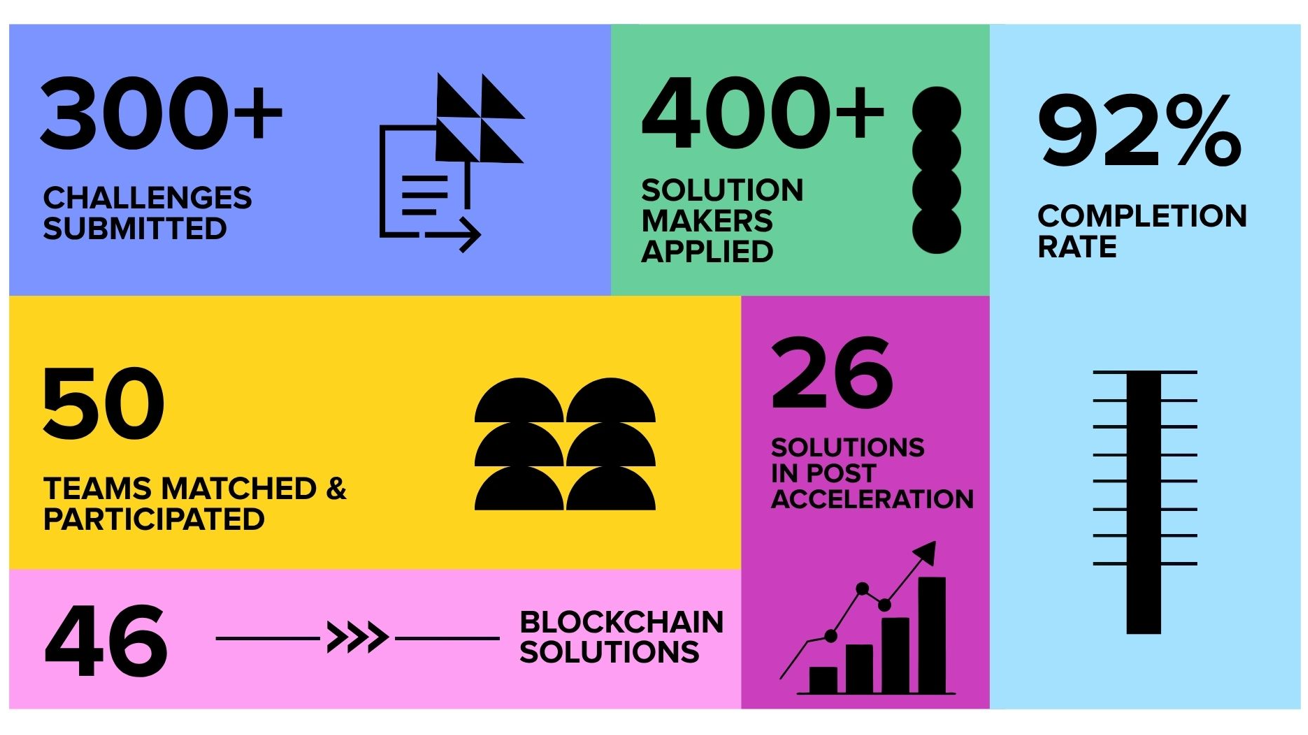
The SDG Blockchain Accelerator was created to connect innovators with development challenges and turn ideas into impact. While interest in blockchain has grown in recent years – from traceable transactions and auditable data to improvements in payments and service delivery – a persistent question has remained: how to design solutions that can operate within institutional, regulatory, and operational realities. To address this, the Accelerator brings together UNDP, technical partners, and innovators into a structured, multi-partner platform that supports solutions from concept to deployment.
Strategically led by the United Nations Development Programme’s Alternative Finance Lab (AltFinLab), in partnership with the Blockchain for Good Alliance (BGA), EMURGO Labs, FLock Technology Holdings, Stellar Development Foundation, and Sui Foundation, the global initiative helps scale blockchain and decentralized AI solutions to advance the Sustainable Development Goals (SDGs).
A structured pathway from demand to deployment
In many innovation efforts, the challenge is not generating ideas or prototypes, but ensuring that solutions can function within existing systems. The Accelerator links demand, solution development, and implementation planning into a single process, helping move ideas from exploration to practical application.
It is built around a demand-led model, where UNDP Country Offices define concrete development challenges grounded in ongoing programmes and national priorities. Across the portfolio, blockchain is being applied to address a consistent set of system-level issues – from inefficient financial flows and weak data integrity to fragmented supply chains and low-trust governance environments – where verification, transparency, and coordination are essential.
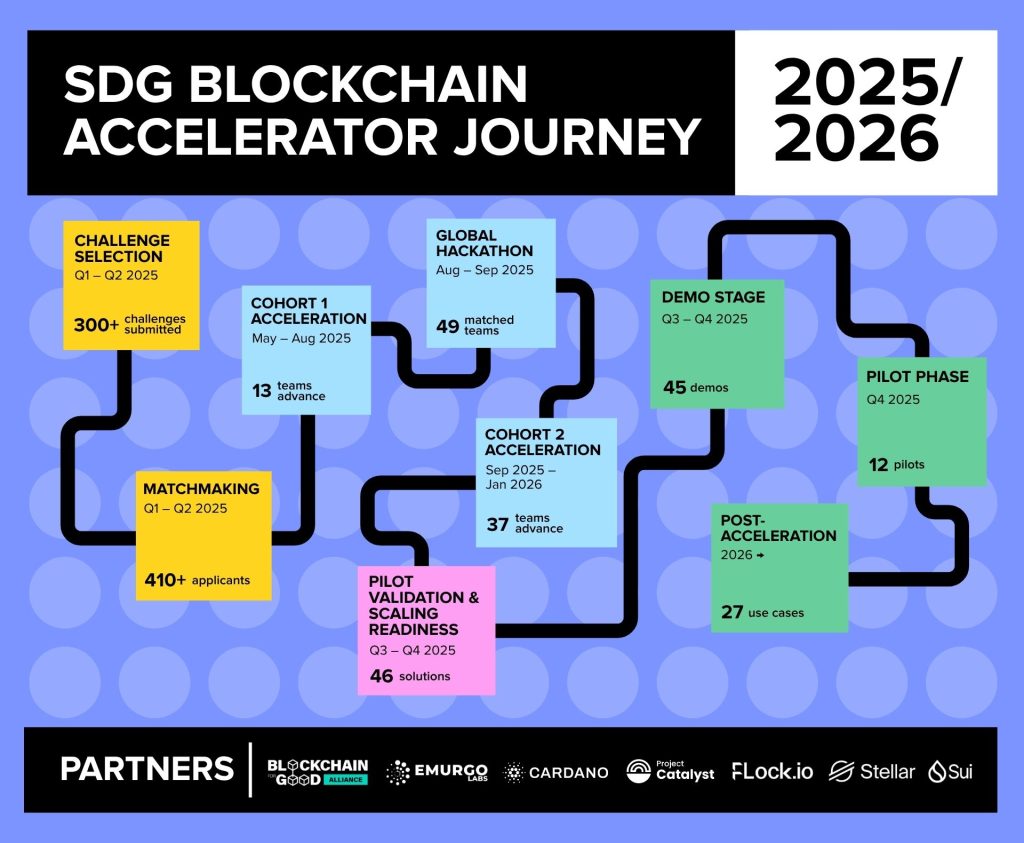
From there, UNDP AltFinLab matches challenge owners with solution makers and technical partners through a structured process – moving from problem definition to roadmap, and from roadmap to pilot readiness. Open calls and hackathons serve as mechanisms for aligning different actors around a shared problem, allowing ideas to be tested and refined before entering acceleration.
The programme operates through a multi-partner, track-based model that brings together multiple technical ecosystems while maintaining a coordinated and neutral approach. This allows challenges to be matched with the most suitable solutions and platforms. By working across multiple blockchain ecosystems, the Accelerator reduces dependency on any single technology stack and increases adaptability across different country contexts. Interoperability is also a defining feature of the portfolio, with nearly 90% of solutions either already supporting or planning cross-chain integration.
Crucially, teams are expected to define how solutions would function under real conditions, including governance, budgeting, and integration into existing processes. At the core of this process is the roadmap – a structured output that translates a development challenge into an implementable pathway, aligning stakeholders, technical design, governance, and financing considerations. This emphasis on operational readiness helps address a common point of friction in innovation efforts.
Where demand is consolidating
The portfolio of solutions that has emerged from this process also reveals where blockchain is beginning to demonstrate practical value.
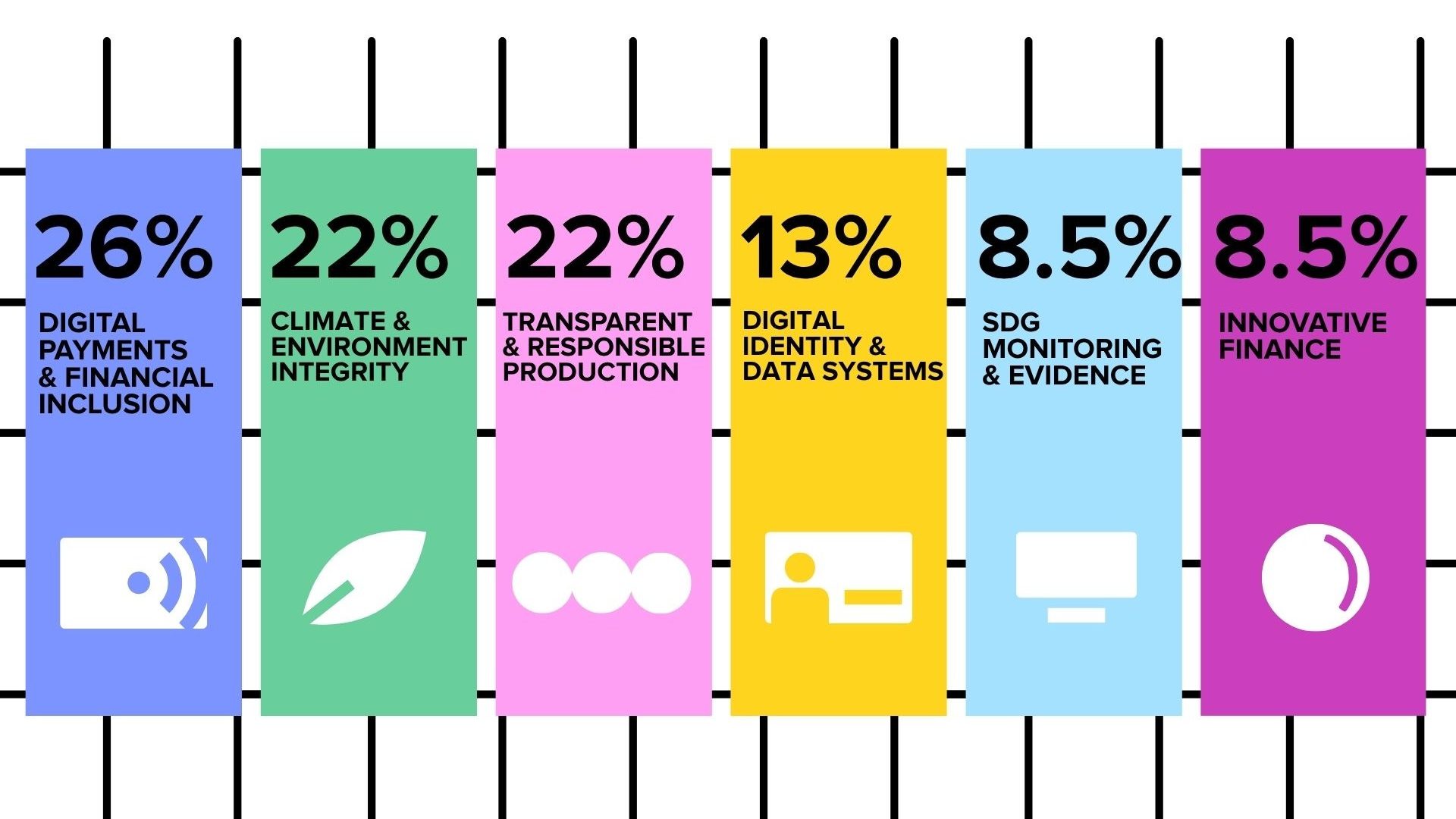
Digital payments and financial inclusion account for the largest share of solutions, followed by climate finance and environmental integrity, and transparent and responsible production. Together, these clusters make up the majority of the portfolio, pointing to areas where systems rely on trust, coordination, and shared data across multiple actors – and where existing approaches often struggle with fragmentation and limited transparency.
The portfolio spans a diverse set of solutions – from payment systems designed to improve last-mile delivery, to carbon registries that strengthen climate market integrity, supply chain platforms that enable traceability across production networks, and digital identity and credentialing tools for verifiable impact tracking.
For example, in contexts where financial systems rely on cash, manual processes, or fragmented infrastructure – as in Haiti and Syria – blockchain-based payment solutions are being designed to deliver funds directly to individuals. This reduces delays, improves traceability, and increases transparency in how resources are distributed. In one pilot, a government disbursement process that currently requires waiting up to six months for loan guarantee payments is being automated, helping small businesses – particularly women-led enterprises that are disproportionately affected by such delays – receive funds faster and more reliably.
Many of these are designed as components that can be integrated into broader public systems, strengthening core functions rather than operating in isolation.
From institutional readiness to public-sector engagement
Beyond solution development, the Accelerator is strengthening institutional readiness to engage with emerging technologies. For 82% of participating UNDP Country Offices, this was their first direct experience with blockchain or similar technologies. By the end of the programme, the share reporting high or very high understanding increased from 21% to 60%, indicating a clear progression from initial exposure to practical capability.
This growing readiness is reflected in how solutions are developed and adopted. UNDP Country Offices act as “challenge owners,” grounding each solution in national priorities and convening stakeholders around it. This ensures alignment with government strategies, regulatory environments, and operational realities from the outset.
Public-sector engagement is therefore built into the process. Government and public-sector entities are involved in 73% of solutions, with more than half engaging policymakers or regulators directly. This creates clearer pathways toward adoption, with solutions shaped in close interaction with the institutions expected to use them.
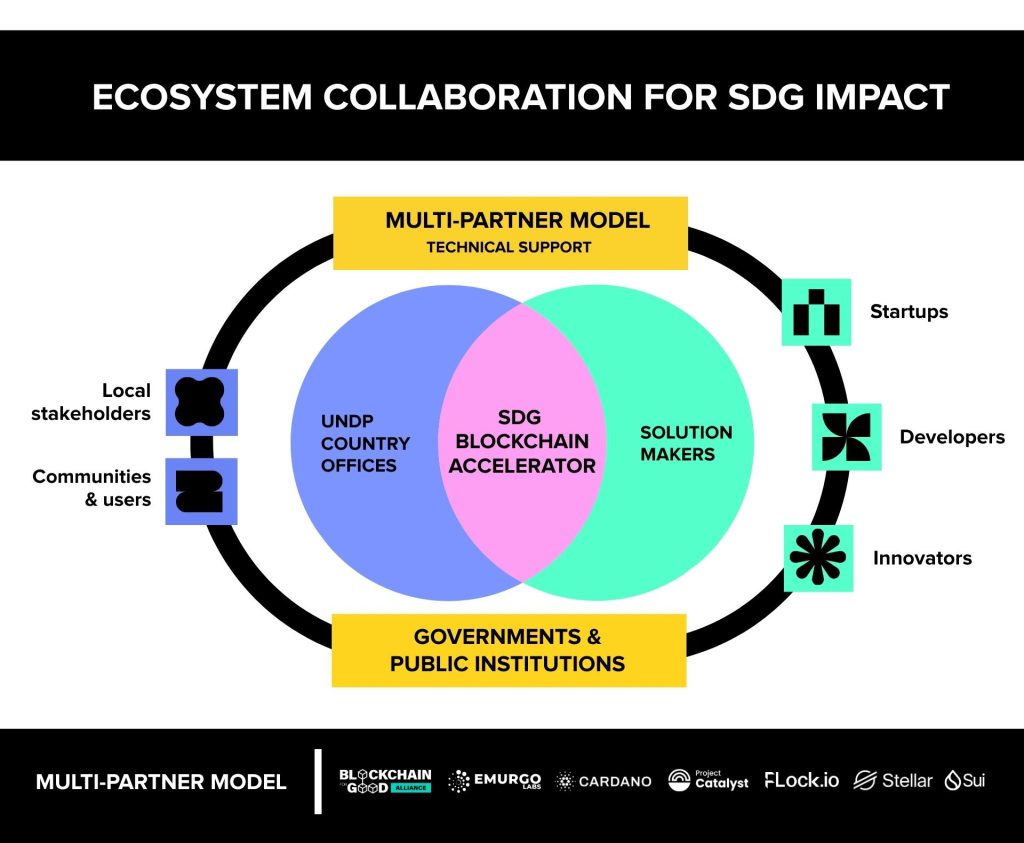
The model also expands the ecosystem around these efforts. More than 120 external partners contributed across the portfolio, with solution makers being able to work directly with public institutions – a connection that is often difficult to establish in practice. This strengthens the link between innovation and implementation environments.
Connecting to a broader blockchain practice
A selection of use cases and pilots developed through the Accelerator are featured in the newly released New Tech, New Partners publication, which brings together more than 40 blockchain applications across regions.
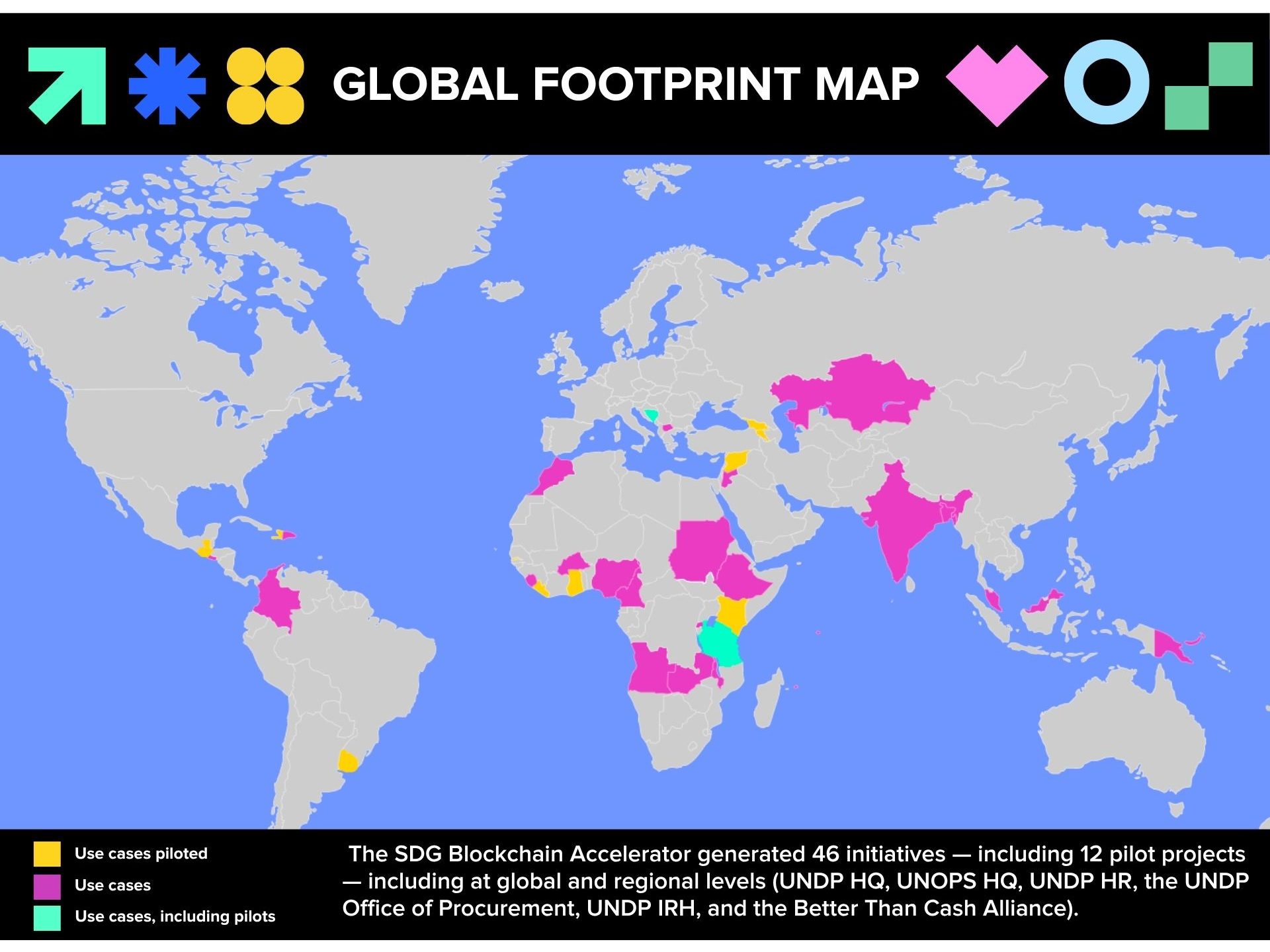
This report highlights the geographic spread and diversity of blockchain applications across development contexts. Across it, blockchain is increasingly used as a coordination and trust layer – supporting how data, payments, and decisions move across systems in more transparent and verifiable ways.
Together, these examples point to a growing body of practice around how blockchain can support digital public infrastructure and public-purpose systems in concrete, applied settings.
The remaining bottleneck: from pilot to scale
The main constraint is no longer whether these solutions work, but whether they can be sustained and scaled. Many are ready to move forward but lack the financing, partnerships, and operational support required to move beyond pilot stages. The challenge has shifted from designing viable solutions to ensuring they are taken up and maintained within public systems.
Building on these lessons, Cohort 3 of the Accelerator will aim to anchor each solution in an existing country programme or programmatic framework with at least one year of operational runway, and a clear implementation context. This shifts the centre of gravity from innovation showcase to institutional delivery: Country Offices and UN agency teams bring the development challenge and the programmatic home, Solution Makers bring production-ready technology, and the Accelerator provides the structure to connect the two. The opportunity now is to move from “proof that it works” to “proof that it scales”, embedding solutions within the programmes, partnerships, and budgets that already exist, so they can deliver tangible, sustained impact.
Stay tuned for our Cohort 3 open call!
The Accelerator is powered by catalytic funding from Cardano’s treasury via Project Catalyst, with support from other partners.
By the time a product or service reaches the end user, most of the difficult work has already been done elsewhere. Someone had to collect the right data and keep it attached to the right goods. Another person had to verify it and carry it through a chain involving tens of actors. Crucially, traceability only becomes relevant when records survive the chain itself – this was the real subject of the sixth UN Blockchain Talks.
This session was valuable because it remained grounded to that reality. Three industry leaders and practitioners — Sam Lambert of zenGate Global, Mark Kaplan of Wholechain, and André Vanyi-Robin of Plastiks — spoke about the conditions that make traceability work, or fail, once systems leave the slide deck and meet the field.
The session began with the challenging process of data capture in the upstream reality, then moved on to the middle of the chain, where records need to be transferred between different parties and systems. Later on, we moved on to plastic recovery, where weak records are becoming increasingly difficult to justify to auditors and regulators. By the end of the Talk, the audience had gained a more practical understanding of what trustworthy traceability actually demands than a general case for blockchain.
The first problem is rarely technical
Sam Lambert opened with a phrase that stayed with the rest of the session: “bush to boardroom.” His point was that the people setting the rules for compliance, risk and reporting are often far removed from the people expected to collect the first data.
In agricultural supply chains, for example, traceability often begins in places with poor connectivity and manual processes. These places also have limited training and strong local systems of trust that do not automatically align with the logic of a digital compliance framework. Sam put it bluntly: “Technology isn’t a silver bullet. In fact, I think it often just exposes where the issues are.”
He also made a point that deserves to be heard beyond this session: “We’re here to design systems around people.” This may sound obvious, but much of the traceability sector still operates in the opposite way. New systems are introduced and new reporting demands are added, placing the burden on communities that were not involved in the initial design process. Sam’s remarks brought the conversation back to the ground: consent, training, workable workflows, offline functionality and field conditions are all integral to the system.
Good records are not enough if they cannot move
Mark Kaplan continued the discussion at the point where products move beyond the first mile and enter a more crowded supply chain. Here, the focus shifts to whether that data can travel with the goods in a form that can be used by others.
Even if a supply chain has portals, dashboards, audits and QR codes, it may still fall short of real traceability if the records are not tied to actual lots and transformation events. Mark described Wholechain’s approach as event-based and grounded in GS1 standards, with records that remain linked to the movement of physical goods.
That is where his remarks on fatigue landed well. When Sam spoke about farmer fatigue, Mark added another phrase to the session: “Portal fatigue.” He used this term to describe the situation where people in the middle of the supply chain are forced to work across disconnected, non-interoperable proprietary systems. Traceability improves when data can be understood by different systems without losing meaning. This is why standards were so important in Mark’s discussion.
In waste recovery, weak proof is no longer enough
André Vanyi-Robin took the session into plastic recovery, where the pressure for stronger records is no longer theoretical. He stated clearly: “There is no traceable proof of recovery. The existing standard practice are spreadsheets, which obviously don’t survive the audits.”
He described a sector where data is fragmented among recyclers, producers, and regulators, and there is no shared connection strong enough to support compliance reporting. In that setting, blockchain technology is important because it provides a continuous record. It stores proof without exposing sensitive commercial data. As he explained, “You have verifiable proof of impact without exposing sensitive data.”
André also tied this back to everyday implementation. In his view, the answer is not to force companies into yet another cumbersome platform, but rather to integrate with existing ERP and product information systems, and “not force additional complexities at the level of verification”.
The stronger lesson sat between the talk
The value of the session came from how these three perspectives met. Sam dealt with first-mile reality and the human side of system design. Mark dealt with standards, interoperability and how records stay attached to goods. André dealt with compliance-grade proof and what happens once records carry legal and financial weight.
Seen together, the message was that blockchain becomes useful only when the rest of the system is already serious about data, process and trust.
Missed our talk? Watch the recording here.
You can also explore previous Blockchain Talks sessions in our YouTube Playlist.
Get involved
The UN Blockchain Community of Practice (CoP) works best when colleagues bring practical questions, field-tested lessons and cases that challenge easy assumptions.
For more details or suggestions, contact Ben Thompson Coon, UN Blockchain CoP Lead; ben.thompsoncoon@undp.org
During the fifth session of the UN Blockchain Talks series, the discussion moved beyond whether blockchain can support digital identity. A more useful examination was what kind of identity system would give people greater control over their data without making implementation harder for governments and service providers.
Hosted under the UN Blockchain Community of Practice, led by UNDP AltFinLab in collaboration with the UN Innovation Network, Blockchain Talks #5: Digital Identity, Privacy and Impact brought Aya Miyaguchi, President of the Ethereum Foundation, Jigme Tenzing, Secretary of GovTech Bhutan, and Peter Frandsen, Founding Partner of Partisia and the Partisia Foundation.
Together, they explored Bhutan’s national digital identity journey, the role of Ethereum in that architecture, and why privacy-enhancing technologies need to be part of the conversation if digital identity systems are to work in practice.
Bhutan’s starting point was privacy
Bhutan’s case stood out because the discussion began with a policy choice, not a technical one. As Jigme Tenzing explained, Bhutan’s move toward a decentralized, self-sovereign identity model was shaped by a concern many governments now face as they digitize services: efficiency can move faster than privacy protections when those protections are treated as secondary.
“In our hurry, we were kind of forgetting about privacy,” he said.
That concern pushed Bhutan away from the idea of a single centralized government database holding all citizen identity data. Instead, the country pursued a model in which verified information can be issued by the government, while remaining under the individual’s control.
In one of the clearest lines of the session, Tenzing described the shift this way: “The government functions more like a notary.” In other words, the role of government changes from holding and managing data to validating credentials that citizens can then use with explicit consent. That distinction gave the discussion real weight.
Why Ethereum fit Bhutan’s model
Aya Miyaguchi placed Bhutan’s approach within a broader set of design values that the Ethereum ecosystem seeks to protect: decentralization, open-source development, privacy, security, and resilience.
Bhutan’s digital identity system was not presented as an imported product, but as national infrastructure developed with external support and strong local ownership. “We are a supporter, not a builder,” Aya said, describing the Ethereum Foundation’s role in Bhutan’s process.
She also noted that Bhutan has become the first country to anchor national digital identity on Ethereum at national scale, with the current system supporting more than 30 government services.
Privacy cannot be solved by blockchain alone
If Bhutan’s case showed why decentralization and user control matter, Partisia’s contribution in the session clarified why privacy still needs additional tools. Peter Frandsen focused on Multi-Party Computation (MPC) and the role it can play alongside blockchain in identity systems.
“Everything on the blockchain is public, and everything in MPC is private.”
That line by Frandsen helped cut through a common confusion in digital identity discussions. Blockchain can provide integrity, immutability, and a shared trust layer. But when systems need to verify something sensitive without exposing the underlying data, privacy-enhancing technologies become essential.
Frandsen illustrated this through concrete examples. In one case, a person can prove they are allowed to access a building or collect a parcel without disclosing unnecessary personal information. The system confirms the right to act, rather than forcing the user to reveal more data than the transaction actually requires.
What this session clarified
Blockchain Talks #5 made clear that digital identity decisions are also decisions about trust, data control, legal readiness, and public understanding. Bhutan’s case made that visible. Ethereum’s role clarified the infrastructure logic behind it. Partisia’s contribution showed why privacy needs to be designed at the computational level, not simply promised at the policy level.
The session also served as a useful reminder that the hardest part of digital identity is rarely the interface. What matters most are the governance choices and technical architecture underneath.
Missed our talk? Watch the recording here.
You can also explore previous Blockchain Talks sessions in our YouTube Playlist.
Get involved
The UN Blockchain Community of Practice (CoP) works best when colleagues bring real examples, practical questions
For more details or suggestions, contact:
Ben Thompson Coon, UN Blockchain CoP Lead
ben.thompsoncoon@undp.org
Blockchain work across the UN system has grown steadily, but not always in a coordinated manner. Some teams are piloting real solutions; others are still assessing whether the technology fits their operational reality. This creates momentum, but also fragmentation; lessons sit in separate corners, and colleagues often struggle to find the right use case, the right focal point, or the right evidence at the right time.
Between existing blockchain projects and use cases across the United Nations, the UN Blockchain Talks add the missing layer: a regular space to compare approaches and learn from cases that have faced real operating constraints. The series continues in 2026 with a monthly rhythm as topic-specific sessions designed to stay practical and collaborative.
Timeline and topics of upcoming UN Blockchain Talks:
- 12 March 2026 | Digital Identity → Watch the recording
National-scale digital identity on public blockchains - 9 April 2026 | Supply Chain → Watch the recording
Supply chains traceability and implementation - 23 April 2026 | Blockchain for Climate → Watch the recording
Environmental sustainability and blockchain: Where does it actually help? - 5 May 2026 | Digital Payments → Watch the recording
Money’s New Rails: Stablecoins and the last mile of financial inclusion - 11 June 2026 | AI on Blockchain → Watch the recording
AI Agents, federated learning and on-Chain alignment
Each talk is followed by shared materials and a lightweight prompt for participants to share interests and propose ideas to move beyond the talks into peer support, working groups and practical collaboration.
The UN Blockchain Community of Practice
Blockchain projects across UN agencies and regions tend to face the same early hurdles, such as finding the right partners, navigating governance and risk issues, or demonstrating that the approach improves delivery in real operating conditions. And when teams work in isolation, lessons travel slowly, and the same design mistakes repeat.
That’s why the UN Blockchain Community of Practice (CoP), hosted under the UN Innovation Network (UNIN) and managed by UNDP’s Alternative Finance Lab (AltFinLab), brings this work into one shared space with a focus on practical knowledge sharing – a regular learning series, a live repository of initiatives, and pathways that keep the work moving beyond the Talks.
COs, UN Agencies working in isolation/silos, the CoP creates a shared space where colleagues can find real examples, learn from what has already been tested, and connect with the right people. Through the Core Group, the live repository, and the Blockchain Talks and other activities, the CoP reduces duplication, helps avoid common mistakes, and improves the quality of new initiatives.
Journey and momentum
Since early 2025, the CoP has relaunched its learning cadence through the Blockchain Talks series, with the first set of sessions focusing on building a shared foundation while staying grounded in real implementation. Each talk was designed to be useful for both newcomers and practitioners, and featured expert speakers from across the UN system and external technical partners.
Those early sessions helped reset the community around a practical baseline: what kinds of problems blockchain has been used for inside the UN ecosystem, what enabling conditions matter (policy, partners, user adoption, and operational constraints), and what colleagues should ask before they commit time and resources to a pilot.
A living repository of UN blockchain initiatives
Aiming to build a reliable knowledge base of what has been tried, where, by whom, and for what purpose, a major workstream behind the CoP was building a live repository of UN blockchain initiatives that can serve as a working reference point. As part of this wider effort, 150+ blockchain-related initiatives were mapped across the UN ecosystem.
In parallel, 80+ cases were validated directly with project focal points (to correct details, add context, and confirm status), building toward a repository that is usable as a working tool for programme teams, innovation units, procurement colleagues, and policy teams alike.
What becomes easier
- Colleagues can quickly find relevant use cases instead of starting from scratch.
- Teams can identify who to contact and what supporting materials exist.
- Early design can improve when teams can see what others learned about governance, risk, and delivery constraints.
- Templates, partner models, and implementation patterns can travel across agencies more easily.
The repository also helps the community see patterns. Over time, it becomes a live tool that makes it easier to spot clusters of work in areas where the UN is already active, such as payments and financial inclusion, supply chain traceability, digital identity, climate-related applications, and new governance or fundraising models.
Get involved
What makes this CoP work is the people who show up with real examples and honest questions. If you are attending a Talk, your input is what makes it valuable. Registration links will be shared through the CoP space and mailing list.
For more details or suggestions, contact: Ben Thompson Coon, UN Blockchain CoP Lead
There’s a question that doesn’t get asked enough in digital finance: what does “working” actually mean when you’re operating at the last mile?
Digital payments solve obvious problems on paper: instant settlement, lower fees, and transparency. But the last mile doesn’t operate on paper. It operates with patchy connectivity, cash-based economies where trust is built face-to-face over years, and the weight of someone’s entire month’s survival sitting in a transaction that may or may not go through.
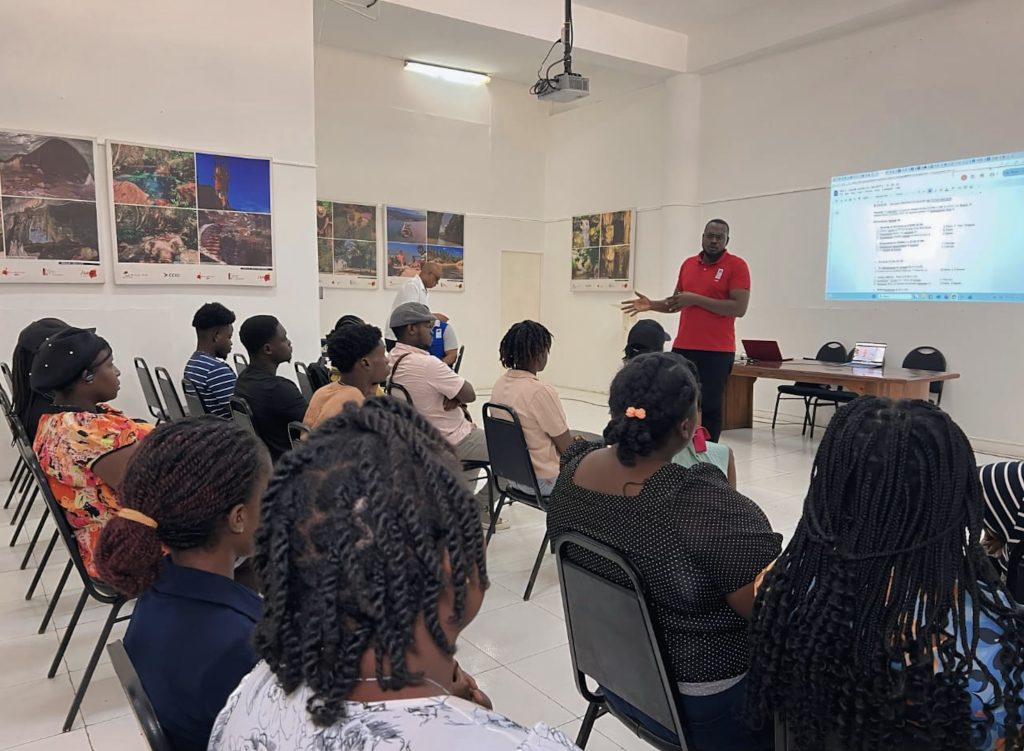
Across Haiti, Guatemala, and The Gambia, three teams from Cohort 2 of the SDG Blockchain Accelerator ran pilots testing whether blockchain-based digital payment flows could function under real operational constraints, not ideal conditions, in partnership with Stellar Development Foundation. What they found was more specific and more useful than a simple yes or no.
What were we actually testing?
For many households and microbusinesses, remittances and small transfers mean survival. Payment friction compounds at every step: transfer fees, currency exchange losses, physical distance to payout locations, and the opportunity cost of a day spent traveling to collect money. When people are forced to cash out immediately because holding digital value feels precarious, there’s no room for saving, building credit, or investing in community. When programmes can’t see where money actually goes, accountability becomes a reporting exercise rather than a feedback loop.
The question these pilots tested wasn’t whether blockchain can handle payments. It was narrower and more practical: can digital rails reduce friction while widening access to financial services in contexts where traditional banking infrastructure doesn’t reach, or doesn’t bother to reach, because the volumes don’t justify the cost?
This is fundamentally a design question, not a technology question.
Each pilot ran an end-to-end flow with bulk payments initiated by partners, received in participating wallets, and used in real economic activities like merchant payments, community fund governance, and informal business recordkeeping. In Haiti and the Gambia, two pilots used the Stellar Disbursement Platform to send bulk payments directly to end user wallets. UNDP Guatemala Country Office collaborated with Amero Exchange to test a community investment feature tied to remittances, with an interoperability roadmap outlined in their product plans.
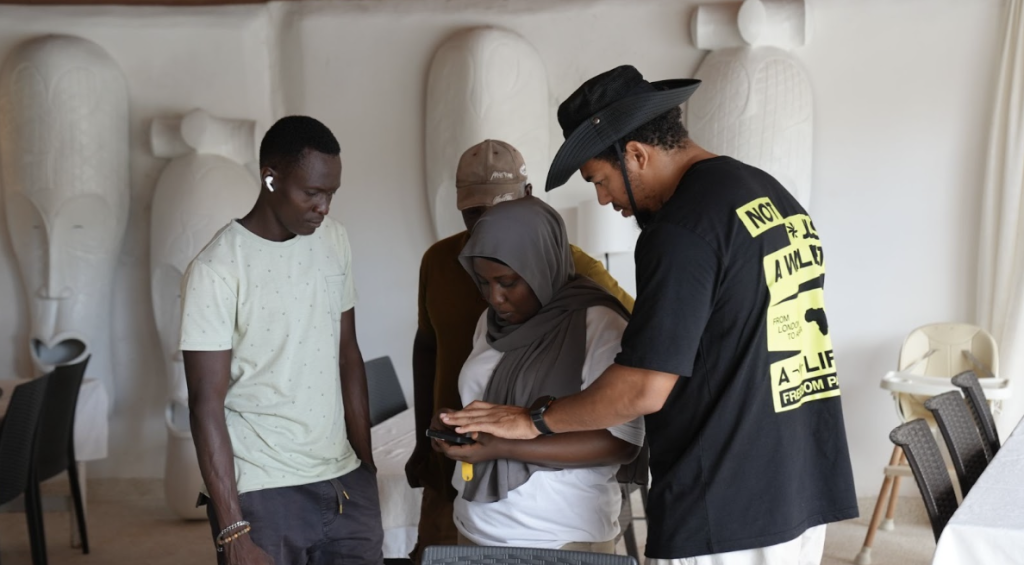
Proof-of-concept success meant demonstrating three things: funds could be delivered digitally to the last mile, users could transact in ways that reflect daily realities rather than ideal conditions, and partners could view a trustworthy record of what happened. Three different contexts, each on a different platform, revealed a shared signal.
Haiti: When the contingency plan becomes the test
In Haiti, most day-to-day transactions still happen in cash. ‘The Prosperity Loop’ pilot asked whether digital payments could function reliably when infrastructure fails, not just whether they could work in principle.
The pilot enabled households, merchants, microfinance institutions, and nonprofits to receive transfers in digital wallets from Kura and Bousol, make local payments, and build a trusted transaction record. The model combined these wallets with point-of-sale infrastructure designed for low connectivity, and those design choices got tested faster than anyone planned.
With flights disrupted, the UNDP Haiti team and the solution makers from Kura and Bousol reached Cap-Haïtien by last-minute helicopter. The next day, the cellular network went down completely. A Starlink Mini carried as a contingency plan became the only source of connectivity. What was supposed to be a controlled pilot became a stress test of whether “designed for low connectivity” was more than a feature claim, and the pilot recorded a 100% transaction success rate with near-instant performance across both wallets under the conditions that actually exist.
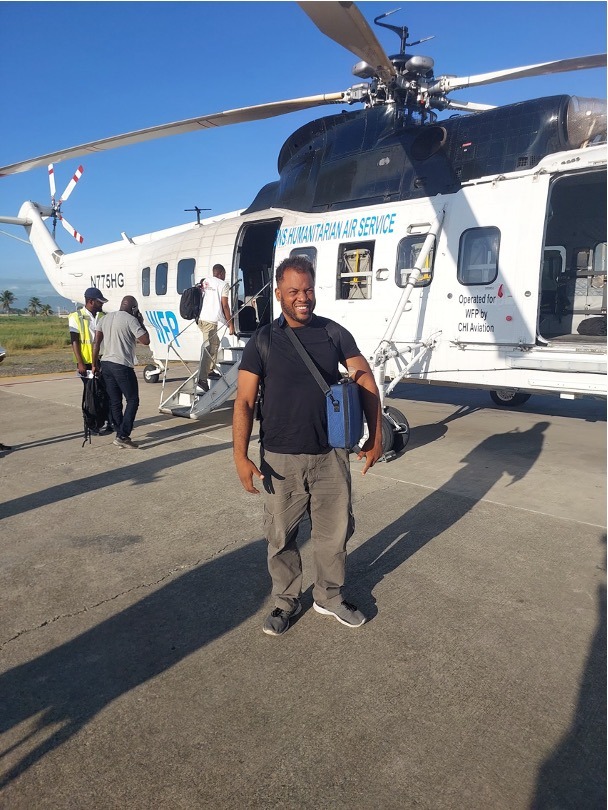
What made this more than a technical achievement was what happened next. Maxime, a monitoring and evaluation specialist for a national malaria project, initiated a live bulk disbursement through the Stellar Disbursement Platform during the test, sending payments directly to recipients’ wallets. He saw it work under constraint and is now exploring pathways for scale-up in Spring 2026. The signal here isn’t just that blockchain works, but that when you design for the constraints that exist rather than the infrastructure you wish existed, traditional program implementers start seeing how this fits into what they already do.
Guatemala: What gets designed out
In Guatemala, remittances from abroad are a key source of income that’s usually spent immediately, not because people don’t want to save or invest, but because the friction of doing anything else with that money is too high.
Blockchain-based digital payment tools can be laser-focused on specific populations with specific needs. The value isn’t in disrupting the entire financial system but in filling the gaps that the system can’t economically justify serving. When you design for simplicity, instant settlement, and visual clarity, you create pathways for populations that existing infrastructure excludes not by policy, but by design assumptions.
UNDP Guatemala partnered with Amero Exchange, whose platform was specifically created for Spanish speakers. Through the Stellar Development Foundation’s approach of matching solution makers to challenges presented by UNDP Country Offices, Amero’s remittance and community investment capabilities aligned with Guatemala’s particular context. This matching wasn’t accidental but reflected the reality that “the right tool” means linguistic fit, cultural context, and functional alignment, not just technical capability.
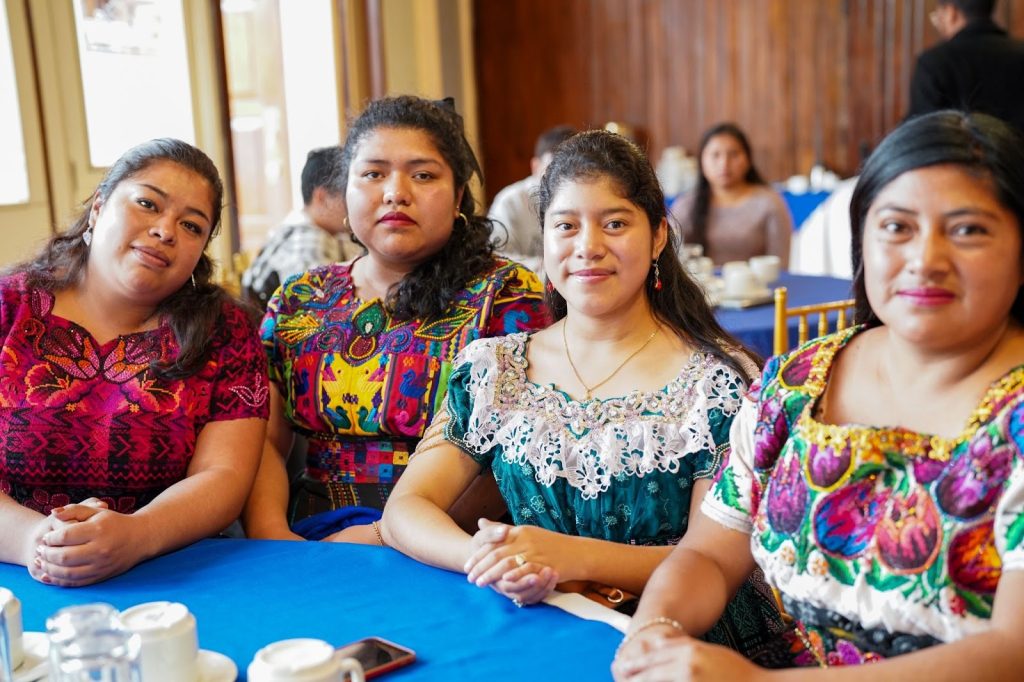
The pilot tested whether remittances could support longer-term community priorities without making people choose between immediate needs and collective investment. Families could direct a small percentage of each transfer to a community fund governed by community members back home, where members could propose and vote on local projects with all contributions and payouts recorded transparently.
During testing, both diaspora senders and receivers engaged quickly once they understood the model. But one interaction revealed something the team hadn’t explicitly designed for. A woman with a hearing and speaking disability was in the testing group. She’d used banking services before that required extensive verbal communication, follow-up visits to confirm transactions, and waiting periods with unclear resolution times. When she went through Amero‘s onboarding process, the visual interface was clear and the instant settlement meant no ambiguity about whether the money had arrived. She found sending money to loved ones more manageable, with less friction and more confidence.
This wasn’t a special accessibility feature but simply what happened when you designed for simplicity and clarity as defaults. Current banking solutions often overlook populations like women with dependencies in diaspora, people with disabilities, and people whose needs don’t generate sufficient volume to justify traditional banks’ infrastructure costs. Not because the need isn’t there, but because the business case isn’t there under existing models.
The broader value wasn’t just expanding what remittances could do but lowering barriers to participation in household and community-level financial decisions for people, particularly women and young people, who are often excluded from those conversations entirely.
The Gambia: Where flexibility actually lives
In The Gambia, “last mile” isn’t just about geography but about the gap between informal livelihoods and formal financial systems.
Women and youth entrepreneurs keep local markets moving, but many operate outside formal finance with no bank accounts, no collateral, and no credit histories. They track sales in notebooks and remain invisible to services that could help them grow, not because they’re not economically active, but because that activity doesn’t produce the data formal systems recognize.
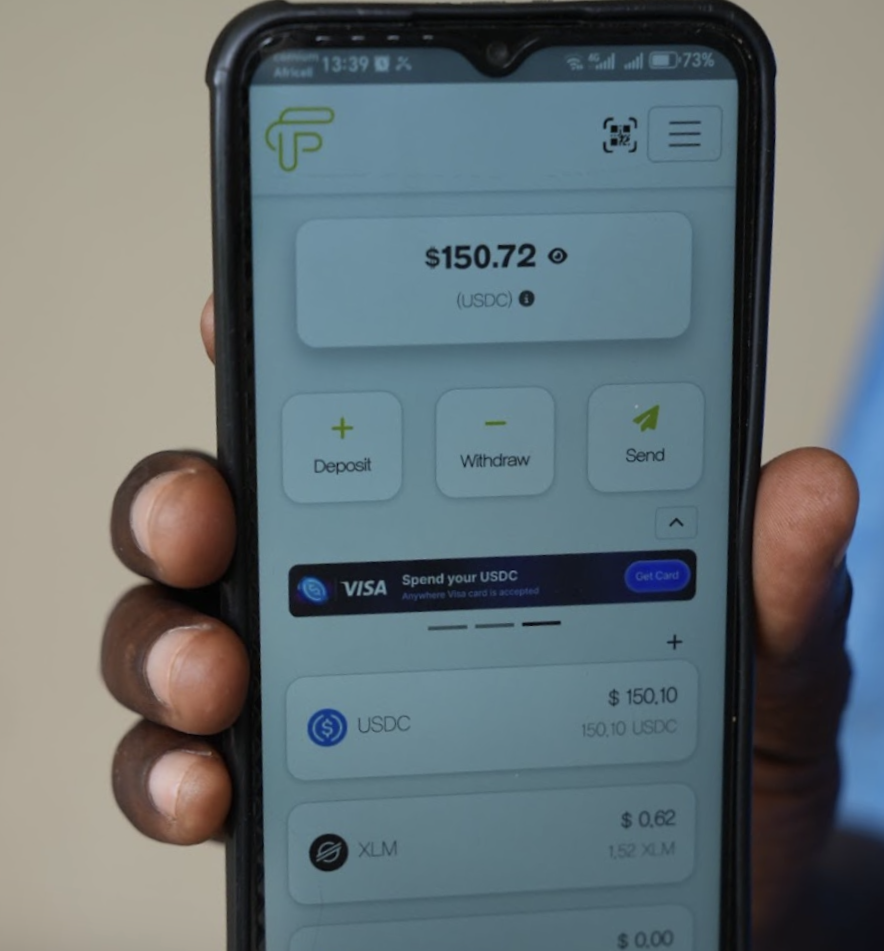
The pilot, led by UNDP staff from the Istanbul Regional Hub working with FreedomPay Wallet, paired a mobile-first wallet with simple digital recordkeeping to help entrepreneurs build usable business profiles and access fair microfinance over time. FreedomPay Wallet leverages Moneygram Access to provide cash-in and out options directly from the app interface, available in over 180 countries worldwide. During testing, something unexpected happened.
A MoneyGram agent noticed unusual, sustained demand for cash-outs in his area. After investigating, he discovered people were using FreedomPay Wallet. Rather than requiring people to travel to his established location, he closed his shop for the day and traveled with the team to a remote community. This wasn’t customer service but a traditional financial services provider recognizing value in an emerging tool and adapting his operations to meet people where they were.
Here’s what matters about that moment. We talk about legacy financial systems as if they’re monolithic and inflexible, but at the last-mile level, individual agents often have more discretion than the systems they represent. The agent’s decision to collaborate with FreedomPay Wallet showed that traditional players are ready to engage with emerging technologies when they see tangible demand from communities they serve.
The constraint isn’t technical compatibility but whether decision-makers higher up the chain will create frameworks that let last-mile providers collaborate across traditional and emerging systems without jeopardizing compliance and AML requirements. The infrastructure for reaching unbanked populations already exists. What’s needed is agile policy that empowers the people already embedded in those communities to use the tools that work. In this case, established cash-based systems and new digital tools worked together, demonstrating how collaboration rather than replacement can expand access for people who need better options.
What matching actually means
These three pilots used different platforms for specific reasons. The Stellar Disbursement Platform, leveraged by implementing organizations in Haiti and The Gambia, offers enterprise-grade ease of use for bulk transactions and provides transaction-level traceability for accountability purposes while limiting access to beneficiary personal data.
Amero, purpose-built for Spanish-speaking users, brought linguistic and cultural fit to Guatemala’s remittance-focused model. Language isn’t just translation but how financial concepts map to lived experience, which makes this choice more significant than it might initially sound.
Through the Stellar Development Foundation’s process of matching solution makers to specific challenges presented by UNDP Country Offices, each platform was aligned with context beyond just technical requirements. The real alignment happened around the actual shape of the problem: Who needs to use this? What literacy can we assume? What connectivity can we rely on? What does trust look like here? What does failure cost?
When those questions get answered honestly, you end up with different tools for different contexts because the people and places demand it, not because the technology does.
Incremental, not disruptive
There’s a narrative about blockchain that needs to be challenged: that it’s disruptive technology. It’s not. It’s incremental technology, and this distinction matters for how we invest and scale.
The value of these pilots isn’t that they replaced existing financial systems but that they filled specific gaps those systems either can’t or won’t address. The woman in Guatemala didn’t stop using other financial services but gained access to one that worked better for her particular need. The MoneyGram agent in The Gambia didn’t abandon his business model but extended it by collaborating with a tool that served demand he was already seeing.
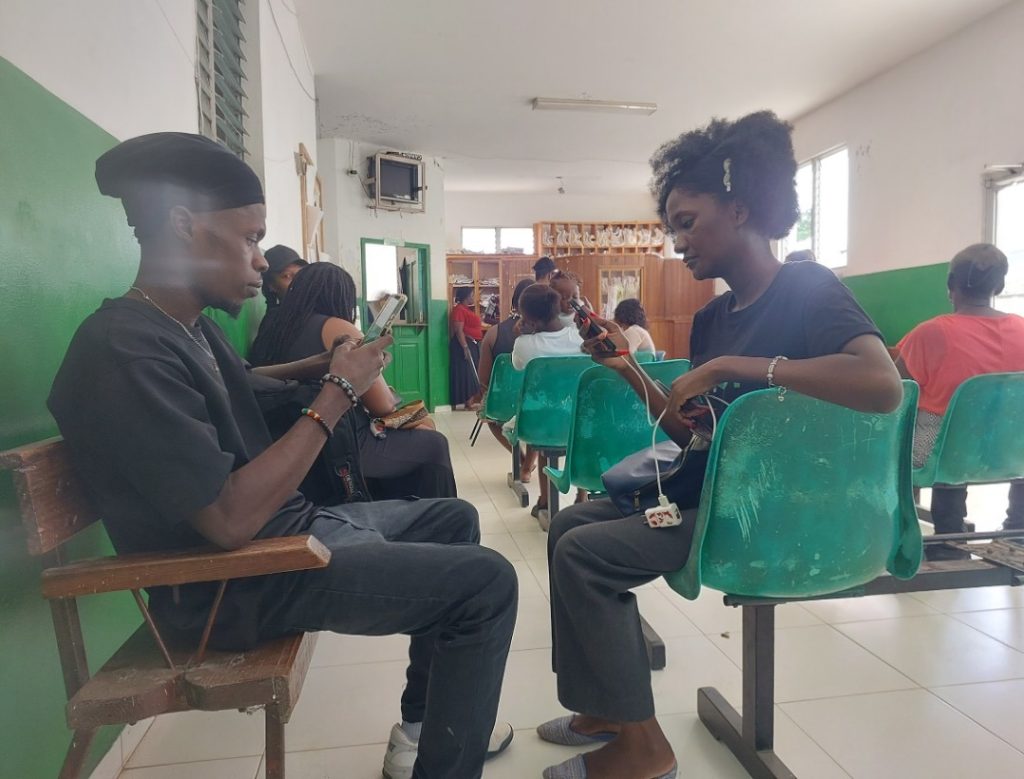
If blockchain is disruptive, the strategy is to build parallel infrastructure, wait for adoption tipping points, and replace incumbents. That’s expensive, slow, and in last-mile contexts it ignores the reality that existing infrastructure, however imperfect, is what people currently rely on. If blockchain is incremental, the strategy changes to identifying specific gaps in existing systems, building focused tools that integrate rather than replace, scaling gradually based on demonstrated demand, and allowing traditional and emerging systems to collaborate.
This requires different expectations: multiple innovation cycles, gradual volume increases, and patience for solutions to prove themselves in real conditions over time. It also requires something harder, which is a unified approach from blockchain partners in digital payments. Right now, not all wallet projects will succeed, and that’s fine because that’s how markets work. But the proliferation of incompatible solutions creates scattered efforts that make it harder for traditional implementers to understand what’s actually viable at scale.
What’s needed is clearer signaling around which use cases have demonstrated traction, what volumes are realistic in year one versus year three versus year five, and how solutions integrate with existing remittance channels, mobile money, and local finance partners. Matching supply to transaction demand matters, and that matching needs to happen incrementally with realistic volume expectations rather than with disruption narratives that promise transformation but deliver fragmentation.
What needs to happen
A successful pilot doesn’t mean the project is complete. The next phase is operational readiness, which involves aligning with financial institutions and program owners, ensuring compatibility with local cash and connectivity conditions, establishing user support and safeguarding, and clarifying how solutions adapt to regulation and market realities.
But operational readiness isn’t just technical. It’s strategic, and these three pilots demonstrated that digital payment rails can reduce friction and open pathways to financial inclusion in last-mile settings when designed around real constraints. The question now isn’t whether this works but whether the investment approach will support the incremental scaling that actually drives adoption.
That means funding multiple innovation cycles rather than expecting immediate scale. It means supporting gradual volume increases that allow solutions to prove viability. It means enabling traditional and emerging systems to collaborate without prohibitive compliance barriers. It means creating frameworks that empower last-mile providers to adopt tools flexibly. And it means measuring success not by disruption metrics but by specific gap-filling outcomes.
These pilots aren’t standalone experiments but build the evidence base for what deployment readiness looks like: tested workflows, defined partner roles, proven performance under constraint. The UNDP SDG Blockchain Accelerator exists to move solutions from proof of concept to real-world adoption, and insights from these pilots feed directly into that mission by turning individual country experiences into transferable patterns other teams can apply.
The infrastructure is emerging and the use cases are clarifying. What’s needed now is an investment strategy that matches the technology’s actual shape: incremental, context-specific, and designed to integrate rather than replace.
UNDP has released a new publication, “New Tech, New Partners: Transforming development in the digital era – A snapshot of UNDP’s blockchain practice,” offering a practical look at how blockchain technologies are being tested and applied across development contexts to strengthen public systems.
The publication addresses a growing knowledge gap regarding the responsible use of rapidly evolving digital technologies. Drawing on more than 40 real-world pilots implemented with governments and partners globally, it demonstrates how blockchain can support more transparent, inclusive, and trusted methods for managing payments, data, and shared rules.
Rather than focusing on technology in isolation, the publication examines how blockchain is being used as part of broader digital transformation efforts – complementing public institutions, policy frameworks, and existing infrastructure. The cases explore applications across several key areas, including:
- Digital payments and financial inclusion
- Climate and nature finance
- Digital identity and data governance
- Community-driven and alternative finance models
- Supply-chain transparency and public accountability
The publication does not present a single model or blueprint. Instead, it captures an emerging practice, documenting lessons from early experimentation and pilot deployments. Each case highlights the specific development challenge being addressed, the scale of the pilot, the technology stack involved, and the partnerships that make these initiatives work in real-world conditions. Together, the cases illustrate how blockchain – when designed with safeguards and public purpose in mind – can help improve transparency, reduce fragmentation, and build trust in public systems, while also surfacing risks, trade-offs, and governance considerations.
Policymakers, development practitioners, and innovators will find this snapshot particularly useful for understanding where blockchain may add value to future-ready public systems, and where careful design, regulation, and institutional capacity remain essential.
Find the full publication on UNDP global website.
This publication was prepared by UNDP’s Alternative Finance Lab, part of the Innovation and Digital Team at UNDP Europe and Central Asia, with contributions from UNDP Country Offices, the Bureau of Policy and Programme Support, and the Istanbul Regional Hub. UNDP acknowledges the partners supporting the pilots featured in the publication, including Algorand Foundation, Blockchain for Good Alliance, EMURGO Labs, Cardano Foundation, Project Catalyst, FLock.io, Stellar Development Foundation, and Sui Foundation.
The following piece was first published on the Proofing Future and was originally published on April 20, 2021.
“The Social Impact Network is a decentralized ecosystem for impact investments that connects decentralized finance and real-world asset projects to create real social impact and deliver above-average yields to investors. Compared to traditional portfolios, the impact investment offered by our platform is open fund based, easily tradable, transparent, and secure due to the integration of DTL and IoT devices into the funded projects,” says Dr. Nikola Markovic of Social Impact Network as we talk with him, Marina Petrović and Robert Pašičko of UNDP AltFinLab, and Rawad Rizk of UNDP Lebanon about their project collaboration in the DLT4EU accelerator programme.
The DLT4EU accelerator programme identifies and connects distributed ledger technology (DLT) entrepreneurs with leading public and private sector organisations for social and public good.
DLT4EU is led by a consortium comprised of Metabolic, Digital Catapult and Ideas for Change, with direct support and advice of the European Commission’s Joint Research Center.
Dr. Nikola Markovic is the CEO and CoFounder of Social Impact Network, the place where impact investors make a measurable social and environmental impact with their investment. Social Impact Network is a startup that was built during the DLT4EU accelerator program. With his expertises and enthusiasm in innovation and technology pushed the project from idea to realization. He is keen to bring the Social Impact Network further on the market and enable funding for green energy in emerging markets more accessible.
Rawad Rizk is Project Manager at UNDP Lebanon and team member of UNDP Alternative Finance Lab. He has been managing Live Lebanon, a crowdfunding platform aiming at linking the diaspora to the development effort in Lebanon with over 70 projects implemented successfully. As part of the Alternative Finance Lab team, Rawad Rizk supports the implementation of Tadamon, a NGO empowerment for poverty reduction program, which is providing capacity building and funding to CSOs in 57 countries. Rawad Rizk is a member of the digital crowdfunding academy. an online training program, as well as managing the campaign for the Alliance to Fight Avoidable Blindness AFAB, a program that provides treatment to fight avoidable blindness in 13 countries in Africa.
Marina Petrović is the Innovative Finance and Technology Expert at UNDP Istanbul Regional Hub as well as Cofounder of the Alternative Finance Lab (AltFinLab), which is an internal startup, run out of UNDP Istanbul Regional Hub for Europe and CIS. The AltFinLab is exploring how to revolutionize development finance, through innovation, digitalization and technology. Since the AltFinLab launched in 2016, Marina Petrović has been working to provide hands-on technical expertise, advisory support and market intelligence to over 45 UNDP offices, national partners and governments around the world.
Robert Pašičko is the Cofounder of the UNDP Alternative Finance Lab (AltFinLab). He supports innovation in alternative finance mechanisms and in low carbon development in over 40 countries globally. He focuses on finding ways to make green energy affordable through blockchain, crowdfunding and community financing. Robert Pašičko also cofounded the UNDP Crowdfunding Academy, a training program for crowdfunding which has been implemented in over 20 countries worldwide and has created over successful 50 campaigns. He is an evaluator of blockchain projects funded by the European Commission.
Sebastian Klemm: Which deep economic reforms do we need to tackle, in order to arrive at regenerative & intragenerationally just societies that manage to live within planetary boundaries?
Dr. Nikola Markovic: In today’s economy, emerging countries are often left behind, without sustainable and effective solutions for their development. The implementation of the Sustainable Development Goals (SDGs) in these countries is often short-termed and inefficient.
Public innovation projects are proven avenues to increase awareness and accelerate development. However, due to a lack of accessibility and accountability for both citizens and organizations, civic participation is a major drawback for their implementation.
Distributed ledger technologies, in short DLT, can provide decentralized platforms for a collaborative economy and promote digital infrastructure that facilitates increased civic participation and engagement. New financial mechanisms based on DLT would stimulate civic investment in areas such as education, health, energy, agriculture and women smallholders. This innovative type of inclusive and collaborative economy would encourage sustainable development in emerging countries and contribute to equality in societies.
Rawad Rizk: I believe we are reaching an irreversible or a breaking point when it comes to the environmental damage to our planet. Raising awareness to change behavior is not enough. We need tough reforms and regulations that enforce laws to protect nature.
Marina Petrović & Robert Pašičko: With regard to our Digital Impact Coins challenge, necessary reforms could be the regulation of digital technologies, crypto and new banking systems that are citizen led and owned, which could also help with the distribution of power, as we could have more people actively participating in the global economy who were previously unbanked, as well as people living without ID.
Sebastian Klemm: Why do you participate in the DLT4EU programme?
Dr. Nikola Markovic: The DLT4EU programme offered a unique opportunity for accelerating the implementation of the DLT solutions that we propose with the Social Impact Network. Moreover, the challenge proposed at the beginning of the programme by challenge owners, about incentivizing financial contribution of citizens for social and environmental projects, was perfectly aligned with the core solution based on blockchain technology that we are offering for impact investment within our Social Impact Network platform.
Rawad Rizk: The DLT4EU programme is a learning opportunity to gain hands on experience by engaging with experts in the field of distributed ledgers and blockchain. The programme will help us move from traditional donation based projects to impact investment.
Marina Petrović & Robert Pašičko: UNDP ALtFinLab is part of the innovation team led by UNDP Istanbul Regional Hub and has been working with innovative digital technologies for development over the past 5 years.
We understand that the interdependence of our world has been experienced so starkly by so many people at the same time. COVID-19 and the response to it has shown us the realities of the interconnectedness of our system, with one action leading to secondary and tertiary consequences across the globe.
Participating in DLT4EU helps us to reshape and think differently about our approach to tackling development challenges by exploring and leveraging new and novel technologies.
Sebastian Klemm: What have been inspiring moments to you personally during both your work together as a Virtual Field Lab team and within the entire DLT4EU programme so far?
Rawad Rizk: I have been inspired by the collective work and the countless brainstorming sessions we had for overcoming many obstacles. Working with people from different geographical areas, backgrounds and cultures to solve common problems was satisfying.
Dr. Nikola Markovic: During the accelerator programme, we have experienced both dramatic and inspiring moments. However, I would like to highlight one that changed everything.
The day after a dramatic explosion in Beirut, Lebanon, we held our scheduled weekly call within the Virtual Field Lab team and got first hand information from UNDP Lebanon about the situation in Beirut.
It was a very shocking realisation that due to the lack of sustainable energy, doctors were performing surgeries using phone lights. Furthermore, the planned pilot site for our project was destroyed and the implementation of the entire project was uncertain.
But, during this meeting we had one of the most productive brainstorming sessions, built stronger connections and bonded as a team for a common goal. Out of the disaster and hopeless situation came an engine for successful project development.
Could you elaborate as to how your particular project can support the recovery of Lebanon, particularly on site in Beirut following the local explosions and destructions in August 2020?
Dr. Nikola Markovic: The explosion in Beirut combined with COVID-19 amplified the already existing problems in Lebanon, and demonstrated the urgency for our solution. Our Social Impact Network can support the recovery of Lebanon, particularly to provide sustainable energy to facilities such as hospitals and schools, by providing access to funds that would be used to build solar PV plants.
Sebastian Klemm: What social and environmental challenges does your DLT4EU project address exactly?
Rawad Rizk: The goal of our pilot project is to encourage renewable energy solutions and to provide financial means to beneficiaries who need these solutions. Shifting to clean and renewable energy will protect the environment by reducing greenhouse gas emissions. It is a healthier alternative for communities.
Take Lebanon as an example, where citizens rely on expensive and polluting private electricity generators that cause great harm to their health and the environment. Installing solar PVs instead will reduce their bills, protect the environment and improve their well-being.
Marina Petrović & Robert Pašičko: In terms of socio economic recovery from COVID-19, in many countries, such as Lebanon, financial viability is the weakest dimension of sustainability, whether due to shifting donor priorities, new legal obstacles, or the emergence of greater economic challenges. This has occurred since the COVID-19 pandemic began and countries and donors scaled back their funding to address COVID-19. Investments shifted to supporting development efforts in Syria and other war-torn regions and to direct implementation activities, rather than funding local organizations, startups, or companies to do so. Finally, in many places, a deteriorating economy and limited options for domestic funding have increased reliance on foreign funds while intensifying competition among organizations for those funds.
Concerning the COVID-19 socio economic recovery in Lebanon in particular, it shows that the currency devaluation reached a record losing more than 80% of its value which jumped from 1500/$ to 9000/$. Lebanon was also hit hard by the Beirut port blast which is the third largest blast in history. The losses incurred are estimated at 10B$. More than half of the population is below the poverty line and the unemployment rate has reached 40%. The situation is rapidly deteriorating and is reaching a tipping point. Lebanon is now facing a major energy crisis. With the lack of USD the government will not be able to import fuel oil used to operate the power plants and private generators. Power rationing will soon reach its highest level. Currently, the government is supplying less than 12 hours of electricity per day. Citizens are relying on expensive and highly polluting private generators to fill the gap. The power cuts will heavily affect the hospitals and health centers. With an average of 5000 new COVID-19 cases, hospitals have reached their full capacity with only 60 ICU beds remaining. Many of those hospitals were affected by the Beirut port blast which left them hanging in the dark.
Dr. Nikola Markovic: Above all the financial support is the key for enabling citizens of Lebanon and other developing countries to have access to sustainable and renewable energy, as Rawad and Marina have already mentioned. Traditional impact investment could become an approach to generate positive social and environmental impact alongside a financial return. However, low level of trust and transparency, sophistication of impact measurement practice, suitable exit options among others, are still preventing it from scaling.
Sebastian Klemm: How do you apply distributed ledger technologies in your project to help solve these challenges for the public good?
Rawad Rizk: With our pilot project we are building an online solution to connect potential investors with beneficiaries who would like to install solar power systems. Blockchain technology offers a trustworthy solution in this regard, safeguarding the interests of all parties involved.
Marina Petrović & Robert Pašičko: A Digital Impact Coin or SI Token can serve as an economic incentive model mechanism, and thus encourage positive engagement for public benefits. This mechanism also encourages a long-term relationship that can be extended across ecosystem members who share common values, as well as be passed between community generations.
Dr. Nikola Markovic: The Social Impact Network is a decentralized ecosystem for impact investments that connects decentralized finance and real-world asset projects to create real social impact and deliver above-average yields to investors.
The first impact investment fund offered via Social Impact Network is a Renewable Energy Fund. Compared to traditional portfolios, the impact investment offered by our platform is open fund-based, easily tradable, transparent, and secure due to the integration of DTL and IoT devices into the funded projects. The latter enables the measurement and tracking of the energy produced and based on that calculates the return on the investment.
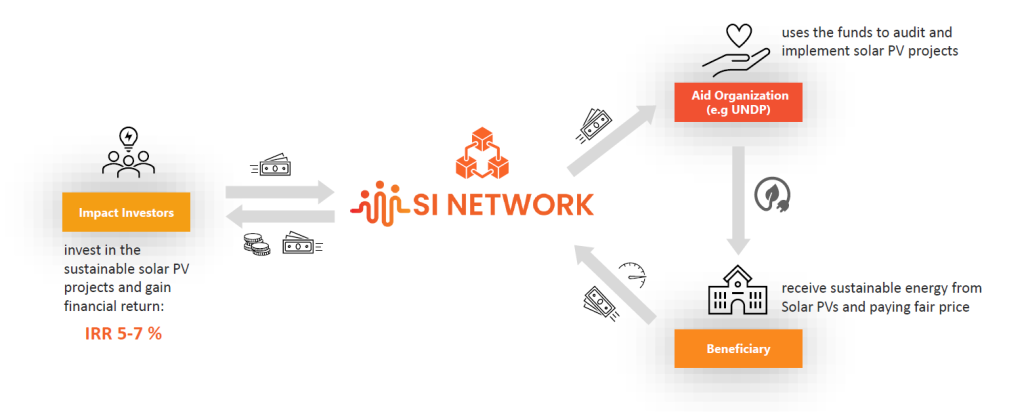
The new impact investment model, called Tokenized Measurable Impact Investment, can engage more people in financing and supporting the social impact project, e.g. electrification with renewable energy, in emerging markets. The interoperability of these tokens with financial institutions such as banks enables its integration into their digital portfolios and provides a wide range of potential for investors.
UNDP Lebanon, as project coordinator, supports vulnerable beneficiaries such as schools and hospitals in Lebanon with site assessment for solar PV plants and by proposing these projects on the platform. The project proposed by UNDP Lebanon is funded by impact investors through SI Tokens, governance tokens of the Social Impact Network. In this way, the project coordinator directly benefits from the sustainable financing model for the solar PV plants and the beneficiaries get easy access to sustainable energy.
This is how it works:
- Step 1. UNDP identifies and makes an assessment plan for renewable energy projects with social impact. The chosen projects are proposed on the Social Impact Network platform.
- Step 2. Impact investors buy the SI Tokens directly through the platform or through banks and become part of Social Impact Network.
- Step 3. Funds are used by UNDP to implement the proposed project. Contractors for the project implementation will be selected through a competitive public tender process managed by UNDP.
- Step 4. The IoT device sends data from the installed solar PV plants via blockchain, and the data is transparently available on the Social Impact Network platform.
- Step 5. The electricity is paid by the beneficiaries to the Social Impact Network, and the payouts are distributed to the impact investors based on the token ownership.
Sebastian Klemm: What have you been developing so far throughout the DLT4EU accelerator programme?
Rawad Rizk: Thanks to the DLT4EU accelerator we have developed a better understanding of tokens and blockchain technologies.
Marina Petrović & Robert Pašičko: As a result of our gain in understanding, we have created a system solution and technical platform together with the Social Impact Network.
Dr. Nikola Markovic: As a result of our weekly meetings with the challenge owners of UNDP & AltFinLab as well as with DLT4EU coaches, we designed a tailored solution, the Social Impact Network, and fully developed it during the DLT4EU accelerator timeline. Early 2021, we will have implemented our solution in an operating environment in Lebanon with real customers.
In addition, we have also created the full legal framework for our Proof of Concept and the next phases. Our Social Impact Network components developed during the timeline of the DLT accelerator include:
- A mobile ready responsive platform tested with end users.
- A fully operational tokenized fund with all functionalities.
- The interconnection of an IoT device placed on the solar PV plants for measuring.
- Blockchain technology for storing impact data like energy produced and the CO2 reduction.
Sebastian Klemm: What particular qualities of the DLT4EU accelerator distinguish this programme in your opinion?
Rawad Rizk: The DLT4EU programme is well organized and structured. The responsible colleagues do a good follow up, which I believe will yield successful results.
Dr. Nikola Markovic: The key quality of the DLT4EU is in an interplay of access to highly skilled mentors, participation in carefully tailored bootcamps, and active contribution in Virtual Field Lab concept. The Virtual Field Labs in particular, as a joint venture between challenge owner and the venture team, is a way to successfully implement cutting-edge technology to overcome a real challenge. In addition, each step during the development was followed and discussed with the mentors so that the Virtual Field Labs were independent in decision making but guided towards successful implementation.
Marina Petrović & Robert Pašičko: One of the particular qualities of DLT4EU is that it is directly supported by the European Commission. Such support is often the biggest shortcoming of similar programmes, which are creative in design but abstract in implementation as they lack the political angle and support on the policy, legal, regulatory and funding fronts.
Sebastian Klemm: Following your participation and insights so far: What evidence of positive impact and benefits of the DLT4EU accelerator do you see already?
Rawad Rizk: I believe the positive impact and benefits will be clear after we finalise the Proof of Concept and implement the first pilot.
Dr. Nikola Markovic: We are in the early stage of the implementation. However, the technical aspect of the PoC is fully tested and it is ready for the market. After realisation of the first pilot project, we are expecting to scale Social Impact Network by including regional UNDP hubs. It is very clear that urgency for new financial inputs in emerging markets can accelerate the whole market of impact investment. Our mission is to further incentivize financial contribution by establishing a new standard for impact investment that guarantees full transparency and inclusiveness. .
Marina Petrović & Robert Pašičko: There may be even potential of scale up for other challenge owners.
Sebastian Klemm: How will you sustain your engagement and project development beyond the final presentations at the European Commission in March 2021?
Rawad Rizk: We are planning to create a partnership with the Social Impact Network team and test our solution within one UNDP country office and later on expand it to other countries.
Marina Petrović & Robert Pašičko: Furthermore, we can see a potential scale up through Tadamon, a NGO empowerment for poverty reduction programme.
Dr. Nikola Markovic: The relation that we have built with UNDP Lebanon during the DLT4EU programme is the foundation for our future cooperation. Our solution has the potential to disrupt the impact investment sector and create tangible social and environmental impact not only in Lebanon but also in other emerging countries. We look forward to seeing this happen.
The following piece was first published on the Proofing Future and was originally published on February 21, 2021.
“We are using distributed ledger technology to help the cooperatives better market and differentiate their products on the back of their sustainability certifications, creating products with provable certification claims and traceability back to their origin. This traceability is then being leveraged to sell “proof packages” containing all this information to downstream buyers, driving more value directly back to a cooperative similar to how impact credits work in other industries,” says Erik Zvaigzne of Convergence.tech as we talk with him, as well as Marina Petrović and Robert Pašičko of UNDP Alt Fin Lab, about their project collaboration in the DLT4EU accelerator programme.
The DLT4EU accelerator programme identifies and connects distributed ledger technology (DLT) entrepreneurs with leading public and private sector organisations for social and public good.
DLT4EU is led by a consortium comprised of Metabolic, Digital Catapult and Ideas for Change, with direct support and advice of the European Commission’s Joint Research Center.
Erik Zvaigzne is VP of Product Innovation at Convergence.tech, a digital transformation and technology development company specialized in digital identity and traceability solutions, with a keen interest in how technologies like blockchain can be leveraged to create sustainability. He leads product development efforts for the company, as well as works with governments and international development organizations globally to help solve problems using emerging technologies. Erik is the venture team lead on the DLT4EU project.
Marina Petrović is the Innovative Finance and Technology Expert at UNDP Istanbul Regional Hub as well as Cofounder of the Alternative Finance Lab (Alt Fin Lab), which is an internal startup, run out of UNDP Istanbul Regional Hub for Europe and CIS. The Alt Fin Lab is exploring how to revolutionize development finance, through innovation, digitalization and technology. Since the Alt Fin Lab launched in 2016, Marina Petrović has been working to provide hands-on technical expertise, advisory support and market intelligence to over 45 UNDP offices, national partners and governments around the world.
Robert Pašičko is the Cofounder of the UNDP Alternative Finance Lab (Alt Fin Lab). He supports innovation in alternative finance mechanisms and in low carbon development in over 40 countries globally. He focuses on finding ways to make green energy affordable through blockchain, crowdfunding and community financing. Robert Pašičko also cofounded the UNDP Crowdfunding Academy, a training program for crowdfunding which has been implemented in over 20 countries worldwide and has created over successful 50 campaigns. He is an evaluator of blockchain projects funded by the European Commission.
Sebastian Klemm: Which deep economic reforms do we need to tackle, in order to arrive at regenerative & intragenerationally just societies that manage to live within planetary boundaries?
Erik Zvaigzne: I think a lot of it has to do with culture and awareness. We are increasingly becoming aware of the actions and impacts we have as people on the planet thanks just to our greater interconnectedness online and discussion of some of the issues in the media, which already feels like it is starting to change the mentality and consumer preferences of the younger generations as they look at things more holistically.
Crisis can spur innovation, and to some extent on the environmental sustainability front. I think, we are starting to see the results of that in some early things like clean energy. Circularity feels like it is up next, given the potential for digital platforms to do the hard work of connecting industries and supply chains together at various levels.
Everyone of course is at a different level of awareness and maturity in that sense globally, and it will take a long time for everyone to get onboard to achieve long and lasting effect. Balanced against the sometimes added cost of “doing the right thing”, if anything needs to change in terms of economic reforms, I would say we need to shift our regulatory landscape to create situations where it becomes more expensive to do the wrong thing and people fall into alignment regardless of their motive. The cost of the impact our products have on our health and our planet should factor into their prices so that people will fall in line regardless of their reasons or motives. Easier said than done, this is a very delicate thing to balance against overall prosperity and economic development in emerging economies for sure, but that is where I think some deregulation of technology innovations and proliferating better technology access can help create new and more sustainable communities.
Marina Petrović & Robert Pašičko: The market is driving producers to adopt unsustainable practices, creating a series of economic, social and environmental problems. The market does not incentivize producers to become sustainable. Brands pledging to be sustainable need to expand sustainable sourcing in order to meet their commitments. In absence of a clear solution, most companies are unable to achieve their target for a sustainable supply chain.
The UNDP United Nations Development Programme is working globally with a wide number of value chains and related commodities. However, more can be done to support the matching between demand and offer. For example, governments could prioritize economic mechanisms that promote the generation of livelihoods and decent and sustainable entrepreneurship. This could be done by introducing smart technologies, like blockchain, and creating decentralized markets which are transparent and efficient and can potentially increase the efficiency of supply chains and positively impact and improve inclusion within the value chain.
Sebastian Klemm: Speaking of the necessary shifts in the regulatory landscape: In a previous interview, David Franquesa elaborates on the EU legislation on Ecodesign – which claims to “further enhance the reparability and recyclability of appliances”.
What enhanced regulatory initiatives do you see already that may nudge both corporate and consumer behavior towards sustainable practices?
Erik Zvaigzne: The European Parliamentary resolution of 22 October 2020 furthering work on the EU legal framework to halt and reverse EU-driven global deforestation is an interesting one in how it will encourage greater accountability, action and transparency in commercial supply chains. By putting the onus on companies to provide proof of compliance with claims such as “deforestation-free”, new levels of traceability and international cooperation will be required to better monitor, track, and prove such assurances using tool sets similar to the one we developed as part of DLT4EU. The emphasis it places on sustainability, production processes and carbon footprint, human rights, and land tenure all require good practices to be followed in the countries of origin, and should naturally create investment in sustainability and development programs in the target countries to help achieve this.
Sebastian Klemm: What particular qualities of the DLT4EU accelerator distinguish this programme in your opinion?
Erik Zvaigzne: The problem-first emphasis. Many accelerators help commercialize an idea but don’t touch the design aspect too much, but DLT4EU left the solution space wide open for ideas on how technology could be adapted and applied to help solve the use cases. Creating a commercial model on the back of it is challenging in this way, but ideation with subject matter experts like this around a problem feels like a strong way to create social innovation and come up with new ideas.
Marina Petrović & Robert Pašičko: The vertical top down support by the European Commission, which is for us at the UNDP a game changer. As we work with and for governments, the solutions that we bring to them need to be more than just a good idea, or solution developed through a hackathon. They also need to be “implementable”, which in a lot of cases is impossible, as solution developers have only covered the “innovation or tech” part, and have not worked in parallel on policies or “restriction” elements.
Sebastian Klemm: Why do you participate in the DLT4EU programme?
Erik Zvaigzne: One of our core focuses at Convergence.tech is on projects that explore the application of technology to create positive social or environmental impact. Sustainable supply chains fit that profile. DLT4EU provided us the opportunity to explore the idea of how traceability can empower smallholder producers in agriculture and others in cooperation with the UNDP AltFin Labs.
Marina Petrović & Robert Pašičko: The United Nations Development Programme (UNDP) is working on “big things”. We are trying to reduce the impacts of climate change, help communities, cities, governments in creating a better world. We call these challenges, 17 in total, the SDGs or Sustainable Development Goals. To fund these and address them, we have a gap: We need around $2.5 trillion per year. To fill this gap, governments and development organisations are trying to rethink their approach, as “business as usual” solutions are not enough anymore. And here comes the innovation part, technology and development. As we live in a digital world, maybe more than ever, development needs disruptive solutions to change the way people live today. From banking for 2 billion people who don’t have access to a bank account, to providing an identity for 1,5 billion people who do not have it, to speeding up access to electricity for 1,2 billion people who live without it. These people don’t have time to wait, and neither do development and the SDGs.
The UNDP mandate is “leave no one behind” and as the SDGs are so ambitious and comprehensive, they require multi-sectoral methods, innovative technologies and financial instruments that can leverage resources from different actors and account for the complexity of the development agenda.
It is the innovation team within UNDP’s Bureau for Programme & Policy Support, specifically its lead regional bureau, Europe and CIS, that has played a key role in accelerating organisational learning on emerging approaches to development. In this context, it has built a portfolio of innovative business offerings that includes:
- Building policy innovation labs within governments as an alternative mechanism for tapping into citizen expertise and assets for policy design and delivery.
- Leveraging alternative financial mechanisms and technologies, such as blockchain, to support entrepreneurship and strengthen competitiveness, as well as promoting understanding of the impact these mechanisms and technologies have on existing regulation and institutional frameworks (regulatory innovation). This service line has given rise to the Alternative Finance Lab, run out of UNDP Istanbul Regional Hub, which has led the design of three challenges under DLT4EU: Digital Impact Currencies, P2P Energy and Track-and-Trace.
- Advising governments on the use of new sources of data for timelier policy response.
- Strategic foresight and R&D aimed at continued market intelligence for new approaches and methods to tackle ‘sticky’ or stubborn development issues.
Sebastian Klemm: What are the societal and environmental challenges that your particular project “Track-and-Trace: Creating Fairer and More Transparent Supply Chains for Women-Owned Cooperatives in Morocco” addresses?
Erik Zvaigzne: Argan oil is a very high value commodity that can be worth over €250 / litre in the EU cosmetics market and is of great economic importance to the rural Moroccan communities that produce it. The primary producers are small, women-owned cooperatives who make less than €25 / litre from the oil that is pretty much ready for sale to the cosmetics market when it leaves their hands. For the coops and their members, the argan oil trade is sometimes the only opportunity for income and employment available to them.
Environmentally, good work is being done around certifications and ecosystem payment schemes that command premium prices and help preserve and grow the argan forests that are so critical to this industry. Proving and marketing these certifications to find interesting buyers willing to pay premium prices remains a challenge.
Despite being so critical to the industry as a whole, the coops who are in fact producing sustainably see a disproportionately small portion of the market value in return for their efforts since they lack broader market access and the ability to differentiate their products among others in the industry.
Marina Petrović & Robert Pašičko: Our project improves the socio-economic inclusion of small and medium-scale female farmer cooperatives, inserting them into a value chain in which their contribution is made visible and fair commercial conditions are guaranteed. On top of that, our project provides a user-friendly mechanism for responsible consumer applications in national and international markets.
Sebastian Klemm: The DLT4EU programme focuses the application of DLTs to the areas of “Circular Economy” and “Digital Citizenship”. How do you apply distributed ledger technologies in your project to help solve these challenges for the public good?
Marina Petrović & Robert Pašičko: We are using it to create a blockchain shared – value ecosystem and platform. End buyers will be able to trace argan oil production and ensure it has been sourced fairly and sustainably. The price will reflect the impact on the ecosystem and the real costs of production and export, with farmers receiving a significantly greater share than through any other method.
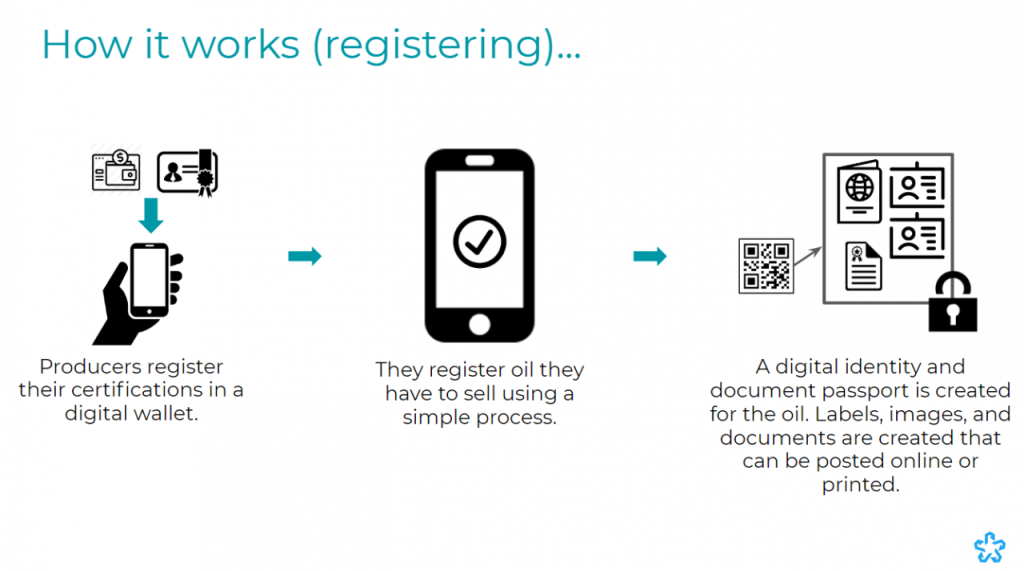
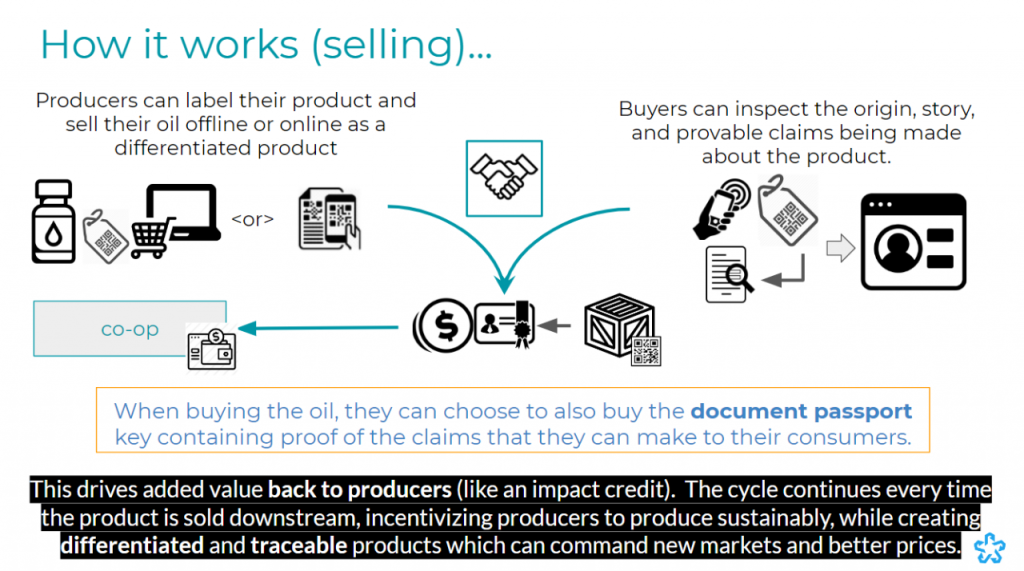
Erik Zvaigzne: We are using distributed ledger technology to help the cooperatives better market and differentiate their products on the back of their sustainability certifications, creating products with provable certification claims and traceability back to their origin.
This traceability is then being leveraged to sell “proof packages” containing all this information to downstream buyers, driving more value directly back to a cooperative similar to how impact credits work in other industries. This is all being done on the back of privacy protecting digital identity wallets and open standard W3C-compliant verifiable credentials, to build an ecosystem around certification-based traceability.
By open sourcing core parts of the platform and basing it on verifiable credentials as a data format, our hope is that this pattern can also be applied to other industries where smallholders have similar challenges that can in turn create fairer and more transparent supply chains in other commodities industries.
Sebastian Klemm: Track and trace may possibly be distinguished according to direction & point in time. Whereas tracing is about following the completed path backwards from its current point to where it began, tracking is about following the emerging path forwards from your starting point to wherever an economic resource currently is.
Could you further elaborate on the interplay of tracking to support the value creation in your application?
Erik Zvaigzne: We are collecting data points that provide both. Registration of the oil by the coop solidifies point of origin information and the beginning of the data record, associated with a cooperative profile, branding information, and any certifications they have. This is traceable by anyone who wishes to inspect the provenance of the oil that is being sold to them, and is a key data point that weigh into purchasing decisions made by commercial buyers, who have specific sourcing standards, certification and information requirements for the oil they purchase.
The present back-and-forth exchange of unverifiable paper documents is something that is made much easier, with high assurance data that can be validated as authentic in real-time by use of our technology.
To end consumers interested in sustainable and ethical purchasing, it also provides an opportunity to transparently see where their goods are coming from and under what conditions and certifications they were produced. We are working on also creating a channel here where consumers can choose to support the cooperatives directly financially as a part of this and looking at meaningful methods in which they can benefit the women and their families.
When the oil is sold to a new buyer, that information, and changes of custody thereafter, is where tracking comes into play as new data is added to the registered oil which enriches the traceability data. Recording this information on a shared digital data platform enables this. Incentive to do this comes by way of purchasable data passports that contain the proovable certification and claims information, which they in turn can use as proof of sustainable sourcing or as a marketing tool to incentivize their buyers and their branding. Branding is the element of importance we are trying to build for these cooperatives as well by equipping them with data and tools to help tell their story and reach new markets. They need to differentiate and promote their product and their certifications to open up new markets and commercial opportunities, and data passports are one way of doing that.
Sebastian Klemm: Can you elaborate on the aforementioned W3C World Wide Web Consortium and what specific relevance its standards compliance for your project development has? Perhaps, how does the application of these standards support your solution in terms of the public good?
Erik Zvaigzne: W3C is one of the leading internet standards organizations in the world. Their Verifiable Credentials (VC) and privacy-protecting Decentralized Identifiers (DID) standards in particular have been very influential in the decentralized identity world as of the last few years in this space, which create the pathways for interoperable cryptographically signed data packages (VCs) and identifiers (DIDs). For instance, both have been used to good effect in the European Blockchain Services Infrastructure (EBSI) project supported by the EU Commission.
What this creates are pathways for interoperability with data systems between vendors, between industry participants, and increasingly between government infrastructure globally so they can all speak the same language and make sense of the signed data packages and identifiers being used in the solution since all these data formats are non-proprietary. This is how basing our solutions on standards like these is beneficial. Others, not just us, can participate in this ecosystem and bring DID-compliant identities or issue certifications and credentials into this traceability platform, which reduces the barrier to participation significantly since we as Convergence.tech are then not a barrier to platform participation to create new data.
Anyone who complies with these standards will know how to create and validate the information that flows into and out of our platform. People can also leverage existing user-owned digital identities and signing functions that will increasingly be in place on the buyer side thanks to broader initiatives like EBSI and some of the digital signing work they are doing.
Sebastian Klemm: Throughout the DLT4EU programme and along the bootcamps with mentoring therein: What have you been developing so far?
Erik Zvaigzne: We have been developing refinements to our existing digital traceability technology and tooling to work for some of the specific needs in the argan oil value chain, as well as exploring what B2C market channels can be created on the back of this to help the cooperatives sell more directly to end consumers and benefit from the high prices the oil commands in international markets.
We see some other opportunities to be able to help with the administration and digitization of some of the underlying certifications programs, which we feel is another opportunity to get more people participating on the platform we are creating.
Marina Petrović & Robert Pašičko: Based on the tech part that Erik explained, we on the UNDP side have been working on the concept of a responsible value chain with the potential to expand its benefits not only in the agroindustry sector, but also to other sectors.
Our DLT4EU project is the first project of its kind in the UNDP Morocco Country Office and will expand UNDP’s expertise in the application of technologies in development. In line with ongoing discussions about UNDP’s role as a key player in innovation for development, as well as with the private sector, this initiative will have a catalytic effect as it will position the organisation in an evolving niche.
Sebastian Klemm: So far, money has been a fundamental building block of the traditional economic paradigm, where economic actors are incentivised to extract natural and social capital in exchange for money.
In a previous interview, Lynn Foster elaborates on the use of tokens as rewards within their DLT4EU project, where spending the tokens in neighborhood businesses encourages local awareness and more cycles of local economic activity, an ‘economic multiplier’ which increases local resilience.
Could you elaborate on realized solutions in other projects you conducted at Alt Fin Lab as well as at Convergence.tech where you applied alternative finance & currencies, impact credits or token to foster socio-ecological regeneration and resilience?
Erik Zvaigzne: We have not done too much work with alternative currencies as of yet in our projects since the regulatory environment needs to be favorable to be permissible at scale, which we are finding to be a very country-specific situation. Even for the Morocco use case, we are likely starting by way of the commerce angle to buy the data passports as being something happening in fiat currency outside of the system and included in the purchase of the oil itself to simplify the situation since the ecosystem to spend any credits accumulated as a digital currency do not really exist in this case since not much goes into the supply side of argan oil beyond purchasing of the seeds for those who do not harvest them themselves.
We are at present designing a project in Ecuador around deforestation-free livestock production where we are exploring the impact credits earned from proovable production, monitored via geospatial data and satellite photos, to take the form of an alternative currency, enabling the purchase of agriculture inputs and supplies from local suppliers as one potential avenue for the value to take. We are exploring this to be backed up initially by REDD+ credit funding and government incentives for good agricultural practices, before then transitioning into a “price premium” model for sustainable production once the market is ready. Keeping the price gap for sustainable production high enough to change behaviour is the balance we are trying to find with this without introducing pathways where the model can be exploited in some way.
In general, tying benefits of some kind to sustainable production, be it on the sell side or buy side, is one element of great interest as a tool to shift markets to sustainable production. Behavioural economics can be powerful. Some of us at Convergence.tech have done work in carbon credit and cap-and-trade markets internationally as well, which is an interesting dynamic we would like to explore building into sustainable agriculture as well. Some of the patterns that appear in those markets, like well intentioned people buying up a supply of credits simply to make things more expensive for heavy polluters, is one thing we have not been able to trial yet in these types of supply chain systems but is compelling to think about. We have some ideas floating around on what we can do here.
Sebastian Klemm: In our preceding interview about DLT4EU, Alice MacNeil says: “One of my favourite experiences was with the Venture Teams as part of a Storytelling Masterclass by Hayley Bagnall of Altus Impact, as part of the Barcelona Bootcamp in November. It was rewarding to see how the teams shifted their narrative about what they were doing, from a technology-first perspective to a more social, impact-driven focus. Not only was it fun, but we learned a lot about how to tell the story of your project and the power of storytelling. DLT can be quite niche, and this kind of approach allows us to tell a better story to a wider audience, to connect DLT4EU to a more public and democratic space.“
What have been inspiring moments to you personally during both your work together as a team & the overall DLT4EU programme so far?
Erik Zvaigzne: Getting to learn more about the intricacies of the argan oil in Morocco and some of the challenges that the cooperatives face by engaging and speaking with some of them directly has been inspiring, both in confirming the realities of the problem and the excitement and potential that exists in helping to solve it through the use of digital technologies. We have met a lot of people in the UNDP Country Office and in the industry who are passionate about social good and making a difference, and the support we have gotten for some of the ideas has been really encouraging.
Marina Petrović & Robert Pašičko: Working with passionate, creative and proactive people the from UNDP Morocco Country Office, Convergence.tech and DLT4EU who have a new mindset that is needed to rethink economics and tackle the 21st-century challenges, namely re-distributing wealth and respecting our planetary boundaries.
Sebastian Klemm: Were there any particular developments in other Virtual Field Lab teams that also helped you?
Erik Zvaigzne: Though, no specific instances are jumping to mind, I can say it has been great in general to be able to share our experience and progress with the other teams to compare, contrast, and learn as we all try to address similar challenges and issues in the realm of deploying technology for social impact. Many creative solutions have come up that make me hopeful for the future of DLT technologies in the post-cryptocurrency boom era of the industry.
Marina Petrović & Robert Pašičko: To understand the context of DLT4EU’s progress and outcomes, it was really helpful to share with other teams and hear their experiences, how they dealt with challenges and what they learned on their journey.
Sebastian Klemm: Following your participation and insights so far: What evidence of positive impact and benefits of the DLT4EU accelerator do you see already?
Erik Zvaigzne: For us, it has made us rethink our approach to traceability in certain use cases to models that don’t require entire consortiums or industries on board to make a difference. It has also connected us with a great team at UNDP Morocco who are committed to making a difference and exploring the potential of our concept and technology in the industry.
Marina Petrović & Robert Pašičko: We see positive impacts internally, where we have new UNDP Country Offices around the world that are interested to work with us and explore blockchain and track and trace, and externally working with the Convergence team on creating a Track-and-Trace platform that could be applicable not only for Argan Oil and Morocco, but also for other commodities, farmers and Country Offices.
Sebastian Klemm: How will you sustain your engagement and project development beyond the final presentations at the European Commission in March 2021?
Erik Zvaigzne: We are aiming to continue our weekly sync-ups and conversations as we progress our idea in an effort to pilot our technology in the field in Morocco and gain further support for our project.
There are a few complementary initiatives happening in Morocco around a new ecolabel payments program and an export promotion platform which have complementary goals to what we are trying to achieve with our project. We hope our technology can be a unifying factor and will be seeking support and further grant or impact funding to help us scale up and extend our technology.
Marina Petrović & Robert Pašičko: We plan to link the DLT4EU Track-and-Trace project with the Tadamon project, where we are working with and empowering Civil Society Organisations (CSOs), including cooperatives and NGOs from 57 OIC Member Countries. Morocco is one of our first pilots.
Now, the idea is to see how to sign up new Country Offices, their local partners in Civil Society Organisations and their products on the Track-and-Trace platform.
The following piece was first published on the AltFinLab blog and was originally published on October 2, 2019.
Why UNDP, the Islamic Development Bank (IsDB), and Islamic Solidarity Fund (ISF) are launching a programme to strengthen NGOs in 57 countries
Many countries in the Muslim world face daunting development challenges. In the Arab region despite steady progress in reducing poverty and boosting health and education, political fragility, instability, and recurrent conflicts present immense stumbling blocks on the course to implementing the 2030 Agenda.
Despite this, many Muslim countries have extended generous support to their neighbours; they represent eight of the top 12 refugee-hosting countries. How do we capitalize on such solidarity and grassroots networks to solve some of the most difficult development issues in countries in the Islamic world?
A year and a half ago, UNDP, IsDB, and ISF forged the ‘ISFD NGOs Empowerment Programme’ to promote citizen participation, increase the sustainability of development programmes, and accelerate progress toward the SDGs. Our belief is that we need NGOs, citizens, philanthropists, and the private sector to complement the work of development organisations and banks.
Traditional financing is also insufficient. We need to tap into innovative financing channels and technological developments. Our initial findings from the world of Islamic Finance, crowdfunding and crowd investing, and the emergence of blockchain technologies, give us a strong foundations on which to build.
IsDB member countries can also provide a springboard. They are set very widely apart, stretching from Morocco to Indonesia. The 57 countries span four continents. IsDB delivers development impact at scale, touching the lives of one out of every five people in the world.
Tadamon: bridging the gap
Together we created Tadamon, which means solidarity in Arabic, and aims to strengthen the role of civil society in development programming. Tadamon connects all actors, large and small, around common goals. It can help bridge the gap between donors and NGOs, bringing more transparency to the former and a more support to the latter.
The role of Tadamon is to serve as a “Trip Advisor” for citizens and the private sector, making it easier to finance the humanitarian and development work of civil society organisations. It will link NGO crowdfunding campaigns and help them use blockchain technologies to mobilize additional financing. These networks exist. We need to make them stronger and reach more people willing to help. Tadamon will link the work and experiences of different NGOs because diversity makes us stronger, better, smarter, and more resilient.
Tadamon will also help map, screen, and categorize national NGOs and CSOs in IsDB member countries, depending on the nature of their work, and matching them with specific needs on the ground. To help NGOs get visibility for their work the project will include communication, management, and accountability training.
We are rounding up both the usual and unusual suspects. So far, more than 20 new partners have joined forces with us, including large development banks, impact hubs, crowdfunding platforms, and blockchain start-ups.
______________________________________________________________________________________
Support from the following organizations is provided by AfDB, AlQuds Fund and Endowment, CSR Network, BADEA, Humanitarian Leadership Academy, Save the children, SPARK, SESRIC, Fonbulucu, Impact HUB Istanbul, World Congress of Muslim Philanthropist, KUSIF, and IslamiChain.
In 2018 the UNDP Innovation Facility issued a Call for Proposals to promote development through the innovative use of Artificial Intelligence, big data, behavioural insights and impact financing. A record of more than 195 proposals were received, and 29 winners chosen from 35 countries. UNDP Lebanon, UNDP AltFinLab and its partners won with a proposal which will help to reinvigorate the country’s ancient cedar forests.
The Syria crisis has placed a great strain on its immediate neighbour Lebanon. The country of just over six million has taken in more than a million refugees in the past seven years. Its infrastructure, public finances, and environment are suffering as a result, and Lebanon doesn’t have the money to cope. According to the World Bank, in 2015 alone Lebanon lost $US5.6 billion—more than 11 percent of its GDP.
The diaspora has stepped in to help.
The estimated 10 million Lebanese who live abroad play a vital role in the country’s economic health. According to the Ministry of Foreign Affairs and Emigrants, they sent home US$7.9 billion in 2017.
Helping ‘home’ from abroad
UNDP is making it easier for the Lebanese diaspora to participate in programmes that benefit the country.
Since its launch in 2009, Live Lebanon has implemented 67 projects and raised US$4.2 million from Lebanese communities abroad. From education to environment, it has tapped into various aspects of society through development and awareness projects.
Ensa Joura, one of Live Lebanon’s most successful campaigns, fixed more than 6,000 potholes reported by citizens around Lebanon and reduced the number of road accidents. Live Lebanon also launched volunteering programmes to clean beaches, seas, waterfalls, rivers, and forests, engaging more than 5,000 volunteers in a single year. Recently, it has been working on solving a protracted problem: 25 million hunting cartridges are dropped in forests every year, causing fires, damaging crops, and polluting groundwater. The team, together with the support of university students, built a separating and recycling machine to help manage used cartridges. In the coming weeks, Live Lebanon will launch a Motor Ambulance project with Lebanese Civil Defense in the hopes of reducing the number of casualties from road accidents.
Matching crypto currency with cedar trees
To strengthen and broaden such development efforts, Live Lebanon continuously explores new ideas.
Now it’s expanding into alternative financing. Crowd investing will encourage more private funding and allow contributors to invest in a crypto currency called CedarCoin.
Backed by blockchain technology, CedarCoin will promote the reforestation and protection of Lebanon’s ancient cedar forests, the symbol of the country.
Mentioned in the Mesopotamian Epic of Gilgamesh, the forests were placed on the list of UNESCO World Heritage Sites in 1998.
The trees are slow growing and famously long-lived; they can survive for more than 1,000 years. They once thickly covered Lebanon’s mountains, but have suffered from extreme deforestation, and only small remnants of the original vast forests survive.
Planting new cedar trees will not only rebuild the once flourishing forests but will also provide promising opportunities for the economy as well as for agriculture and health. As the cedar tree represents Lebanon, replanting these trees will symbolize investing in the growth of the country.
Rewarding environmentally conscious behaviour
One CedarCoin will be assigned to a specific tree. For each tree planted, a CedarCoin will be distributed to its investor and to the communities hosting the trees; encouraging reforestation and rewarding environmentally-conscious behaviour. CedarCoin will raise money to buy more trees and finance replanting programmes.
In future, CedarCoin owners will be able to ‘adopt’ a specific tree, and see its location and GPS coordinates.
CedarCoin will also be used to promote solar photovoltaic technology—allowing supporters to invest in solar panels to replace carbon-generated power. Investors will be paid in CedarCoins equal to the electricity and the income the panels generate.
Live Lebanon’s mobile app, Lebanon Connect, will be expanded to enable direct contributions to crowd investing campaigns. Participants will be able to buy CedarCoins through digital wallets such as Lykke, a Swiss-based free exchange global marketplace.
For as little as US$20, Lebanese expatriates will be able to digitally connect to their home country as well as to a community of investors and public and private sector organizations, and ensure that the trees that have stood as the symbol of their country for thousands of years have a healthy future.
Read original article.
The following piece was first published on the AltFinLab blog and was originally published on October 19, 2018.
With a financing gap of 2.5 billion dollars to implement the Sustainable Development Goals and two out of every six people in the world without access to a formal bank account, innovative financial mechanisms represent an alternative to close the financial gap and promote sustainable development.
This is said by the team of experts in alternative finance of the United Nations Development Program (UNDP), Marina Petrović and Robert Pasicko. They run the Alternative Finance Lab (AltFin Lab), an initiative created in 2016 to explore and take advantage of new financial technologies and mechanisms to access investment.
[blockquote author=”” link=”” target=”_blank”]Due to the increasingly changing world of today, governments, citizens and development actors must adapt quickly, understand better advanced technologies and learn how they can be used in the best way for the benefit of society in general.
– Robert Pasicko, UNDP Alternative Finance Lab[/blockquote]
The AltFin Lab experts visited Panama at the invitation of the UNDP Country Office. Their purpose is to learn about advances in innovation with practical cases, and thus be able to exchange with organizations that are already promoting blockchain, fintech and crowdfunding initiatives, such as the City of Knowledge, the Panamanian Chamber of Technology (CAPATEC) and the Authority for Government Innovation (AIG).
The UNDP AltFinLab team and the UNDP Environment and Sustainable Development area in Panama organized a session to exchange experiences, challenges and opportunities, as well as an interactive workshop led by UNDP experts, in which representatives of the UN Environment also participated. There were also participants from the Inter-American Development Bank (IDB), the World Bank (WB), the AIG, the Panama Canal Authority (ACP), and private sector initiatives that are currently innovating in Panama.
Working groups were formed and ideas with development potential were created to catalyze resources through new technologies. “It is expected that new technologies such as blockchain, crowdfunding, social impact bonds, among others, will change the global financial system, and the development issues will not remain immune to these trends”, Petrović sums up.
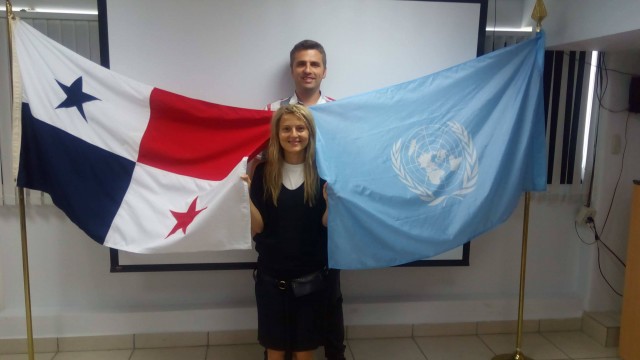
As an organization present in more than 170 countries and territories, UNDP aims to consolidate as an articulator between key stakeholders with needs to advance in sustainable development and change makers of technological innovation through multi-stakeholder platforms that allow concrete, agile and accessible solutions that help improve the quality of life of people.
[blockquote author=”” link=”” target=”_blank”]In a context of global financial challenges it is important that the organization develop a new generation of ideas tested in practice, easily adaptable to local contexts, to reach innovative financing strategies
– Jessica Young, National Officer for Environment and Sustainable Development, UNDP Panama[/blockquote]
In the same way, Marina Petrović, from the UNDP Innovation team, explains that “to create an innovative alternative financing strategy for UNDP, it is necessary to consolidate the expertise of the country offices. The easiest way would be to couple UNDP country offices with local partners and empower them for their own alternative financing projects”.
An example of alternative finance is the Development Impact Bonds, investment instruments based on payment by results. The infrastructure specialist of the World Bank, Inga Afanasieva, explains that under this type of financing, the reimbursement to investors depends on the achievement of specific social results, which translates the investment risk from the public to the private sector. According to the specialist, these bonds have the potential to improve the effectiveness of development aid and profitability by changing the focus towards the quality of implementation and the delivery of successful results.
[blockquote author=”” link=”” target=”_blank”]The crowdfunding is at the origin of all modern development platforms. When we turn to platforms, we direct the money where it is most needed. People can select the best ideas and vote for them. Governments and donors can channel the funds raised, financing projects that citizens support.
– Marina Petrovic, UNDP Alternative Finance Lab[/blockquote]
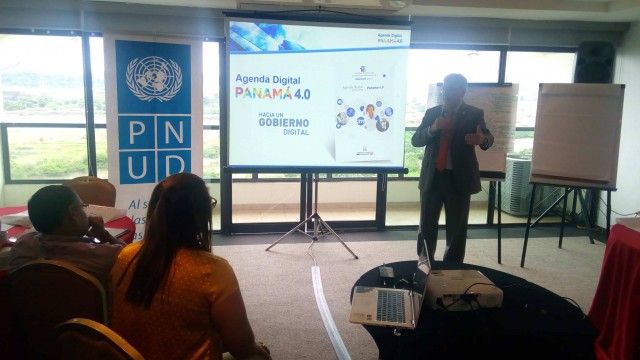
Since 2015, AltFin Lab has conducted 35 crowdfunding campaigns and managed to mobilize more than 1.2 million dollars. The field offices are working on campaigns valued at 7 million dollars, according to the experts.
The blockchain is one of the technologies with the greatest potential for development. It offers possible solutions to a wide range of issues, including the conservation of natural resources, economic growth and financial inclusion and security, areas in which UNDP has begun to work globally.
Participating institutions
Fundación Ciudad del Saber, Cámara Panameña de Tecnología (CAPATEC), la Autoridad para la Innovación Gubernamental (AIG), ONU Ambiente, Banco Interamericano de Desarrollo (BID), Banco Mundial (BM), la Autoridad para la Innovación Gubernamental (AIG), la Autoridad del Canal de Panamá (ACP), Municipio de Panamá, Banesco, Consejo Nacional Empresa Privada (CONEP), Corporación La Prensa, Fortesza and Redoxigen.
UNDP AltFinLab partnered with Blockchain.com, UN Refugee Agency (UNHCR), and the World Economic Forum (WEF) to explore how block chain technology works, but also how it is already being used to pursue conventional ends. The culmination of that partnership is in the form of a white paper titled, The Future is Decentralised.
We’re excited to share how this technology has brought new levels of efficiency and effectiveness to the fields of development aid, supply chain management, renewable energy, economic growth, and several others.
The potential of block chains to disrupt industrial sectors, commercial processes, governmental structures or economic systems seems to know no bounds. We suggest that the transformative power of block chain technology should not be seen as a threat to existing systems of governance; rather, it should be seen as an opportunity for national and international institutions to defend the rights of those they represent and to accelerate our collective progress towards meeting the United Nations’ Sustainable Development Goals.
Block chains can bring transparency to opaque or corrupt systems, and verifiability and immutability to commercial processes. They can bring security and resilience to vulnerable infrastructure, ensure individual privacy whilst guaranteeing autonomy, and encourage cooperation and engender trust where they are needed most.
Block chains can ease the frictions that prevent a vast array of sustainability, humanitarian, and environmental initiatives from fulfilling their potential.
This white paper explains how this unconventional technology works and how it is already being used to pursue conventional ends. It illustrates how block chains have brought new levels of efficiency and effectiveness to the fields of development aid, supply chain management, renewable energy, economic growth, and several others.
Our aim has been to show how governments, NGOs, and citizens are working together, exploiting the versatility of block chain technology to form new, powerful partnerships. We address the risks posed by this nascent technology and suggest how these risks should be managed.
[highlight background=”” color=””]To learn more download the report.[/highlight]