Category: Innovative finance
In Tashir, Armenia, the need is clear: the city’s drinking-water system requires rehabilitation. But the route to financing is less straightforward. Before engaging an external funder, the city needs clarity on technical scope, who will operate and maintain the system, national funding availability, and how much of the investment can realistically be supported through public resources. Until those questions are resolved, an investment affecting something as basic as reliable drinking water can remain stuck between local priority and financing.
Secondary cities, like Tashir, often know what they need. Development banks and other financing institutions are looking for projects worth backing. Yet the two still struggle to meet. Funding availability and the shortage of sufficiently prepared projects are part of the problem, but so is a deeper mismatch between how secondary cities develop investments and how development finance reaches them. Closing that gap requires stronger projects and financing approaches that fit the scale, economics and institutional realities of secondary cities.
In practice, innovative city finance is often more about connecting the right actors with suitable funding than inventing a completely new financial instrument.
UNDP’s City Finance Advisory Function (CFAF) works in this space to accelerate city investments. Launched through the European Union-funded Mayors for Economic Growth initiative and the City Experiment Fund, with support from Frankfurt School of Finance & Management and Climate Policy Initiative, it is working with six municipalities in Armenia, Moldova and Ukraine.
There is no single investment-readiness package
One of the clearest lessons from the first cohort is how different municipal investment pipelines can look. Some projects arrived with studies, indicative cost or a reasonably clear national funding route. Others addressed equally important priorities but still needed to establish what to build, who would operate it, how much it might cost and what kind of funding could realistically support it.
A water project, transport system and industrial park may all be worthwhile investments but won’t follow the same route to finance. Some may depend primarily on public budgets or grants. Others may be able to bring in development-bank finance earlier. A few may attract commercial financing for particular components.
The practical question becomes: what still needs to happen before financing institutions can engage, and who needs to be involved?
Important financing barriers appear long before a large loan or investment is discussed
Development banks and donors often expect early studies, credible costs and structured project documentation before considering a project. Yet municipalities can struggle to finance or procure those relatively small preparation costs.
Targeted technical assistance and relatively small project-preparation grants can determine whether a much larger financing conversation becomes possible later.
Before financing solar power and battery systems for municipal water pumping stations, Kryvyi Rih, Ukraine, needs to decide which assets to prioritize and why. In Trostyanets, Ukraine, the educational and cultural centre will likely need a combination of public or recovery funding, donor support and potentially separate financing for energy-efficiency measures.
CFAF helps cities strengthen their project pipelines, develop priority investments and engage the right institutions earlier. National authorities and public-finance channels may be the logical starting point, while Trostyanets, for example, may require several different sources of support.
Cities remain central to that process. They need to own the project, validate the underlying information and secure decisions or approvals that only they can provide. External advisers can structure, model and open doors, but they cannot replace municipal ownership, or the institutional support needed to move a project forward.

Photo: Kryvyi Rih City Council

Photo: Depostphotos
Better-prepared cities are only half the answer
Many secondary cities also face constraints that better documentation alone cannot solve.
Local revenues may be limited and fiscal autonomy restricted. Borrowing usually requires national approval, guarantees or sovereign participation. Individual projects can also be relatively small compared with the scale at which major international financial institutions usually operate.
For public-service infrastructure, economic and social value can far exceed direct financial returns. Public transport can improve access to jobs and services without generating enough fare revenue to support conventional commercial lending. Water, wastewater, social infrastructure and resilience investments can face similar economics.
These realities also create a role for financing institutions to adapt. Early support can help cities prepare projects before they seek major financing; grants and loans can be combined for public-service projects that cannot rely on commercial finance alone. Smaller investments can be grouped into larger programmes that financing institutions find easier to support.
Development banks can also design financing around municipal realities rather than expecting every city to fit an existing product. Dedicated municipal credit lines could combine grant-funded project preparation with longer repayment periods, appropriate grace periods, guarantees or risk-sharing. Where individual projects are too small, financing could be organised around portfolios of similar municipal investments rather than assessing each one separately.
The financing conversation therefore also needs to reflect how secondary cities actually operate and seek closer collaboration with national governments and financiers.
Innovation may be less exotic than it sounds
“Innovative finance” often brings to mind sophisticated new instruments. For coy secondary-city projects, the most useful innovation may be combining familiar funding sources in a smarter sequence.
A project may begin with technical assistance to complete a study, move to municipal or national co-financing, and then bring in development-bank or donor support for particular components. Commercial finance may suit one revenue-generating part of a project rather than the whole investment. Several smaller projects may become easier to finance when grouped into a larger programme.
Through CFAF, we’re already putting these approaches in practice: earlier project preparation, stronger municipal pipelines, different financing routes for different types of projects, and combinations of public, donor and development finance where a single source is unlikely to be sufficient.
Through its relationships with municipalities, national governments and public institutions, UNDP and the EU can help connect local priorities with policy decisions and financing partners, while bringing in specialist financial expertise where it is needed. Frankfurt School brings the financing perspective, and municipalities bring the knowledge and ownership of their own priorities.
CFAF’s longer-term goal is for cities to develop stronger pipelines, better relationships and a clearer ability to navigate the next investment on their own.
Cities and financing institutions need a shared understanding of what makes a project viable, which type of funding fits it and what needs to happen next. Over time, that relationship also needs to become less transactional and more continuous.
The real test of innovative city finance will be whether it can make ordinary but essential investments, from water and transport to energy and local infrastructure, easier to fund in the places that need them most.
This is joint article by Collaborating Centre for Climate and Sustainable Energy Finance, Frankfurt School of Finance & Management and UNDP’s Regional Bureau for Europe and Central Asia.
Reposted from UNDP Europe and Central Asia.
ISTANBUL, 16 October 2026 – The United Nations Development Programme (UNDP), through the Mayors for Economic Growth (M4EG) Facility, funded by the European Union, and the City Experiment Fund (CEF), funded by the Ministry of Finance of the Slovak Republic, is launching a new Call for Interest for the Innovative Finance Challenge (IFC). The initiative will support municipalities in Armenia, Moldova, North Macedonia and Ukraine in designing and implementing innovative financing solutions to address local development challenges.
The IFC will provide cities with technical and financial support to test and implement innovative financing mechanisms tailored to their local needs. These may include but are not limited to revolving funds, community co-funding platforms, municipal asset management and monetization, property tax enhancement, municipal bonds and community land trusts. Municipalities may also propose their own innovative solutions.
The financing solutions proposed under the IFC are expected to respond to a concrete financing bottleneck faced by the applicant municipality, rather than serve as a generic revenue-generation tool. Such bottlenecks may relate, for example, to municipal revenue, access to finance, private-sector engagement, community participation or investment readiness. By addressing one or more of these bottlenecks, the proposed solution should enable investment in one or more areas of local development.
Selected municipalities will receive tailored technical advisory support and financial assistance of up to US$20,000 per city to help design and implement their innovative financing mechanisms. Participating municipalities will be required to provide co-financing equivalent to at least 10% of the financial support received from IFC, either in cash or in-kind.
The deadline for applications is 13 November 2026. Selected municipalities will participate in the Challenge from January to November 2027.
The Call for Interest Guidance Note, eligibility criteria and application materials are available via the link.
Background:
CEF works with municipalities across Europe and Central Asia to tackle complex urban challenges through strategic innovation and experimentation with financial support of the Ministry of Finance of the Slovak Republic. The M4EG Initiative was launched by the European Union in 2017, and it has been continuously funded by the EU since then. Since 2021, the initiative has been managed by UNDP, in close cooperation with the EU, local authorities and various partners.
For media inquiries:
CEF: Svetla Baeva, Strategic Communications Lead, Innovation & Digital Team, svetla.baeva@undp.org
M4EG: Anton Sydorenko, M4EG Facility Communications Lead, anton.sydorenko@undp.org
NEW YORK — [September 25, 2026] — Circle Foundation, a philanthropic initiative supported by Circle Internet Group, Inc.’s (NYSE: CRCL) 1% equity commitment, the United Nations Development Programme (UNDP) and the World Food Programme (WFP), today announced two initiatives to improve digital payments for development and humanitarian action.
The initiatives will explore how digital payments and improved digital financial infrastructure can help international organizations move resources, deliver support more efficiently and advance financial resilience and inclusion.
“Around the world, the need for humanitarian aid keeps growing while the resources to meet it are stretched thinner than ever,” said Elisabeth Carpenter, Chief Strategic Engagement Officer, Circle, and Founding Chair, Circle Foundation. “If we can help humanitarian and development institutions move value faster, more transparently, and at lower cost, we can ensure more of every aid dollar actually reaches the people who need it. Circle Foundation’s support for UNDP and WFP is about strengthening the shared infrastructure powering these organizations so that life-saving and life-sustaining aid reaches people in crisis faster, without the delays and costs of outdated systems.”
Enabling UNDP to move from pilots to programme delivery
Circle Foundation’s grant will enable UNDP to establish and operate the Digital Asset Innovation Pool, a new mechanism designed for the responsible use of digital assets via regulated payment stablecoins in development programmes to accelerate delivery.
The work builds on digital payment solutions piloted through UNDP’s Sustainable Development Goals (SDG) Blockchain Accelerator, a global initiative led by the Alternative Finance Lab that develops and scales practical solutions using blockchain, AI and other emerging technologies to advance the SDGs. The pilots tested digital Cash-for-Work payments in Aleppo, Syria; disbursements designed for low-connectivity conditions in Haiti; a remittance-linked community investment model in Guatemala; and mobile wallets connected to existing cash-agent networks in The Gambia. The Digital Asset Innovation Pool will build on these lessons by helping Country Offices move from individual pilots to regular programme delivery, with structured implementation support, regulatory and operational guidance, beneficiary safeguards, and tools to track delivery time, cost and reach.
“Getting resources to people should not be the most difficult or expensive part of delivering a programme. The Digital Asset Innovation Pool will support UNDP in using digital payments responsibly to make last-mile programme payments faster, more affordable and easier to access – especially for people underserved by conventional banking. We want to make sure more of every dollar reaches the people and communities it is meant to support,” said Robert Pasicko, Team Lead, UNDP Alternative Finance Lab.
The Pool is not intended to replace established banking channels. It will provide an additional option for contexts in which conventional payment systems create significant costs, delays or barriers to access.
Supporting WFP’s shared humanitarian payment infrastructure
A separate grant from Circle Foundation to World Food Program USA will support WFP and the WFP Innovation Accelerator in building the institutional infrastructure needed to deploy and scale regulated, stablecoin-enabled payments.
The funding will support the underlying systems that make stablecoin adoption sustainable: governance and risk frameworks, treasury and reconciliation systems, and compliance tools built to hold up across multiple country operations. It will also fund local fintech and mobile money integration, along with independent, sector-wide research on cost, speed and operational feasibility – giving the broader humanitarian sector its first real benchmarks on stablecoin-enabled payments.
Over the next three years, WFP will test two to three country corridors connecting WFP payments with local financial providers and markets, generating evidence on efficiency, transparency and resilience for WFP and the wider humanitarian sector.
“Digital payments have the potential to make humanitarian assistance faster, more efficient, and more resilient, while also fostering greater financial inclusion for the people we serve. Circle Foundation’s support enables us to explore regulated stablecoin-enabled payment solutions in real-world contexts and build the evidence, partnerships, and infrastructure needed to scale responsibly,” said Bernhard Kowatsch, Director, WFP Global Accelerator and Ventures.
The new contributions expand Circle Foundation’s support for digital financial infrastructure across the UN system. In 2021, the Digital Hub of Treasury Solutions (DHoTS) was launched by UNHCR as a shared platform to modernize financial infrastructure across the UN system, bringing together 15 participating organizations, including UNDP and WFP. In January 2026, Circle Foundation announced its first international grant in support of DHoTS to streamline financial transfers, reduce costs and improve transparency.
About Circle Foundation
Established by Circle Internet Group in 2025, Circle Foundation is a donor-advised fund managed by Fidelity Charitable. It advances financial resilience and inclusion through strategic grantmaking and systems-level investments. Seeded by Circle’s Pledge 1% equity commitment, the Foundation directs financial resources and expertise toward creating lasting economic impact.
About the United Nations Development Programme
UNDP is the leading United Nations organisation fighting to end the injustice of poverty, inequality and climate change. Working with our broad network of experts and partners in 170 countries, we help nations to build integrated, lasting solutions for people and the planet. UNDP Alternative Finance Lab is a UNDP initiative that connects finance, innovation, and emerging technologies to explore, test, and scale new approaches for sustainable development.
About the World Food Program USA and the WFP Innovation Accelerator
World Food Program USA, World Food Program USA, a 501(c)(3) organization based in Washington, D.C., proudly supports the mission of the World Food Programme (WFP) by mobilizing American policymakers, businesses and individuals to advance the global movement to end hunger. The WFP Innovation Accelerator was launched by WFP in 2015 to source, implement and scale high-impact innovations. From its base in Munich, Germany, the WFP Innovation Accelerator has grown to become one of the world’s leading social impact startup accelerators. In 2025, the WFP Innovation Accelerator ran 14 programmes addressing a wide range of social impact and sustainability issues. Its portfolio, comprising over 85 innovations and 29 alumni projects, reached 132.5 million individuals across 75 countries and territories. In total, WFP Innovation Accelerator supported ventures have catalysed over USD 383 million in funding since 2015.
The United Nations Development Programme (UNDP) in Europe and Central Asia has published the 2025 Annual Report for the Slovak Transformation Fund (STF), highlighting how cities across the region are strengthening their capacity to manage complex urban transitions and connect local priorities with innovation and emerging pathways to finance.
Funded by the Ministry of Finance of the Slovak Republic, the STF entered the first year of its new 2025–2028 phase by moving the strategic direction established in 2024 into municipal practice. Its two core initiatives – the City Experiment Fund (CEF) and the BOOST impact acceleration programme – also became more closely connected, linking challenges identified by cities with potential solutions, partners and financing opportunities.
Through CEF, which supports municipalities in addressing complex urban challenges through strategic innovation and experimentation, ten cities in Armenia, Kosovo[1], Montenegro, North Macedonia and Ukraine completed a shared process of community listening, sensemaking, portfolio development and early option design. This helped them understand how challenges such as energy resilience, air pollution, waste, land use and economic transition intersect, and identify portfolios of interventions that could address them.
Across the ten cities, 319 residents and local stakeholders shared their experiences and priorities, helping municipal teams ground their work in local realities. More than half of those consulted were women, while over a third were from groups identified locally as facing greater vulnerability.
In Stepanavan, Armenia, a circular-transition portfolio moved into early operation: reusable sorting bags were distributed to 100 households, 30 public bins were installed and around two tons of sorted waste were collected. In Podgorica, UNDP and the city signed a memorandum of understanding, prepared a Disaster Risk Reduction Strategy and Action Plan, and designed a heat-island mitigation pilot with the University of Montenegro. In Pljevlja, more than 50 young people took part in a summer school and ideation labs linked to the city’s just transition, while agreements were prepared to take forward studies for a Green Jobs Training Centre and more energy-efficient public lighting. In Kovel and Nizhyn, city teams continued developing energy-resilience portfolios despite continued effects of the war in Ukraine.
BOOST complemented the city-level work by identifying and preparing potential responses to urban and green transition challenges. The Urban Future Finance Challenge graduated 16 ventures, brought 11 to Demo Day and awarded three US$10,000 innovation prizes. Green Urban Tech attracted 262 applications from more than 30 countries and selected 15 organizations for its sprint phase, building a pipeline of solutions spanning air-quality monitoring, urban management, emissions tracking, circularity, biodiversity and citizen participation.
The report also captures the knowledge generated through this work. The Twin Transition Stencil and related tools provide a practical way for cities and development practitioners to connect green and digital change with systems thinking, portfolio development, innovation and finance readiness.
At the same time, the report reflects on political change, limited municipal capacity and the effects of war. The experience of 2025 reinforced the importance of senior leadership, institutional ownership, flexible support and realistic implementation pathways tailored to each city’s circumstances.
For the next years, the report recommends deepening engagement with mayors and senior officials, converting existing portfolios and financing pipelines into more clearly sequenced activities, and strengthening cities’ ability to assess and engage with artificial intelligence through the newly launched CEF × AI cohort.
[1] References to Kosovo shall be understood in the context of United Nations Security Council resolution 1244 (1999).
Istanbul, 06 July 2026. The United Nations Development Programme and the Stellar Development Foundation have signed a new agreement that carries their joint work on blockchain-based digital payments into its next phase, moving from a set of proven pilots toward a standing capability that UNDP country offices can draw on as a regular part of how they deliver programmes. Coordinated by the UNDP Alternative Finance Lab (AltFinLab) at the Istanbul Regional Hub, the agreement shifts the focus from testing the technology in specific contexts to putting in place the institutional conditions under which it can be used at scale.
The decision to scale follows sixteen months of joint work, during which the two partners researched the use of digital payments across seventeen countries, consulted UNDP country offices and stakeholders, and implemented live pilots in Haiti, Syria, Kenya, Guatemala, and The Gambia, with two further solutions developed to a working prototype in Colombia and Papua New Guinea. In parallel, the Sustainable Development Goals Blockchain Accelerator, strategically led by UNDP AltFinLab, matched a cohort of payment solutions built on the Stellar network with real UNDP programme challenges, producing a portfolio of graduated solutions with documented pathways to scale within existing country office programmes.
These pilots produced concrete evidence rather than promising projections. In Aleppo, UNDP delivered Cash for Work stipends to beneficiaries digitally and recorded every transaction on-chain, which reduced the estimated cost of distribution from about 10 percent of funds under conventional methods to about two percent, with every participant receiving and cashing out their payment. In Haiti, a pilot built for low connectivity continued to function with a 100 percent success rate, even when the cellular network failed entirely during testing, settling payments almost instantly under the conditions that communities actually face. Across all of the pilots, programmes gained something they had not had before, which is a traceable record of where money went.
Earlier in 2026, UNDP featured part of this work in the report New Tech, New Partners: Transforming Development in the Digital Era, which set out why reliable digital payment infrastructure matters for financial inclusion, for remittances, and for reaching people in fragile and conflict-affected settings that traditional financial systems sometimes fail to reach.
The new agreement turns these results into a capability that does not depend on any single project or funding cycle. Over the coming period the two partners will establish the governance, onboarding, and safeguards that allow UNDP to adopt digital payments responsibly, move validated solutions from the existing pipeline into active use, extend the same infrastructure across different categories of UNDP programming – from humanitarian response to social protection and financial inclusion – and consolidate the evidence and operating guidance that the service needs to continue and grow within the development system.
Throughout this phase, the Stellar Development Foundation will provide technical advisory support and coordination across the Stellar ecosystem, including expertise on the network and its protocols, and engagement with the solution providers operating within the UNDP pipeline, while UNDP will retain responsibility for delivery and implementation.
Robert Pasicko, UNDP Alternative Finance Lab, said: “We have shown that digital payments can reach the people that conventional systems miss, and in some of the hardest places to operate. The work now is to make that capability ordinary, so that a country office can use it with confidence as part of how it already works, rather than treating each deployment as an experiment.”
Candace Kelly, Chief Legal Officer, Stellar Development Foundation, said: “These pilots showed what open, public blockchain infrastructure can do when it is built around the realities of the last mile. We are proud to continue this work with UNDP and to help turn a set of successful pilots into a durable part of how development and humanitarian finance is delivered.”
The agreement runs through 2027 and will conclude with a consolidated evidence base, a scaling playbook, and a formal handover, so that the capability outlasts the partnership that created it.
About the United Nations Development Programme
The United Nations Development Programme (UNDP) is the leading United Nations organization fighting to end the injustice of poverty, inequality, and climate change. Working with our broad network of experts and partners in 170 countries and territories, we help nations to build integrated, lasting solutions for people and planet. Learn more at undp.org or follow at @UNDP.
About UNDP Alternative Finance Lab
UNDP Alternative Finance Lab develops new financial approaches, instruments, and partnerships that expand the resources available for sustainable development. Its work on blockchain based digital payments is part of a wider effort to make development and humanitarian finance faster, more transparent, and more inclusive. The Lab is hosted at the UNDP Istanbul Regional Hub.
About the Stellar Development Foundation
The Stellar Development Foundation (SDF) is a non-profit organization that supports the development and growth of Stellar, an open-source network that connects the world’s financial infrastructure. Founded in 2014, the Foundation helps maintain Stellar’s codebase, supports the technical and business communities building on the network, and serves as a voice to regulators and institutions. The Foundation seeks to create equitable access to the global financial system, using the Stellar network to unlock the world’s economic potential through blockchain technology.
The United Nations Development Programme (UNDP) will convene Scaling Blockchain for Public Good, a two-day high-level event bringing together blockchain ecosystem leaders, governments, development organizations, and academic institutions to explore the practical pathways through which blockchain technologies can strengthen public systems and support sustainable development. The programme is organized by UNDP’s Alternative Finance Lab (AltFinLab), a flagship initiative focused on exploring and scaling innovative financing and technology solutions for sustainable development.
The programme will take place across two days in Paris. On 3 June, UNDP will participate in Proof of Talk 2026 at the Louvre Palace (Musée des Arts Décoratifs) – one of Europe’s leading blockchain gatherings – to advance the conversation on blockchain for development with ecosystem leaders. On 4 June, the programme will continue at Sciences Po, co-organized with the Sciences Po Tech & Global Affairs Innovation Hub, with a focus on government engagement and responsible blockchain adoption in public systems.
Blockchain technologies are increasingly demonstrating their potential to foster cooperation in low-trust environments, strengthen digital public infrastructure, and expand access to financial and non-financial services for those furthest behind. Yet developing and scaling these solutions where they are most needed remains a challenge. Closing that gap requires new partnership models that connect technical innovation, development experience, and public sector engagement to deliver development outcomes at scale.
3 June | Proof of Talk, Louvre Palace
UNDP will host two sessions at Proof of Talk – one of Europe’s leading gatherings in the blockchain and digital asset space, with approximately 2,500 senior decision-makers from across the ecosystem.
UNDP will formally launch the Blockchain Advisory Group (BAG) – a senior-level advisory mechanism convening leading blockchain organizations to inform how blockchain technologies can support sustainable development and public-purpose digital transformation. The BAG formalizes UNDP’s engagement with the blockchain ecosystem into a structured, ongoing advisory relationship, designed to explore what partnering differently for development at scale can look like in practice. The inaugural, closed session will focus on financial inclusion and digital finance – where the need is most urgent. Despite significant progress, 1.3 billion adults worldwide remain without access to formal financial services, and close to one billion lack the digital identity needed to access them.
The second is the SDG Blockchain Accelerator Impact Showcase – an open session part of the Proof of Talk programme. The SDG Blockchain Accelerator is UNDP’s global initiative to scale blockchain and AI solutions in support of the Sustainable Development Goals. Selected solution teams will present on-the-ground work across financial inclusion, digital identity, climate resilience, and public service delivery, in a demonstration and networking session. The session will also preview the upcoming launch of Cohort 3 of the Accelerator – an opportunity for solution makers, technical partners, and ecosystem actors to explore collaboration with UNDP on scaling blockchain solutions for development.
Registration for the Impact Showcase is available here.
4 June | Sciences Po, Paris
Co-organized by UNDP AltFinLab and the Sciences Po Tech & Global Affairs Innovation Hub, in partnership with Exponential Science Foundations and Stellar Development Foundation, the half-day programme at Sciences Po brings together academics, policymakers, senior government representatives, and practitioners for a focused dialogue on responsible blockchain adoption in public systems.
The programme addresses two interconnected themes: first, how governments are building the institutional capacity, regulatory frameworks, and implementation pathways needed to adopt blockchain-based solutions within public systems – including an introduction to the Government Blockchain Academy, UNDP AltFinLab’s new capacity-building initiative for public-sector blockchain adoption; and second, how blockchain-enabled financial tools are being used to reach people excluded from conventional financial systems, drawing on active deployments in humanitarian and development settings.
The full programme and registration are available here.
About the programme
Across both days, Scaling Blockchain for Public Good is intended to support practical exchange and advance the conversation on where blockchain can deliver public value – what conditions are needed for responsible and inclusive implementation, and how development actors, governments, and the blockchain ecosystem can work together in support of public purpose digital transformation at scale.
The eighth session of the UN Blockchain Talks used the story of Mariama, a fictional trader in The Gambia, to bring the discussion on stablecoins closer to the realities of last-mile financial inclusion. Mariama runs a small business, depends on family remittances, manages customer debts, and needs money to arrive in a form she can use immediately.
Her situation gave the session its practical anchor! A transfer may arrive faster through digital rails, but speed alone does not settle the matter. The real question is whether the money can be converted, spent, trusted, and supported by people and systems nearby.
The discussion brought together Dr. Margie Cheesman of King’s College London, Stephanie Joseph of Citi, and Freedom Pigott of FreedomPay Wallet, with moderation by Ali Al-Zuhairi of UNDP Alternative Finance Lab.
The cost of being financially invisible
At the start of the session, the speakers looked at Mariama’s financial life before any new payment tool entered the picture. She already has a financial system, built through informal savings groups, family support, customer relationships, receipts, WhatsApp records, and daily judgment.
Dr. Margie Cheesman pointed to the structural disadvantages faced by people outside formal banking systems. Their financial lives are often active and complex, yet formal institutions may fail to recognize that activity as proof of reliability. Freedom Pigott brought that point into the experience of small traders, many of whom manage credit, repayments, sales, and supplier relationships with discipline.
At the receiving end, Stephanie Joseph pointed to another gap: a sender may have access to digital payment tools, while the receiver still depends on limited local options!
When money arrives late
As the scenario developed, Mariama needed to restock her business. A relative sends money, but the transfer is slowed by fees, exchange rates, and delays. For a trader, waiting can mean missing stock, losing a customer, or buying less than planned.
This is where stablecoins can help! In corridors where traditional transfers are slow or expensive, digital dollars can move value in minutes and reduce the cost of sending. In Mariama’s case, that speed could help her respond before a business opportunity disappears.
Still, the discussion kept returning to the same practical point: Mariama’s supplier wants dalasi. Her customers pay locally. Her business needs liquidity. A wallet balance is useful only when it can be converted, spent, or accepted nearby.
Where the system is tested
At the last mile, the quality of the system depends on what surrounds the transfer. Agents, merchants, cash-out points, liquidity, user support, and trust determine whether the money becomes part of daily business or stays trapped inside an app.
Freedom shared experience from implementation in The Gambia, including the challenge of building agent networks and maintaining liquidity. For development programmes, this is where design has to be tested honestly. A pilot can record successful transactions while the user still carries the hardest work.
The same issue applies to financial records! Blockchain-based tools may help small traders build a record of activity that can later support credit, microloans, or working capital. Yet that record must be understandable and safe for the person whose activity created it.
Faster rails, slower institutions
The final part of the session turned to institutional adoption. Participants were asked why someone like Mariama may still be waiting for payment when faster technology already exists. The strongest response pointed to slow institutional processes, followed by the lack of local infrastructure.
Compliance, procurement, data protection, and risk management protect people and institutions. In urgent contexts, however, long processes can make support arrive too late. Startups need better internal controls and clearer regulatory pathways. Institutions need safer ways to test payment models without slowing them down until they lose their purpose.
By the end, the session treated stablecoins as one layer in a wider system that still has to earn trust through local use. For Mariama, the value of the transfer depends on what happens after it arrives: whether she can spend it, convert it, understand it, and get help if something goes wrong.
Missed our talk? Watch the recording here.
You can also explore previous Blockchain Talks sessions in our YouTube Playlist.
Get involved
The UN Blockchain Community of Practice (CoP) works best when colleagues bring practical questions, field-tested lessons and cases that challenge easy assumptions.
For more details or suggestions, contact Ben Thompson Coon, UN Blockchain CoP Lead; ben.thompsoncoon@undp.org
In 2025, the SDG Blockchain Accelerator delivered 46 pilot- and implementation-ready solutions, with 12 already entering real-world testing. Developed across two global cohorts, 70% of these solutions are embedded within ongoing national and regional programmes – positioning them to move beyond standalone experiments and into active use.
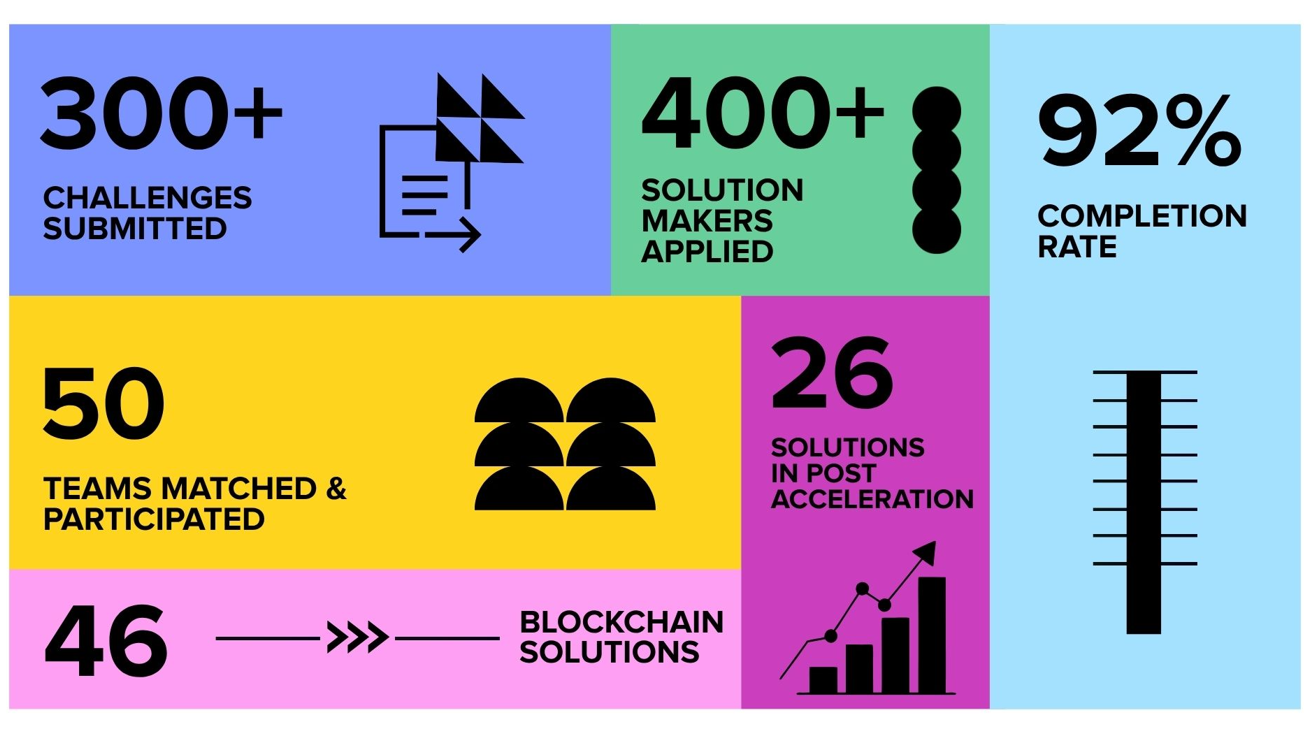
The SDG Blockchain Accelerator was created to connect innovators with development challenges and turn ideas into impact. While interest in blockchain has grown in recent years – from traceable transactions and auditable data to improvements in payments and service delivery – a persistent question has remained: how to design solutions that can operate within institutional, regulatory, and operational realities. To address this, the Accelerator brings together UNDP, technical partners, and innovators into a structured, multi-partner platform that supports solutions from concept to deployment.
Strategically led by the United Nations Development Programme’s Alternative Finance Lab (AltFinLab), in partnership with the Blockchain for Good Alliance (BGA), EMURGO Labs, FLock Technology Holdings, Stellar Development Foundation, and Sui Foundation, the global initiative helps scale blockchain and decentralized AI solutions to advance the Sustainable Development Goals (SDGs).
A structured pathway from demand to deployment
In many innovation efforts, the challenge is not generating ideas or prototypes, but ensuring that solutions can function within existing systems. The Accelerator links demand, solution development, and implementation planning into a single process, helping move ideas from exploration to practical application.
It is built around a demand-led model, where UNDP Country Offices define concrete development challenges grounded in ongoing programmes and national priorities. Across the portfolio, blockchain is being applied to address a consistent set of system-level issues – from inefficient financial flows and weak data integrity to fragmented supply chains and low-trust governance environments – where verification, transparency, and coordination are essential.
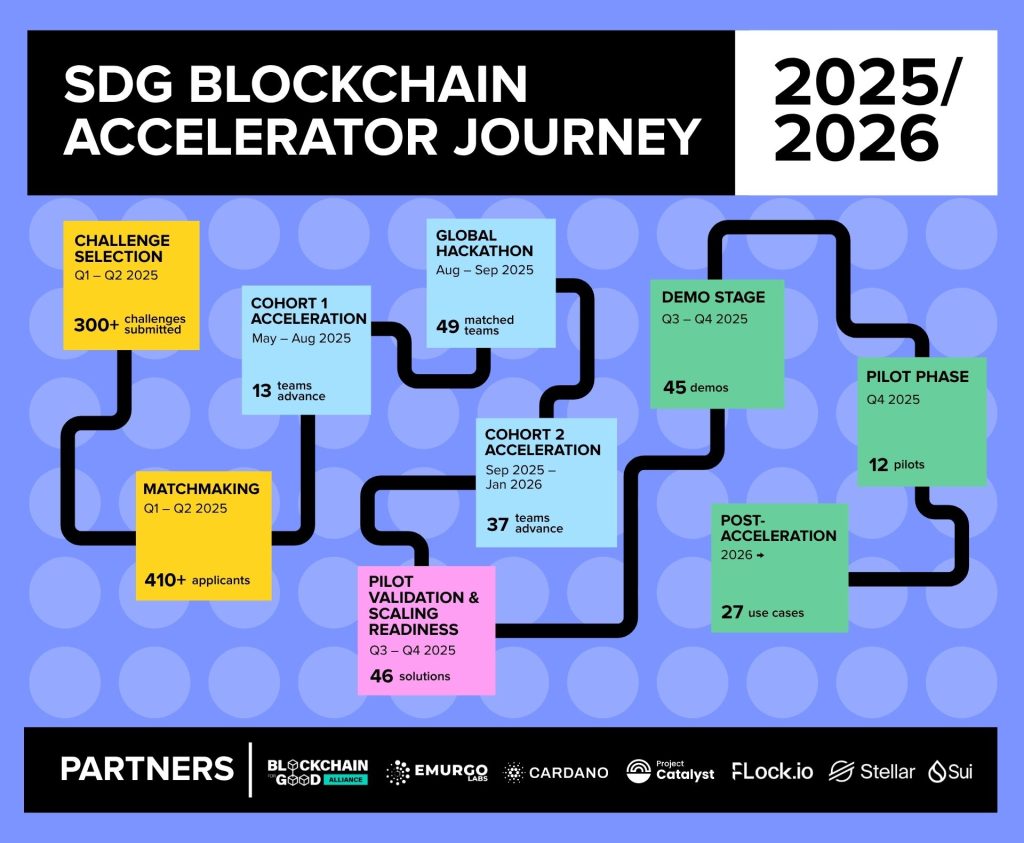
From there, UNDP AltFinLab matches challenge owners with solution makers and technical partners through a structured process – moving from problem definition to roadmap, and from roadmap to pilot readiness. Open calls and hackathons serve as mechanisms for aligning different actors around a shared problem, allowing ideas to be tested and refined before entering acceleration.
The programme operates through a multi-partner, track-based model that brings together multiple technical ecosystems while maintaining a coordinated and neutral approach. This allows challenges to be matched with the most suitable solutions and platforms. By working across multiple blockchain ecosystems, the Accelerator reduces dependency on any single technology stack and increases adaptability across different country contexts. Interoperability is also a defining feature of the portfolio, with nearly 90% of solutions either already supporting or planning cross-chain integration.
Crucially, teams are expected to define how solutions would function under real conditions, including governance, budgeting, and integration into existing processes. At the core of this process is the roadmap – a structured output that translates a development challenge into an implementable pathway, aligning stakeholders, technical design, governance, and financing considerations. This emphasis on operational readiness helps address a common point of friction in innovation efforts.
Where demand is consolidating
The portfolio of solutions that has emerged from this process also reveals where blockchain is beginning to demonstrate practical value.
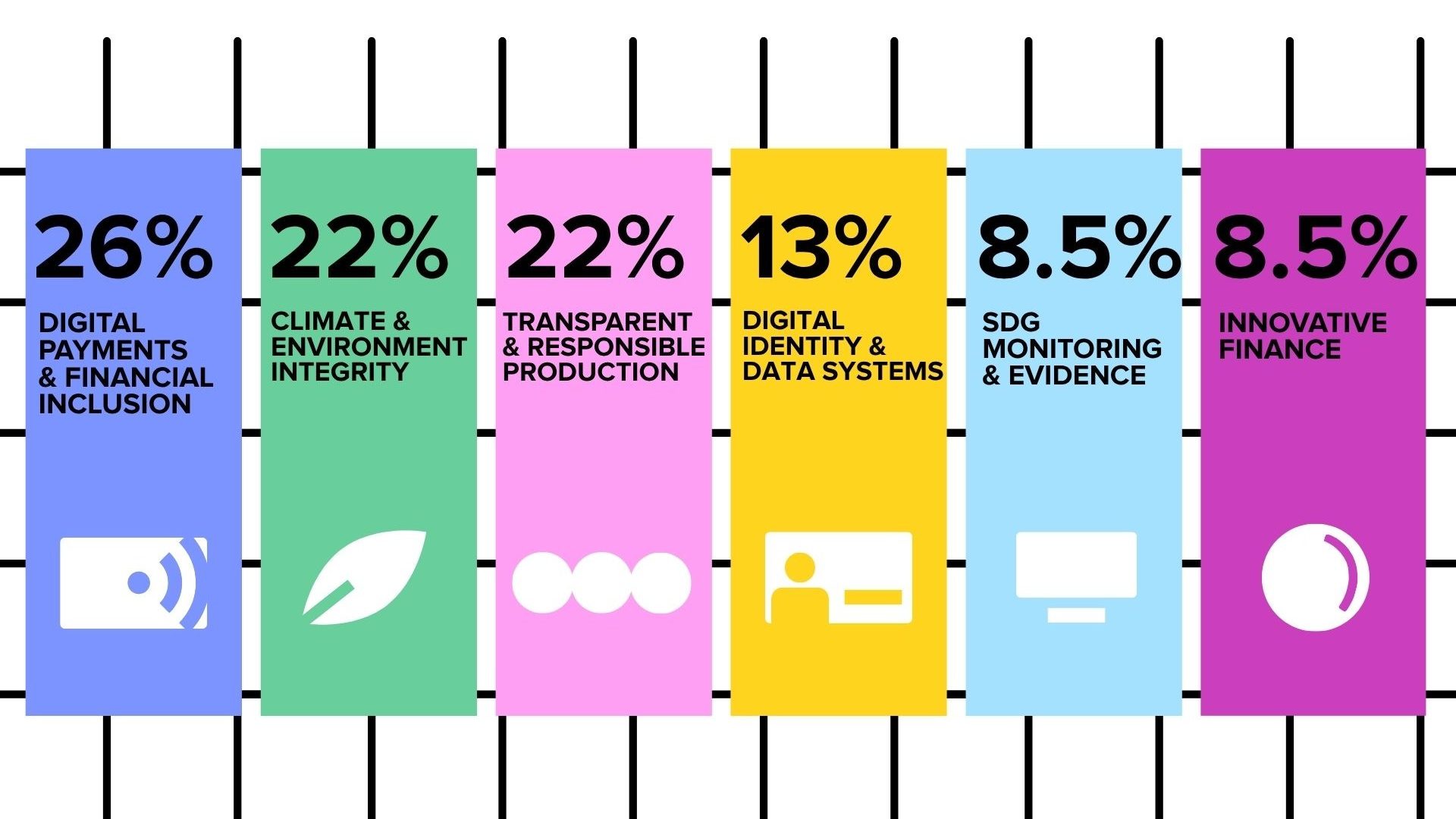
Digital payments and financial inclusion account for the largest share of solutions, followed by climate finance and environmental integrity, and transparent and responsible production. Together, these clusters make up the majority of the portfolio, pointing to areas where systems rely on trust, coordination, and shared data across multiple actors – and where existing approaches often struggle with fragmentation and limited transparency.
The portfolio spans a diverse set of solutions – from payment systems designed to improve last-mile delivery, to carbon registries that strengthen climate market integrity, supply chain platforms that enable traceability across production networks, and digital identity and credentialing tools for verifiable impact tracking.
For example, in contexts where financial systems rely on cash, manual processes, or fragmented infrastructure – as in Haiti and Syria – blockchain-based payment solutions are being designed to deliver funds directly to individuals. This reduces delays, improves traceability, and increases transparency in how resources are distributed. In one pilot, a government disbursement process that currently requires waiting up to six months for loan guarantee payments is being automated, helping small businesses – particularly women-led enterprises that are disproportionately affected by such delays – receive funds faster and more reliably.
Many of these are designed as components that can be integrated into broader public systems, strengthening core functions rather than operating in isolation.
From institutional readiness to public-sector engagement
Beyond solution development, the Accelerator is strengthening institutional readiness to engage with emerging technologies. For 82% of participating UNDP Country Offices, this was their first direct experience with blockchain or similar technologies. By the end of the programme, the share reporting high or very high understanding increased from 21% to 60%, indicating a clear progression from initial exposure to practical capability.
This growing readiness is reflected in how solutions are developed and adopted. UNDP Country Offices act as “challenge owners,” grounding each solution in national priorities and convening stakeholders around it. This ensures alignment with government strategies, regulatory environments, and operational realities from the outset.
Public-sector engagement is therefore built into the process. Government and public-sector entities are involved in 73% of solutions, with more than half engaging policymakers or regulators directly. This creates clearer pathways toward adoption, with solutions shaped in close interaction with the institutions expected to use them.
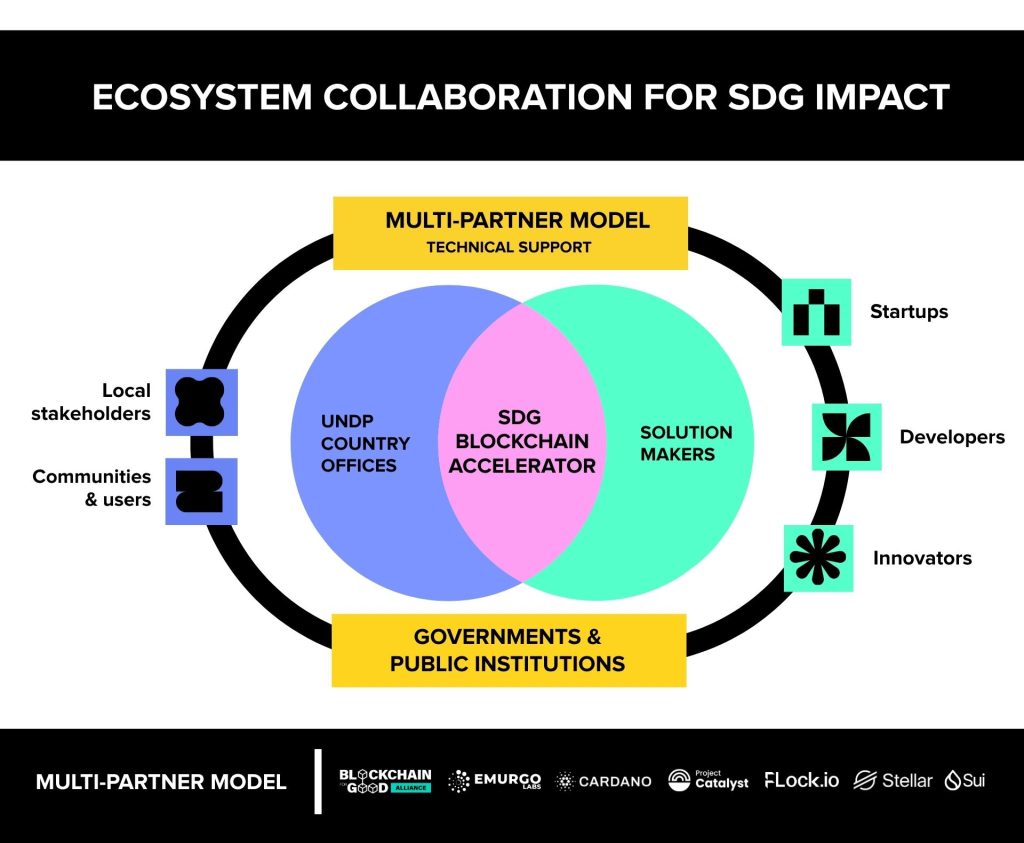
The model also expands the ecosystem around these efforts. More than 120 external partners contributed across the portfolio, with solution makers being able to work directly with public institutions – a connection that is often difficult to establish in practice. This strengthens the link between innovation and implementation environments.
Connecting to a broader blockchain practice
A selection of use cases and pilots developed through the Accelerator are featured in the newly released New Tech, New Partners publication, which brings together more than 40 blockchain applications across regions.
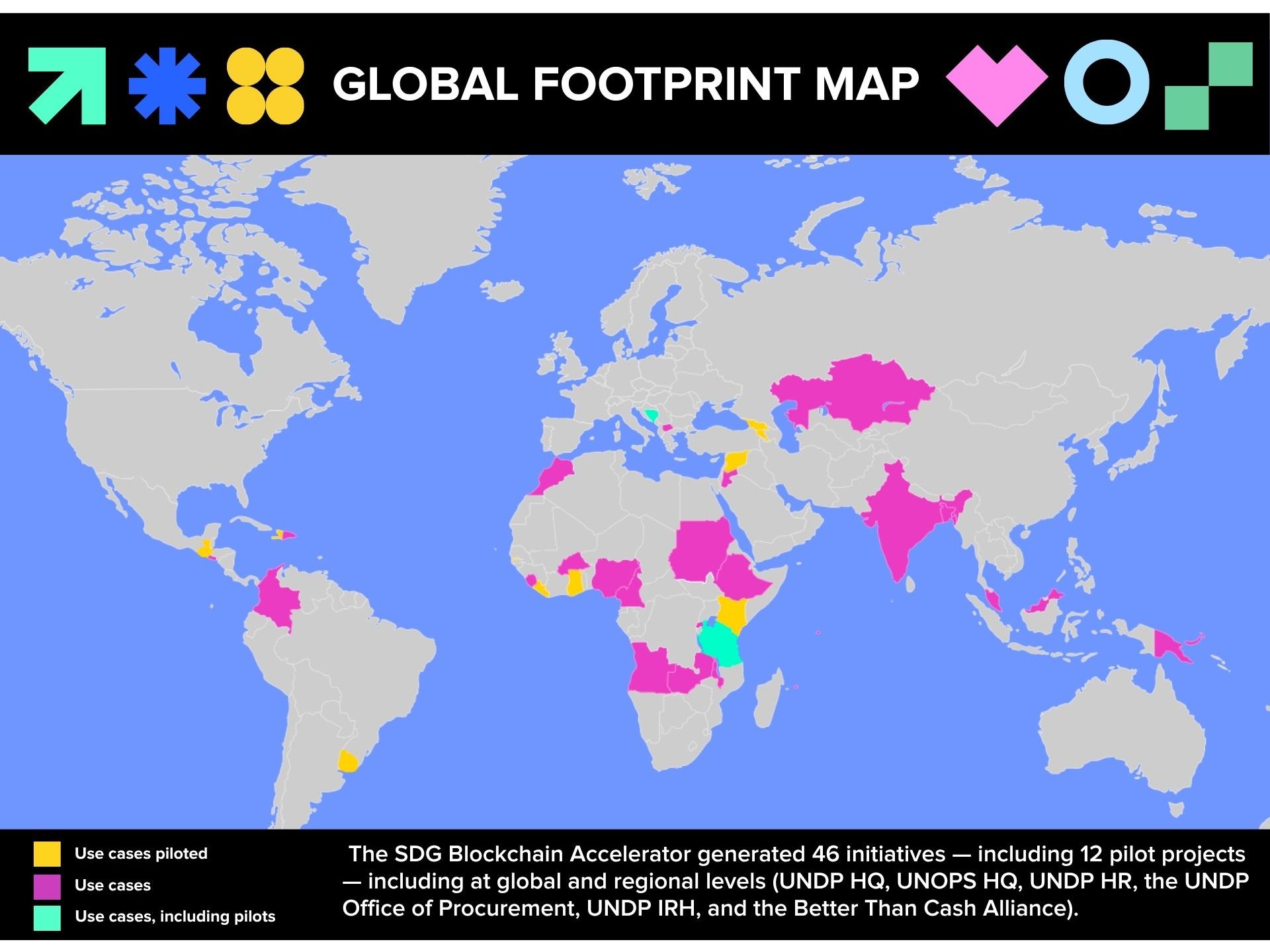
This report highlights the geographic spread and diversity of blockchain applications across development contexts. Across it, blockchain is increasingly used as a coordination and trust layer – supporting how data, payments, and decisions move across systems in more transparent and verifiable ways.
Together, these examples point to a growing body of practice around how blockchain can support digital public infrastructure and public-purpose systems in concrete, applied settings.
The remaining bottleneck: from pilot to scale
The main constraint is no longer whether these solutions work, but whether they can be sustained and scaled. Many are ready to move forward but lack the financing, partnerships, and operational support required to move beyond pilot stages. The challenge has shifted from designing viable solutions to ensuring they are taken up and maintained within public systems.
Building on these lessons, Cohort 3 of the Accelerator will aim to anchor each solution in an existing country programme or programmatic framework with at least one year of operational runway, and a clear implementation context. This shifts the centre of gravity from innovation showcase to institutional delivery: Country Offices and UN agency teams bring the development challenge and the programmatic home, Solution Makers bring production-ready technology, and the Accelerator provides the structure to connect the two. The opportunity now is to move from “proof that it works” to “proof that it scales”, embedding solutions within the programmes, partnerships, and budgets that already exist, so they can deliver tangible, sustained impact.
Stay tuned for our Cohort 3 open call!
The Accelerator is powered by catalytic funding from Cardano’s treasury via Project Catalyst, with support from other partners.
Following the Istanbul Innovation Days held in March 2025, we are releasing a series of articles capturing key insights, bold ideas and solutions that emerged from the conversations on institutional innovation. From reimagining partnerships to leveraging frontier technologies, these stories showcase opportunities to rethink and transform institutional paradigms.
Digital payments are no longer just an emerging trend – they’re reshaping the way we think about inclusion, public finance, and service delivery. At Istanbul Innovation Days, UNDP’s Alternative Finance Lab and the Stellar Development Foundation (SDF), a nonprofit organization that supports the growth and development of the Stellar blockchain network for accessible and inclusive financial systems, co-hosted a session to bring this transformation to life, through hands-on exploration and real life experience of how digital payments work.
During the session, we highlighted the global trends driving this change: today, nearly one billion digital wallets are in use, and stablecoin transactions have surpassed $1 trillion each month. These developments are creating new opportunities to streamline remittances, improve government-to-person payments, and unlock access to financial services in remote areas.
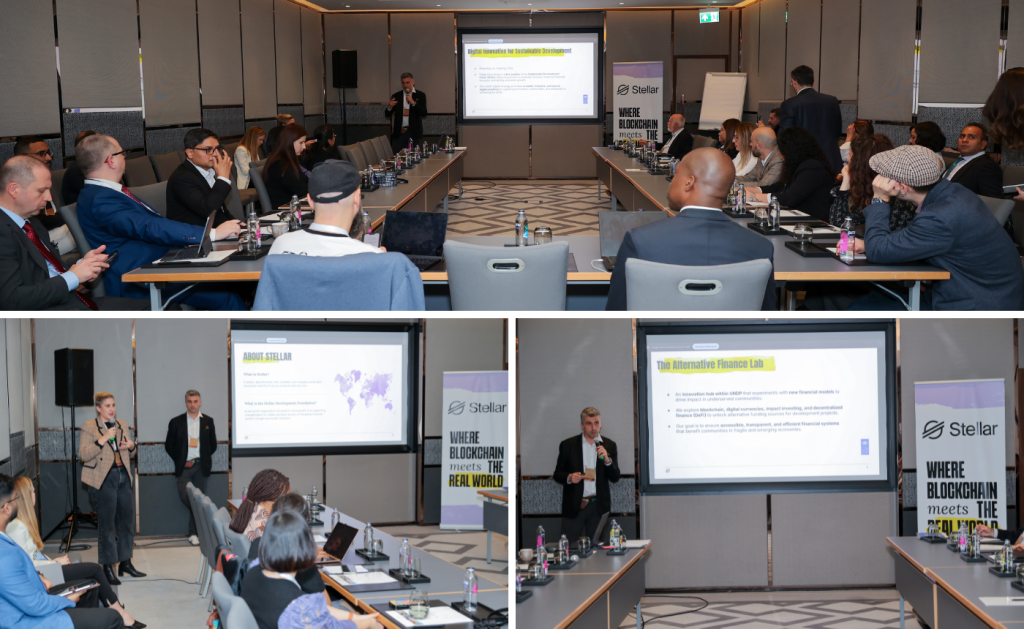
With around 50 participants from across governments, partners and UNDP, the session offered more than just an overview of the potential of blockchain – it was a deep dive into the rapidly evolving world of digital payments, exploring not only how decentralized technologies can transform traditional financial ecosystems, but also the current barriers such as limited infrastructure, regulatory uncertainty, and digital literacy gaps, with a huge potential to either bridge or widen financial inclusion, depending on how these challenges are addressed.
Participants learned how digital payments work and, more importantly, how they could be implemented in their own countries and projects. Through an interactive presentation and live demos, attendees got a firsthand look at how fast, secure, and low-cost digital transactions can be, especially when powered by blockchain technology.
During the breakout session, participants engaged in a live demo that put digital payments to the test. Each person set up a digital wallet and received blockchain-based funds in real time – proving that, with the right technology, payments don’t have to take months. They then used those funds to instantly donate to an NGO of their choice, demonstrating how fast, transparent, and direct digital giving can be. We demonstrated that there is no longer any need or excuse for payments to partners or beneficiaries that take months. The session sparked concrete interest from development professionals, who asked how digital wallets could be integrated into social protection programs, how tokenized payments might reduce losses, and what legal and operational steps are needed to scale such solutions responsibly.
In co-hosting this session with the SDF, we aimed to bridge the gap between emerging technology and practical development solutions, such as with TPN in Ukraine, a GIZ case study and Decaf Colombia example, a UNHCR case, and Rumsan case study. And based on the feedback and follow-up interest, it’s clear there is a strong appetite across the development sector to explore what’s next in digital finance.
This session was just one step in a growing collaboration between UNDP and SDF. Through a joint research initiative in 18 countries across regions – MENA, Latin America and Eastern Europe regions – we are assessing the opportunities and challenges of deploying digital wallets and tokenized cash assistance in real-world settings. Beyond research, our partnership is also helping us pilot projects in regions like MENA and Latin America to test how these technologies can enhance social protection schemes, climate finance, and humanitarian aid. With partners like SDF, UNDP is committed to leveraging blockchain technology as a tool to help countries build faster, more inclusive, and more resilient public services, grounded in real needs and real impact.
In Berlin, on 12-13 June 2025, the Smart Futures event convened a global community of innovators, policymakers and technologists to explore how frontier technologies – particularly blockchain and artificial intelligence – can accelerate progress toward the Sustainable Development Goals (SDGs). Co-organized by Disruptive Elements in collaboration with UNDP and its innovation and urban transformation programmes, such as BOOST and City Experiment Fund, and supported by the Cardano Foundation, the event served as a platform for innovative dialogue and action-oriented problem-solving across domains such as smart cities, circular economy, CO₂ track and trace, industry 4.0/5.0 and digital public infrastructure.
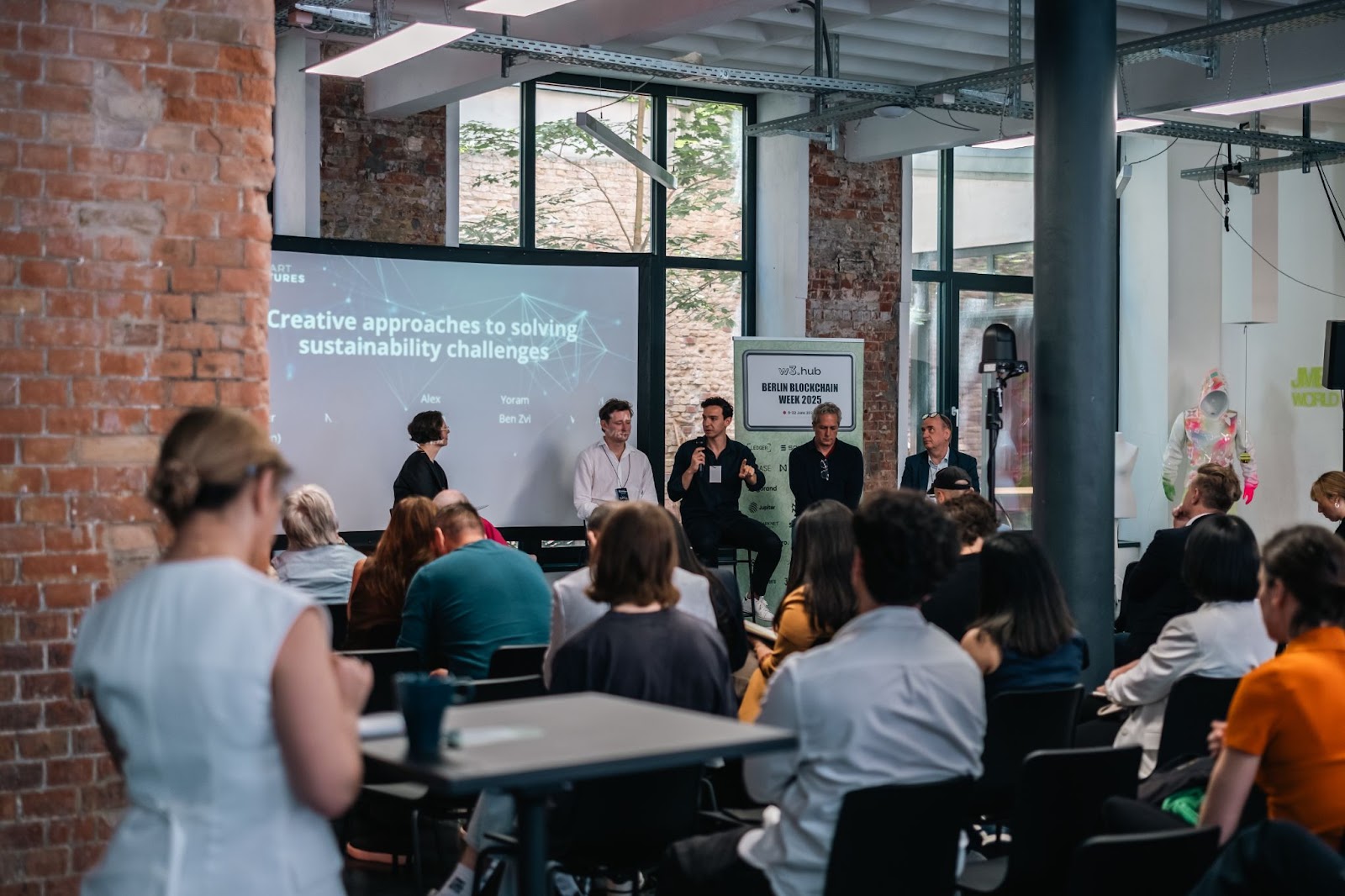
“A digital health passport, a digital vaccine record – it’s something we in the global health space have been struggling with for years. Could blockchain help? Absolutely. In areas like procurement and data management, where accuracy, efficiency, and trust are critical, this technology could help strengthen the foundations of our health systems,” said Marina Smelyanskaya, Team Leader, HIV, Health and Development, UNDP Europe and Central Asia.
From Thought to Action
The importance of collective innovation in building equitable, tech-enabled futures was emphasised throughout Smart Futures, from keynotes and interactive panels to participatory think tank sessions.
The event opened with strategic reflections on how emerging technologies can be harnessed for the public good, setting the stage for deeper engagement. These insights were then translated into action through hands-on sessions that explored practical applications across key areas such as Public-Private sector partnerships and the need for coordination in decentralized ecosystems.
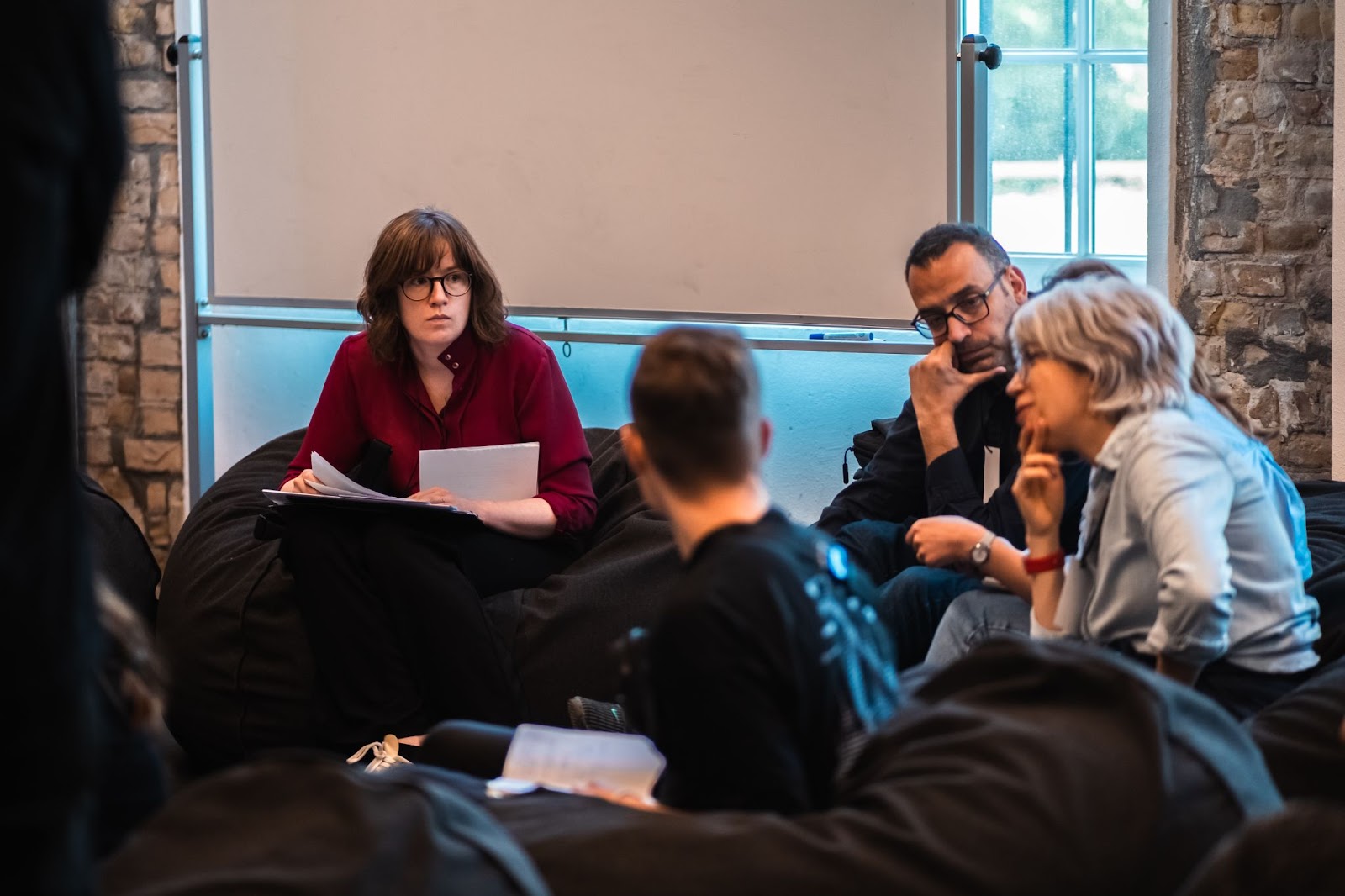
“By the very nature of decentralised ecosystems, [the process of decision making] tends to spread far and wide, paying attention to detail, but very slowly. A minimum level of centralization around the allocation of technical and financial resources towards key verticals is valuable for decentralized ecosystems like Cardano to accelerate adoption. This is why we talk about a coordination layer for sustainability on Cardano. We’ve proven the concept with UN-affiliated proposals receiving a substantial percentage of funds disbursed out of Cardano’s annual treasury allocation in 2024. Now it’s time to scale this innovative Private Public Partnership!” noted Alexandre Maaza, Sustainability and Innovation Lead, Cardano Foundation.
Moreover, sessions dug into how blockchain-enabled traceability can make industrial emissions visible and accountable. Participants discussed how digital warehousing and blockchain can also support the green steel industry by providing transparent, mass-balanced emissions tracking.
“The concept of mass balancing, done in a trustworthy and transparent way, would be a solution. We can save the emissions in something like a digital warehouse and just give the savings to the customers who are willing to transform or to pay for them, ” said Steffen Bittner, Stahlo.
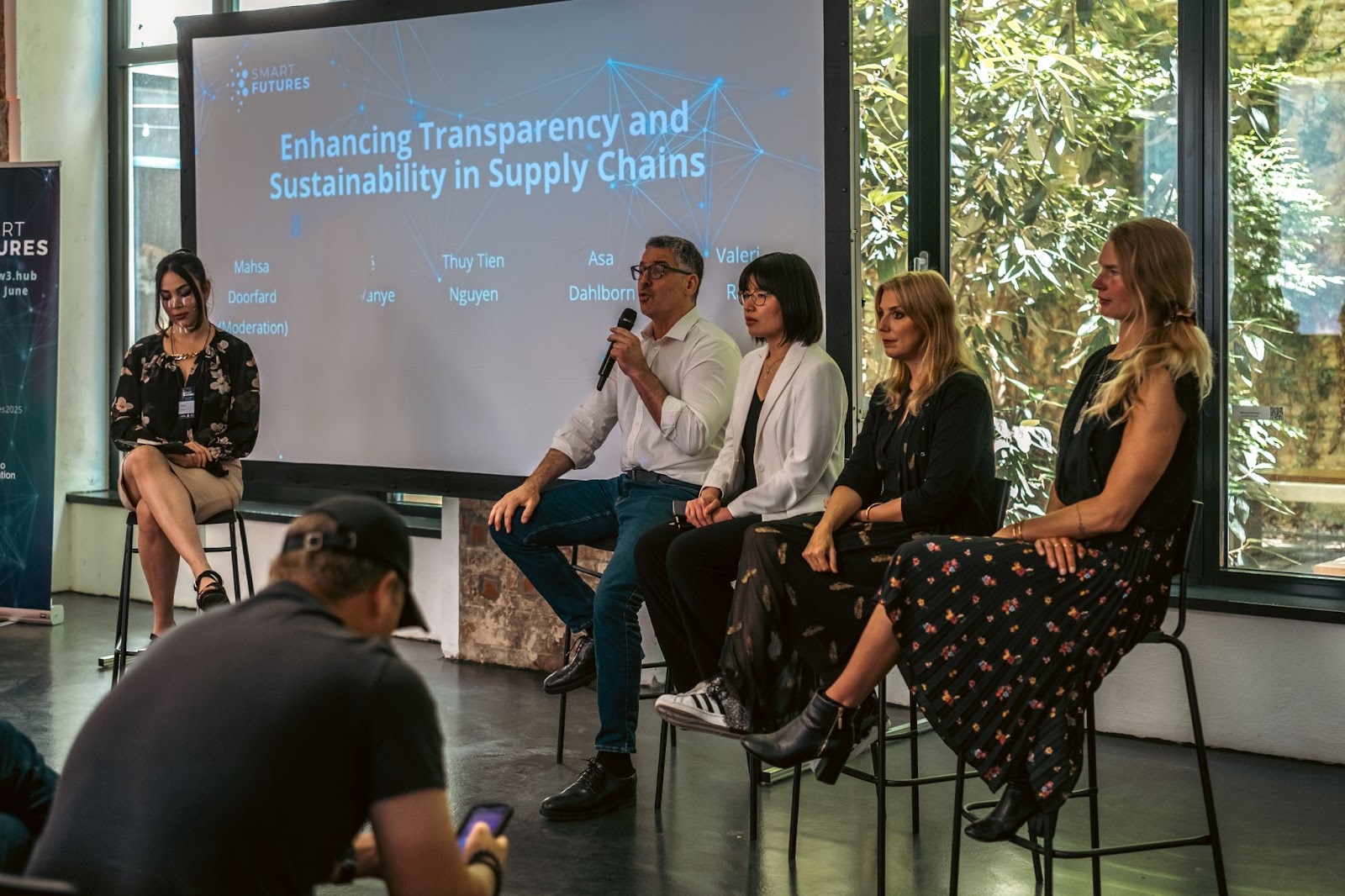
Other sessions focused on blockchain-backed skill credentials to promote inclusive, portable learning. These interactive breakouts explored the co-design of pilot initiatives and the role of Web3 in incentivising sustainable behaviours – from earning verifiable credentials for completing tasks to tokenized rewards for community contributions via platforms like Andamio, and blockchain‑verified plastic recovery through Plastiks’ digital plastic‑credit certificates that encourage responsible recycling efforts.
“What incentivizes real-world change is real-world impact. People need to benefit from the use cases first. Then you tell them, ‘Did you know what you’re using is actually built on blockchain?’ That’s the Eureka moment. Blockchain is a tool. Use it if it serves your goal. Positive change is possible through Web3; we just need the right approach, mindset and education,” said Glenn Tan, Director of Global Affairs, Blockchain for Good Alliance.
Collaboration as the Catalyst

A shared purpose and a spirit of openness guided the conversations throughout the event, underscoring what can be achieved when diverse perspectives come together to address global challenges. Rather than being framed as a technological opportunity, the convergence of blockchain and AI was presented as a pathway to greater transparency, inclusion and sustainability.
As discussions unfolded, one message echoed throughout: meaningful innovation in blockchain and AI does not happen in isolation. It thrives when blockchain protocols, private sector leaders, UN agencies, governments, policymakers and communities come together to overcome shared challenges. Collaboration, not competition, is the engine of progress. As the demand for interoperability, ethical standards and inclusive design increases, the importance of multi-stakeholder partnerships becomes ever clearer. When technical innovation meets global cooperation, we can invent scalable, transparent solutions that advance sustainable development and serve the public good.
“We have a saying in Turkish: when you put your head on the pillow, do you feel good about yourself? I think we all can, if we come together. […] As UN agencies, our role is to bring everyone—even competitors—to the same table and ask: what can we solve together? Without collaboration, this technology, like everything else, won’t survive,” noted Burcu Mavis, Blockchain Academy Lead, UNDP AltFinLab.
Showcasing Impact-Driven Solutions
Beyond the panels and discussions, innovators such as Plastiks, PB Token, Green Mining DAO, Andamio, Huros, and others showcased a diverse range of impactful blockchain solutions, highlighting real-world use cases and the transformative potential of Web3 for sustainable development.
To name just a few, Plastiks is harnessing blockchain to bring transparency and accountability to the fight against plastic pollution, connecting businesses and recyclers to ensure verified plastic recovery for a circular economy. Meanwhile, Purpose Bound Token (PB Token) has introduced a new class of programmable digital tokens designed to ensure that funds are used solely for their intended purpose, unlocking new possibilities for transparent, accountable payments in areas like aid delivery, impact investing, and social finance.
But Smart Futures was more than just a showcase of emerging technology — it was a glimpse into what’s possible when innovation is grounded in purpose and driven by collaboration. As blockchain and AI continue to evolve, so must our collective commitment to ensuring these tools serve people and planet.
The United Nations Development Programme (UNDP) in Europe and Central Asia and the Stellar Development Foundation (SDF) have announced a strategic partnership aimed at harnessing blockchain technology to accelerate progress toward meeting the United Nations’ Sustainable Development Goals and promoting financial inclusion worldwide.
With this partnership, UNDP and SDF will aim to create scalable blockchain solutions that drive equitable economic growth and strengthen economic resilience in developing regions. The collaboration will harness the Stellar network and open-source tools to enhance access to digital financial services, facilitate transparent and efficient cross-border transactions, and provide more secure, low-cost digital payment solutions, including for humanitarian aid, remittances, and national cash transfer programmes. The partnership will focus on empowering underserved populations and fostering innovation in emerging economies through a series of joint pilots, knowledge sharing, and capacity building.
Robert Pasicko, Project Manager of the Alternative Finance Lab at UNDP, remarked: “Our collaboration with the Stellar Development Foundation is a pivotal step toward harnessing cutting-edge technology for sustainable development. With nearly 1 billion people worldwide using cryptocurrencies and digital wallets, the potential for these tools to drive meaningful change in the development and humanitarian sectors is immense. By merging UNDP’s global expertise with Stellar network capabilities, we aim to create innovative solutions that transform lives and communities. Together, we are committed to unlocking the power of blockchain to drive social impact on a global scale.”
“The Stellar network was designed to support access to the global financial system for everyone, no matter where they live,” said Denelle Dixon, CEO of the Stellar Development Foundation. “Partnering with UNDP to leverage blockchain technology for international development and financial inclusion aligns perfectly with our mission. This collaboration represents exactly the kind of transformative impact the Stellar Development Foundation was created to achieve. We are excited to be part of this crucial effort to drive innovation and empower communities around the world.”
For more information, please contact Svetla Baeva, Communications Lead, UNDP at svetla.baeva@undp.org or the Stellar Development Foundation at media@stellar.org.
At last week’s COP29, nations faced an urgent priority – addressing the critical role of finance in adapting to climate change and tackling loss and damage. Cities, which account for over 70% of global CO2 emissions and house more than half the world’s population, stand at the frontline of both climate impacts and solutions. Yet with a staggering global climate financing gap of more than US$4 trillion annually, it’s clear that new approaches to funding urban climate action are needed.
UNDP in Europe and Central Asia has been advancing an array of innovative financing initiatives designed to transform our cities and build resilience in the face of climate change. We’re testing different approaches – from assessing how blockchain technology can help fund green initiatives, to building capacity for crowdfunding that empowers communities to invest in sustainable efforts, to exploring how environmental impact bonds can create win-win opportunities for investors and the planet.
Democratizing access to finance through crowdfunding
Crowdfunding can be a powerful tool enabling individuals, diaspora communities and private sector actors to support local climate initiatives often overlooked by traditional investors. Our AltFinLab’s Crowdfunding Academy has already made a strong impact: previous cohorts have mobilized over US$3.1 million for sustainable development projects. The academy now includes a dedicated climate-focused track.
With this success, we’ve moved on to the municipal-level to test how cities can leverage crowdfunding for local development projects, starting with ten Moldovan municipalities with project ideas ranging from rebuilding green spaces to waste management initiatives. Additionally, the UNDP-powered Tadamon platform, supported by ISDB and IsFD, has equipped 700+ civil society organizations with crowdfunding capabilities, leading to numerous campaigns on bringing renewable energy to schools and installing solar panels. Collectively, these initiatives have catalyzed over $17 million in funding, demonstrating crowdfunding’s potential as an effective alternative financing mechanism.
Leveraging blockchain technology to foster transparency and efficiency
Building on its crowdfunding success, UNDP AltFinLab is also exploring blockchain technology to enhance transparency and efficiency in climate finance. A critical foundation for this work is the Blockchain Academy, launched in collaboration with the Algorand Foundation. It provides a comprehensive understanding of the fundamentals of blockchain technology, its applications and its potential to transform various sectors, including climate adaptation. In particular, the academy will help UNDP, UNCDF and UNV participants understand impact-focused use cases for development and climate mitigation work, and train them to design blockchain solutions that create value for the communities UNDP works with.
One promising application of blockchain technology for climate finance is in the development of green token systems for cities. Cities like Skopje and Podgorica, part of the City Experiment Fund, are examining how digital token systems can encourage sustainable behavior. Initial designs propose rewarding residents with tokens for activities like bio-waste disposal and public transport usage, which they could exchange for local services or cultural experiences.
In Skopje, for instance, the concept centers on smart bins that would track bio-waste collection, with early analysis suggesting potential cost reductions of 20 percent in waste management and up to €500,000 in annual revenue from bio-waste products. Podgorica’s transportation-focused concept aims to address rising emissions in the sector, with estimated annual savings of €3.4 million in emissions-related costs. Such systems, while still in early planning stages, represent innovative ways to connect environmental goals with everyday urban life.
Building resilience with innovative financial instruments
What if cities could fund climate action while ensuring investors see measurable environmental returns? This is the potential of green bonds, a game-changing financial tool dedicated to financing projects with significant environmental benefits, enabling cities to address climate challenges while attracting diverse investors and collaborators. They encourage long-term planning, enabling local governments to secure funding for crucial infrastructure projects such as renewable energy, public transportation and climate resilience measures.
Several countries across Central Asia are exploring green bonds as a financing mechanism, with Kazakhstan having launched the region’s first municipal green bond to address urban issues like air quality. Last year, Uzbekistan also issued its first ever green bonds on the London Stock Exchange, demonstrating its strong commitment towards a green transition, with more interest from more than 30 international investors. Our Urban Learning Center is now equipping local authorities in the Eastern Partnership region with the skills to access and manage green bonds. As many municipalities in this region face significant barriers to securing financing for infrastructure and sustainable development projects, the center recently launched its “Funding and Finance for Municipalities” course. It provides a comprehensive overview of available financing options, especially on practical strategies for attracting investment. It introduces various financial instruments, such as bonds, tailored for sustainable projects and climate infrastructure at the subnational level. The focus on capacity-building is critical for scaling up climate finance, ensuring that cities are well-positioned to attract investors and execute their ambitious climate projects.
Beyond single projects: A new way to finance city transformations
Cities often try to solve multiple challenges in siloes– transitioning to renewable energy, implementing green transportation systems, enhancing efficiency and expanding urban green spaces. But rather than tackling each problem separately, UNDP’s portfolio approach helps cities design a connected set of solutions, including finance options, that work together. This approach spreads risk across different projects, making it easier to attract funding from different types of investors – from public institutions to private companies – while testing various solutions at the same time.
Take Pljevlja, Montenegro, for example. The city needed to move away from its dependence on coal, but instead of betting everything on one big project, they started with several smaller energy efficiency initiatives. This careful approach paid off – the success of these initial projects helped convince funders to invest more, securing €8.8 million for a national energy efficiency program, with €2.8 million going to Pljevlja. Similarly, in Ceadir-Lunga, Moldova, a portfolio of connected interventions is helping the city transition to renewable energy and attract the necessary funding for it. Their approach includes training programs on green energy, making kindergartens more energy efficient, and helping low-income families access green technologies.
While many of these approaches are still in early stages, the experiments happening in cities across Europe and Central Asia show promising ways to unlock new resources for urban transformation and climate action.
Reposted from UNDP Europe and Central Asia / Modified from original illustration by Anina Takeff for ArtistsForClimate.org