
Category: Urban futures
Everyone has the right to live in cities that are comfortable, accessible, and environmentally clean, where public spaces prioritize human well-being and inclusivity. Indeed, many urban theorists argue that modern city development is overly centered on production, efficiency, and profit, which comes at the expense of livability, community engagement, and environmental balance. One key voice in this movement is Jane Jacobs. In her seminal work, The Death and Life of Great American Cities (1961), she argued that cities should be designed for people, not cars or industries, and that urban spaces should promote interaction, walkability, and vibrant community life. Jacobs critiqued the top-down approach of urban planning, calling for a bottom-up, human-centered design approach.
Unfortunately, the ideals espoused by Jacobs and alike often clash with the reality of many urban areas today, which struggle with systemic issues that undermine the quality of urban living. Among these challenges, air pollution stands out as a particularly critical concern. Poor air quality not only jeopardizes residents’ health but also exacerbates social inequities and hampers economic growth and investment. This highlights an urgent need for policies and initiatives that reimagine cityscapes, drawing on Jacobs’ principles to address these systemic problems and foster a more sustainable and equitable urban future.
Addressing systemic urban issues requires a comprehensive and integrative approach that considers the interconnectedness of various urban systems and their impacts on sustainable development. Policymakers must adopt a holistic perspective, encompassing economic, social, and environmental dimensions to identify root causes and implement effective interventions.
From symptoms to solutions: Tackling air quality issues
Air pollution exemplifies a systemic urban issue that demands a multifaceted approach due to its deep interconnections with economic growth, public healthcare, transportation, culture, and inclusive urban development. It made sense for us, hence, to utilize the portfolio approach alongside systems thinking principles to tackle this issue. We aimed to avoid pathways of investing billions in massive ‘silver bullet’ infrastructural solutions that might work, and instead under City Experiment Fund project sought smaller, ‘obvious-not-so-obvious’ solutions that could create systemic ripple effects. A compelling example of what we wanted can be seen in Copenhagen, which faced near bankruptcy in 1993 yet prioritized development to tackle the growing issues of air pollution and transportation. The city opted for the most cost-effective solution: investing in cycling infrastructure. This choice has received strong support from authorities due to its consistent delivery of positive environmental, health, efficiency, and economic benefits.
Green and safe streets in Almaty: Small changes, big impact
Henri Lefebvre, a French sociologist and philosopher, who expanded the idea of ’the right to the city’ in the 1960s argued that urban spaces belong to everyone who lives in them, not just planners or property developers, and that all residents should have the right to shape them. Sherry Arnstein’s Ladder of Citizen Participation (1969) outlined different levels of public involvement in decision-making. She identified that for true co-participation, communities shouldn’t just be consulted—they should be empowered to influence actual outcomes. In that spirit and under methodological process of portfolio approach we conducted co-design sessions with a diverse array of key actors in Almaty. The result of that process was the nested portfolio that we called ‘Green and Safe Streets’. The logic behind ‘Green and Safe Streets’ initiative focuses on reimagining Almaty’s transformation to minimize air pollution factors (vehicle exhaust, the energy consumption from the coal-based CHPS, etc.) through pedestrianization, greening urban spaces, enhancing public and alternative transport, and promoting energy-efficient buildings, all in a participatory manner. In the implementation phase, we chose to focus on interconnected clusters of social impact campaigns, demonstrations of urban fabric change through tactical urbanism activities, and the use of digital solutions such as air pollution monitoring to support data-driven policymaking.
This approach not only helps to improve air quality, but also creates more comfortable and attractive cities to live in. Green spaces absorb pollutants and partially mitigate the heat island effect, while modernized buildings with energy efficient technologies help to reduce the overall carbon footprint. The benefits of this approach go beyond ecology to aspects of comfort and behavioural change. Increased green space and improved pedestrian and cycling infrastructure makes city streets more convenient and safer for residents, increasing physical activity and reducing car dependency. A convenient and environmentally friendly transport network encourages the use of public transport and alternative modes of travel, which further reduces pollution and pressure on transport systems. Moreover, the development of green streets and energy-efficient buildings contributes to a more vibrant and dynamic urban environment, which in turn stimulates economic activity and attracts investment in sustainable infrastructure. It also shapes citizens’ awareness of the environment and sustainable lifestyles, supporting a shift to more sustainable habits. Ultimately, the creation of such urban spaces contributes not only to improving air quality and urban aesthetics, but also to strengthening social cohesion, ensuring sustainable development and enhancing the well-being of the urban community.
Learning by doing: tactical urbanism in action
To date, we organized several tactical urbanism initiatives in Almaty, implementing temporary changes at several street locations and a parking lot before the city’s planned reconstruction work. Through public workshops and guided tours, we brought together city officials and residents to demonstrate how urban changes can be implemented gradually and with minimal disruption to all users, including drivers. The insights from those initiatives were considered and the city agreed to partially or fully consider those changes, and will integrate tactical urbanism principles moving forward. We are currently installing air quality monitoring devices to measure pollution levels before, during, and after street reconstruction. Once completed, we plan to share both our monitoring framework and a comprehensive guidebook on implementing these projects with the public. It is important to communicate the logic of why, when, how, and by whom these activities are done to ensure socialization, knowledge preservation and sustainability of the learnings we had over the course of the project. So, just like in this blog, we tried to conduct our work in the principle of ‘work out loud’, by sharing insights and learnings through the series of communication channels, social media posts, social events, excursions, partner events, and other channels.
Funding the future: Innovative financing mechanisms for urban change
Importantly, we also acknowledge that any proposals for change must take funding considerations into account. Drawing on the innovative spirit of our team, we aimed to present less conventional, yet highly feasible options based on the existing legal and financial infrastructure in Kazakhstan, particularly in Almaty. We explored the issuance of SDG Sukuks, as well as the introduction of the first-ever municipal Green Bonds in the country (and indeed the first in the region of Central Asia). Currently, our primary focus with local partners centers on advancing the latter two initiatives.
The quest for success: Human-centered urban strategies
By adopting an integrated approach to urban sustainability, cities can achieve multiple objectives, fostering resilient, vibrant, and inclusive environments that enhance the quality of life for residents. However, the path to such decisions is not always straightforward. History is full of examples of seemingly ‘obvious’ large-scale infrastructure projects aimed at boosting economic interests that ultimately produced lasting negative outcomes deemed costly mistakes later — something Jane Jacobs would have probably attested to. Municipalities worldwide face the ongoing challenge of identifying more well-thought ‘not-so-obvious’ solutions. While the journeys may differ from city to city: from Almaty to New York to Sydney, human-centered, community-involved, and systems-informed approaches have proven to be effective strategies for uncovering them.
Reposted from UNDP Kazakhstan.
Cities in Europe and Central Asia are adopting a systemic design approach to urban development. The shift is being spearheaded by two UNDP initiatives – Mayors for Economic Growth and the City Experiment Fund. These multiyear programmes are starting to generate urban effects that go beyond what we can measure in traditional ways, broadening our understanding of how various city sub-systems interact. This blog explores some of these interactions and effects – the visible and invisible – that cities in the region are experiencing.
In the aftermath of COVID-19, our sense of reality is shaken in a way we have not experienced before. Environmental crises are unfolding just as we were warned they would over the last few decades, and we are very likely living through the hottest year recorded in history. As the complexity and interconnectedness of the natural and human-made systems become more apparent, we are also facing a new kind of crisis – a deficit of social imagination. Geoff Mulgan, Professor at UCL, refers to this as an imagination crisis, in which we are stuck, unable to move from ‘what is’ to ‘what if.’
Imagination is defined as way of seeing, sensing, thinking, and dreaming that creates the conditions for material interventions in, and political sensibilities of, the world (Yusoff & Gabrys, 2011). In our current reality, we are simultaneously breaking into a new world, marked by rapid advancements in artificial intelligence and other technologies, whilst still healing from the aftermath of ongoing crises and wars. In this complex landscape, ‘how we look’ can affect ‘what we see,’ which begs the question: where is the infrastructure that nurtures and supports social imagination – the imagination infrastructure?
Historically, urban spaces have shaped ‘what the city could be’, including our local identities, and they continue to do so. Take public squares in their varied shapes and forms across the globe – beyond just being places to gather, they have served as places for protests, revolutions, celebrations and more. Such spaces act as crucial imagination infrastructure by providing a physical and symbolic arena where people can envision and enact social change, offering a stage for public expression and allowing diverse groups to interact and share ideas that can shape our future.
Other examples abound. Over the last two decades, cities across the globe have seen the rise of makerspaces and fab-labs – a result of the maker movement that was born in the 1990s. A melting pot of art, craft, innovation and technology, these spaces are where creative individuals with ideas come together, imagine and create. This imagination infrastructure has lowered the barrier of access to space, technology and community, and has led to the prototyping and testing of some of the innovations we use today (from phone cases to tap-payment systems).
Urban spaces such as these have shaped history but what is it about them that inspires and evokes such powerful responses in cities?
Cities operate within a vast complexity of interrelated systems – social and economic to ecological and physical – without any centralized coordination. They also largely function without seeing their full impact on surrounding ecological systems. With dense populations and growing digitalization, imagination infrastructure in cities like makerspaces have the potential to bridge some of these gaps – giving us a moment to pause, listen, connect and tap into a sense of community at a time where transformation is pivotal.
“When a complex system is far from equilibrium, small islands of coherence in a sea of chaos have the capacity to shift the entire system to a higher order.”
Illya Prigogine, Chemist and Nobel Laureate
But it is more than that – imagination infrastructure also has the power to shape our narratives and identities and vice versa. It is through our collective narrative imaginations that we are both anchored and transported (Andrews, 2016). Narratives in a city or any social system are shaped, formed and molded by such spaces and inversely, the stories we share about them and how they evolve over time also mold the space. As Winston Churchill for once aptly said: “We shape our buildings and then our buildings shape us.” These spaces foster change by providing a platform to discuss shared challenges, reimagine societal structures, and innovate everyday products and services to shape our lives.
Take public libraries and coffee shops for instance – both have long served as imagination spaces for creatives, writers, and storytellers. With the advent of digital transformation, the future of these traditional havens for imagination hangs in the balance, prompting us to reconsider and reimagine their value and potential in nurturing the creative spirit of our communities. Public libraries are remodeling themselves into community centres and maker spaces, becoming more flexible even in their architectural design. Meanwhile, coffee shops have paved the way for co-working spaces and innovation hubs. Our evolving discourse about these spaces has not only shaped how others perceive them but also how they perceive themselves, influencing their role in fostering creativity and intellectual exchange. These spaces, along with other forms of imagination infrastructure – the physical manifestations of our values, novelty, and exchange – play a crucial role in shaping our sense of hope and aspiration for the systems we live in.
Ultimately, urban spaces that stimulate our imagination can be powerful catalysts for shifting perceptions and enabling change. By encouraging us to pause, observe, and reflect, they inspire action towards reimagining existing complex challenges and building momentum for transformation to create new possibilities for people and society.
Take a look at some of the imagination infrastructure emerging in our cities:
Pljevlja, a city in Montenegro, houses the country’s only coal-fired power station, which supplies a third of the nation’s electricity. While the livelihood of a large part of the local population depends on the power plant, the country is also embracing a green transition. The city of Pljevlja, in partnership with UNDP through the Slovak Transformation Fund, recently opened a Creative Hub that aims to transform the city to a place for the development of start-up projects with green business ideas that have the potential to create new jobs. Further, the hub is becoming a meeting space for young people to explore the possibilities of using innovative technologies and to acquire skills and knowledge. Read more about Pljevlja’s Creative Hub here.
An audit of the waste in Skopje, North Macedonia, found that nearly 50% of the municipal waste is biowaste. This city of Skopje and UNDP wasted no time in setting up a biohacking lab, with the support of the Slovak Transformation Fund, to change the perception of biowaste from garbage to a valuable resource. The space now not only hosts biohackathons, supporting innovative startups, but also conducts workshops with students to inspire circular thinking and brings together researchers and academics to experiment. Interestingly, the emergence of the lab has also amplified the voices of environmental advocates and circular economy proponents, lending weight to their causes. Read more about Skopje’s Biohacking Lab here.
Batumi, a resort city in Georgia, grapples with a dual challenge: the emigration of talented youth seeking better opportunities elsewhere, and an economy heavily reliant on seasonal tourism, which creates instability throughout the year. In reinventing itself as an entrepreneurship hub to retain talent and diversify its economy, Batumi aims to create a physical space to promote youth interaction through the EU-funded Mayors for Economic Growth. It is envisioned as a youth hub and a co-working space, which will offer additional services and opportunities for learning and networking, aiming to become a meeting place for young minds with ideas to create innovations for the city. Read more about Batumi’s approach here.
The city of Ceadîr-Lunga in Moldova has embarked on a critical journey towards energy resilience since the Russia-Ukraine war drove up energy prices sixfold. The city, in collaboration with UNDP through the EU-funded Mayors for Economic Growth, piloted a project to retrofit kindergartens – reducing energy consumption by 90% and cutting the cost to a tenth of what it was before. The kindergarten became a symbol of change, inspiring both children and the local community to envision a renewable energy future. Showing ‘what could be’ sparked conversations around energy resilience both inside and outside the classroom with students, their parents and teachers. The resulting energy and cost savings were made public, encouraging wider acceptance of adaptation measures and shifting perceptions to make energy efficiency more desirable. Read more about Ceadîr-Lunga’s Kindergarten retrofit here.
What are we seeing as the common thread connecting these spaces in these diverse contexts which we are collectively calling imagination infrastructure? They are spaces that bring people together: they are sparking new conversations, creating room for forming new relationships, kindling new thinking, enabling a shift in mindsets, strengthening partnerships, helping articulate values and triggering many more emerging effects.
Imagination is critical to transformation and as cities play more active roles as connectors, collaborators and orchestrators, there is an emerging need to reimagine the spaces where we can connect, play and imagine. To break away from legacy thinking and embrace more flexibility in adapting to the changes the future demands, UNDP is working together with cities across the Europe and Central Asia region to reimagine how we can design and bolster imagination infrastructure. As we envision a future of inclusive development that instills hope across generations, a crucial question emerges: How are institutions adapting to nurture the imagination infrastructure needed to catalyze transformative change in our cities? And as our cities adapt and transform, how are we listening and learning about the changing narratives that these urban spaces are driving?
Read more about our community listening practice here
Illustration credit: Mark Wang for TheGreats.co
The 12th World Urban Forum (WUF), the largest global conference on urban issues convened by UN-Habitat, will take place in Cairo, Egypt, from November 4-8, 2024, focusing on key actions to address the challenges of sustainable urban development.
Two upcoming sessions at WUF, co-hosted by the United Nations Development Programme’s Istanbul Regional Hub, the European Commission, the Slovak Republic’s Ministry of Finance, and the City Institute Lviv, will explore critical solutions for urban sustainability.
The first session The Future of Ukrainian Cities – Transformation Through Radical Collaboration will explore innovative and multidisciplinary approaches to rebuilding and renewing Ukrainian cities amidst ongoing crises. By bringing together diverse stakeholders, including government entities, the private sector, academia, and civil society, the networking session seeks to identify practical actions and integrate diverse stakeholders to create sustainable, scalable outcomes for resilient urban development.
Session details:
Date and time: 6 November 2024, 17:00 Cairo time
Venue: Egypt International Exhibition Center (Multipurpose Room 18)
The second session CityScape 2050: GenAI-Powered Urban Futures Workshop aspires to ignite social imagination by exploring speculative future scenarios. Participants will engage in collective thinking and discussions based on a scenario to formulate decisions about the present. The workshop will also provide participants with exposure to the use of generative AI tools, aiming to catalyze collaboration among diverse stakeholders to build future-ready cities. The workshop aims to impart exposure and skills to the participants on the following topics in urban transformation initiatives: i) futures thinking and analysis of future scenarios; ii) co-creation process for engaging diverse stakeholders in collaborative thinking; and iii) generative AI tools to enhance collaborative and creative thinking.
Session details:
Date and time: 7 November 2024, 9:00 Cairo time
Venue: Egypt International Exhibition Center (Multipurpose Room 11)
Join us at WUF by registering for the forum and our sessions or virtually by downloading the WUF app (Android or iOS). Both sessions will offer valuable insights and opportunities for collaboration on shaping the future of urban spaces.
At the end of 2023, the Innovation team at UNDP Europe and Central Asia initiated a more structured exploration of how to strengthen the team’s learning muscle. Six months into the process of gathering individual reflections from UNDP colleagues working across five countries (Armenia, Azerbaijan, Georgia, Moldova and Ukraine) – part of the Mayors for Economic Growth (M4EG), a joint EU and UNDP initiative supporting mayors in the Eastern Partnership region – we synthesized our learnings and tried to make sense of the collective learning in these diverse contexts. Interestingly, we noticed that some of our learning questions were met with more questions.
As municipalities participating in the M4EG Portfolio Journey initiative explore financing strategies for their mission-oriented portfolios and new growth trajectories, our learning-capture tool has revealed the need for a shared understanding to effectively navigate this space. As a result, we initiated an informal and optional learning program as an experiment within our team, extending it to others working in this domain, to make space for knowledge sharing and peer-learning. We called these sessions Finance Fridays, scheduling a 30-minute session every two weeks, spanning three months. This blog explores the different topics we navigated through this three-month learning experiment over seven sessions and our key learnings.
Session 1 took colleagues through an overview of the financing challenges faced by municipalities in the Eastern Partnership region and an introduction to innovative financing, alternative finance and the concept of bankability. The introductory topic was unpacked using a 10-minute video that was put together using AI tools and an exercise to map innovative and alternative finance instruments that colleagues were familiar with in their own country context. This session set the stage for the peer-learning sessions in the second half of the series.
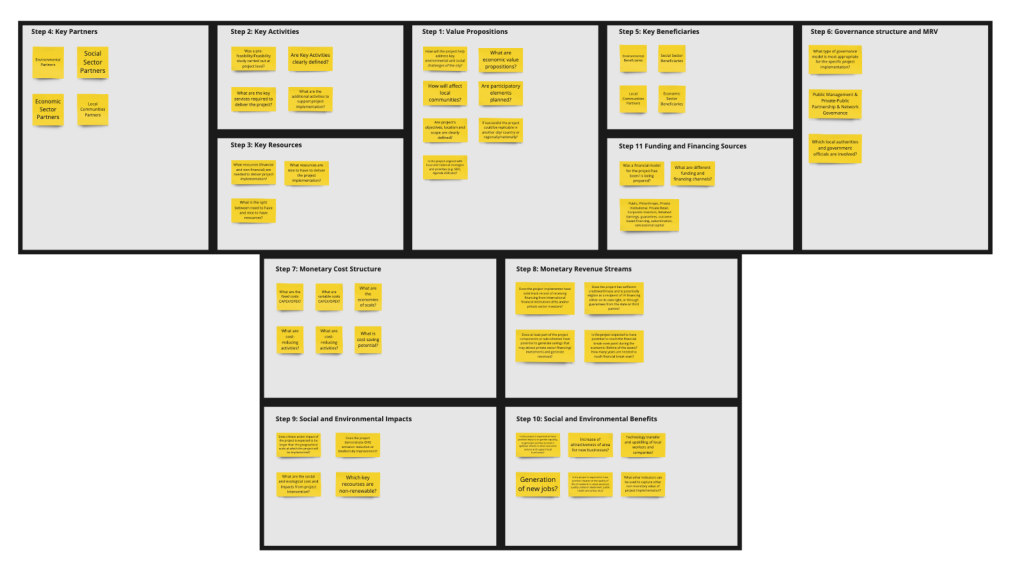
Session 2 focused on bankability and how to use a business model canvas to assess it. The session was facilitated by Alexander Weise, SDG finance consultant in the UNDP Innovation team. This session helped participants better understand the different aspects of a project’s business model to consider when assessing bankability, with an added focus on evaluating social and environmental effects. The session also unpacked some specific topics such as creditworthiness and measurement, reporting and verification (MRV) through lively participant engagement.
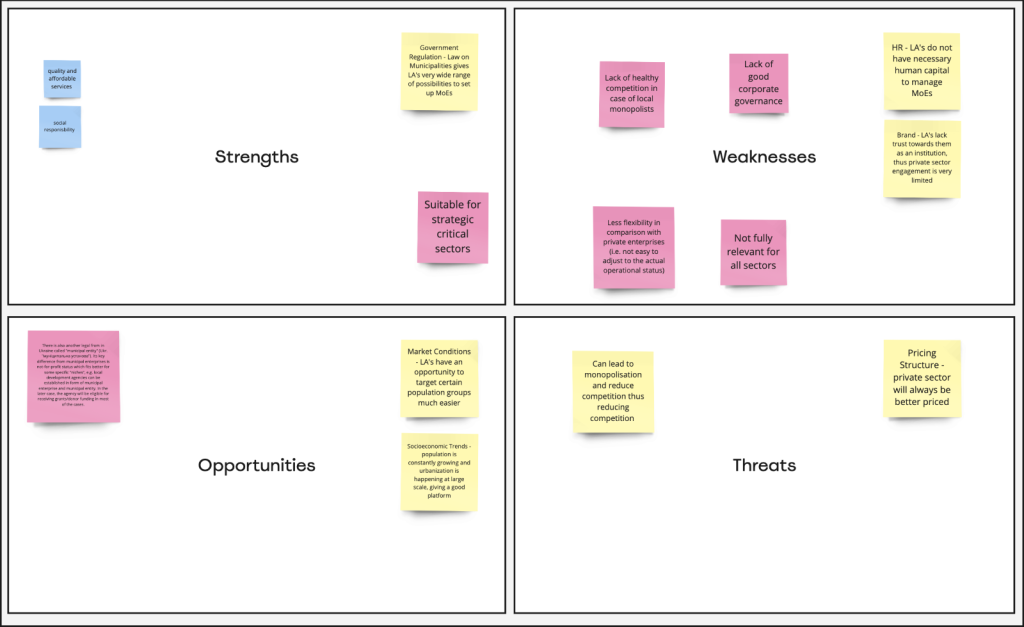
Session 3 took a deep-dive into Municipal-owned enterprises (MoEs) – a modality that local governments across the globe are increasingly relying on to provide public services. While some countries in the region have been using this modality for many years, it is still new in other countries and the session allowed colleagues to discuss the topic from both sides of this spectrum. This session was also facilitated through a 10-minute video on the topic and was followed by a workshop and discussion where colleagues assessed MoEs for their country context using SWOT analysis.
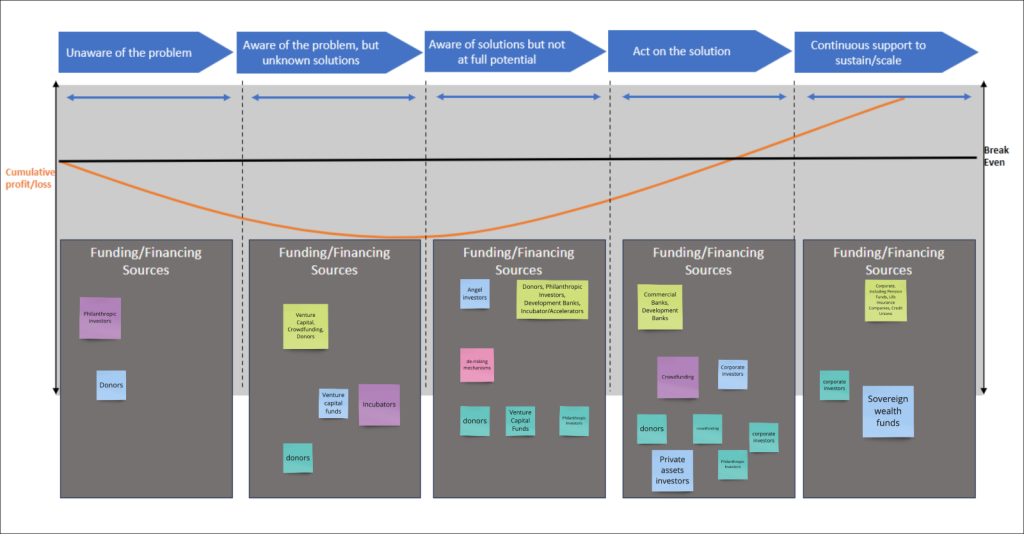
Session 4 focussed on the investment curve and assessing various sources of funding – a session facilitated by Alexander Weise. This collaborative session included a short explainer on the investment curve and a workshop on identifying investors for different stages of a project. This session helped colleagues identify and assess the different actors in the funding ecosystem and understand at which stage of maturity, the project might be of interest to them.
Session 5 kicked off with a peer-learning exercise with our colleague Mustafa Sait-Ametov, Regional Development Programme Manager in UNDP Ukraine. He shared his experience with supporting local Revolving Funds established by municipalities in Ukraine. Through case studies from the local authority of Pittsburgh, U.S.A and the city of Voznesenk, Ukraine, we unpacked the types of revolving funds and their administrative needs and benefits.
Session 6 included an introduction by Louise Skarvall, Accelerator Lead for UNDP’s BOOST, a regional impact acceleration programme, on the launching of a new challenge for innovative finance solutions in the Western Balkans. The concept, which was created and developed using stakeholder consultations, was also introduced to colleagues in country offices beyond the region for feedback and garnered further interest.
Session 7 was the last session before the summer on the topic of tokenization, led by Ievgen Kylymnyk, Project Manager of the Slovak Transformation Fund. The session introduced colleagues to ‘green tokens’ which have been implemented in a few cities across the globe and has been used as a tool to finance critical environmental initiatives. This session provided an opportunity for colleagues to learn about the insights from the event on Green Tokenization in Podgorica, Montenegro and also helped answer some critical questions about implementation challenges.
Since launching Finance Fridays as an experimental initiative, we have been eager to evaluate its impact on participants. We gathered feedback from colleagues who attended the sessions. The evaluation focused on uncovering insights in four key areas: learning something new, expanding networks, creating a safe space for sharing, and curating relevant content. Here’s what we discovered based on these criteria:
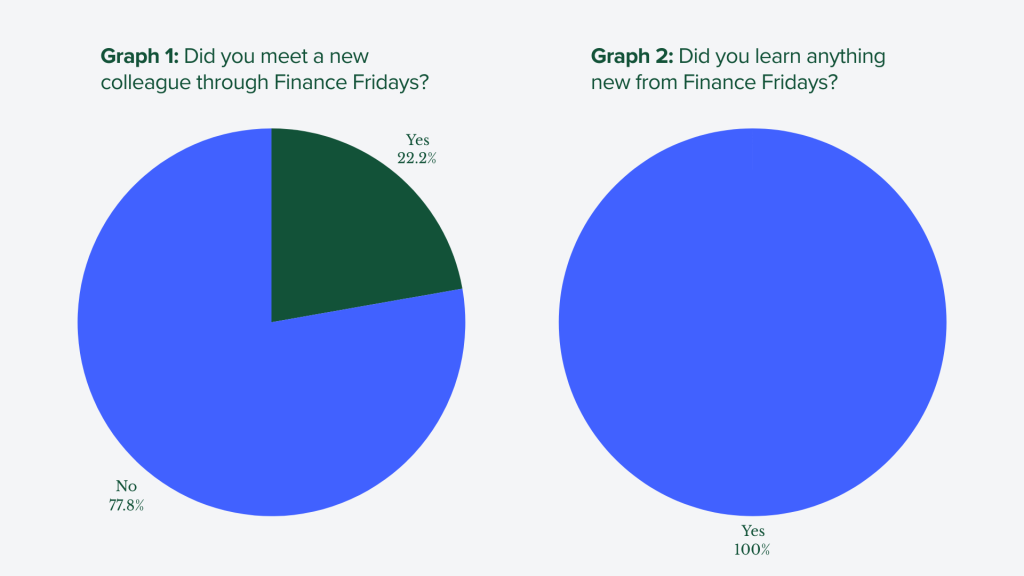
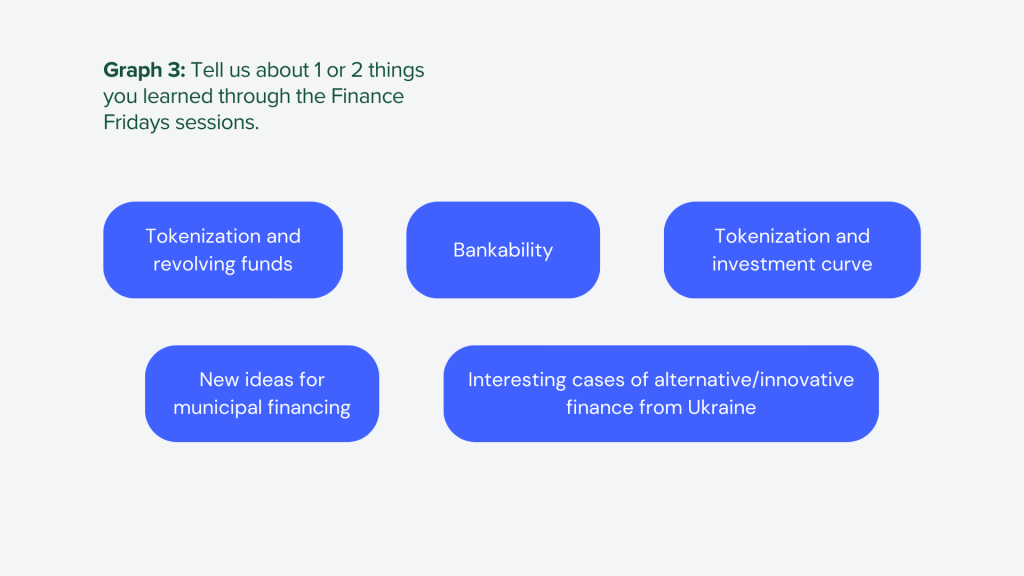
The results showed that 13 of the 20 colleagues attended three or more sessions, with an average of nine participants in each session. Some colleagues shared the invitation beyond their own team and invited other colleagues they work with in other capacities, to attend the sessions. Many colleagues felt that the sessions need to be longer than 30 minutes as we were forced to cut short lively discussions in the interest of time.
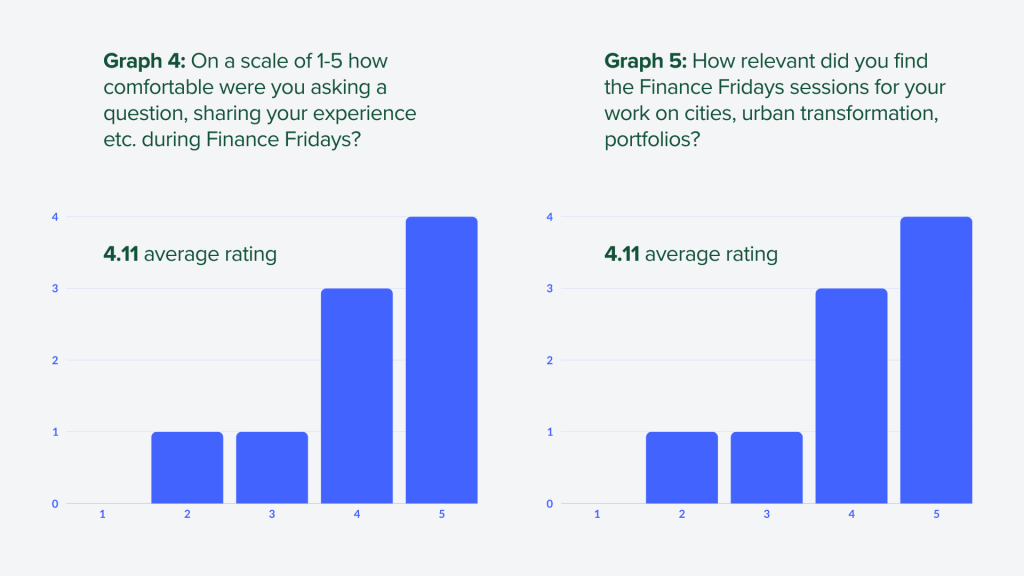
As the summer ends, we plan to redesign this experiment by changing the criteria of assessment and implementing the feedback we received to continue working towards creating a learning culture that fuels our curiosity and sense of community.
The United Nations Development Programme (UNDP) in Europe and Central Asia released its 2023 Annual Report for the Slovak Transformation Fund (STF), funded by the Ministry of Finance of the Slovak Republic. The annual report provides a detailed overview of the Fund’s activities and progress throughout the year and outlines the key developments within the BOOST Impact Acceleration Programme and the City Experiment Fund (CEF), two of the Fund’s main initiatives.
In 2023, BOOST continued to support women innovators that took part in our BOOST: Women Innovators programme by offering essential financial and technical assistance to help grow their impact solutions. A notable milestone was the launch of the BOOST Alumni Network, designed to provide post-acceleration support to impact ventures and non-profits and foster collaboration among cohorts.
The CEF continued its collaboration with five cities in Europe and Central Asia to design, implement, and dynamically manage their portfolios of urban interventions, while also exploring innovative financing options to support sustainable development. 17 options across the five cities were activated, addressing various urban challenges such as air pollution, urban vibrancy, and waste management
The report also reflects on the challenges encountered, including limited local expertise and political instability, and the Fund’s efforts to address these through adaptive management and capacity-building initiatives.
The 2023 Annual Report provides valuable insights into the lessons learned over the past year and presents key recommendations for the future. The STF remains committed to aligning its work with the UNDP Strategic Plan, focusing on green, inclusive, and digital transitions.
About Slovak Transformation Fund:
The STF, funded and supported by the Ministry of Finance of the Slovak Republic, is dedicated to driving sustainable development across Europe and Central Asia by co-creating solutions with local ecosystems, deploying innovative approaches, and leveraging new financing sources.
For more information, reach out to: Ievgen Kylymnyk, Project Manager, Innovation team at UNDP IRH.
The Green Tokens project, led by the UNDP IRH Innovation Team, is a new pilot initiative designed to assess how using a reward-based token system can address environmental challenges in urban areas. In Skopje, North Macedonia and Podgorica, Montenegro, the project looks into emerging technologies to tackle major city pain points such as bio-waste management and public transportation, to promote eco-conscious behaviour among residents and businesses.
Backed by the Slovak Transformation Fund and the Resource Mobilization Facility in this exploration phase, the project has also drawn on the expertise of several Web3 leaders and organizations. Furthermore, through collaboration with local municipalities we ensured that the research integrates the specific conditions of the cities of Skopje and Podgorica.
Hold on – what are green tokens?
Green tokens refer to digital or blockchain-based tokens that are used to promote and support environmental sustainability and eco-friendly initiatives. In essence, it is a digital reward system designed to encourage eco-friendly behaviors among residents and businesses in cities. They can represent various types of assets or rights and are typically associated with projects that have a positive environmental impact. For example, by earning tokens for actions like reducing waste and conserving energy, residents and businesses can directly contribute to environmental sustainability while benefiting from rewards.
Building the green path forward
To understand whether green tokens would be a good fit, the Green Tokens project has undertaken a series of feasibility studies and blueprint development for both Skopje and Podgorica. These studies were essential in identifying existing challenges and opportunities in bio-waste management and public transportation improvement.
- In Skopje, the feasibility study looked into significant challenges in bio-waste management, which constitutes a large portion of the city’s municipal solid waste. The study identified inefficiencies in the current system, leading to increased landfill usage and greenhouse gas emissions. It proposed integrating blockchain technology, IoT-enabled smart bins, and a user-friendly mobile application to incentivize waste separation and recycling.
- In Podgorica, the feasibility study focused on promoting sustainable public transportation to reduce greenhouse gas emissions. Given the city’s current public transport challenges, such as outdated infrastructure and high-ticket prices, the study suggested a token-based reward system to encourage residents to shift from private car usage to public transport, walking, and cycling.
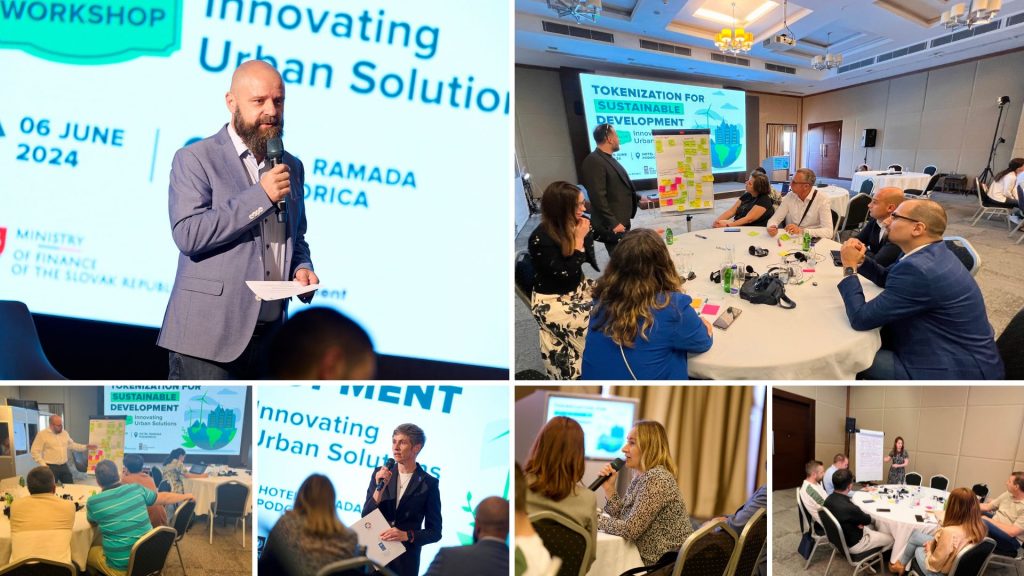
During a co-creation workshop, held in Podgorica in June 2024, which engaged 30 participants from Skopje, Podgorica, and Bar, plus external experts from various institutions and Web3 communities worldwide, we designed potential interventions and gathered valuable feedback to finalize the blueprint development. The event helped build momentum and foster collaboration among stakeholders for the project’s next phases.
The blueprints for Skopje and Podgorica provided detailed technical specifications, system architecture, and implementation strategies.
- For Skopje, the blueprint emphasized leveraging the Cardano blockchain for secure and transparent transaction management and deploying smart bins equipped with IoT sensors for real-time bio-waste monitoring, enhancing biowaste separation and recycling. Additional recommendations included integrating urban farming initiatives, using compost from bio-waste, for community gardens and rooftop greening projects, as well as organizing educational campaigns to boost public awareness about the benefits and value of bio-waste.
- In Podgorica, the blueprint included modernizing the bus fleet, improving route coverage, and integrating electronic ticketing systems to make public transport more attractive and reliable. It also recommended developing a raising awareness campaign to promote sustainable mobility and adapting an existing app to track eco-friendly activities as well as earn tokens and redeem rewards to encourage the use of public transport, walking and cycling.
Next steps
In its exploratory phase, the Green Tokens project has paved the road to understanding how green tokens and other technologies can transform the management of public assets and services in cities. Going forward, engaging local and international partners, as well as securing funding from municipal, private, and community sources, will be critical for the project’s expansion and long-term sustainability. Additionally, the developed model has the potential to be scaled, with plans in place to roll out the token system in other cities, using the blueprints and feasibility studies to assess its applicability and possible integration, bringing environmental and economic benefits across cities in the region.
In tackling escalating social and environmental challenges, it is becoming clear that traditional project-based innovation methods, with their predefined objectives, outcomes and fixed timelines, often miss the systemic complexities of urban transformation. This includes tackling challenges like transport optimisation, energy transition, and air pollution. In the past few years, an increasing number of development actors, including UNDP, have acknowledged these shortcomings and pivoted towards more nuanced and responsive strategies. A shift to the ‘portfolio approach‘ represents this change in perspective, offering a framework that is flexible, integrative, and adaptable. In this blog, we present a case study that adopts this approach to combat persistent air pollution in Almaty, Kazakhstan. Reflecting on our collaboration with Dark Matter Labs—a strategic design and research lab—we share our insights and experiences from this methodology in practice. Our intent is to contribute to a growing dialogue on innovative methods, focusing on both the process—the ‘how’—and the objectives—the ‘what.’
Portfolios as a method
As the first initiative in Kazakhstan to adopt a ‘portfolio’ approach, ‘Breathing City: Clean Air in Almaty Through Joint Efforts’, specifically engaged with the concept of portfolios as a dynamic model for organising around specific missions, such as clean air and improved public health. Originating from the field of finance (as primarily a risk management tool) and later adopted in the field of policy innovation, portfolios are understood as a network of actions, actors, resources (assets) that drive resilient transition processes. Unlike the conventional method of allocating funds and resources to sector-specific, single-point solutions that address a relatively narrow set of issues, the portfolio framework allows for the aggregation of diverse initiatives within a coherent strategic vision, enabling them to mutually reinforce each other. Moreover, this intention to consider synergies between different initiatives translates into a method of design, delivery, and management that is much more distributed and collaborative, rather than centralised.
However, the portfolio approach is not without its challenges. Institutionalising this method demands substantial efforts to transform procurement, monitoring and evaluation (M&E), and various legal instruments that have traditionally governed the life cycles of large development programmes. The novel approach of clustering initiatives by missions and synergies rather than by traditional sectors may complicate efforts to attract financing and government support, particularly when it diverges from established investment and planning cycles. Building new capabilities and institutional knowledge to enable the shift towards the portfolio approach also remains a continuous challenge. Recognising these obstacles, our project sought to refine and adapt the portfolio model to the unique context of Almaty’s air quality challenge.
Hypotheses for change
Our initiative was built on several key hypotheses aimed at enhancing efforts in air quality action in the city, an active domain spearheaded by committed local actors engaged in advocacy, research, and technological innovation.
- Reframing the issue of air pollution to emphasise its health and economic implications would mobilise a broader range of stakeholders
- Bringing in new actors could help shift the conversation and action on air quality, and thus enhance existing efforts by diversifying strategies and perspectives
- By embedding the portfolio content in municipal and local partner plans and aligning with a new project office in the local government (Almaty Akimat, and its subsidiary bodies like Almaty Development Centre), we could develop a strong pathway for implementation
Translating Portfolio Method into Project Processes
The portfolio method, far from being a fixed framework, is inherently evolving and adaptive, reflecting the contributions from diverse participants and the specificities of the local context it is being initiated in. In the case of the Almaty air quality portfolio, we adapted it as a step-by-step process that integrates research, co-design processes with local stakeholders, and a cycle of review, learning and further development.
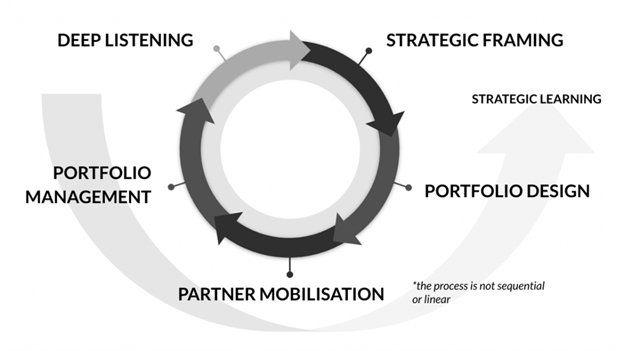
- Deep Listening: Enabled by stakeholder interviews and research — focusing on underlying barriers and innovations
- Strategic Framing: Focusing on strategic alignment with existing initiatives and identifying suitable scale and scope
- Portfolio Design: Enabling multi-stakeholder workshops for ideation and building legitimacy and alignment
- Partner Mobilisation: Moving towards shared accountability, multi-partner collaboration and new forms of governance
- Portfolio Management: Building tools and metrics for continuous portfolio development, implementation and strategic learning
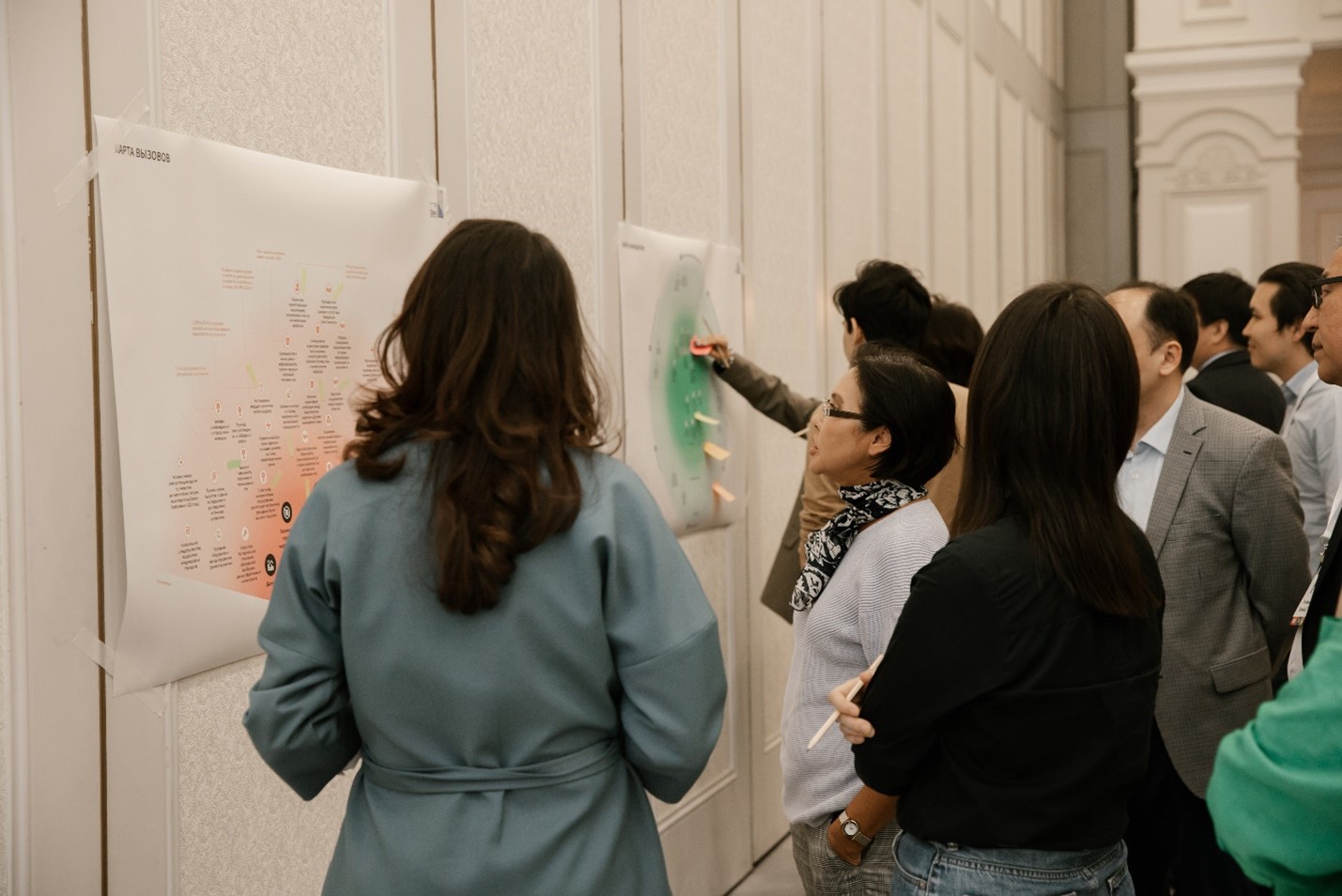
Deep Listening and Strategic Framing
Our initial step centred around deep listening, a phase marked by stakeholder interviews and desk research. This allowed us to uncover the nuanced challenges and opportunities within the Almaty context, focusing on the underlying barriers to clean air and the potential levers for change. In April 2023, we held an in-person ‘sensemaking workshop’ inviting a diverse range of stakeholders — from local experts to community organisers — to share, validate and strengthen the insights gathered from the research. (More details about the process in our first blog.) Some practical tools that we adopted in an in-person and hybrid workshop context were the Five Whys framework, which allows collaborative investigation into root causes of problems, and the challenges and initiatives mapping canvases (see image below), which provide a framework that incorporates insights from desk research and invites participants to proactively add missing elements.
As a crucial step in the portfolio process, strategic reframing utilises insights from the identification of structural challenges to pinpoint gaps and highlight potential levers of change. Through participatory sessions, reframing becomes an opportunity to introduce diverse viewpoints into the portfolio, creating richer and more differentiated narratives as well as new entry points for action. In the case of Almaty, strategic reframing involved looking into one of the root causes of the challenge identified by local stakeholders: the fact that air pollution as an issue is often overshadowed by concerns for economic development because it is largely framed as an environmental issue. Through reframing, we were able to construct a narrative around air pollution that highlighted the economic implications and adverse health effects, particularly on children, which opened new avenues for collaboration between schools, parents, businesses, and medical researchers. This not only broadened the scope for advocacy but also facilitated knowledge sharing and potential for collaborative action.
Often, introducing a systemic perspective into an existing issue necessitates an expansion of the problem space, because root causes of a problem tend to overlap, and this exploration of common ground allows us to see how seemingly discrete sectors or domains of problems are in fact interrelated and interdependent.
Portfolio Design and Partner Mobilisation
The next phase of the work involved a series of collaborative ‘design sessions’ to explore new actions and initiatives that could be integrated into the portfolio. The process not only helped generate innovative ideas but also built legitimacy and alignment among stakeholders, ensuring broad-based support for the portfolio’s objectives.
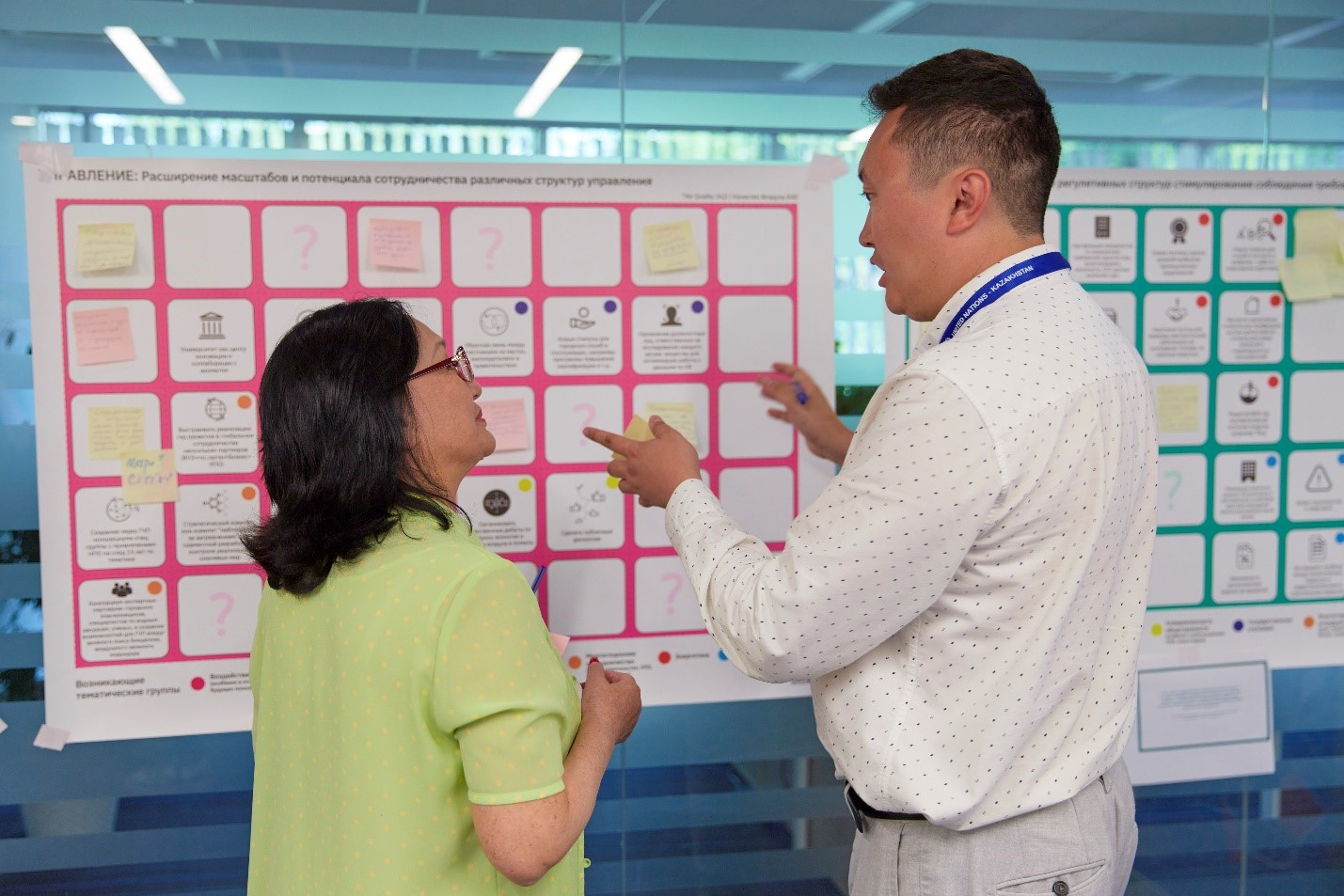
Instead of being a separate phase, partner mobilisation is usually embedded in the ongoing participatory activities that we hold throughout the portfolio design phase. This is to ensure a smooth transition to the implementation phase, and to avoid treating implementation as a mere exercise of delegation and delivery. In the Almaty portfolio, we introduced an additional step of creating a ‘nested’ portfolio—the ‘Safe and Green Streets’ initiative, which strategically connected several initiatives (or “options”) within the larger portfolio to align with critical developments in the city (specifically the new General Plan of Almaty by the government, and mandates of key stakeholders). This was an effort to improve the chances of investment, in a context where portfolio-based investments were rare, and to secure the buy-in of key local stakeholders who may not be familiar with the portfolio framework.
As such, portfolios emerged as a tool to move beyond traditional ‘master plans’ and municipal planning, which often result in extensive lists of actions that few people engage with and that become fragmented during implementation, typically being delegated to the most economic bidder. While the participatory portfolio design sessions helped counter the centralised and top-down nature of planning, transforming it into a more distributed and iterative process, an additional step is needed to make it truly actionable. Through our experience in Almaty, we recognised that to advance a portfolio of actions beyond a static list, it must be integrated into ‘pathways’ aligned with funding opportunities and potential coalitions of actors.
Portfolio Management and Strategic Learning
Portfolio management involves a dynamic process of strategic review and learning, combined with institutionalisation and mainstreaming, which is what we had attempted to do through developing a ‘nested’portfolio, aligned with municipal strategies. It recognises that portfolios need to be continually updated and respond to the latest information, learning through emerging partnerships that form along the way. In the Almaty portfolio process, we began with an open inquiry (not just a hypothesis that was going to be tested and evidenced), which was further defined through stakeholder interviews, challenged and validated continuously throughout the collaborative portfolio design process, and re-worked again through the formation of new partnerships. The evaluation of a portfolio does not happen at the very end—instead, it is iterated at multiple points throughout the process, which allows room for emergence and an ability to respond to the changing conditions of the system.
Lessons Learned and Looking Ahead
As we continue the first stages of implementation, which includes among others a small-scale experiment centred on tactical urbanism, one critical reflection has emerged: a mere list of actions—or a portfolio of actions/initiatives—is insufficient. Greater effort is required to understand and articulate how these diverse actions can be implemented in real-world contexts. In essence, a more nuanced ‘portfolio’ approach to ‘implementation’ is necessary to ensure these strategies are effectively realised.
As a methodology, the portfolio approach is continuously evolving. Typically, the concrete outputs of a portfolio design process include a list of actions—also referred to as options, interventions, or experiments—that are strategically implemented by various actors. These actions are often clustered together to highlight adjacencies, connections, and potential synergies. In the Almaty portfolio, actions were organized under three strategic outcomes: 1) Improving health with a focus on families and children; 2) Building a Green Economy; and 3) Fostering Green Urban Development. These clusters align with the strategic framing of the portfolio, which addresses air pollution as both a health and economic issue. As detailed earlier, some initiatives in the portfolio were strategically grouped under the ‘nested’ portfolio of ‘Safe and Green Streets.’ This initiative envisions a network of interconnected innovations centred around schools, involving retrofitting for energy efficiency, low-emission zoning, urban green infrastructure improvements, and tactical urbanism for community engagement.
As a first step, we are exploring how we can expand and complement the portfolio of actions with additional data and insights such as a list of relevant actors and assets in the ecosystem. The identification of relevant actors within the system highlights the potential for new, sometimes unexpected alliances that span institutions, spaces, and narratives. Similarly, identifying the assets available within the system—from financial resources and regulatory frameworks to democratic legitimacy—underscores the critical role of resources and constraints in shaping action. These assets do not merely facilitate action; they define the boundaries of possibility, encouraging, constraining, and aligning actions within the urban ecosystem. Ultimately, a portfolio that effectively conveys how multiple connected actions, delivered through a coalition of diverse actors who share resources and build on each other’s capabilities, can significantly amplify impact.
Our initiative on improving air quality in Almaty has been a journey of discovery and learning. As the portfolio advances into new phases of implementation, it is progressively handed over to local actors who institutionalise and tailor the process to their context. Concurrently, we continue to explore ways to scale up the venture and apply the lessons learned to initiate or expand larger UNDP programmes both within Kazakhstan and beyond.
Reposted from UNDP Kazakhstan.
Hosted by UNDP Europe and Central Asia in partnership with the Ministry of Finance of the Slovak Republic, the Catalyzing Urban Transformation regional forum brought together over 50 policymakers, urban planners, development experts, and private sector stakeholders to advance urban development through innovative and systemic approaches.
Our video features dynamic snippets from the forum, interviews with key participants, and insights into the collaborative efforts of the Slovak Transformation Fund, and its flagship initiative City Experiment Fund (CEF). The video features our stakeholders from city initiatives and the Slovak Ministry of Finance.
Watch the video to see how cities like Skopje, Pljevlja, Pristina, Almaty, and Stepanavan are pioneering innovative urban solutions and contributing to the creation of more liveable, inclusive, and resilient urban environments.
Stay tuned for more updates and insights from our ongoing urban transformation initiatives!
The United Nations Development Programme (UNDP) is excited to announce the Tokenization for Sustainable Development event, a pivotal component of the Green Tokens initiative. This event is dedicated to promoting sustainable urban development through the adoption of cutting-edge technologies that foster eco-friendly behaviors among citizens.
As the global focus intensifies on environmental sustainability and urban efficiency, this event seeks to transcend traditional financial mechanisms and cultivate innovative practices that can transform urban landscapes. Key stakeholders from Podgorica and Bar, Montenegro, along with a delegation from Skopje, North Macedonia, will come together to share knowledge, collaborate on various innovative approaches, and expedite the adoption of sustainable initiatives.
The event will underscore the significance of emerging technologies, particularly tokenization, in encouraging eco-friendly behaviors among citizens. Participants will explore how these technologies can be integrated into urban development plans to create more sustainable and efficient cities. Additionally, the event aims to highlight existing tokenization cases and best practices, showcasing their potential impact on urban development and environmental sustainability.
One of the highlights of the event will be the presentation of findings from feasibility studies on tokenization conducted in Podgorica and Skopje. These findings will provide a foundation for gathering feedback and insights, which will be crucial for refining and implementing future projects. Additionally, a co-design session will engage participants in exploring various tokenization models and prioritizing actions for developing a blueprint for sustainable urbanization.
By bringing together together various stakeholders – municipal authorities, government agencies responsible for urban planning, transportation, waste management, and environmental sustainability, as well as experts in blockchain technology and digital innovation, representatives from academia, international organizations, civil society organizations, and community groups – the event aims to ensure a diverse and comprehensive dialogue and fuel cross sector partnerships and connections.
The Mayors for Economic Growth (M4EG) Facility, a joint initiative of the European Union and the United Nations Development Programme (UNDP), announced the launch of the Green and Just Transition course as part of the Urban Learning Center (ULC). The course introduces the key concepts, solutions and planning processes essential for a Green & Just Transition and what this means for cities or towns, in terms of their practice, planning and projects. The modules in this course connect with several Pathways for Economic Growth (P4EG) steps outlined in the P4EG Course of the Urban Learning Center, namely, Local Economic Situation Assessment, Strategy Making, Action Planning and Monitoring, Evaluation and Learning (MEL).
“Today, urban areas accounted for 70 percent of global CO2 emissions,” recalled Thibault Charlet, Programme Manager for Digital and Local Economic Development at the Directorate-General for Neighbourhood and Enlargement Negotiations (DG NEAR) of the European Commission. “It is crucial for any municipality that aims to be future-ready to understand the essential concepts, solutions, and planning processes for a green transition and implement these in their local planning. In addition, it can help mobilise more public-private financing from the EU’s Economic and Investment Plan for the Eastern Partnership region.”
“Alongside the shift to green practices, it’s vital for city leaders to grasp the needs and complexities of the ‘just’ aspect and its social implications,” commented Tina Stoum, Regional Programme Chief, UNDP. “A Just transition prioritizes equity, justice, sustainable development, and resilience, recognizing the varied needs of communities and underlining the importance of creating alternative and green employment opportunities.”
The self-paced online course is available on the ULC SparkBlue Platform (after log-in) and provides video summaries and bite-sized content such as interactive quizzes and activities to help users apply new learnings to their own context
The Urban Learning Center is designed as a Learning Ecosystem that interconnects community members at the national and regional levels, organized around the practitioner member as both a learner and contributor. Access to ULC is free and available through the SparkBlue online community engagement platform (sign-up is required for new participants). The ULC was developed as part of the Mayors for Economic Growth Facility funded by the European Union.
Background
The M4EG Facility draws on the Mayors for Economic Growth Initiative, launched and funded by the European Union (EU) in 2017. Since 2021, the EU-funded M4EG Facility has been managed by UNDP in close cooperation with the EU, local authorities and a range of partners.
Climate change, technological disruption and other issues are profoundly shaping the trajectory of our cities. Interconnected challenges are converging in front of us, creating a complex landscape that demands action beyond business as usual.
Across Europe and Central Asia, demographic shifts like declining birth rates and rapid aging are straining economies and social systems. Youth unemployment rates are twice as high as older workers. While older populations are less concerned about climate change, young people see it as an existential crisis and demand urgent action – they have a very real stake in environmental impacts playing out over longer timelines.
Emerging learning from the City Experiment Fund
Cities are the hotspots where these challenges are most acute and intersectional. The need to accelerate green and just economic transitions crosses with broader forces reshaping their future:
- Cities’ outsized environmental footprints from industrial activity, transportation emissions and concentrated populations, requiring substantial shifts in how they address sustainability;
- A digital revolution transforming how people work, live and engage with urban environments at an exponential pace, testing cities’ abilities to adapt infrastructure and services;
- Decentralization trends empowering local communities to develop innovative policy solutions tailored to their needs are also fragmenting the landscape of urban governance and straining municipal resources.
- Public trust in institutions eroding even as the need for rapid innovation is increasing.
For UNDP, catalyzing sustainable development means embracing this convergence in cities not as a risk, but as an opportunity for bottom-up transformation.
Enter the “portfolio” approach. Through initiatives like the City Experiment Fund, a partnership with Slovakia’s Ministry of Finance, we assembled collaborative portfolios in five pilot cities – Skopje, Almaty, Stepanavan, Pljevlja and Pristina – we focused on complex urban challenges like air quality, circularity, public spaces and employment.
Rather than pursuing city development projects in isolation, these pilot portfolios became hubs for experimentation – building local capacities in systems thinking, fostering co-creation between unlikely partners and allowing ideas to rapidly evolve based on continuous feedback loops. For example, finding synergy between landfills and the social impact ecosystem to rethink how urban organic waste can be turned into a valuable resource.
The initial results from this approach have been encouraging. Municipalities appreciated the flexibility provided to design and adapt initiatives based on real-time feedback from a wide range of grassroot actors on the ground. This created an environment where experimentation could occur without rigid constraints – a “failing forward” mindset took root, viewing missteps as learning opportunities rather than failures.
Three major shifts dominated the focus across the portfolios: 1) accelerating a green and just transition by addressing air pollution, waste issues, fossil fuel dependency, unsustainable transportation models and lack of green infrastructure; 2) tackling demographic challenges like depopulation, brain drain, loss of human capital and shrinking cities; and 3) tapping into new economic opportunities around circularity and the future of work.
Across these areas, a common thread emerged – navigating uncertainty around how transformation could unfold, and building novel coalitions to drive change, like the civic-municipal partnership returning vibrancy to Stepanavan, Armenia or Montenegro’s National Council for Sustainable Development working on a just transition. The portfolios provided a solid framework for city teams to embrace this complexity. What resulted were not narrow projects but an expanding web of complementary interventions mutually reinforcing each other.
From city portfolios to regional urban innovation cohorts
Encouraged by these initial impacts, UNDP and partners are embracing a more ambitious vision – forming thematic regional cohorts unified by common challenges, transitions and development patterns that transcend geographical boundaries.
Creating groups oriented around emergent themes – recently highlighted at in Slovakia – democratizes innovative solutions by distributing experimentation across a broader network, and simultaneously scales the impact.
Potential thematic areas include youth empowerment to create decent work opportunities that also drive sustainability goals; decentralized, participatory governance models that unlock local policy innovation; and the twin transition towards green economies and digitalization as a unifying platform for reducing emissions/pollution, enhancing environmental resilience and catalyzing smarter, more agile cities.The portfolio architecture will evolve iteratively based on an ongoing process of listening, learning and adaptation to emerging issues, risks and opportunities and changing urban landscapes.
A case for new urban solutions and financing approaches
Systemically addressing these converging urban challenges, however, requires significant financial resources. The global urban financing gap is estimated at a staggering US$1-3 trillion annually, underscoring the urgency of unlocking new funding sources and innovative financial mechanisms.
The regional forum explored a range of emerging approaches and tools:
Quadratic funding for participatory budgeting allows citizens to express their preferences more effectively. Its combination of voting and crowdfunding increases participation, improves decision-making and can even increase the overall budget for projects through citizen donations.
New avenues for value exchange: Inspired by Vienna’s “Culture Token”, a blockchain-based pilot that rewards citizens for environmentally-friendly behaviors like cycling or walking, tokens earned based on saved CO2 emissions can be redeemed for cultural event tickets. This type of cross-sectoral value exchange can help foster more sustainable behaviors while also supporting cultural institutions and creating a shared sense of civic engagement. Meanwhile, they support cities’ climate neutrality goals and create economic exchange in new spaces.
Blended finance and risk-sharing mechanisms: International Financial Institutions (IFI) are increasingly using blended finance approaches to crowd in private investments for sustainable urban projects. This can involve using public or philanthropic funds to de-risk investments, provide technical assistance or structure projects to create more attractive risk-return profiles for private investors. We will be partnering with IFIs too catalyze more private financing for small and medium-sized cities that may otherwise struggle to access funding.
By aggregating smaller, thematically-aligned projects across multiple cities into cohorts, it becomes possible to structure larger financing propositions better suited for these kinds of blended or risk-sharing instruments. City cohorts will also benefit from the strategic integration of UNDP’s regional acceleration programme BOOST.
The key is to move beyond grant-based funding for individual projects and instead design new financing models that are adapted to the complex, mission-driven nature of urban transformation. This requires close collaboration between cities, financial institutions and others, and the City Experiment Fund will continue to foster this and serve as a laboratory for rapidly testing, iterating and diffusing these innovative approaches across city networks.
***
The complex challenges facing cities require new approaches that break down siloes and unlock the creative potential of local stakeholders. The Slovak Transformation Fund (a flagship partnership project between UNDP and the Ministry of Finance of the Slovak Republic) invites partners across sectors to collaboratively explore these new paradigms with us.
Reposted from UNDP Europe and Central Asia’s website.
The European Union (EU), the Kingdom of Denmark, and the United Nations Development Programme (UNDP) in Ukraine, in partnership with BOOST, an acceleration programme for social impact innovation, are excited to announce the launch of an Innovation Challenge to boost the economies of Mykolaiv and Ternopil.
UNDP Ukraine invites micro-, small, and medium enterprises (MSMEs) to apply to participate in the Innovation Challenge with innovative ideas for the transition of the economies of Mykolaiv and Ternopil. Selected participants will join the BOOST entrepreneurial acceleration programme aimed at revitalizing the economies of two cities.
The Innovation Challenge comes at a critical time for Ukrainian cities, which have been deeply affected by Russia’s war on Ukraine. The once thriving economies have suffered significant setbacks as investment potential dwindles, resources become scarce, and new challenges emerge daily. In the face of adversity, Mykolaiv and Ternopil seek innovative solutions to pave the way for economic recovery and sustainable development in the fields of the Blue and Green Economy.
But what do these terms mean? The Blue Economy refers to the sustainable use of water resources for economic growth, improved livelihoods, and jobs while preserving the health of rivers and seas ecosystems. It encompasses sectors such as marine renewable energy, sustainable fisheries, coastal tourism, marine biotechnology, and many more. The Green Economy, on the other hand, promotes economic growth and development while ensuring environmental sustainability and social equity. It involves reducing carbon emissions, increasing energy efficiency, promoting renewable energy sources, and adopting sustainable production and consumption practices.
Despite the challenges they face, Mykolaiv and Ternopil are determined to embrace these new economic models and seize the opportunities they offer for growth and resilience, whilst developping the capacities of MSMEs in the region.
The Innovation Challenge participants will be provided with mentorship, business acceleration support, networking possibilities as well as USD10,000 in financial awards to boost and make their innovative idea come to life.
See more information and apply for the Blue Innovation Challenge for Mykolaiv.
See more information and apply for the Green Innovation Challenge for Ternopil.
The Innovation Challenge is implemented within the framework of the Mayors for Economic Growth facility funded by the EU and supported by the Innovation Fund Project funded by the Kingdom of Denmark. The projects are implemented by the UNDP.