
Category: Urban futures
It’s tiny, orange, and on first look, with a strange shape and texture.
This small object is the first piece of bioplastic made at the Biohacking laboratory, established by UNDP North Macedonia in partnership with the city of Skopje and UNICEF to push the design durable solutions for complex environmental challenges, through fostering innovation, education, and engagement of communities.
Scientists at the biohacking laboratory, led by Professor Jana Klopcevska, used biowaste from potato peel to create bioplastic that can serve as an entry point in creating entrepreneurial opportunities for a greener future that can be across the country and region.
On World Earth Day 2024, we take a deeper look at bioplastics, asking the question – is it a viable alternative to the excessive use of plastic, which continues to pollute our planet to an extreme amount?
The theme for this year’s observance is „World against plastics “. This rallying cry is directed towards everyone, from activists, youth and educators to governments, innovators, and scientists – and the dire situation on the planet faced with plastic pollution sets an ambitious goal – 60% reduction in the production of all plastics by 2040.
The plastic bottles we use daily are made from polyethylene terephthalate, often referred to as „PET“and if not recycled, it would take approximately 450 years for these bottles to decompose in the environment, creating huge plastic waste and polluting the environment.
In addition to being thrown away, these bottles can be burned or managed through waste disposal.
If thrown away, plastic can pollute landscapes, waterways, and ecosystems. If its incinerated, it releases harmful pollutants, including methane, which can have a more significant impact on climate change than CO₂ over shorter periods.
And even when handled in the most sustainable way possible, only about 9 percent of all plastic waste is estimated to be recycled.
As science has proven beyond any doubt – plastic pollution poses a threat to the environment, ecosystems, wildlife, and human health.
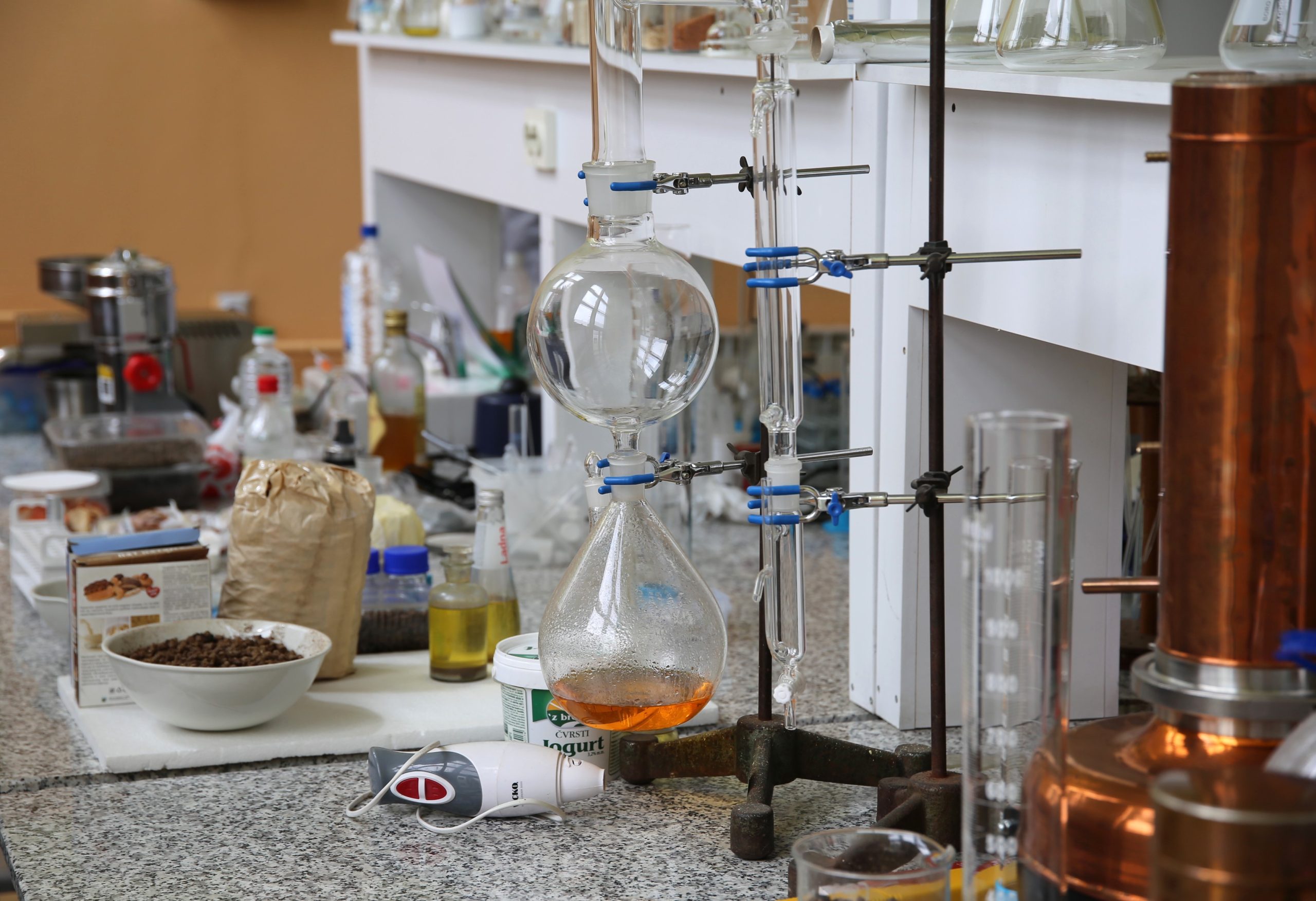
So, what is bioplastic and why is it a better alternative to the plastic we use abundantly?
Bioplastics are a type of plastic derived from renewable biomass sources, such as plants, agricultural byproducts, or microorganisms. Unlike traditional plastics, which are typically made from fossil fuels like petroleum or natural gas, bioplastics offer a more sustainable alternative.
The key ingredient for the bioplastics made in the biohacking Skopje laboratory – potato, can be found in every kitchen, restaurant, and fresh produce shop.
The production of bioplastics also results in lower greenhouse gas emissions compared to the production of regular plastics.
As a result, using bioplastics can help mitigate climate change by reducing CO2 emissions and other greenhouse gases.
Many bioplastics are also biodegradable or compostable, meaning they can break down naturally in the environment through microbial action, composting, or other biological processes. This can help reduce plastic pollution and environmental impact, especially in marine and terrestrial ecosystems where plastic waste accumulates.
So even though, continued research and innovation are needed to optimize its sustainability and scalability, bioplastics offer a promising alternative to regular plastics, as an environmentally friendly option for various applications, including packaging, consumer products, textiles, and automotive components.
Reposted from UNDP North Macedonia.
In tackling escalating social and environmental challenges, it is becoming clear that traditional project-based innovation methods, with their predefined objectives, outcomes and fixed timelines, often miss the systemic complexities of urban transformation. This includes tackling challenges like transport optimisation, energy transition, and air pollution. In the past few years, an increasing number of development actors, including UNDP, have acknowledged these shortcomings and pivoted towards more nuanced and responsive strategies. A shift to the ‘portfolio approach‘ represents this change in perspective, offering a framework that is flexible, integrative, and adaptable. In this blog, we present a case study that adopts this approach to combat persistent air pollution in Almaty, Kazakhstan. Reflecting on our collaboration with Dark Matter Labs—a strategic design and research lab—we share our insights and experiences from this methodology in practice. Our intent is to contribute to a growing dialogue on innovative methods, focusing on both the process—the ‘how’—and the objectives—the ‘what.’
Portfolios as a Method
As the first initiative in Kazakhstan to adopt a ‘portfolio’ approach, ‘Breathing City: Clean Air in Almaty Through Joint Efforts’, specifically engaged with the concept of portfolios as a dynamic model for organising around specific missions, such as clean air and improved public health. Originating from the field of finance (as primarily a risk management tool) and later adopted in the field of policy innovation, portfolios are understood as a network of actions, actors, resources (assets) that drive resilient transition processes. Unlike the conventional method of allocating funds and resources to sector-specific, single-point solutions that address a relatively narrow set of issues, the portfolio framework allows for the aggregation of diverse initiatives within a coherent strategic vision, enabling them to mutually reinforce each other. Moreover, this intention to consider synergies between different initiatives translates into a method of design, delivery, and management that is much more distributed and collaborative, rather than centralised.
However, the portfolio approach is not without its challenges. Institutionalising this method demands substantial efforts to transform procurement, monitoring and evaluation (M&E), and various legal instruments that have traditionally governed the life cycles of large development programmes. The novel approach of clustering initiatives by missions and synergies rather than by traditional sectors may complicate efforts to attract financing and government support, particularly when it diverges from established investment and planning cycles. Building new capabilities and institutional knowledge to enable the shift towards the portfolio approach also remains a continuous challenge. Recognising these obstacles, our project sought to refine and adapt the portfolio model to the unique context of Almaty’s air quality challenge.
Hypotheses for Change
Our initiative was built on several key hypotheses aimed at enhancing efforts in air quality action in the city, an active domain spearheaded by committed local actors engaged in advocacy, research, and technological innovation.
- Reframing the issue of air pollution to emphasise its health and economic implications would mobilise a broader range of stakeholders
- Bringing in new actors could help shift the conversation and action on air quality, and thus enhance existing efforts by diversifying strategies and perspectives
- By embedding the portfolio content in municipal and local partner plans and aligning with a new project office in the local government (Almaty Akimat, and its subsidiary bodies like Almaty Development Centre), we could develop a strong pathway for implementation
Translating Portfolio Method into Project Processes
The portfolio method, far from being a fixed framework, is inherently evolving and adaptive, reflecting the contributions from diverse participants and the specificities of the local context it is being initiated in. In the case of the Almaty air quality portfolio, we adapted it as a step-by-step process that integrates research, co-design processes with local stakeholders, and a cycle of review, learning and further development.
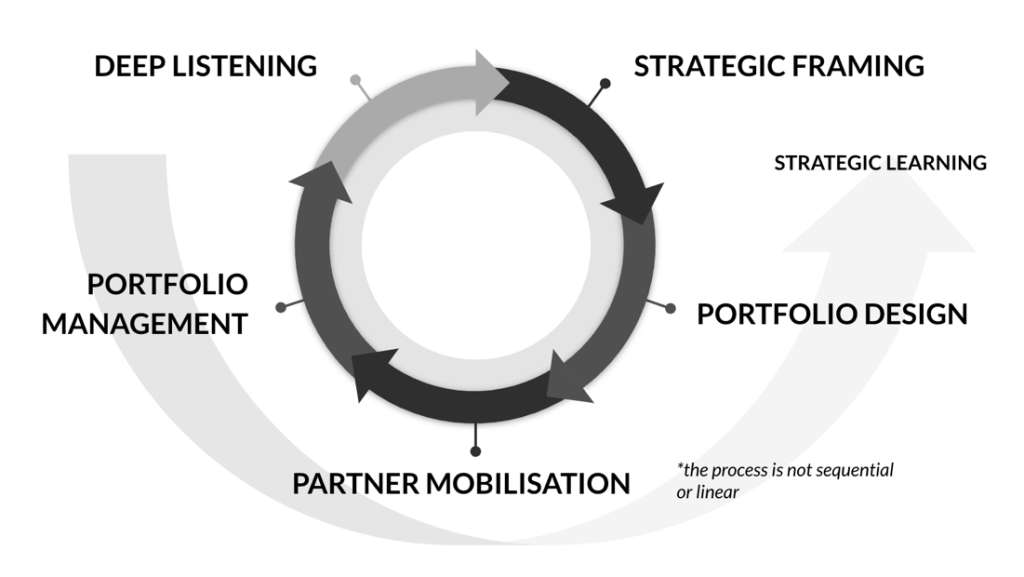
- Deep Listening: Enabled by stakeholder interviews and research — focusing on underlying barriers and innovations
- Strategic Framing: Focusing on strategic alignment with existing initiatives and identifying suitable scale and scope
- Portfolio Design: Enabling multi-stakeholder workshops for ideation and building legitimacy and alignment
- Partner Mobilisation: Moving towards shared accountability, multi-partner collaboration and new forms of governance
- Portfolio Management: Building tools and metrics for continuous portfolio development, implementation and strategic learning
Deep Listening and Strategic Framing
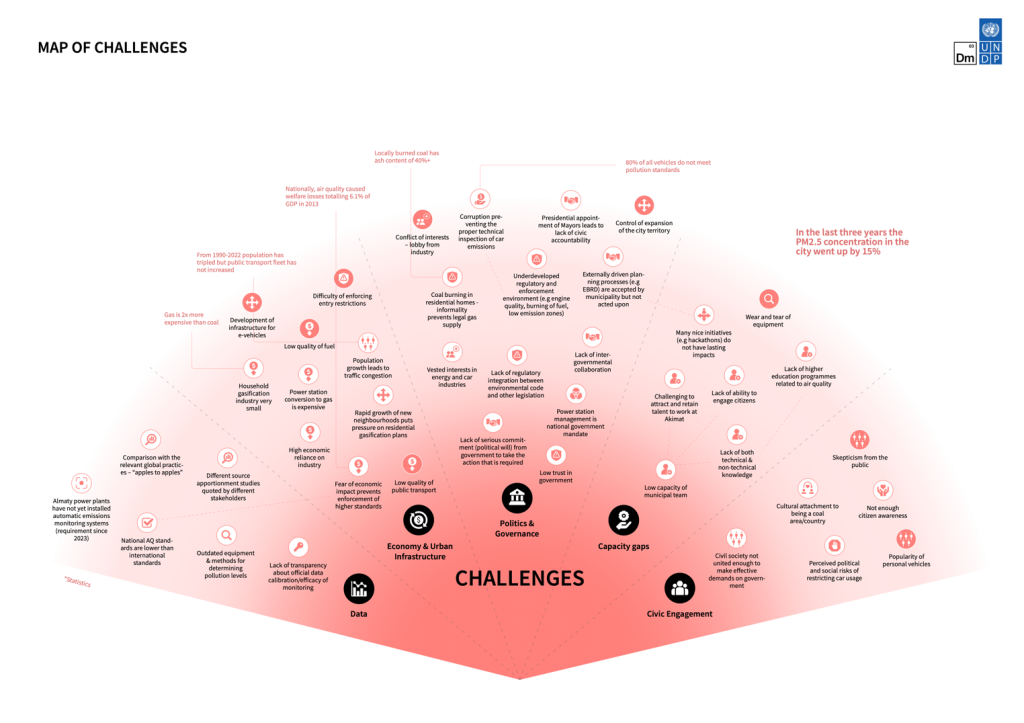
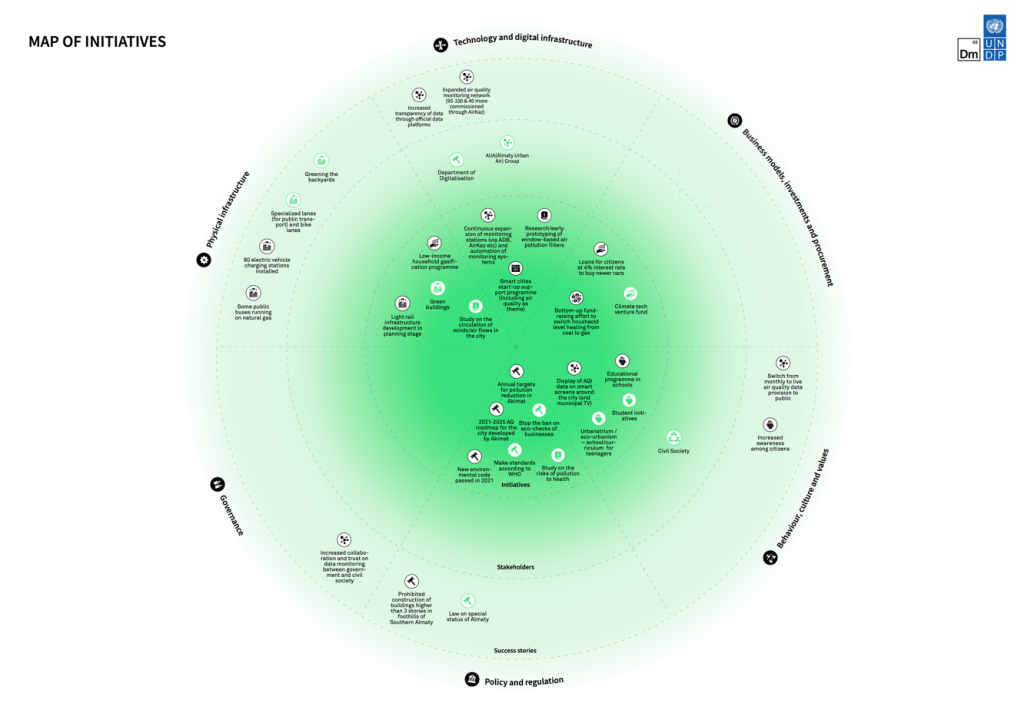
Our initial step centred around deep listening, a phase marked by stakeholder interviews and desk research. This allowed us to uncover the nuanced challenges and opportunities within the Almaty context, focusing on the underlying barriers to clean air and the potential levers for change. In April 2023, we held an in-person ‘sensemaking workshop’ inviting a diverse range of stakeholders — from local experts to community organisers — to share, validate and strengthen the insights gathered from the research. (More details about the process in our first blog.) Some practical tools that we adopted in an in-person and hybrid workshop context were the Five Whys framework, which allows collaborative investigation into root causes of problems, and the challenges and initiatives mapping canvases (see image below), which provide a framework that incorporates insights from desk research and invites participants to proactively add missing elements.
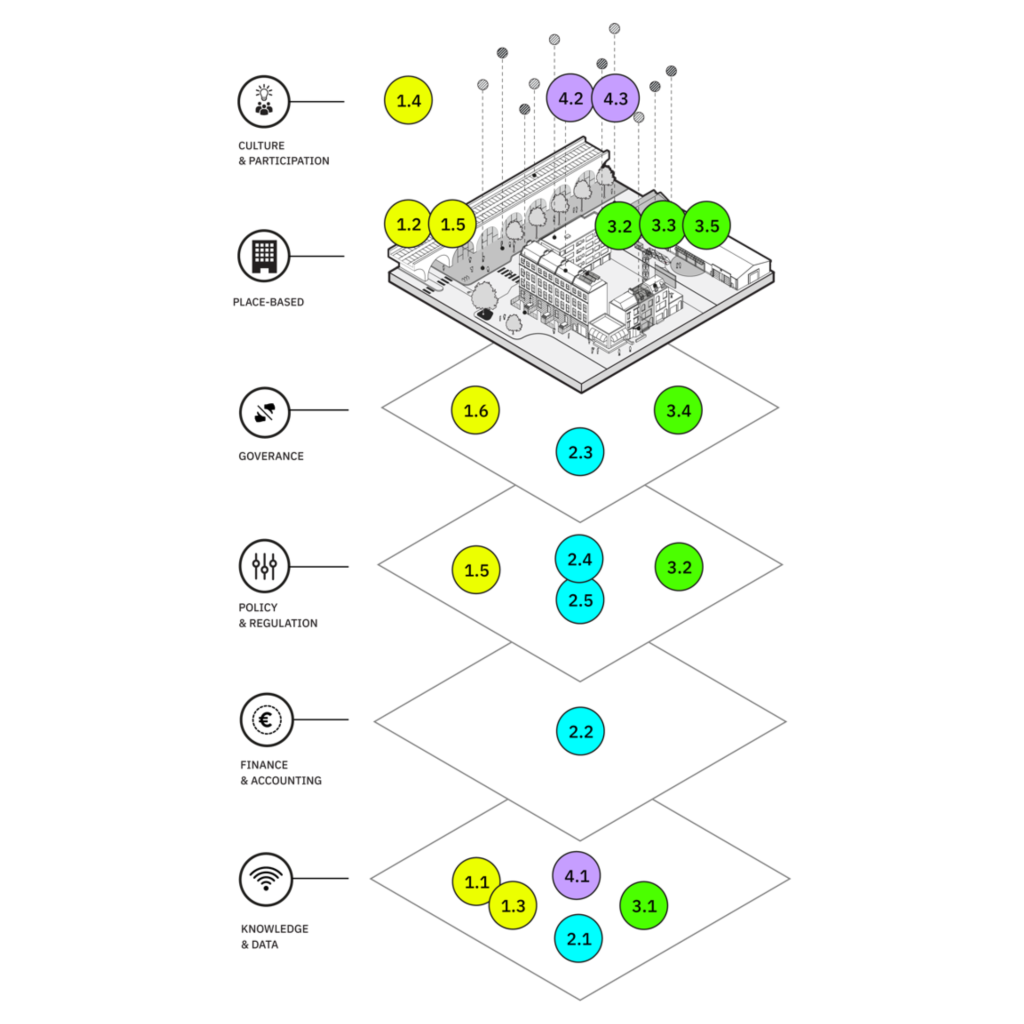
As a crucial step in the portfolio process, strategic reframing utilises insights from the identification of structural challenges to pinpoint gaps and highlight potential levers of change. Through participatory sessions, reframing becomes an opportunity to introduce diverse viewpoints into the portfolio, creating richer and more differentiated narratives as well as new entry points for action. In the case of Almaty, strategic reframing involved looking into one of the root causes of the challenge identified by local stakeholders: the fact that air pollution as an issue is often overshadowed by concerns for economic development because it is largely framed as an environmental issue. Through reframing, we were able to construct a narrative around air pollution that highlighted the economic implications and adverse health effects, particularly on children, which opened new avenues for collaboration between schools, parents, businesses, and medical researchers. This not only broadened the scope for advocacy but also facilitated knowledge sharing and potential for collaborative action.
Often, introducing a systemic perspective into an existing issue necessitates an expansion of the problem space, because root causes of a problem tend to overlap, and this exploration of common ground allows us to see how seemingly discrete sectors or domains of problems are in fact interrelated and interdependent.
Portfolio Design and Partner Mobilisation
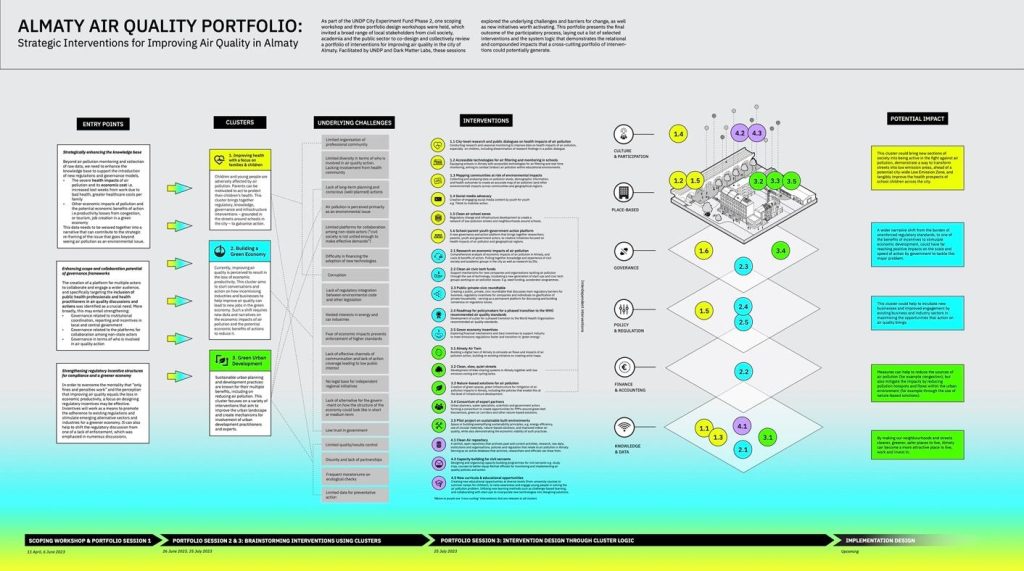
The next phase of the work involved a series of collaborative ‘design sessions’ to explore new actions and initiatives that could be integrated into the portfolio. The process not only helped generate innovative ideas but also built legitimacy and alignment among stakeholders, ensuring broad-based support for the portfolio’s objectives.
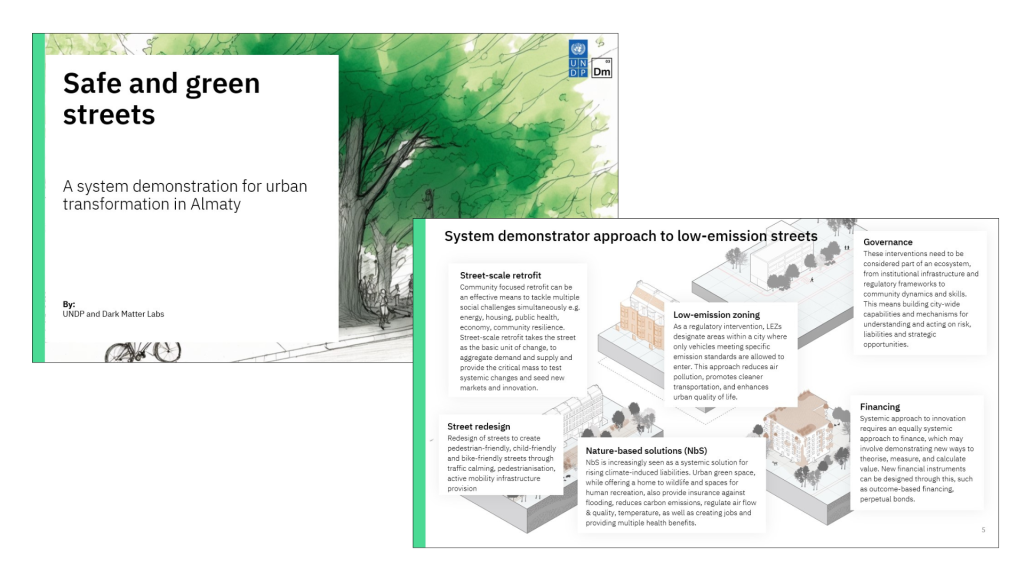
Instead of being a separate phase, partner mobilisation is usually embedded in the ongoing participatory activities that we hold throughout the portfolio design phase. This is to ensure a smooth transition to the implementation phase, and to avoid treating implementation as a mere exercise of delegation and delivery. In the Almaty portfolio, we introduced an additional step of creating a ‘nested’ portfolio—the ‘Safe and Green Streets’ initiative, which strategically connected several initiatives (or “options”) within the larger portfolio to align with critical developments in the city (specifically the new General Plan of Almaty by the government, and mandates of key stakeholders). This was an effort to improve the chances of investment, in a context where portfolio-based investments were rare, and to secure the buy-in of key local stakeholders who may not be familiar with the portfolio framework.
As such, portfolios emerged as a tool to move beyond traditional ‘master plans’ and municipal planning, which often result in extensive lists of actions that few people engage with and that become fragmented during implementation, typically being delegated to the most economic bidder. While the participatory portfolio design sessions helped counter the centralised and top-down nature of planning, transforming it into a more distributed and iterative process, an additional step is needed to make it truly actionable. Through our experience in Almaty, we recognised that to advance a portfolio of actions beyond a static list, it must be integrated into ‘pathways’ aligned with funding opportunities and potential coalitions of actors.
Portfolio Management and Strategic Learning
Portfolio management involves a dynamic process of strategic review and learning, combined with institutionalisation and mainstreaming, which is what we had attempted to do through developing a ‘nested’portfolio, aligned with municipal strategies. It recognises that portfolios need to be continually updated and respond to the latest information, learning through emerging partnerships that form along the way. In the Almaty portfolio process, we began with an open inquiry (not just a hypothesis that was going to be tested and evidenced), which was further defined through stakeholder interviews, challenged and validated continuously throughout the collaborative portfolio design process, and re-worked again through the formation of new partnerships. The evaluation of a portfolio does not happen at the very end—instead, it is iterated at multiple points throughout the process, which allows room for emergence and an ability to respond to the changing conditions of the system.
Lessons Learned and Looking Ahead
As a methodology, the portfolio approach is continuously evolving. Typically, the concrete outputs of a portfolio design process include a list of actions—also referred to as options, interventions, or experiments—that are strategically implemented by various actors. These actions are often clustered together to highlight adjacencies, connections, and potential synergies. In the Almaty portfolio, actions were organized under three strategic outcomes: 1) Improving health with a focus on families and children; 2) Building a Green Economy; and 3) Fostering Green Urban Development. These clusters align with the strategic framing of the portfolio, which addresses air pollution as both a health and economic issue. As detailed earlier, some initiatives in the portfolio were strategically grouped under the ‘nested’ portfolio of ‘Safe and Green Streets.’ This initiative envisions a network of interconnected innovations centred around schools, involving retrofitting for energy efficiency, low-emission zoning, urban green infrastructure improvements, and tactical urbanism for community engagement.
As we continue the first stages of implementation, which includes among others a small-scale experiment centred on tactical urbanism, one critical reflection has emerged: a mere list of actions—or a portfolio of actions/initiatives—is insufficient. Greater effort is required to understand and articulate how these diverse actions can be implemented in real-world contexts. In essence, a more nuanced ‘portfolio’ approach to ‘implementation’ is necessary to ensure these strategies are effectively realised.
As a first step, we are exploring how we can expand and complement the portfolio of actions with additional data and insights such as a list of relevant actors and assets in the ecosystem. The identification of relevant actors within the system highlights the potential for new, sometimes unexpected alliances that span institutions, spaces, and narratives. Similarly, identifying the assets available within the system—from financial resources and regulatory frameworks to democratic legitimacy—underscores the critical role of resources and constraints in shaping action. These assets do not merely facilitate action; they define the boundaries of possibility, encouraging, constraining, and aligning actions within the urban ecosystem. Ultimately, a portfolio that effectively conveys how multiple connected actions, delivered through a coalition of diverse actors who share resources and build on each other’s capabilities, can significantly amplify impact.
Our initiative on improving air quality in Almaty has been a journey of discovery and learning. As the portfolio advances into new phases of implementation, it is progressively handed over to local actors who institutionalise and tailor the process to their context. Concurrently, we continue to explore ways to scale up the venture and apply the lessons learned to initiate or expand larger UNDP programmes both within Kazakhstan and beyond.
We extend our sincere thanks to Eunsoo Lee, Steven Bland, Gyorgyi Galik, Simon Höher, and Anel Moldakhmetova from Dark Matter Labs for their pivotal role in co-leading our portfolio design process. Their expertise and dedication have been invaluable in shaping our approach and guiding our journey.
Armenian municipalities take ownership of their development
Armenia is a country of ancient histories and modern development. Walk through its capital Yerevan and you willpass through a park filled with modern art sculptures amidst skyscrapers and shopping malls. Yet the country can also contend for the birthplace of Christianity as state religion and winemaking.
Exploring the narratives of three places around the country – Gyumri, Kapan and Areni – carries us through the rich cultural heritage and history of Armenia. Gyumri and Kapan’s origins date back to the 5th century, while Areni’s history begins in the 13th. These municipalities, each with its own unique history and past, are actively shaping their futures.
As these municipalities have evolved, they’ve faced unique and complex challenges that cannot be solved with one-off solutions from the shelf. Supported by the EU and UNDP’s Mayors for Economic Growth (M4EG) initiative, these local governments are now designing mission-oriented economy strategies for their municipalities. Over the last 10-15 years, there have been plans in Armenia to decentralize government functions, giving more power and autonomy to local governments, but it’s not yet a direct mandate. Through this initiative, and the co-design and grants it provides, municipalities now have stronger control and mandate for their reinvention journeys.
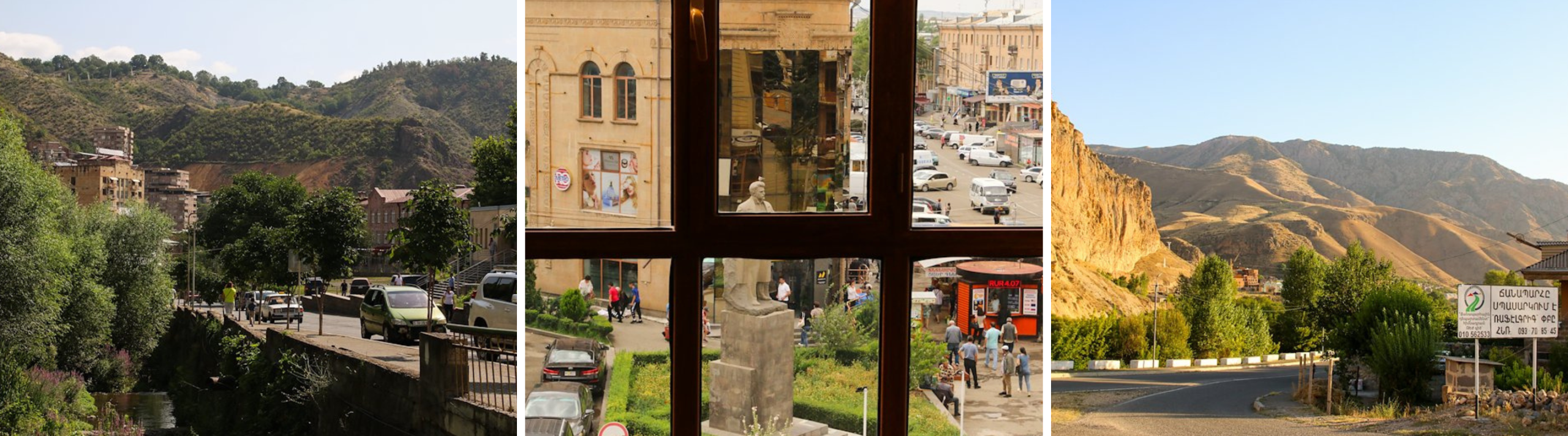
That process of reinvention has citizen involvement at its core. By listening to the community and conducting sessions to listen to their concerns and desires, the municipalities are putting residents at the center of their redevelopment.
And the driving force behind much of this work lies with a younger generation. These are individuals who care deeply for their place of origin, who choose to stay and reimagine how to make living more attractive and sustainable for everyone rather than migrate to Yerevan or beyond.
GYUMRI. POPULATION 112,000.
OUTLOOK: EQUITABLE AND RESILIENT CULTURAL TOURISM
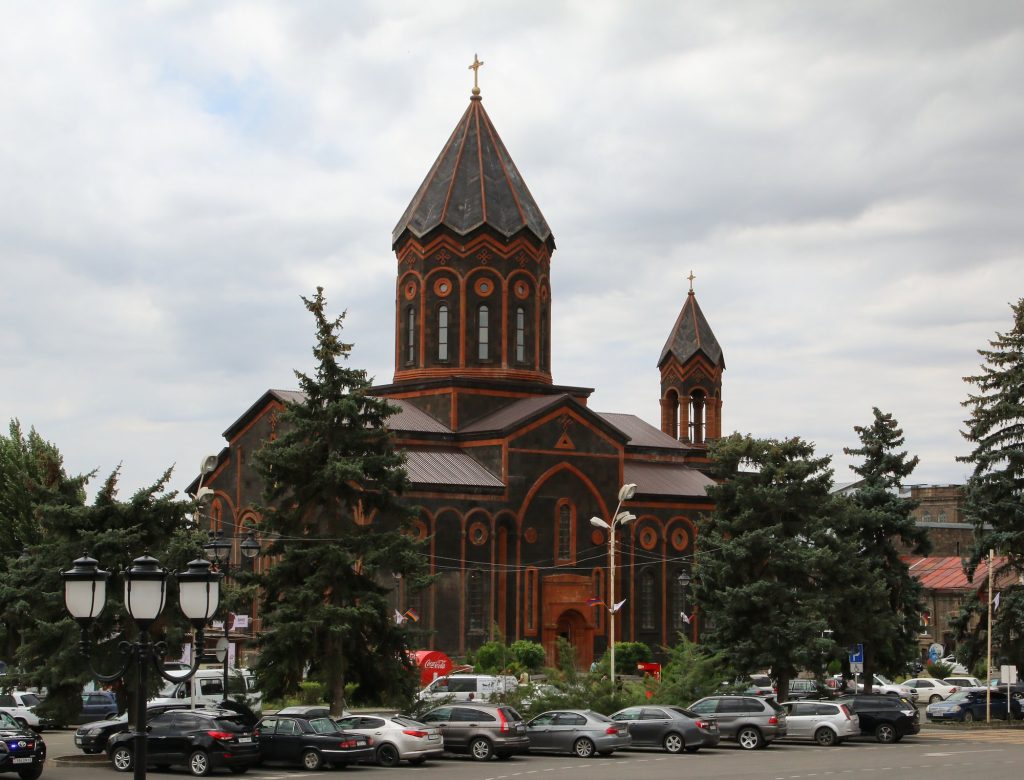
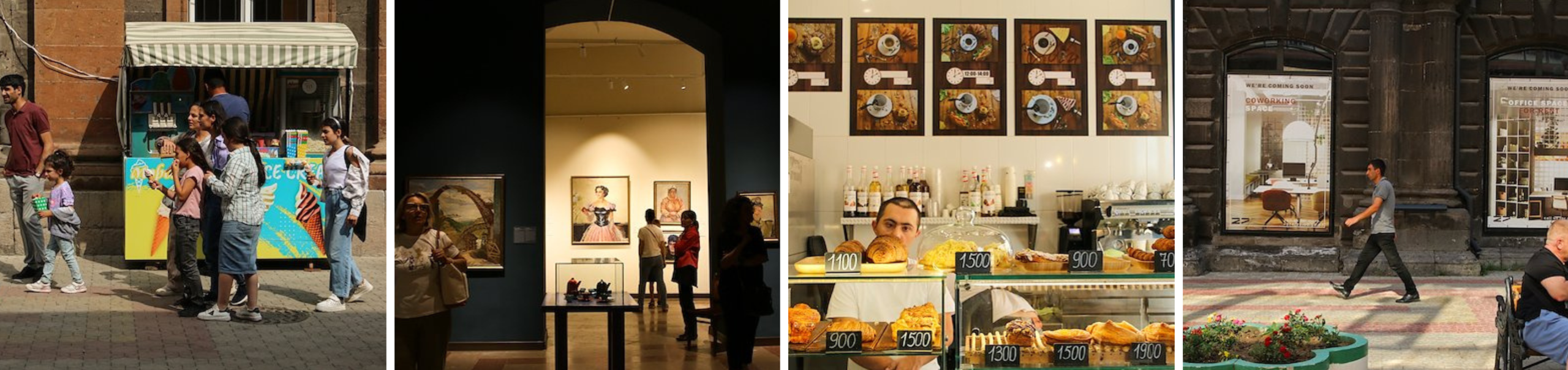
Gyumri, population 112,100, is the second largest city in Armenia and known as its cultural and sports capital, with a rich history and unique heritage sites and customs. But some of the damage from a big earthquake in 1988 still has not been fixed, despite much effort to mobilize support.
The city’s cultural heritage is strong, encompassing everything from architecture to applied arts, from music to poetry and theater. Wood and metal production – also linked to the cultural economy – make up a significant share of income sources. Historically, trade was also a major sector because of its size and strategic location, as well as a developed textile industry, construction and hospitality sectors.
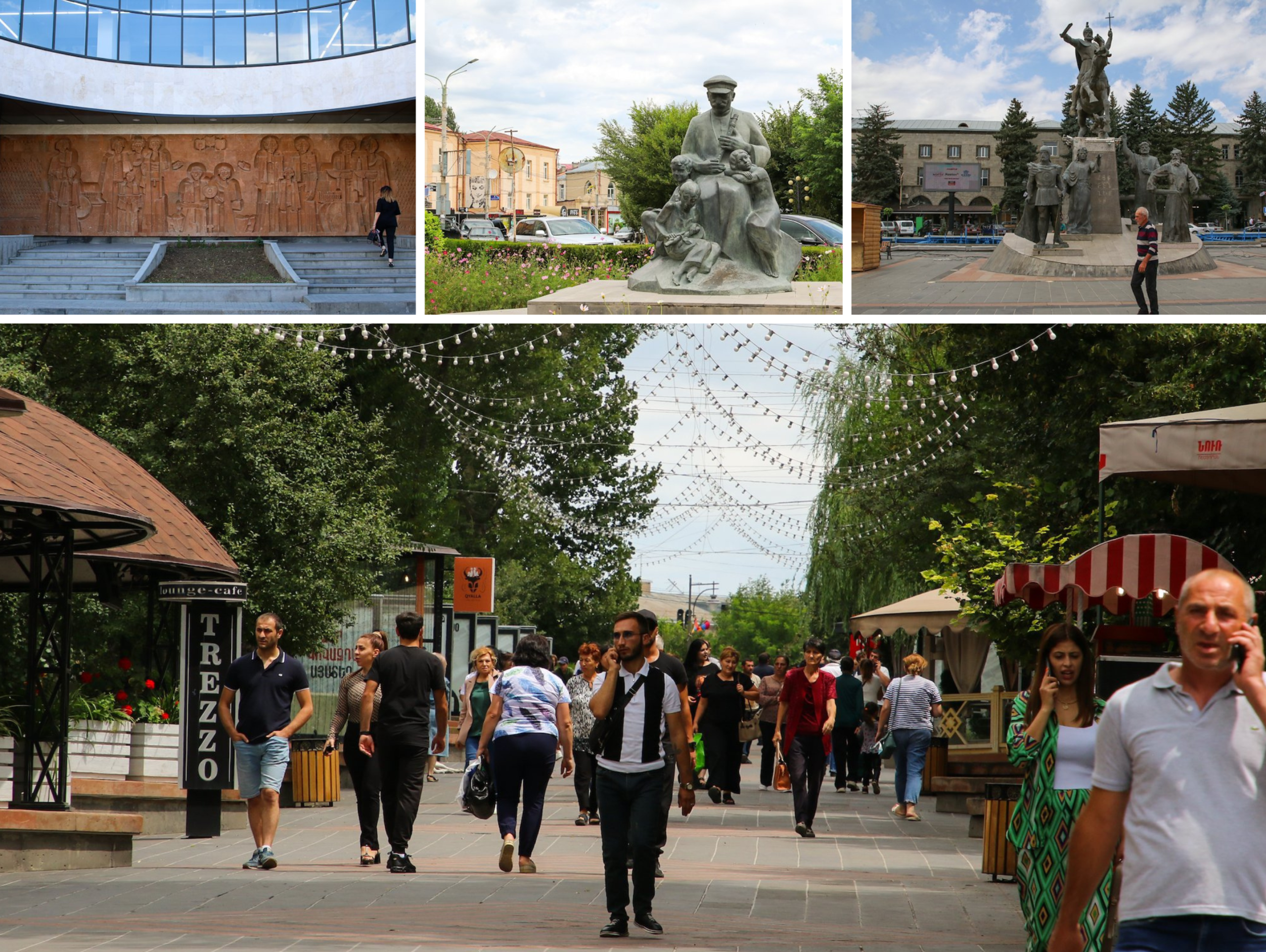
Since 2018, there has been a surge of tourists, magnified during COVID, which the city was not prepared to accommodate. Despite facing growing pains, related to cultural and tourism development, the city has successfully reactivated its former cultural and touristic life post-pandemic. But tourists are still consuming the cultural heritage of the previous century. Additionally, many cultural institutions under municipality management have not changed their practices or adapted to new technological innovations.
The municipality’s plan is focusing outwardly on one hand, to improve the tourism infrastructure and make it more adaptable to the 21st century, and inwardly on the other, to create an environment for its residents that is environmentally healthy and allows for new culture and opportunities to emerge.
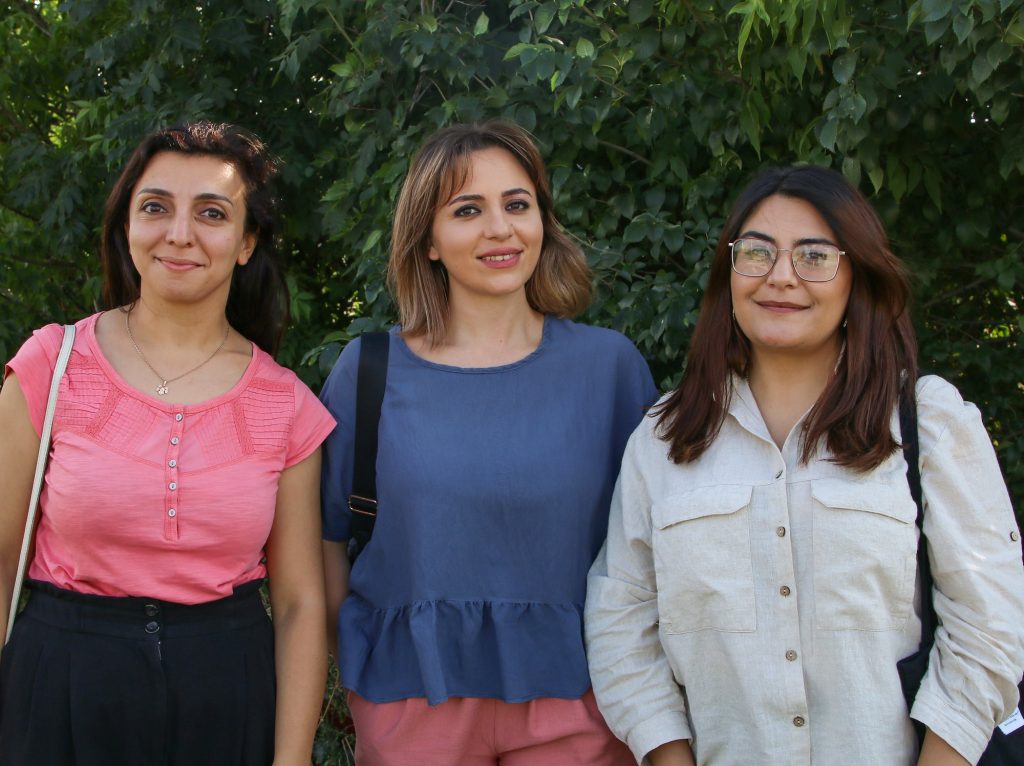
Leading the vision is a team of dynamic young women: Lilit Tovmasyan, Marine Hovhannisyan and Emma Baghdasaryan, all part of the Portfolio team.
“The three of us – Marine, Lilit and I – were all born in 1988, the same year as the devastating earthquake,”
explains Emma, programme coordinator at the Foundation of Urban Development. “The impact was significant, shaping our challenging childhoods. A few years ago, we initiated a gathering ‘88 30’, which brought together individuals born in 1988…who have been shaping the city across different sectors. We want to emphasize that the city’s future rests in our hands, and we’ll support the city that has lost so much by investing in our community, especially the youth.”
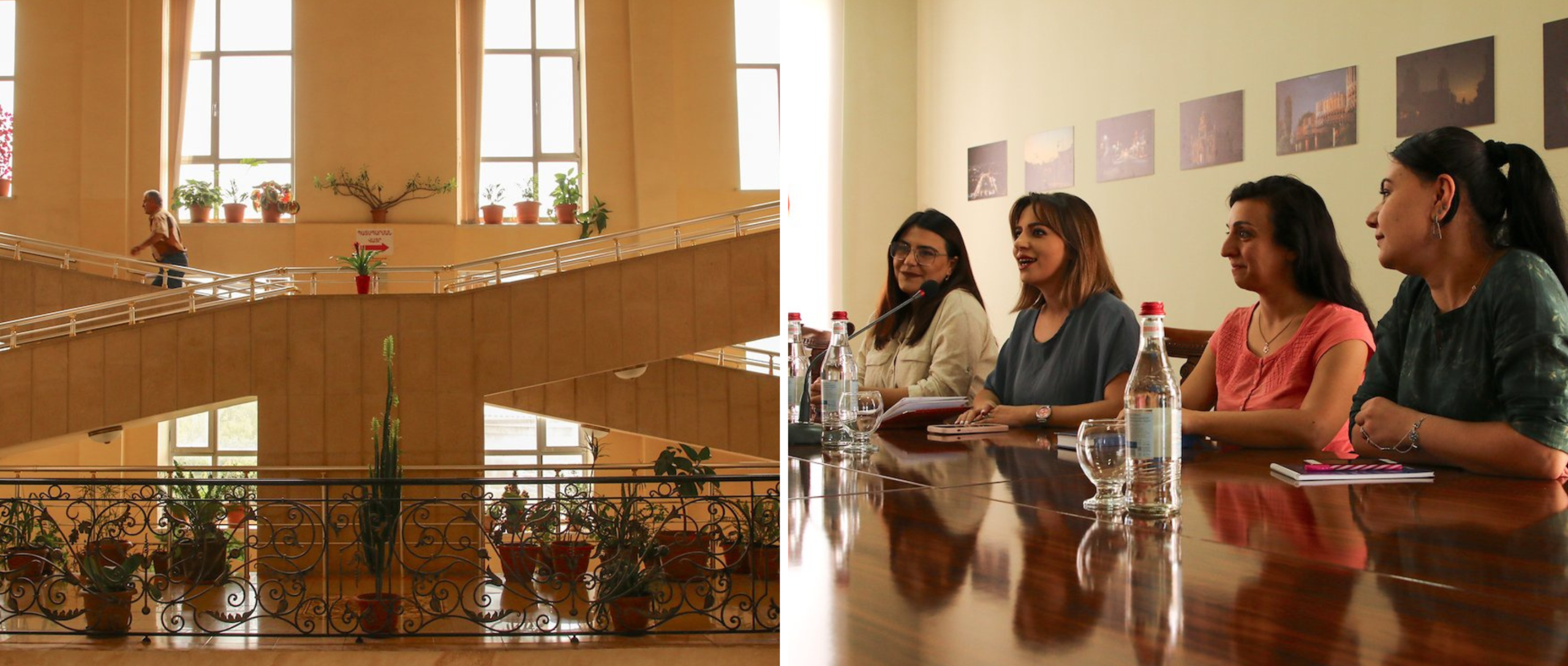
Lilit, head of the unit in the Department of Culture and Youth Affairs, notes the people are special, and their vibrancy can help move the city forward despite the challenges. “On the one hand, many of them reflect the traditions and heritage of our ancestors. At the same time, there exists a robust and progressive community galvanizing the need for change and innovations.”
“To plan the future, we must assess our past,”
Marine, also in the department of Culture and Youth Affairs, points out. And perhaps use it and reinterpret it. She hopes some of the factories and sectors can be revitalized and renewed, and talented youth can create cultural assets that reflect the current times. “Personally, I would love to contribute to the cultural sector and help educate the new generation.”
KAPAN. POPULATION 44,362
OUTLOOK: BROADENING HORIZONS TO ENCOMPASS MORE DIVERSE ECONOMIC AND COMMUNITY INITIATIVES
Kapan, in southeast Armenia, serves at the administrative center for the Kapan Municipality as well as the provincial capital of Syunik Province. The economy in this region is mainly based in the industrial sector. Historically reliant on mining, which is currently 80-85 percent of its economy, the city’s well-being has been impacted by foreign investors. The majority of the community is connected to mining in some way, but in the foreseeable future, the resources will dry up, bringing significant cuts to jobs and incomes. A high rate of migration is expected.
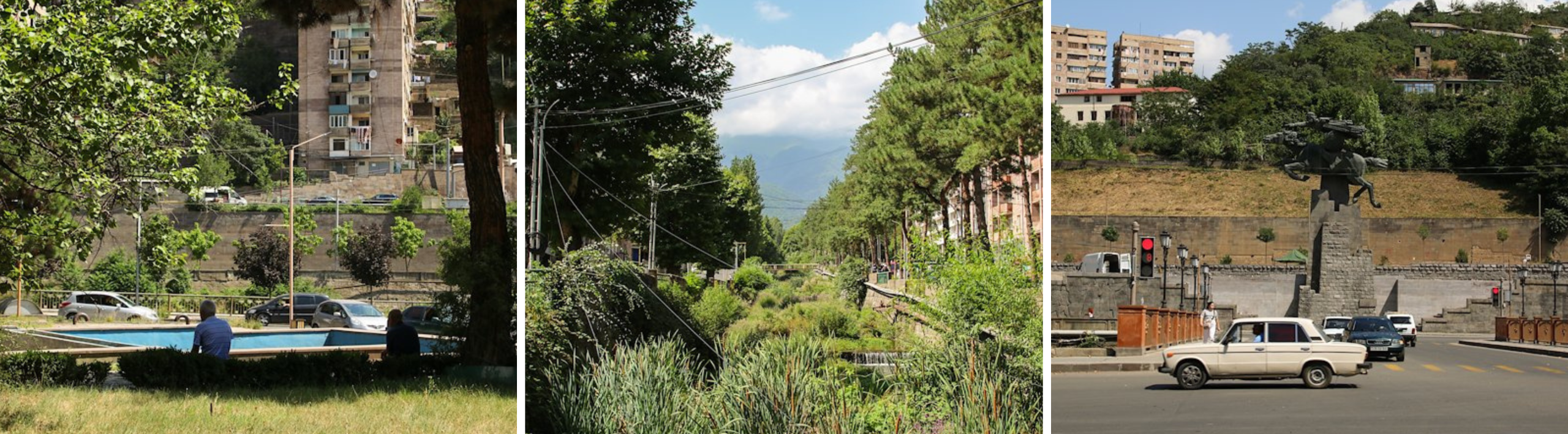
Mining is a difficult job and poses severe health risks to those employed in the system, as well as for the environment where communities live. Traditionally a steady job, younger generations are less interested in this type of high-risk job.
Security risks leave people with a state of unease and insecurity, which can also impact the overall well-being of the local population.
So Kapan is broadening its horizons to encompass more diverse economic and community initiatives (focusing on business and talent development). It’s asking: what are the new areas of economic development? How do you keep younger generations in Kapan, or get them to return?
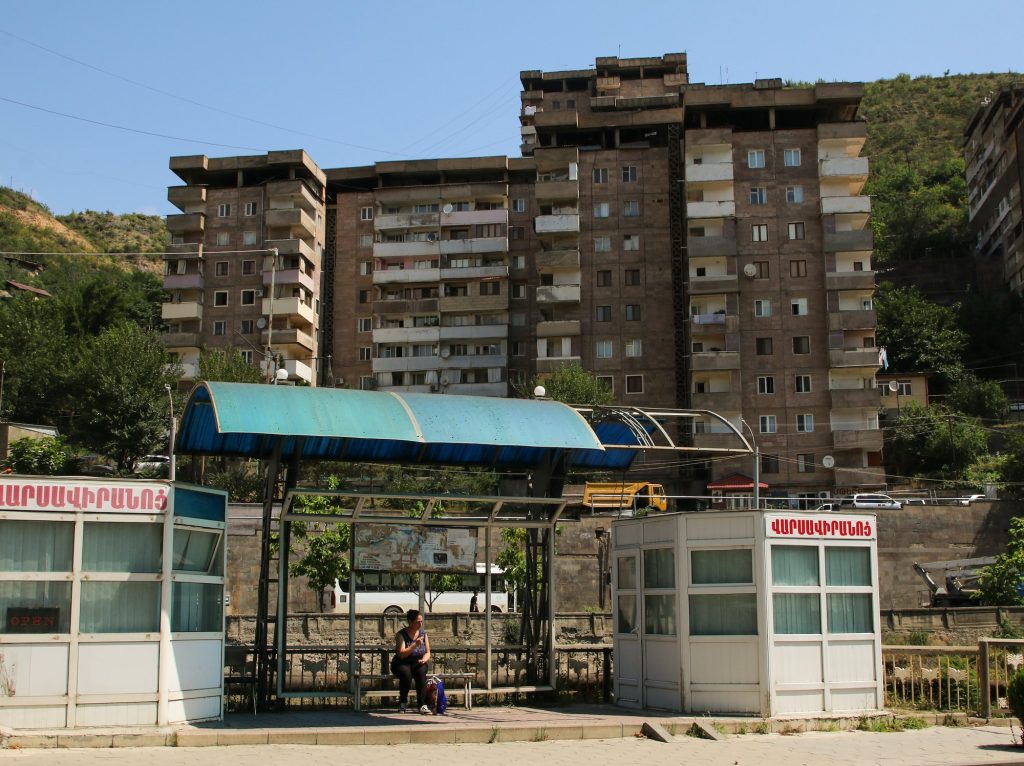
One of these ways is developing technology and entrepreneurial talent that can match needs and skills in existing or upcoming industries. The TUMO Center for Creative Technologies, free-of-charge educational program for teenagers, now operates a training center in Kapan, supported by the EU.
The municipality is considering also using it for mothers and women returning to the workforce after discontinuing their career for family reasons, a large, underused group of work talent. Incubator labs and collaborative studios can help nurture entrepreneurs in tech startups, local production and digital design businesses.

But it’s not just economy that makes a place sustainable for living. How can the municipality improve social protection and the social cohesion? Issues of security have brought stress to the community, and in planning for the future, the community has asked the municipality to incorporate better well-being into the strategic planning ideas for the future.
With the more centralized government, Kapan did not previously have an understanding of how to “work with” and address complex challenges, and institutions are dealing with this for the first time.
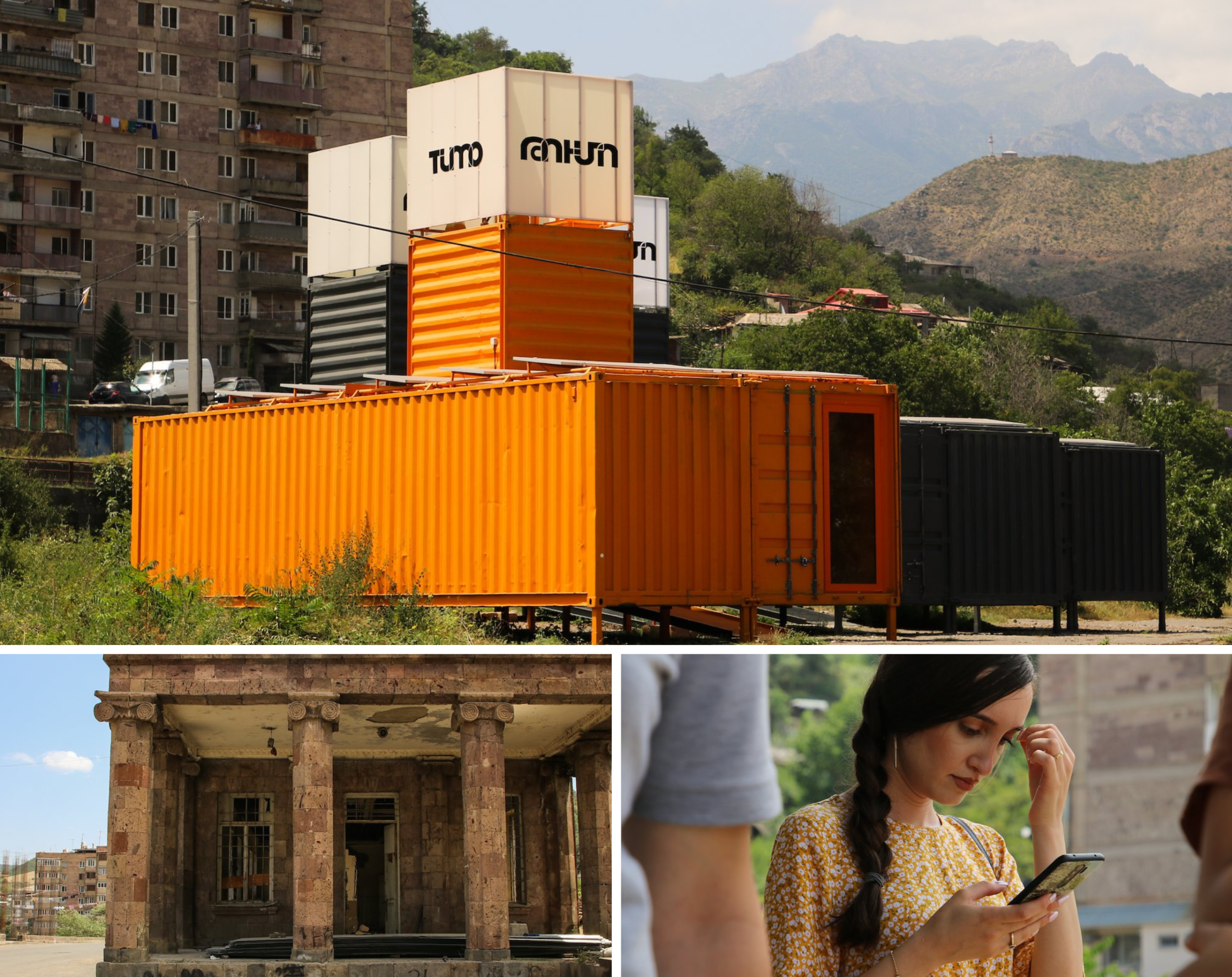
From the community side, social worker Svetlana Manasyan has been a key liaison for the process and Portfolio team, working to incorporate mental well-being into the municipality’s overall plans.
“My deep connection to my family, friends and community keeps me attached to this place,” she explains. “I’ve noticed that our community is very well-educated, something common with Yerevan. What differentiates Kapan apart for me is its distinctive nature and culture.”
She notes that low salaries push the younger generation toward migration or emigration for better job opportunities. As an industrial municipality, it is easier for men to find jobs than women.
“I see a need for social workers in the municipality, positioning me perfectly to make meaningful contributions now,” she explains. And she also sees hope:
“I’m not the only young person who chose to stay in Kapan. Many others have also opted for remote work, which enables them to stay in Kapan and contribute to the municipality’s development.”
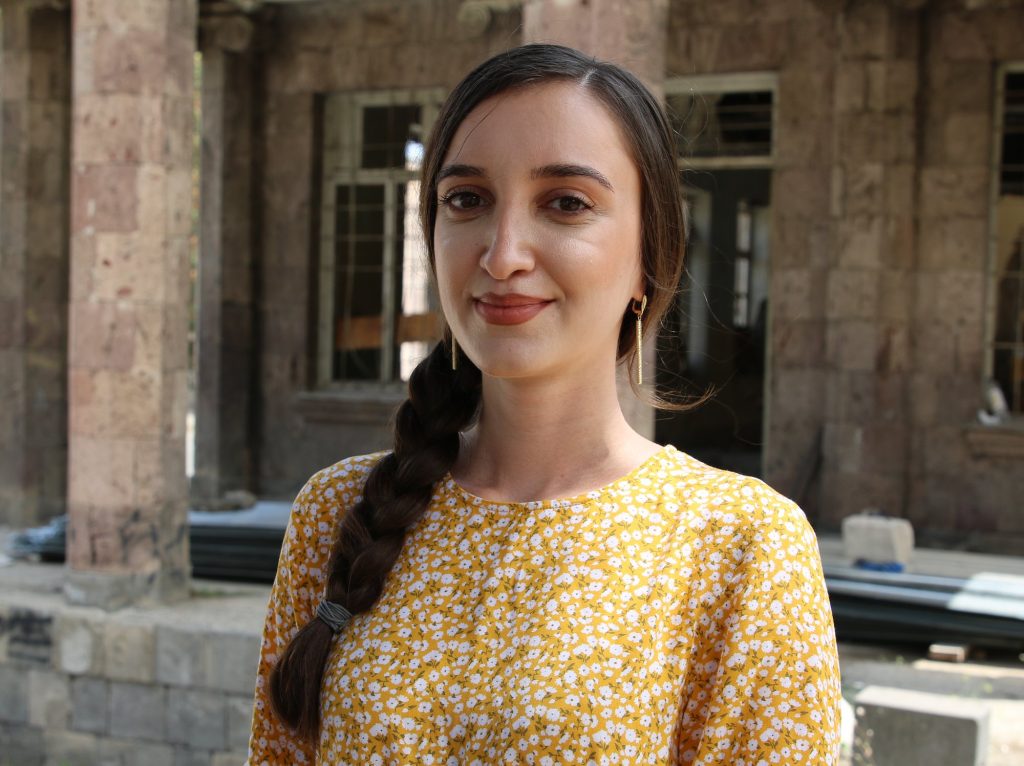
ARENI. POPULATION 11, 309
OUTLOOK: STRENGTHEN CULTURAL LANDMARKS AND CREATE OPPORTUNITIES FOR ALL VILLAGES TO ENHANCE TOURISM
Areni municipality, a united community of nine villages, sits in the center-west of the country. From Khachik village, you can see Iran, Azerbaijan and Türkiye.
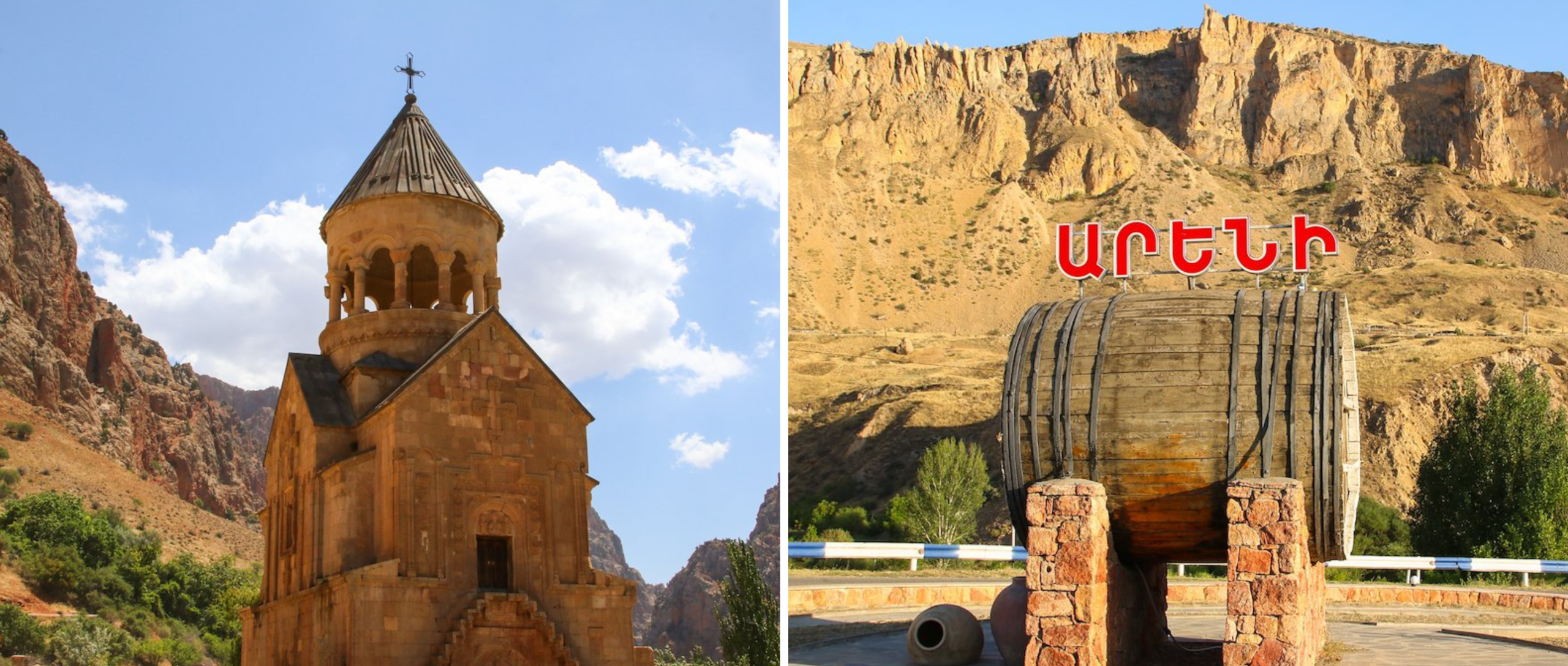
Areni is known as a centre for wine production and as a big name in wine history.
“In Areni and its larger vicinities, around 200 families are involved in winemaking,” explains Norayr Grigoryan, part of the M4EG portfolio team. “Some produce it for sale, others do as a hobby or gifts for family and friends. With 6000 years of wine history, it became deeply rooted in our history and traditions.”
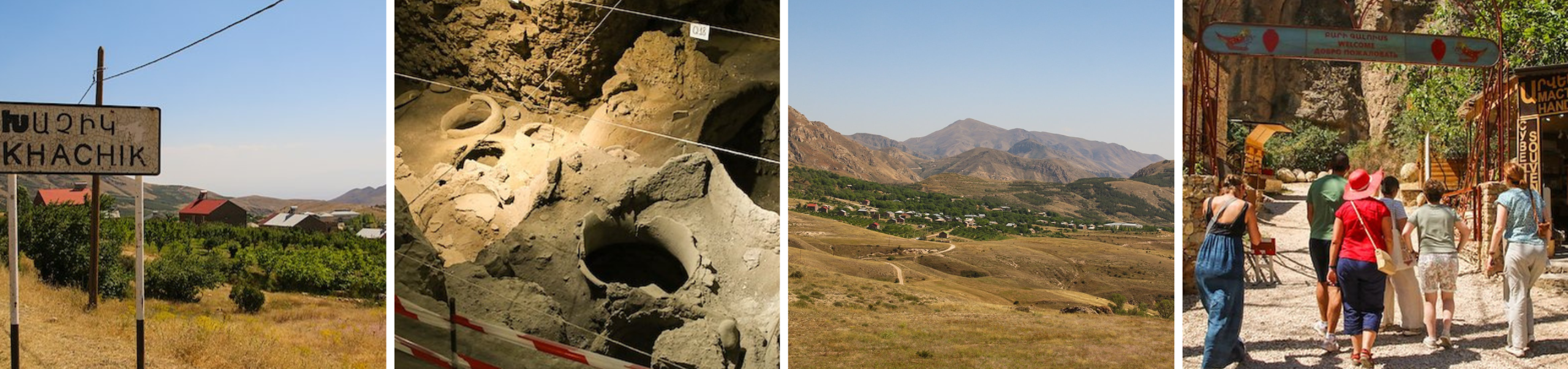
Areni also boasts many unique monasteries, including 13th century Noravank, which are important for Christian tourism, a key sector for Armenia. Despite the strong heritage, tourism infrastructure is lacking. Many of these locations and sites are managed by different private and state entities, making it difficult to generate coordinated tourism efforts. When tourists come, it’s usually just for a few hours as they pass through to other parts of the country.

So the municipality is focusing a sustainable tourism transformation, both economically and environmentally, that allows for a diverse, connected and attractive “package” for visitors. This means improving infrastructure for current attractions, developing a brand for wine tourism and identifying new niches and alternative offerings, such as gastro hubs (supported also by UNDP and others) and outdoor adventure tourism.
As one administrative unit, however, it is difficult to craft a universal approach that delivers for all villages. Only 2 of the 9 have wine production or churches, and some villages are more disadvantaged and remote, lack human capital and face more security risks. So special efforts must be made to ensure that all can benefit from this major sector.
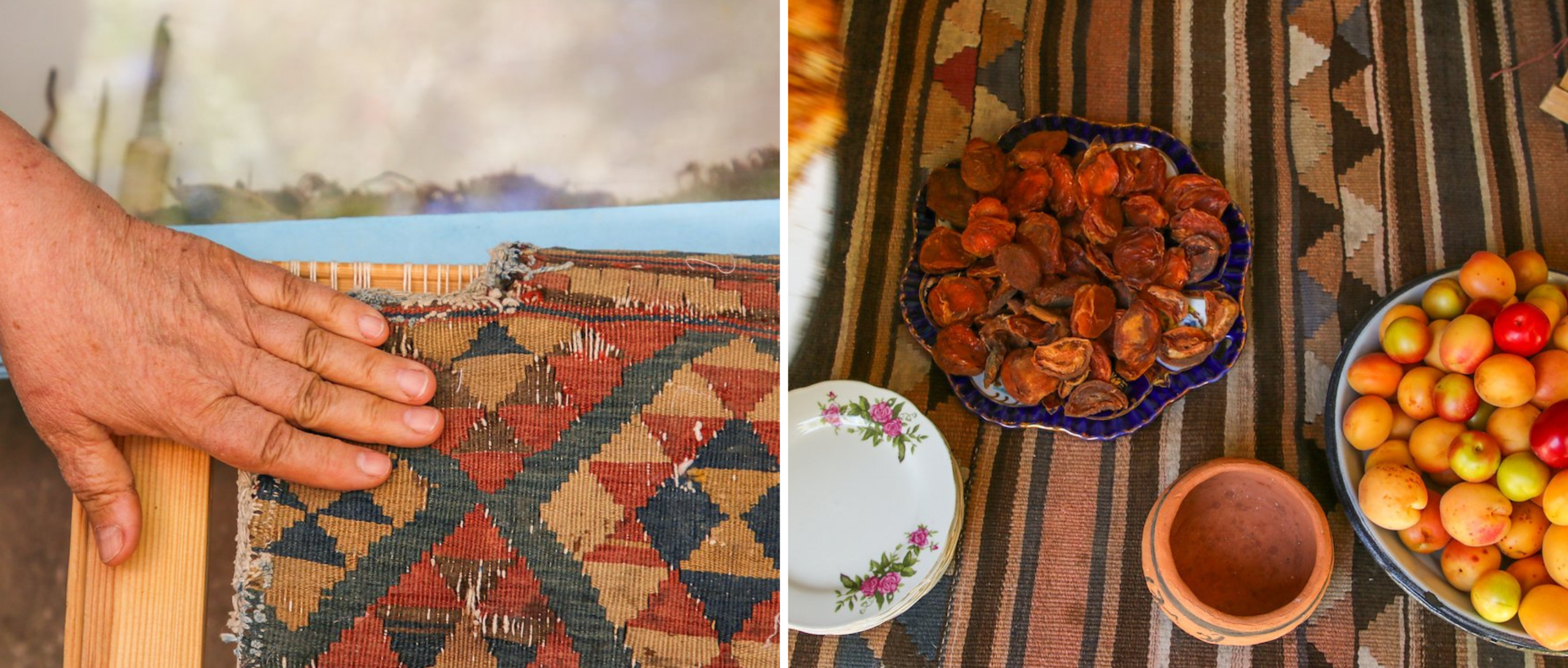
Norayr wears many hats in addition to the M4EG one: leading specialist for advertisement services and tourism for the community, media worker and a winemaker and purveyor of a 30-year-old family vineyard.
“Being born and living in a place naturally connects you to its landscapes, history and cultural legacy,” he says. But that’s not always enough to keep one at home.
“A vast development challenge is that village life doesn’t appeal to young people. Unfortunately, there is a brain drain, a strong migration tendency, and a high level of urbanization.”
Norayr wants to be an active part in reshaping his community’s well-being and future development, so that the younger generation also has a place here.

All these efforts revitalize historic gains and embrace future-readiness where history and progress can coexist and flourish, where community engagement and sustainable development are being actively pursued.
The article was republished from UNDP Europe and Central Asia’s website.
The Mayors for Economic Growth (M4EG) is a joint EU & UNDP initiative to support Mayors and their teams in the Eastern Partnership region. The M4EG offers resources, network and learning opportunities to explore new trajectories of growth, to make towns and cities more attractive for people and investment. The M4EG takes a ‘hyperlocal’ and whole-of-place approach. There are no quick fixes for complex challenges – how is your municipality investing in continuous learning, experimentation, and collaboration to be more #futureready?
Three years ago, we embarked on a new journey with the EU funded Mayors for Economic Growth (M4EG) initiative, supporting mayors across the Eastern Partnership to develop new growth trajectories through mission-oriented innovation. Our goal was ambitious: to transcend business as usual and embrace both a systematic and systemic lens. This initiative, spanning a network of 420 municipalities, has been more than just support for strategy development and economic planning. It’s been a venture into what it takes to stay relevant in a changing and complex environment – from the onset of wars and forced migration, pandemics, and energy crises to local election changes.
We needed to capture learning rather than monitoring only
Recognizing the ever-changing realities within these municipalities and their contexts, we realized that we needed to stay on top of changes and patterns as a team, and that a proactive approach was vital. We recognized the necessity of not only monitoring or evaluating our activities, but also quickly and efficiently reflecting the realities on the ground to make relevant changes based on the evolving context. Hence, we sought to create quicker feedback loops and actionable intelligence, which led us to establishing a rhythm of learning rituals and tools. In 2022, we introduced the M4EG Systems Learning Framework. This tool wasn’t just about monitoring; it was a framework to deepen our insights and guide decision-making, aligning with our mission to increase the relevance of our development efforts.
This led to learning questions that complemented the standard results-based management ‘outcomes’ and ‘outputs’
We understood that the traditional linear progression from output to outcome, akin to a strategy, often yielded uncertain results, with the behavioral or organizational changes being difficult to attribute, and possibly not even influenced by our best-intentioned efforts. Balancing the often quantitative indicators with qualitative insights, we designed learning questions to complement the standard indicators (see example below). To operationalize this, we conducted monthly internal online reflection questionnaires as part of our regular meeting rhythm, to uncover patterns and insights beyond standard monitoring indicators. This shift opened new avenues for understanding the added value of our work. It was fascinating as we identified patterns that we could not capture with the standard monitoring indicators.
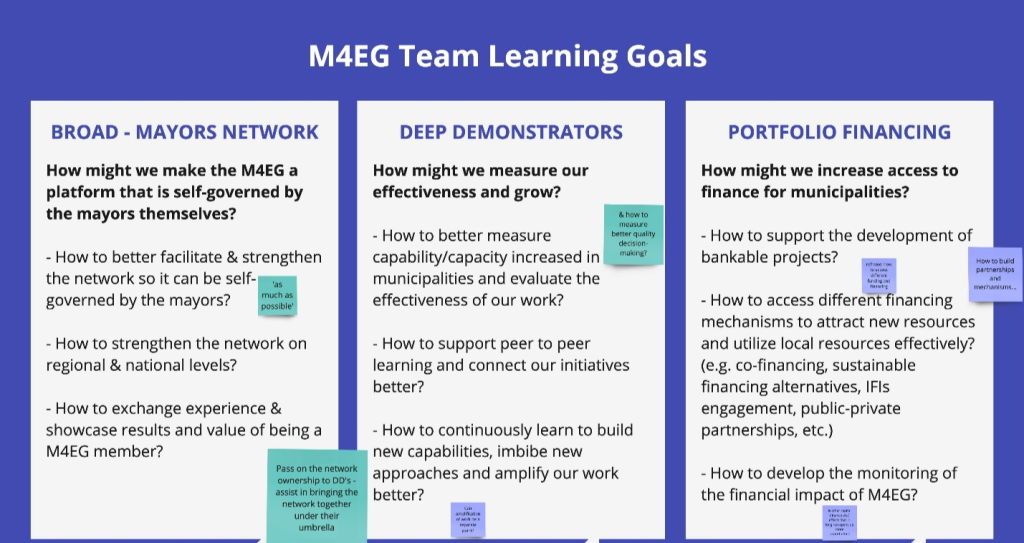
One example of a key insight and how we adapted
One key learning question for enhancing our network focused on improving the exchange of experiences and showcasing the benefits of M4EG membership. Throughout the year, we actively sought effective ways to facilitate this exchange and encourage member participation. A significant insight was the value of cross-border municipal networking and collaboration, particularly highlighted during regional events or peer-to-peer exchanges among local authorities. These periods saw a surge in positive feedback and appreciation from municipalities, reinforcing the importance of being part of the network. This insight led to a renewed emphasis on organizing meaningful network gatherings and improving existing ones. This involved broadening participation to include diverse voices and partners, in response to emerging needs, which also meant bringing in international financial institutions, other partner initiatives at national and international levels, and fostering greater engagement of central governments.
(Learning) culture eats (learning) strategy for breakfast
Fostering a culture of learning necessitated a shift in our approach to questioning – moving away from routine updates and towards more probing inquiries focused on learning, unexpected discoveries, and navigating change. Instead of asking, “What did you do last week?”, we began asking questions like, “What surprised you during your meeting with the municipality?” We augmented this shift with an online space for project staff, creating a platform for sharing and collective learning. Encouraging rituals such as celebrating ‘wins’, foster curiosity and creating a safe space for sharing ‘fumble brags’ and blind spots became integral to our approach.
We have also seen the added value of principles to lean on. A key principle has been ‘not to come with a solution, but a process to co-design solutions in a specific context’. The impulse to immediately solve problems had to be replaced with a sense of curiosity and appreciation for the value of discovery, rather than focusing solely on creating predefined blueprints. Another key principle for learning is now the 70-20-10 model. Where in addition to the 70% of core, tried and tested activities, another 20% of our work ought to be focused on emerging topics and ideas (and ideally 10% for ‘crazy ideas’), where experimentation is needed to help our work and capabilities evolve and stay relevant.
What has been difficult
First, a key realization was our tendency to report actions rather than reflect on learning. Shifting from a control and oversight mindset to one of reflection and learning remains an ongoing journey, and where we seek inspiration from others.
Second, we operate within traditional project management and administrative systems that emphasize accountability and risk management over learning. While we are still accountable in the traditional sense of delivering a clean or green dashboard for all indicators and risk registers, we also nurture a a mindset of ‘yes, and’ as well as curiosity. Continually advocating for an internal operational and cultural shift towards a learning mindset is a critical part of our journey.
Looking ahead
Now in 2024, our aim is to augment our learning muscle by experimenting with new rhythms and rituals, and emerging technologies like artificial intelligence. In a world that constantly evolves, our ability to adapt and learn is our most valuable asset.
We would love to hear from others working on fostering adaptability through actionable learning and insights in their projects and programs. What strategies, rhythm and rituals have you found effective? Please reach out at: irh.innovation@undp.org.
This piece shared what we are working on internally, and we have also tested this framework externally. In 2023, we applied the system learning framework with a cohort of active municipality staff. More on this to come soon.
How can cities get the support they need to achieve their climate ambitions? This conversation in partnership with the City Climate Finance Gap Fund explores how local governments can strengthen cities’ capacities in climate finance.
UNDP’s Head Disaster Risk Reduction & Recovery for Building Resilience Ronald Jackson opens the talk with remarks on cities and urban spaces being an important player for climate and disaster risk reduction action, because (1) urbanization will only intensify over the coming decades, (2) most development trends will be concentrated in cities, (3) there is a discernible urbanization of climate impact and disaster risk and (4) deficits pertaining to governance resources and capacities constrain cities’ ability to meet existing needs and emerging priorities.
To set the table, UNDP Istanbul Regional Hub’s Regional Project Manager – Mayors for Economic Growth Tina Stoum presents ways Mayors for Economic Growth, a network of 425 municipalities, can help secondary cities explore new trajectories of growth within planetary boundaries, with a focus on how can cities and towns can become more livable and attractive for people. She is followed by UNDP Climate Hub’s Climate and Cities Technical Specialist James Vener, who articulates how the Climate Promise, a global initiative supporting 127 countries and territories, helped design national climate strategies, to then help cities move from policy to implementation of concrete actions on the ground, using NDCs (Nationally Determined Contributions) as tools for sustainable development.
Then Global Engagement Lead for the Gap Fund-GCOM Partnership Helena Monteiro deep dives into the core of the topic by going through how the Gap Fund can support municipalities’ climate strategy development and capacity building through technical assistance and knowledge sharing.
Two municipalities then share their collaboration experience with the Gap Fund: Acting Head of Street Infrastructure Office Pavlo Syrvatka for Lviv Municipality, Ukraine expands on a project supporting the city’s street design to make it more favorable for pedestrians and cyclists, and Project manager for the International Cooperation Office Teodora Kusovac for City of Podgorica, Montenegro tells us about the municipality’s key learnings on implementing green infrastructure, by measuring public buildings impact on heat island effects, flooding risks, and energy efficiency.
The talk closes by an engaging Q&A session addressing cities’ eligibility to receive assistance from the Gap Fund, ways to mobilize partners and stakeholders to create a collaborative environment, and partners cities can reach out to for funding.
Find the speaker presentations: Tina Stoum, James Vener and Helena Monteiro.
The European Commission’s Directorate-General for Neighbourhood and Enlargement Negotiations (DG NEAR), Arup, EIT Climate-KIC, Tallinn University of Technology (TalTech), and UNDP launched today the Pathways for Economic Growth (P4EG) framework, a methodology to design a new generation of local economic development plans in the context of the EU-funded project Mayors for Economic Growth (M4EG).
Founded on the principle of holistic development, the P4EG framework helps cities best assess social, environmental and economic factors in local development, as well as the potential for scaling up their projects in cooperation with central governments, donors and European and International Financial Institutions.
Thibault Charlet, Programme Manager for Digital Transition and Local Economic Development in the European Commission’s DG NEAR, underlined that a critical success factor for the P4EG framework is that existing revenue streams, funding and financing opportunities are mapped up front. He highlighted the important role for local leaders to engage with diverse stakeholders, such as local businesses, donors, investors and central government. He added that the P4EG framework will play a key role in building pipelines of investment projects at the local level, which will help cities mobilise more public-private financing under the EU’s Economic and Investment Plan for the Eastern Partnership region.
Pasquale Capizzi, Europe Resilience and Adaptation Leader, ARUP, highlighted that pathways address the ongoing need for learning and adaptability among local authorities. “The approach prompts cities to rethink their economic development paradigm, by firmly linking growth to sustainability and equity.”
Tina Stoum, Regional Manager, M4EG, UNDP Istanbul Regional Hub, highlighted the importance of shifting from one-size-fits-all linear planning tools to recognizing the uncertainty and complexity of challenges faced by municipalities. “By moving beyond traditional GDP-centric focus, P4EG brings a broader focus on well-being and sustainability,” added Stoum.
Comprising eight building blocks, the P4EG approach provides cities and towns with the necessary framework to set a diagnostic of their local situation, identify key drivers of change, opportunities, stresses, and shocks facing them. It allows the establishment of prioritised actions for municipalities to deliver on the targets set out in their development vision, and promote entrepreneurship and innovation.
Access the P4EG Guidance Note and join the P4EG introduction course starting today.
Republished from M4EG. See original article here.
Foreword by the Mayor
“Our municipality is a small municipality covering Urva, Chilegir and Urvaoba villages in Gusar region of Azerbaijan. It is very different from other places participating in the Urban Imaginaries programme, both in terms of territory and residents.
When Farhad suggested that we join this project and the results of the selection process were announced, I was excited. A small village municipality won the right to represent our country in an international project, along with big cities.
This project has reinforced the importance for proper dialogue with residents and partners. Farhad fully supervised the implementation of the project, and I am sure that the acquired knowledge and established relationships will serve our municipality for many years to come,” said Mrs Gunesh Hajiyeva, Head of Urva Municipality.
Putting Urva on the map: A culinary vision for sustainable tourism
“There are two quite well-known restaurants on the way through the village to the ski resort, and while most people knew the restaurant, they did not know the village where the restaurant was located. I wanted to change that,” explains Farhad, a local resident.
Urva, a municipality in Azerbaijan, is located on the main road to Gusar, a well-known ski resort and tourist destination. But as Farhad describes, it has historically been overlooked by tourists.
Farhad’s gastro tourism and culinary background fueled his passion for transforming Urva and rewriting its story. He recognised the potential to elevate the village’s profile beyond being a mere stopover for tourists heading to the ski resort.
“Being from the food industry, I wanted to get the farmers on the map, to give them the platform to present their goods,” says Farhad.
As part of a municipal team from Urva, Farhad took part in Urban Imaginaries, a learning journey delivered in partnership by the Centre for Public Impact and the United Nations Development Programme (UNDP), financed and supported by the European Union (EU). The programme supports local governments across Eastern Europe and Central Asia to develop innovative solutions to their most pressing urban challenges.
To establish Urva as a destination in its own right, Farhad and his team suggested establishing a tourist information center and developing a village brand to promote the area’s food production. The goal was clear: bring local farmers to the forefront, showcasing their goods and establishing Urva as a culinary destination.

“We wanted the people who live here, the citizens of the village, to benefit from the tourists who come through their village rather than just waving goodbye to them on the way to the resort,” says Farhad.
The challenge of engaging the community
Bringing this vision to life required consultation and cooperation with the community. This proved challenging initially:
“It was extremely difficult when we started because people living in Urva are used to a certain way of life. You can imagine people’s reaction when somebody comes to them and says, ‘well, you’ve been selling your products in the bazaar, but what if we make a new product and place it into other marketplaces and promote it differently?’”
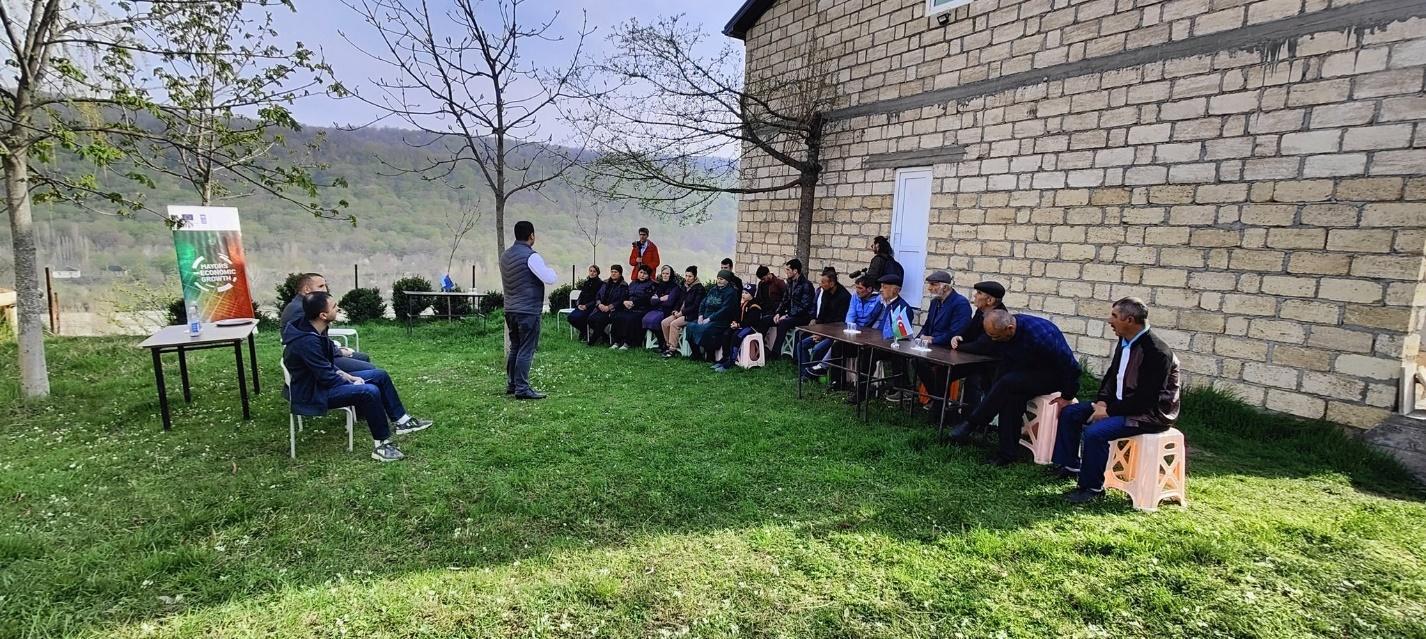
As the project unfolded, the community witnessed the positive impact of initiatives in neighbouring regions, and their scepticism transformed into active participation.
“Once we got the ball rolling and built trust and relationships with residents, they started coming up with their own proposals. For example, to establish a small football field for the residents or improve internet access in the village. People needed a kickoff moment to understand that they can be the driving force of change,” says Farhad.
The project not only empowered local farmers but also garnered support from other stakeholders, such as large businesses.
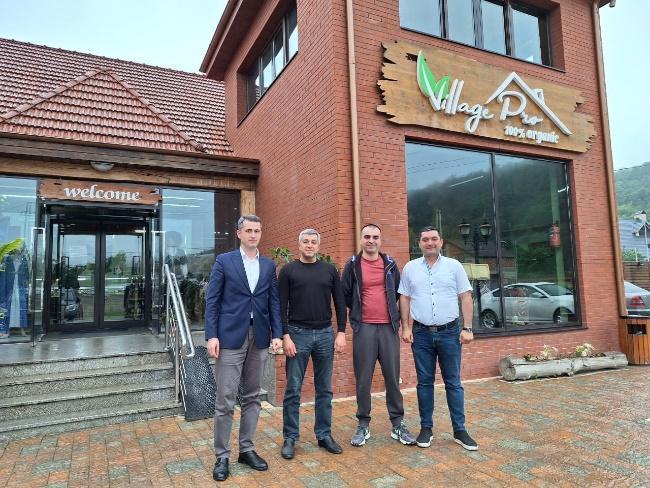
“When a small village municipality comes to a big business or big state agency requesting support, there can be a kind of mistrust. But we could change the narrative over time and after many meetings. Now we have one of the biggest businesses in the village openly supporting this initiative by providing a free space for the tourism centre.”
Municipalities as agents of change
Farhad’s experience with this project has altered his perception of the role of municipalities:
“There was a personal shift, too, experiencing a pivotal change in perspective, re-evaluating the municipality’s crucial role as an institution. I realised how valuable and necessary this institution is to the life of residents.”
The Urban Imaginaries programme has also been transformative for the community, inspiring a belief in the potential of grassroots initiatives to drive positive change. As Farhad describes:
“Previously, they did not have much experience with and did not trust the municipal team, but now they see a shift and the potential improvements that can be brought through projects like this. Considering it’s a small village municipality and only a few people are working there, it’s also renewed the confidence of the municipal team, that even with limited capacity, they can really do something.”
Farhad was also inspired by initiatives led by other municipalities taking part in the Urban Imaginaries programme:
“Working with UNDP and the EU has shown me how there is a network behind everything and how important that can be in connecting people.”
“Learning more about the work that Mingachevir is doing to transition to LED lighting was inspiring. We, as a community, have been thinking about how to apply that in Urva but using more solar electricity because we’re high in the mountains.”
What’s on the menu? What does the future hold for Urva?
Farhad shares that “regarding immediate plans, it is, of course, to finalise the work on this initiative and to open the tourism information center. We’ll follow up by creating the first batch of products made under the village brand in spring 2024.”
Looking further ahead, plans are underway for a new route connecting Azerbaijan’s northern and central regions, which will pass through Urva. Farhad says there are hopes within the municipality that this will allow Urva to become a local hub and role model in the region:
“The municipal team has already started talking to some villages around us where specific regional products are made and thinking about how we can attract them to work with us. For example, a village in the north produces a specific cabbage. We’d like to explore how we could get them involved in production in the area.”
“There’s also potential for setting an example to others by introducing certain initiatives and promoting them to newcomers as well as attracting potential regional investors. For instance, in the area of green energy and waste management, there’s an opportunity to make it an example to other small villages, to show them they can become a vital and connecting place, in their community and their locality.”
Advice for aspiring municipalities
Farhad says, “the most important thing is to believe in your capacity and capability of being the changemaker, the person or entity that can lead and make this change.
“Identify something that can make you stand out, depending on your location and situation. If you’re a tourist spot like us, you must find a product or service or whatever your place is well known for and use it to move forward.”
“Anywhere else in the world that has cultivated a specific geographical identity has prospered by using the brand name and by identifying and promoting regional products. So, adopting this type of approach, even at a small scale level as a village, can be beneficial both financially and in giving recognition to a place to attract more people to come and visit.”
Farhad’s work alongside the wider community has begun to change the local landscape and inspired new possibilities for the municipality. As Urva continues to evolve and develop its village brand, the municipality’s journey can inspire other communities aspiring to reimagine and innovate their places.
Stepanavan, in northern Armenia, boasts picturesque landscapes and lush greenery. Just over 100 kilometers from the capital, it is a quiet destination, away from the bustling urban centers, and whose rich historical heritage and warm community have earned it a reputation as a welcoming valley hotspot.
But despite its undeniable beauty and cultural allure, Stepanavan has been grappling with depopulation. The town is experiencing rapid aging, with residents aged between 18 and 29 making up less than 15% of the permanent population. The gradual decline in the town’s population, especially among younger generations, is mainly a result of the appeal of larger cities and economic opportunities elsewhere.
So Stepanavan has embarked on a path of urban transformation to address the underlying causes of outmigration. It is among five cities, part of the City Experiment Fund (CEF), a regional initiative at UNDP Europe and Central Asia supported by the Slovak Ministry of Finance, that are embedding innovative methods in the design and delivery of city-level programmes and shifting to systems thinking in approaching urban challenges.
In partnership with the Agirre Lehendakaria Centre and CHÔRA, CEF is working hand in hand with the local municipality and Armenian communities to provide the essential tools and resources needed to develop innovative solutions in response to depopulation. The objective of retaining and attracting youth is no small task, especially for rural towns. But one year into applying a portfolio approach, it is fitting to take a look at how Stepanavan has fared thus far.
How to tackle depopulation innovatively
To address depopulation, the solution lies in fostering a robust economic ecosystem that enhances people’s quality of life. In the field of rural development, urban experts have identified several critical focus areas and strategic approaches aimed at revitalizing depopulated rural communities and promoting sustainable growth. These approaches encompass but are not limited to:
- Bolstering technological advancements to attract skilled talent and enhance the competitive advantage of small businesses in rural areas.
- Encouraging collaboration between the public and private sectors to nurture entrepreneurship in these regions.
- Prioritizing inclusivity, particularly by empowering and supporting women-led businesses to rejuvenate local economies.
- Establishing social and recreational spaces, catering to diverse demographics, to inject vibrancy and effectively combat rural-to-urban depopulation.
A journey to vibrancy
In the aftermath of 2020, Stepanavan found itself confronting a dual crisis, marked by economic and security uncertainties. It became clear that conventional municipal management methods were no longer sufficient, prompting Stepanavan to adopt innovative approaches to confront its challenges. Acknowledging the necessity for a comprehensive and systemic approach, the town’s leaders and community members enthusiastically joined forces to formulate a strategic roadmap for progress and sustainability.
As one of the pioneering cities in the region to embrace systems thinking, Stepanavan’s adoption of the portfolio approach underscored the significance of social listening and community engagement in crafting a tailored set of options precisely aligned with the town’s unique needs. By meticulously mapping out key stakeholders involved in civic transformation efforts and, more crucially, involving all relevant parties in a profound listening exercise, they explored the specific problem areas within the municipal context. In collaboration with more than 200 prominent stakeholders, including nonprofits, the public and private sectors, and community members, they identified the roadmap’s intent and delved deep into the challenges and opportunities lying ahead for this picturesque community center.
“The most important thing to highlight about our social listening exercise is that people started to own the process for themselves… it served as a significant anchor point.”
Nelli Minasyan, Technical Task Leader, UNDP Armenia
While the initial intent was to draw in young people from larger cities, the profound process of active listening revealed a more pressing demand within the community: the need for a thriving environment for both residence and employment in order to bolster both attraction and retention. Furthermore, the youth of Stepanavan pinpointed the scarcity of educational and job prospects, along with the absence of recreational and entertainment spaces, as the primary factors driving them to leave the region. At the same time, local businesses, nonprofits, educational institutions, and cultural heritage centers identified the latent resources that could potentially be harnessed to foster a dynamic Stepanavan.
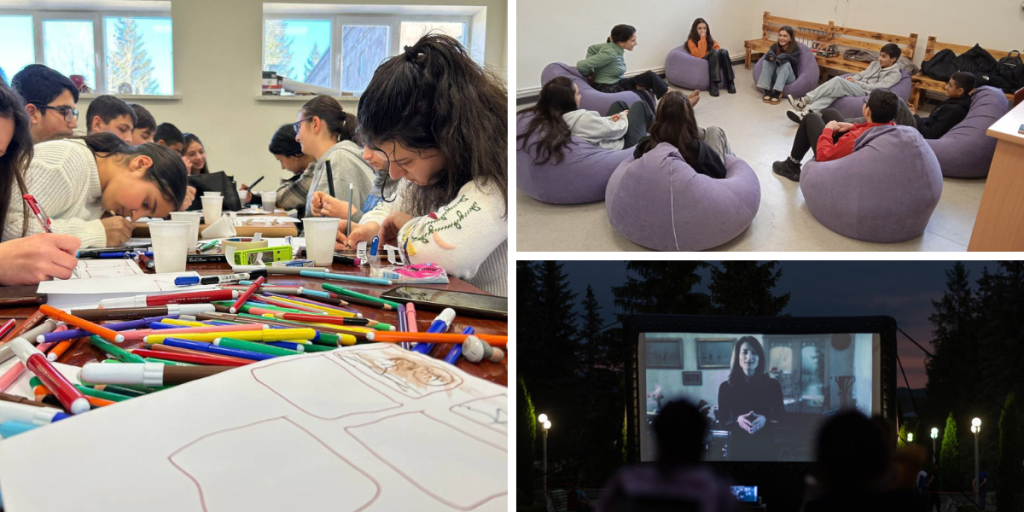
Stepanavan aspired to learn how to develop a plan for consistently attracting and retaining talent from within and outside the mountainous town. This also meant transforming Stepanavan’s image from merely being “a place of rest” to becoming “a place to live and contribute”. The overall portfolio design co-created by and for Stepanavan outlined workable goals that aimed to boost green job skill development. These goals included the engagement of local nonprofits in talent attraction and retention initiatives, the support of STEM education, particularly for children, the establishment of a certified Aviation and IT Training Center, the promotion of additional recreational and cultural events, and the creation of new digital tools to create a new municipal identity.
The Stepanavan portfolio journey has achieved remarkable strides through its implemented options. Some noteworthy achievements in the pursuit of attracting and retaining youth includes establishing lively spaces for youth entertainment, the successful coordination of an open-air cinema event, the hosting of a flower festival that celebrated nature’s beauty in Stepanavan, and the construction of a new sports courtyard to boost wellbeing with the assistance of the UNDP Crowdfunding Academy.
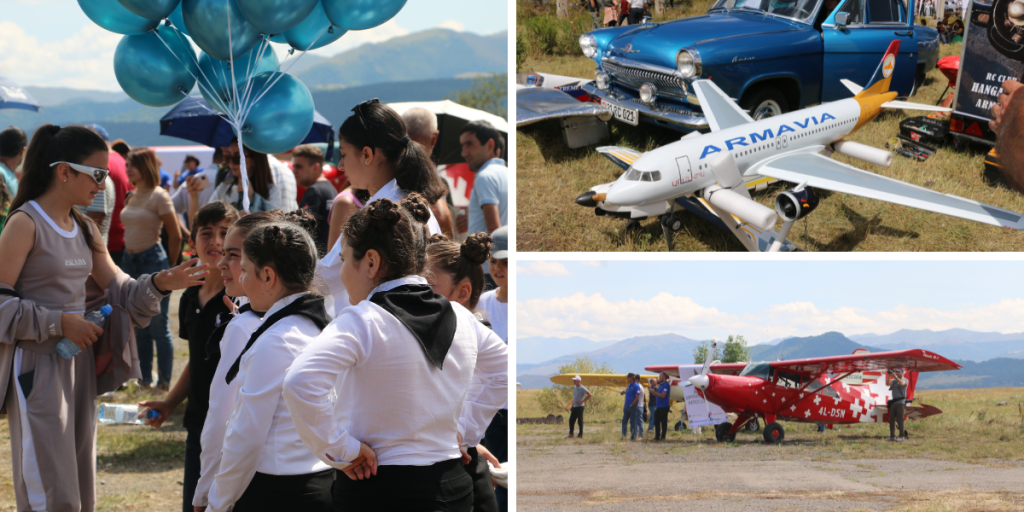
One of the central achievements of the portfolio approach has been the establishment of the Aviation and IT Learning Center, a collaborative effort involving the municipality, a local nonprofit, and the Crisis Management Academy. The center’s agri-drone classes have created valuable opportunities for skills development among the province’s youth, preparing them for green transition jobs. The center has already had a tangible impact, with numerous graduates successfully finding employment within the sector after completing their training sessions.
In another implemented option, the Stepanavan public library underwent a significant transformation and introduced a new Youth Learning Hub. Focused on talent retention, a dedicated team organized a diverse range of enriching events, including career orientation sessions, dynamic discussion bootcamps, and programming and design classes.
A promising glimpse into the future
The portfolio process in Stepanavan has yielded invaluable insights, revealing a newfound awareness among key stakeholders of their crucial role in shaping the municipality’s transformative path. This realization represents a significant milestone as the Stepanavan municipality, in close collaboration with other stakeholders, has taken the initiative to implement the co-designed strategic options independently of further UNDP involvement. As the journey unfolds, the collective efforts of Stepanavan’s stakeholders are proving to have far-reaching and positive implications for the municipality’s future. A local network of changemakers is now actively exploring additional innovative approaches not only to retain local talent but also to attract new talent to the town.
Furthermore, Stepanavan is in the process of institutionalizing the transformation by integrating the portfolio approach into the municipality’s strategic decision-making process. This is being achieved through collaborating with key stakeholders and partners to co-design living strategy documents to lead Stepanavan into the evolving future. The newly established Resilient Stepanavan Fund is taking its first steps to mobilize alternative finance for ongoing efforts aimed at revitalizing the town’s vibrancy.
Finally, by having the safe space for interaction, creation, learning and fun, the network of active youth of Stepanavan has been gradually expanding as demonstrated by engagement of more than 200 young people into non-formal education activities, community work, humanitarian support and social integration activities by commitment to take initiative, respond to crisis, become the change agents to craft a resilient Stepanavan.
Bratislava, February 2024 – UNDP Europe and Central Asia, in partnership with the Ministry of Finance of the Slovak Republic, is set to host next week Catalyzing Urban Transformation, a regional forum aimed at advancing urban development through innovative and systemic approaches in cities in the Europe and Central Asia region.
This two-day event, taking place on February 14 and 15 in Bratislava, Slovakia, will bring together policymakers, urban planners, development experts, and private sector stakeholders from across the region.
Through the Slovak Transformation Fund, a program supported by the Ministry of Finance of the Slovak Republic, UNDP is actively collaborating with cities in the region in addressing the challenges of urbanization through adopting a portfolio approach to urban development, mitigating investment risks, and developing sustainable pathways to growth.
The conference will showcase the progress and lessons learned from cities involved in the City Experiment Fund (CEF), an integral part of the Slovak Transformation Fund, which has been instrumental in working with cities such as Skopje, Pljevlja, Pristina, Almaty, and Stepanavan to craft innovative visions and systemic approaches for more liveable, inclusive, and resilient urban environments.
“Cities are at the forefront of development challenges – I trust this forum will create a shared understanding of what is needed for the twin transition and a call to action to unlock the financing needed, especially for tertiary and intermediary cities,” said Lejla Sadiku, Team Leader for Innovation, UNDP Europe and Central Asia. “This conference also provides a unique platform to explore progress on urban transformation in the region, highlight valuable best practices, and explore new collaboration opportunities to shape sustainable urban futures for the region.”
Moreover, the forum will feature discussions on systemic approaches to urban challenges and opportunities, strategies to accelerate access to finance for urban development projects, and the reinforcement and expansion of partnerships with regional actors and stakeholders.
As cities grapple with various global challenges and crises, the upcoming forum in Bratislava serves as a timely opportunity to continue amplifying efforts to accelerate urban transformation in the region and beyond.
To learn more about the forum, see the full agenda.
This article is part of a spotlight series highlighting Mayors for Economic Growth (M4EG), a joint EU and UNDP regional initiative, hosting a network of 400+ municipalities in the Eastern Partnership – Armenia, Azerbaijan, Georgia, Republic of Moldova, and Ukraine. M4EG’s goal is to reimagine urban and local spaces for positive economic transformation and future-readiness.
In a time where progress often overshadows history, Kutaisi, an ancient Georgian city, is making moves to become a forward-thinking eco-smart hub. Over the course of a comprehensive multi-year engagement, Kutaisi’s municipality, together with local stakeholders, is working with Mayors for Economic Growth (M4EG) to chart a new approach to transformative urban initiatives as part of a broader economic development strategy. This municipal-level collaboration is underpinned by a commitment to support one of the city’s pivotal goals – achieving a balance between economic prosperity and a sustainable and environmentally resilient future. Kutaisi’s effort is a practical example of what is often referred to as ‘mission-oriented innovation or economy’ approach.
As cities are both significant contributors to greenhouse gas emissions and ever more vulnerable to climate change impacts, there is a pressing need to confront environmental crises, such as air pollution and resource depletion, as we push for economic progress. To this end, eco-smart cities prioritize actions to cut emissions, boost energy efficiency, and navigate a shifting climate landscape. As technological advancements make eco-smart cities a reality, it’s now more feasible than ever for cities to adopt sustainable practices to reduce their environmental footprint.
Kutaisi’s vision of tomorrow is spearheaded by local authorities who are committed to empowering citizens in new ways. With support from M4EG, Kutaisi is leveraging the portfolio approach to test a range of strategic options – from catalyzing environmental resilience to addressing urban challenges using smart management, green transportation, and sustainable energy use. One key goal unifying this multifaceted approach is to transform community-based organizations, businesses, academic institutions, and everyday citizens into stewards of the environment. Moreover, these portfolio options aim to attract additional resources from stakeholders with sustainable agendas, while also generating insights to help launch pilots in other parts of the country and inspire policies at the national level.
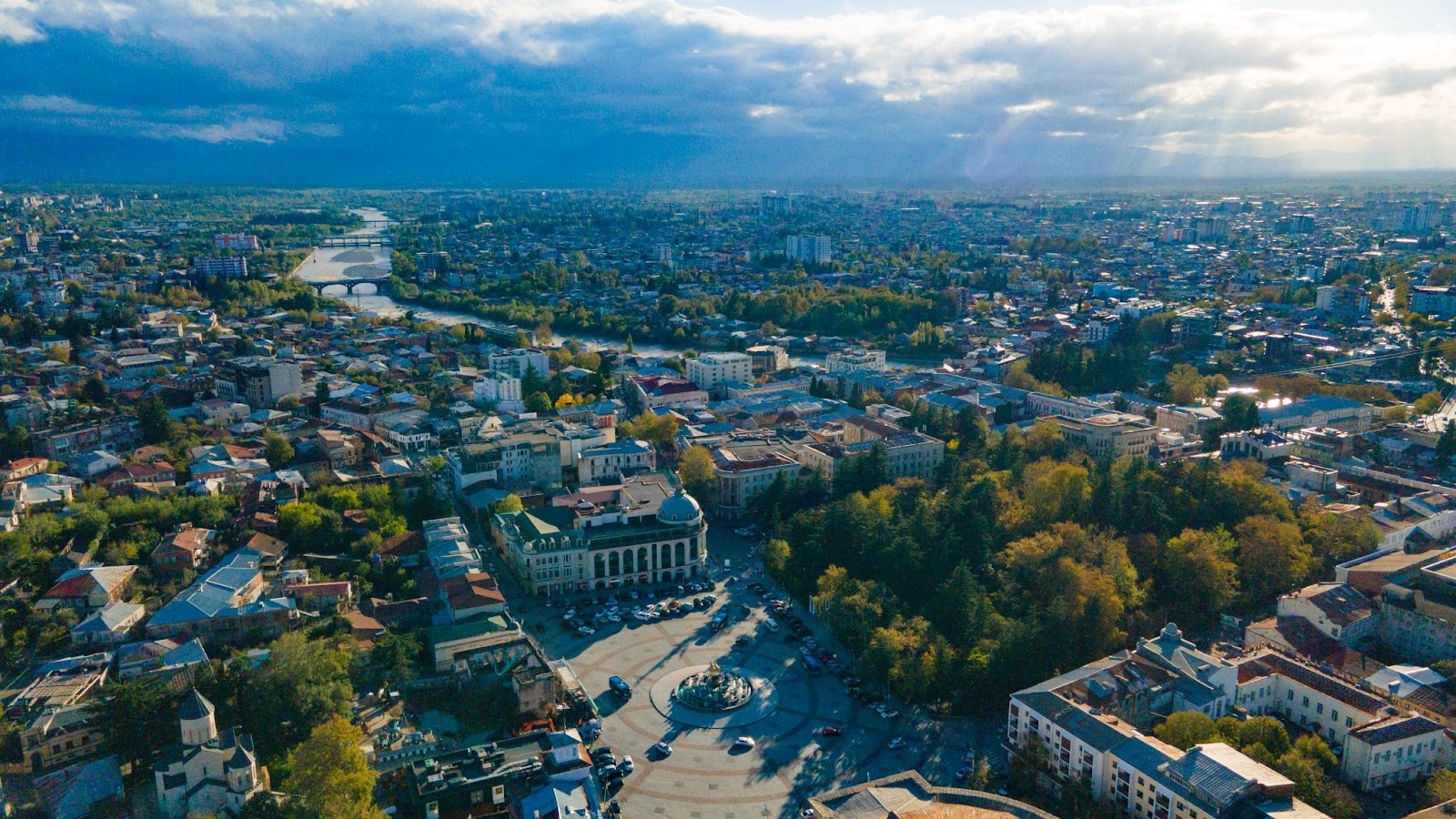
Weaving a complex tapestry of heritage and modernization
In the midst of these transformative shifts lies a profound challenge – even when equipped with state-of-the-art technology, this endeavor often entails the delicate task of reshaping the intricate social narratives, norms, and practices woven into the very fabric of the city.
For Kutaisi, a city boasting a remarkable 3,600-year-old legacy, this dilemma takes on a particularly monumental character. Prominently featured in Greek mythology such as the enduring epic of Jason and the Argonauts, Kutaisi stands as a living link to antiquity. With a claim to the title of one of the region’s oldest continuously inhabited areas, its roots can be traced back to the Kingdom of Colchis, which dates back to at least to the 2nd century BC [1].
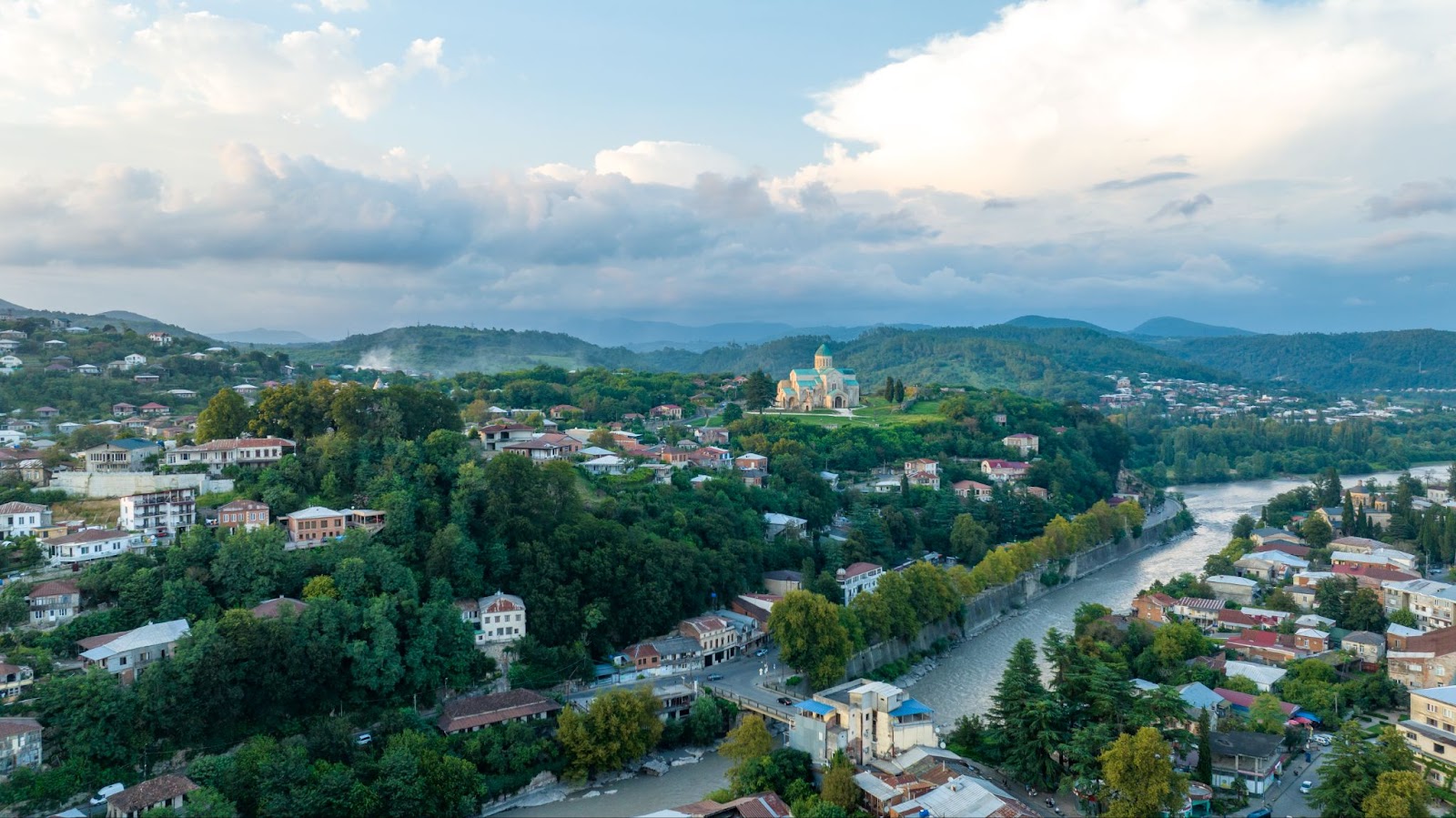
Centuries-old monuments, such as the iconic Bagrati Cathedral, bear witness to the city’s resilience. This 11th century landmark has not only withstood various attacks in the 17th and 18th centuries, but has also undergone significant-yet-controversial renovations at the start of the 21st century [2], characterizing the difficulty of striking a balance between preservation and progress.
Much like with the Bagrati Cathedral, Kutaisi continues to navigate this nuanced path between honoring its epochal past and embracing a future that fits the needs of its residents. “Kutaisi is one of the oldest cities in the world with great traditions, and simultaneously it’s a city of innovations. We’re very glad that our city has joined the M4EG joint EU-UNDP Initiative to mutually start working towards an eco-smart city,” says the Mayor of Kutaisi, Ioseb Khakhaleishvili.
Georgia’s third largest city now stands poised to parallel this journey, ready to step out of the shadows of its more recent past as a major Soviet industrial center. “The main challenge for us is the transformation of the city because the city has its history, traditions for centuries,” notes Mirza Khidashelli, a portfolio team member representing Kutaisi’s Office of Infrastructure. “The industrial part of this city, as it was expected, did not have capacity to maintain the enterprises in free competition…[the transformation process now] is more like an invention or something new, but it should be connected with its historical part.”
Charting a new course for empowered engagement
Weaving Kutaisi’s significance as an industrial hub into its eco-smart city aspirations is a complex endeavor – years of manufacturing and production have set the stage for persistent air pollution. When intertwined with its terrain and local climate conditions, this underscores the city’s vulnerability to natural disasters. The urgency to bolster resilience has been further accentuated by recent events – a 3.5 magnitude earthquake this past April, swiftly followed by flash floods in June.
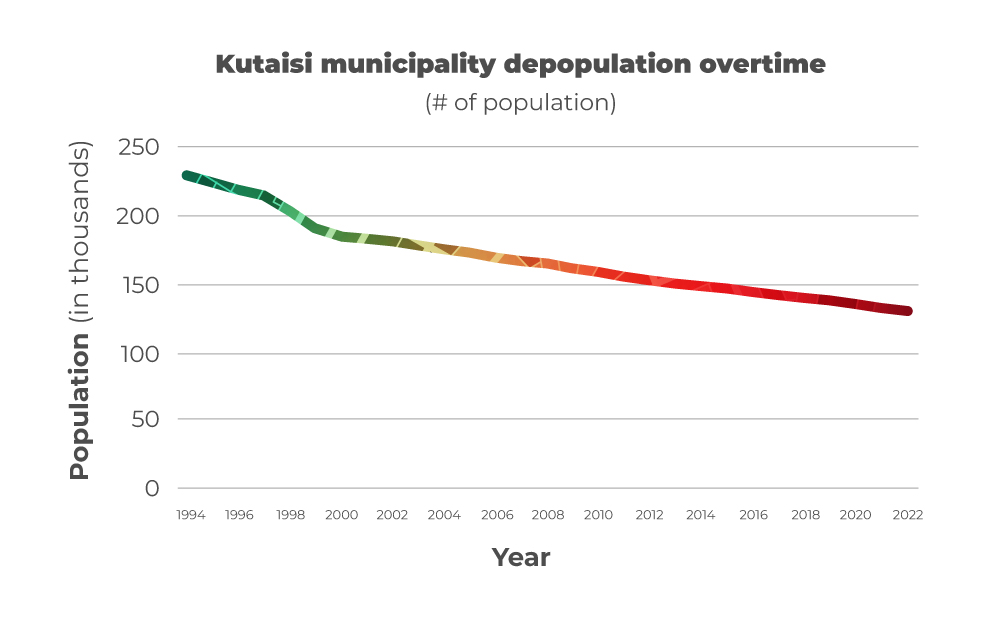
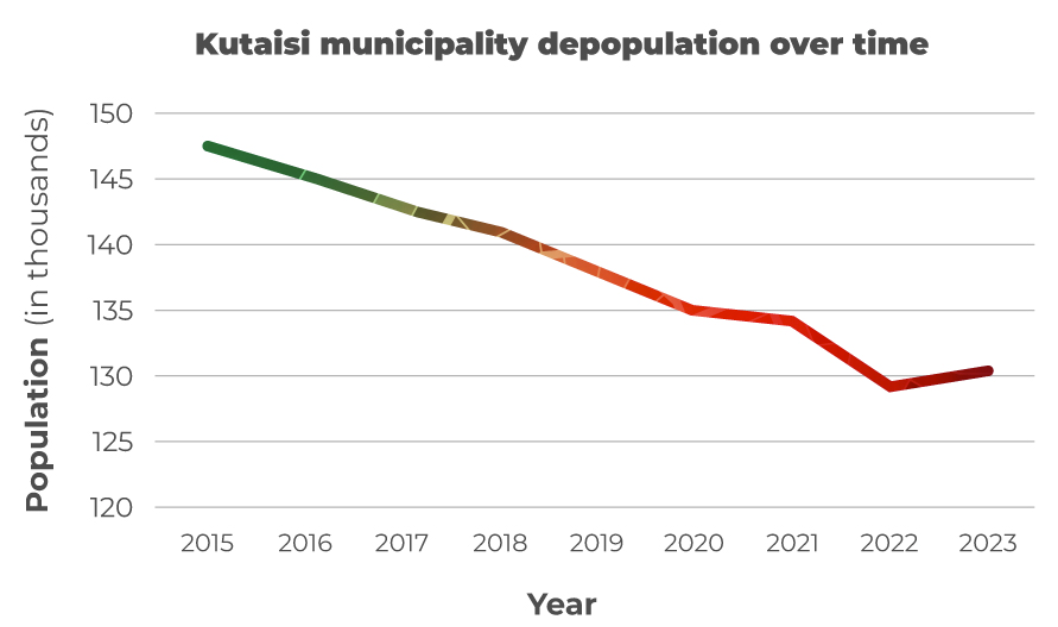
The city also grapples with an additional challenge: a decline in economic prominence has triggered a phenomenon known as “brain drain,” resulting in depopulation and contributing to a larger countrywide trend. Consequently, Kutaisi’s urban transformation portfolio hinges not only on its ability to preserve its cultural heritage and introduce innovative green solutions but also on the crucial mission of making the city more comfortable and attractive for residents. Sustainable economic development and a fundamental shift in perceptions about the city are integral parts of this multifaceted approach. “After all, as in many post-industrial cities, people always want to have a better life,” explains Irakli Goglichidze, Portfolio Team Leader and Head of the Department of Economic Development and Transport at Kutaisi’s City Hall. “So we need somehow to recover opportunities in the city and to raise our citizens’ awareness that something will be improved, transformed and changed inside of the city.”
In an effort to actively engage a wide range of stakeholders in the transformation process, the M4EG team carried out a large-scale citywide event that introduced citizens to the portfolio journey. It involved in-depth interviews with local residents, academics, youth, local non-governmental organizations, the private sector, and investors to gather their invaluable insights. Above all, its primary goal was to cultivate local enthusiasm for contributing ideas on how to improve the city as the portfolio team embarked on the mission of conceptualizing an eco-smart city with and for the community.
“We can say frankly that whatever we have planned in the first phase, within the framework of this project, envisages the opinions of many of our citizens,” says Ketevan Tskhakaia, co-founder and executive director of Spectri, a non-government organization that fosters cross-sectoral partnerships to ensure sustainable development in Georgia. “And this is one of the factors of high engagement in this project. The idea and concept of an eco-smart city is something new for our city.”
Embracing the spirit of “something new” has earned the Kutaisi municipality prestigious recognition in the form of a 2022 Best Practice Award from the National Association of Local Authorities. It garnered two nominations for best practices in local governance and municipal performance; the first applauds the city’s achievements in local economic development planning and participatory economic development innovation. The second accolade highlights the city’s outstanding track record of successful collaboration with international donors.
Promoting eco-friendly behavior through multifaceted initiatives
“One of the goals is to help our citizens change behavior, to improve awareness in order to meet the requirements of a smart and eco city because this process is strongly dependent on human behavior and human awareness,” Ketevan explains.
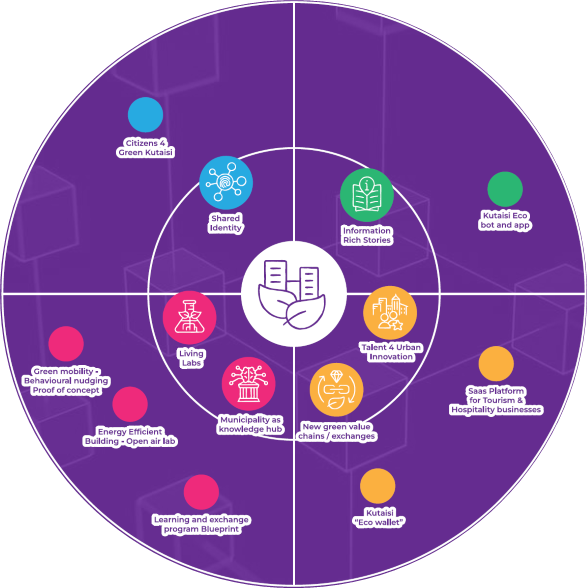
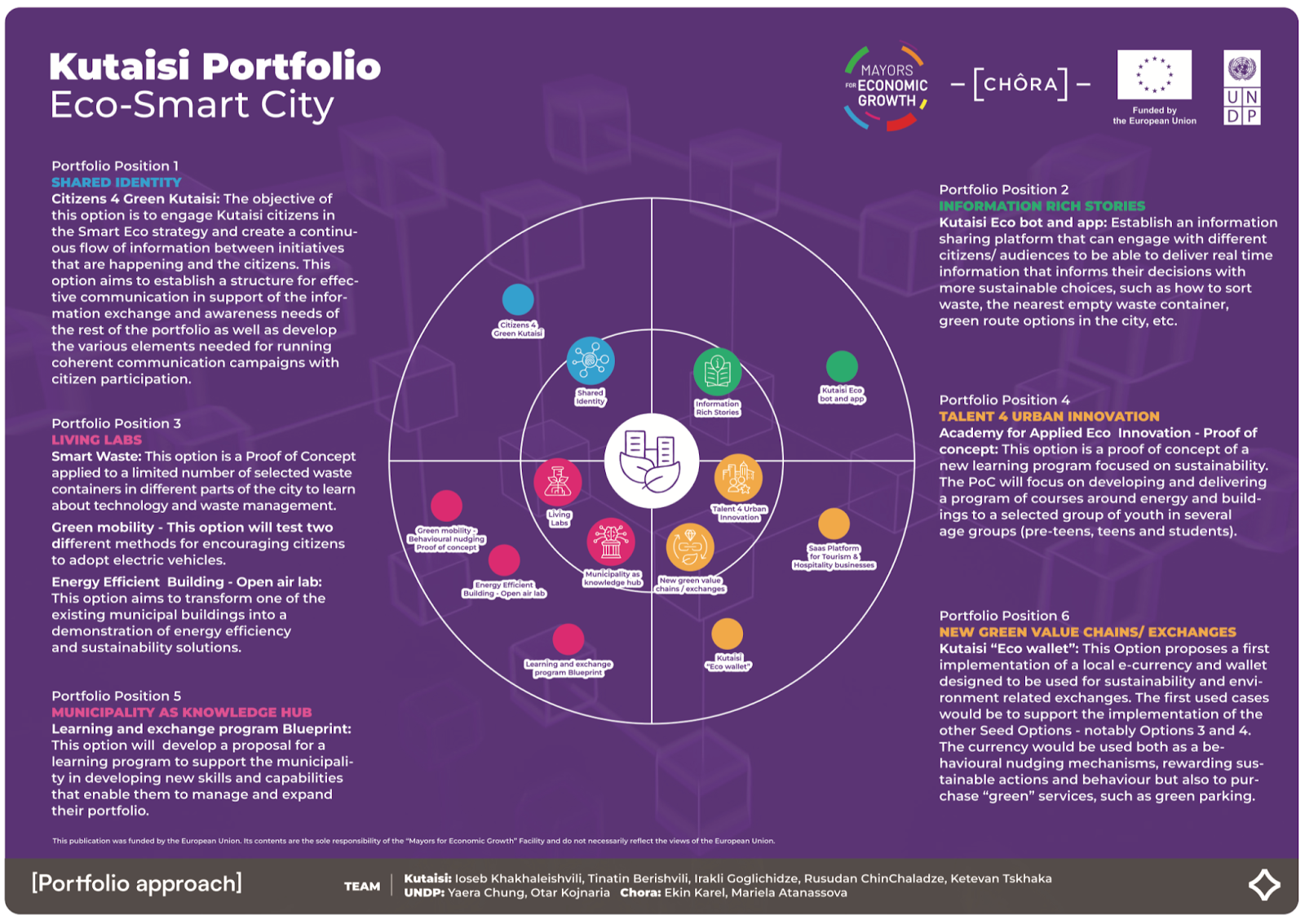
“Kutaisi was the first city in Georgia where waste separation and composting took place. We have made significant changes to create an environment-friendly public transport system as well as to improve the inner-city and suburban ecosystem,” explains the Kutaisi mayor. In their pursuit of promoting eco-friendly behavior, the portfolio team launched experimental initiatives in three key areas: smart management, green transport, and sustainable energy. In just one year of collaboration, they’ve made significant strides: testing a smart waste management system using bin sensors and analytics; establishing an Eco Innovations Academy that offers training, hackathons, and mentorship to foster innovation; installing solar panels on buildings; preparing the electrical grid and charging infrastructure ahead of a procurement of a fleet of electric vehicles; and reducing the expenses associated with adopting electric vehicles by eliminating specific charging fees and city tolls.
Instead of concentrating on a single-point project as seen in traditional development project management, M4EG project coordinator and UNDP Georgia representative Otar Konjaria explains the benefit of piloting multiple actions at the same time aimed at behavioral nudging. “Implementing small initiatives give us an opportunity to see whether we are on the right track, whether these are the initiatives which will promote transformation of the city into an eco-smart city,” says Irakli and further adds that, “the way that one intervention has a positive influence in different directions enables us to impact citizens’ awareness.”
Experimenting locally to pave the way for the region
The startup-inspired portfolio process serves as a catalyst to nurture innovation and adaptability in an increasingly fast-paced and uncertain world. However, as Irakli points out, the accessibility of resources for rapid idea testing through iterative implementation is generally out of reach for many Georgians. “People are lacking the luxury of investing in experiments because it is somehow risky, isn’t it? So our municipal team accepted this responsibility.”
The city’s ambitious journey towards sustainability is rooted in its ability to lead by example. “We wanted them to see how these municipal services could work. For example, we believe that businesses will copy these services and implement them in their activities. We believe that we can propose and show our citizens something new, something useful,“ explains Irakli. “Then our people will see that this is really good municipal practice and they will try to implement this in their everyday life.”
Beyond its municipal boundaries, Kutaisi seeks to take on a broader role. The team endeavors to leverage the portfolio to not only inform but also spearhead a national agenda for sustainable policies and incentives. “This is the first attempt in our country and even in the region to develop a model of an eco-smart city,” says Ketevan. “Our experience might be shared, not just by other cities in Georgia, but our neighboring countries as well.”
Even in the face of potential post-election changes, the team’s high-octane enthusiasm remains intact, partly due to the administrative safeguards in place that protect the process. The municipal team has designated eco-smart city development activities as essential for the city and has even integrated the project frameworks into local development initiatives at City Hall to protect them from the effects of political transitions.
“We clearly understand that economic welfare and an ecologically sustainable future are of equally essential tasks, and the local government aims to develop these two components harmoniously,”says the Mayor Ioseb Khakhaleishvili.
When it comes to envisioning the lifespan of the portfolio and its long-term impacts, Irakli is tenaciously resolute. “This is a long-term responsibility and we’ll work on this. We’ll do our best to allocate human and financial resources from the local budget, maybe donors can also help.” Then he muses, “You can’t give food one day to someone and then leave them starving the next day. No, we’ll continue feeding this process and permanently supply our society with something new, leading to eco-friendly development. That is our plan.”
Footnotes
[1] Okrostsvaridze, A, et al. “A Modern Field Investigation of the Mythical “Gold Sands” of the Ancient Colchis Kingdom and “Golden Fleece” Phenomena.” Quaternary International, vol. 409, no. Part A, 2016, pp. 61-69, https://doi.org/10.1016/j.quaint.2014.07.064. Accessed 20 Oct. 2023.
[2] “Reconstructing the Sacred: The Controversial Process of Bagrati Cathedral’S Full-scale Restoration and Its World Heritage Delisting.” Wikipedia, Wikimedia Foundation, 18 Nov. 2020, www.cambridge.org/core/journals/international-journal-of-cultural-property/article/abs/reconstructing-the-sacred-the-controversial-process-of-bagrati-cathedrals-fullscale-restoration-and-its-world-heritage-delisting/B8048773BF4338C57D254DA76C5E674D. Accessed 20 Oct. 2023.
In a rapidly evolving urban landscape, traditional methods of addressing interconnected urban challenges are becoming increasingly inadequate. As a result, urban development practitioners are exploring innovative ways of working to tackle systemic urban issues. One such solution is the portfolio approach, a dynamic and multi-faceted strategy that redefines the way we address urban challenges. This approach is seen as complementary to traditional project management, offering an additional tool for tackling more complex problems. But what impact does this new approach have, and is it truly transformative? Our latest publication, City Snapshots, offers a glimpse into these groundbreaking practices, showcasing their application, areas of influence, and potential outcomes.
Based on the upfront experience of seven UNDP Country Offices, this booklet not only highlights the value of innovative development but also consolidates key learnings to communicate this work to urban practitioners within and beyond these programs and communities. Ultimately, the publication aims to ignite a conversation among diverse stakeholders and teams working on urban transformation, creating a community that will serve as an inspiration and learning space to harness the growing interest for innovation in urban development.
The portfolio approach itself offers a new way to tackle complex urban challenges, creating a network of intervention options that examine problems from multiple angles, allowing for flexibility and adaptability. Nine municipalities in the Europe and Central Asia region have embraced this approach, demonstrating tangible and significant advantages. This presents an opportunity for other municipalities to explore and implement portfolio practices, opening new possibilities for addressing urban issues.
City Snapshots is your invitation to explore urban development innovation and discover how these pioneering practices are leading to positive, sustainable outcomes in cities across Europe and Central Asia.
City Snapshots delves into UNDP Europe and Central Asia’s urban transformation initiatives – City Experiment Fund (CEF) and the Mayors for Economic Growth (M4EG) – employing the portfolio approach across various cities, contexts, and problem spaces. Funded by the Slovak Transformation Fund, UNDP’s CEF is a joint effort by UNDP and the Ministry of Finance of the Slovak Republic to support cities in applying the innovative portfolio approach to tackle complex urban challenges, while M4EG is a joint EU & UNDP initiative to support mayors and their teams in the Eastern Partnership region. The M4EG offers resources, networks and learning opportunities to explore new trajectories of growth, and to make towns and cities more attractive for people and investment.
For Mayors involved in the initiative, the purpose is to provide a sense of expanded options in the face of complexity, rather than resorting to “magic bullets.” Initial M4EG launch piece: “Integrating complexity in development handbooks, with mayors on the front page”.
It’s been three years of EU and UNDP partnership in orchestrating the Mayors for Economic Growth (M4EG) initiative in the Eastern Partnership (Armenia, Azerbaijan, Georgia, Republic of Moldova and Ukraine). Below we take stock of how our three main work streams have supported local authorities in the following areas: 1) creating spaces to learn from each other, 2) adapting to new realities and improving crisis response, and 3) delving deep into finding a municipality’s best local fit for sustainable economic development.
1. Reinvigorating municipal ties: A network of peer learning and inspiration
One of our core objectives has been to transform the network of municipalities into a vibrant space for exchanging knowledge and shared experiences. With an eye on the myriad of challenges and opportunities municipalities face, we recognized that the collective strength lay in their ability to learn from one another.
To respond to the evolving needs, we designed an Urban Learning Center (ULC) with partners Arup, Climate KIC, and TalTech. The ULC is an online platform with open access to courses and resources. As a result in 2023, we launched our Foundation for Future Readiness course, soon to be followed by courses on the green and just transition, smart cities, and a new generation of local economic development plans (Pathways for Economic Growth – P4EG), all available in the six languages of the EaP. The courses are complemented by in-country learning sprints and workshops, tailored to the demand and interest of M4EG network members. More than 400 municipality staff have so far been trained under the ULC.
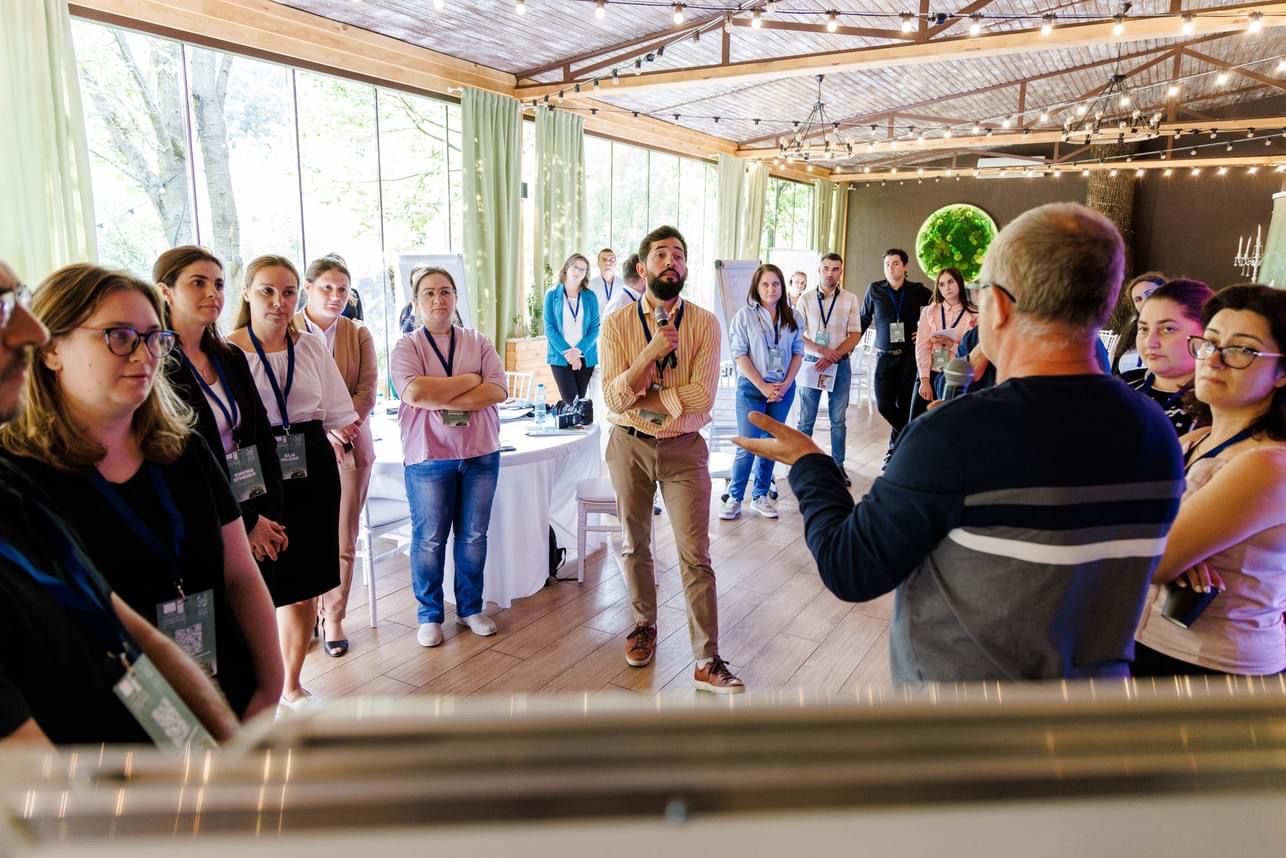
The network is further strengthened by regional as well as national level events, including starting the tradition of “Show & Tell” gatherings where members share learning and effects with peers. A key principle of the M4EG network is to leverage and scale initiatives that are already taking place and embed a stronger local economic transformation lens. For example, in 2023, the M4EG helped design and co-host the Tbilisi Economic Forum and the Lviv Urban Forum that brought together development leaders and policymakers to reimagine urban transformation.
What have we seen so far?
Over the past few years, the network has closed to doubled, and with a notably strong demand from Mayors and their teams for more tailored opportunities to connect with their peers. We received a substantial number of applications for all of our learning and grant opportunities. There is a keen interest in moving beyond traditional methods, especially if it allows city governments to play a broader role in connecting partners and expanding opportunities. The M4EG’s focus on ‘future-readiness’ and exploring new trajectories of growth has awakened interest. Over the past three years, more than 8,000 individuals have actively participated in workshops and events, and our communication initiatives have reached over 2 million people.
While maintaining our emphasis on sustainable economic growth, M4EG’s ‘urban makeover’ concept, which focuses on the vibrancy of places and innovation, has landed well with mayors and municipalities. There is a growing consensus that achieving prosperity and nurturing ‘thriving communities’ requires a strong interplay of economic as well as social and environmental dimensions.
Drawing inspiration from the EU and beyond, the network has fostered a culture in which municipalities are not just beneficiaries but active contributors, sharing their innovations and lessons learned.
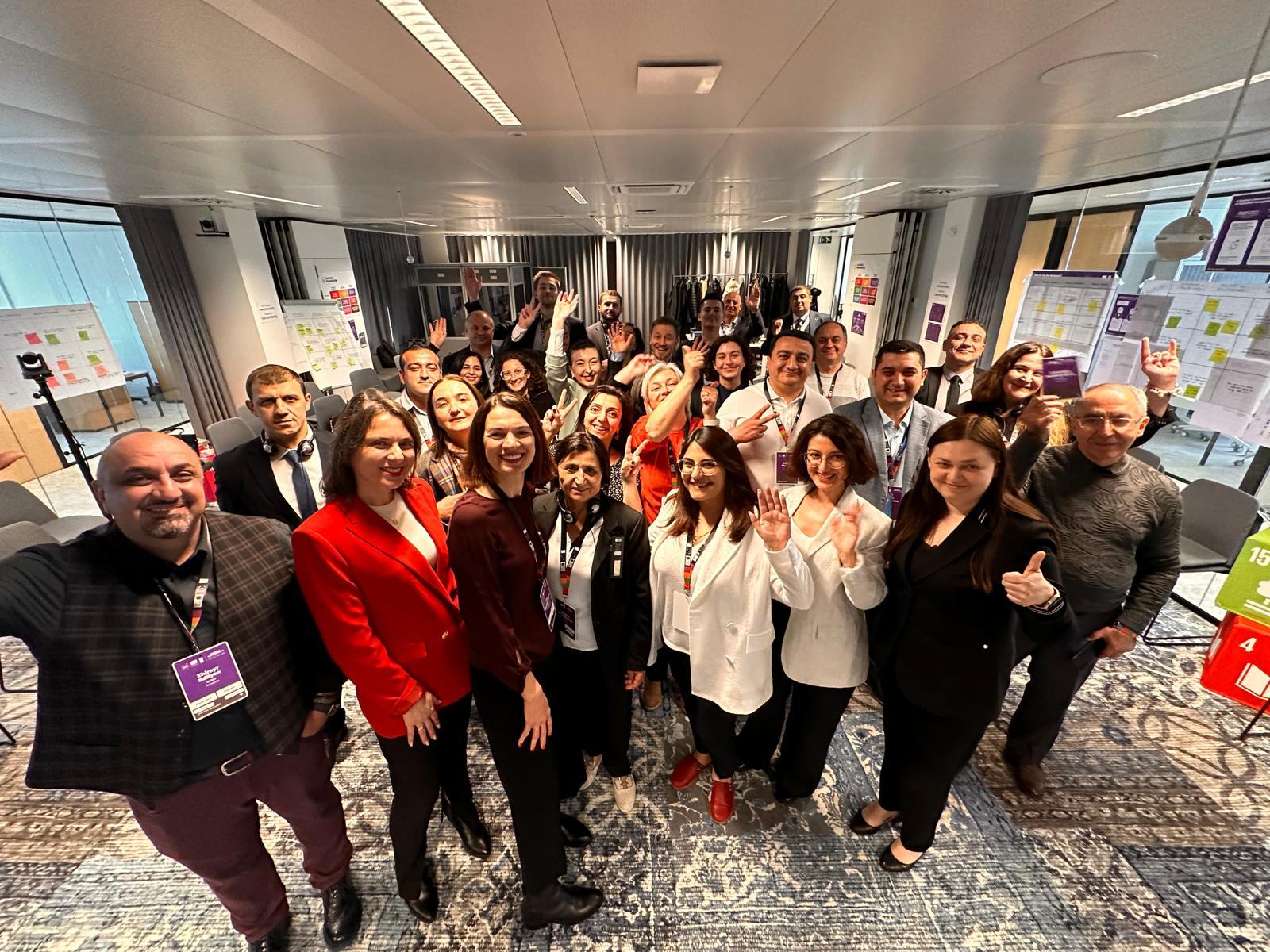
2. Pivoting in times of crisis: Resilience amidst adversity in Ukraine and Moldova
The unpredictability of the global landscape was never more evident than with the onset of the war in Ukraine and its significant repercussions in Moldova. Faced with these new realities, the M4EG swiftly adapted to the changing dynamics, providing urgent and resilience support to over 100 municipalities in the most trying times of 2022-2023. More than 25,000 refugees and internally displaced people (IDP) were supported through a number of initiatives.
A new offer called the Response & Renewal Grant Programme was designed, with a EUR 1.8m top-up from the EU. Close to 200 applications were received from members, and the selected 18 members went through the Learning & Design Sprint, a co-design process to develop the best-fit intervention to rejuvenate their foundations for economic recovery, facilitate future sustainable growth, and modernize their cities and communities. Currently, all grants are under implementation and results are expected at the end 2023.
The Learning Sprint led to several concrete improvements of our proposal including: systematization of the project’s educational component, detailed planning of specialized training for IDPs, and establishment of a consultative body for addressing IDP issues.
Municipality staff in Slavuta, Ukraine
What have we seen so far?
Local authorities are at the forefront of the crisis response, and the M4EG recognized these existing capabilities and system immunities by leveraging and topping up ongoing responses. The rapid learning sprint design helped to quickly improve the existing proposals. Community listening proved particularly valuable, allowing municipal teams to vet their intended interventions with stakeholders, make necessary adjustments, and improve communication about their initiatives with residents. The collaboration of Bilbao’s Agirre Lehendakaria Center with Ukrainian cities underlined that ‘community listening is not a luxury, even in times of crisis’.
M4EG’s strong principle of adaptability, ensuring relevance in changing circumstances, proved essential and underscored our commitment to development and the well-being of the municipalities.

3. Deep engagement: Innovating and leveraging beyond the norm
Transitioning from conventional economic approaches, our ‘deep’ engagement with nearly 50 municipalities marks a significant shift towards innovative economic and urban development.
These municipalities embarked on a transformative learning journey, fortified with seed-funding – totaling approximately EUR 5 million – to introduce groundbreaking tools and methodologies. The Portfolio Journey, led with our partner Chora Design, introduced a mission-based economy approach to local challenges around economic stagnation and unemployment. The Urban Imaginaries, led with our partner Center for Public Impact, applied a human-centered design approach to reimagining city life and public services. The diverse range of focuses, spanning from creative economic industries and the blue economy to fostering a start-up ecosystem and the renewable energy transition, are inspiring and offer tangible results and lessons to be shared with the regional network and beyond.
What have we seen so far?
The M4EG approach of going ‘hyperlocal’ and working alongside municipalities to jointly co-design and solve issues together is highly appreciated by its members. The impact on the ground is evident, and the close and tailored engagement has unlocked new partnership and funding opportunities. To highlight one example, the Ukrainian city of Mykolaiv – the “city on the wave” – has already mobilized EUR 300,000 on top of the M4EG grant for its new blue economy portfolio, designed under the M4EG.
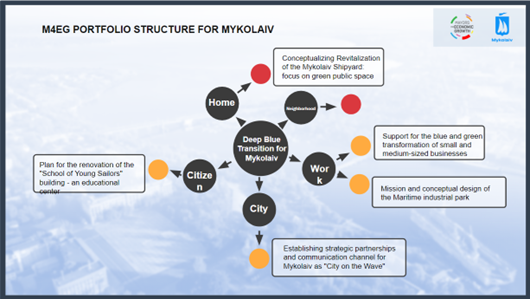
However, official development assistance (ODA) is far from sufficient to sustainably manage the economic changes needed at the local level. The need to diversify revenue streams is clear, and M4EG is intensifying its focus on identifying existing as well as new funding and financing opportunities. Further leveraging funds from central government, improved tax collection, budget savings, such as through energy efficiency measures, municipal enterprises, crowdfunding, SME funding support, such as credit lines from the EU Economic and Investment Plan for the Eastern Partnership region, as well as the identification of possible ‘bankable’ projects for financing can all help turn the dial toward economic transformation, and where the local city governments can take an active facilitator role.
What is next?
Going forward, the M4EG will maintain an active network with meaningful participation through learning opportunities under the ULC, with a particular focus on the Pathways for Economic Growth methodology and the green and smart transitions. Supporting implementation of grants and capturing and disseminating the results from those going ‘deep’ will also be another key deliverable over the next year.
Simultaneously, the M4EG plans to increase its focus on further optimizing the grant funding, seeking new avenues to scale and mobilize more public and private financing. As we look ahead, our vision is to harness these resources to unlock new partnerships, funding, and financing opportunities, including under the EU’s Economic and Investment Plan for the Eastern Partnership region, to ensure that the M4EG municipalities are well-positioned to capitalize on emerging opportunities.
In conclusion, as we reflect upon our journey with the M4EG initiative, it has been a path marked by valuable learnings, adaptability, and profound engagements. Here is to continuing our collective endeavor towards a sustainable, resilient, and prosperous future, with Mayors and their teams in the driving seat.
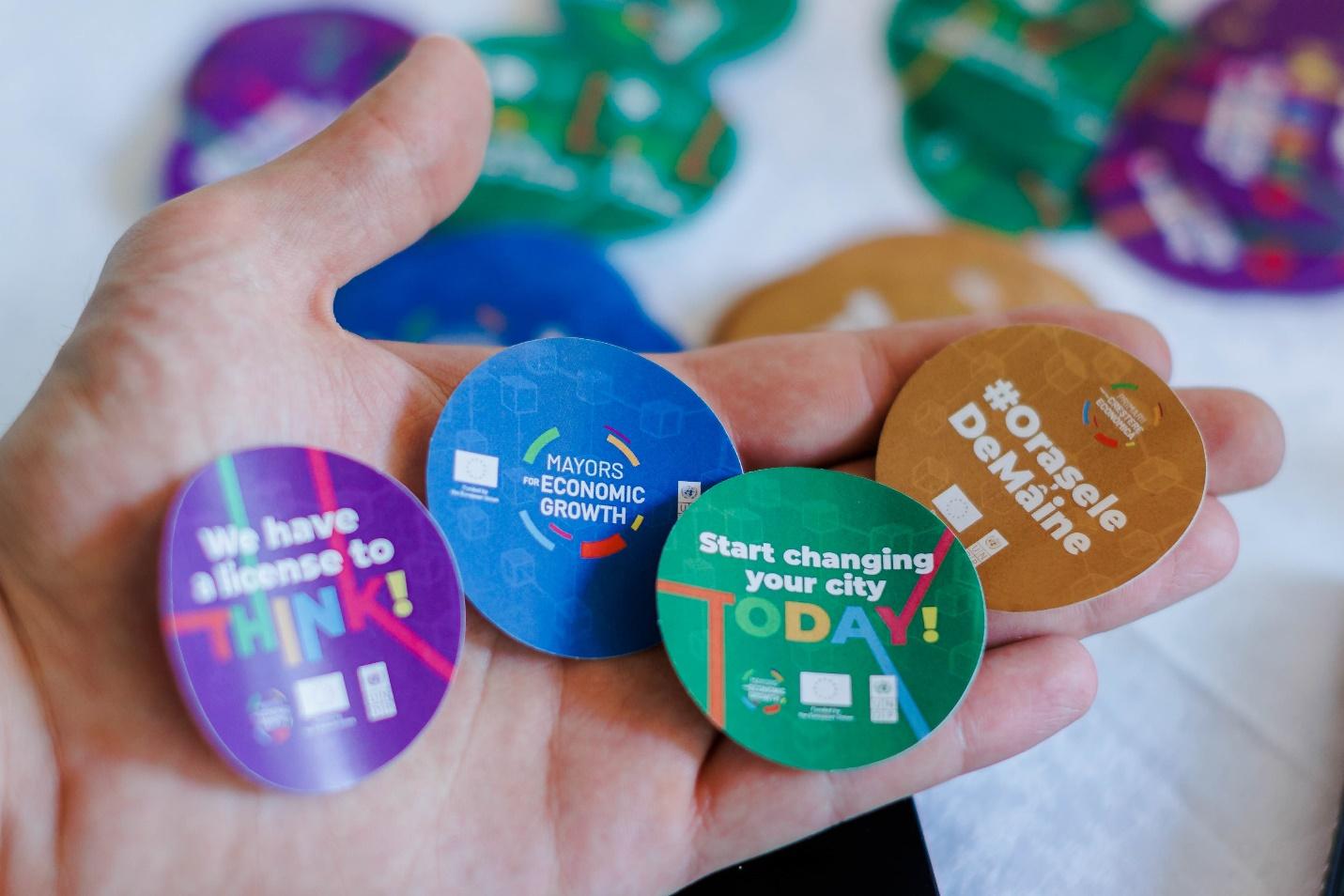
Background:
The Mayors for Economic Growth, a joint EU and UNDP initiative, funded by the EU since 2017, supports cities and towns in the Eastern Partnership countries. By fostering robust partnerships and promoting local transformations, the initiative seeks to reshape traditional developmental thinking and encourage sustainable, resilient, inclusive, innovative economic growth within planetary boundaries.