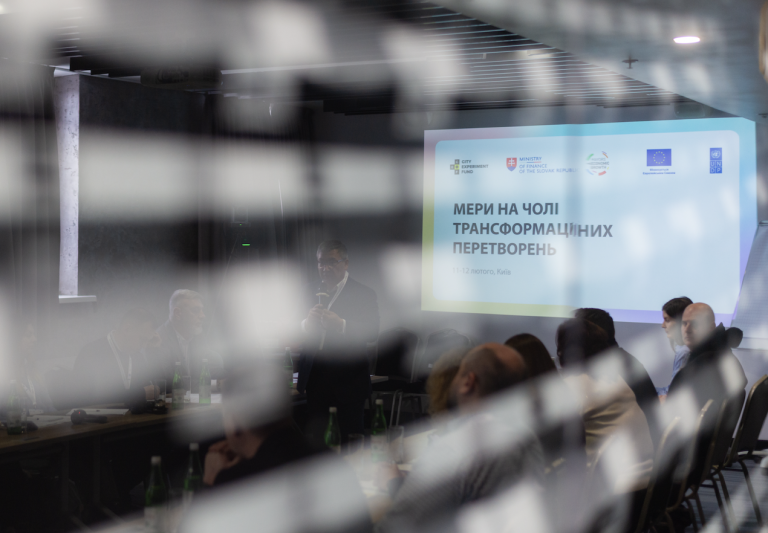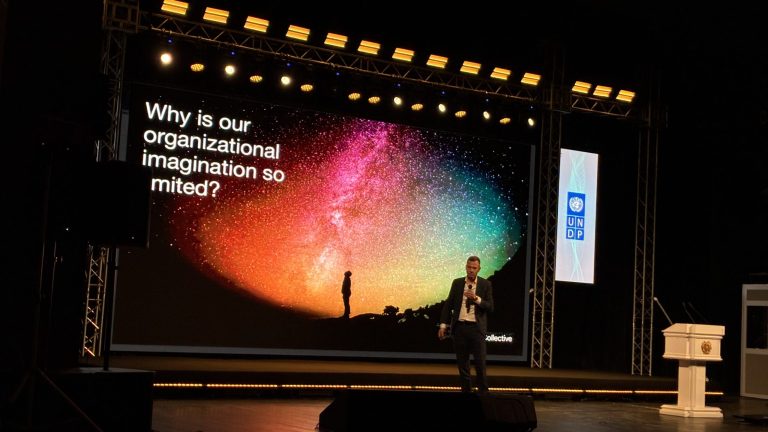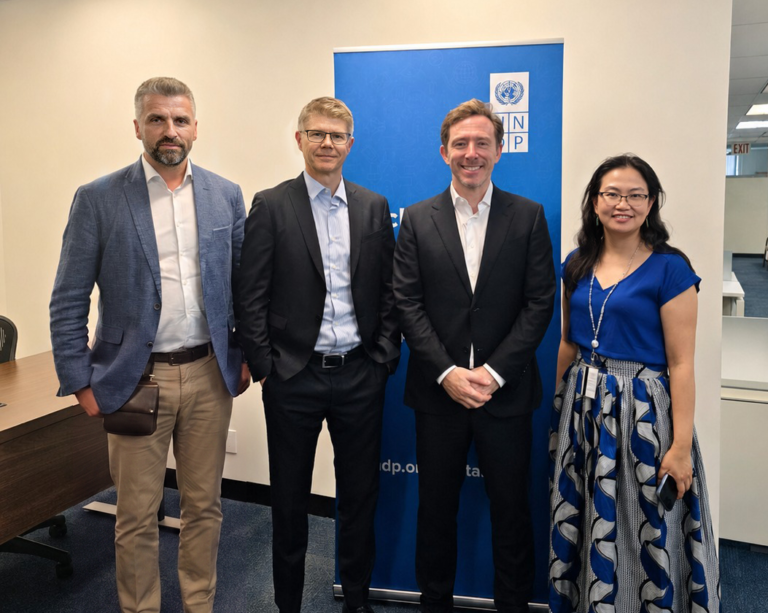
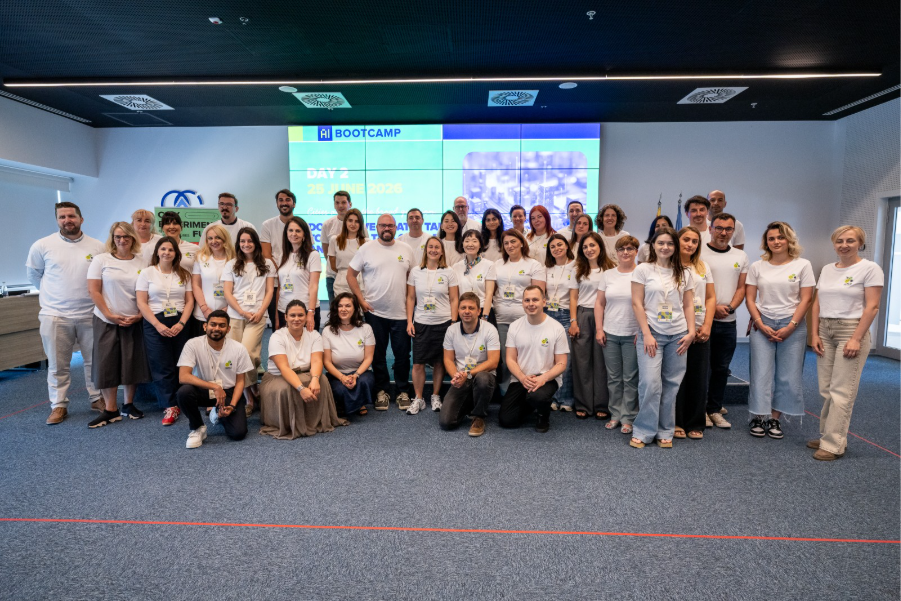
The CEF x AI Bootcamp, held on 23–25 June under UNDP’s City Experiment Fund (CEF) with the support of the Ministry of Finance of the Slovak Republic, brought together some thirty participants from ten municipalities – from capital cities to small towns, some of them rebuilding through crisis. In the course of three days, cities from Armenia, Kosovo1, Montenegro, North Macedonia and Ukraine worked on exploring where – and whether – AI belongs in their city.
Their starting points differed widely, but the challenges they brought clustered around a handful of shared themes: energy resilience and resource monitoring; water management; waste collection and recycling; air quality and environmental prediction; making sense of citizen requests and complaints; and planning – from circular economy to sustainable tourism. Several teams are also grappling with the underlying data challenge: fragmented systems, scattered records, and information that exists but cannot yet be used.
Why a bootcamp, and why now
Cities are already encountering AI whether they choose to or not – it is reshaping how services are delivered and decisions are made, while the capacity gap between what the technology demands and what most municipalities have kept widening. Cities that engage early get to shape how AI is adopted: which problems it solves, and which safeguards are built in.
Yet most AI training for governments stays abstract – a tour of the technology, disconnected from any decision a city actually has to make. CEF takes a different starting point: AI is not a tool to procure but a capability to build. The bootcamp was designed as the pivotal middle step of a longer journey that runs from foundational learning to funded experimentation as part of the new CEF x AI programme.
How we designed it
Three design choices shaped the experience.
Fundamentals moved online, before the event. All participants completed a self-paced AI Foundations course and a set of preparatory canvases in advance. That freed the three days in Podgorica for the only thing that cannot be done remotely: teams working through the challenges facing their own cities alongside peers and experts in the room.
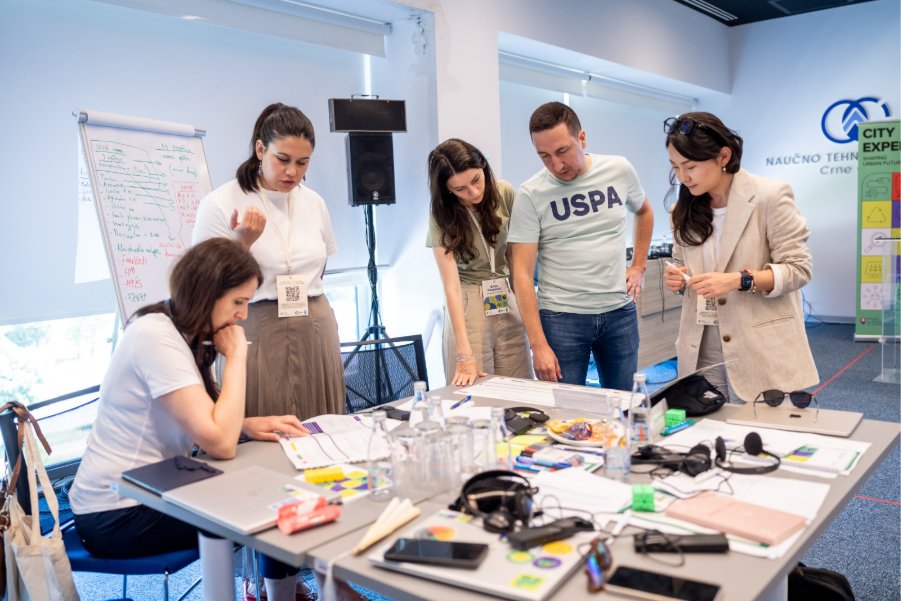
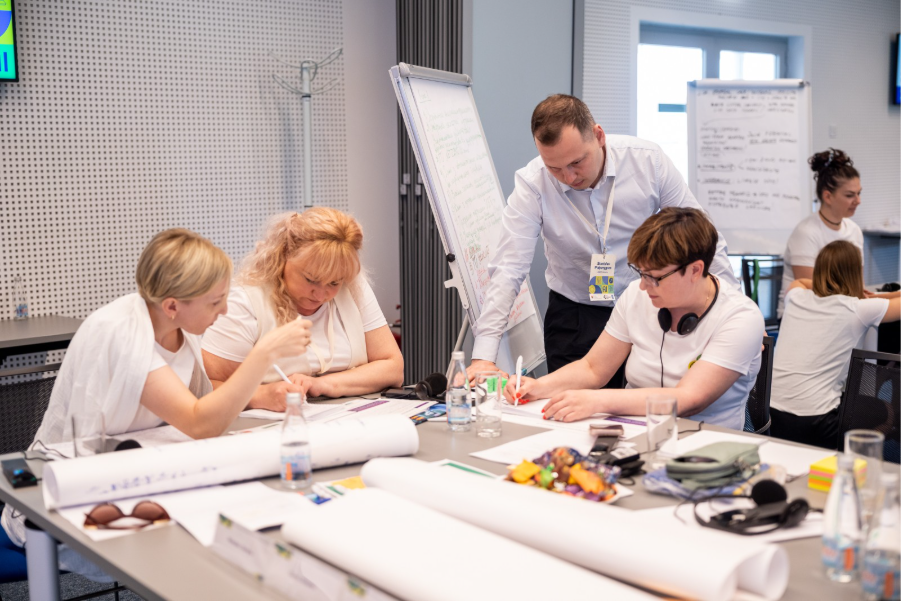
A workbook, not a lecture series. The heart of the bootcamp was a single workbook of seven canvases, each producing one concrete output that feeds the next: an ecosystem map, a problem statement, a responsibility check, a feasibility check, peer feedback, entry points, and reflections. By the final afternoon, every city had at least two concrete AI entry points – the substrate of their funding proposal. One instruction was printed into the method itself: “‘AI is not the answer’ is a valid finding.”
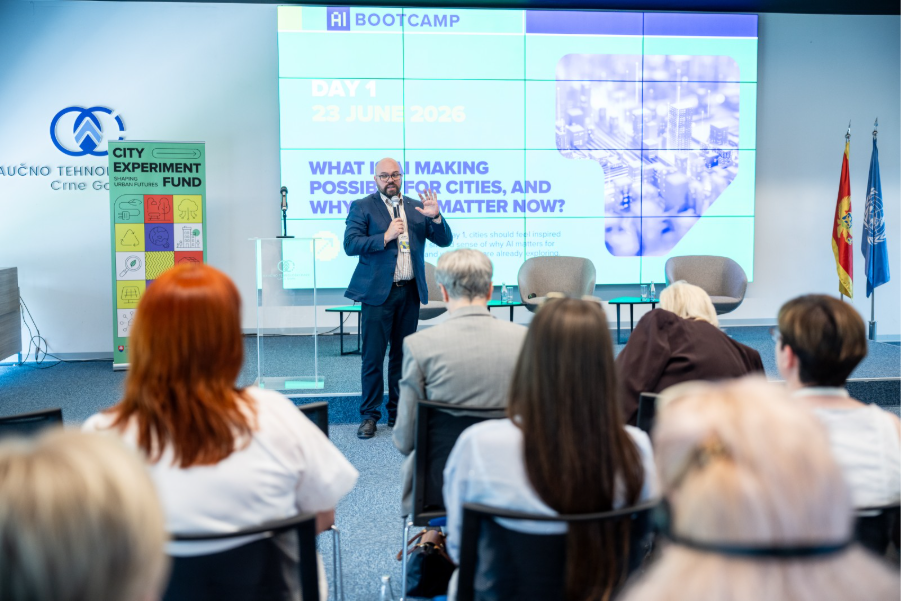
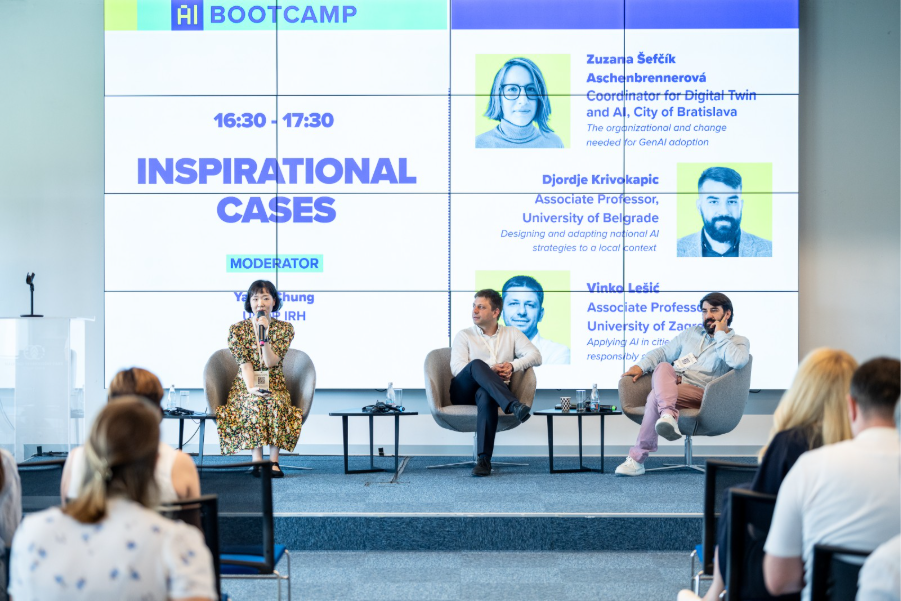
Three days, three questions. Day 1 asked what AI is making possible for cities and why it matters now – inspiration, provocations, and real cases from Bratislava, Montenegro’s national AI strategy and the IEEE’s GenAI for Good work. Day 2 asked what each city’s AI landscape looks like, and which challenge is most worth pursuing. Day 3 focused on implementation: do we have what it takes, and where do we begin?
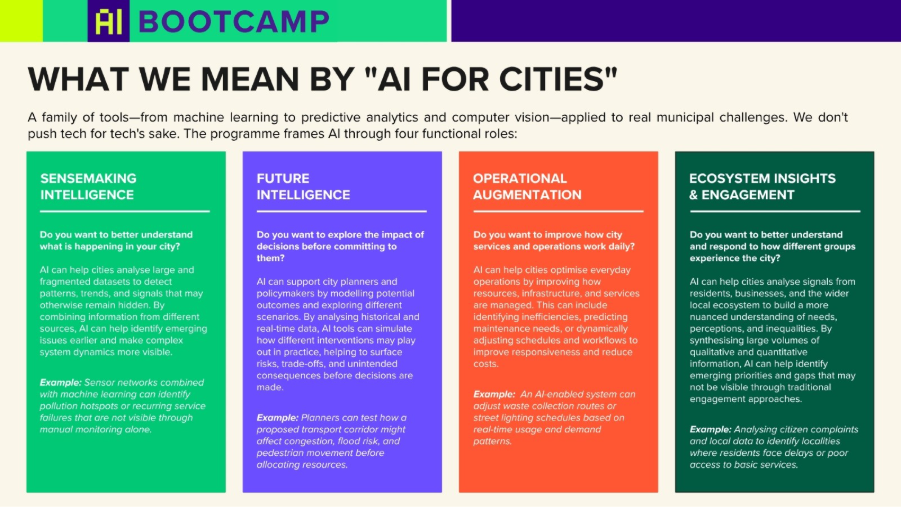
Instead of a taxonomy of algorithms, cities worked with four functional pathways, each phrased as a question a public servant can answer: Do you want to understand what is happening in your city (sensemaking intelligence)? How to explore the impact of decisions before committing them (future intelligence)? Improve daily operations (operational augmentation)? How to better understand how different groups experience the city (ecosystem insights and engagement)?
What we learned
Problem framing is the hardest and most valuable step. Cities tend to arrive with solutions, rather than problems. Many of the biggest breakthroughs came from refining the “How might we” statement. Teams were challenged to clearly define who is affected, what needs to change for them, and why it matters – without jumping to a solution or embedding a technology in the question.
Permission to say no to AI builds trust. Making “AI may not be the answer” an explicitly valid outcome changed the tone of the room. Teams became more candid about fragmented data, missing skills and weak enabling conditions, which is exactly the honesty a credible proposal needs.
Peers are the real curriculum. One participant named their key takeaway from Day 1 simply as a “feeling of alignment.” Whether rebuilding through crisis or planning for long-term transformation, small towns and capital cities found themselves asking many of the same questions. Structured peer feedback in country groups helped teams refine those shared challenges into sharper problem statements.
Responsibility works as a design step, not a lecture. Rather than an ethics session bolted at the end, every team worked through a responsibility canvas while their AI direction was still taking shape – asking who could be harmed or excluded, whose privacy and rights are at stake, and what safeguards would need to be in place. While the cities are still exploring how AI might be applied, it also makes the right moment for cities to reflect on ethics, privacy and rights from the very beginning – where the responsibility becomes part of the design rather than an afterthought.
Real-time sentiment is a facilitation tool, and occasionally a mirror. The daily Menti meter pulse lets the team adjust pacing and energy between sessions. It also gave participants a place to leave the harder, anonymous questions. A room that steps back from process to ask about purpose is a room that has understood the assignment.
What happens next
The bootcamp is a beginning, not an end. Cities are now refining their entry points into proposals along two tracks for CEF x AI Programme. Track 1 – the CEF x AI Demonstrator – will support selected cities with US$200,000 over roughly two years to build and test AI pathways embedded in their ongoing portfolios. Track 2 – the BOOST x GenAI for Good Challenge – will match city-owned use cases with global innovator teams to co-design responsible, open-source GenAI solutions, with cities staying owners of the problem throughout. Selection will take place over the summer; and the activation begins in September 2026.
The question these ten municipalities are taking home is no longer: “What can AI do?” It is the one that emerged during the bootcamp: Will this actually benefit the citizens of our town? The fact that teams are asking this before a single line of code is written may be the bootcamp’s most important outcome.
[1] References to Kosovo shall be understood to be in the context of United Nations Security Council resolution 1244 (1999).