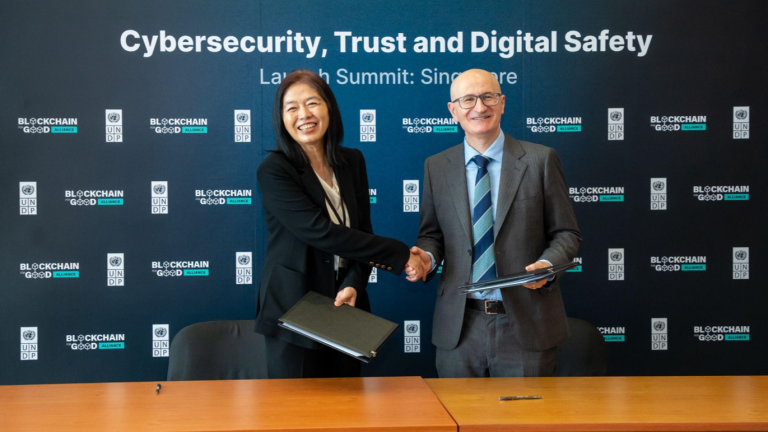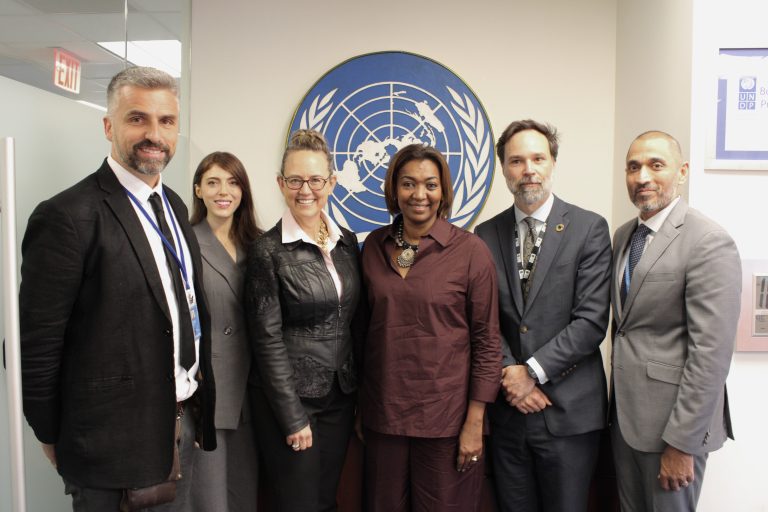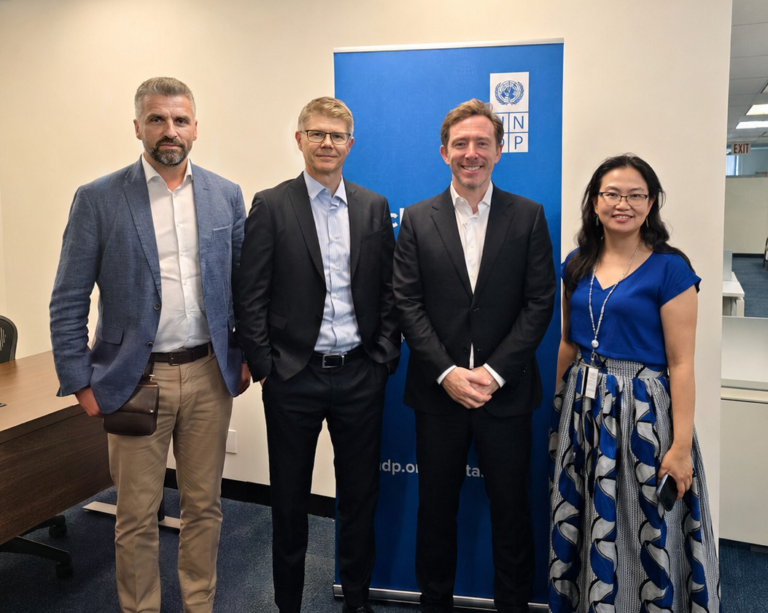
Istanbul, Lugano, 26 October 2026 — The United Nations Development Programme (UNDP), through its Alternative Finance Lab (AltFinLab), and the Exponential Science Foundation (ESF) have launched the Government Blockchain Academy in El Salvador, the Dominican Republic and Argentina. Public officials in all three countries have begun the Academy’s learning programme, designed to strengthen their ability to assess where blockchain and other emerging technologies could address institutional needs and improve public services.
Building on the partnership announced in 2025, more than 1,600 public officials from over 130 institutions have now joined the Academy across its first three country programmes, with more countries expected to follow. The launches also convened senior government representatives and UNDP leadership, showing strong institutional commitment to the initiative.
Country launches and national priorities
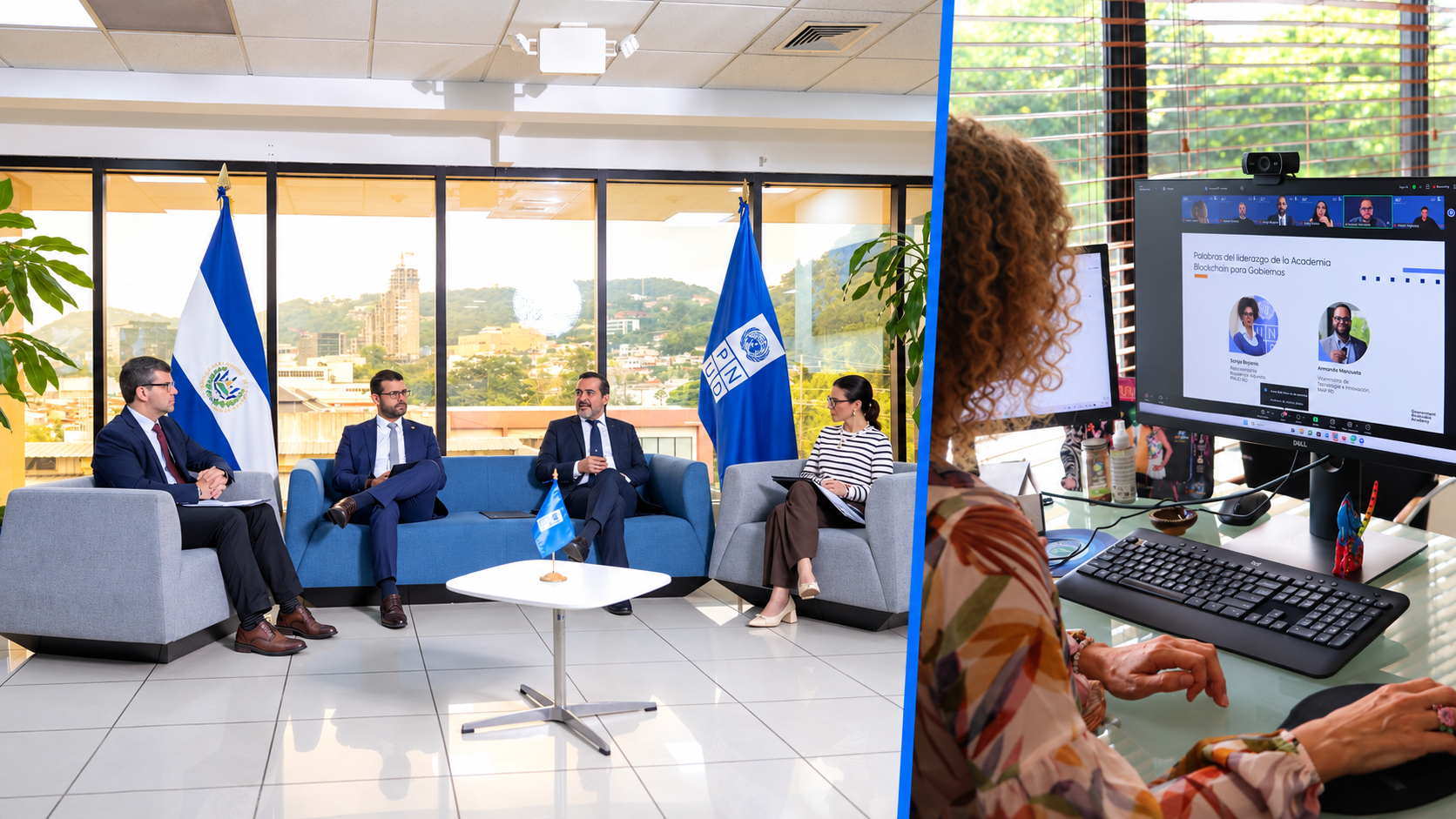
In El Salvador, more than 300 public officials are participating in a programme that builds on the country’s Digital Readiness Assessment and ongoing work on digital inclusion and emerging technologies. At the country launch, UNDP El Salvador’s Resident Representative Jairo Acuña-Alfaro joined senior institutional representatives in person, while other participants connected online. The in-person panel included Fernando Velasco, National Registrar and Executive Director of the National Registry of Natural Persons (RNPN); Alexander Gil, Director of the National Solid Waste Authority (ANDRES); and Karla Majano de Palma, Director of the El Salvador Agency for International Cooperation (ESCO).
More than 120 public officials from a range of institutions have joined the Academy in Argentina to build a shared understanding of blockchain and explore its relevance to public-sector priorities. The launch opened with remarks from Carlos Arboleda, Deputy Resident Representative of UNDP Argentina, who stressed that emerging technologies should not be adopted for their own sake, but explored responsibly where they can strengthen public institutions and help them respond to people’s needs with better services.
In the Dominican Republic, the Ministry of Public Administration has played a central role in bringing nearly 1200 public officials into the programme, with institutions ranging from the Ministry of Public Administration and the Ministry of Environment and Natural Resources to the Ministry of the Presidency and the Ministry of Justice. During the launch, Armando Manzueta, Vice-Minister of Innovation and Technology at the Ministry of Public Administration, stressed the importance of identifying public-sector needs before choosing technologies to address them.
Learning and practical applications
Each programme will run for two to three months, combining self-paced online learning with live sessions led by international experts and discussions of practical government use cases. Officials have already begun the online modules, with schedules tailored to participants in each country. The curriculum covers issues such as digital identity, digital payments and financial inclusion, governance, supply chains and climate resilience. Participants will also examine the potential relevance of artificial intelligence and other emerging technologies, alongside considerations of privacy, security and compatibility with existing public systems.
The programme aims to equip government teams with the knowledge to assess whether blockchain is appropriate for a particular challenge, including when another approach may be better suited. For participating officials, use-case discussions and solution facilitation will provide opportunities to define institutional challenges more precisely and examine potential applications to explore pathways for future pilots.
“Government teams need the skills and confidence to drive public-sector innovation and weigh different technologies against the challenges they face. Through the Academy, officials learn from relevant blockchain applications, assessing where the technology could create public value and understanding what responsible use would require,” said Burcu Mavis, Government Blockchain Academy Lead, UNDP AltFinLab.
“Preparing governments for the next era of digital transformation requires more than technology; it requires a fundamental investment in knowledge, expertise, and human potential,” said Prof. Paolo Tasca, President of the Exponential Science Foundation. “In alignment with ESF’s purpose of advancing research and education for the public good, our partnership with UNDP AltFinLab brings together world-class expertise and practical learning to help governments harness emerging technologies for institutional progress and societal benefit.”
UNDP works with countries to align the Academy’s learning programme with national priorities and existing public service needs, while ESF contributes expertise in research, curriculum development and education. The Academy also draws on AltFinLab’s experience with the UNDP Blockchain Academy and SDG Blockchain Accelerator, connecting foundational learning with opportunities to explore practical applications.
About UNDP
The United Nations Development Programme (UNDP) is the leading United Nations organization fighting to end the injustice of poverty, inequality and climate change. Working with a broad network of experts and partners in 170 countries, UNDP helps nations build integrated, lasting solutions for people and the planet. UNDP AltFinLab is a global initiative that connects innovation, alternative finance and emerging technologies to explore, test and scale new approaches for sustainable development.
About the Exponential Science Foundation
The Exponential Science Foundation (ESF) is a Swiss-based global nonprofit organization led by academic leaders Prof. Paolo Tasca and Prof. Nikhil Vadgama. Through research, education and open-source innovation, ESF advances the responsible adoption of blockchain, artificial intelligence and other emerging digital technologies across business and society. Working with governments, academia, international organisations and industry, the Foundation builds the knowledge, skills and partnerships needed to translate scientific advances into practical solutions for public benefit.