Originally posted at M4EG’s website, read the full article here.
Cities rarely move in straight lines. A tourism problem is also a skills problem, a public-service problem, a business-confidence problem and often a community-belief problem. A weak local economy is rarely only about investment; it is also shaped by institutions, trust, identity, infrastructure and the ability of people to imagine a future where they are.
This is particularly true for smaller cities. Their challenges are often described in simple terms: too few visitors, too few jobs, too few services, too little money. Beneath these shortages, however, usually sits a more complex system of relationships, habits, assumptions and missed connections.
Aparan, Goris and Noyemberyan in Armenia began their mission-oriented journey from different starting points. Aparan looked at how tourism could become more equitable and economically meaningful. Goris explored how cultural tourism could become more innovative and better connected to local life. Noyemberyan asked how it could become more than a place people pass through on the way to somewhere else.
Different cities and different ambitions, yet their experience points to one shared lesson: local transformation does not begin with a project, but with a municipality learning to see differently.
Start with the system
In many municipalities, development still begins with a familiar sequence: identify a problem, prepare a proposal, find funding, and implement an activity. This logic is useful when the problem is simple, but many local challenges are not simple. They are interconnected, shaped by people’s behaviour, institutional habits, business confide
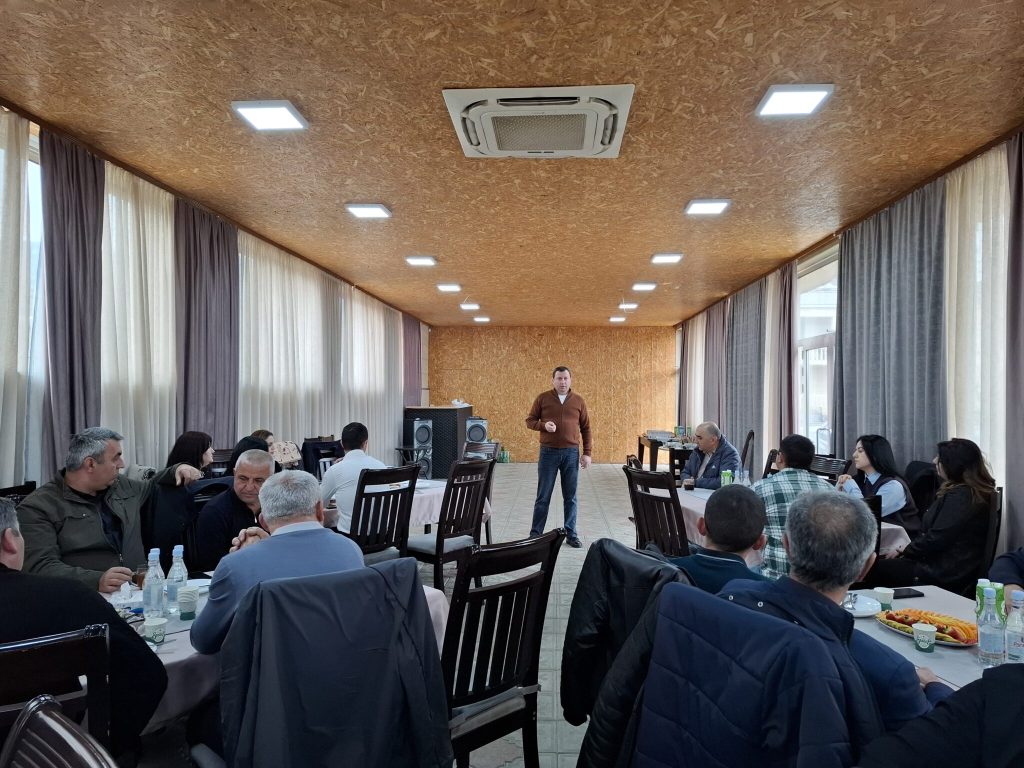
The mission-oriented approach used in Aparan, Goris and Noyemberyan asked municipalities to slow down before rushing to solutions. The sequence was deliberate: understand the challenge, listen to the community, map the actors involved, make sense of what has been heard, and only then design a portfolio of connected interventions that can be tested, adjusted and scaled.
The first change was internal
Each municipality formed a mission team led by the mayor or deputy mayor and composed of decision-makers from different municipal departments. The mission team created a space where these separate issues could be seen as part of one bigger picture. It brought together people with authority, practical knowledge and different institutional perspectives. Through training and capacity building, the teams worked with tools for stakeholder mapping, engagement, deep community listening and shared visioning. The most important outcome, however, was behavioural rather than technical.
Municipal teams began practising horizontal collaboration. They were asked to look beyond their own departments and understand how different parts of the city system influence one another. For other municipalities, this may be the first useful lesson: a city does not become more adaptive simply because it approves a new strategy; it becomes more adaptive when the people responsible for change start working differently.
Become the convener
The next step was to build a more honest picture of each city. Aparan, Goris and Noyemberyan developed city profiles, but this was not only a data exercise. It was a process of shared awareness. What assets already exist? Which actors are active but under-engaged? Where is information missing? Which assumptions have become so familiar that nobody questions them anymore?
This process also changed how the municipality appeared to local actors. When local government approaches businesses, investors and community groups not only to inform them, but to listen and involve them, the relationship begins to change. The municipality moves from being seen mainly as an administrator or service provider to becoming a convener of local development.
In Aparan, a leading mountain ski resort became part of the conversation about the city’s future. In Noyemberyan, agricultural businesses, including those cultivating olive gardens, were brought closer to the city’s development process. In Goris, local hotels became part of the emerging local mission around cultural tourism.
These examples show that many local assets are not absent; they are disconnected. Businesses may operate separately from municipal priorities, community groups may have energy but little access to decision-making, while public institutions may run activities that overlap or fail to reinforce one another. A municipality that can connect these pieces creates value before a single new project begins.
See the hidden links
The cognitive shift came next. Through sessions on systems thinking, complexity and portfolios, mission teams were introduced to a different way of understanding local problems. Instead of treating challenges as isolated issues, they began to see them as interconnected and evolving.
This can be difficult for public institutions, which are often expected to provide clear answers. Yet many urban challenges do not have one clear answer. A city may want more tourism, but tourism depends on services, infrastructure, skills, public spaces, private investment, local identity and the willingness of residents to see themselves as hosts. A city may want more economic activity, but economic activity depends on confidence, coordination, access to opportunity and the ability to turn local assets into something visible and usable.
Seeing the system does not make the problem smaller; it makes action smarter.
Ecosystem mapping turned this new perspective into practice. The teams identified public institutions, businesses, civil society groups, community actors and ongoing initiatives. They looked not only at who existed, but at how these actors related to one another.
This helped reveal overlooked stakeholders and connections. It also challenged the natural bias of municipal work. Officials often see familiar problems, familiar actors and familiar solutions. That is understandable, as institutions are built around routine, but transformation requires looking beyond the usual circle.
By reformulating problems together with stakeholders, the mission teams began to see different entry points for change. New actors emerged not because they had suddenly appeared, but because the municipality had started looking differently.
Listen before designing
Then came the stage that gave the process its human depth: community listening.
In many local development processes, residents enter late. They are asked to react to proposals, validate priorities or attend consultations. In Aparan, Goris and Noyemberyan, residents were brought in earlier. Mission teams conducted around 25 to 40 interviews per city, with attention to gender balance and the representation of vulnerable groups.
The purpose was to understand how residents experience the city: what they need, what they value, what they worry about, what they hope for and what role they imagine for themselves in the city’s future.
This required municipal teams to suspend the comfort of ready-made answers. They went out with open-ended questions and listened before designing. Although that may sound simple, it changes the balance of knowledge. Residents are not only beneficiaries of services; they are experts in the lived reality of the city.
Turn voices into direction
The insights gathered through listening then fed into sensemaking and foresight workshops. These sessions brought diverse stakeholders together to identify patterns, compare perspectives and imagine possible futures for each city. They also helped reduce duplication by showing what different actors were already doing.
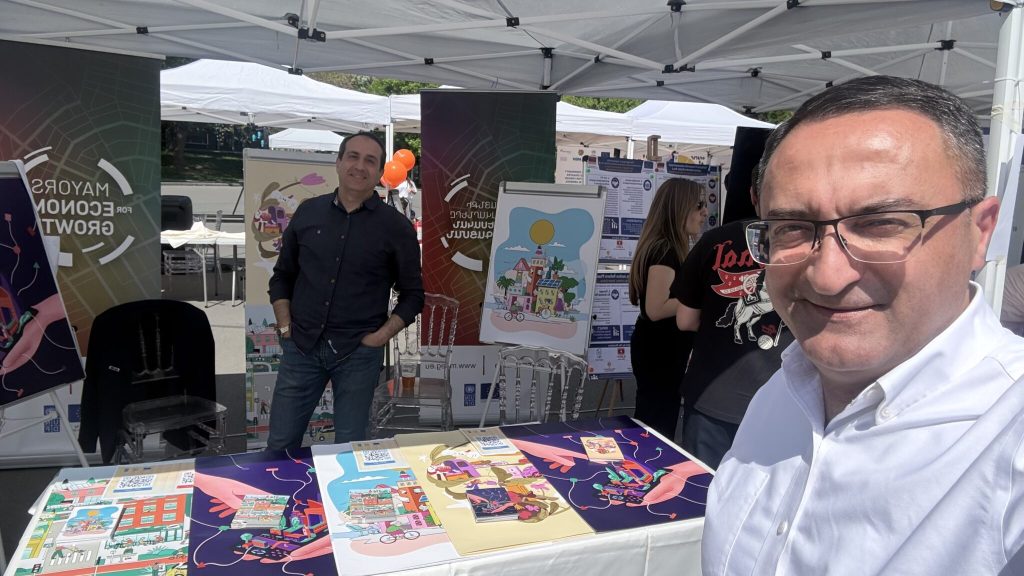
This stage matters because participation without sensemaking can become a list of complaints, while foresight without evidence can become wishful thinking. The value of the process was in combining both: listening to people’s lived realities and then using those insights to shape a collective direction.
It also changed the quality of engagement. When people are asked not only what is wrong, but what future they want and what role they might play in building it, the conversation becomes more productive. A sense of belonging becomes a development asset. People begin to see themselves not only as residents of a municipality, but as participants in its future.
Build a portfolio, not a wishlist
The portfolio bootcamp marked the move from exploration to strategy. Aparan, Goris and Noyemberyan translated their insights into mission portfolios: a clear mission statement, the shifts that need to happen, the expected effects of change and strategic positions within the local system.
- Aparan defined its mission around an equitable tourism-driven economy, with the aim of becoming a more economically active and attractive municipality by strengthening local economic development, improving service provision and making better use of existing assets and institutional capacity.
- Goris focused on innovative cultural tourism, seeking to strengthen the city as a more dynamic and attractive municipality by improving economic activity, enhancing public services and better leveraging its cultural, social and institutional assets.
- Noyemberyan chose the mission of becoming a hospitable transit hub, aiming to transform itself from a municipality people pass through into a recognized and attractive destination by activating its tourism, service and local economic potential.
What other cities can learn
For other municipalities, the message is both practical and demanding. The journey begins with the team: breaking internal silos and creating a shared way of working before trying to solve problems outside the municipality.
It also requires a deeper understanding of the system. Familiar actors, old assumptions and fragmented data are rarely enough to explain why local challenges persist. Municipalities need to look more widely, listen more carefully and involve residents, businesses and vulnerable groups before priorities are already fixed.
Mapping the ecosystem can reveal that many resources are already present but disconnected. A mission becomes useful when it helps bring those resources into a more coherent portfolio of action, where vision is translated into connected initiatives rather than isolated projects.
The real change is a habit
Aparan, Goris and Noyemberyan are now moving into implementation, where the mission-oriented approach will be tested in practice. The next phase will be about trying out interventions, learning from what happens, adjusting where needed and scaling the ideas that prove useful. Some actions may show results quickly, while others may need to be refined or redesigned along the way. This process of adaptation is central to the journey.
For municipalities preparing to join the M4EG network, this may be the most useful lesson. The starting point is not only to ask what project is needed, but who should be part of the conversation, what remains poorly understood and what the municipality is ready to learn together with its residents and partners.
Cities that thrive are unlikely to be those with a single ready-made answer. They are more likely to be those that build the capacity to ask better questions, connect the right actors and keep learning as conditions change.
The experience of Aparan, Goris and Noyemberyan is taking place under the EU-funded Mayors for Economic Growth initiative.