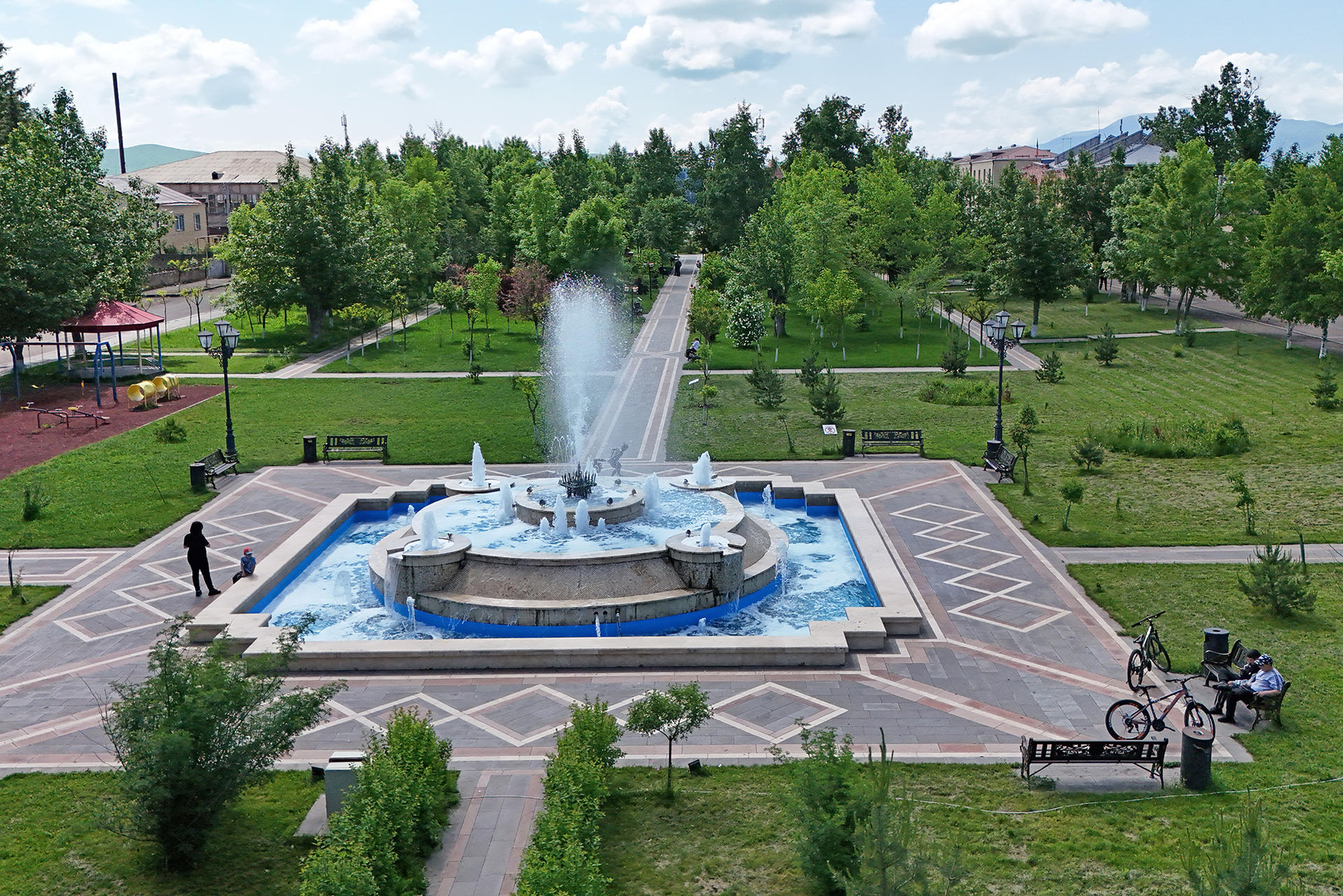
In Tashir, Armenia, the need is clear: the city’s drinking-water system requires rehabilitation. But the route to financing is less straightforward. Before engaging an external funder, the city needs clarity on technical scope, who will operate and maintain the system, national funding availability, and how much of the investment can realistically be supported through public resources. Until those questions are resolved, an investment affecting something as basic as reliable drinking water can remain stuck between local priority and financing.
Secondary cities, like Tashir, often know what they need. Development banks and other financing institutions are looking for projects worth backing. Yet the two still struggle to meet. Funding availability and the shortage of sufficiently prepared projects are part of the problem, but so is a deeper mismatch between how secondary cities develop investments and how development finance reaches them. Closing that gap requires stronger projects and financing approaches that fit the scale, economics and institutional realities of secondary cities.
In practice, innovative city finance is often more about connecting the right actors with suitable funding than inventing a completely new financial instrument.
UNDP’s City Finance Advisory Function (CFAF) works in this space to accelerate city investments. Launched through the European Union-funded Mayors for Economic Growth initiative and the City Experiment Fund, with support from Frankfurt School of Finance & Management and Climate Policy Initiative, it is working with six municipalities in Armenia, Moldova and Ukraine.
There is no single investment-readiness package
One of the clearest lessons from the first cohort is how different municipal investment pipelines can look. Some projects arrived with studies, indicative cost or a reasonably clear national funding route. Others addressed equally important priorities but still needed to establish what to build, who would operate it, how much it might cost and what kind of funding could realistically support it.
A water project, transport system and industrial park may all be worthwhile investments but won’t follow the same route to finance. Some may depend primarily on public budgets or grants. Others may be able to bring in development-bank finance earlier. A few may attract commercial financing for particular components.
The practical question becomes: what still needs to happen before financing institutions can engage, and who needs to be involved?
Important financing barriers appear long before a large loan or investment is discussed
Development banks and donors often expect early studies, credible costs and structured project documentation before considering a project. Yet municipalities can struggle to finance or procure those relatively small preparation costs.
Targeted technical assistance and relatively small project-preparation grants can determine whether a much larger financing conversation becomes possible later.
Before financing solar power and battery systems for municipal water pumping stations, Kryvyi Rih, Ukraine, needs to decide which assets to prioritize and why. In Trostyanets, Ukraine, the educational and cultural centre will likely need a combination of public or recovery funding, donor support and potentially separate financing for energy-efficiency measures.
CFAF helps cities strengthen their project pipelines, develop priority investments and engage the right institutions earlier. National authorities and public-finance channels may be the logical starting point, while Trostyanets, for example, may require several different sources of support.
Cities remain central to that process. They need to own the project, validate the underlying information and secure decisions or approvals that only they can provide. External advisers can structure, model and open doors, but they cannot replace municipal ownership, or the institutional support needed to move a project forward.

Photo: Kryvyi Rih City Council
Photo: Depostphotos
Better-prepared cities are only half the answer
Many secondary cities also face constraints that better documentation alone cannot solve.
Local revenues may be limited and fiscal autonomy restricted. Borrowing usually requires national approval, guarantees or sovereign participation. Individual projects can also be relatively small compared with the scale at which major international financial institutions usually operate.
For public-service infrastructure, economic and social value can far exceed direct financial returns. Public transport can improve access to jobs and services without generating enough fare revenue to support conventional commercial lending. Water, wastewater, social infrastructure and resilience investments can face similar economics.
These realities also create a role for financing institutions to adapt. Early support can help cities prepare projects before they seek major financing; grants and loans can be combined for public-service projects that cannot rely on commercial finance alone. Smaller investments can be grouped into larger programmes that financing institutions find easier to support.
Development banks can also design financing around municipal realities rather than expecting every city to fit an existing product. Dedicated municipal credit lines could combine grant-funded project preparation with longer repayment periods, appropriate grace periods, guarantees or risk-sharing. Where individual projects are too small, financing could be organised around portfolios of similar municipal investments rather than assessing each one separately.
The financing conversation therefore also needs to reflect how secondary cities actually operate and seek closer collaboration with national governments and financiers.
Innovation may be less exotic than it sounds
“Innovative finance” often brings to mind sophisticated new instruments. For coy secondary-city projects, the most useful innovation may be combining familiar funding sources in a smarter sequence.
A project may begin with technical assistance to complete a study, move to municipal or national co-financing, and then bring in development-bank or donor support for particular components. Commercial finance may suit one revenue-generating part of a project rather than the whole investment. Several smaller projects may become easier to finance when grouped into a larger programme.
Through CFAF, we’re already putting these approaches in practice: earlier project preparation, stronger municipal pipelines, different financing routes for different types of projects, and combinations of public, donor and development finance where a single source is unlikely to be sufficient.
Through its relationships with municipalities, national governments and public institutions, UNDP and the EU can help connect local priorities with policy decisions and financing partners, while bringing in specialist financial expertise where it is needed. Frankfurt School brings the financing perspective, and municipalities bring the knowledge and ownership of their own priorities.
CFAF’s longer-term goal is for cities to develop stronger pipelines, better relationships and a clearer ability to navigate the next investment on their own.
Cities and financing institutions need a shared understanding of what makes a project viable, which type of funding fits it and what needs to happen next. Over time, that relationship also needs to become less transactional and more continuous.
The real test of innovative city finance will be whether it can make ordinary but essential investments, from water and transport to energy and local infrastructure, easier to fund in the places that need them most.
This is joint article by Collaborating Centre for Climate and Sustainable Energy Finance, Frankfurt School of Finance & Management and UNDP’s Regional Bureau for Europe and Central Asia.