Authors: Ljubica Teofilovska, Project Manager, City Experiment Fund, UNDP North Macedonia, and Ratka Pemova, Communications officer, UNDP North Macedonia

About the series: This article is part of the “City Pulse” series, which explores the people, ideas and experiments reimagining urban life across Europe and Central Asia – what they're trying, what's changing and what they're learning along the way. The series is part of UNDP's City Experiment Fund (CEF), an initiative financed by the Ministry of Finance of the Slovak Republic that supports municipalities in tackling complex urban challenges through strategic innovation and experimentation. Running from World Cities Day in October 2026 through Earth Day in April 2027, the series takes readers inside cities experimenting with greener, more resilient and sustainable futures.
In Kavadarci, almost everything begins with grapes.
Located in North Macedonia’s largest wine-growing region, Kavadarci is a place where vineyards are part of everyday life. The wider Tikvesh region has approximately 11,000 hectares of vineyards, with nearly 8,000 of them in the Kavadarci municipality. For generations, grapes and wine have sustained livelihoods and shaped the region’s identity.

But wine on this scale also leaves a great deal behind. Pruned branches, grape skins and seeds, and used glass bottles are often treated as waste. Finding uses for these materials can reduce both what’s discarded and the need for new resources – a central principle of the circular economy.
Three local initiatives are taking a different approach: a grower is returning branches to the soil, a teacher and students is making products from grape by-products, and an entrepreneur is reusing bottles. While each of their initiatives started out independently, driven by practical needs and curiosity, together, they are shifting habits and helping a new culture take root in Kavadarci.
Giving something back to the soil
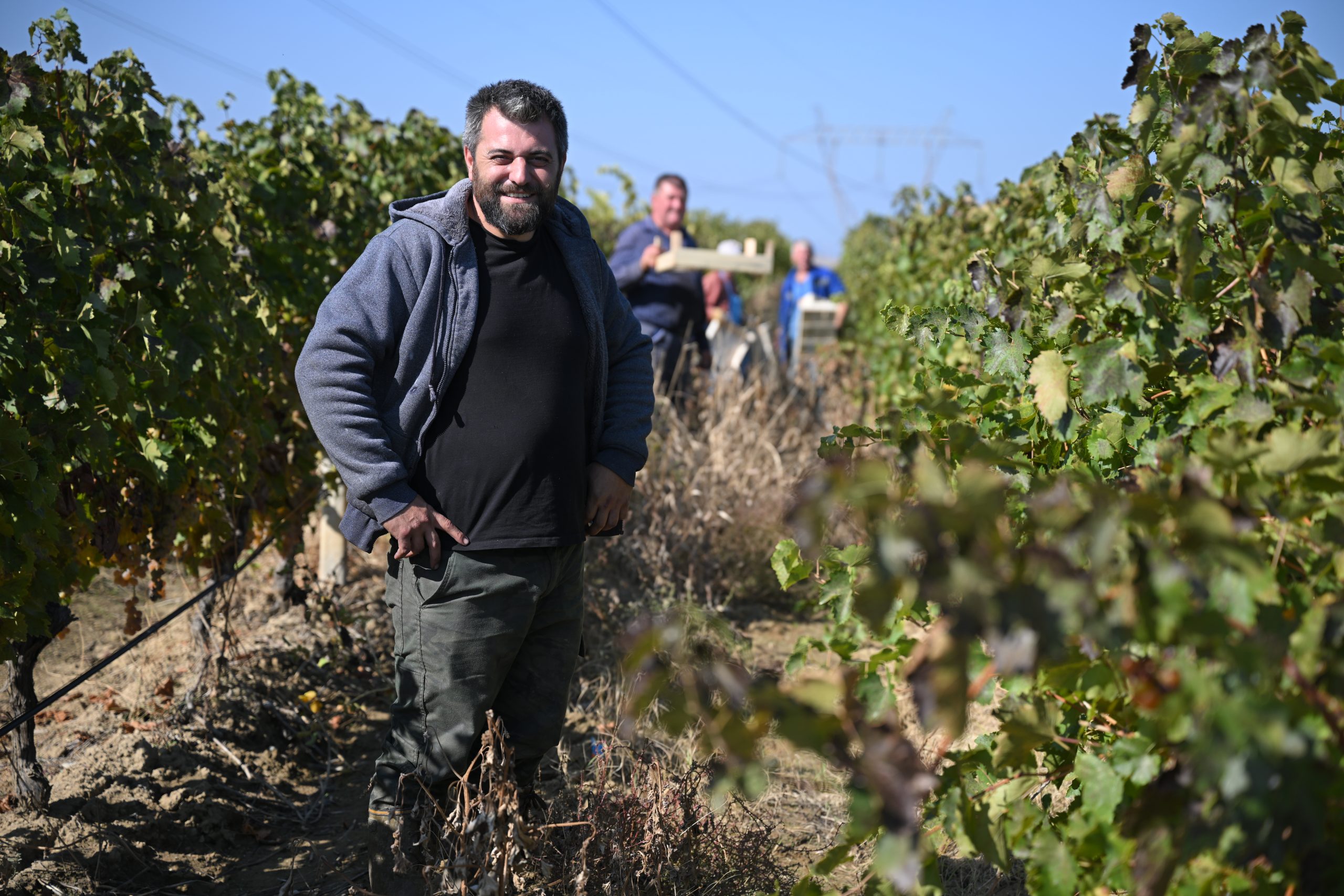
About 25 years ago, grape grower Stefan Stojchev noticed that the soil in his vineyards was poor in humus, the organic matter that helps land hold water and nutrients. With 30 hectares of vineyards and 40 hectares of grain crops to look after, maintaining fertility was difficult. Then he began using a resource already at hand –– the branches cut from the vines.
“We started shredding the vine prunings directly in the vineyard, allowing them to decompose naturally over about 18 months. We’ve been doing this ever since,” Stefan says.
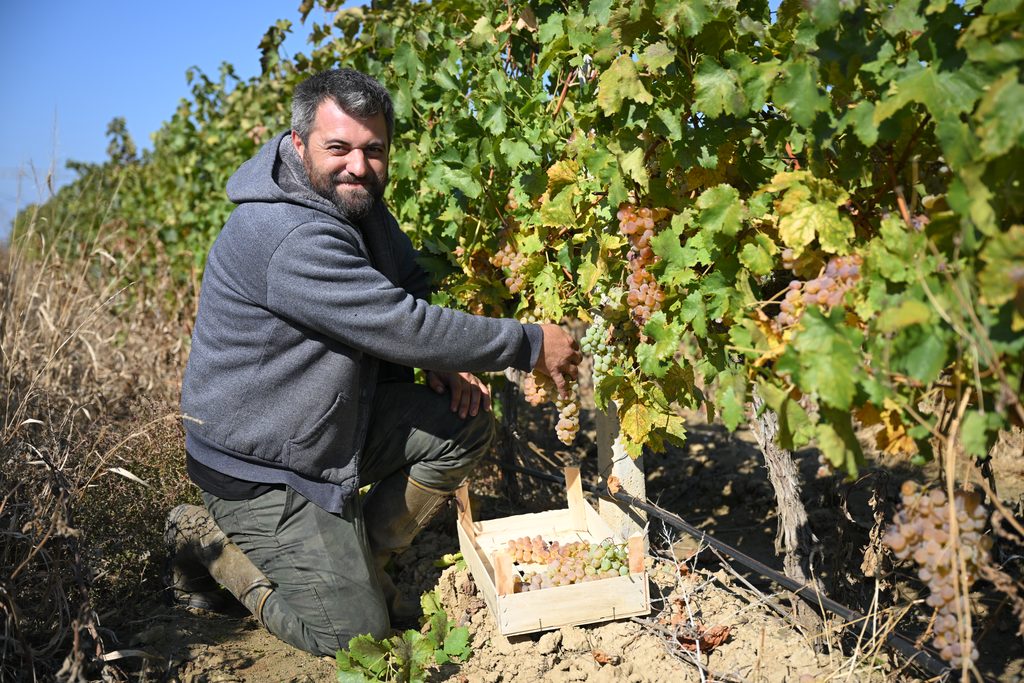
The results required patience – but after roughly ten years, he noticed a substantial improvement in the soil’s humus content. The practice also meant he no longer needed to burn the branches.
“We are essentially returning nutrients to the soil instead of throwing valuable organic material away.”
What Stefan sees as sensible farming is also connected to circular agriculture: returning resources to the land rather than discarding them. But it is not easy for everyone to follow his example. Shredding equipment is expensive, particularly for smaller growers. Shared machinery and financial support, he believes, could help more farmers adopt the practice.
From grape seeds to lip balm
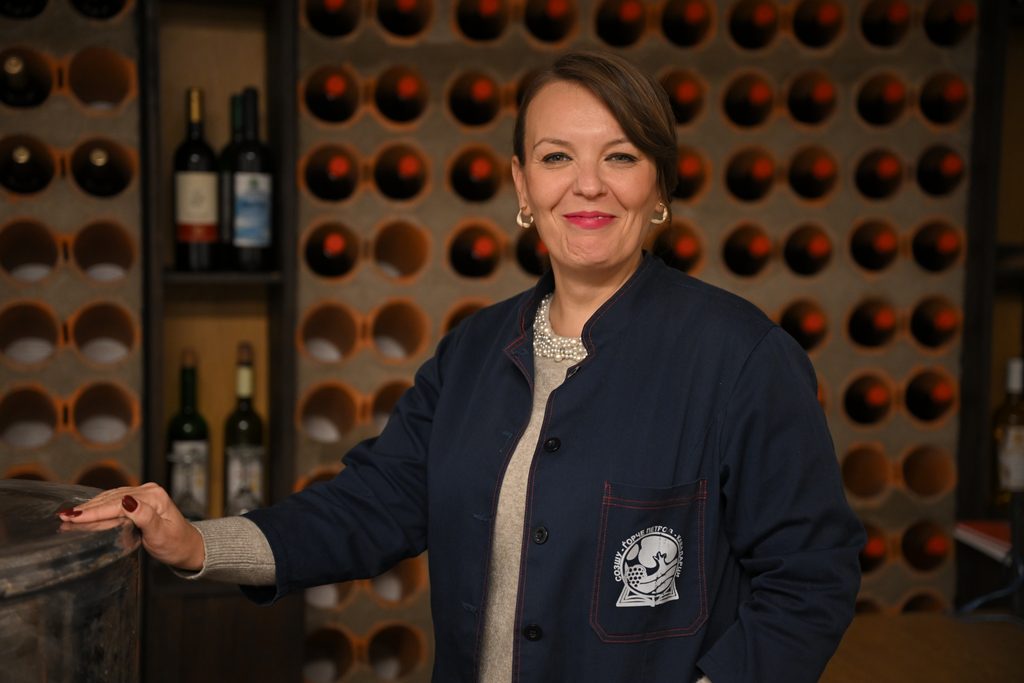
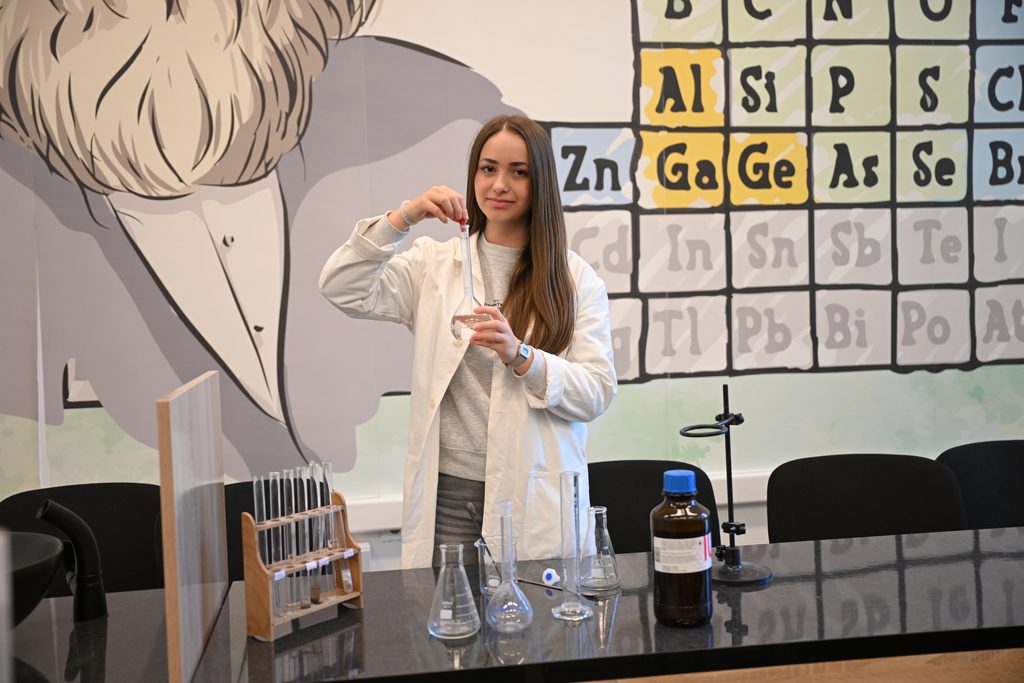
At the “Gjorche Petrov” vocational school in Kavadarci, Olivera Grkova, a vocational teacher specializing in agriculture and veterinary studies, and her pharmacy specialist colleague Blaze Gjorchev, are exploring another use for grape by-products. Working with students across agricultural and pharmaceutical fields, they have developed a lip care product using grape seed oil and essential oils during practical classes.
The experiment left Lora Turimandzova, a pharmaceutical technician student, rethinking what counts as waste.
“What surprised me most was that something we usually consider waste could be transformed into a useful product, like a balm. I never imagined that was possible.”
Olivera sees the classroom experiment as a way to connect education with the community around it. “Kavadarci is a wine-producing region, and grape processing is part of everyday life in our community. This gives us an opportunity to show students how the knowledge they gain at school can help address practical challenges.”
The school hopes to acquire equipment for producing cold-pressed grape seed oil and strengthen its laboratory so students can test more ideas. Lora sees many more possibilities: “I would love to explore this idea further and discover what else we can create from waste. I believe this is where the future lies.”
Giving glass bottles another life
For Austrian entrepreneur Roland Dimai, Kavadarci has become a home away from home. Living in a wine-producing region, he saw an opportunity to give used glass bottles a second life.
With private investment, Roland and his team developed a bottle-cleaning process and successfully washed more than 100,000 bottles in a pilot initiative in Kavadarci. Their ambition was to build a network capable of processing 20 to 30 million bottles a year across North Macedonia.
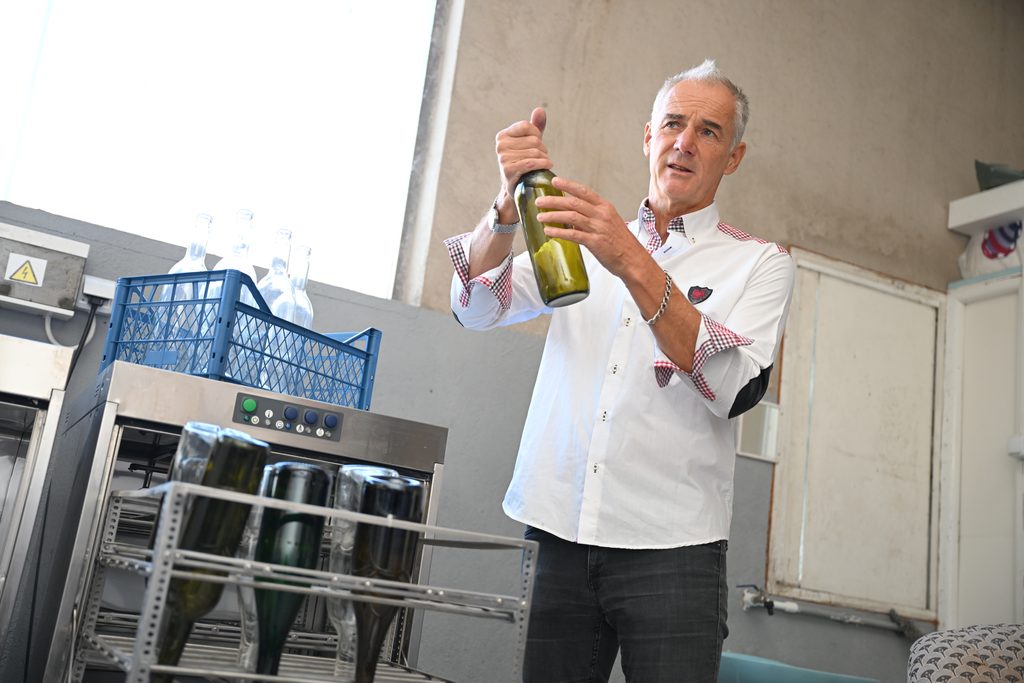
The idea promised less waste, lower energy use and emissions from manufacturing new bottles, and opportunities for employment. But expanding it required more than a working technology.
“Before investing in a circular economy initiative, it is essential to understand whether the legislation actually supports it,” Roland explains.
For now, the team is focusing on Tirana, Albania, where it operates a similar small-scale bottle-washing facility, applying the experience gained in Kavadarci. Roland’s story illustrates both the potential of circular businesses and the importance of regulations and partnerships that allow them to grow.
Connecting people, ideas and opportunities
The three initiatives are different, but each finds value in resources that might otherwise be discarded. They also reveal barriers – from access to equipment to supportive policies and regulation – that individuals cannot always overcome alone.
“For Kavadarci, circularity is an opportunity to connect environmental protection with local economic development,” says Vasilka Drvarova from the Municipality of Kavadarci. Grape pomace, seeds and vine prunings, she explains, could become inputs for compost, energy or other products. “We need stronger connections between those who generate residues and those who can process them.”
That need for stronger connections is central to the work supported by the United Nations Development Programme (UNDP) through the City Experiment Fund (CEF), a regional initiative implemented with financial support from the Ministry of Finance of the Slovak Republic. Rather than introducing unrelated activities, the programme is helping the Kavadarci municipality identify how its existing strengths – from its winemaking tradition and farmland to its natural landscape, growing tourism and local entrepreneurs – could work better together.
“What makes Kavadarci particularly interesting is that it already had many of the ingredients for a more sustainable local economy,” says Ljubica Teofilovska from UNDP North Macedonia. “The challenge is that these strengths have not always been connected.”
One result of this cross-pollination is Kavadarci’s Ecotourism Strategy 2026–2030, developed through local assessments and consultations with municipal institutions, wineries, small producers, businesses and civil society. Ecotourism in Kavadarci has largely meant winery visits, but the strategy aims to widen that by linking the vineyards with local food, rural accommodation, crafts and the natural landscape, and by encouraging more sustainable practices among the businesses involved.
Stefan, Olivera and Roland were among those consulted through the CEF-supported process. Their experience of what works on the ground, and of what gets in the way, helped show where local cooperation is most needed.
“I think the CEF’s contribution is in helping bring these connections into focus,” Ljubica said. “We now have a clearer picture of the opportunities, the barriers and, most importantly, the people and institutions that need to be involved in taking this work forward.”
From individual ideas to a shared vision
Among the next steps being explored is the creation of an Ecotourism and Innovation Hub – a platform where businesses, researchers, municipal institutions, young people and community groups could connect, build skills and test solutions. The activities it is expected to run include an Ecotourism Innovation Hackathon, giving young people and entrepreneurs a chance to work on practical tourism and circular economy challenges.
The work further aligns with North Macedonia’s Circular Economy Roadmap and National Development Strategy 2024–2044. Its promise is not simply to attract more visitors, but to help local businesses and communities use resources wisely and keep the benefits within the local economy.
There is no single answer. Stefan’s experience shows the importance of affordable equipment; Olivera and Lora’s work shows what education and experimentation can unlock; Roland’s approach underlines the need for enabling rules. What Kavadarci already has is initiative, knowledge and people willing to try something different.
The opportunity now is to connect them – so that the value of a grape does not have to end with a glass of wine.