
Category: Systems and portfolios
Prototyping City Learning Circle amidst Russia’s war of aggression against Ukraine
This blog is based on the experience of Ukraine cities who were part of prototyping the City Learning Circle from October through December 2022. The City Learning Circle is a series hosted by UNDP Regional Center for Europe and Central Asia (RBEC) and powered by Agirre Lehendakaria Center (ALC) and funded by the EU as part of Mayors for Economic Growth Facility (M4EG) — a joint initiative of the EU & UNDP. The City Learning Circle taps into the work of selected cities participating in the City Experiment Fund — an initiative under the Slovak Transformation Fund, implemented in partnership with the Slovak Ministry of Finance. For more information on the City Learning Circle, please see the Welcome Packet.
This blog is informed by the experiences and reflections of ALC and UNDP teams as well as interviews with the City Learning Circle participants from Ivano-Frankivsk and Kamienets-Podilskyi in Ukraine and UNDP Ukraine Country Office staff. (Some names have been changed to respect anonymity.)
Note that 19 Ukrainian cities applied to take part in the City Learning Circle, but there was only space for two. The cities who were not selected – as well as any others interested – will have access to a guide and toolkit that ALC and UNDP are preparing as a result of this process, called: Co-creating urban transformation: A guide to community listening for future-fit cities. Please fill in this form if you’d like to be notified when the guide becomes available.
Preface: Listening to the past for narratives of possibility
It was little known until recently that Ukraine has one of the longest and richest histories of urban settlements in the world (Cities in Ukraine (also called megasites) date as far back as the 4th millennium BC (see Graeber & Wengrow (2021). The Dawn of Everything: A new history of humanity. Signal)). What’s more, as revealed in Graeber & Wengrow (2021), cities in Ukraine seem to have parallel evolutions with human settlements at the opposite corner of the continent in the Basque Country. Among the earliest known in Europe, Ukrainian and Basque ancient histories of large community settlements reveal similarly built circular forms and cultural commitments to egalitarianism and governance that are far different from other early urban histories in which cities were centrally governed by bureaucracies run by kings and monarchs in various forms. These human settlement histories would seem to coincide with remnants of culture that have persisted, and perhaps even foreshadow possibilities for somewhat similar futures.
We didn’t realize this ancient coincidence between Ukraine and the Basque Country when we invited President Ibarretxe, former head of the Basque Country (and co-founder of ALC), to give the keynote talk during the first session of the City Learning Circle in October 2022. His words of advice to cities in the cohort, and Ukraine in particular, would now seem prophetic.
President Ibarretxe insisted on the importance of questions—and of changing the questions we ask ourselves collectively. He advocated that rather than asking: “How to change a country or a city?”, we should instead ask, “How to engage people to change a country, a city?”. And for him, culture is the key—as in, a culture of innovation and cooperation with a commitment to schools, education, and solidarity, in order to construct better futures for all. He argues further that societies who can make good decisions together will be able to share the benefits, and perhaps most fundamentally, will have developed capabilities for dialogue and listening. That capability to collectively listen (referred to interchangeably as deep listening, social listening, and community listening in the work of ALC) to build shared understanding about collective narratives operating in a society, contributed to the social and economic transformation of the Basque Country, which over the past 35 years has developed the world’s largest network of worker-owned cooperatives. The Basque Country has evolved as a society with one of the highest measures of equality in the world. Our Ukrainian partners in the City Learning Circle were inspired to learn from President Ibarretxe about the Basque Country’s social and economic transformation experience and curious about what aspects could be adapted to their post-war reconstruction.
I. Why are listening & learning critical, even—and perhaps especially—in crisis conditions?
Societies around the world are caught in vicious cycles of distrust and disjointed thinking, and action. In many ways and for many reasons that relate to shifting political landscapes, broken information ecologies, climate and energy crises, violent conflict, and more, it is difficult for communities and societies to listen well to one another, to engage in dialogue, and to understand perspectives of people who have different backgrounds and views. Increasingly, people are navigating social contexts with polarized assumptions about what is happening and what is true. Societal mistrust is contributing to societal breakdown that shows up in all sorts of ways — from polarization and social isolation to increases in violence and war.
In this context, on February 24, 2022, Russia invaded Ukraine from the south, east and north, bombing more than a dozen cities. So began Europe’s largest land war since World War II. Immediately in those early days, UNDP’s Ukraine Country Office moved into gear to support local communities. The M4EG country team in Ukraine was well-equipped to respond, since they had already been working on community infrastructure rebuilding in eastern Ukraine from armed conflict, as well as supporting decentralization efforts with regional governments across the country. In the early days when Ukraine declared marshall law, the M4EG team responded to partner municipalities’ learning needs about how to continue to manage communities and deliver services in the new context. And the need for learning didn’t stop there — Mustafa Sait-Ametov, M4EG country team lead in Ukraine, remarked that municipalities have seized learning opportunities to make their cities better, including responding to our City Learning Circle invitation.
Why does community listening matter, including in crisis conditions? In relatively peaceful times, Community Listening approaches and tools help deepen understanding of local narratives and perceptions, which contributes to collective intelligence building regarding a city’s social reality and desired and imagined futures. Narratives inevitably influence the interventions that municipal teams develop, and thus become essential to take into account when designing and implementing actions. Moreover, listening, coupled with processes of deliberation and co-design with citizens, can contribute to evolving shared narratives for change and creation of urban transformation portfolios that are ‘people powered’. Community Listening can also provide a robust foundation for civic change, and narratives of the past and present are revelatory for how people imagine future transformation. In times of crisis, these processes need to be adaptive to the situation. In the case of the two Ukraine cities in the City Learning Circle, participants chose to dive in and accelerate the testing of Community Listening approaches in order to address pressing problems in ways that directly engaged people and included perspectives based on their current lived realities
Cities are ground zero in this war, and even those who are not being invaded directly are coping with large numbers and flows of displaced peoples and businesses. This massive migration not only requires new strategies for addressing immediate needs and reconstruction planning, but also has a deep impact on people’s lived experience in cities. The fact that the war is urban, and displacement is happening primarily in cities portends, those cities will be particularly important for the post-war reconstruction strategies.
In this context, UNDP extended an invitation to Ukrainian cities to take part in the City Learning Circle, which we designed to address two main questions:
- Can the structure and method of a multi-city, transnational City Learning Circle provide an effective way to engender peer-to-peer learning and stronger relationships between cities?
- How can the community listening tools be improved and adapted to assist cities in Eastern Europe who want to learn these practices as part of a more adaptive governing system that responds more efficiently to real time needs and today’s complex problems?
The flow of the City Learning Circle consisted of three full cohort sessions, punctuated by mentoring sessions with each city team in between to support tool testing and address city teams’ questions on theory, methods, and practical applications. The next section covers outcomes and learnings from the experience between October and December 2022.
II. Ukraine cities’ experience and effects
Ukraine cities jumped at the chance to take part in the City Learning Circle; UNDP expected applications from four or five cities, so we were all surprised to receive 19 applications. “There’s a huge demand for new knowledge and learning, even during the awful situation of war,” said UNDP Ukraine colleagues. Amidst violence, displacement, and the continued crisis context, we wondered why there was so much demand for learning in general and for community listening in particular. We asked participants from the two cities who were selected what motivated them to apply, and they told us that they were driven to learn more so that they could improve their cities and their work and build trust and capabilities that would help strengthen post-war rebuilding. Following are two examples.
“We are right now in a turning point because immediately after the war is over, there will be a huge wave of renaissance of restoration processes and activities and I want to be ready for it.”
Volodymyr, Kamianets-Podilskyi team
“My motivation, first of all, is to improve my work. What does it mean? It means to arrange effective communication and cooperation between resources and our local community. Information received during this City Learning Circle was used to develop the most effective solutions and we are going to use it further and further.”
Irina, Kamianets-Podilskyi team
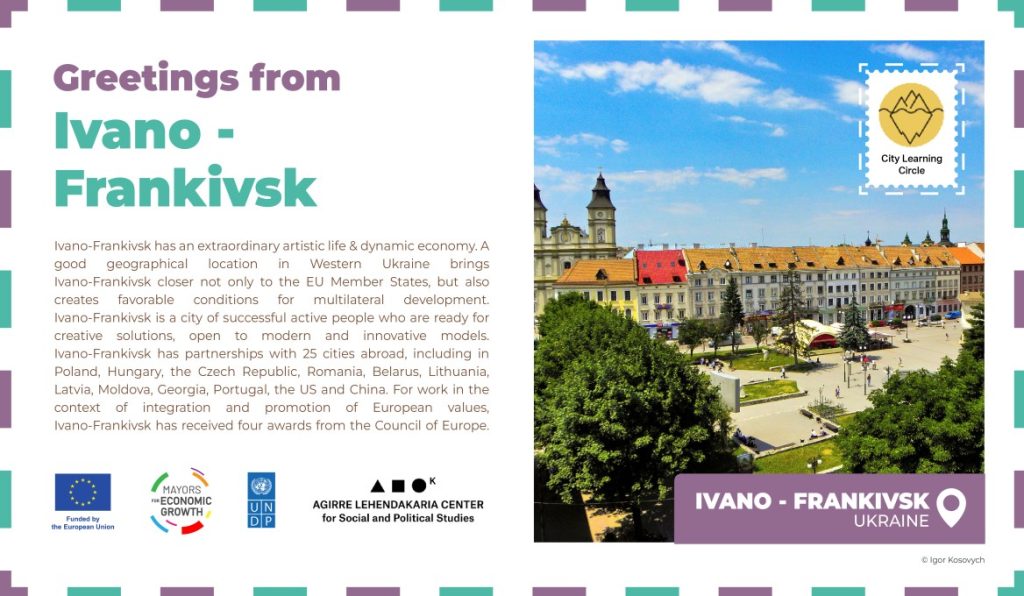
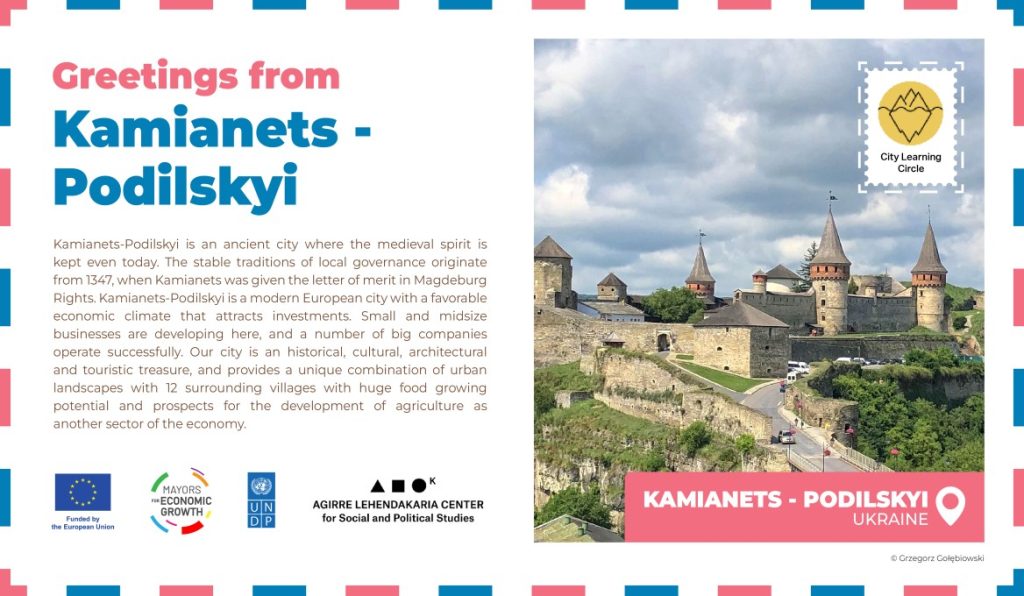
Participants in both selected cities, Ivano-Frankivsk and Kamianets-Podilskyi, consisted of municipal staff from different departments as well as civil society representatives. The cities are both located in the western part of the country, and in spite of their massive workload increase resulting from the arrival of internally displaced people, families and businesses, the teams engaged deeply in the City Learning Circle right from the start. Participants attended group sessions and one-on-one mentoring meetings, and they diligently carried out community listening and narrative analysis exercises in between sessions with support from ALC. City teams reported outcomes on five levels:
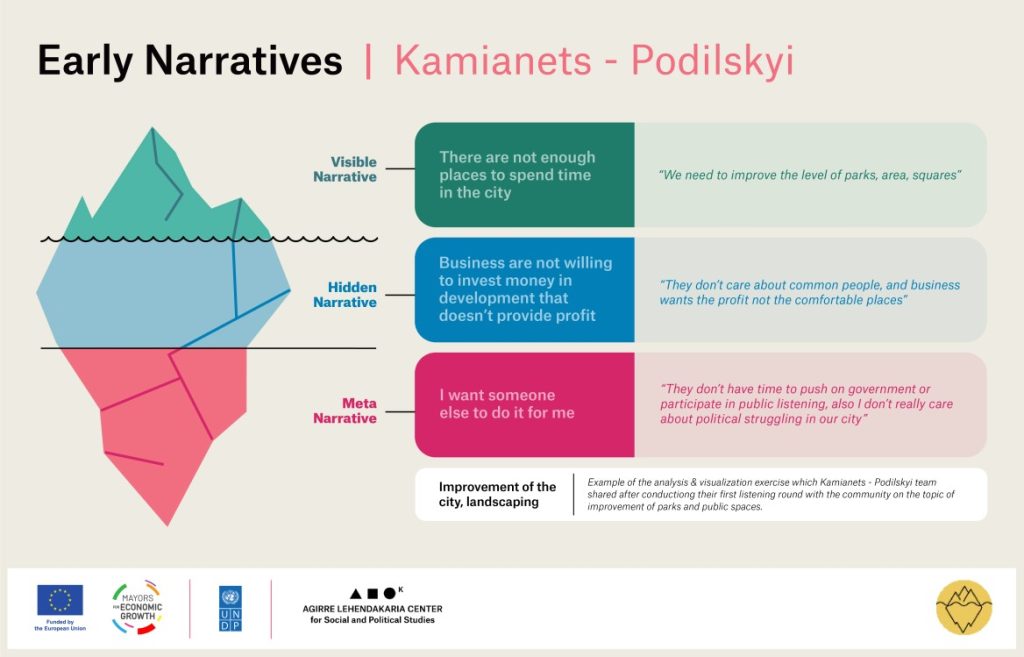
Effect 1: Deeper understanding of residents’ lived experiences and clearer analysis of local narratives—both visible on the surface and less obvious hidden narratives and metanarratives—operating in each city.
“We need to constantly learn, constantly find out new things, constantly engage in learning processes. These learning processes [in the City Learning Circle] united us and showed us real processes happening in our city, such as the daily-life challenges of single moms, young people, and internally-displaced people and businesses from the East.”
Yelyzaveta, Kamianets-Podilskyi team
Effect 2: A sense of solidarity and visceral feeling that Ukraine is not alone.
“Participation in the City Learning Circle was, for me, proof that Ukraine is not alone. I mean, it seems that the whole world supports Ukraine in such difficult times. And of course, it gives strength. It gives us understanding that we are supported in such a way, giving us new knowledge, giving us new mechanisms.”
Irina, Kamianets-Podilskyi team
Effect 3: Inspiration, strength, and learning from the diversity of city teams: multigenerational, multidepartmental, multisectoral, and gender diverse.
“It helps me to have the possibility to work in such a diverse team of specialists, which includes young specialists, youth which include special representatives of civil society and many others. It’s just amazing.”
Irina, Kamianets-Podilskyi team
Effect 4: New ideas for the municipalities and new ways to listen to citizens, based on ALC’s tools and approaches.
“The City Learning Circle gave us a lot of ideas. Many of the ideas we have already started to implement into some processes and into some new channels. For example, we have new listening channels, among which is the Council of Civil Activists, that help us to get a better grasp of communities’ and society’s tendencies and worries. […]The experience which we have gained during this learning process can’t be undervalued and underestimated. We have already used various mechanisms which we have learned during the last months, and we plan to extend our existing mechanisms and to develop new ones.”
Irina, Kamianets-Podilskyi team
Effect 5: Changed ways of seeing and greater insights based on sharing experiences with other cities in the cohort, both within Ukraine and from city teams in Kosovo and Armenia.
“For me personally, it was interesting to find out about problems and challenges that exist, especially abroad. On the geopolitics level, it’s always important to understand what the realities are, their real challenges, what are their pains, so to say, because you can’t find it out from the news or from mass media. But on the Ukrainian level, it was interesting for me to find out about some successful projects in other cities. In a good sense that’s a competition, like: ‘Oh, they have this good idea, or they have this good project’. It’s nice to pilot something similar as well.”
Yuliana, Ivano-Frankivsk team
The outcomes were particularly encouraging given the hardship and tension of the war. Our meetings were frequently punctuated with dreaded air raid sirens. Comments like this at the start of meetings were common:
“[…] Municipal offices and administrative buildings are always in danger during air attacks. So, if there is an air raid alert, we will need to go and take cover,” said a participant, Ukraine municipality.
III. Learnings from design and prototyping of the City Learning Circle
Besides learnings embedded in the direct outcomes above, we lay out below what we learned about: a) early evidence of culture shifts in the Ukraine municipalities; and b) what worked well with the City Learning Circle design, as well as limitations.
Learnings about culture shifts we observed during prototyping City Learning Circle
Learning 1: Relational culture of unity and solidarity, local trust, and fighting collective depression.
A number of participants remarked that relationality and trust building both among citizens and between citizens and municipal government were already being strengthened as a result of prototyping Community Listening. In one city, we observed seeds of strengthening relational culture particularly with some of the most vulnerable people in the city, including single mothers and their children and internally displaced peoples (IDPs). One participant also shared that Community Listening helped to fight collective depression:
“Social listening constitutes an important element of this, of all our efforts, because I need to say that society now is quite depressed either because of the economic challenges and not only economic ones, because, for example, today we have a mourning day. We buried one of the heroes who died just today.”
Irina, Kamianets-Podilskyi team
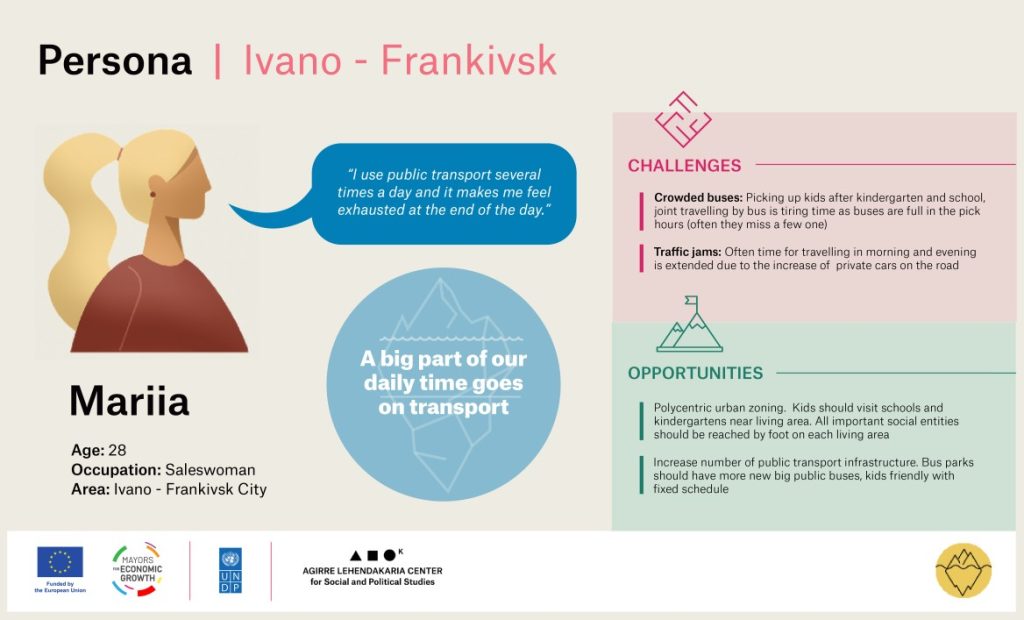
Some city staff felt that the Community Listening went even further to contribute to building a culture of unity and solidarity in the city. Besides the direct, individual listening the team prototyped, they also began social media chats and invited young people and single mothers to share their experiences, challenges and aspirations. This contributed to the city’s ability to develop a set of ‘personas’ (ethnographic profiles, representing archetypes of lived experiences in the city, which then informed the municipal budgeting process for 2023 (as mentioned below).
“Just yesterday we approved the municipal budget for 2023. […] Thanks to inspiration during City Learning Circle we included in the budget different support and benefits allowances for all these categories of our local population, which actually constitutes this persona of the person in their highest needs, and inspired by the mechanisms and processes we learned from you,” continued Irina, Kamianets-Podilskyi team. “That’s a communication possibility for people. We started to develop the persona exercise with single moms, with children during the process, and it brought us to a variety of sectors. For instance, water supply, heating supply, wellbeing of the city and planning of public services, which actually were initially developed for single moms. We have learned more efficient and empathic ways of communication.”
Learning 2: Realization of the importance of narratives and desire to deepen analysis to understand hidden and metanarratives in the city.
Among the different Community Listening tools on how to gather and get to the core of local perceptions, we presented ways of accessing different levels of local narratives.
- Visible: Public discourses and what people say openly;
- Hidden: Something hidden behind the textual discourse; and
- Metanarrative: Deep community beliefs that result in revealing Visible and Hidden levels.
These perceptions at three different levels have a decisive influence on what is believed to be possible or not in a community, and can even determine the success or failure of socio-economic initiatives implemented for city transformation.
“It’s extremely important to understand the deep needs of citizens and it’s extremely important to know how to actually start, and how to handle your communication in order to move quickly from visible narrative and needs into the deep and hidden narratives. These listening skills need extensive training. Of course, we need to train and to learn how to do it more effectively.”
Yuliana, Ivano-Frankivsk team
Learning 3: Growing sense of European identity of Ukrainians.
One city team shared how local culture is changing in that people within their community feel a stronger sense of what it means to be European and the importance of understanding that narrative and its implications.
“Each Ukrainian now feels and wants to be European and to understand how it is to be European and what are important things for Europeans,” stressed Irina, Kamianets-Podilskyi team.
Learnings about the City Learning Circle design—strengths and limitations
Learning 4: The City Learning Circle proved to be a highly adaptive and adaptable container, both for cities who were completely new to Community Listening and analysis processes, as well as for those more experienced.
The alternating sessions of the full group of four cities, followed by one-to-one city mentoring sessions seemed to respond well to Ukraine cities’ needs and accelerated their learning evolutions. The ALC and UNDP teams continually adapted session design to address what we heard from city teams along the way.
Learning 5: City teams that consisted of representatives of a mix of sectors, genders, seniority of city staff, and civil society partners seemed to be able to engage most deeply.
Both cities in Ukraine incorporated such representation. A department head and elected representative in one city marked how enriching it was to have young people in the team with diverse interests and enthusiasm for the work as well as deep commitment to improving their city.
Learning 6: Participants appreciated transnational engagement—not only from the city teams who represented three different countries, but also that the hosting organizations (ALC and UNDP) were multinational.
“International cooperation is extremely important, because it helps us to develop ourselves. It helps us to understand what we lack and what we have in excessive amounts, what we could use, or change, or even build from scratch. With such international communication, we got extremely crucial support. during this difficult time for us and Ukraine,” commented Yelyzaveta, Kamianets-Podilskyi team.
“From the very beginning, when we watched and listened to your presentations, learning about different problems and solutions abroad, it helped me to see that some challenges are quite similar here and in Armenia or Kosovo. At the same time, we have quite a few successes and lessons learned to share with colleagues. Take for instance our good touristic areas, while others have well developed parks and transportation areas. See, we could share our experience and ideas to learn from each other,” said Volodymyr, Kamianets-Podilskyi team. “It would be great to learn how they made such great parks. Or we could share our experience in the tourism sector. It’s extremely important to get out of your information bubble, to learn something new from foreign cities. And so that’s why direct communication with other cities is extremely important in order to give the possibility of experience exchange.”
Learning 7: Participants remarked that the friendly, warm, collegial, and inspiring atmosphere of City Learning Circle meetings put them at ease and facilitated learning, particularly considering that concepts seemed confusing and foggy at the beginning.
The convivial vibe and frequent ALC support helped to relax participants and speed up the learning process, so that by the end, participants had confidence in their knowledge and capabilities to use the tools more regularly and adeptly moving forward.
“For me, it wasn’t clear or obvious in the very beginning. I just didn’t understand anything. Then, amid the process, I started to understand some basic rules and principles, and as result I learned that these are very simple and useful tools to apply in practice.”
Volodymyr, Kamianets-Podilskyi team
“You prepared all the information for all the lectures, and the atmosphere was extremely friendly. And after every meeting, we were so inspired. We created different things and mechanisms such as community and youth chat groups and communication tools,” mentioned Yelyzaveta, Kamianets-Podilskyi team.
Learning 8: For improving or scaling the City Learning Circle moving forward, we’d suggest addressing giving greater thought to several aspects of design: duration, language, and technologies.
The short duration was somewhat limiting as ALC was not able to train and coach on the full set of processes of its community engagement framework/social innovation platform system, which includes: Community Listening, Collective Sensemaking, Co-Creation, and Co-Design of people-powered portfolios. It is more beneficial to cities to have a full understanding of the systemic approach with opportunities to prototype the full set of processes. Secondly, operating in multiple languages and translating documents when the time is condensed proved to be challenging. And thirdly, the tools and learning technologies could be reconsidered next time, and perhaps coordinated with other technologies the city teams are already using or would like to learn.
IV. Where’s this going?
Municipalities understand the critical role of community listening, and they value rapid, adaptive learning, building new capabilities, and connecting more meaningfully with other cities inside and outside Ukraine. To sustain solidarity and reconstruct for social and economic transformation and long-term futures, community listening will be a tremendous asset.
Successful recovery of Ukraine requires strong relationships of trust: community listening is an essential basis for trust and relationship strengthening as part of a larger strategy of generating people-powered portfolios for social and economic transformation
What is the role of cities in Ukraine’s future? For Mustafa in UNDP’s Country Office, cities and regions are critical and will become even more so through continuing the process of decentralization started before the war.
“What would be the role of cities [in the future]? It will be maybe the most important factor—the capabilities of municipalities, and I mean, not only local authorities, but also strong local partnerships for recovery and for development. We’re all kind of orchestrators of the development processes at the local level… Even now we can predict that such cities will recover quickly. And we see all the signs that we will be able to build back better, much better than before. These cities have very progressive and open-minded thinking, and they have the ability to attract and engage partners, mobilize funds and implement their projects. And so there will be, I think, a lot of prominent examples, but there will also be other problems with the cities which require capacities to be built.”
Mustafa, UNDP Ukraine
Mustafa is committed to cohesion and inclusion of all communities.
“The primary task for them [cities in eastern Ukraine] will be to save their communities, to maintain a sense of community and make efforts to bring people back from where they are now in the western part of the country where the situation is different. [The western cities] have seen a significant influx of population, so the pressure on social infrastructure is enormous. Also, they need to find a way to create new jobs and economic opportunities for people who would like to reestablish their lives in their new communities. There are different levels of these issues. In general, I would say the primary factor is internal cohesion of the communities, trust between and within communities, and trust between local governments and others,” added Mustafa, UNDP Ukraine.
According to Mustafa, one thing is sure: for communities across Ukraine, listening and learning are not luxuries — there is constant demand from municipalities and regions for new knowledge, and UNDP, together with its partners, is doing their best to help meet those needs.
Postface: Listening to emerging futures in Ukraine
The war in Ukraine is not over, but the profound courage, solidarity and shared narratives of her inhabitants and her history foreshadow futures of reconstructing a stronger network of cities and regions. Already before the war, processes of decentralization were well underway, and they are expected to resume during reconstruction. The work will be immense—particularly for communities in the East, and new forms of social infrastructure and economic cooperation will be essential. Collective construction of future narratives, resulting from community listening, can contribute to change, as was the case in the Basque Country transformation in the 1980s and 90s.
Historically, both Basque and Ukrainian societies avoided heavy central bureaucracy, and seemed to develop complex systems to govern themselves in self-conscious egalitarian ways. In the Basque case, this became a complex and robust system of economic cooperation and community care, and we can see evidence that these narratives persist even today.
Ukraine will build cities again, and in new ways, that are fit for the future — evolving culture, strengthening social cohesion and economic cooperation. This will require a great deal of collaborative work by cities and communities right across the country.
What futures are emerging in Ukrainian cities? Deep community listening is already revealing possibilities.
“We have one hope for all Ukrainians, for all Ukraine — it’s our victory. All other hopes will be definitely achieved after this. Everything will be restored. Certainly, community listening will be a key element during all these processes,” said Yuliana, Ivano-Frankivsk team.
Disclaimer
This publication was funded by the European Union. Its contents are the sole responsibility of the Mayors for Economic Growth Facility and do not necessarily reflect the views of the European Union.
The M4EG Facility draws on the Mayors for Economic Growth Initiative, launched and funded by the European Union (EU) in 2017. Since 2021, the EU-funded M4EG Facility has been managed by UNDP in close cooperation with the EU, local authorities and a range of partners.
Special thanks to Mustafa Sait-Ametov and Tamara Kharchenko, UNDP Ukraine, and to the Mayors and city teams of Ivano-Frankivsk and Kamianets-Podilskyi, especially participants .
For another example of where Ukrainian cities have embraced and see the value add of innovation amidst crisis, please see this story from UNDP: https://stories.undp.org/lviv-a-city-embraces-innovation-even-amidst-war.
Reposted from the Centre for Public Impact.
The latest developments internationally demand responses that have not been tried before. It requires governments at the central and local levels to engage in intentional learning and testing of new approaches to remain relevant. Hence, municipalities from Georgia applied to the Urban Imaginaries programme run by UNDP and the Centre for Public Impact (CPI). This is part of the EU-funded Mayors for Economic Growth Initiative, and aims to help city authorities listen to their citizens and design solutions to pressing challenges collaboratively. Samtredia, Rustavi, Tskaltubo, and Poti were selected, and I was lucky to join their learning path.
For me, this journey started nearly a decade ago with the launch of the UNDP public sector innovation work in ECIS region. In 2014, the first design experiment in the public sector in Georgia witnessed an unprecedented collaboration between the Ministry of Interior Emergency Services and people with disabilities. It gave people with hearing impairments access to emergency services. It won multiple international awards, but what was most valuable was the appreciation of the members of the Deaf Union, who said that what mattered the most was their role as co-creators of the service. In 2017, UNDP Georgia went local and helped Rustavi City Hall establish its municipal innovation hub – the first in Georgia. This is what we have learnt in the last year since the four municipalities joined the Urban Imaginaries programme.
The process
Each municipal team was comprised of representatives of different city hall departments. They worked on pre-identified issues, which were scrutinised through different lenses to come up with re-framed problem statements. The online learning process was structured and led by the CPI team. They developed a wealth of training materials which were prepared and translated. These were conveyed through workshops and regular individual follow-up mentorship sessions with simultaneous translation provided (8 online workshops with the municipalities from the other participating countries (Armenia and Moldova), followed by 15 weekly individual mentorship reflections with CPI, 2 peer-to-peer learning sessions and 2 storytelling). The UNDP team also guided the teams, with 20 individual city sessions conducted in Georgian.
The ideas for solutions that municipality teams formulated, resulted from what they learnt from speaking with diverse groups of people, peers, state and non-state actors, and testing the first experiments around preliminary solution ideas. These ranged from infrastructure rehabilitation for healthy lifestyles in Samtredia, improving multifunctional open spaces in Poti and Tkaltubo, to fostering youth entrepreneurship in Rustavi, to support the city’s sustainable green development.
What have we learnt?
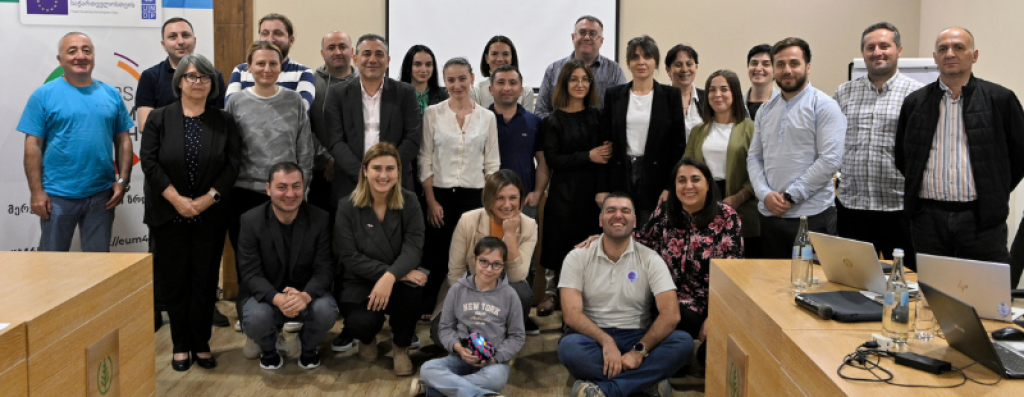
Following the discovery and prototype testing phases, the teams gathered in Telavi in October 2022 to review the learning journey and plan the next phase of implementation. The overall feedback has been positive, and we probed into what made this engagement different from the others for the civil servants. Several themes are emerging:
At a personal level
- The shift in personal perceptions about people and their role in local development.
“We had organised the viewings before as well, but it did not gather so much public, like the one we organised for testing the prototypes – what made a difference was reaching out to people by the information medium they are most comfortable with (social media group), and asking them what they would like to see. The turnout was unexpectedly high.” (Poti, Irakli)
“People were happy when we were approaching them for an interview – they were happy realizing that their opinion mattered.”
Marekhi, Tksaltubo
“We noticed that a bench in the newly renovated park had been moved to a different location where people found it more comfortable to sit. It made us think that had we, at the municipality, designed the park together with our residents, this would not have happened.” (Samtredia, Lasha)
- Appreciating the iterative nature of the exploration phase which makes the ideas for solutions as targeted to the context and evidence-based as possible.
“We have engaged in the number of design experiments in Rustavi previously, but in this learning journey we were able to go into details of exploration and the purpose mattered.” (Misha)
At an organisational level
- Making learning an integral part of the local service delivery requires engagement with the representatives of different departments of the municipality, but also dedicated staff to manage the collaborative design of solutions requiring time commitment and continuous codification of learnings and data.
- A new generation of skills for the civil servants at the local level needs to be supported to enable institutional continuity of the newly acquired methodologies adapted to the local context, on the one hand, and helping to forge external partnerships for financing and growth, on the other.
“The exploration process was intense which required distribution of workload to several people, new functions have emerged demanding new skills, like conducting user research and sensemaking. Without diversified team you cannot achieve much.”
Nino, Poti
- The need for new forms of engagement with diverse actors, including people at large, formal and informal civic communities or organisations, academia and the private sector, most importantly.
“The key value of this process is that it has helped for people to identify their role and municipality its own role through iterative process which changed the initial vision based on municipality perception to the one reflecting the view of the ordinary people.” (Irakli, Poti)
We were also able to compare notes from our previous city exploration journey in Rustavi. It was different from Urban Imaginaries, as we walked largely “unknown” terrain, where the local context and developments shaped every phase through a “learning by doing” approach. The overarching problem Rustavi has been addressing from the beginning is youth brain-drain and lack of opportunities. The city transformation sandbox then, like in Urban Imaginaries, started with human-centred design to test the ground for service design, followed by Foresight for defining the city’s long-term vision, Urban Game for co-production of community solutions, and alternative finance models to support their implementation.
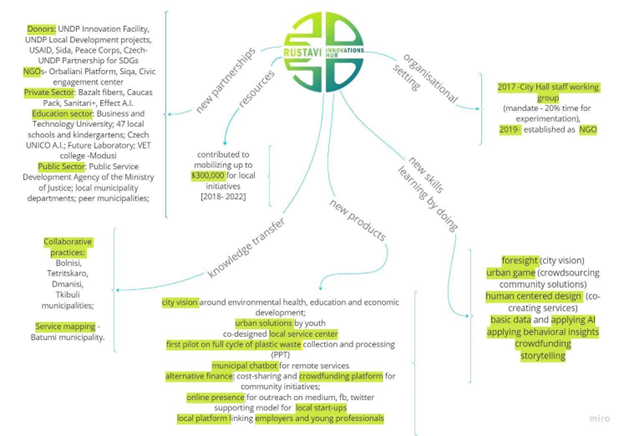
Even with the previous experience of co-designing, Urban Imaginaries was instrumental for the Rustavi city team in: refining the co-creation process through well-structured and mentored discovery phase; codifying data and knowledge; deepening understanding of how prototype testing works; exposure to the peer network for exchange and international expertise via CPI; fundraising and validation of the exploration journey before M4EG.
In addition, as we could follow the work of the several city teams, some common patterns emerged for us as UNDP:
Cultural context and shared values which form the local identity of the communities is the foundation of co-creation
- Process and relationships matter as much as the results
- The pace of change varies depending on the local context and appreciating a meaningful pace for change is crucial for keeping wider engagement going
- Not all local solutions are scalable – small changes over time can translate into systemic shifts, and not always in the communities where they were originally initiated
- Guidance and mentorship and a structured approach is needed throughout for any ‘unknown’ process to succeed until the local team has confidence to take over
- Face-to-face interaction for peer-to-peer learning is necessary for nurturing networks of civil service practitioners
- The need in the new skills for civil servants ranging from learning English or other international languages to access external resources meaningfully, as well as communication, storytelling, managing partnerships beyond public service, basic IT literacy, generating and working with data, horizon scanning, burnout and self-care, codifying the learning (“what has not been put in writing never happened”)
- Emerging opportunities for spreading the movement, like the interest from the part of the 23 NGOs to learn and apply a human-centred approach in their activities, which was unanimously confirmed by the UNDP-organised workshop participants in the summer of 2022
What’s next?
Transformation requires a continued and structured joint effort also involving impartial actors that can channel the external experience into local practices. UNDP can be a conduit and facilitator of its own and can channel external expertise to help generate contextual knowledge and open up new growth avenues for partnership and fundraising for municipalities.
While the municipal teams are in the solutions implementation phase, we are pondering on the new set of questions to explore:
- What is required to make external funding opportunities practically accessible to municipalities?
- Where and how do municipalities retain the knowledge for co-creating new solutions with/for people? (Rustavi Innovation Hub model or beyond)?
- “What would be the incentives for local governments beyond monetary ones to start engaging in new practices systemwide?” (Revaz, Rustavi)
- What is the new generation of skills for civil servants at the local level?
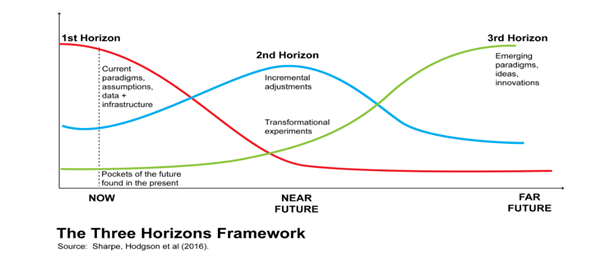
- How do we balance between 3rd horizon outcomes vs short-term tangible results when working with municipalities?
The way to being hyperlocal is through cultivating value-based relationships, which human-centred approaches can provide through equitable community-building, reshaping the traditional funder/recipient/implementer relationship. It can secure trust, open up communication between otherwise unconnected actors, speed up action by shortening the span of decision-making, and create momentum for positive change.
The launch of the EU Response and Renewal Programme for local authorities in Ukraine and Moldova for M4EG
To support the new realities of local authorities in Ukraine and Moldova, the EU Response and Renewal Programme was launched to offer direct support to city and town authorities under the Mayors for Economic Growth (M4EG) network, a joint EU & UNDP initiative in the Eastern Partnership region. This grant programme, of EUR 1.8 million, is designed to support municipalities to build an immediate recovery response and long-term pathways for renewal.
The war in Ukraine profoundly impacts the region, leaving countless individuals and communities struggling to cope with its devastating political, economic, social, and environmental effects. Over 8.1 million1 Ukrainians have fled to other countries, and are living as refugees abroad, while over 5.4 million2 are internally displaced within the country as of February 2023. Furthermore, 674,057 Ukrainians relocated to the Republic of Moldova since late February 2022, with 102,283 remaining as of 16 January 2023, making it the country with the highest number of Ukrainian refugees per capita.3
As the protracted war continues to bring destruction and community displacement, local authorities in both countries are experiencing immense pressure to address the immediate needs and possible long-term implications of socio-economic development as a result of the crisis.
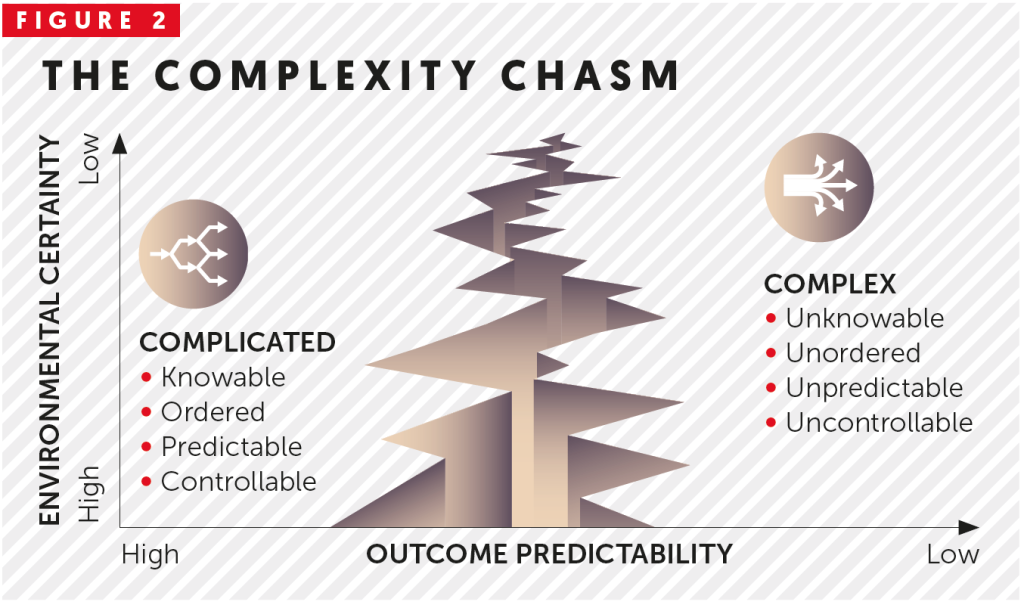
The use of systems approaches is currently being adopted as an alternative to traditional linear recovery efforts in post-conflict situations. Systems thinking can provide a more comprehensive understanding of the complexity of such situations, leading to more effective interventions. But although the application of systems thinking can help address the challenges of uncertainty, tunnel vision, and inconsistent information, it requires significant time and resource commitment, as well as agile measures to integrate systems thinking mechanisms.
As the M4EG initiative takes on a hyperlocal systems approach to offer resources, a network, and learning opportunities to explore new growth trajectories for towns and cities (urban makeover), we asked ourselves: how can we also apply systems thinking in the crisis context to support local authorities in Ukraine and Moldova build an immediate response and recovery?
While using our existing Agora Framework as a template for whole system engagement, there was an urgent need to reduce the burden on local authorities and support them with external analysis and research. The thinking around this research design was led by a crisis response team at the UNDP Istanbul Regional Hub, which worked in close collaboration with the UNDP Country Offices in Ukraine and Moldova to verify the analysis provided.
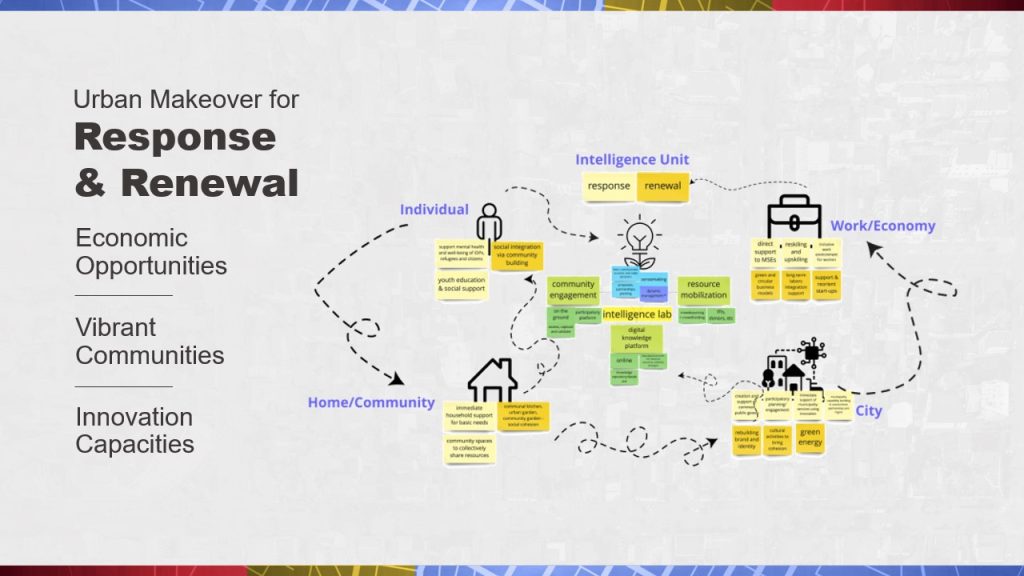
To facilitate the conceptualization (and application) process for interested municipalities, the grant programme focused on two broad goals: (1) immediate response and recovery; and (2) renewal and anticipation. In addition, the crisis response team formulated several pre-defined/inspirational positions in four different areas to address challenges related to refugees and internally displaced persons (IDPs).
The Response and Renewal grant programme was designed in the following way:
1. Immediate response and recovery
The programme aims to provide support for the immediate needs of Ukrainians, which includes IDPs and refugees, whose homes and jobs were destroyed or severely impacted by war. It also seeks to ensure small-scale restoration of infrastructure and services. These are critical for the wellbeing of the residents and the functioning of the local economy.
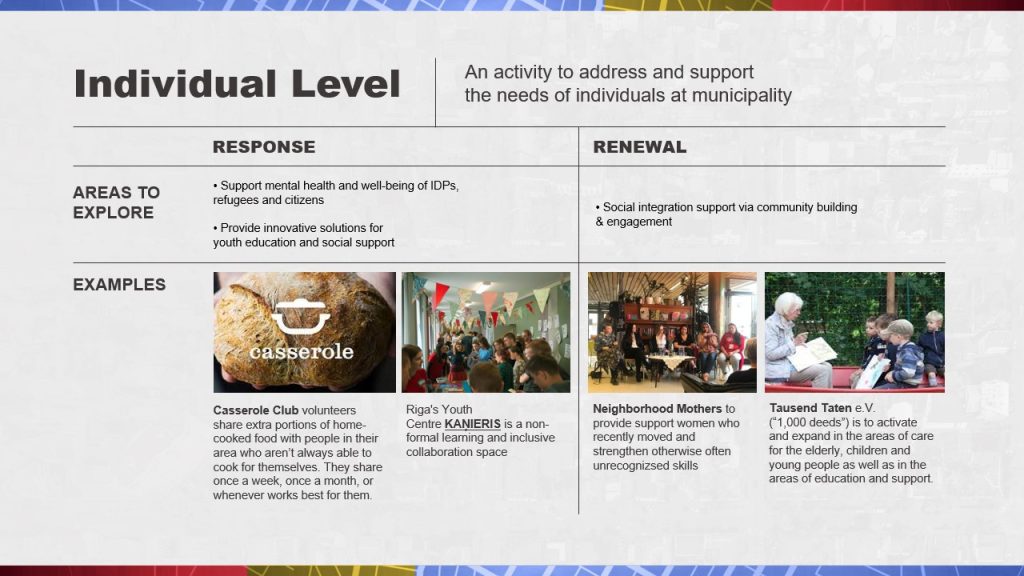
The needs identified are as follows:
- Individual and household level: These address the needs of those facing difficulties adjusting to the social and economic life in the city/community, directly affected by the crisis. Examples of interventions could include ensuring or improving shelters or other short to medium-term housing, procuring supplies, providing light infrastructure or internet access, and addressing other basic needs of IDPs and refugees. The programme aims to promote the long-term integration of IDPs, refugees, and returnees in host communities, by fostering communication, economic linkages, and cooperation. This could include interventions like the creation of inclusive work environments, and facilitation of communal spaces to build social networks and engagement. The programme will also focus on supporting initiatives that provide skills mapping and matching, and building capabilities where there is demand among returnees, IDPs, and refugees.
- City and community level: The focus is on re-starting the local economy by addressing the immediate needs on the ground (including city structures) through small-scale interventions to get energy, water, mobility/transport, and waste services running as well as tackling the immediate capacity needs of local authorities. Examples of interventions could include small-scale clean ups of the city after liberation, addressing the impact of shelling, repairing damage to multi-apartment buildings and the neighborhood through nature-based solutions, and reinstating public services that facilitate the integration of IDPs and refugees. Other examples at the city and community level also include supporting crisis coordination and decision-making of local authorities through data, knowledge management, volunteer schemes and tools such as the UNDP Sensemaking Protocol. A demand-driven needs assessment will be carried out at the town and city levels to identify other areas of intervention.
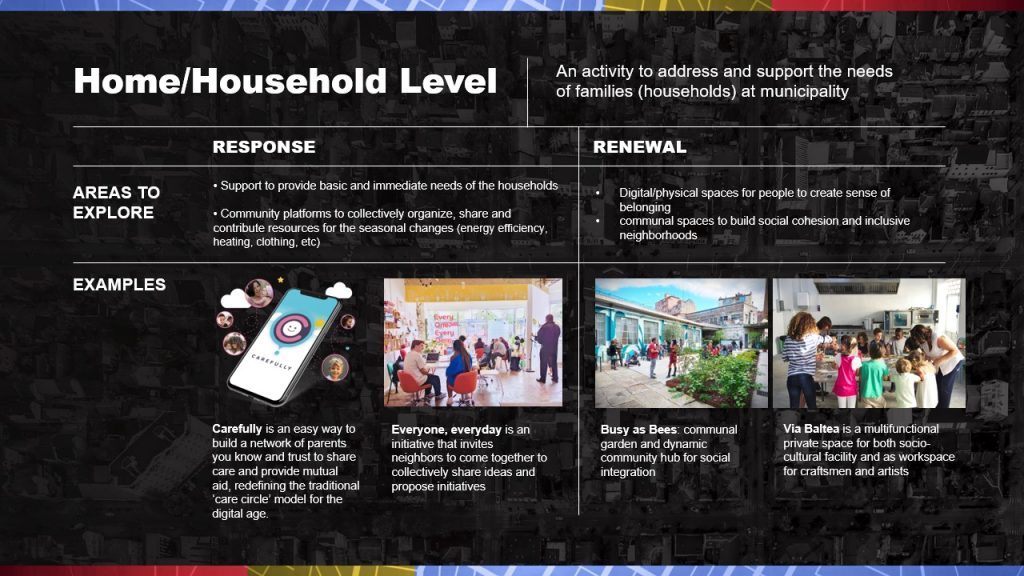
2. Renewal and anticipation
The programme will also focus on the opportunities that may come in a crisis, to re-imagine the role of local authorities and solution pathways for an economically and socially thriving town or city space.
The needs identified are as follows:
- Individual and household level: Support for longer-term integration of individuals and households (IDPs, refugees, returnees) and foster positive relationships with members of host communities. Examples here could include aid structures that foster feelings of belonging and togetherness in the community and the neighborhood, the provision of high-quality education, health and other services, support for rebuilding homes and the re-use of structures for shelters. Another example can be implementing small-scale urban infrastructure for economic development initiatives such as tourism using climate-smart and nature-based solutions. In terms of employment and businesses, examples include “future of work” initiatives, virtual or physical marketplaces or matchmaking platforms to bring new job and business opportunities, new value chains and industries.
- City and community level: At this level, the emphasis lies with supporting sustainable, smaller-scale renewal initiatives for a better built environment that aim to create inclusive and vibrant places, connect external partners, and/or bring knowledge and engagement to the city system. Additionally, the programme will support interventions that aid local authorities to build or enhance their skills in social listening, sensemaking, and future crisis management and anticipation. The emphasis is on the provision of support for inclusive and systematic economic recovery plans and programmes. There are many successful case studies within the M4EG project on IDP and refugee response and coordination, which can be used for city-to-city support and capability sharing, within Ukraine and Moldova as well as across twinning cities in Europe. Other examples include community-based initiatives that create spaces for new economic activities and green jobs, such as eco-friendly delivery services, renewed public spaces for commerce, food courts and sustainable mobility.
The call for local initiatives among M4EG members in Ukraine and Moldova was launched in October 2022, and generated extensive interest, with over 180 applications. The winners were announced in late March 2023, and will participate in a four-week learning sprint to strengthen their proposals. The journey will include social listening, building learning objectives and applying a gender lens to planning and decision-making.
Learn more about the EU Response and Renewal Grant Programme.
The Mayors for Economic Growth (M4EG) Facility is increasing its support to members in Ukraine and Moldova
Brussels, Chișinău, Kyiv, 29 March 2023 – the European Commission and the United Nations Development Programme (UNDP) announced today the selection of 18 municipalities from Ukraine and the Republic of Moldova under the Call for Local Demonstration Initiatives as part of the EU Response and Renewal Grant Programme aimed at revitalising and supporting the recovery of local economies and communities impacted by Russia’s war of aggression against Ukraine.
Gérald Audaz, Team Leader for Economic Development, Connectivity and the Green Transition in Eastern Partnership countries at DG NEAR, European Commission, said, “The European Union’s support to Ukraine and Moldova is unwavering. In both countries, local authorities have deployed relentless efforts to respond to emergencies, protect citizens but also to actively lay the groundwork for the reconstruction of a vibrant economy. With the new EU Response and Renewal Grant Programme under Mayors for Economic Growth, we aim to support municipalities in their endeavour at laying strong and sustainable foundations for economic recovery.”
Lejla Sadiku, Knowledge and Innovation Team Leader at the UNDP Istanbul Regional Hub, said, “The Call for Local Demonstration Initiatives showcased that a significant number of municipalities are ready to pave the path toward a resilient future by using emerging opportunities and new approaches.”
Seven cities were selected under Lot 1 – Response & Immediate Recovery, namely Chortkiv (Ternopil Oblast), Hlukhiv (Sumy Oblast), Kamianets-Podilskyi (Khmelnytskyi Oblast), Slavuta (Khmelnytskyi Oblast), Velyka Oleksandrivka (Kherson Oblast) from Ukraine, and Carpineni and Volintiri from Moldova.
As part of Lot 2 – Renewal & Anticipation, the following 11 cities were selected: Bucha (Kyiv Oblast), Chernivtsi, Kharkiv, Nizhyn (Chernihiv Oblast), Nova Kakhovka (Kherson Oblast), Slavutych (Kyiv Oblast), Velyki Luchky (Zakarpattia Oblast), Voznesensk (Mykolaiv Oblast) from Ukraine, and Copceac, Cimislia, and Drochia from Moldova.
Background:
The financial increase of EUR 1.8 million, under the auspices of the M4EG Facility network, provides direct support to the selected cities in Ukraine and Moldova. 70 percent of the grant component will be available to Ukrainian local authorities and 30 percent to local authorities in Moldova. The funding has two lots: 1) Response & Immediate Recovery, aimed at supporting the immediate needs of people affected by the war, and 2) Renewal & Anticipation, aimed at supporting local authorities to get on track with their sustainable development pathways with a funding range EUR 30,000-50,000 (no co-financing required) and EUR 70,000 – 100,000 (at least 20% co-financing required) respectively.
The M4EG Facility draws on the Mayors for Economic Growth Initiative, launched and funded by the European Union (EU) in 2017. Since 2021, the EU-funded M4EG Facility has been managed by UNDP in close cooperation with the EU, local authorities and a range of partners.
Learn more about M4EG.
The Mayors for Economic Growth (M4EG) initiative held a Partner Dialogue in Istanbul on 28 February 2023, bringing together representatives from the EU and UNDP and prominent partners such as Agence Française de Développement, Arup, Center for Public Impact, CHÔRA Design, Climate KIC, European Bank for Reconstruction and Development.
The Partner Dialogue sought to provoke new ways of looking at possible transformations at the city level and exploring new approaches to better address complex and systemic challenges. The discussion aimed to create a space for reflection on how to scale up learning and financing opportunities for the network of 400+ cities under the programme.

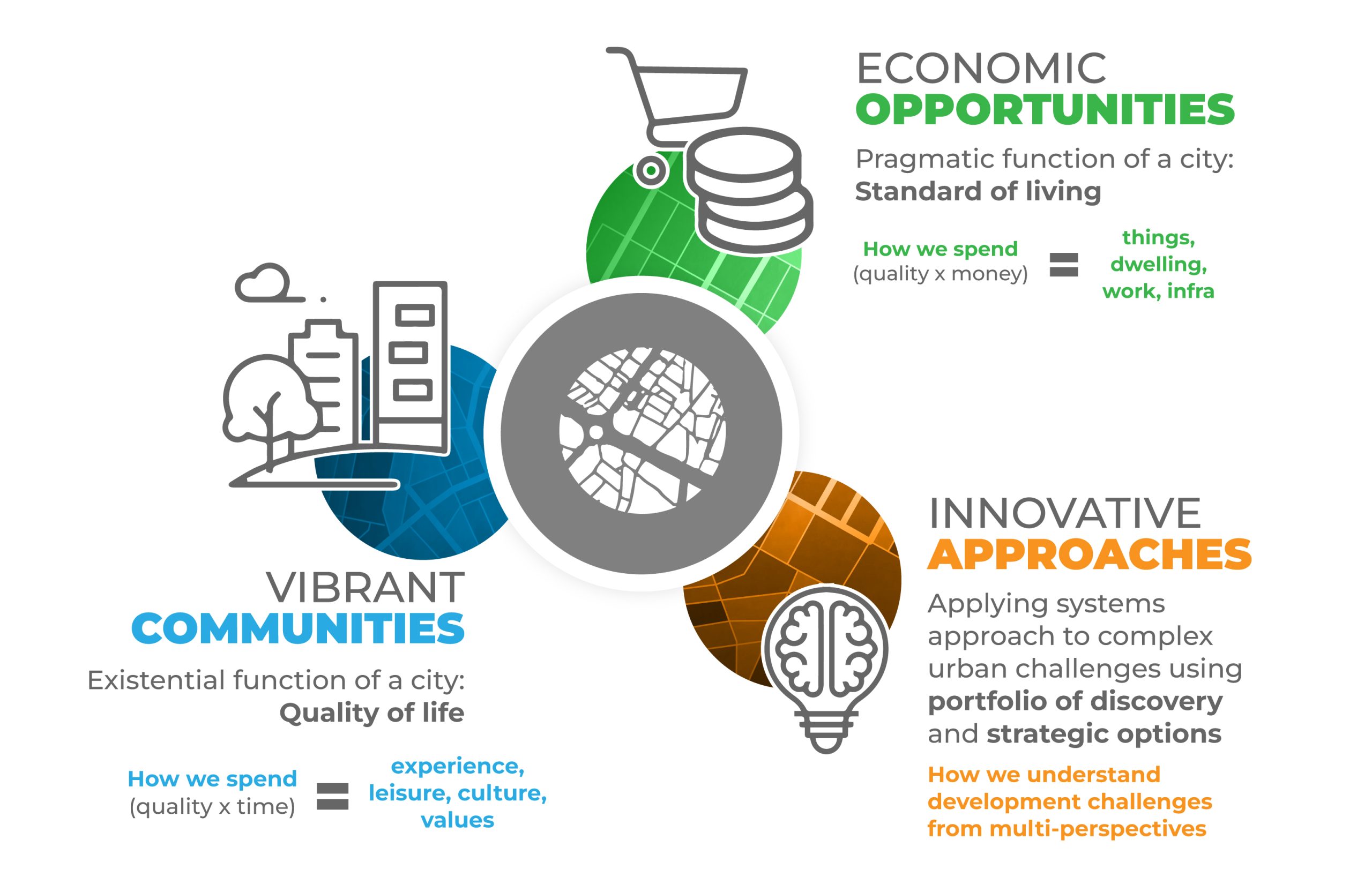
Mayors for Economic Growth (M4EG), a joint EU and UNDP initiative focused on reimagining urban and local spaces, is running a Portfolio Journey with 10 selected cities in Eastern Partnership countries. Starting in late 2021 with its first cohort, the Portfolio Journey is a three-year-long learning, design and management programme, where cities get to learn about and apply a portfolio approach to their selected topic. The journey guides them to put in motion transformative Urban Makeovers to bring about improved economic opportunities, build vibrant communities and promote innovation practices.
Two cities in Ukraine are currently testing the portfolio approach for crisis response and recovery with the support of UNDP Ukraine and UNDP Istanbul Regional Hub (IRH). For the remaining eight cities, UNDP IRH is partnering with CHÔRA, an organization that brings their Strategic Innovation framework and capability to the table, to co-design and facilitate the cities’ Portfolio Journey.
How it started?
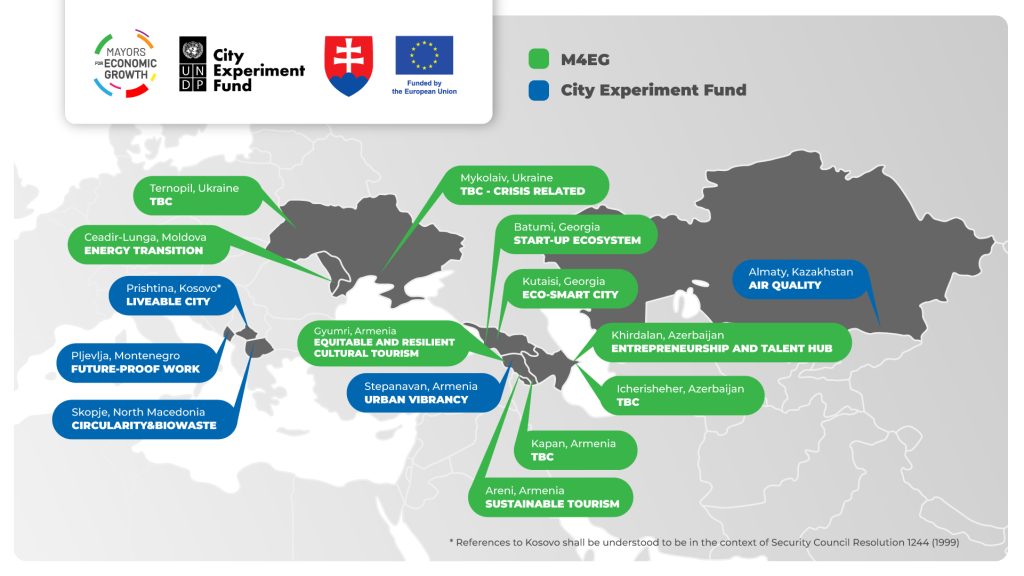
UNDP has embarked on a journey to move away from projects and apply a more connected and horizontal portfolio approach as an integral part of our Strategic Plan 2022-2025. Regionally, UNDP in Europe and Central Asia has been developing the portfolio practice, with the goal of applying it not only internally to our programming, but also with our partners such as municipalities. The journey started when we co-developed with CHÔRA Agorà, an urban transformation portfolio framework for informing and structuring our portfolio designs for urban transformation. The framework was first applied within the City Experiment Fund (CEF), where four cities designed and activated their urban portfolios in 2021. In 2023 the urban transformation work continues with 15 cities under the M4EG and CEF initiatives. Recently, we were able to activate portfolios in four new cities under the M4EG initiative: Batumi and Kutaisi in Georgia, Areni in Armenia, and Ceadîr-Lunga in Moldova.
Dynamic Management Framework
Activating portfolios means that we have finished the first round of design work – analyzed the context and the relational problems, formulated a shared portfolio intent, built a hypothesis for change, designed and initiated implementation of the first set of learning options, part of their portfolio. Learning options are interventions, which are designed by setting learning goals to inform the portfolio holder, usually municipality teams, about their selected topic. When layered together, learning options support decision-making regarding where to channel resources for lasting solutions to urban challenges. For us to extract learnings and experiences from a portfolio’s learning options and use the intelligence in both adapting our portfolio and scaling our solutions, we have created a Dynamic Management Framework for the M4EG Portfolio Journey.
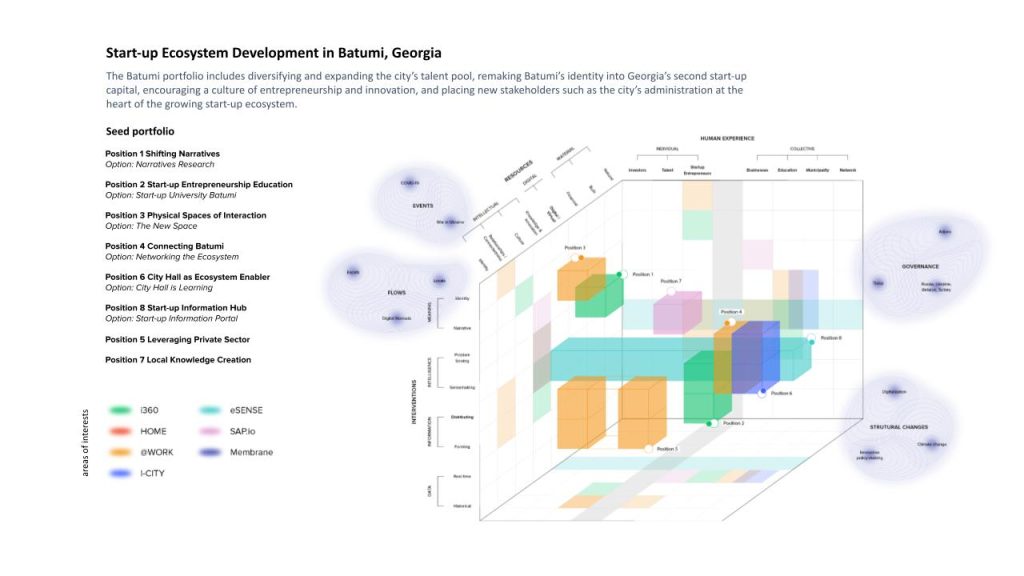
The Dynamic Management Framework uses Sensemaking as a tool in order to enable a continuous and adaptive strategic learning cycle in the portfolios over time, which we have applied to urban challenges. Dynamically managing an urban transformation portfolio aims to amplify and multiply the positive systemic changes that the portfolio can create through supplying urban decision-makers with timely intelligence, learnings, and possibilities for adaptation. It also ensures that every time portfolio managers and teams are taking a decision, they are being held accountable, aligning their decision with the portfolio’s intent and the positive systemic changes it aims to achieve. The Dynamic Management Framework, therefore, ensures ongoing coherence between the envisioned portfolio intent and the executed portfolio activities, as well as between the overall municipal portfolio and other related activities in the city’s ever-changing context.
3 distinct characteristics of the Portfolio Dynamic Management Framework
1. A core characteristic of the framework is the learning spiral
At its core, dynamically managing a portfolio closes the loop between the design of a learning option, the learning option activity or experience itself, the extraction of learning from that experience through Sensemaking, and the intelligence generated that is used to inform and design new interventions based on the learnings.
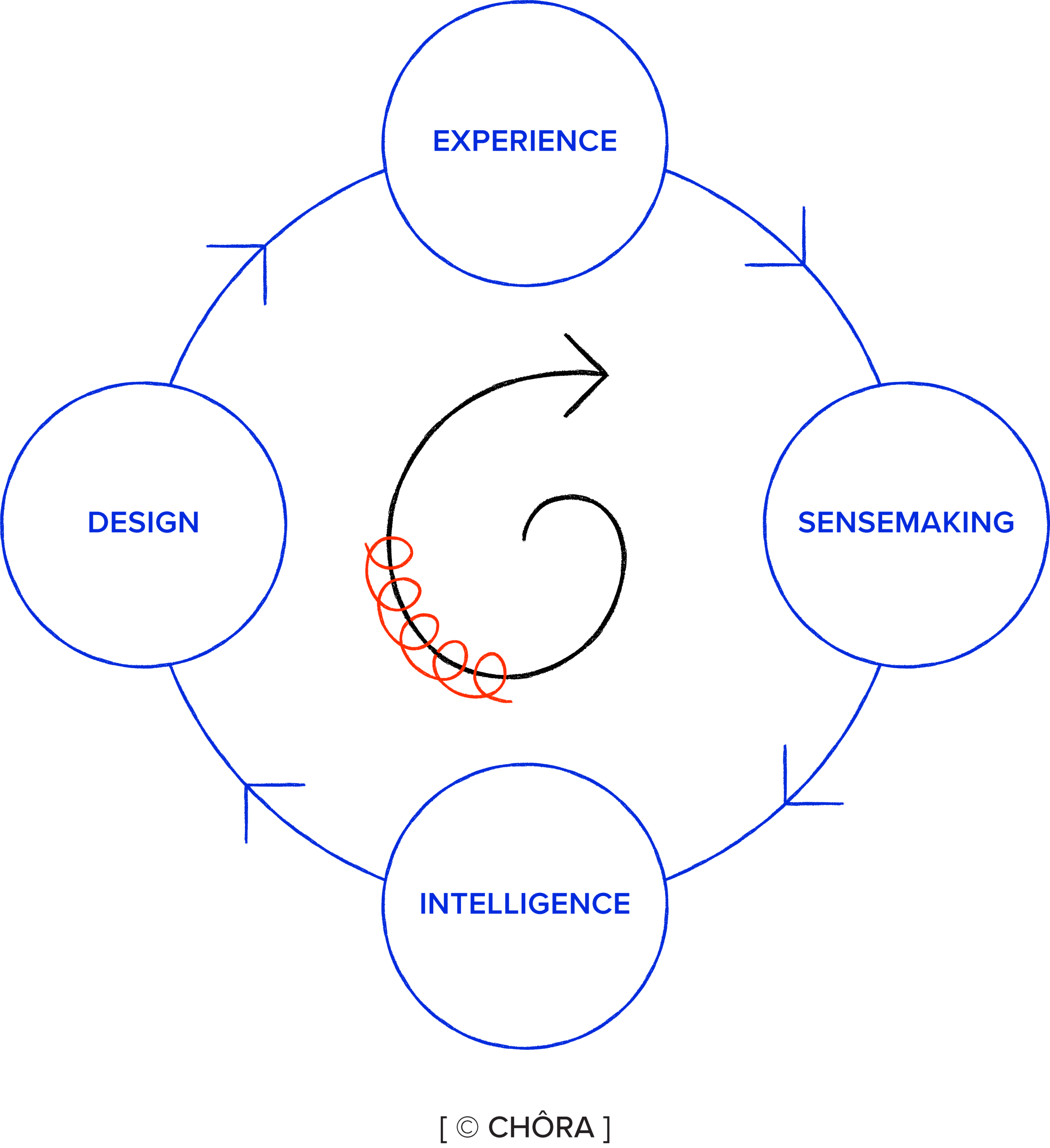
This learning cycle is repeated at different levels of the Portfolio: Portfolio Intent, Portfolio Positions, and Portfolio Options. We will come back to this in further detail later, under Point 3.
It is in this stage of the framework that we use Sensemaking, a strategic organizational learning capability and a structured tool to learn from existing experiences such as projects and activities. We do this through a series of workshops with portfolio teams and when relevant we also include external stakeholders. Sensemaking has been widely used and tested in UNDP since the co-development of the UNDP Portfolio Sensemaking & Acceleration Protocol by CHÔRA and UNDP in 2019.
The purpose and at the same time the formalized outcome of Sensemaking is actionable intelligence, which emerges through the interpretation and synthesis of cross-activity insights. In the M4EG programme, as a first step, we ran a Sensemaking and Dynamic Management Training, facilitated by our colleagues at CHÔRA, to introduce the participating municipal teams to a basic understanding of the portfolio sensemaking approach, tools and practice. We are currently at the stage where the municipal teams will start applying these tools themselves.
2. How is portfolio management different from project management?
A portfolio consists of multiple projects, activities, or learning options being implemented at different speeds and timeframes, and with different but connected learning hypotheses. The portfolio is the connective tissue that binds and gives meaning to the wide range of smaller activities or projects. The portfolio therefore provides a system or mechanism for strategic learning and dynamic decision-making to make sure we are striving towards a higher order goal, which we call the Portfolio Intent. This intent-driven, integrative, dynamic quality defines and distinguishes our understanding and application of portfolios from other notions of “portfolios”, which usually refer to a mere collection of thematic projects that have and follow their own solution pathways without a systematic mechanism that binds and guides them by purpose.
When asking the question of project vs. portfolio management, it might also help to define what qualities we are looking for in a portfolio (that we possibly aren’t at the project level), which might make it more effective and successful. When designing a portfolio, we consider the following:
- the breadth and diversity of the activities that when combined, will accelerate the transformation we are interested in;
- the intensity of interactions the portfolio can induce in the city system and the density of relationships it engages towards the desired transformation;
- the speed and rhythm at which the portfolio will evolve and re-shape itself (again, through iterative use of Sensemaking as a tool for dynamic portfolio management);
- the overarching narrative the portfolio can produce for the problem-owner(s), here city governments, to attract and allocate resources.
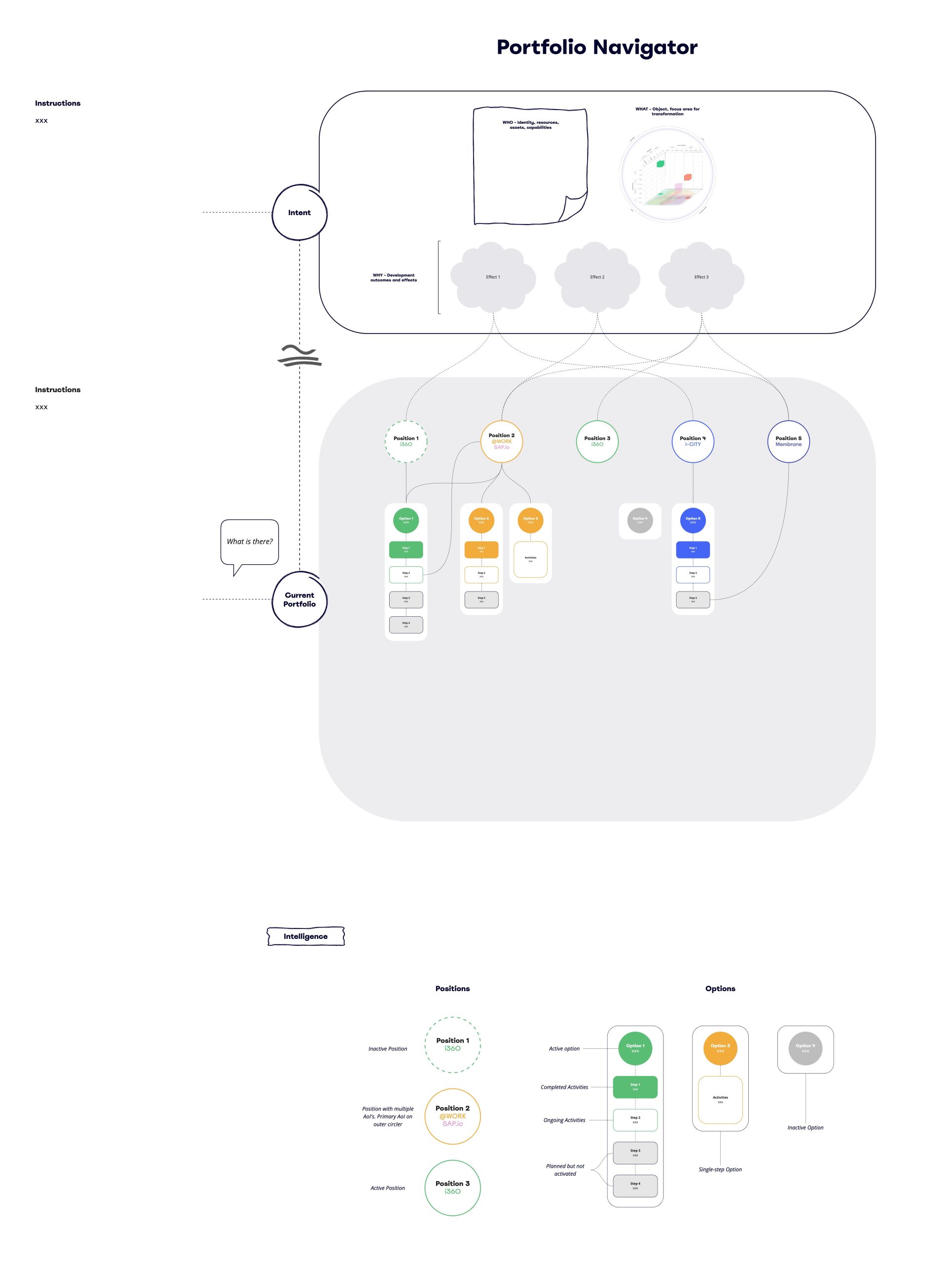
These qualities are necessary when dynamically managing a complex urban transformation portfolio and we are currently working on embedding them into our management and evaluation framework. To manage and capture the information, experiences and intelligence of the portfolio throughout its management cycle, we have created a Portfolio Navigator, a light management dashboard, which showcases the interconnectedness of the different elements of the portfolio (such as Intent, Positions and Options). It can be updated regularly after each sensemaking phase and iteration in the design. The Navigator will help to manage the multiple activities happening simultaneously at different speeds and allow portfolio holders to monitor how these activities are mutually contributing to the Portfolio Intent.
3. Sensemaking at different levels of the portfolio
Portfolio Dynamic Management also utilizes a structured process of iterative Sensemaking at different levels of the portfolio (see visual below) that we are currently applying within M4EG. Dynamic management is characterized by a continuous rhythm of iterations and consequent re-designs of the portfolio. In M4EG, we are testing a dynamic management system at four distinct levels of the urban portfolios (Options, Positions, Portfolio and Intent), with at least two key roles required to support this process: 1) option leads (these might be multiple people, each leading one learning option in the portfolio) and 2) a portfolio lead. The option leads are responsible for ensuring the effective implementation of each learning option in the portfolio, as well as capturing ongoing learnings from the on-ground experience. On the other hand, the portfolio lead is responsible for the direction and iteration of the whole portfolio, as well as designing and organizing the sensemaking and intelligence generation process to support the portfolio adaptation and re-design.
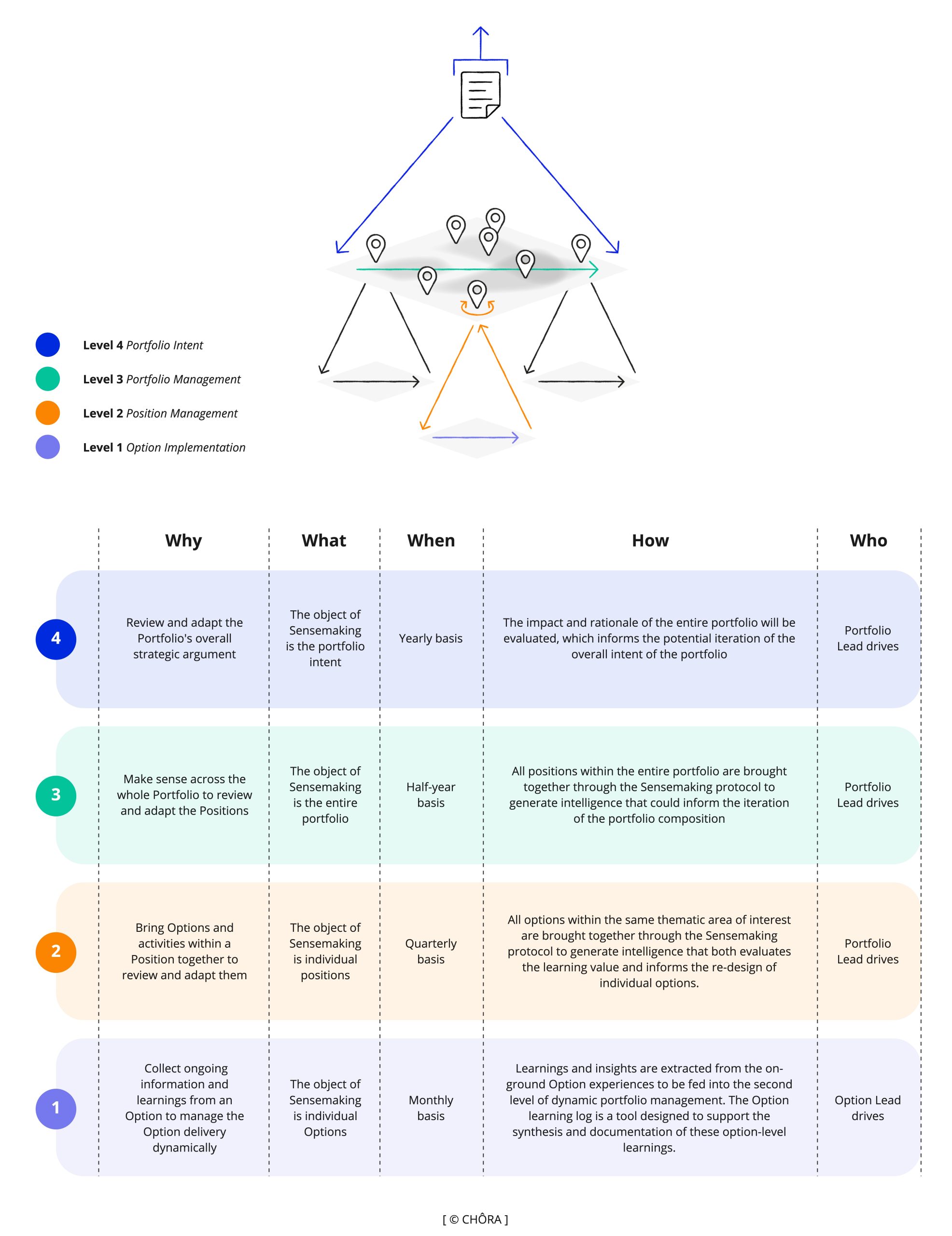
In the Sensemaking and Dynamic Management Training, the municipal teams gained a better understanding of the four levels of portfolio management and their rhythm. Each city team aligned the distribution of the key roles and responsibilities to support the dynamic management process of their portfolio.
As a continuation of this learning process, we designed a hands-on training with CHÔRA to support teams with the first round of synthesis and documentation of learnings from activated options, which will be followed by sensemaking and intelligence generation training sessions in Spring 2023.
Ongoing learnings & next steps for M4EG
The process of setting up dynamic management systems and collective learning practices in organizations, which traditionally function in a linear and siloed way, has taught us that collective and strategic learning needs systemization, structures, and leadership. For this reason, we are currently experimenting with bridging the gap between the organizational structures and cultures of the municipalities we work with, and the new requirements that the Dynamic Portfolio Management Framework puts in place. Some concrete examples of what we are experimenting with right now:
- adding practical dynamic management requirements in the funding agreements and contracts between municipalities and UNDP;
- testing the monthly, quarterly, bi-annual and annual rhythm of the learning cycle with different municipalities and taking stock of the feedback;
- acknowledging that thinking in systems, relationships, synthethizing information, generating intelligence and leading by intent are specific capabilities that need to be built into systems;
- knowledge management systems are almost non-existent in municipalities and this poses an opportunity to strategically invest in such capabilities to inform dynamic management and decision-making.
Stay tuned for Part 2 of this blog series on our learnings on applying dynamic portfolio management with cities! If you are doing dynamic portfolio management at the moment or wish to do so, please connect with us and share your reflections – we are here to build on each other’s learnings.
Background:
In 2021 UNDP, together with the EU, launched the Mayors for Economic Growth (M4EG), a regional initiative hosting a network of some 350 municipalities in the Eastern Partnership – Armenia, Azerbaijan, Georgia, Moldova, and Ukraine. The M4EG’s intention is to demonstrate and inspire secondary cities’ new trajectories of growth to become more attractive and vibrant for people and financing.
CHÔRA’s purpose is to enable complex social systems with transformational intents to take decisions about themselves. You can find a glimpse of our thinking and doing in development in our Green Paper: “Future of Development: Make Happen with Portfolios of Options”.
Additional resources and readings:
- See this previous article by our colleagues at the UNDP to learn more about how Sensemaking is being used in the UNDP.
- See this article series (Part 1 and Part 2) by CHÔRA that demonstrates how the Dynamic Management tool and capability were applied with the UNDP Malawi CO.
- For an example of how the Agorà Urban Transformation Framework, co-developed by UNDP IRH and CHÔRA was applied, see this article about the Armenian city Stepanavan’s City Experiment Fund Portfolio Journey in 2021.
The biowaste audit dashboard visualizes how commercial entities working in the capital city of North Macedonia – Skopje, particularly in the HORECA (Hotels, Restaurants and Catering) sector, and not limited to that group, are producing biowaste. The dashboard is a snapshot experiment that aims to highlight how visualized data from the biowaste audit can showcase potential opportunities for businesses working with biowaste transformation and biotechnologies. It was published on the Data Futures Platform, a project of the United Nations Development Programme (UNDP). To see the full dashboard, see more here.
By 2050, the UN foresees that 66% of the world’s population will live in urban cities or megacities, which will only occupy around 2% of Earth’s land. With this pace of urbanization, there is a global shift to cities as primary agents of innovation and intervention and a consensus that to accommodate these new patterns, they need to be resilient, economically vibrant, more livable, sustainable, accessible, well-governed, and well-planned. Furthermore, there is a change of perceptions and an unprecedented pace of digitalization as the CEO of Microsoft put it in the beginning of the pandemic, “We’ve seen two years’ worth of digital transformation in two months”.
To this end, UNDP Europe and Central Asia under the framework of The City Experiment Fund (CEF), supported by the Slovak Ministry of Finance, seeks to embed innovative methods in the design and delivery of city-level programs and shift to deploying systems thinking when approaching city-level problems. The project was used by UNDP North Macedonia to create a dynamic learning portfolio focusing on exploring system transformation approaches around the circularity of biowaste in Skopje. As part of the portfolio of interventions created around biowaste transformation the team conducted the first biowaste audit on a city level not only to better understand the current state of play of the bio-waste system but also to understand key system dynamics and interactions between the players within the system.
Follow the learning journey through the series of blogposts unpacking how to work with complex systems, rethink biowaste, and make the business case for biowaste transformation.
Understanding the data
By implementing the first biowaste audit at a city level in the country, we managed to highlight the marketing potential of the biowaste created on the city level. This potential we are hoping will be later leveraged by entrepreneurs and innovators by forming new businesses, employment and economic development opportunities out of transformed biowaste.
The biowaste audit is a snapshot of the system as observed at the time of the intervention – summer of 2021 (July and August), using a mix of activities such as desk research, one on one interviews, and survey questionnaires conducted online and in-person. These activities generated the following findings: (1) map of centrally located business that produces biowaste; (2) amount of the biowaste produced during the period, (3) type of biowaste produced and list of business activities that generated biowaste. The list of legal entities in the city of Skopje that are creating biowaste was done by cross-referencing publicly available data from the Central Registry of Republic of North Macedonia, the register of issued environmental permits, registry of approved protection elaborates and similar registries. This list proved that the dominant commercial activities that generated biodegradable waste in Skopje were restaurants, covering about half of the total number of entities that produce biowaste with their production activities. If we clustered the data, we arrived at the following findings: the total number of restaurants, catering and hotels (HORECA) sector in the city of Skopje is 1588 entities, there are 417 entities working as coffee bars and 702 entities are creating biowaste as a result of their production or processing activities in the Skopje region.
Four data collection tools (questionnaires) were prepared in a way that would enable the collection of the necessary primary data, through a group of clear and unambiguous questions, which could be answered by the respondents in a short time. The questionnaires were disseminated to all identified entities in the city, whereas 190 in person interviews were done on the premises of the identified entities.
One of the limitations for collecting primary data was the time and the data available among the respondents. Thus, the threshold of 10% was introduced in order to help us understand the market size in a representative manner
How to explore the data and use the data
The map and the dashboard can help understanding the amounts and types of biowaste produced, as well as their location. If real data is feed-in, as well as data sharing enabled by all in-line institutions, it will be possible to track the biowaste journey. In addition, it would be possible to understand how biowaste is generated, how it is collected, and how is it disposed (burned, composted or transformed) as well as possibility to understand the cost related to its disposal.
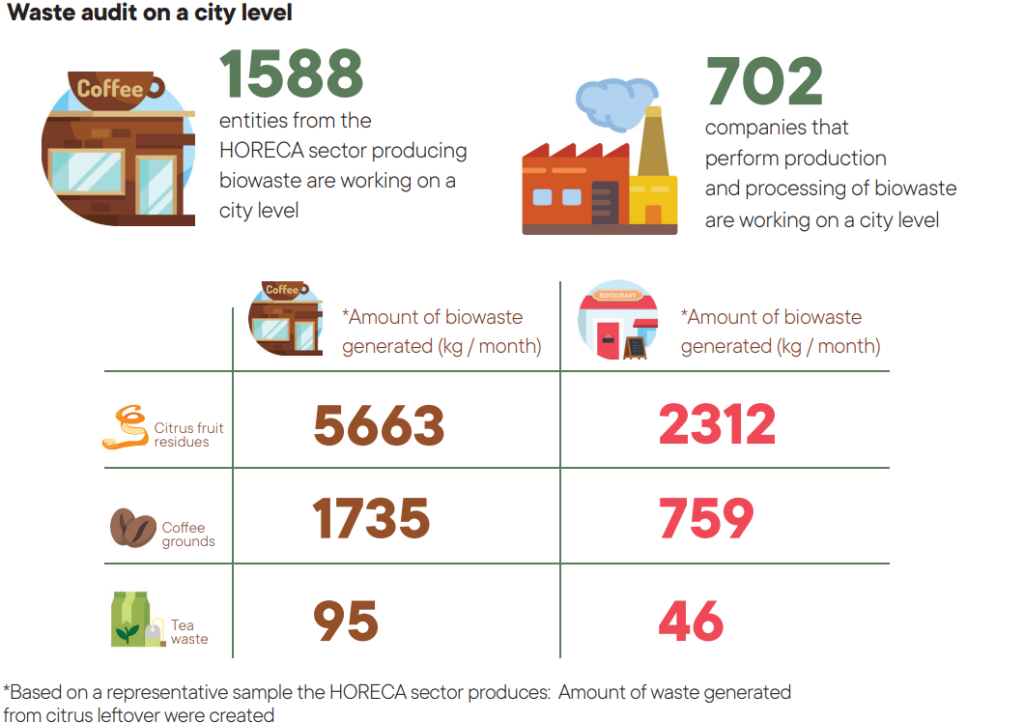
On the other hand, when it comes to the biowaste itself we can explore the amounts of biowaste produced in different intervals- daily, monthly, yearly, estimated min, max, and average amounts, the frequency of generation of the waste (to understand patterns of supply) and the peaks in waste production. Why is this important? Well, if you look at waste as a resource that can support business processes, then the supply chain is the cornerstone of it.
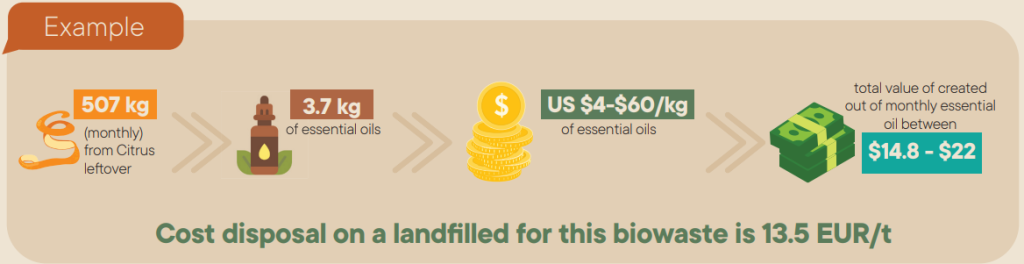
Creating similar dashboards can serve as a building foundation and showcase the power of data visualized in the right format can help entrepreneurs and innovators, and policy/decision – makers better understand the size of the problem. This in the long term can result in the creation of viable business models with a goal to see biowaste as a resource rather than a waste that should be disposed at land fields; The first one creates additional value in the system, the second pure cost. In our research for the CEF project we found out that if we transform all the biowaste coming from citrus leftover, that have been created in the HORECA sector in Skopje in a month’s time we can create 22$ of value, if we continue disposing it for the same amount of waste, the business is losing 7$.
Why to replicate this in other cities
According to the Macedonian National Waste Management Plan (2020-2030), biowaste represents 45.3% of the total municipal waste. In the National Strategy for Waste Management the targets for the diversion of biowaste from landfills, in the phase of selection and treatment, are set with high targets. By 2026 25% of biodegradable waste is expected to be diverted from landfills, while by 2036 the expected percentage of diversion is 50%. For these targets to be met, communities and cities need to be innovative in their approaches to tackle this challenge. In an earlier study conducted with Price Waterhouse Coopers we asked the businesses whether they are measuring and reporting on SDGs, and 61% of the business sector answered that was not a requirement.
Collecting real-time data, as well as introducing these to the transformation processes would be a feasible way to produce and measure the contributions of the business to the SDGs. This subsequently will open opportunities for sustainable business models, transformation of biowaste, innovation, and more importantly increase lifespan of the landfills and reducing pollution at all levels.
In conclusion, simple visualization of biowaste data can open so many opportunities.
For more information, please contact Igor Izotov, Head of Exploration, UNDP North Macedonia.
Leading photo by Pawel Czerwinski on Unsplash.
Urban Imaginaries is a programme that supports towns and cities to reimagine local economic development and governance through new tools. Urban Imaginaries is one programme under the joint EU and UNDP initiative Mayors for Economic Growth (M4EG) Facility. The selected cities receive seed funds of up to 60,000 EUR and technical support for their experiments in their focus area. The partner of the programme is the Centre for Public Impact.
In the first cohort of Urban Imaginaries 2022, three communities from Armenia took part: Alaverdi, Ashtarak, and Charentsavan. From early spring to summer of 2022, human-centered design thinking was introduced to the communities, where they explored their identified problem and vetted and designed solutions through end-user research with residents. In November, all three presented their learning and effects so far in a regional Show and Tell event.
What challenges were sought addressed?
The three communities identified different challenges. In Alaverdi, Lori region, (20,445 residents), residents and tourists are seeking a richer cultural life for a more thriving, inclusive community however the community is facing decaying building facilities and a shrinking number of local cultural activities.
Ashtarak, Aragatsotn region, (75,750 residents) was recently expanded to a consolidated community that includes one urban and 34 rural settlements, leading to a greater need for public transportation reform to boost connectivity and livelihood opportunities.
The municipality team in Charentsavan, Kotayk region, (40,000 residents) finds that its center is in need of a make-over to become more attractive for residents and tourists alike.
Learning and effects in Alaverdi
To provide sufficient conditions for cultural events, the Alaverdi municipality collaborated with the local business and renovated and furnished a privately owned cultural house. With the joint work of government, partners, local activity companies and TV company, a number of cultural events were successfully held in the cultural house. The positive feedback received from the residents indicates that they enjoyed the performances and has confirmed the awakening of cultural life. For the next step, the municipality will renovate the municipal cultural house and develop new innovative content to promote cultural life in the consolidated community, where both the residents and visitors would benefit. The municipality team reflected on the importance to experiment before fully fledged implementation for risk mitigation, and the importance to get adequate honest feedback from residents and experts. They intend to apply the approach acquired from the learning journey to both their future work and issues of neighboring communities. The municipality succeeded in leveraging the M4EG seed-funding to confirm additional resources of about two hundred thousand euros by the national government’s 2023 subvention program.
Learning and effects in Ashtarak
As an experiment, the community designed one route and rented two minibuses to operate, which was used by an estimated 130 passengers per day. They also introduced differentiated fee rates for specific groups including students, pensioners, and persons with disabilities. Coming up, 11 minibuses will be purchased, including 3 for people with disabilities, and 35 bus-stops will be constructed, at least one per settlement of Ashtarak. In line with the new transport network, a new ticket system will be introduced as well. The leadership successfully leveraged the seed-fund under M4EG to confirm additional resources of 150,000 euros for this scale-up by the national government’s 2023 subvention program, and private sector representatives have shown the willingness and made commitments to be involved. The municipality will also try to mobilize additional funding from international donors. In order to compare whether the municipality or the private sector is the better service provider, two routes will be provided by the private sector. The growing initiative is intended to foster increased connectivity and hence have a positive impact on the tourism sector and economic development.
Learning and effects in Charentsavan
Charentsavan municipality conducted two experiments to explore how to realize its tourism potential. One experiment was the improvement and maintenance of Khanjyan street, the central street of Charentsavan. Parts of the street were refurnished, including the Cinema Theatre Square, turned into a cultural space, where a festive cultural event was hosted after the construction. The part of the central street used by elderly people for leisure activities was also renovated to improve it. During the experiment, the municipality launched an awareness campaign, which was found to help change people’s hesitation to use funds for cultural space maintenance. The community team is of the opinion that the experiment also contributed to fostering improved trust of residents toward the local authority and helped to achieve more inclusive social agreement as diverse age, occupation and ability groups of population have been taken into consideration. Next year, a larger area that starts at the entrance of the city will be renovated.
To further boost the rural tourism potential, the local authority also supported a number of other initiatives in villages that part of the community, including the organization of the Arishta (Armenian pasta) Festival in Bjni village, where the team involved international stakeholders, provided additional funds from the municipal budget and strongly encouraged villagers to participate. Charentsavan also opened the Horse-Riding Center in Arzakan and invested more financial and information resources in it. This all has helped to increase the visibility of the community as a whole, created a sense of belonging among rural residents, and promoted the involvement of different stakeholders including businesses, NGOs, civil society organizations.
Other than implementing specific tailored-made interventions, each of the municipality teams has developed a new capacity in the field of human-centered design. The adopted approaches and processes would further contribute to both efficient design of municipality’s development interventions, as well as significantly increase the citizen engagement and participation in urban transformation processes.
The article is reposted from UNDP Armenia.
The European Union (EU) and the United Nations Development Programme (UNDP) launched today a new ecosystem of learning opportunities to reimagine urban and local spaces for transformative change and future-readiness under the Mayors for Economic Growth (M4EG) Facility. The Urban Learning Center (ULC) is designed as an umbrella for various programme and learning opportunities, knowledge management and stakeholder engagement of the M4EG network, and will be supported by an online platform. The ULC aims to introduce approaches beyond “business as usual” to support municipalities with an “urban makeover” vision, i.e., helping Mayors and their teams re-invent their cities with a focus on key priority areas such as green and digital transitions, and on approaches such as foresight, social and community listening, sensemaking, adaptive and agile management. The ULC will also foster local solutions linked to the implementation of the Economic and Investment Plan for the Eastern Partnership region and the realizations of the Sustainable Development Goals (SDGs) outlined in the 2030 Agenda.
“The network of 350 M4EG cities keeps growing, and so do the needs of municipalities. In such unprecedented times, Mayors and their teams seek new ways to stimulate economic growth and unlock the potential of the green and digital transitions,” said Nicholas Cendrowicz, Deputy Head of Unit C.1. Georgia, Moldova, Economic and Investment Plan for the Eastern Partnership countries, DG NEAR. “Coupled with up-to-date learning insights, the Urban Learning Center will allow cities and towns to attract more investment, people and opportunities.”
“UNDP, together with the EU, strives to ensure that local authorities that are members of the M4EG Facility receive new learning and networking opportunities. The challenges faced by municipalities are highly complex. Hence, they need to develop a portfolio of skills and solutions focusing on innovations toward building smart and inclusive cities,” said Gerd Trogemann, Manager of the UNDP Istanbul Regional Hub.
The Urban Learning Center is designed as a Learning Ecosystem that interconnects community members at the national and regional levels, organized around the practitioner member as both a learner and contributor. Access to ULC is free and available through the SparkBlue online community engagement platform (sign-up is required for new participants). The ULC was developed as part of the Mayors for Economic Growth Facility funded by the European Union. You can access here the ULC concept note to discover more about the center.
Background
The M4EG Facility draws on the Mayors for Economic Growth Initiative, launched and funded by the European Union (EU) in 2017. Since 2021, the EU-funded M4EG Facility has been managed by UNDP in close cooperation with the EU, local authorities and a range of partners.
Media enquiries
For the European Commission/DG NEAR:
Mr. Thibault Charlet, Programme Manager, Digital and Local Economic Development, DG NEAR Unit C1, thibault.charlet@ec.europa.eu
For UNDP:
Mrs. Laurence Lessire, Regional Communications Specialist, laurence.lessire@undp.org
Ms. Svetla Baeva, Communications Lead, Innovation Team Istanbul Regional Hub, svetla.baeva@undp.org
Mr. Anton Sydorenko, M4EG Facility Communications Lead, anton.sydorenko@undp.org
A financial top-up under the auspices of the Mayors for Economic Growth Facility supports the crisis immediate response and recovery & long-term renewal of Moldovan and Ukrainian local authorities, including support to Ukrainian refugees and those displaced by the war, throughout 2022-2023.
Brussels, Chișinău, Kyiv, 30 November 2022 – The European Commission announced today a new financial agreement of EUR 1.8 million to enhance direct support to city and town authorities that are members of the Mayors for Economic Growth (M4EG) Facility network in Ukraine and the Republic of Moldova (Moldova). Seventy percent of the grant component will be available for Ukrainian local authorities, and 30 percent to local authorities in Moldova. The additional funds, along with previously repurposed funds from the M4EG project will sponsor a Call for Local Demonstration Initiatives focusing on revitalizing and supporting the recovery of local economies and communities impacted by the war.
The structure of the fund will have two aspects:
- Response & Immediate Recovery – funding range for each proposal: EUR 30,000-50,000 (no co-financing required). It intends to support the immediate needs of people (IDPs and refugees) whose houses, jobs and businesses were destroyed or affected by the war and small-scale restoration of infrastructure and services
- Renewal & Anticipation – funding range for each proposal: EUR 70,000 – 100,000 (at least 20% co-financing required). This aspect aimed at to support local authorities impacted by the war to get on track with their sustainable development pathways and lay foundations for economic recovery, future sustainable growth and modernization of cities and communities.
“The European family stands together with Moldovan and Ukrainian municipalities. With the outbreak of the Russian invasion of Ukraine, affected municipalities showed great resilience and courage in the face of war,” said Gérald Audaz, Team Leader, Economic Development and Digital Transition in Eastern Partnership countries, DG NEAR. “This is why we keep mobilising support – to strengthen local authorities who are now dealing with complex challenges, striving to re-start a local economy by addressing the immediate needs in the city on the ground.”
“For the last nine months, we have witnessed how the ongoing war led to significant loss of life, devastating destruction of infrastructure, and unprecedented internal displacement in Ukraine and towards neighbouring countries,” said Lejla Sadiku, Innovation team leader, UNDP Istanbul Regional Hub. “City authorities are at the forefront of the conflict and its complex effects. Direct support will help address immediate needs and re-think and re-start local economic development trajectories.”
As of February 2022, the M4EG initiative in Ukraine carried out several interventions to support cities, equipping IDP shelters in Lviv, supporting a crisis coordination centre in Melitopol, setting up a network of 34 United Nations Community Volunteers in 29 local authorities, and launching an online course on crisis management and the integration of internally displaced persons for local authorities.
In Moldova, a rapid light assessment of M4EG signatories provided a snapshot of their level of readiness for emergency response and recovery. Emergency support such as equipment and assets to improve living and sanitation conditions for refugees was delivered in 14 local authorities. The EU Delegation and UNDP confirmed their support in establishing a Response and Coordination Unit under the Congress of Local Authorities of Moldova (CALM) to strengthen crisis management capabilities.
Municipalities interested in participating in the Call for Local Demonstration Initiatives should be part of the M4EG network. To join the network, Moldovan and Ukrainian municipalities should reach out to M4EG Secretariat in respective countries through the following link.
Disclaimer:
The M4EG Facility draws on the Mayors for Economic Growth Initiative, launched and funded by the European Union (EU) in 2017. Since 2021, the EU-funded M4EG Facility has been managed by UNDP in close cooperation with the EU, local authorities and a range of partners.
For media inquiries:
For the European Commission/DG NEAR:
- Mr. Thibault Charlet, Programme Manager, Digital and Local Economic Development, DG NEAR Unit C1, thibault.charlet@ec.europa.eu
For UNDP:
- Mrs. Laurence Lessire, Regional Communications Specialist, laurence.lessire@undp.org
- Ms. Svetla Baeva, Communications Lead, Innovation Team Istanbul Regional Hub, svetla.baeva@undp.org
- Mr. Anton Sydorenko, M4EG Facility Communications Lead, anton.sydorenko@undp.org
In our previous story „Imagine the city we want,“ we introduced the Mayors for Economic Growth (M4EG), a joint EU and UNDP initiative that supports a sustainable, digital, just and inclusive transformation of cities and communities in the Eastern Partnership countries.
In a nutshell, the M4EG is about finding new ways to deal with complex urban challenges of the present and future. It is about going hyperlocal – engaging with local communities to learn, co-design and test together what transformation pathways could look like in the city or town system.
A demonstration project to guide future investments of the EU Eastern Partnership Agenda: “The M4EG is important for us because it firmly fits into a wider EU policy, it is a project that takes a radically new approach to local development; it is a demonstration project to guide investments and translate the Economic and Investment plan for the Eastern Partnership countries at the local level. For green and digital transition innovation is necessary, this is what this project is about for local development.”
Thibault Charlet, Programme Manager for the M4EG initiative at the European Commission’s Directorate-General for Neighbourhood and Enlargement Negotiations (DG NEAR)
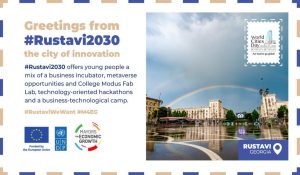
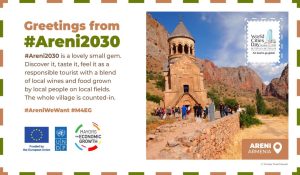
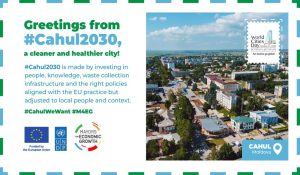
13 mayors as frontrunners
The M4EG introduces new tools and approaches, with four mayors currently testing what it could mean to go from a linear project approach to a systemic portfolio approach for local transformation. Kutaisi and Batumi (Georgia), Areni (Armenia) and Ceadir Lunga (Moldova) are cities making up the first cohort of the Portfolio Journey. Each designed a portfolio with a total of 40 different options to be implemented. Our partner here is the Chora Foundation.
The other nine cities are undertaking an innovation and learning programme called Urban Imaginaries, where cities get a change to test human-centered design through seed-funds. The cities embarking on this journey are: Alaverdi, Ashtarak and Charentsavan from Armenia; Poti, Rustavi, Samtredia and Tskaltubo from Georgia; and Cahul and Călărași from Moldova. Our partner here is Centre for Public Impact.
Instead of looking for up front solutions, these cities and communities are examining the problem from different viewpoints, engaging with unusual suspects, and attempting to curb our reflex to focus on quick solutions for sticky problems. Embedded in empathy, they aim to get a different understanding of the city or town landscape and its economy – going out of the city hall and their offices to talk to residents and local actors, focusing on who the city is and the local stories are. The city teams set up hypotheses and go out to test, pilot, validate various ideas to see how it works. Instead of creating solutions, they are learning how to solve problems as a team, together with their local communities and residents.
It is impossible to bring-in all 13 stories, but we have featured some examples to better illustrate what is “business as unusual” for local governments.
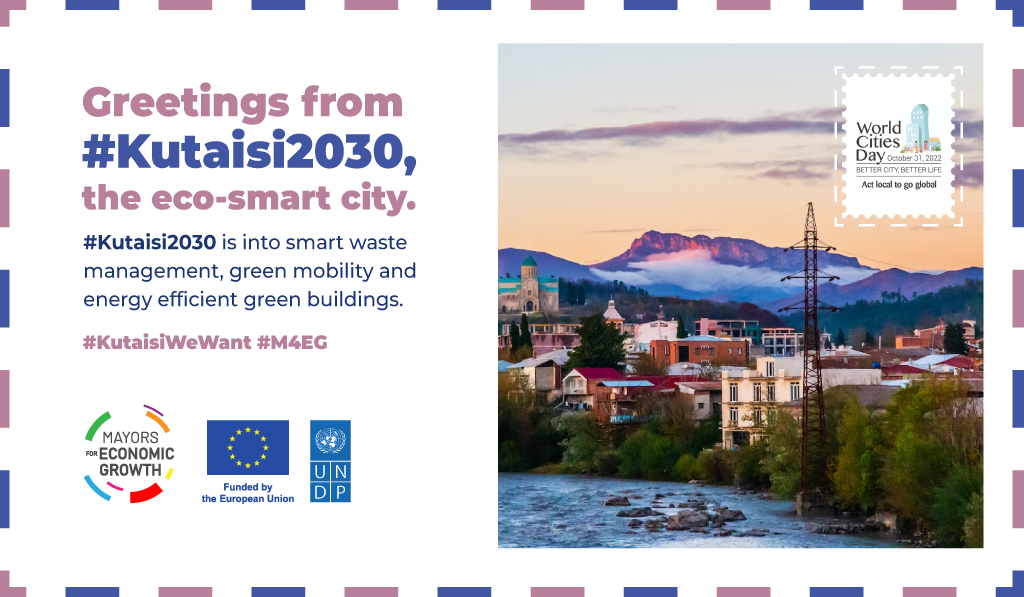
Smart waste in Kutaisi, Georgia
Kutaisi’s portfolio intends to place the city on the eco-smart urban planning frontlines in Georgia and beyond. Of the many designed interventions, the smart waste pilot is looking to gather data on two fronts: what’s the business case for implementing smart tech to optimize waste collection, and how does people’s sorting behaviour change when they are facing new sorting mechanisms such as non-transparent containers or monetary incentives through eco currency. The pilot will implement this tech intervention in a small part of the centre, with a limited number of containers to gather data. At the end of the pilot, they will know: how much money can be saved by automating the planning of waste disposal using sensors on waste bins and whether people sort just as well, better or worse, with financial incentives or with non-transparent containers. This data will give decision-makers an idea of what it would take to unroll this solution across the city, which will be an important infrastructure investment based on a pilot validated by residents.
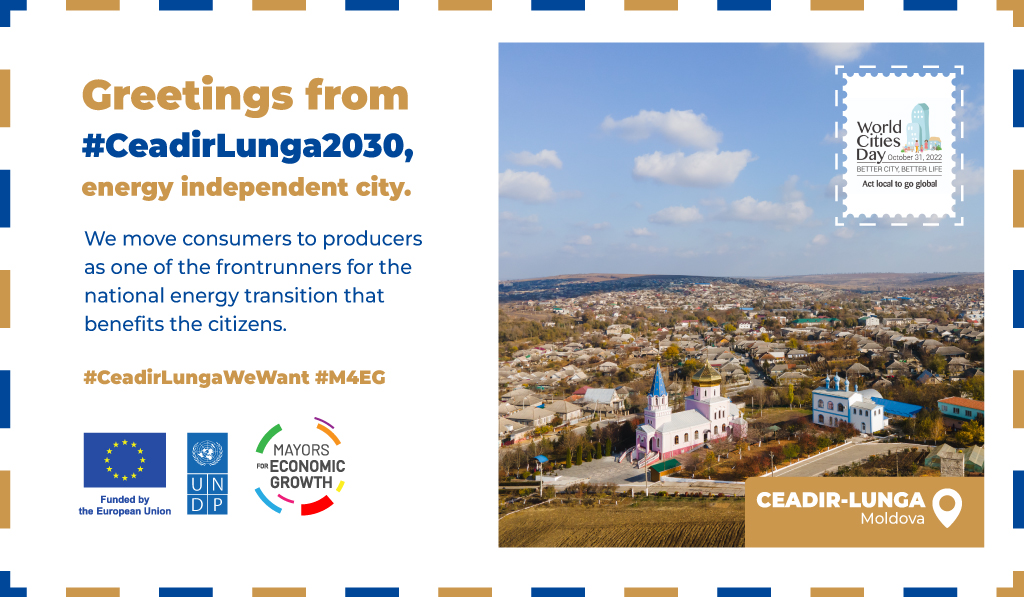
Energy transition of Ceadir Lunga, Moldova
Ceadir Lunga is home to 20,000 people, located in the south of Moldova, right at the border with Ukraine. A key challenge is increased energy prices for gas and oil, particularly during winter months, coupled with the environmental harms of fossil fuel dependency. The town relies on imports for all their energy needs from the Russian Federation. While their energy standards are outdated; it is evident this is not viable nor sustainable going forward. That is why the focus of city transformation is on the transition to renewable and diversified energy sources to reduce imports and improve efficiency. The town wants to support vulnerable groups and tackle high unemployment rates with energy knowledge that can lead to new jobs. “What is new in this process for us is to bring in residents closer through consultations and interviews and to take a more holistic approach to a challenge such as energy imports,” notes Mayor Anatoly Topali from Ceadir Lunga.
How another Moldovan town is reimagining waste management can be found in this blog from Călărași.
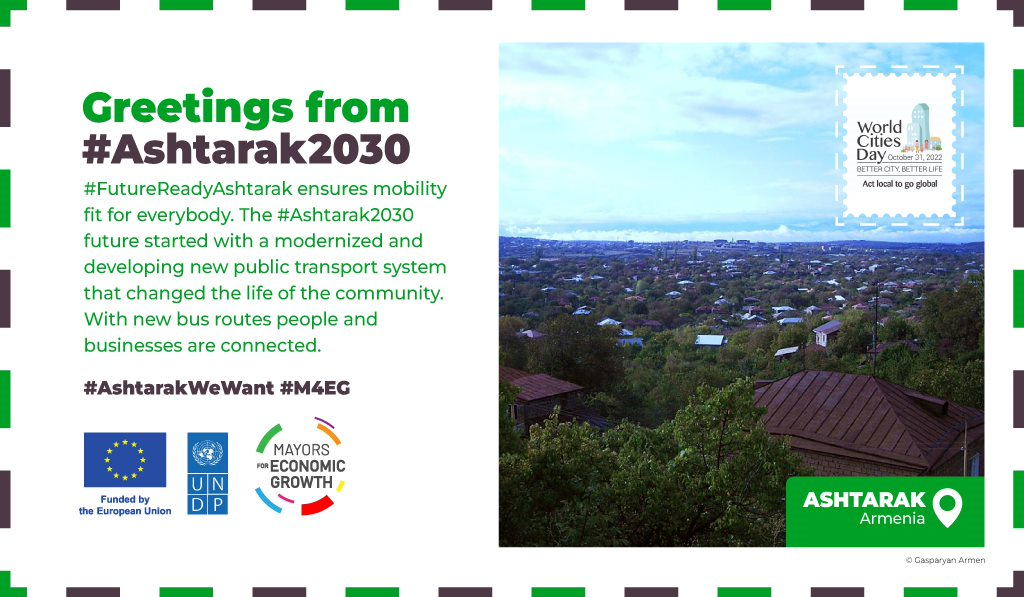
Public transport system reform in Ashtarak, Armenia
Our third example comes from the Ashtarak community in Armenia, only 22 km away from Yerevan. Ashtarak consists of more than 30 villages and has no public transport service, which significantly impacts economic opportunities for local citizens. “We started the public transport reform process as we want to have public transportation services available to our community. We shall establish a test bus route to connect our many community settlements. We are still developing the route, and defining the bus stops’ locations and tariffs in public discussion with our residents. We plan to build closed bus stops, which will have solar-powered heating, lighting and wi-fi. We will start with 3-4 small vans, but the plan is to buy 11 small buses, out of which 3 will be adjusted for use by people with disabilities. For our community development, it is vital to connect settlements with public transport – the 35 new bus stops and greater mobility will change many lives in our community,” shares Mayor Ishkhan Barseghyan. Attracting financing is often difficult for secondary cities and towns, however Astarak has successfully used the M4EG seed-fund to mobilize additional funding from the central government for its public mobility ambition.
15 new city troopers – Azeri cities on board, re-start in Ukraine, and more frontrunners in Armenia
Eight local authorities in Azerbaijan and Armenia recently joined the Portfolio Journey and Urban Imaginaries initiative, together with the seven cities from Ukraine, who put their work on hold due to the war but are back with a plan to re-build and re-imagine their future. We are looking forward to hearing what comes out of the learning journey for Khirdalan, Icherisheher, Sabail, Urva, Mingachevir and Naftalan in Azerbaijan, and Lviv, Melitopol, Poltava, Sumy, Trostianets, Mykolaiv and Ternopil in Ukraine, and Gyumri and Kapan in Armenia.
The network of cities shares that the mutual success ingredient of this journey so far is their teams – people with open minds, dedication, deep engagement and who lean into a process that often goes beyond what has been tried and tested before, all with the guidance and space to experiment, created by their leaders, the mayors and deputies.
Without people’s commitment, no transformative change can happen.
The M4EG Facility builds on the Mayors for Economic Growth Initiative, launched, and funded by the European Union in 2017. Starting from 2021, the M4EG Facility – funded by the EU – has been managed by UNDP in close cooperation with the EU, local authorities, and a range of partners.
“On the surface we’re hitting our targets. But my big fear is that nothing fundamental is changing. We’re not shifting the underlying dynamics that are driving the problem in the first place.”
Over 5 days, the 2022 Learning Festival will take a deep dive into the practical realities of shifting systems in conversation with 50 of the boldest system innovators around the world. It’ll be looking at what it means to shift a system, not just scale a solution. In many contexts, scale matters – but scale without shift will not get us the impact we are looking for – particularly when it comes to issues where the very premise of the systems we have now needs to evolve.
The programme brings together innovators to share their stories of doing the practical work of shifting systems around the world, in health, education, food, welfare, justice, work, economic development, reconciliation and beyond.
UNDP will be participating in a session on November 30 on new approaches to evaluation emerging to support system innovation efforts. The session will highlight new practices in action, in conversation with: Nina Strandberg, Swedish International Development Cooperation Agency (SIDA) (SE); Søren Vester Haldrup and Yaera Chung (US and Central Asia) on the UNDP’s Monitoring and Evaluation Sandbox; Rob Ricigliano, Omidyar Network (US); Bonnie Chiu, The Social Investment Consultancy (UK); Anna Folke Larsen, ROCKWOOL Foundation Intervention Unit (DK) on impact evaluations of principle-based interventions and Beth Smith, Cynefin Group (DK) on the role of mass storytelling in uncovering the trajectories of system change.
The Learning Festival is an opportunity to listen, share, explore, discover, ideate and discuss for anyone who:
- Are trying to tackle complex challenges in new ways
- Want to create fairer, sustainable, better systems for future generations
- Want to tune your work, your venture, your funds or your strategies to have more system impact
- Are committed to making the deeper shifts needed
- Are looking to learn from and connect to others taking a similar approach
- Need some hope and inspiration!
Join the festival for an inspiring and honest deep-dive into the practical realities of system innovation towards a better future. See the full programme here and register!