
Category: Systems and portfolios
Cities: A powerhouse for innovation
Throughout history, cities have held a central role in innovation. First, local governments often are more agile than the national or regional ones in identifying and responding to problems. Then, they are closer to their constituencies, making them well-positioned for participative action. Finally, when facing unprecedented challenges, cities benefit from a wide action range to carry out new solutions, and mobilize communities for a faster response.
On 31 October, the United Nations celebrated World Cities Day, bringing together urban partners to share their approaches on local action, creating more connected, inclusive and sustainable cities.
Emerging challenges
In the Europe and Central Asia region, urban spaces have experienced multiple transitions and shocks. UNDP’s strategic innovation work in cities shows that cities are at a precipice – under-resourced, over-extended, and with unreformed development models – allowing any dent or crack to destabilise the system anew. The outdated economic model no longer works – cities and towns, especially smaller towns, frequently house decrepit industries and are home to young people who want to leave. Yet, while we can easily pinpoint the problems in the region’s recent history and present, the way out is less clear. But there is hope. To live up to people’s expectations for a thriving future, local governments need to move beyond traditional and obsolete economic models, and embrace learning and flexibility to change practices that keep them relevant and open to new opportunities. This is a shift in mindset, collaboration, and capability – and reinventing themselves will accelerate change within the systems.
In this context, urban stakeholders are asking themselves: What do we need to do now to shift systems?
Can we shift urban systems?
Since August, through our Urban Talks Series, we have been exploring these questions and featuring stories of changemakers who have powered innovation to address new and old challenges alike. From these stories, several themes have emerged:
Interconnectedness. Urban systems are interconnected: for example, an investment in public infrastructure will increase the value of property around it and drive other investments. To make them more manageable, urban challenges have been sliced into single issues. But to be effective and make urban systems more resilient, there is a need to work on understanding and building connections between different parts of the system. Urbanist Dr. Jayne Engle, current Co-Director of Participatory Canada, challenged us to explore the interconnectedness between the intangible (wisdom and values), and the tangible – physical, digital, environmental and institutional infrastructures (see Urban Talk #3). Her work recognizes that the future needs to be built together with those to whom it belongs, incorporating the voices of children and young people, and placing at the heart of urban development a balanced relationship with nature. Movements like Japan’s Future Design show how to factor in future generations into the design of interventions now, as do Fridays for Future, a youth-led and organised climate activist movement. In Batumi, Georgia, the city government, in its effort to diversify its economic model and rebrand itself into a tech-city, has ended up identifying and connecting to stakeholders that are driving the startup ecosystem (see Urban Talk #4).
Distributed Power. Radical collaboration between different actors – what Mayor of Ungheni in Moldova, Alexandru Ambros, calls a “web of bridges”, generates active feedback loops and enables cities to respond faster when shocks happen. Building the “web of bridges” is reliant on trust, open communication and shared missions. The Istanbul Planning Agency Vision 2050 team, is another good example of that (see Urban Talk #1). They conducted consultations with over 20,000 people to determine the city’s vision and mission. The city landed on a vision for the future of the city as vibrant, free and diverse, and continued to ‘translate’ this mission into a multitude of actions – from how the municipality works to the projects planned across the city. Similarly, NetZero Cities are supporting 100 cities in Europe to move to carbon neutrality by 2030, together with those to whom the city belongs – communities, companies, city governments (see Urban Talk #7). In the digital space, Barcelona and about 50 cities, with UN Habitat’s support, are developing digital transformation strategies that are people-centred, and that support sustainable urbanization (see Urban Talk #6).
Imagination. In our last Urban Talk, Charles Landry called for boldness and unleashing creativity in cities. Broadening imagination, adopting a learning mindset and encouraging creative bureaucracy are foundational in not only being resilient to shocks, but using them as an opportunity to shift systems. The Creative Bureaucracy movement in the making brings together bureaucrats from around the world who are using their imagination and capabilities to reimagine the role of governments as enablers of change. In this regard at one end of Europe, SPIN Unit is looking into what it would take for the city of Tallinn in Estonia to create a fully self-sufficient food system – including moving to a regional scale, changing diets and re-shaping behaviours. How to get there is a process of discovery that requires “disciplined pluralism,” laced with creativity and hyperlocal knowledge (see Urban Talk #5). On the other end of Europe, UNDP North Macedonia built a portfolio on circularity, by which it unlocked new partnerships, reframed questions and opened up new spaces for collaboration to rethink waste management (see Urban Talk #5).
——-
Cities are starting to reimagine themselves – exploring new economic models that are better balanced with nature, new forms of participation, and understanding more deeply how flows of people (e.g. refugees, internally displaced people, tourists, gig workers, etc.) are reshaping urban fabrics.
Curious to explore and learn how urban spaces are adapting in these ever changing conditions? See all the recordings and all the key insights from our Urban Talks series: innovation.eurasia.undp.org/urban-talks-series-summary-and-takeaways/.
UNDP’s work on the application of systems thinking to urban transformation is supported by the European Commission and the Ministry of Finance of the Republic of Slovakia. To learn more about our urban transformation work, see here, including our Mayors for Economic Growth Initiative in Eastern Partnership countries and the City Experiment Fund.
Illustration: Anina Takeff for Fine Acts
A personal reflection of the past year as the lead orchestrator for a joint EU & UNDP project called the Mayors for Economic Growth
International development is for the most part executed through development projects. The UN Development Programme (UNDP) is no exception, and since our beginning some 60 years ago we have developed an overall solid programme and project management practice.
Yet, the rapid changes and increasing complexities of global and local issues around inequalities, global warming, participatory governance, and public crises and emergencies, question our understanding of linear transformation reflected in our project management.
Many of us working in international development are becoming uncomfortable with presenting ourselves as ‘solution providers’ as if we know what the destination looks like and how to get there. For many of today’s complex challenges and the polycrisis we find ourselves in, we have no ‘best practice’ to lean on.
The thinking that we might be losing relevance due to our projectized approach and how we as an organization are exploring and learning to apply strategic innovation for system change is gaining traction among leading innovation colleagues and senior management, and I would argue is a growing discussion across the organization and sector.
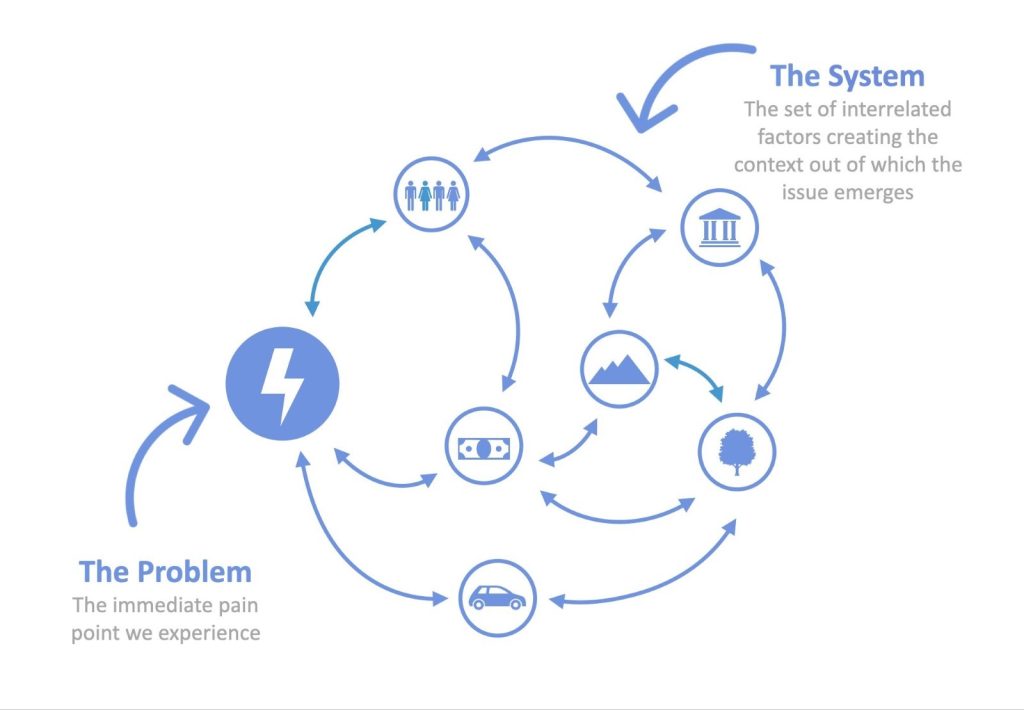
At times, in order to alleviate the pain, we apply #linear approaches to the problem, which can cause unintended consequences. When we disconsider the whole #system the problems we face are involved in, these consequences come back to us.”
SI Network
At a first glance, the Mayors for Economic Growth (M4EG), a joint initiative with the European Union to support towns and cities in Eastern Partnership exploring new trajectories of growth, looks like a standard development project following the established rules and regulations, alongside the ongoing 4,500 projects within UNDP. But M4EG has another intention, that of being a sandbox to test what new handbooks in development could look like while embracing the radical uncertainty of our times.
When we kicked M4EG off in 2021, we asked ourselves: if we accept that the world is complex and unpredictable, how can we inject ways to make our project management more agile, i.e., respond to issues, findings, and opportunities as they emerge?
In some ways, the M4EG has an identity crisis, engaging in deep self-reflection. It straddles the existing frame and project approach, while riding towards what could emerge.
Here are our key takeaways from a project management perspective.
From the start, we designed M4EG for tolerance and adaptability to ensure timely responses and relevance. This flexibility allowed the project team to act faster and make many small and some larger changes over the first year of implementation, among which are:
- New mentoring programme for municipalities: We transformed the standard ‘call for proposals’ into a learning and mentoring journey called Urban Imaginaries Programme, based on a concept around Urban Makeover (vibrant communities + economic opportunities + innovative approaches) that has taken shape within our wider innovation team over the past years. This led to a partnership with the Centre for Public Impact, and the opportunity for 20 municipality teams to learn how to use and implement human-centered design with seed funds.
- New crisis reality in Ukraine and Moldova: The project quickly repurposed EUR 700,000 to support the new realities faced by our network members in Ukraine and Moldova. Consequently, the EU is topping up the existing funds with EUR 1.8m to form a M4EG-EU Response and Renewal Grant Programme to continue supporting municipalities that are currently occupied, at the frontlines, or hosting Ukrainians that are internally displaced or refugees in Moldova.
- Financing links: Knowing that one set of time-constrained project funds will not result in the system transformation we seek, it became evident that UNDP and the EU need to play a stronger role as a bridge and orchestrator for new funding opportunities and partnerships for local authorities. When an EU-led Team Europe initiative, including with International Financing Institutions (IFIs), was launched for the Syunik region in Armenia, the EU called for increased engagement with municipalities in that region. In response, M4EG embedded the largest municipality in the region in the Portfolio Journey programme (going hyperlocal to design and dynamically manage portfolios for system transformation). Simultaneously, to support more of the municipalities in the region, we are launching an accelerated Synch Programme for local economic development (LED) planning to kick start the design of bankable projects that can attract financing.
- From local economic development plans to SYNCH: To switch from linear local economic development planning, the existing LED process under the first phase of the M4EG took on a system lens approach and moved towards continuous and adaptive planning to better stay in synch with changing needs and factors. The first pilot with our partners at Ove Arup and Climate KIC is taking place in Baghdati, Georgia.
- Show and Tell platform: Intentional co-design of interventions is a new approach for most M4EG members and requires stamina, patience, and more time than pre-defined interventions. The 4 to 6 months-long design phase for the first cohort of 13 towns and cities called for a celebration and peer-to-peer exchange in the form of a regional visibility event at the mid-year turn.
- Embedding storytelling: In addition to introducing storytelling as an untapped skill for municipality teams to shape local narratives, it became necessary for a change-orientated initiative like the M4EG to come with a clear future-ready identity. A new attractive brand was co-designed with the EU, with an intentional push for implementation and communication to increasingly go hand-in-hand. So far, more than 200,000 people have been reached in the Eastern Partnership.
The M4EG’s identity sits between being a discovery and learning journey for system transformation, and the UN development project frame for operational effectiveness and expenditure delivery as performance indicators.
To rise above operationalization, our key starting point is not ‘how many workshops and providers are needed,’ but rather ‘what are the emerging needs and realities for our set intention for more sustainable, inclusive, vibrant communities, and how could we best support?’
The M4EG intends to be tolerant and responsive, with a mixture of the relaxed and the precise. It has so far allowed the donor, implementer, partners, and beneficiaries to add a bit of themselves, to help adapt and customize, to be partners in a mission. We see a donor bringing in new partners and exploring new avenues, mayors utilizing the optimistic and colorful M4EG brand to strengthen their local visions, technical partners interested in co-testing new tools and approaches, and UNDP colleagues across teams asking to join in what has become an invitation for change. As Charles Laundry shares in his book on shaping a creative bureaucracy: “Every [bureaucrat] has a vast storehouse of “discretionary” effort, [and] many more are waiting in the wings to contribute more”.
Projects appear across today’s disciplines and is a taken for granted modus operandi for non-routine goals. International development is no exception and arguably has become shaped by a ‘project hegemony’. Could we test ourselves out of this universality?
“Once we denaturalize the project form, we can more clearly imagine alternatives to it. If not every action or every vision for the future amounts to a project, then what else is there? What kinds of transformation might practices of radical care (Hobart and Kneese 2020) or of ‘staying with trouble’ (Haraway 2016) yield? Why don’t we choose to de-projectify some social environments, for example, to ask what work or development might look like without perpetual projects?” (2021, Andrew Graan, What was the project? Thoughts on genre and the project form)
Background:
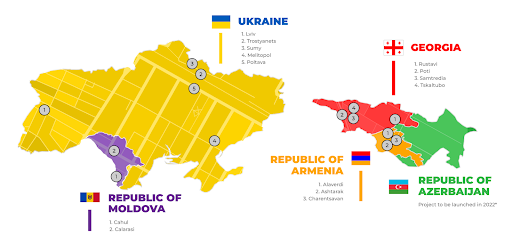
In 2021 UNDP, together with the EU, launched the Mayors for Economic Growth (M4EG), a regional initiative hosting a network of some 350 municipalities in the Eastern Partnership – Armenia, Azerbaijan, Georgia, Moldova, and Ukraine. The M4EG’s intention is to demonstrate and inspire secondary cities’ new trajectories of growth to become more attractive and vibrant for people and financing.
Local governments are at the forefront of change and opportunity – whether that is tackling climate change, addressing inequality, or attracting and retaining talent. Yet, faced with new and emerging challenges all the time, cities and towns must be able to listen to residents, innovate and reimagine their ways of working to effectively respond to a rapidly changing world.
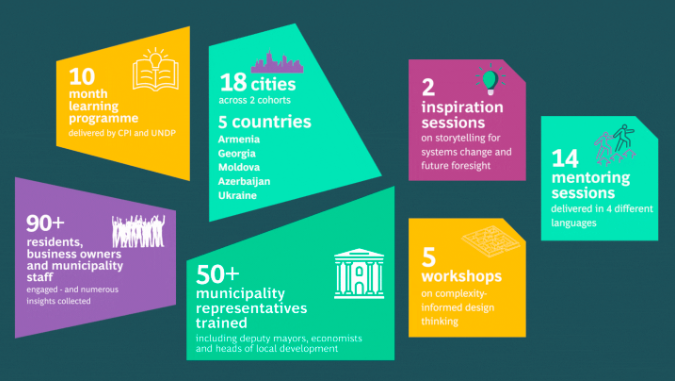
That’s why the Centre for Public Impact and the United Nations Development Programme are excited to be partnering on the Urban Imaginaries programme under the Mayors for Economic Growth, a joint initiative between the EU and UNDP. Urban Imaginaries is a 10-month initiative that is supporting cities across the Eastern Partnership to develop solutions to their most pressing challenges by applying Human Centered Design – a problem-solving approach which seeks to change the way governments approach challenges, by engaging citizens in the design of better – and more human – solutions.
The Urban Imaginaries programme in numbers
4 key learnings for successfully engaging with residents
Through the first phase of the programme, we’ve helped local governments define their challenges. These have ranged from how to reinvigorate cultural life and make public spaces more accessible, through to how to tackle youth unemployment and improve transportation systems. As part of this, we’ve supported local governments to engage with residents and other key stakeholders in their system to develop a deeper understanding of their challenges by using methods like social listening and sensemaking exercises. This has provided ample opportunity for learning, and we’ve summarised four key tips for those in local government who want to work more closely with residents.
- Engage in the process with a learning mindset: Engaging with residents in problem-solving can provide a powerful tool for local government teams to learn more and question their assumptions about the challenge they’re hoping to solve and the way it is impacting residents. By practicing an open, learning mindset, this can better unlock ideas for solutions, and help teams reimagine their relationships with residents.
- Co-design solutions for – and with – residents: While listening to residents to better understand your challenge is the first step, it is important to also continuously engage residents and other key stakeholders in the entire process of designing solutions to emerging urban challenges. This is key to ensuring that city leaders effectively engage with residents and will help deliver greater impact by creating services that better meet the needs of residents.
- Preparation is necessary to listen deeply: The art of listening well to your stakeholders can be learnt, and practiced. Preparing a tailored interview guide in advance, capturing insights as well as making time to collectively reflect on learnings acquired during those conversations are key. It is also important to remember to come in with an open mindset and avoid leading questions.
- Foster values such as empathy, humility, openness and inclusivity: These are all important attributes for city leaders looking to transform how they engage with residents and build trust.
A closer look at our cities and towns
Having concluded the discovery phase of the programme, we’re excited to share how the cohort have engaged residents, what they’ve learned and provide an update on their progress.
Amplifying cultural life in Alaverdi (Armenia) and Tsqaltubo (Georgia)
Arts and culture can change lives, but also have a valuable role to play in contributing to a city’s economy. The arts and cultural heritage of Alaverdi and Tsqaltubo is unmatched in the region. Post-pandemic, both cities want to reimagine and innovate their arts and cultural sector to enrich the lives of residents, create jobs and galvanise economic activity and creativity.

The city of Alaverdi is reimagining cultural life for young people, to create more dynamic and flourishing cultural spaces for the community. Traditionally, Alaverdi has been a centre of cultural life, hosting international festivals such as “Theater fest”, organised annually to honour renowned writers Hovhannes Humanyan and the great actor Sos Sargsyan. As part of this learning programme, Alaverdi has been working with the community to understand their ambitions, aspirations and hopes for this sector. Residents have reflected their desire to enhance the city’s cultural life, which will benefit locals, attract tourists, preserve the area’s rich cultural heritage, and also create new jobs – thereby addressing the issue of migration the region is facing.
“I am surprised at the results of the interviews! It seems the residents are really keen to get involved and they have a MUCH bigger understanding of the issue. For instance, in our interviews with youth, we learnt that they are keen to get involved in the co-design of cultural activities and participate in educational programmes.”
Ms. Karine Simonyan, Local Economic Development Officer (LEDO), Alaverdi Community Administration
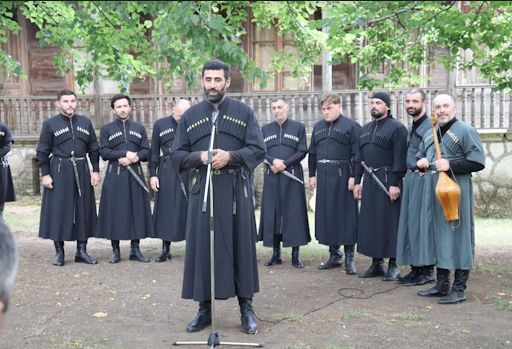
In Tsqaltubo, the pandemic highlighted the need for social interactions, especially among the young population. Now things are changing, and residents are keen to connect, “we are happy to meet each other in person” reported one student. In response to this, the city is focussing on transforming cultural spaces into places for cultural and social interaction between diverse groups.
They were initially looking at how to increase the capacity of the Museum of Niko Nikoladze, in the city’s central cultural hub. However, in-depth user research revealed that residents face transportation limitations which inhibits their ability to experience all the city has to offer. The city is now exploring how they might better link surrounding villages and towns to their local cultural hubs. By addressing these needs, Tsakltubo hopes to take gradual steps towards creating vibrant social and cultural spaces away from the capital, to improve the quality of life for local people and create the conditions for local and international tourism.
Designing inclusive public spaces in Poti (Georgia), Ashtarak and Charentsavan (Armenia)
Many of our cities are focussing on making public spaces more inclusive, accessible and beautiful – which are often a reflection of the values and identity of a city. Frequently, urban spaces are not designed for or with the most marginalised communities in mind. Similarly, urban spaces do not always drive opportunities for intergenerational engagement. Though young people are often described as ‘social glue’, high fences surround our schools, playgrounds are clearly demarcated, and at worst, design features can discourage teenagers from occupying certain spaces. Too often, we erect barriers that segregate different age groups.
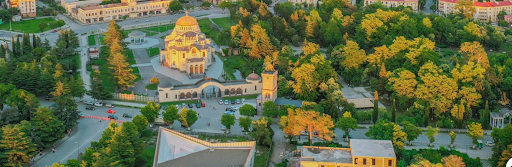
Our cities are changing this. Poti is concentrating on improving open spaces in the city – in particular its central park. The park was previously renovated, but without using a design thinking approach. As a result, the renovation was completed without taking into account the needs of residents. It was built in isolation from many stakeholders and the park now lacks the spaces that residents need for recreation and leisure. The city team is prioritising the inclusion of historically excluded communities as part of their engagement with residents, and some of the ideas emerging from their research include ways of making the park more accessible for disabled communities.
“[complexity informed design thinking methods] are very helpful, because it helps us to understand what others need and build our empathy muscles. We’ve understood the needs may change from one citizen to the other, and we found some needs that were expressed by citizens that we did not expect. For instance, we came to this process thinking some improvements to the park did not fit, and we’ve understood through the interviews that they actually do because they respond to a need expressed by citizens.”
Irakli Lejava, Deputy head of Sustainable Development and Innovation Service, Poti Municipality
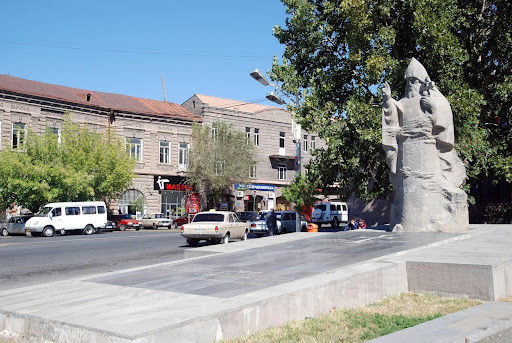
Using the lens of inclusion also means thinking about those who are furthest from the public spaces designed for them. Ashtarak is located in a mountainous region of Armenia, and the city was recently united with 7 neighbouring communities as part of an administrative change. Through Urban Imaginaries, Ashtarak is looking for ways to improve public transportation services between the communities. Currently, these are not well-developed and are impacting the mobility of residents. This includes farmers who find it difficult to sell their products, students who are isolated from universities, and socially vulnerable residents who cannot easily access important public services. By reimagining connectivity between the central city and the other parts of the community, the team hopes to promote economic development throughout the area.
“There is an excitement for this challenge in some remote communities where public transport never existed before. The enthusiasm from our residents is really pleasing – we’re getting really good energy from them as they understand this process allows them to be part of the problem-solving. This work is quite extensive, it might take longer than what we thought, but I am certain this will allow us to get better outcomes. In 20 years, we had never listened to residents in this way, so now we need to make sure we’re up to the level and make sure we keep them updated”.
Nazeli Arsenyan, Member of Ashtarak Community Council
Charentsavan, a small city in Armenia, was founded in the 1940s by the Soviet Government to accommodate workers at a nearby hydroelectric power plant. One key challenge they are facing is the city’s attractiveness. They are therefore exploring how they can reimagine the city’s public spaces to make it more attractive for both residents and visitors. Feedback from the community has been key in shaping a shared vision and plan for the future:
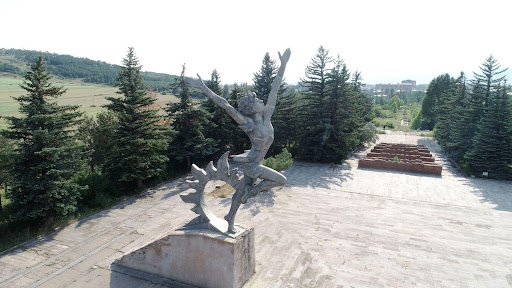
“By engaging with residents, the one thing that surprised us is that we concentrated too much on the central part of the city – leaving the entrance outside. We’ve now realised that the perception of the city starts from the entrance. Our assumption to focus on the central area may have had some emotional grounds as well, and we’ve now realised from our interviews that the entrance needs to be involved in our process.”
Ashot Tserunyan, Local Economic Development Officer (LEDO), Charentsavan Community Administration
Promoting healthy living in Samtredia, Georgia
In Samtredia, the city is aiming to reimagine their sports infrastructure to improve the health of residents and increase regional tourism. They are interested in reinvigorating facilities around the municipality swimming pool, which was functioning well before COVID-19 and is seen as a popular regional attraction.
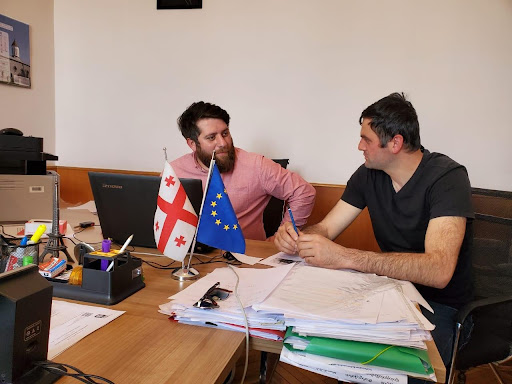
Through the programme, the city team was encouraged to go deeper to understand the health behaviours of their community. In doing so, they learned that residents are apprehensive about visiting public spaces as a result of the COVID-19 pandemic. However, residents are also interested in continuing exercise habits outside of the swimming pool which they took up during lockdown. The city is now exploring ways to respond to this feedback. These include introducing electronic booking systems to increase user safety when using facilities, developing gym facilities, as well as making more sustainable and energy-efficient choices for the city by adopting solar energy.
“Interviews revealed some needs and interesting insights. What was interesting is that we’ve changed our initial plan based on the insights collected. We started this process with a very narrow angle, but with your recommendation we opened up our view to better capture a diversity of views from the visitors. It’s not about what we [the city leaders] want, it’s about what residents need.”
Mr. Lasha Ormotsadze, Head of Coordination Office for Samtredia Mayor’s Representatives
Taking an ecosystem approach to youth unemployment in Rustavi, Georgia
Rustavi, in Georgia, chose to focus on tackling youth unemployment – often a chronic issue that is often difficult to solve. Unemployment in Rustavi is high (approximately 20-22%) and it is above the country average (18.1%).
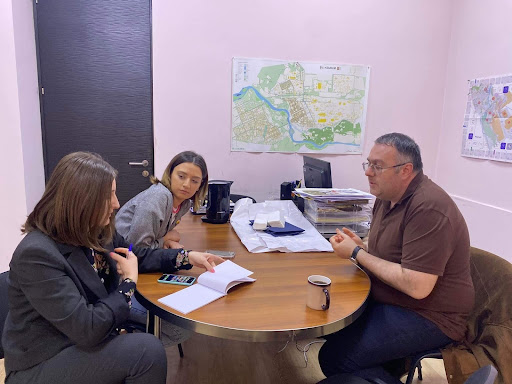
The Rustavi team conducted research to better understand the opportunities and barriers in this space. Through interviews with residents, the city gained a greater understanding of how to narrow down this challenge. The findings highlighted that there is already a vast amount of activity underway to tackle youth unemployment.
For example, they discovered numerous initiatives run by local business and civil society organisations. While well-intentioned, many are not scalable and disconnected from each other. Now, the municipal government is reimagining its role as a connector, convener and amplifier to help the ecosystem collaborate around a diversity of initiatives that seek to develop new skillsets in young people, make job searching easier and provide better career planning tools. This re-envisioning of the role of government with the communities it serves will help solidify and unify efforts across different stakeholders in the city.
“Thinking about ‘for whom is this really a problem?’ helped us understand who the main stakeholders are in the system around our problem. Our end users are of course the young people – but also the municipality and the local organisations and NGOs that are already supporting young people in the city. We’ve understood that our role is also to enhance the strength and great work local organisations are already doing to tackle youth unemployment. We need to engage them in our journey.”
Michael Lobjanidze, Strategic Development Manager of the Center for Artistic, Sports and Youth Development, Rustavi
Improving waste management in Cahul and Calarasi (Moldova)
Calarasi and Cahul are concentrating on challenges surrounding waste management, a key priority in their cities. Waste management infrastructure can be a critical piece of the urban identity puzzle and both city teams are working to better understand the nature of the problems their communities are facing. For example, in both cities the waste collection sites come with a multitude of challenges – they are not contained, attract stray animals, are not well lit and do not offer the opportunity for residents to recycle waste. Furthermore, collection times are often irregular and unreliable leaving the waste sites in disarray.
By conducting user research and deep listening, they were able to better understand and prioritise the waste management challenges that each city is facing.
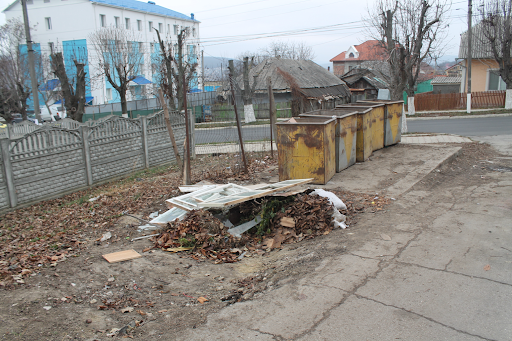
“For us, the process was to learn the methodology and understand how we can put ourselves in the shoes of people. This project helped us understand that we can do things differently – we spoke with those who are in charge of waste management, we spoke to young people, to various people – this helped us understand the problem from various points of view.”
Lilia Rata, Investment Attraction Specialist, City Hall of Călărași
As a result of this work, both cities are able to design more relevant solutions that actually solve citizen needs, improve waste management and collection services, as well as consider environmental sustainability. In Calarasi, one of the ideas they will be exploring is a service that enables residents to share second hand goods with the community, to avoid waste and blockages in the waste management system.
What’s next?
The next phase of the Urban Imaginaries programme has involved working with cities to support them to experiment, and test and learn from their proposed solutions. We look forward to sharing more about what we’ve learned with cities in the experimentation phase soon!
Background:
The Mayors for Economic Growth (M4EG) Facility is part of the M4EG initiative, launched and funded by the European Union since 2017. The M4EG Facility is run by UNDP, starting from 2021, in close cooperation with the EU, local authorities and a range of other partners. www.eum4eg.com
For media and other enquiries for UNDP/M4EG:
Anton Sydorenko, M4EG Communications Lead, anton.sydorenko@undp.org
Tina Stoum, M4EG Regional Lead, tina.stoum@undp.org
Reposted from Center for Public Impact.
Achieving the Sustainable Development Goals in an increasingly evolving, interconnected, and uncertain world requires the ability to navigate complexity. In ecosystems where different actors operate with different priorities and goals, it is necessary to develop innovative practices based on a deep understanding of the environment.
To support urban transformation in Almaty, Kazakhstan, as part of the City Experiment Fund, UNDP has applied a structured methodology. We adopted a holistic mindset that incorporates different parts of the system to achieve optimal outcomes.
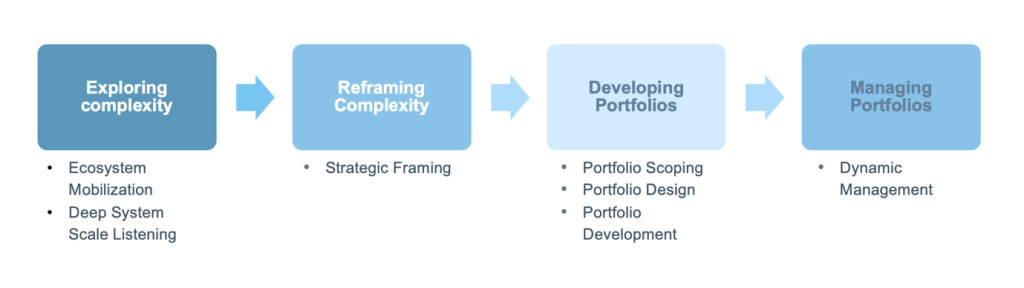
1. Exploring complexity through ecosystem mobilization and deep system scale listening
We applied systems thinking to navigate the complex value chains of urban transformation in Almaty. Social issues in Almaty involve a wide range of actors – from research institutes, businesses, civil society organizations, environmental activists, the Almaty city government, and more. The actors have different priorities and together form an interconnected system. Issues such as air pollution, population growth, and others can only be understood by looking at the entire Almaty development landscape.
To define priority areas and key players requires deep listening to gain a bird’s eye view of stakeholders and key players in the entire system. Specifically, we looked for potential partners, sources of information, and signals of risk.
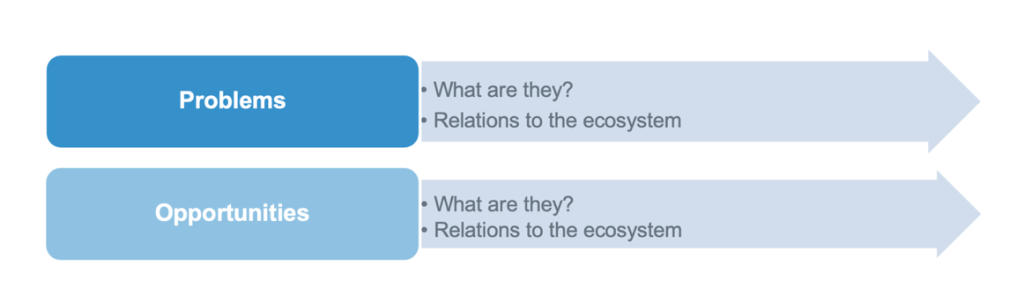
2. Capture complexity with strategic framing
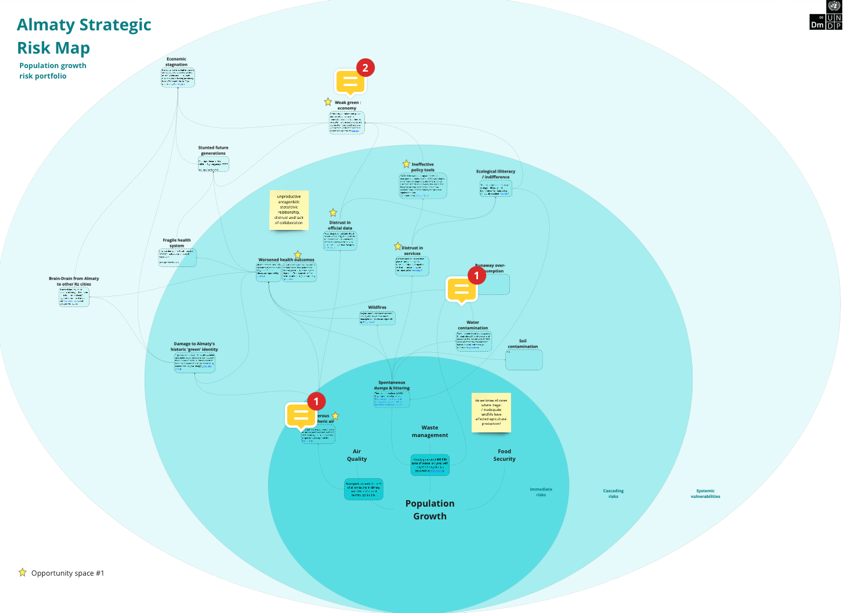
To overcome the unpredictability and spontaneity of urban change, we set out to design a coherent narrative and mission to align the various stakeholders and distribute responsibilities. After identifying our key stakeholders and issues, we began our research grid, which mapped three types of risks and their causality, with population growth as the driver of change in Almaty that concerned us most. This systems thinking approach allowed us to identify the main causes of Almaty’s social problems and find solutions that would have the greatest impact.
3. Portfolio scoping, design, and development
So how can we translate our findings into scalable solutions? First, we identified a set of interconnected immediate, cascading, and systematic risks. For each set of interrelated risks, we created a targeted portfolio of solutions that included a statement of intent and desired development impact.
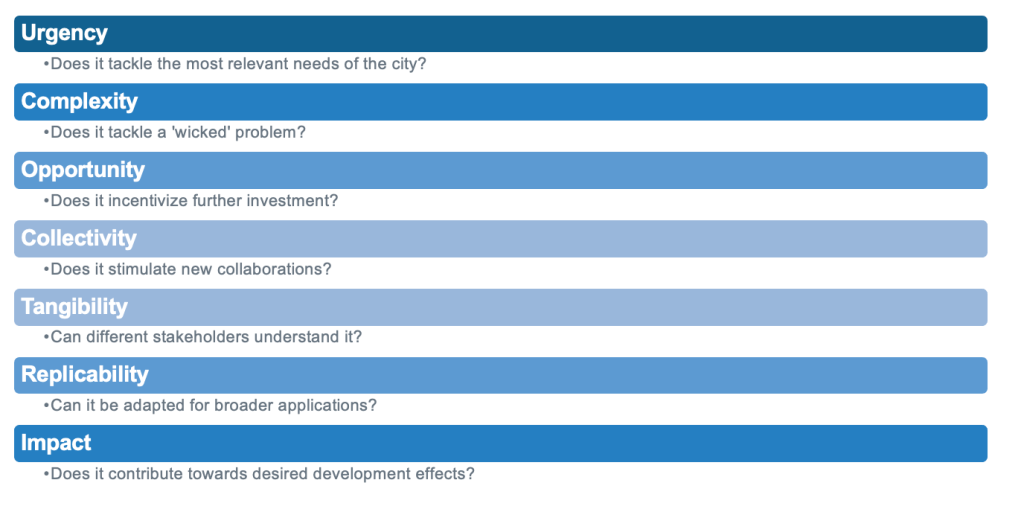
We then used a portfolio approach to bridge the current situation with our vision. For each opportunity, we took an in-depth look at the current situation, the short-term outcome, the long-term results, and the gaps in achieving the vision. At the same time, we referenced existing opportunities and practices around the globe.
Finally, each position was developed and tested – examining impact based on social, environmental, and economic value. We also used experiments to develop and illustrate the potential of the project.
4. Accelerate change with systematic methodologies
Among the various problems Almaty faces, we choose to focus on addressing air quality following our mapping. Air pollution has dire consequences for Almaty, both in terms of economic costs and health. Our goal for this project is to develop an accurate, real-time, and predictive air quality monitoring system that will guide decision-making by both the local community and the Almaty government.
Identifying obstacles and resolving them in a complex ecosystem requires mapping interconnected activities to address multiple levers simultaneously. We categorized the systematic barriers and their solutions into different levels for each of our identified key stakeholders. Here is what we found:
We discovered that the lack of reliable real-time data was the key to unravelling the sporadic, uncoordinated or fragmented actions of stakeholders. This was facilitated by a hostile environment of opposing views, which made information transparency and thus evidence-based policymaking difficult. With these insights, we set out to strengthen the analytical capabilities and gamification of the AirVision platform and a traffic data monitoring system to address air pollution at its root.
Conclusion
The portfolio approach has helped UNDP understand and address the complexity of environmental challenges in Almaty. It has helped the team develop actionable, accelerated, and scaled solutions that untangle complexity through multiple layers of the portfolio.
We look forward to accelerating Almaty’s transformation with insights from our methods and sharing our practices with all colleagues working in the UN system and beyond to achieve greater impact on our most pressing challenges.
Our Show & Tell event, held in Kutaisi, Georgia in July, 2022, was attended by the representatives of municipalities falling under the umbrella of the Mayors for Economic Growth (M4EG). M4EG focuses on economic inclusive growth and job creation in the Eastern Partnership (EaP) countries. It builds on the learnings from its first phase to enhance economic growth by designing and implementing Local Economic Development Plans (LEDPs). As a regional initiative of the EU and UNDP, it seeks to strengthen the capacities of local governments, create inclusive innovation processes for the design of investable projects corresponding to the LEDPs and invest in portfolios of projects that bring tangible benefits to its citizens.
The Show & Tell event was aimed to be regional platform for greater visibility, networking and alignment of seed funds with the identity and intent of the M4EG. Secondly, it gathered municipalities to share their journey learnings, engage and exchange deeper learnings, and outline their next steps. The event was attended in person by the representatives of 56 municipalities, while members of municipalities from Armenia, Azerbaijan, the Republic of Moldova and Ukraine joined online. Representatives from the EU Delegation to Georgia, DG Near and the Georgian Ministry of Regional Development and Infrastructure also joined the event.
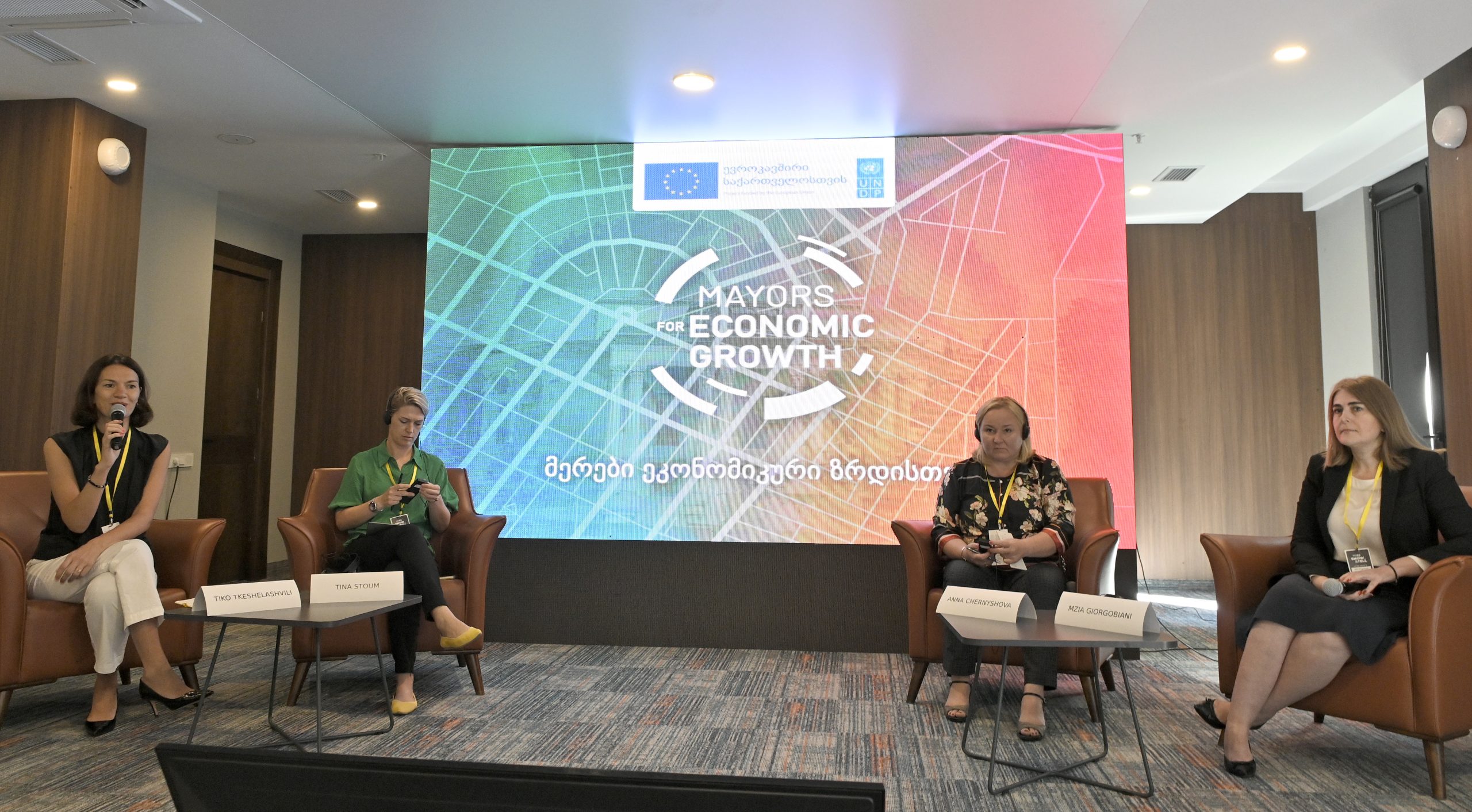
The event agenda included presentations led by 13 municipalities from the ‘Portfolio Journey’ and ‘Urban Imaginaries’ cohorts. These are two initiatives specifically designed to encourage and foster interventions aiming to reimagine key aspects of local living or urban spaces. M4EG’s key thematic focus is: deep engagement modalities with cities and ‘Urban makeover: Reimagining the city by the creation of a responsive, resilient and sustainable urban space’.
Portfolio journey
The portfolio journey addresses the complexity of development challenges by supporting the initiatives of local authorities and bringing additional capabilities to the local level. Currently, it engages with four cities in EaP countries to design and dynamically manage a municipal transformation portfolio. It is an adaptive learning and decision-making mechanism for responding to complex challenges that municipalities are facing.
- Areni from Armenia on sustainable tourism
The portfolio intends to attract and direct additional financial resources to the community to renew parts of its local infrastructure and diversify the local economy by exploring possibilities of interconnected value propositions. This will enable exploring new niches and alternative tourism offerings, such as eco, gastro and adventure tourism, ultimately boosting community livelihoods. - Batumi from Georgia on the start-up ecosystem
The portfolio aims to support the creation of a startup ecosystem space which diversifies and broadens Batumi’s talent pool, contributes to a renewed urban identity, encourages a culture of entrepreneurship and innovation, while at the same time allowing the local government to take the lead of key co-facilitator and orchestrator. - Kutaisi from Georgia on the smart eco-city
The portfolio aims to support the city in transitioning towards green & sustainable life, using nature-based urban innovation, attracting stakeholders with a sustainable agenda, promoting citizenship engagement practices, and sophisticated and responsible management practices at the municipal level. - Ceadîr-Lunga from Moldova on a resilient energy system
The portfolio aims at providing strategic learning opportunities and creating new avenues for diversifying energy sources, increasing energy sufficiency, and identifying local affordable home-based interventions. This would lead to a future of inclusive and sustainable energy, with the optimization of individual household energy use as well as support for low-income households.
Urban Imaginaries
Urban Imaginaries is designed as a learning journey to support small initiatives that seek to reimagine or reinvent key aspects of local living that can become catalysts for an urban makeover. Funding and technical support are provided to selected cities to support them to become familiar with complexity-informed approaches and apply them to design place-based solutions in collaboration with residents across a wide range of issues including economic development, tourism and urban development.
- Alaverdi from Armenia on cultural life
The project seeks to improve its cultural infrastructure hubs to offer a more dynamic and flourishing cultural life. This will lead to a more vibrant cultural life, attracting tourists, preserving the rich cultural heritage of the region, and pushing job creation to address the challenge of migration.
- Ashtarak from Armenia on public transportation
The project seeks to improve public transportation services between the communities, which are not well-developed, which affects the mobility of a wide range of residents, including those who are socially vulnerable and tourists. By reimagining connectivity between the central town and dispersed communities, this will advance economic development in both the central parts of the city and those in the periphery.
- Charentsavan from Armenia on urban development: The public square
This project seeks to reimagine the city centre and make it more attractive for both residents and tourists by renovating its central roads, a key monument and a park, by involving the community and understanding their needs.
- Rustavi from Georgia on economic development: Citipreneurship for youth
This project is reimagining the role of the municipal government as a connector, convener and amplifier to help the ecosystem collaborate around a diversity of initiatives that seek to advance youth skills development, facilitate searching for jobs and provide better career planning tools.
- Poti from Georgia on urban development: Central Park
The project seeks to build on its earlier renovation of city’s central park by reaching out to multiple stakeholders, ranging from park visitors like parents and students to business owners and municipality teams, prioritizing the inclusion of historically excluded communities, as well as integrating ideas emerging from studies to increase accessibility, particularly for people with disabilities.
- Samtredia from Georgia on urban development: Local sports facilities
The project aims to reimagine the city’s sports infrastructure and activities to promote healthier lifestyles and increase regional tourism in the city, particularly by reinvigorating facilities around the municipality such as the swimming pool, understanding public health behavior and adopting sustainable and energy-efficient choices.
- Tskaltubo from Georgia on urban development: Cultural sites
The project seeks to create vibrant social and cultural spaces away from the capital, improve the quality of life for local people and create the conditions for local and international tourism by building better linkages between surrounding villages and towns to their local cultural hubs.
- Cahul from Moldova on waste management 2.0:
The project focuses on improving waste collection and disposal by building the capacity of waste collection sites and implementing initiatives such as the provision of waste bins free of charge so they can expand this service to the entire city.
- Călărași from Moldova on sustainable waste collection platforms
The project focuses on waste management and how to improve collection and disposal, which was identified as a priority for the city in its 2025 development strategy.
Complex issues – like climate change, inequality or a pandemic – are unpredictable and have cascading and interdependent effects across the environment, economy and society. Addressing such issues requires embracing uncertainty and engaging in continuous adaptation and discovery, which stands in contrast to many standard project management tools. It entails a change in mindset, and embracing a very different approach to designing, running and funding development interventions. It also means rethinking risk, how we are set up as an organization, how we operate and what counts as success. This is a path that UNDP has embarked on, shifting to a new way of working by using portfolios as an integral part of our Strategic Plan 2022-2025.
As a result of our shared learning journey in Europe and Central Asia on how to respond more systematically, we’ve seen three pathways emerge: Sense, Position, Transform. These pathways facilitate the understanding of the context and dominant narratives, discovering where to intervene for greatest impact, and how to continuously make sense of the situation. They can be adapted and applied to different contexts based on need, interest and other conditions. The pathways seek to respond to three questions that have repeatedly surfaced:
- How can we improve understanding and identify connections between siloed projects?
- How might we create a new narrative and value around existing issues?
- How might we enhance & accelerate the effects of our interventions?

Sense: Greater than the sum of its parts
“Silos create the illusion that development challenges can be resolved by working in isolation,” says UN Deputy-Secretary General Amina J. Mohammed. With projects as a unit of delivery, we observe that knowledge, expertise, and resources like data are locked at the project level. Beyond reporting requirements, the question that emerges is how to create a space for connection, reflection and learning in order to take into account the rich experiences of projects and/or programmes.
Sense is there to provide a snapshot! The purpose is to strengthen programmatic coherence, improve flows of information, map out distribution of current projects against the local system, harmonize use of resources, and iteratively identify new spaces of intervention.
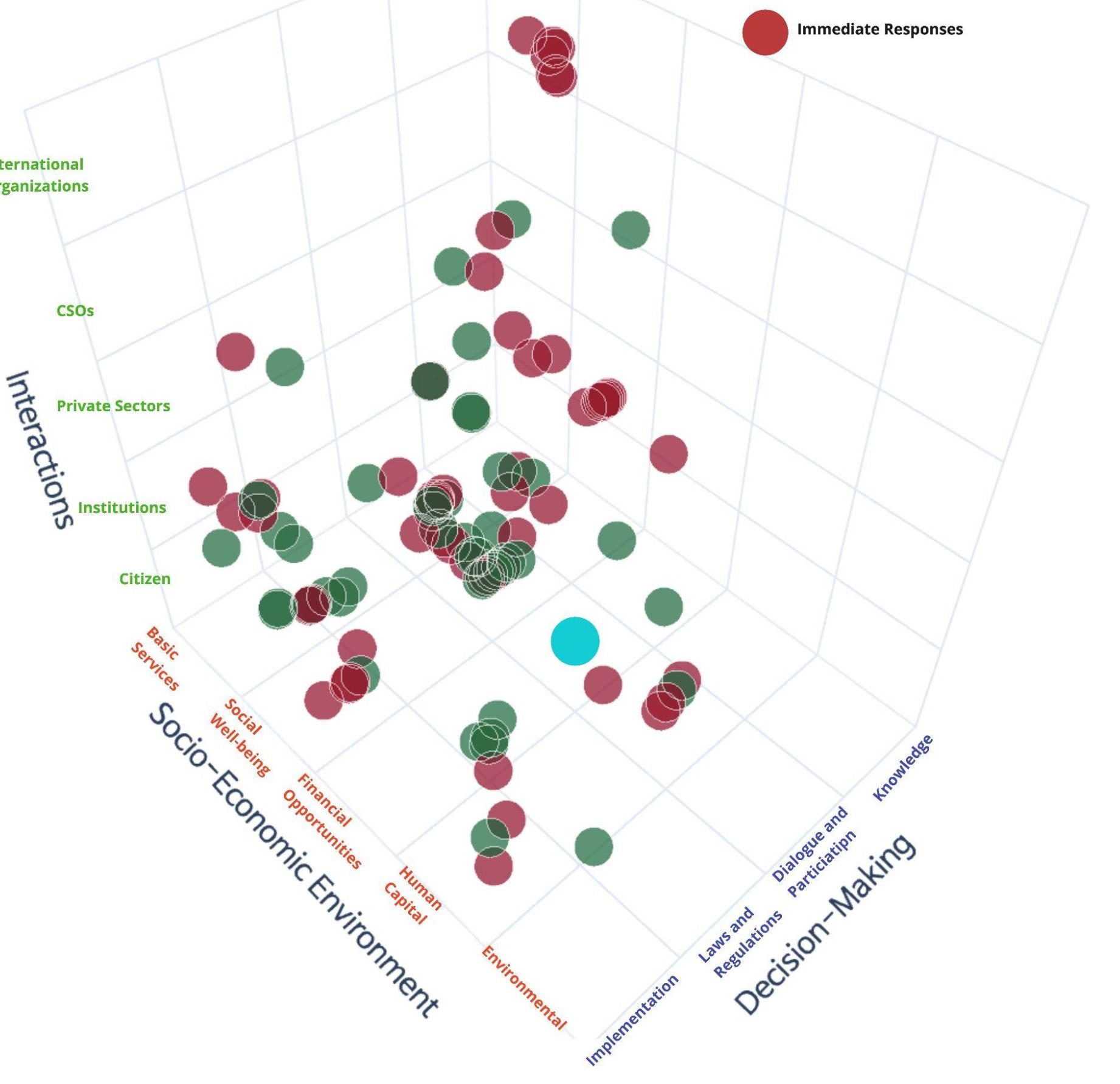
In 2020 UNDP Kosovo* embarked on this pathway to systematically review the immediate and long-term COVID-19 response. This process enabled a better collective understanding current responses and new opportunities for future programming. New opportunities were identified, including economic empowerment, private sector involvement in the green economy and capability development towards a more resilient health system. Since then, the office has continued to use the approach to dynamically manage the Country Programme Document (CPD), which has resulted in the development of a digital transformation portfolio, steps taken towards adopting evidence-based decision-making and identification of new, interdisciplinary entry points, like the environmental-justice nexus as a strategic area.

Position: Reframe and recenter
In addition to mapping existing projects and programmes, country teams that wanted to position delved deeper to identify and design strategic entry points for interventions that would accelerate system transformation around key development challenges. In this pathway, offices and partners reframe issues, examine the broader system, and identify strategic entry points where UNDP and/or its partners bring value.
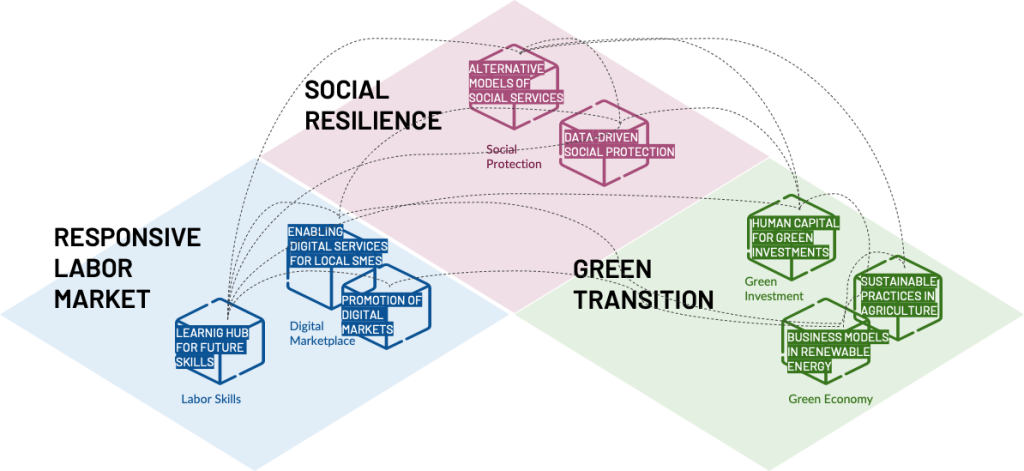
Utilizing the Position pathway tools, UNDP Uzbekistan, together with the regional sustainable development and innovation teams, identified strategic entry points for their Future of Work portfolio. They looked at the conditions, needs, and resources around the work ecosystem, taking into account the impact of COVID-19, climate change, and emerging socio-economic and political factors on the workforce. The Future of Work complements existing country office projects in the area with a set of connected interventions. The three identified areas of interest were a responsive labor market, social resilience and a green transition, whereas entry points included: the promotion of digital markets, data driven social protection and human capital for green investments. The process generated a new value proposition & entry points for programming to accelerate the transition to the future of work. Read about the process here.

Transform
Offices that have taken the pathway Transform, have rethought and expanded the problem definitions, created connections across different projects and programmes, identified activities that are strategic and iterated based on learnings. In our region, Armenia, Serbia, North Macedonia, Kosovo, Uzbekistan and Moldova, amongst others have deployed this process to address emergent challenges like depopulation, urban transformation and circularity. The outcome of running an adaptive portfolio is better harmonization of resources, stronger relevance and evidence towards where to invest for long-term solutions.
In Serbia the UNDP Country Office is tackling depopulation, a complex challenge for which traditional development thinking and single-point interventions would not have worked. The UNDP Serbia team crafted a Portfolio of Options as a way to deconstruct and respond to the driving factors of depopulation, and design integrated solutions holistically. The main task for their portfolio work was to develop a new framing and continue to identify the system leverage points. At the time of writing this blog, data challenges have provided new insights about the nature of population decline, and a multidisciplinary team has been set up in the Prime Minister’s Office to embed the portfolio in government. Read more about the work and journey here.
In Armenia, within the City Experiment Fund, the UNDP Country Office is tackling unemployment and depopulation issues in Stepanavan. The intent (mission) of the portfolio was to retain local talent and attract talent from outside of Sepanavan, which led to a set of interconnected interventions, including the development of an Aviation and IT Learning Center in the city, where the young people of Stepanavan will learn design & operations of Unmanned Aerial Vehicles (drones) and their application in agriculture, forest protection and disaster risk reduction. Amongst other results, the portfolio created excitement among aviation enthusiasts, leading to expression of interest by a Czech company and university for a collaboration and development of an internationally certified programme and is being used as the basis for the five year strategic plan for the city. Read the full story here.
Get in touch
The pathways have a set of tools that are used and adapted based on the context, and show that there is more than one way of approaching systems change. The effects our teams seek is better information sharing, agility, targeted use of resources, supporting local ecosystems and continuous surfacing of new areas worth exploring. UNDP offices and our partners in the region continue to explore how to use these pathways and other tools for higher development effectiveness. Follow our space to hear more about the work of our community on system transformation.
As the practice on portfolio design and adaptive management continues expanding in our region, we’re keen to share, collaborate, learn with and from others in the space. If interested, reach out to us at: innovation.rbec@undp.org or say hi on our Twitter or LinkedIn page.
Special thanks for their leadership, guidance and review to Gerd Trogemann, Niels Knudsen, Doina Mointenau, Irena Cerovic, Tatevik Koloyan and other members of the regional innovation community. The pathways were generated by Andreas Pawelke and Saskia Hermann (formerly at CHORA Foundation), in collaboration with Elina Jarvela, Yaera Chung, Justyna Krol, Aditi Soni and Lejla Sadiku.
This blog reflects UNDP’s work in the region with CHORA Foundation, Agirre Lekhardia Center, Snowcone and other partners working on systems transformation.
When thinking about the future, we often ask who gets to speak for it. But instead, we decided to ask ourselves a different question: who gets to listen? If UNDP is to become an even more agile and anticipatory organisation, listening is the first step towards opening a dialogue about possible futures. We approached this exercise as listening practice, with a two-fold goal: 1) spark enthusiasm about exploring possible futures, and 2) contribute to a shifting understanding of the future: from a distant horizon to an extension of today.
With this in mind, we embarked on a journey to gather insights from a wide range of stakeholders involved in shaping the future of urban development in Eastern Partnership (EaP) countries. Curious about how professionals from the Europe and Central Asia region and international experts talk about the future, we started our Urban Futures Talks series with the following goals:
· to identify needs and gaps in terms of urban development in the EaP region;
· to stimulate individuals’ future-oriented thinking and spark enthusiasm around engaging in future conversations;
· to identify conflicting/complementary views about the urban futures in the region.
How and for whom?
After identifying relevant urban experts with the help of our colleagues from UNDP country offices, we prepared a set of future-oriented questions set in 2050. We looked at what makes people hopeful and fearful about urban life in the region, we asked about key trends that could either hinder or accelerate urban development in the upcoming 30 years, and we searched for the hidden sides of development, trying to unveil overlooked trends and patterns.
While UNDP Europe and Central Asia has several initiatives related to urban transformation, our initial exploratory research is meant to support the Mayors for Economic Growth (M4EG) facility. M4EG is a joint EU & UNDP initiative, seeking to address complex development issues in secondary cities in EaP countries.
Over the course of several months, we talked with 27 experts varying in: age (from 23 to 60+), gender (men and women), professions (private and public sector, academia, CSO) and nationality (Armenia, Georgia, Moldova, Ukraine, and international experts). We extrapolated a wide variety of insights, which included key concerns about: ageing population, rural-urban divide, national security, outmigration, the lack of green spaces and affordable housing, digitalization, and poor urban planning. Au contraire, experts also expressed hope about mobility alternatives, emerging tech businesses, urban activism and the youth mindset, city branding and decentralization.
The following selection of recurring issues should be regarded as a glimpse into the conversations that we had, not as their representation.
Shrinking cities
Shrinkage is the defining attribute of secondary cities in the post-Soviet space. Yet the phenomenon is neither new nor peculiar to this region. Despite having a common past where massive urbanization was driven by a particular industry that dictated the spatial distribution of the population, following the dissolution of the USSR, the situation of urban configurations has been context-driven, depending on several factors such as political willingness, education opportunities and more.
During the interviews, architects, activists, scholars, and civil servants acknowledged that shrinking cities is a prevalent urbanization challenge for EaP countries. When asked about the year 2050, a Georgian architect wondered if “secondary cities would even still exist and if so, how would they look like?”
The urban downturn in the region is partly the consequence of demographic decline (outmigration/immigration and falling fertility rates), combined with the story of monotowns who have lost their key economic function and could not reinvent themselves. While shrinking cities are already a reality, the phenomenon is expected to grow. The experts we interviewed expressed concerns about the implications for the physical infrastructure of the cities and their social fabric. Economic factors were still the leading cause of the shrinkage, but economic downturn never comes alone. A series of self-reinforcing and interrelated effects such as the loss of skilled workers, decreased capacity of the city’s administration, worsening quality of public services and a negative image of the city, have made the present situation of secondary cities seem hopeless.
Shrinking cities cannot be understood outside the larger context of growing urbanization affecting the region. If secondary cities struggle to find their ‘lost identity’, big urban centers continue to grow, and attract and retain talent. Highly qualified people leave smaller cities or the country for better opportunities abroad, while villages continue to shrink, exposing painful realities – a growing ageing population left without a proper care infrastructure.
What was surprising though was to hear a lot about planning for the decline instead of trying to overturn the trend. We imagined that we would hear about shrinking cities as an opportunity for growth or a threat to the quality of life. Instead, our interviewees did not perceive this phenomenon as a problem that needed fixing or even less so as a chance for growth. Rather, they described it as a new reality to be acknowledged and accepted.
In terms of solutions, we heard about complementary, even contradictory strategies – repurposing vs rightsizing existing infrastructure, developing a new city identity vs working around the existing one, and focusing on attracting those who left vs focusing on attracting newcomers.
Regardless of the policies to be pursued, what emerged was the need to view shrinkage at a different scale – not as an isolated urban challenge but as a regional one. If we consider the development of a region holistically (both rural and urban areas), what implications does this have for the shrinking of certain cities? What type of ‘shrinking governance’ would a territorial rebalancing imply? What kind of networks of knowledge, institutions and policies are needed to create a support system beyond individual shrinking cities? We don’t have the answers to these questions, but the pandemic has shown us that alternatives exist. Some people were willing to go back and work remotely, others reconsidered where they would want to live or raise their kids, and all of us realized that no structure, system or advancement could be taken for granted.
Tech & digitalization: The potential and risk
Urban environments are often associated with science positivism and tech utopianism. In this context, we were curious to learn about what technology could bring to the 2050 cities.
Technology and digitalization inevitably came into the discussion on the future of cities in the region. Urban development cannot overlook the importance of technology, its application, and its consequences. Now more than ever, emerging technologies impact businesses and politics, policymaking and individual lives.
Although the interviewed experts talked about technology and digitalization from vastly different perspectives, they did not necessarily link it to the urban context. They acknowledged its potential for growing economies and boosting businesses – with a special emphasis on the role of ICT on urban development. Technology has also been particularly helpful during the pandemic; thanks to low-touch economy initiatives, people managed to rethink their businesses and work from home, and education at all levels continued despite restrictions. All these merits of technology further revealed how the digital divide can affect different social groups, exposing some of the pervasive inequalities of the 21st century. Technology allows information to flow, research to spread and people to connect and exchange ideas, so it is undeniably a drive for innovation, as some of our experts (both locals and internationals) rightfully observed. In particular, younger interviewees stressed tech’s potential to diversify economies, bridge the gender divide, and counter other kinds of social injustice.
But tech’s utility and constructive potential can also be limited for a series of reasons, and for others, it can also be damaging and represent a threat. Cybersecurity is a fundamental issue at both public and private levels. For example, in relation to data privacy, what do businesses do with collected data? What are the ethics behind it? While in the EU, the GDPR ensures some protection and accountability for users, the digital world is much more unregulated in the EaP countries. These concerns affect a wide range of issues from children’s rights and safety to data privacy and freedom of expression online.
“Technology and digitalization are taken for granted to be green, but are they?” rightfully wondered a couple of interviewees. On the one hand, digital technologies can offer innovative solutions to complex environmental problems. Apps, blockchain, and AI technologies could, for example, help to address food waste and boost recycling, which might positively impact urban lives. Yet technologies come with their own environmental cost. To solve this issue; it would be essential to strengthen the global governance on data and technology. In fact, according to a 2019 study by The Shift Project, a French think tank, the world’s collective digital carbon footprint accounted for nearly 3.7% of all greenhouse emissions, which is comparable to aviation industry emissions. What is more, digital technology’s energy consumption increased by almost 70% between 2013 and 2020. So, while digital technologies contribute to designing solutions for more sustainable consumption and production, environmental and knowledge management, their carbon footprint should not be underestimated. Technology and digitalization are double-edged swords and to be used in our favour, they need to be harnessed appropriately.
Often what is omitted from an interview can paint a powerful picture. While inequality and social justice can be addressed through the use of technology, little was mentioned about its inherent biases and what is needed for efficient and equitable use of tech. In fact, today, technologies are strongly shaped by an able straight white man’s perspective. So many are the studies proving technology’s detrimental biases, which often negatively affect women, people of colour and other marginalised communities. More inclusive tech education and a bigger collection of disaggregated data (by gender and race for example, although this too carries its own ethical conundrums) is, therefore, a must in order to understand how tech affects different communities or to understand their needs. It is essential to analyze all the good and bad sides of technology in order to apply it ethically and efficiently address urban challenges. Furthermore, the provocation remains how to use urban tech more for social good and less for profit. If the cities of the future want to be sustainable, they need first and foremost to be just and green, and going digital should only enable not hinder that prospective.
Climate change and environment
While some of our interviewees talked about climate change and the consequent environmental transformations as an opportunity for people to pursue further education, major innovation to take place and behavior to change, the concern is certainly not center stage. One of our experts noted the low interest and will to change among older generations, which was also reflected in the interviews with older practitioners.
Changes in temperatures and the environment in all countries in the EaP region are underway, but how much are urban planning and policy-making taking these significant changes into account? While there are extensive scientific research and evidence concerning the risk, and some efforts are being made internationally: from commitment to SDGs to the Paris Agreement, lots more need to be done. From an urban perspective, social, public and personal decisions generated as consequences of climate change are expected. Environmentally conscious people may, for instance, privilege low-emission and zero-emission transport or quit eating meat and dairy. But what will their government push for? Will the EaP cities be ready for a shift in urban mobility? Will public transport receive the funding, or will people have to recur to personal bicycles and scooters? Mobility will also be affected by the jobs people do. If you could work from home, there could be a reduction in the need for mobility in general and a consequent reduction in emissions. A lot of our experts, in fact, mentioned mobility, from public to private transport, as an issue concerning climate change and the environment.
Some comments and insights we were expecting to hear weren’t brought up. No one addressed the link between migration and environmental crisis. While the EaP countries have perhaps not been impacted as much by it yet, the situation is likely to change in the future, and along with humanitarian issues, consequent security and international relations dynamics might be expected to change.
Furthermore, the relationship between the economy, in a broader sense, and climate change was very much overlooked. Mainly women and young people talked about climate and the environment, and women, in particular, addressed it as a matter of social justice. Unsurprisingly, according to a 2019 study, a higher number of women in parliament correlates with the adoption of climate change policies, resulting in a reduction in emissions. At the local level, women’s participation in natural resource management is linked with better resource management and sounder conservation outcomes. Climate talks will be unsuccessful without women and young people’s voices, and urban development risks failing its beneficiaries if it doesn’t look at environmental issues through the lens of diversity and “the future” as an everlasting order of the day.
Conclusions, observations and limitations
The future is inherently uncertain and even more so in unstable times (war in Ukraine, fear of war in Moldova and Georgia, recent war in Armenia). To unlock transformational potential – or at least the capacity to imagine the future – requires a sense of safety and stability. According to one of our interviewees from Ukraine, talking about the future requires being grounded in the present and having essential needs met, hence the difficulty to have these conversations with people from the region who still struggle with existential concerns.
Yet , no other region has experienced such severe depopulation, economic downturn and political instability in peace time. As a result, there is incredible resilience, perseverance and determination that characterize this region which gives hope and a sense of confidence in a better future. Overall, there was a sense of antifragility and faith in the human capacity to innovate despite the odds which confirmed to us that in a complex world, cities are the right locus to begin transformational change.
Engaging in conversations about the future can be a powerful tool, yet there is a need for complementary efforts to achieve a more robust vision of our possible futures. Considering our own biases and assumptions that are relevant only from today’s perspective is the first step to having an honest discussion. Despite numerous limitations, these conversations played an important part in developing our own understanding of what speaks to others, what drives people’s sense of hope and fear, and what type of incentives, knowledge networks and processes are needed to support desired systemic changes.
However, what remains to be improved is supporting a learning culture within and outside the organization to be able to adapt to our fast-changing world, decolonizing capacity building by bringing different forms of knowledge and sources of insights into the process, and finally supporting shared ownership. As we have seen in other regions, lasting change happens only if it is grounded in the local ecosystem and embedded in the conviction of local actors to address it, so we need to get better at incentivizing for systemic transformation and make our offer more demand-driven.
Following these conversations, the questions that still remain are more important than the answers that we have. We still wonder: What does it take to design anticipatory interventions and strategies? What’s the role of conversations about the future in imagining what tomorrow might look like? What capabilities are required to imagine the future and to make policies that are relevant across different possible futures? How to cultivate richer imaginations, deeper understanding of human experience and stimulate bolder endeavours in the extraordinary times we live in? We will keep searching for answers and asking difficult questions, deliberately creating space for these types of conversations to continue to happen.
Photo by CHUTTERSNAP on Unsplash
This blog kicks off a series on the joint portfolio design process by UNDP Uzbekistan, facilitated by the Accelerator Lab Uzbekistan and led by the UNDP RBEC Innovation Team. The process includes several steps. In the first blog, we cover the initial stage – the Problem phase. Thank you to Elina Jarvela, Yaera Chung, and Lejla Sadiku from UNDP Istanbul Regional Hub’s Innovation Team for their continued support and guidance.
Portfolio Approach and the Future of Work for Uzbekistan
We are currently observing the start of a shift across UNDP towards the experimentation with and adoption of systems thinking as an approach across diverse geographical and thematic domains. Systems thinking stems from an attempt to understand and solve scientific problems, which require looking at separate elements as interrelated parts of an eco(system). Now, it is also proving to be an apt tool to rethink development in the face of increasing complexity and uncertainty of the problems and their context.
Currently, in international development, projects are mainly a standalone undertaking, despite being formally nested under an overarching programme. But decades of project implementation have shown us the writing on the wall: “Projects don’t change systems”. Many of the challenges faced by development organizations now require transforming the systems within which they operate and which they hope to impact. In this context, business as usual doesn’t work anymore. Hence UNDP Uzbekistan joined other pioneers in portfolio practice – from Burundi to Serbia – in exploring and adopting portfolio design within the organization.
Our choice of designing a forward-looking, employment-centered Future of Work portfolio for UNDP Uzbekistan was determined by the increasing importance of employment issues in the country, the potential development opportunities, and the positioning of UNDP in this space. About half a million youth enter the labor market in Uzbekistan each year, with about a 5% annual increase. These trends will likely continue in the mid-term perspective. They may exacerbate existing risks in the backdrop of environmental challenges, the spread of technologies, and other socio-political factors. Or on the contrary, they can also be leveraged to transform labor markets, social resilience, and growth strategies for a better future.
Methodology and Set-up
Our portfolio design process adopted and re-designed the Agora methodology, a system transformation tool co-developed with UNDP Istanbul Regional Hub (IRH) and the Chora Foundation, to fit the context of our work. Initially designed for an urban pandemic response and renewal context, Agora was adapted for our needs, building on the methodology’s focus to facilitate strategic understanding and planning, coupled with non-linear thinking.
To run the process, we set up a core team which consisted of the Accelerator Lab and representatives from various programme units and projects. The Problem phase started with an online introductory session on portfolio thinking, followed by coordination meetings, desk research (e.g., stakeholder mapping, literature review, collecting observations), in-depth interviews, consultations with colleagues from other countries, and a series of workshops to consolidate our findings.
The Process Overview
During the Problem phase, we explored what, how and why the problem manifests in the system and how we can intervene in the continually changing Future of Work space.
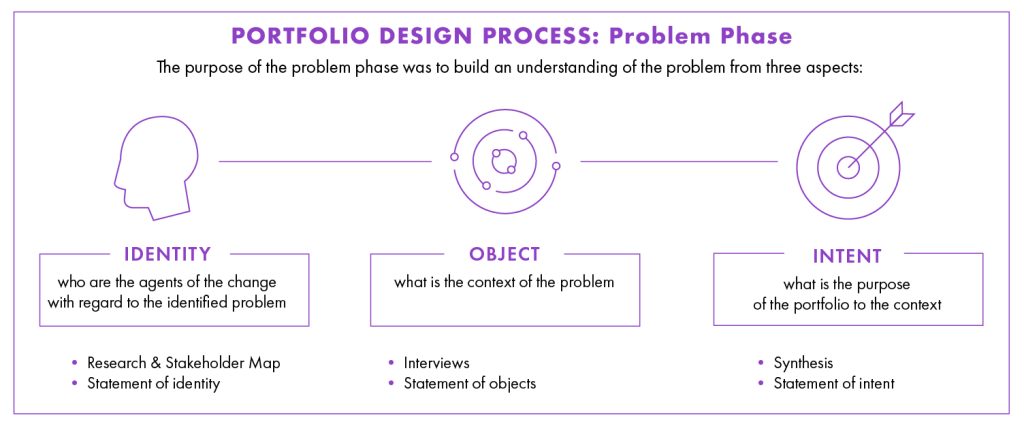
The team focused on exploring these questions through desk research and interviews, sharing and rendering the findings during the workshops. We conducted desk research on the following eight distinctive topics to understand the system structures and dynamics in Uzbekistan:
- Systemic risks and resilience
- Enabling conditions and policy factors
- Resources and capabilities
- Emerging trends and drivers for work
- Decision-making process for job opportunities
- Demographic analysis
- Work environment
- Green jobs
Seven interviews were conducted focusing on identifying the needs, resources, conditions, and intent in the Future of Work ecosystem with key UNDP Uzbekistan staff, university professors, NGO representatives, and entrepreneurs.
To consolidate the findings, identify dynamics, and map linkages at this stage, we organized several check-in and rendering workshops with the participation of the core team and an extended group of country office colleagues.
Positioning: Our Identity in the Future of Work Ecosystem
To apply systems thinking to the portfolio design process for the Future of Work in Uzbekistan, we started by asking the question of who has agency, can act, influence, and represent itself, and has access to networks, resources, and capabilities to make decisions.
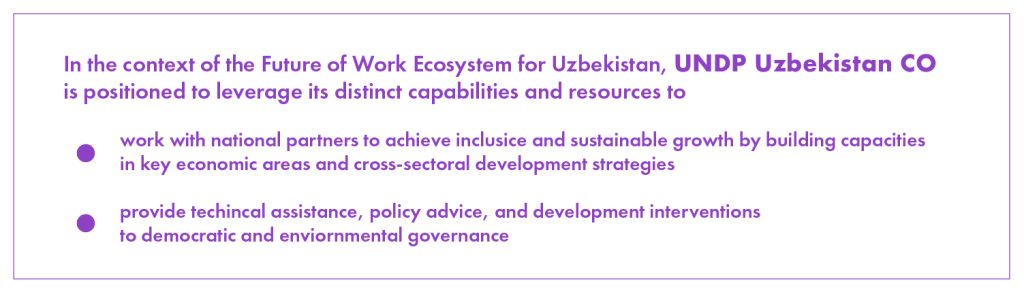
As for UNDP Uzbekistan, we discussed our role in relation to the Future of Work Ecosystem in Uzbekistan and came up with the following description of the ‘identity‘ to identify and describe our position in designing the Future of Work Portfolio in Uzbekistan.
Strategy as a System: The Future of Work Ecosystem as the Object of Our Portfolio
Having formulated the ‘identity‘, we moved onto thinking about the structures, elements, relations, and experiences that form the Future of Work Ecosystem in Uzbekistan. Specifically, we explored the needs, resources, and conditions around the work ecosystem to understand and identify the systemic issues and occurrences with a holistic view.
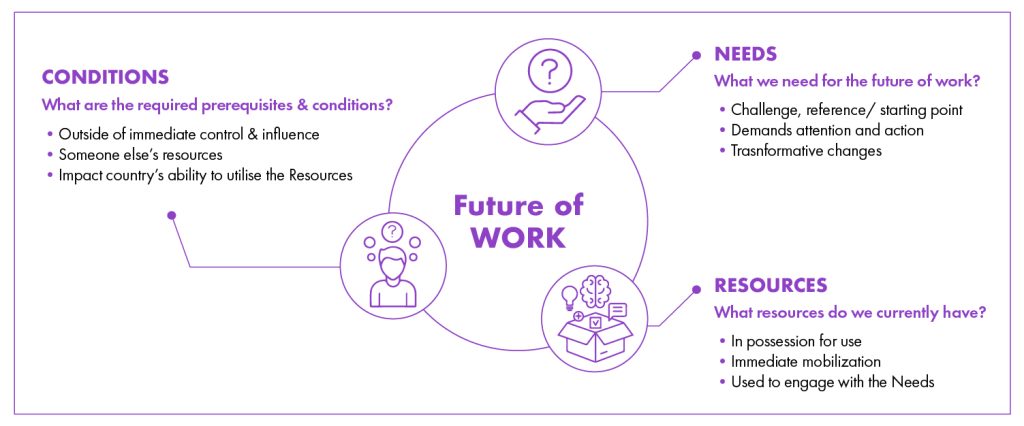
1 / Needs:
We analyzed the country’s needs as a reference point in the context of work and its future that demands the country’s attention and urges its many elements (people, institutions, businesses) to take action.
2/ Resources:
Resources available to Uzbekistan and within its immediate reach that it can bring and combine to answer to and engage with the identified needs.
3/ Conditions:
Defined as structures outside the agency’s immediate control and area of influence. Often conditions refer to someone else’s Resources – they impact and mediate a country’s capability to address its needs and utilize its resources.
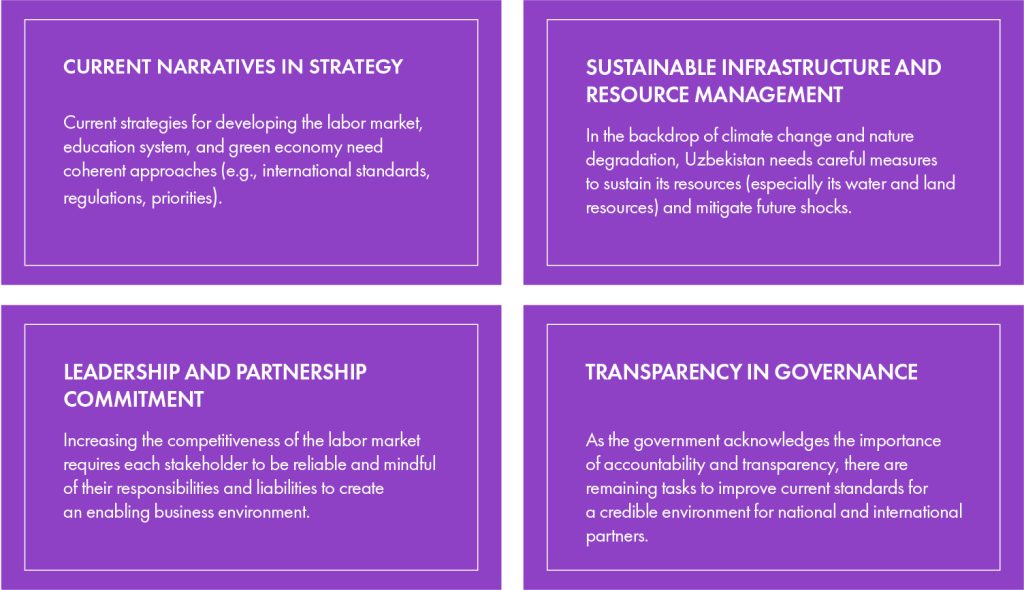
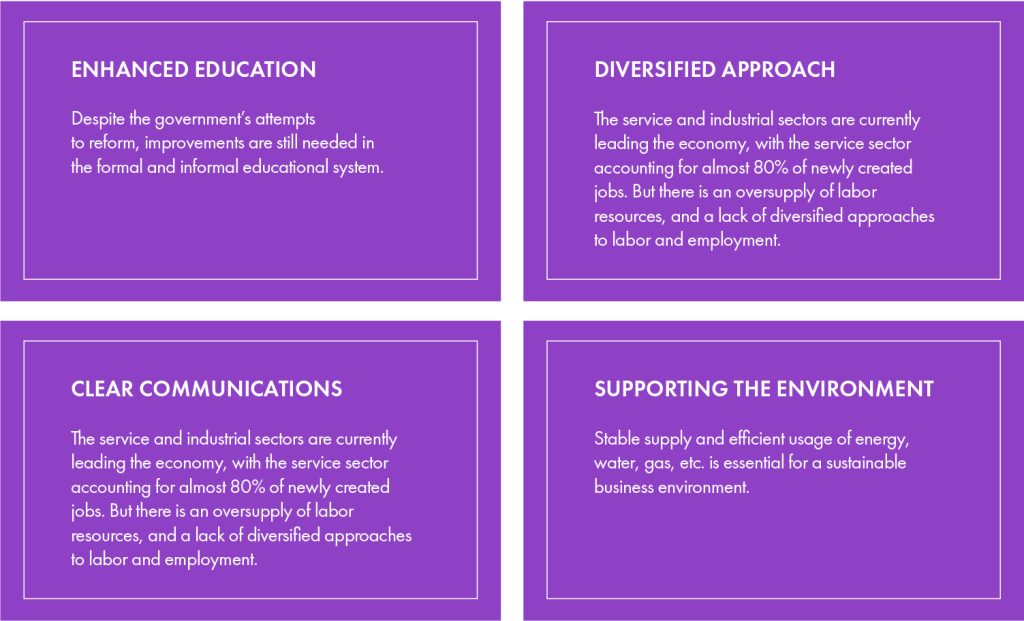
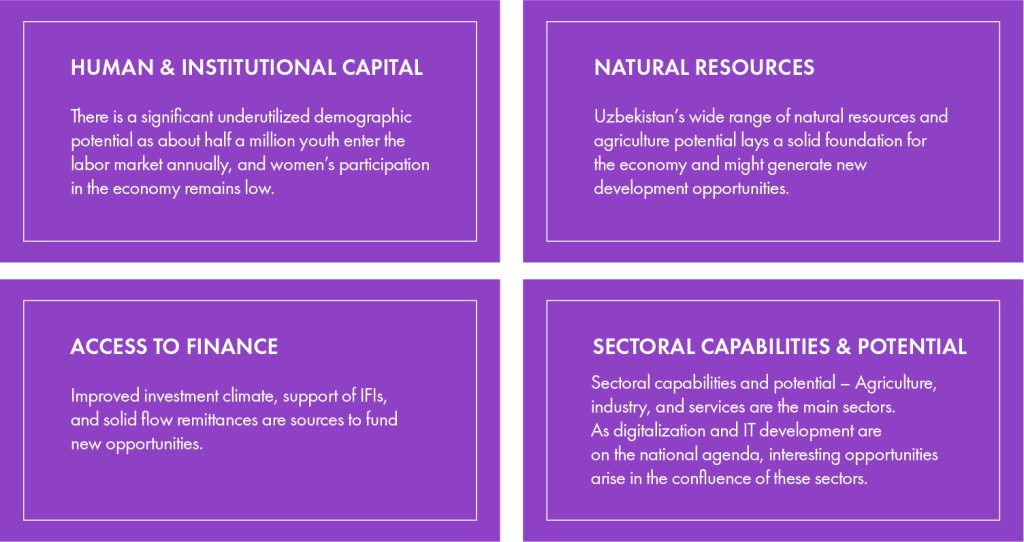
Initial Insights and Our Intent
Analyzing the needs, resources, and conditions allowed us to generate insights about the Future of Work ecosystem and formulate our intent through rendering workshops.
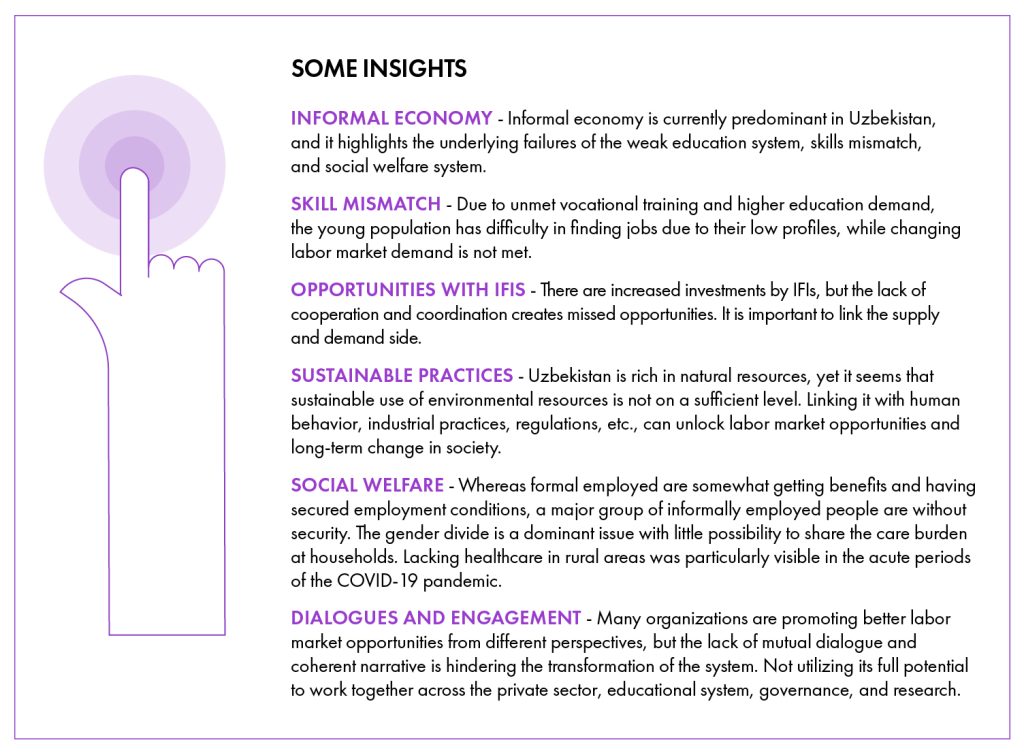
Based on these insights, we were able to formulate our ‘intent’. An ‘intent‘ is a stated determination to design the Portfolio of Discovery and Strategic Option to coherently move towards the outcome sought by an agent. The agent’s identity was defined at the beginning of the process, and the desired outcome is sketched by looking at the needs, resources, and conditions of the system.
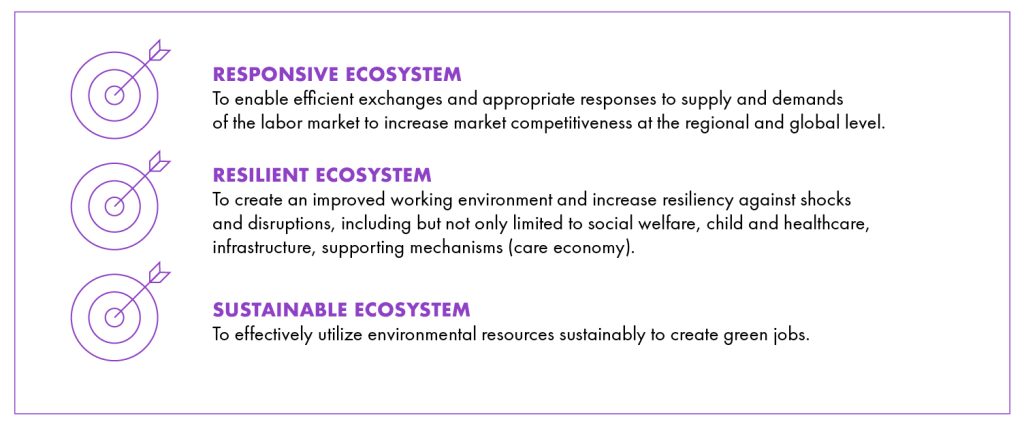
What We Learned From the Process
Embracing systems thinking tools and the portfolio approach requires transforming our institutional culture and individual mindsets. To paraphrase a famous quote: it would be wiser to change ourselves first before changing the world. We believe that interlinked portfolios with interventions that learn from each other will become a ubiquitous tool to address the complexity of the challenges we face. In this view, it is essential to document the learning from running this exercise, which can add to the growing body of knowledge and practice within UNDP offices across the globe. This blog series aims to serve this purpose, both sharing our experience step-by-step and providing context and insights for each step.
To complement the picture, we also want to share some of our learnings from initiating the process and running the Problem phase:
- Strategic guidance and support of the senior management, regional bureaus, and innovation teams are critical. In our case, the process was initiated by the senior management in our country office, which continued supporting and pushing through the following stages. The guidance and facilitation of the Innovation Team at the Istanbul Regional Hub allowed us to apply a suitable methodology and adapt it. They also guided us through the tool’s nuances and helped ensure the robustness and quality of the work.
- Be selective in the choice of the first topic. For the exercise, it is crucial to find a thematic area that has complex and interlinked dynamics, is balanced in terms of programmatic interests, and is aligned with strategic priorities and capabilities. The choice of the Future of Work thematic allowed us to keep the necessary programmatic focus and engage all programme clusters through various dimensions of the topic.
- The tools and methodology are best learned by being part of the process, contributing to the discussion and analysis. In this sense, it is important to ensure the participation of a wider group of programme specialists. It is good to involve a diverse group of people from various levels of the organizational structure and with varying specializations. These early pioneers will become the advocates of the changes and focal points in further applying the tool.
- When exploring the problem, valuable insights may come from the most unexpected sources. Look for unusual perspectives. In our case, we tapped into the experience and expertise of the NGO community, academia, and entrepreneurs, which allowed us to discover fresh viewpoints and new insights to complete the whole picture.
- From the very beginning, try to set out a holistic roadmap and manage expectations (both short- and long-term) with colleagues and partners. The process is sometimes complex, and, in the beginning, it may seem redundant or void of immediate practicality. Frame the understanding that the puzzle pieces will gradually come together (for a whole that is greater than the sum of the parts) as you proceed.
- If it is the first portfolio design exercise, meticulous documentation of the whole process will help to institutionalize the learning experience. Step-by-step reports, recordings, file repositories, saving online or offline work boards, interview notes, meeting minutes, etc., will help you enhance the learning process and your ability to replicate or modify the process in the future.
Next Stage: Solutions
Crystallizing the Intent laid the foundation to proceed to the next – Solution Stage. In the solution phase, we built our hypothesis based on our understanding of the ecosystem and identified the areas of interest relevant to the intent. Then we moved on to looking at specific areas to design strategic options by looking into existing UNDP initiatives and projects and other national and international initiatives to create coherent and connected sets of intervention options for a portfolio. Our next blog will cover this phase in detail.
Muzaffar Tilavov is Head of Exploration at UNDP Uzbekistan Accelerator Lab. You can reach him by email: muzaffar.tilavov@undp.org or via Twitter: @mtilavov
Supporting cities to take a more complexity-informed approach to urban challenges.
The United Nations Development Programme (UNDP) and the Centre for Public Impact (CPI) have kicked off the Urban Imaginaries programme. Urban Imaginaries is a new ten-month initiative that will support cities across the Eastern Partnership to develop solutions to their most pressing urban and local challenges.
Urban Imaginaries is part of the joint EU & UNDP Mayors for Economic Growth (M4EG) Facility, an EU-funded initiative that promotes inclusive economic growth and innovation in the Eastern Partnership countries. The M4EG network began in 2017 with more than 300 Mayors as members. The current phase is led by UNDP (2021-2024) in close partnership with the EU offices and with the intention to build the capabilities of local authorities to use innovative methods toward just and green development.
CPI is working alongside UNDP to design and implement the Urban Imaginaries programme. The programme will strengthen the innovation capabilities of mayors and city leaders in nine cities across Armenia, Georgia, and Moldova, equipping them with the skills needed to develop initiatives that reimagine or reinvent key aspects of local living.
Cities will receive training and exposure to complexity-informed approaches and frameworks such as design thinking, futures and foresight, systems thinking, and many more. They will then be supported to design place-based solutions across a wide range of issues, including economic development, tourism, and agriculture. Funding of up to EU 60,000 will be available for interventions that have the potential to become catalysts for wider system transformation while contributing to the promotion of sustainable development in the region.
The joint EU&UNDP initiative, Mayors for Economic Growth, is an invitation to change the way we work and move beyond business as usual. The Urban Imaginaries programme allows local governments to test new mindsets and tools for positive change in their towns, cities and communities. We are happy to partner with CPI as a thought leader around re-thinking local governance and building the municipalities’ as well as our own capabilities as learning organizations. CPI’s hands-on work with towns and cities around the world is most valuable here and we are excited to see already tangible results and learning that can be shared across the EaP network and beyond.
Gerd Trogemann, Istanbul Regional Hub, Bureau for Europe and the CIS, UNDP
Note: We recognise the dramatic consequences of the Russian invasion of Ukraine and the refugee crisis in neighbouring Moldova. As a regional initiative, a key focus for the M4EG will be to support Ukraine and Moldova in this rapidly changing crisis situation, while focusing on enhancing the resilience of the other Eastern Partnership countries, which is more important and more relevant than ever.
- For more information on the Urban Imaginaries programme, please visit: www.centreforpublicimpact.org/europe/urban-imaginaries
- For more information on the innovation work of UNDP in the Eurasia region, please visit: https://innovation.eurasia.undp.org/
- For more information on CPI, please visit: https://www.centreforpublicimpact.org/
Reposted from UNDP Europe and Central Asia.
I am standing on a podium in Baku, Azerbaijan, in front of 46 city Mayors, gathered together from all corners of the country. There is a sense of optimism and drive in the air – a desire for novelty and moving beyond business as usual. At the same time, on the other side of the Eastern Partnership, a meaningless war rages on in Ukraine – it’s second month in. It is within this context, with much sadness and optimism, that we begin our journey, a journey that seeks to expand options for local decision makers in a highly uncertain world. It is an invitation to change in a rapidly changing world.
“Our city is not afraid
of taking risks”
City of Rustavi, Georgia,
Member of the M4EG network
The EU & UNDP initiative, Mayors for Economic Growth (M4EG), explores new trajectories of growth and reimagining cities across the Eastern Partnership. With a network of more than 300 towns and cities in Armenia, Azerbaijan, Georgia, Moldova, and Ukraine, the initiative will onboard a cohort of more than 30 members in 2022 to start a mentoring and seed-fund journey to explore what ‘revitalization’ could imply within their contexts.
Human settlements are unruly things. Organic and non-linear. There is a growing realization that there are no clear-cut solutions for planning and delivering economic prosperity, and attracting people and investment. The cities and towns in the EaP are no exception. Many struggle with dilapidated and antiquated industries, lack financial resources, and the need to re-thinking economic development.
For example, the city team in Rustavi, Georgia, which joined the M4EG network and is now part of the programme called Urban Imaginaries – reimagining life in the city, stressed that real societal change calls for a shift in attitude and skills, with a need to mobilize the entire municipality. But before the skills comes the mindset, of moving beyond a controlling approach of knowing what might happen to creating a space that allows ideas to emerge. It is a brave statement, and one that we are curious to see how we can learn from. Urban Imaginaries is supported by our partner Centre for Public Impact and inspired in part by the City Expert Gabriella Gomez-Mont.
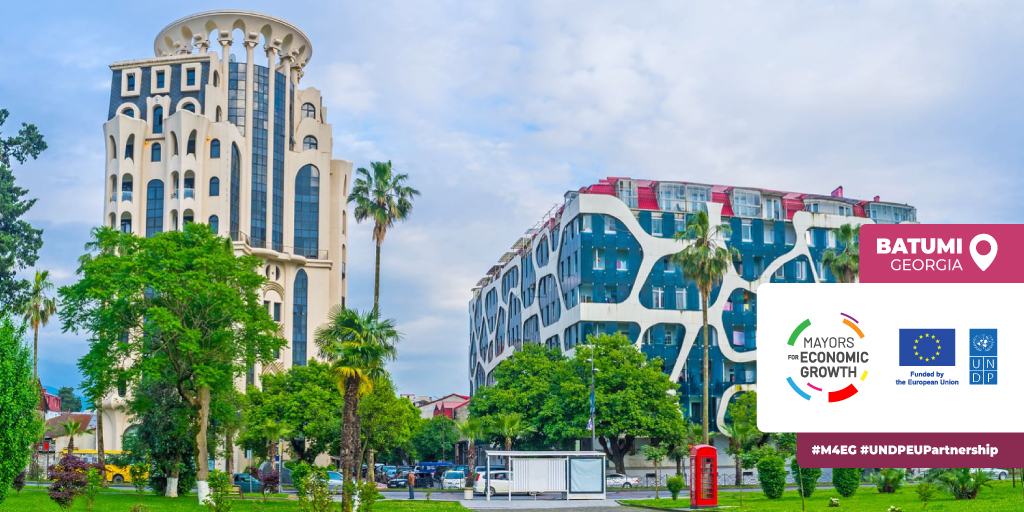
“Our community’s complex
challenges cannot be fixed
by technical solutions alone.”
Charentsavan community, Armenia,
Member of the M4EG network
International development is riddled with ‘technical solutions’, and to some extent, even today, it continues to use a ‘cookie cutter’ approach to crafting ‘solutions’. But transformational change calls for embracing a novel underlying philosophy or narrative that the human world and experience is made up of various interacting systems. To intervene successfully in solving unemployment, for example, we will get better results if we understand systems behavior so as to know how, where and when to intervene. (OECD System Thinking Report, 2020)
Urban changes need vision
Charentsavan, a small city in Armenia, struggles, as most communities, with ‘chronic’ issues. It’s an urban space with close to 20,000 inhabitants and was founded in the 1940s by the Soviet Government to accommodate workers at a nearby hydroelectric power plant. Since then, its economy has largely been defined by heavy industries, and with the dissolution of the Soviet Union many of its industrial plants are now no longer viable. In a M4EG workshop, a Charentsavan representative shared that one key challenge they face is the aesthetics of the city and its attractiveness. With the rise of private construction around the town, the new environment is expanding unaligned to any particular design or vision for the city. There are technical regulations in place, but that can only do so much without a shared vision and plan for the wider community.
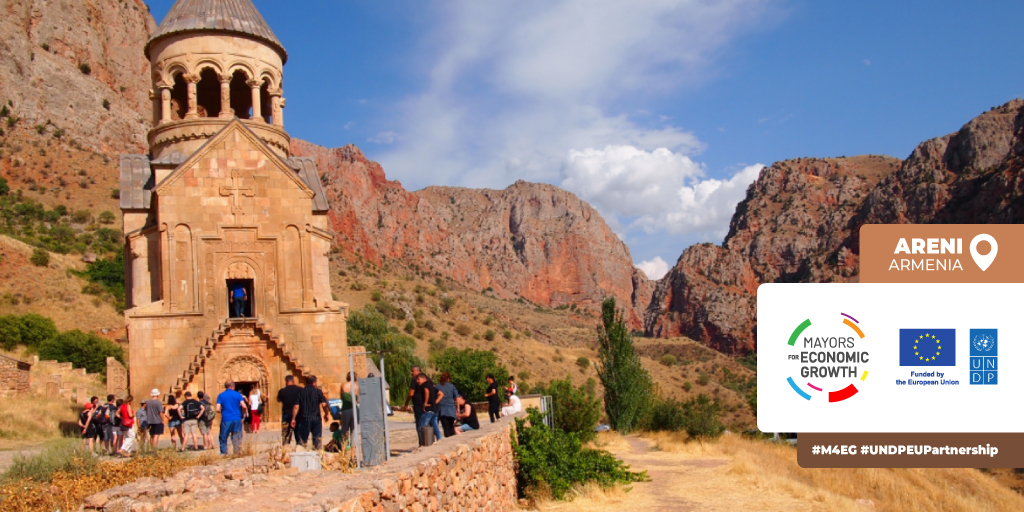
The importance of urban identities
In 2021, 117 members applied to take part in the M4EG learning journey – each place with its unique enabling environment and bottlenecks for positive change. The M4EG applies its specifically designed Urban Makeover concept, where both the tangible elements such as economic sectors and livelihood opportunities are combined with the softer or intangible aspects, taking into account the need for belonging, people’s hopes and dreams of a better future, and the relationships between people and place. Every community, town and city have their own identity and underlying narrative that can help build momentum for change.
“Our city has an identity
we must tap into.”
City of Mykolaiv, Ukraine,
Member of the M4EG network
As I write, the city of Mykolaiv is at the frontlines of the battle in Ukraine. A few weeks before the war, the M4EG team, together with our partner Chora Foundation, facilitated a sensemaking session with the city government as part of the first phase in designing the city’s portfolio for change. Mykolaiv is a port city with a strong identity as a transport and shipbuilding hub on the Black Sea. In the context of the green and digital shift, “brown” industries will have to change including to better protect the strained natural environment around the city, yet the sense of pride in being a ‘marine hub’ and related historical and cultural heritage will have to be part of that ‘solution’, if peace can prevail.
In Khirdalan, a bordering city near the capital, Baku, we sit down with the Mayor, a young and dynamic man, who eagerly shares many ideas on how to create alternative revenue sources for the city, including petitioning the government for collecting a percentage from advertisement costs on billboards in the city. The Mayor wishes to use the M4EG platform to share and collect such ideas from other Mayors and to better position the city to attract additional investment and revenue. As we brainstorm with the Mayor, the idea of creating informal breakfast gatherings among the city leaders in the country materializes – a space for the Mayors to share lessons and help create a stronger narrative that local authorities are indeed closest to citizens and residents’ needs and concerns and can have a larger role to play in supporting the central government’s responsibilities.
“We as city municipalities
lower the burden for
central governments.”
City of Khirdalan, Azerbaijan,
Member of the M4EG network
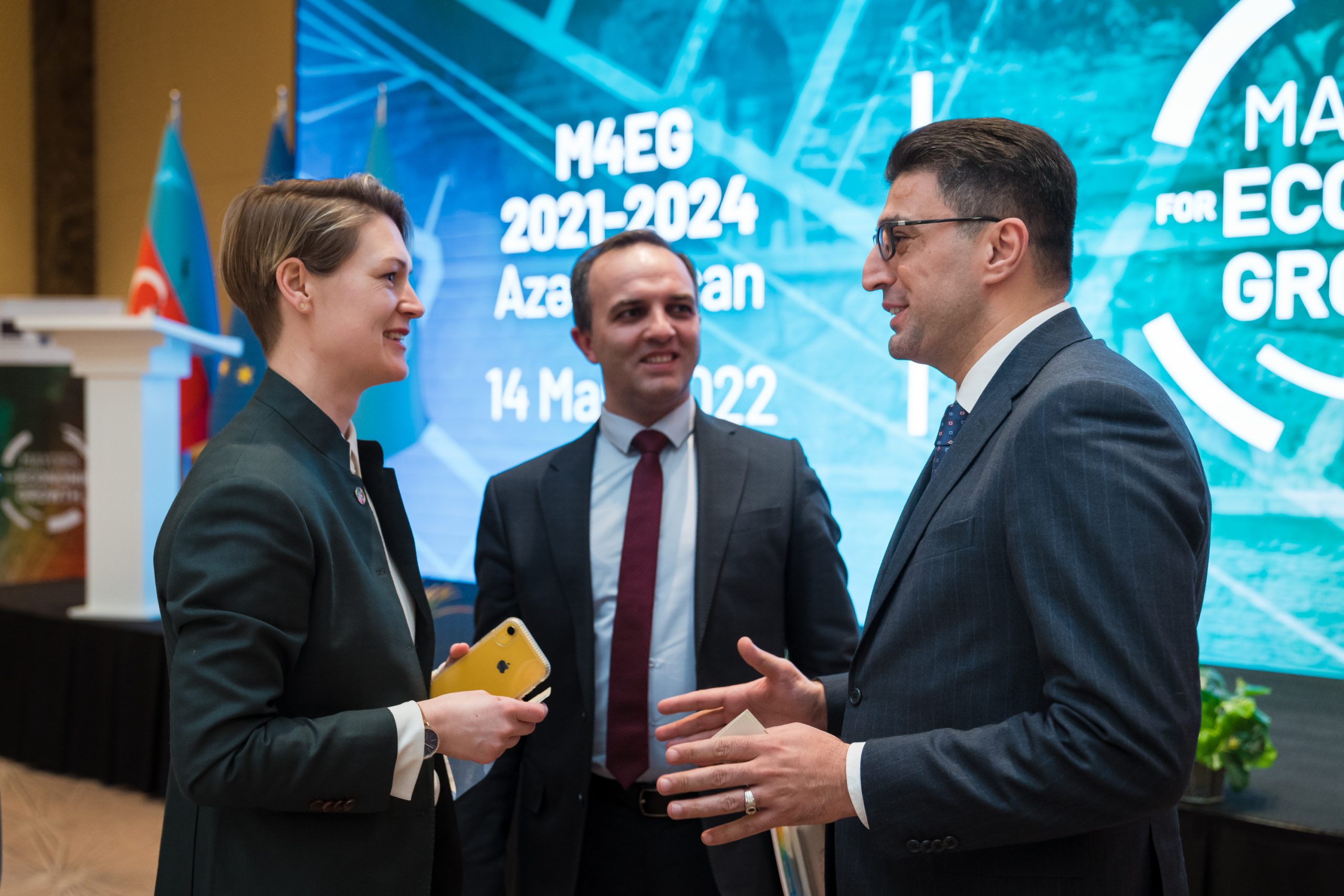
Local authorities are at the forefront of the most pressing challenges faced today
With a high number of refugees coming into Moldova from Ukraine, many of the 45 members of the M4EG network in the country are at the forefront of the refugee response. Moldova’s host communities have quickly and commendably responded to the refugees’ needs, but their capacities and resources are stretched. They will have to adapt to find smart ways to respond to the emerging challenges and linking them to the daily goings-on in their cities and towns, not to mention plans and visions for the future.
It’s a 2,500 km stretch to get from the western part of the Eastern Partnership to its most eastern part, and the interest and demand for re-inventing cities of tomorrow is found all over this route.
Going forward, the M4EG will have to continue building its adaptive muscle to best support the different challenges and realities faced by its members in the Eastern Partnership.
Stay tuned for future intel coming from the Mayors for Economic Growth network and reach out to us if you want to hear more or partner with us (eu.m4eg@undp.org).
In nowadays world immersed in multiple crises and in growing uncertainty, where the situation and dynamics change even on hourly basis, we should all embrace a new mindset, and approach that is agile, quick, adaptive, and systemic to increase our impact and relevance
Under this notion, the cities, forward looking actors of international community that include more than 55% of the world population, have a say, or in fact, can be the pioneers of change, leading the transformation and scaling it to the national level.
Cities are very complex systems with interwoven sectors, interrelated initiatives, stakeholders and relationships. So, how in this fast-paced world, planning can be done with such complex entities as cities? The answer is simple: they need to be “Smart”, not in the sense of only technological advancement, but as new UNDP handbook puts it “have bold vision, be engaging, transparent and stable, build on existing capabilities, learning continuously, be collaborative, inclusive and accessible”.
Well, how can these complex systems achieve the above-mentioned “Smartness”? One of the ways is the portfolio approach; when urban environments are approached through systems lens, thoroughly observed, listened to continuously before & after any intervention in the system. Meanwhile, the approach allows the systems, “to fail fast” and learn from “failure” early in the development where innovation and its impact is less costly but with bigger prospects”.
UNDP Armenia Kolba lab in cooperation with UNDP regional hub and with strong support from Agirre Lehendakaria Center and Chora Foundation embarked on this unknown yet exciting journey of urban transformation by applying the portfolio approach in small city of Stepanavan in the North of Armenia.
The project has identified Stepanavan, a small resort town in Armenia, for its diversity of offerings and potential attraction for talent. A model green city of 2015, an active tourism and recreation spot, the city has recently started looking for more opportunities for development.
All the voices should be heard
First, with the support from regional & Agiree teams, UNDP Armenia team started “listening” to the city dynamics to understand what’s happening and where the citizens of Stepanavan aspire to go. For this purpose, the team used different tools, including urban foresight to ensure that all the voices in the city are heard.
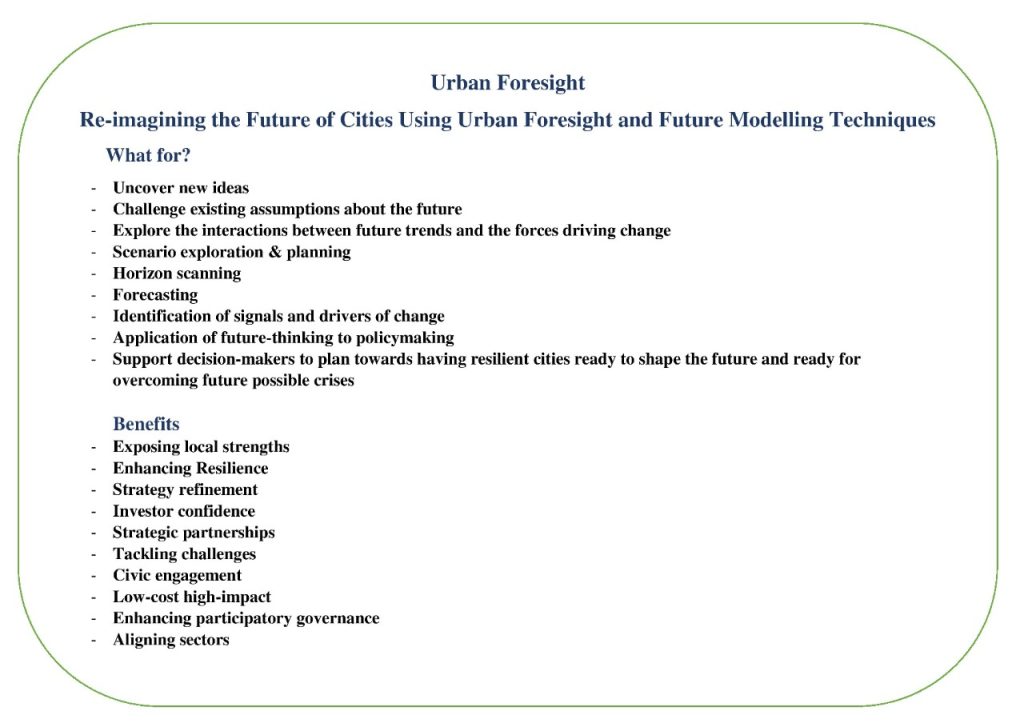
The listening helped us “understand, comprehend” the city; what are city dynamics, barriers, and enablers, divers of change, who are the key stakeholders, actors, and initiatives, what are the relationships between different groups in the system etc. In fact, it turned out that it is largely the relationships, networks and partnerships that make things moving.
Designing the intent for Stepanavan transformation
The listening process was followed by portfolio design process that included sensemaking sessions with the aim to reveal the hidden narratives and metanarratives existing in the city, validate the learnings and find the entry points.
As a result, the initial goal of the project was shifted from initial “talent attraction” to a broader intent for Stepanavan transformation – “bringing back vibrancy” to Stepanavan by:
- leveraging currently existing but under-used resources of the city, its “ripe fruits”
- enabling an image of the city that evolves from only being “a place to rest” to being “a place to live” (and contribute)
- learning how to continuously attract and retain talent (within and outside of the city)
The intent was backed by its eight strongly interrelated positions and several interrelated options; the portfolio team started probing with different but connected interventions at diverse sectors of the city.
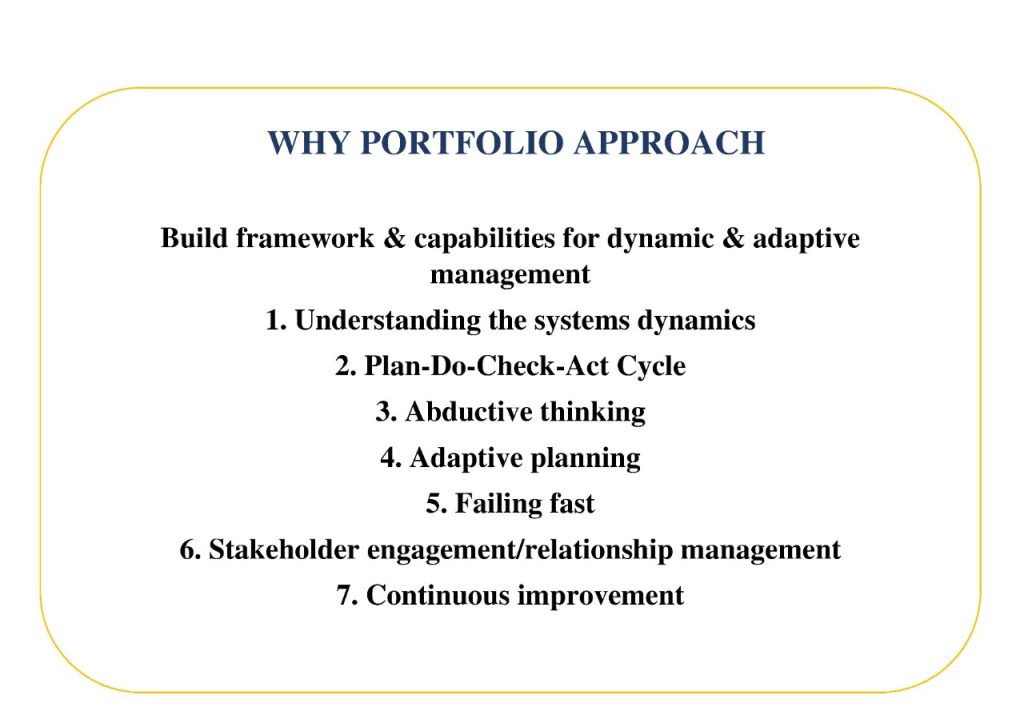
Major challenges in Stepanavan and how we are trying to solve them
Two major problems identified in Stepanavan were the youth emigration and unemployment; the problems the portfolio is trying to address systemically.
First, as the youth and talent are the future of any working system, be it a city, a country, or an organization, our aim was to retain local talent and attract the external talent into Stepanavan by various interrelated probes;
- Enhancing access of local youth to alternative learning and job opportunities. Based on the post COVID-19 trend of increasing “remote operations”, opportunities of remote learning & working were introduced to the local youth, so as they can study in the top universities of the world and work for global markets, without leaving Stepanavan.
- However, the young people do not only need the jobs, but they also need some fun to have after the working day. In the framework of the portfolio several interventions were carried out to bring entertainment into the city: open-air movie & discussion club, revival of city traditional festivals, promotion of sports etc.
- To attract people to Stepanavan, first it was decided to tell the people about Stepanavan, to present Stepanavan with renewed identity, not only a green and cozy place to rest but an ideal place to live and work for remote workers. Stepanavan was put on the digital map through different interventions.
- An experimental internship program was conducted to bring to Stepanavan medical professionals that the city needs so much.
- Finally, for transformative development, an interesting and strategic option was designed and piloted – the citizens of Stepanavan aimed to revive an old, declined industry of aviation through creation of aviation cluster (education, business, infrastructure) in the city. To support the city with the initiative, UNDP together with partners established the Aviation and IT Learning Center in the city, where the young people of Stepanavan will learn design & operations of UAVs to use them in agriculture, forest protection and disaster risk reduction. The Center will serve as a venue for organization of professional development courses as well as social platform for aviation education enthusiasts. A partnership agreement was facilitated by UNDP between Stepanavan municipality, local and external NGOs and academia for sustainable operations of the center.
- Network of change-makers, innovators is formed in the city who already started carrying out dynamic management of the portfolio already without UNDP’s involvement.
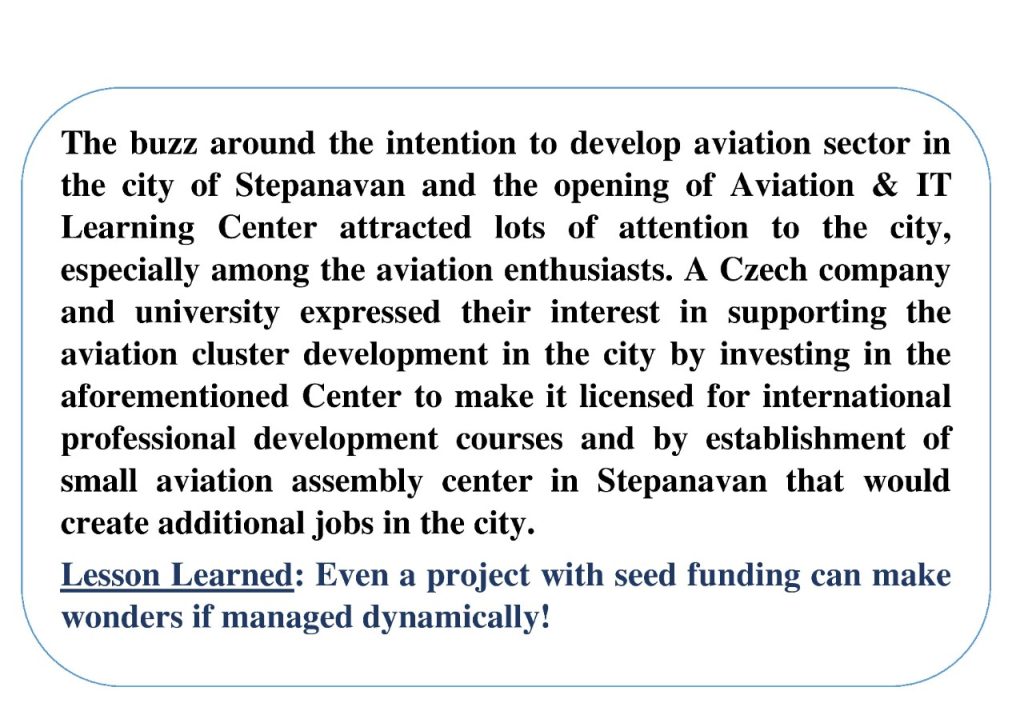
All the above-mentioned interventions, probes serve the same purpose of bringing vibrancy to Stepanavan; we cannot speak about vibrant city without working youth; talent wouldn’t like to remain or come to the city if living in the city is not fun, without development of a major industry the city risks losing its vibrancy during any crises such as COVID-19. Besides, what the probes will bring to the system is largely unknown as they already started having multiplier effects, effects that come on their own based on the initial intervention but going beyond intended output/outcome. The below table shows several of them.
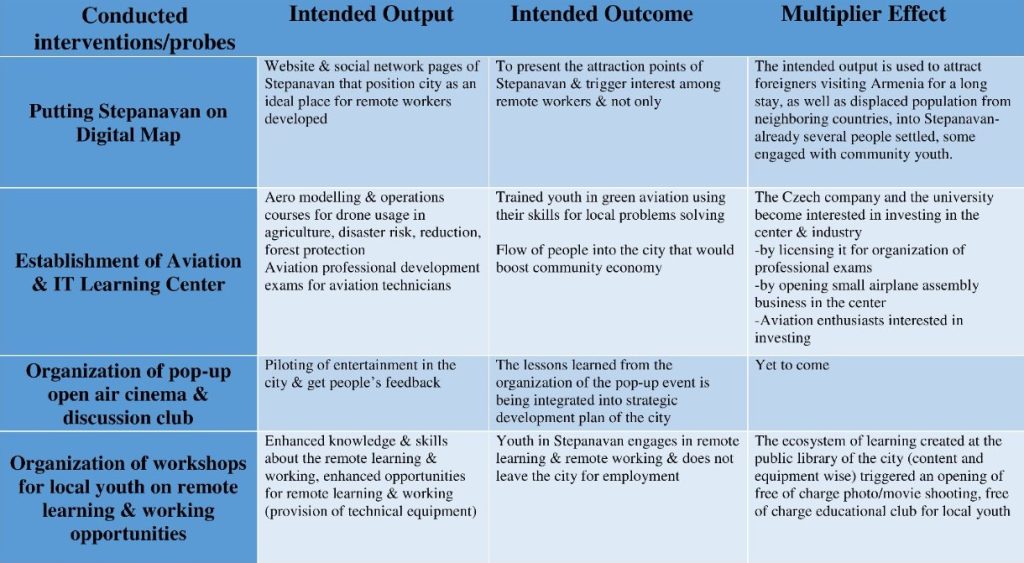
What’s next…
While the portfolio is currently at the stage of learning from the probes, not all the interventions will necessarily be successful. Now the city is in the 2nd iteration of observation, where portfolio team has been engaged in sensemaking sessions to see what went as expected what not, what needs to be changed, what improved etc. This is how iterative development works: continuous learning & continuous improvement.
Currently, UNDP is supporting Stepanavan Municipality to write its 5-year strategic development plan using the designed portfolio as a guide. The process will follow with other iterations of listening, sensemaking & learning & improving…
Let’s follow this challenging but exciting journey of transformation of a small green city of Stepanavan in the north of Armenia, a city with a myriad of challenges but forward looking with determination to achieve sustainable development.
Republished from UNDP Armenia.
If we are to radically transform urban areas to accelerate changes towards sustainability and resilience, enshrined in the 2030 UN Sustainable Development Goals, where do we start? How do we devise interventions that are not one-off and are capable of addressing the complexity and wickedness of development challenges such as poverty, inequality, or climate change? If we are to bring about systemic change, we need a “portfolio” of solutions, rather than assuming that a single project can lead to the desired impact.
In our previous intro blog on Agorà an urban transformation portfolio framework, we shared why and how our journey in exploring urban systems started with the context of the pandemic. The regional Innovation Team at UNDP RBEC spent over eight months researching, designing, and building a framework, which we are now utilizing to support and guide UNDP Country Offices and regional projects in building systems thinking portfolios for urban transformation. [e.g, TGFF Cities Experiment Fund, EU Mayors for Economic Growth Project, Future of Work portfolio in Uzbekistan, and Digital Transformation portfolio in Kosovo[1]]. This blog will explain the framework’s main building blocks and tools.
As an urban system consists of multi-layered complexities and inter-woven relationships, we apply the social systems theory [2] to understand the urban system through the lens of human society and how we communicate within it and its environment. The framework consists of two main phases: 1) the problem phase: unpacking the complex urban system, and 2) the solution phase: designing and implementing activities part of the urban transformation portfolio to learn how to address identified complex challenges. Each phase has three building blocks and it is critical to view it as a process rather than as separate steps that could be mixed and matched. The importance of applying the framework lies with the value of following the whole process from beginning to end since the learning experience occurs iteratively and consistently over time. The insights and identified discoveries during each phase enrich the designing and thinking process of portfolio development.
Here is the process map for each phase with the building blocks explainer taken from Agorà.
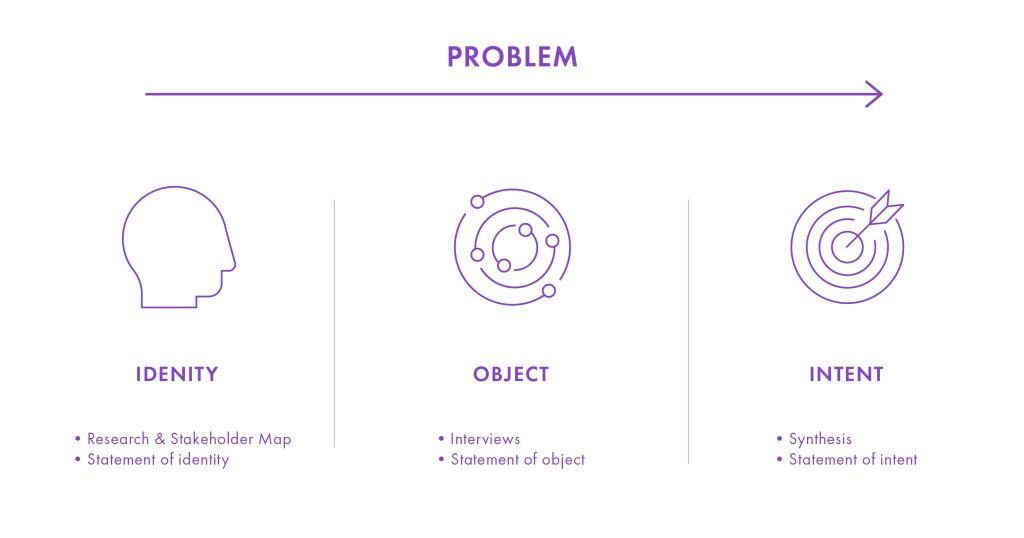
Problem Phase: Unpacking the complex systems
Identity: Within the social systems theory, identity refers to an agent(s) who has the will and capacity to intervene in an identified systemic challenge. In the Agorà framework, we identified the city system as the primary portfolio holder. The city, which has its own will and capacity, has the following features: resources and capabilities to form decisions, a relational fabric of internal and external stakeholders, governance and administrative structures, and willingness to make actions and commitments to its context.
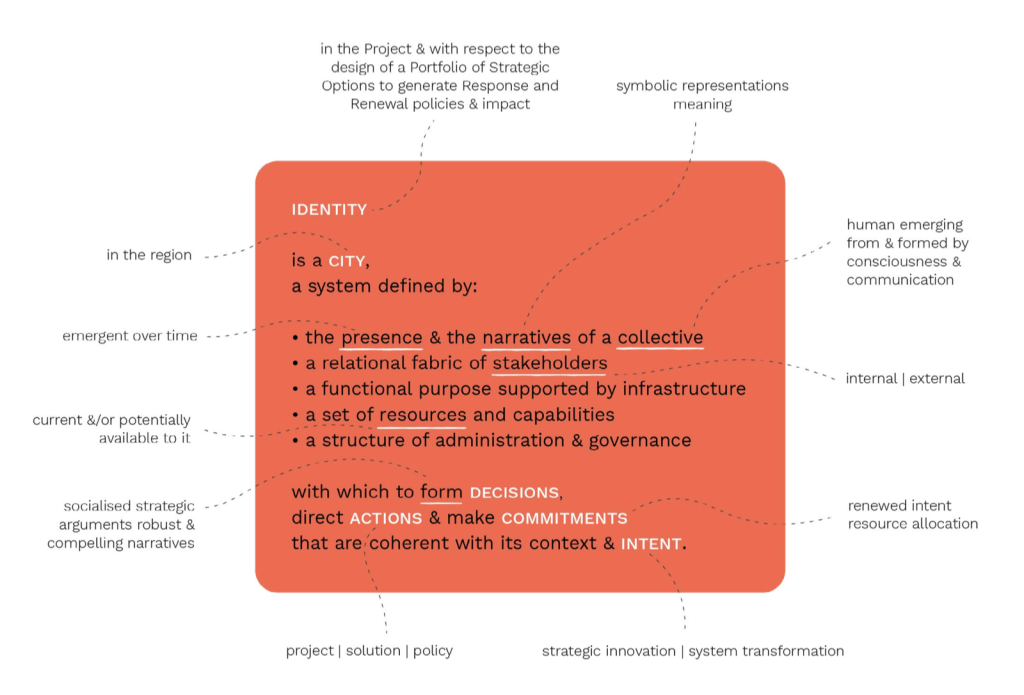
During the problem phase, we aim to understand the identity of the portfolio holder, which includes preliminary research and stakeholder mapping, identifying what distinct capabilities and resources we can bring to the system, and the potential limitations of the portfolio holder.
Object: The object of the urban transformation framework is understanding the landscape of a problem(s) that we want to address and take action to solve with specific intent. In our case, we have identified this to be a city. As the city structure is inter-webbed into a wide range of networks, resources, and functions, we wanted to find our key focus. The process includes carrying out interviews with key stakeholders and actors that we have identified in the system, in an attempt to assess the needs, available resources, enabling conditions, and modes of partnerships. After consolidating the findings from the interviews and our preliminary research, a statement of the object is formed to provide a description of the city.
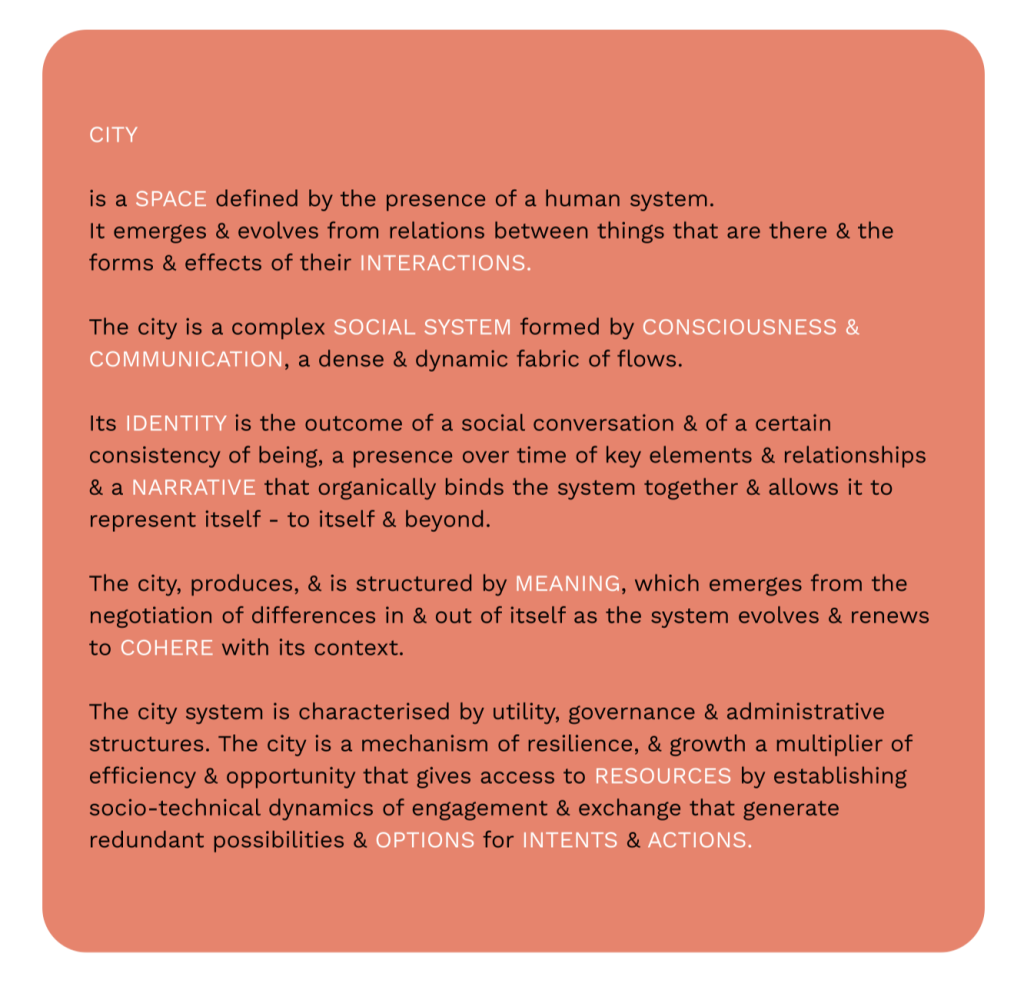
Intent: An intent is a stated determination to allocate resources and develop actions so that the system engages and has commitment to solve an identified issue. The stated intent for the agora is to design, embed, and dynamically manage a coherent portfolio of strategic innovation options to attract resources, develop policies, model actions and induce system-wide propensities and outcomes:
- Response interventions and solutions that ensure the activation of grounded and distributed resilience mechanisms and social immunity, an additional level of protection that will help communities to be more responsive to various types of shocks, including the pandemic.
- Development of socio-technical systems that generate and give access to renewal capabilities, processes, and tools that will support in creating transformative effects of the identified challenge or a system.
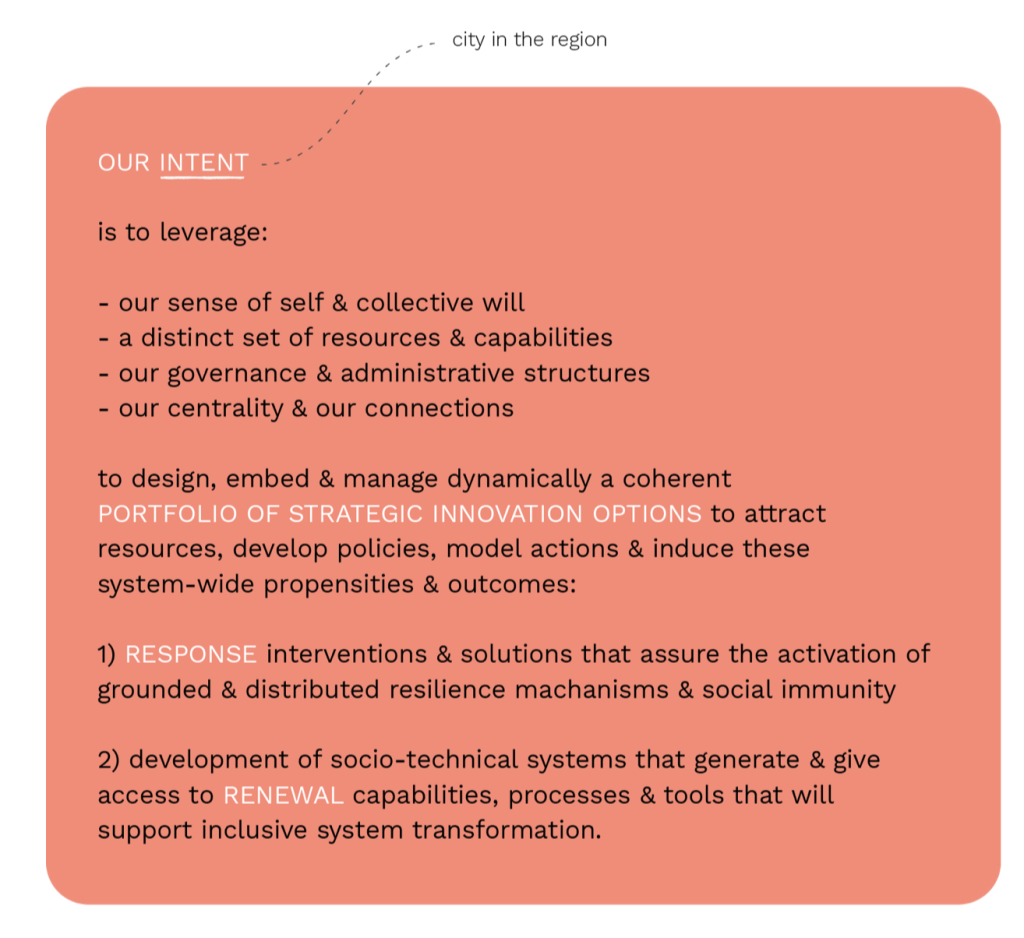
The intent building block includes the synthesis of all the findings and insights on the specific system and the problem area gathered up to this point. It is at this stage that we develop the statement of intent for the portfolio, in coherence with the context. As the intent phase works like a compass that guides us in the direction of what kind of system transformation the portfolio could achieve with regard to the identified problem, it requires multi-stakeholder consultations, validations, and iterations to evolve its direction as the portfolio progresses.
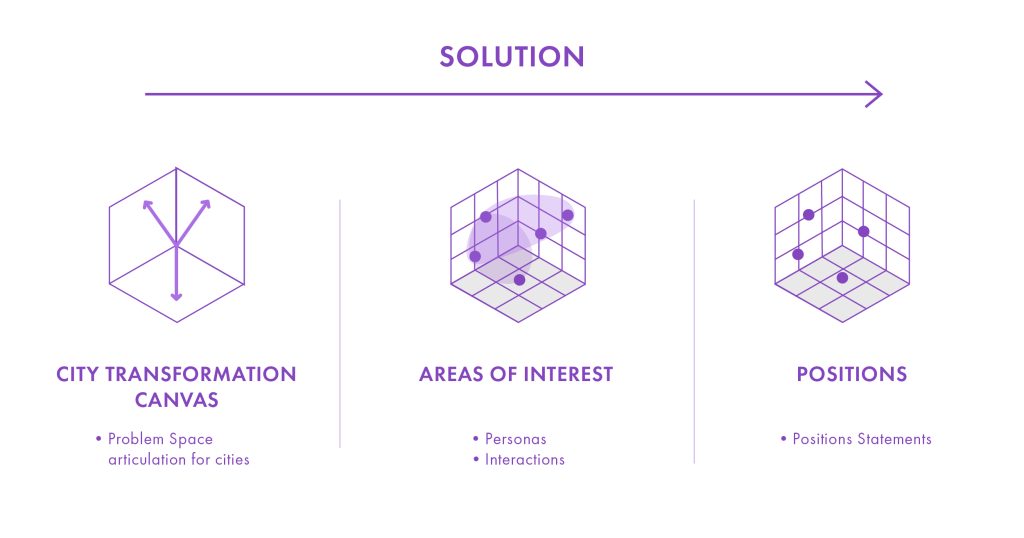
Solution Phase: Design an urban transformation portfolio
City Transformation Canvas: The Agora framework includes a City Transformation Design Canvas, which is an effective and user-friendly conceptual tool with which to engage in the identification of system features and dynamics relevant to the intent.
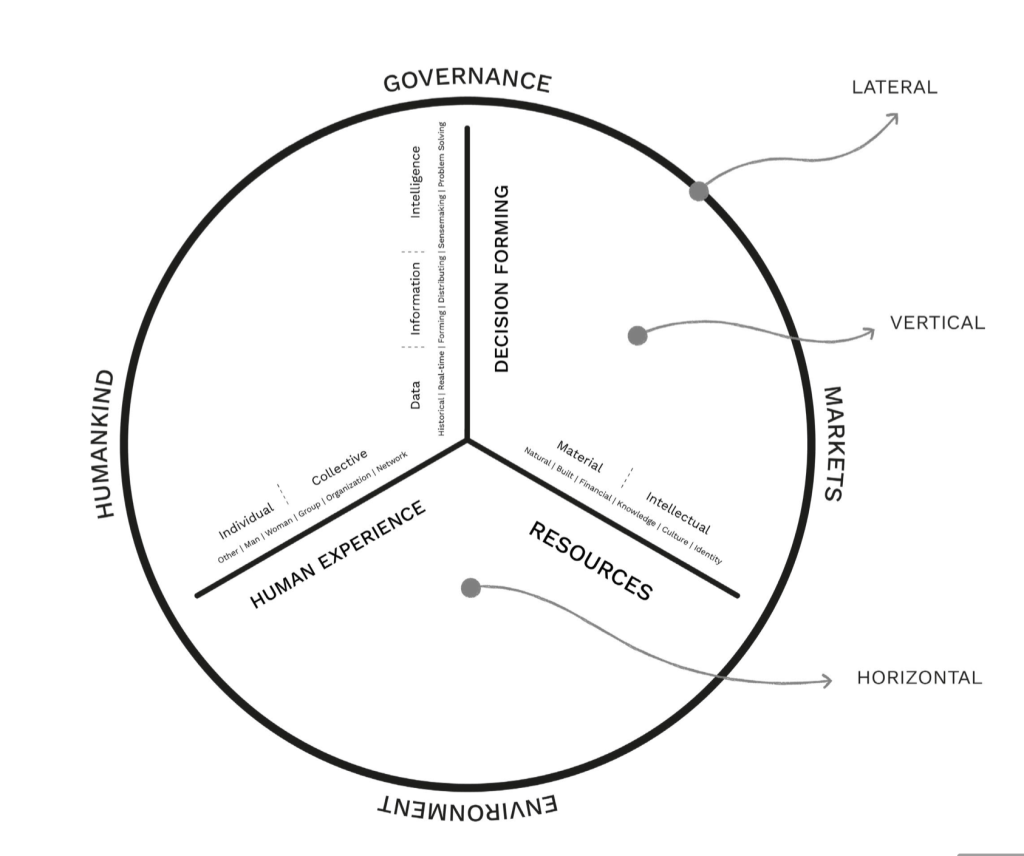
The Canvas is a 3D system representation that is based on the social systems theory and consists of three main constitutive elements of the social system: human experiences, resources, and decision-forming. It provides a hypothetical model to visualize how a city, as a social system, interacts with resources and feeds its experience into its decision-making processes. It can be used to observe the system’s interactions and dynamics so that particular areas of the city [ex: governance structure, mobility, healthcare, education, etc] can be singled out and used to position options. In addition, the Canvas is a design tool as it stands alone and could be used to foster ideation and innovation workshops, or seed and structure strategic conversations and engagements with partners.
Areas of Interest: The framework includes the identification and description of five key Areas of Interest that would act as system attractors that allow us to focus on where the energy is being concentrated, and guide us in finding leverage points in the system.
In the design of Portfolios of Development Options, an Area of Interest is a heuristic and pragmatic recognition and naming of wherein a social system meaningful experiences are happening in such a way as to be considered “attractors.” These work as a magnet that makes people and resources come together (i.e, when pandemic first broke out, people were finding all possible measures to be safe by social distancing, wearing masts, etc). Their utility, in the process of designing a Portfolio of Options, is that they allow us to observe where the energy in a complex social system is and goes, how much of that energy is available to the system, the mechanisms by which the system directs energy, how and where the system produces information and where intelligence is generated and how it can be leveraged.
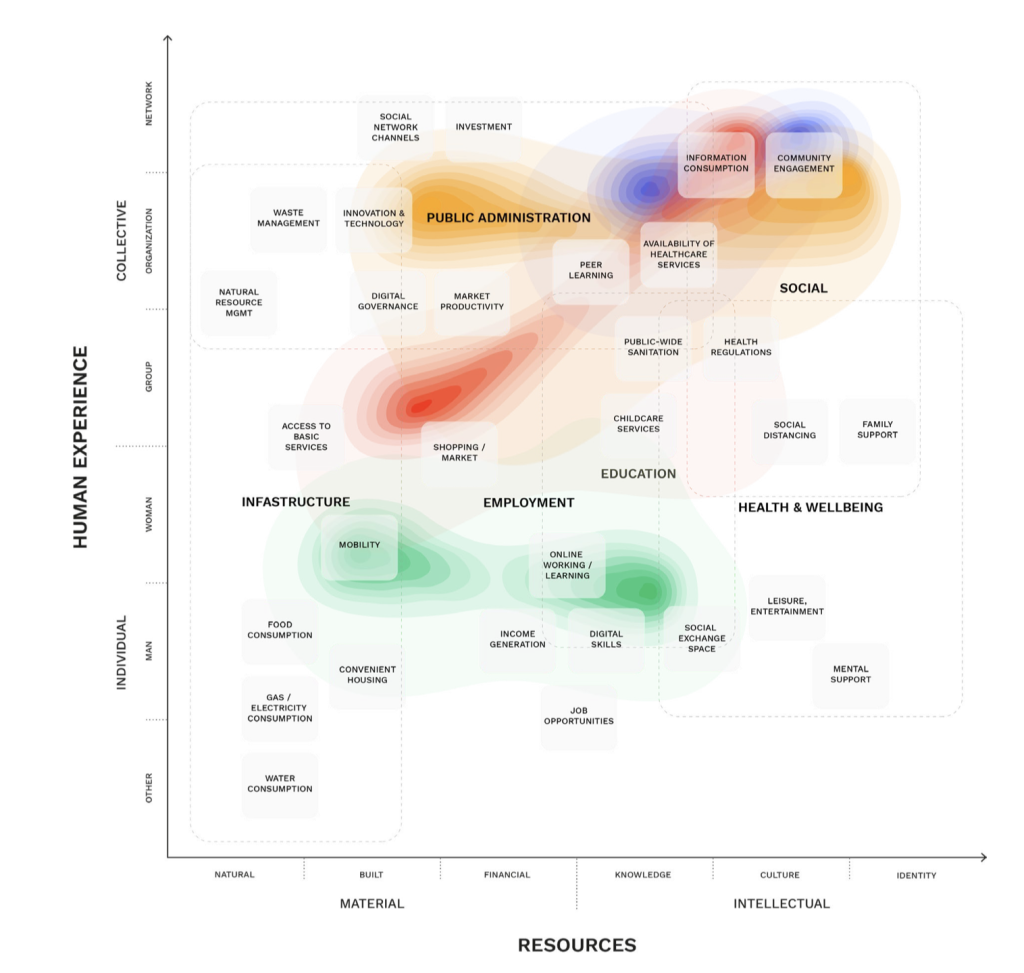
The five identified Areas of Interest in the city system are: I-360, Home, Work, I-City, and eSENSE.
- I-360: As a single actor in the city, whether in the form of a citizen, resident, dweller, or visitor, this area focuses on how an individual interacts with the city space including infrastructure, services, etc., in relation to the city.
- Home: As a social unit, which goes beyond physical description but rather focuses on social interactive space at a scale, from family to friends, community, and network, this focuses on how the home interacts with the city space, including where people eat, take shelter, build relationships and engage with others.
- Work: As a functional space where we provide, engage in, and generate economic opportunities and values in the city, this focuses on how existing and emerging models and technologies can be utilized to create more employment opportunities and attract resources.
- I-City: As a collective space for the whole city itself, this focuses on how the city manages itself with the given regulations, frameworks, and resources, and how it interacts within itself and externally.
- eSENSE: As a knowledge repository space for the city, this focuses on how the city collects available data, aggregates information, and engages with different actors to make sense of the city and leads to intelligence creation.
Position Statements: In the process of designing Portfolios of Development Options, Positions are certainly the most critical feature – the principal source of value for a dynamically managed Portfolio of Development Options. A Position identifies and articulates a rationale for “where” an element of the system, that is our object, can be engaged with in order to develop solutions (projects, initiatives, actions, options, programs, policies, etc.) and induce acceleration and transformation effects.
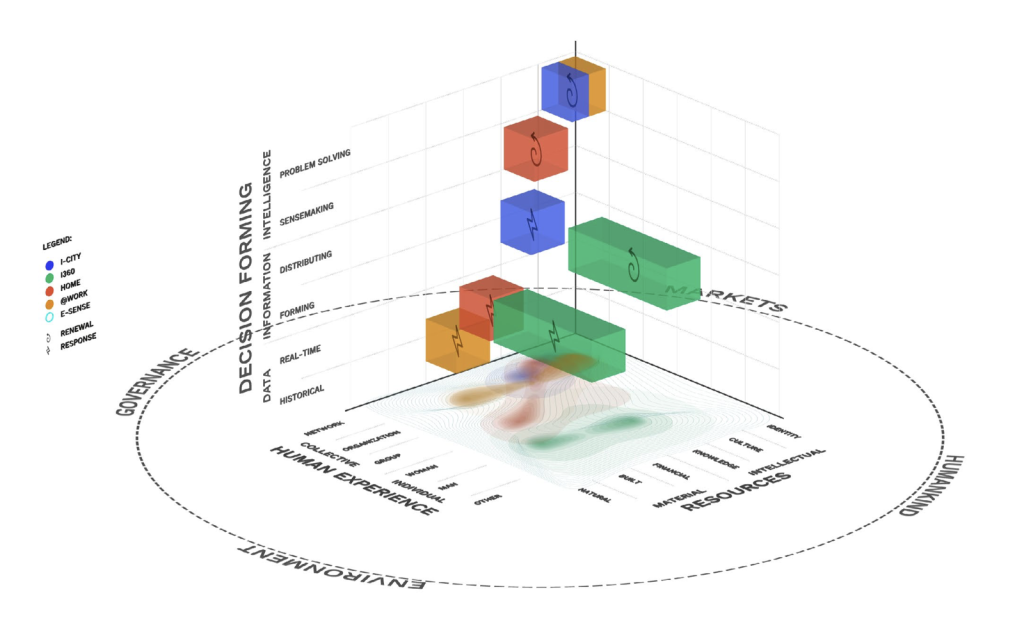
In line with Agora’s intent, the framework provides both response and renewal Positions in each Area of Interest (except in eSENSE) and consists of nine identified Positions. Each Position statement provides “where”, “why” and “how” to build an argument for engaging with the selected system element.
To learn more about how Agorà has been applied in the region, please read this blog on City Experiment Fund, and stay tuned for upcoming blogs on Portfolio Development. If you are interested to learn more about the Agora process, please reach out to us at rbec.innovation@undp.org
[1] References to Kosovo shall be understood to be in the context of Security Council resolution 1244 (1999)
[2] Luhmanns’ social systems theory