
Category: Systems and portfolios
Everyone has the right to live in cities that are comfortable, accessible, and environmentally clean, where public spaces prioritize human well-being and inclusivity. Indeed, many urban theorists argue that modern city development is overly centered on production, efficiency, and profit, which comes at the expense of livability, community engagement, and environmental balance. One key voice in this movement is Jane Jacobs. In her seminal work, The Death and Life of Great American Cities (1961), she argued that cities should be designed for people, not cars or industries, and that urban spaces should promote interaction, walkability, and vibrant community life. Jacobs critiqued the top-down approach of urban planning, calling for a bottom-up, human-centered design approach.
Unfortunately, the ideals espoused by Jacobs and alike often clash with the reality of many urban areas today, which struggle with systemic issues that undermine the quality of urban living. Among these challenges, air pollution stands out as a particularly critical concern. Poor air quality not only jeopardizes residents’ health but also exacerbates social inequities and hampers economic growth and investment. This highlights an urgent need for policies and initiatives that reimagine cityscapes, drawing on Jacobs’ principles to address these systemic problems and foster a more sustainable and equitable urban future.
Addressing systemic urban issues requires a comprehensive and integrative approach that considers the interconnectedness of various urban systems and their impacts on sustainable development. Policymakers must adopt a holistic perspective, encompassing economic, social, and environmental dimensions to identify root causes and implement effective interventions.
From symptoms to solutions: Tackling air quality issues
Air pollution exemplifies a systemic urban issue that demands a multifaceted approach due to its deep interconnections with economic growth, public healthcare, transportation, culture, and inclusive urban development. It made sense for us, hence, to utilize the portfolio approach alongside systems thinking principles to tackle this issue. We aimed to avoid pathways of investing billions in massive ‘silver bullet’ infrastructural solutions that might work, and instead under City Experiment Fund project sought smaller, ‘obvious-not-so-obvious’ solutions that could create systemic ripple effects. A compelling example of what we wanted can be seen in Copenhagen, which faced near bankruptcy in 1993 yet prioritized development to tackle the growing issues of air pollution and transportation. The city opted for the most cost-effective solution: investing in cycling infrastructure. This choice has received strong support from authorities due to its consistent delivery of positive environmental, health, efficiency, and economic benefits.
Green and safe streets in Almaty: Small changes, big impact
Henri Lefebvre, a French sociologist and philosopher, who expanded the idea of ’the right to the city’ in the 1960s argued that urban spaces belong to everyone who lives in them, not just planners or property developers, and that all residents should have the right to shape them. Sherry Arnstein’s Ladder of Citizen Participation (1969) outlined different levels of public involvement in decision-making. She identified that for true co-participation, communities shouldn’t just be consulted—they should be empowered to influence actual outcomes. In that spirit and under methodological process of portfolio approach we conducted co-design sessions with a diverse array of key actors in Almaty. The result of that process was the nested portfolio that we called ‘Green and Safe Streets’. The logic behind ‘Green and Safe Streets’ initiative focuses on reimagining Almaty’s transformation to minimize air pollution factors (vehicle exhaust, the energy consumption from the coal-based CHPS, etc.) through pedestrianization, greening urban spaces, enhancing public and alternative transport, and promoting energy-efficient buildings, all in a participatory manner. In the implementation phase, we chose to focus on interconnected clusters of social impact campaigns, demonstrations of urban fabric change through tactical urbanism activities, and the use of digital solutions such as air pollution monitoring to support data-driven policymaking.
This approach not only helps to improve air quality, but also creates more comfortable and attractive cities to live in. Green spaces absorb pollutants and partially mitigate the heat island effect, while modernized buildings with energy efficient technologies help to reduce the overall carbon footprint. The benefits of this approach go beyond ecology to aspects of comfort and behavioural change. Increased green space and improved pedestrian and cycling infrastructure makes city streets more convenient and safer for residents, increasing physical activity and reducing car dependency. A convenient and environmentally friendly transport network encourages the use of public transport and alternative modes of travel, which further reduces pollution and pressure on transport systems. Moreover, the development of green streets and energy-efficient buildings contributes to a more vibrant and dynamic urban environment, which in turn stimulates economic activity and attracts investment in sustainable infrastructure. It also shapes citizens’ awareness of the environment and sustainable lifestyles, supporting a shift to more sustainable habits. Ultimately, the creation of such urban spaces contributes not only to improving air quality and urban aesthetics, but also to strengthening social cohesion, ensuring sustainable development and enhancing the well-being of the urban community.
Learning by doing: tactical urbanism in action
To date, we organized several tactical urbanism initiatives in Almaty, implementing temporary changes at several street locations and a parking lot before the city’s planned reconstruction work. Through public workshops and guided tours, we brought together city officials and residents to demonstrate how urban changes can be implemented gradually and with minimal disruption to all users, including drivers. The insights from those initiatives were considered and the city agreed to partially or fully consider those changes, and will integrate tactical urbanism principles moving forward. We are currently installing air quality monitoring devices to measure pollution levels before, during, and after street reconstruction. Once completed, we plan to share both our monitoring framework and a comprehensive guidebook on implementing these projects with the public. It is important to communicate the logic of why, when, how, and by whom these activities are done to ensure socialization, knowledge preservation and sustainability of the learnings we had over the course of the project. So, just like in this blog, we tried to conduct our work in the principle of ‘work out loud’, by sharing insights and learnings through the series of communication channels, social media posts, social events, excursions, partner events, and other channels.
Funding the future: Innovative financing mechanisms for urban change
Importantly, we also acknowledge that any proposals for change must take funding considerations into account. Drawing on the innovative spirit of our team, we aimed to present less conventional, yet highly feasible options based on the existing legal and financial infrastructure in Kazakhstan, particularly in Almaty. We explored the issuance of SDG Sukuks, as well as the introduction of the first-ever municipal Green Bonds in the country (and indeed the first in the region of Central Asia). Currently, our primary focus with local partners centers on advancing the latter two initiatives.
The quest for success: Human-centered urban strategies
By adopting an integrated approach to urban sustainability, cities can achieve multiple objectives, fostering resilient, vibrant, and inclusive environments that enhance the quality of life for residents. However, the path to such decisions is not always straightforward. History is full of examples of seemingly ‘obvious’ large-scale infrastructure projects aimed at boosting economic interests that ultimately produced lasting negative outcomes deemed costly mistakes later — something Jane Jacobs would have probably attested to. Municipalities worldwide face the ongoing challenge of identifying more well-thought ‘not-so-obvious’ solutions. While the journeys may differ from city to city: from Almaty to New York to Sydney, human-centered, community-involved, and systems-informed approaches have proven to be effective strategies for uncovering them.
Reposted from UNDP Kazakhstan.
Cities in Europe and Central Asia are adopting a systemic design approach to urban development. The shift is being spearheaded by two UNDP initiatives – Mayors for Economic Growth and the City Experiment Fund. These multiyear programmes are starting to generate urban effects that go beyond what we can measure in traditional ways, broadening our understanding of how various city sub-systems interact. This blog explores some of these interactions and effects – the visible and invisible – that cities in the region are experiencing.
In the aftermath of COVID-19, our sense of reality is shaken in a way we have not experienced before. Environmental crises are unfolding just as we were warned they would over the last few decades, and we are very likely living through the hottest year recorded in history. As the complexity and interconnectedness of the natural and human-made systems become more apparent, we are also facing a new kind of crisis – a deficit of social imagination. Geoff Mulgan, Professor at UCL, refers to this as an imagination crisis, in which we are stuck, unable to move from ‘what is’ to ‘what if.’
Imagination is defined as way of seeing, sensing, thinking, and dreaming that creates the conditions for material interventions in, and political sensibilities of, the world (Yusoff & Gabrys, 2011). In our current reality, we are simultaneously breaking into a new world, marked by rapid advancements in artificial intelligence and other technologies, whilst still healing from the aftermath of ongoing crises and wars. In this complex landscape, ‘how we look’ can affect ‘what we see,’ which begs the question: where is the infrastructure that nurtures and supports social imagination – the imagination infrastructure?
Historically, urban spaces have shaped ‘what the city could be’, including our local identities, and they continue to do so. Take public squares in their varied shapes and forms across the globe – beyond just being places to gather, they have served as places for protests, revolutions, celebrations and more. Such spaces act as crucial imagination infrastructure by providing a physical and symbolic arena where people can envision and enact social change, offering a stage for public expression and allowing diverse groups to interact and share ideas that can shape our future.
Other examples abound. Over the last two decades, cities across the globe have seen the rise of makerspaces and fab-labs – a result of the maker movement that was born in the 1990s. A melting pot of art, craft, innovation and technology, these spaces are where creative individuals with ideas come together, imagine and create. This imagination infrastructure has lowered the barrier of access to space, technology and community, and has led to the prototyping and testing of some of the innovations we use today (from phone cases to tap-payment systems).
Urban spaces such as these have shaped history but what is it about them that inspires and evokes such powerful responses in cities?
Cities operate within a vast complexity of interrelated systems – social and economic to ecological and physical – without any centralized coordination. They also largely function without seeing their full impact on surrounding ecological systems. With dense populations and growing digitalization, imagination infrastructure in cities like makerspaces have the potential to bridge some of these gaps – giving us a moment to pause, listen, connect and tap into a sense of community at a time where transformation is pivotal.
“When a complex system is far from equilibrium, small islands of coherence in a sea of chaos have the capacity to shift the entire system to a higher order.”
Illya Prigogine, Chemist and Nobel Laureate
But it is more than that – imagination infrastructure also has the power to shape our narratives and identities and vice versa. It is through our collective narrative imaginations that we are both anchored and transported (Andrews, 2016). Narratives in a city or any social system are shaped, formed and molded by such spaces and inversely, the stories we share about them and how they evolve over time also mold the space. As Winston Churchill for once aptly said: “We shape our buildings and then our buildings shape us.” These spaces foster change by providing a platform to discuss shared challenges, reimagine societal structures, and innovate everyday products and services to shape our lives.
Take public libraries and coffee shops for instance – both have long served as imagination spaces for creatives, writers, and storytellers. With the advent of digital transformation, the future of these traditional havens for imagination hangs in the balance, prompting us to reconsider and reimagine their value and potential in nurturing the creative spirit of our communities. Public libraries are remodeling themselves into community centres and maker spaces, becoming more flexible even in their architectural design. Meanwhile, coffee shops have paved the way for co-working spaces and innovation hubs. Our evolving discourse about these spaces has not only shaped how others perceive them but also how they perceive themselves, influencing their role in fostering creativity and intellectual exchange. These spaces, along with other forms of imagination infrastructure – the physical manifestations of our values, novelty, and exchange – play a crucial role in shaping our sense of hope and aspiration for the systems we live in.
Ultimately, urban spaces that stimulate our imagination can be powerful catalysts for shifting perceptions and enabling change. By encouraging us to pause, observe, and reflect, they inspire action towards reimagining existing complex challenges and building momentum for transformation to create new possibilities for people and society.
Take a look at some of the imagination infrastructure emerging in our cities:
Pljevlja, a city in Montenegro, houses the country’s only coal-fired power station, which supplies a third of the nation’s electricity. While the livelihood of a large part of the local population depends on the power plant, the country is also embracing a green transition. The city of Pljevlja, in partnership with UNDP through the Slovak Transformation Fund, recently opened a Creative Hub that aims to transform the city to a place for the development of start-up projects with green business ideas that have the potential to create new jobs. Further, the hub is becoming a meeting space for young people to explore the possibilities of using innovative technologies and to acquire skills and knowledge. Read more about Pljevlja’s Creative Hub here.
An audit of the waste in Skopje, North Macedonia, found that nearly 50% of the municipal waste is biowaste. This city of Skopje and UNDP wasted no time in setting up a biohacking lab, with the support of the Slovak Transformation Fund, to change the perception of biowaste from garbage to a valuable resource. The space now not only hosts biohackathons, supporting innovative startups, but also conducts workshops with students to inspire circular thinking and brings together researchers and academics to experiment. Interestingly, the emergence of the lab has also amplified the voices of environmental advocates and circular economy proponents, lending weight to their causes. Read more about Skopje’s Biohacking Lab here.
Batumi, a resort city in Georgia, grapples with a dual challenge: the emigration of talented youth seeking better opportunities elsewhere, and an economy heavily reliant on seasonal tourism, which creates instability throughout the year. In reinventing itself as an entrepreneurship hub to retain talent and diversify its economy, Batumi aims to create a physical space to promote youth interaction through the EU-funded Mayors for Economic Growth. It is envisioned as a youth hub and a co-working space, which will offer additional services and opportunities for learning and networking, aiming to become a meeting place for young minds with ideas to create innovations for the city. Read more about Batumi’s approach here.
The city of Ceadîr-Lunga in Moldova has embarked on a critical journey towards energy resilience since the Russia-Ukraine war drove up energy prices sixfold. The city, in collaboration with UNDP through the EU-funded Mayors for Economic Growth, piloted a project to retrofit kindergartens – reducing energy consumption by 90% and cutting the cost to a tenth of what it was before. The kindergarten became a symbol of change, inspiring both children and the local community to envision a renewable energy future. Showing ‘what could be’ sparked conversations around energy resilience both inside and outside the classroom with students, their parents and teachers. The resulting energy and cost savings were made public, encouraging wider acceptance of adaptation measures and shifting perceptions to make energy efficiency more desirable. Read more about Ceadîr-Lunga’s Kindergarten retrofit here.
What are we seeing as the common thread connecting these spaces in these diverse contexts which we are collectively calling imagination infrastructure? They are spaces that bring people together: they are sparking new conversations, creating room for forming new relationships, kindling new thinking, enabling a shift in mindsets, strengthening partnerships, helping articulate values and triggering many more emerging effects.
Imagination is critical to transformation and as cities play more active roles as connectors, collaborators and orchestrators, there is an emerging need to reimagine the spaces where we can connect, play and imagine. To break away from legacy thinking and embrace more flexibility in adapting to the changes the future demands, UNDP is working together with cities across the Europe and Central Asia region to reimagine how we can design and bolster imagination infrastructure. As we envision a future of inclusive development that instills hope across generations, a crucial question emerges: How are institutions adapting to nurture the imagination infrastructure needed to catalyze transformative change in our cities? And as our cities adapt and transform, how are we listening and learning about the changing narratives that these urban spaces are driving?
Read more about our community listening practice here
Illustration credit: Mark Wang for TheGreats.co
At the end of 2023, the Innovation team at UNDP Europe and Central Asia initiated a more structured exploration of how to strengthen the team’s learning muscle. Six months into the process of gathering individual reflections from UNDP colleagues working across five countries (Armenia, Azerbaijan, Georgia, Moldova and Ukraine) – part of the Mayors for Economic Growth (M4EG), a joint EU and UNDP initiative supporting mayors in the Eastern Partnership region – we synthesized our learnings and tried to make sense of the collective learning in these diverse contexts. Interestingly, we noticed that some of our learning questions were met with more questions.
As municipalities participating in the M4EG Portfolio Journey initiative explore financing strategies for their mission-oriented portfolios and new growth trajectories, our learning-capture tool has revealed the need for a shared understanding to effectively navigate this space. As a result, we initiated an informal and optional learning program as an experiment within our team, extending it to others working in this domain, to make space for knowledge sharing and peer-learning. We called these sessions Finance Fridays, scheduling a 30-minute session every two weeks, spanning three months. This blog explores the different topics we navigated through this three-month learning experiment over seven sessions and our key learnings.
Session 1 took colleagues through an overview of the financing challenges faced by municipalities in the Eastern Partnership region and an introduction to innovative financing, alternative finance and the concept of bankability. The introductory topic was unpacked using a 10-minute video that was put together using AI tools and an exercise to map innovative and alternative finance instruments that colleagues were familiar with in their own country context. This session set the stage for the peer-learning sessions in the second half of the series.
Session 2 focused on bankability and how to use a business model canvas to assess it. The session was facilitated by Alexander Weise, SDG finance consultant in the UNDP Innovation team. This session helped participants better understand the different aspects of a project’s business model to consider when assessing bankability, with an added focus on evaluating social and environmental effects. The session also unpacked some specific topics such as creditworthiness and measurement, reporting and verification (MRV) through lively participant engagement.
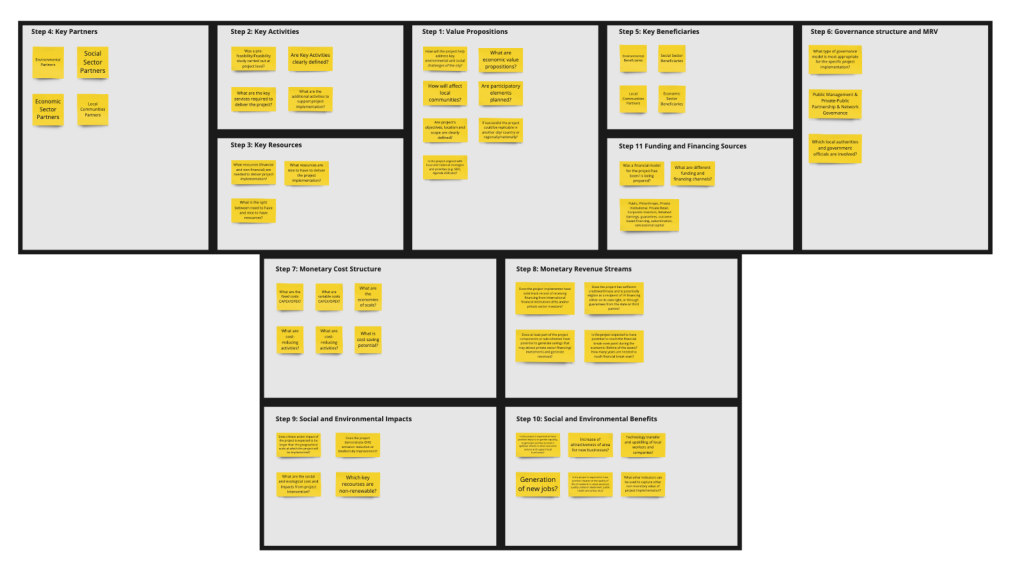
Session 3 took a deep-dive into Municipal-owned enterprises (MoEs) – a modality that local governments across the globe are increasingly relying on to provide public services. While some countries in the region have been using this modality for many years, it is still new in other countries and the session allowed colleagues to discuss the topic from both sides of this spectrum. This session was also facilitated through a 10-minute video on the topic and was followed by a workshop and discussion where colleagues assessed MoEs for their country context using SWOT analysis.
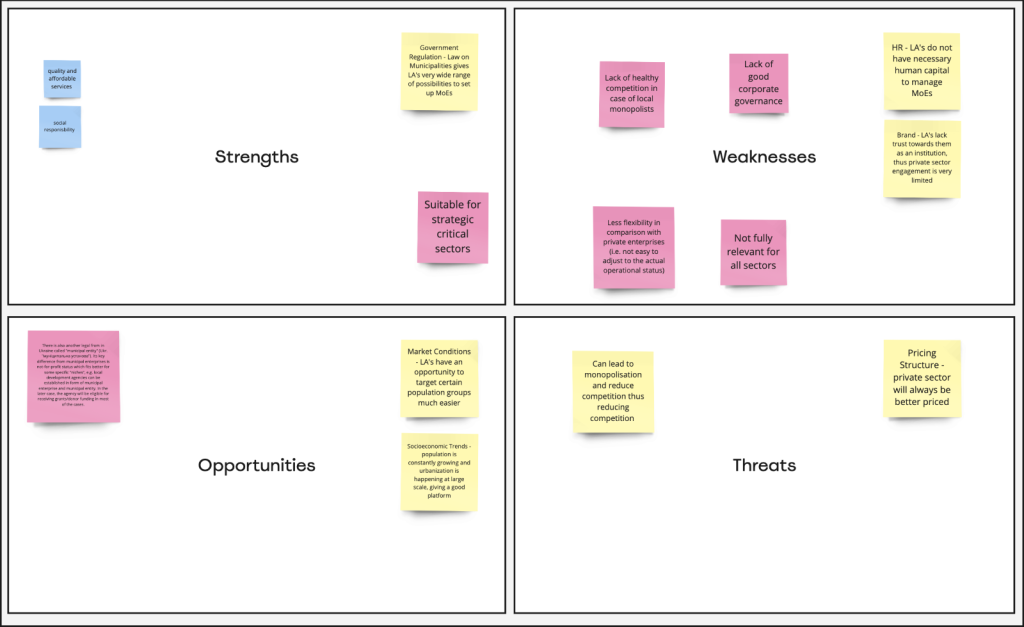
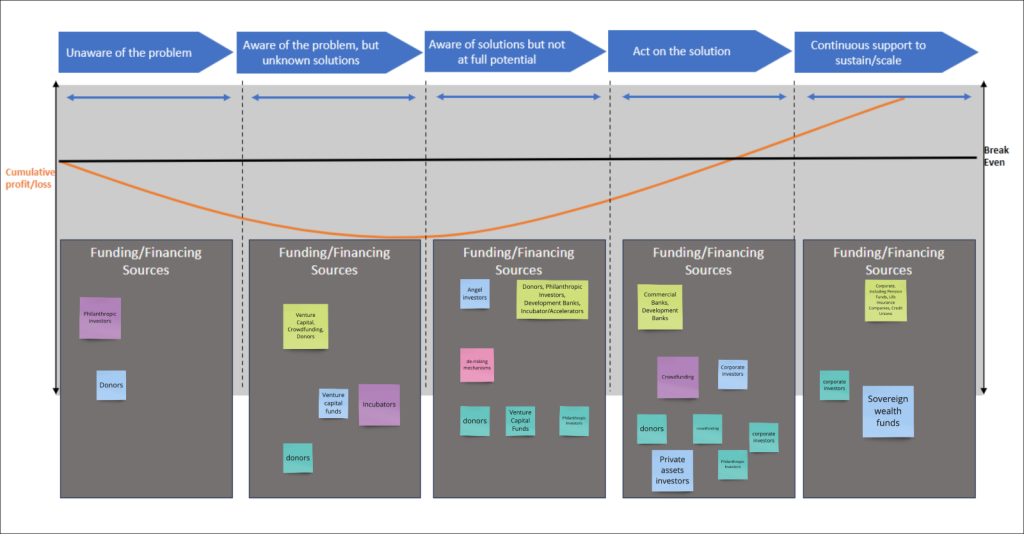
Session 4 focussed on the investment curve and assessing various sources of funding – a session facilitated by Alexander Weise. This collaborative session included a short explainer on the investment curve and a workshop on identifying investors for different stages of a project. This session helped colleagues identify and assess the different actors in the funding ecosystem and understand at which stage of maturity, the project might be of interest to them.
Session 5 kicked off with a peer-learning exercise with our colleague Mustafa Sait-Ametov, Regional Development Programme Manager in UNDP Ukraine. He shared his experience with supporting local Revolving Funds established by municipalities in Ukraine. Through case studies from the local authority of Pittsburgh, U.S.A and the city of Voznesenk, Ukraine, we unpacked the types of revolving funds and their administrative needs and benefits.
Session 6 included an introduction by Louise Skarvall, Accelerator Lead for UNDP’s BOOST, a regional impact acceleration programme, on the launching of a new challenge for innovative finance solutions in the Western Balkans. The concept, which was created and developed using stakeholder consultations, was also introduced to colleagues in country offices beyond the region for feedback and garnered further interest.
Session 7 was the last session before the summer on the topic of tokenization, led by Ievgen Kylymnyk, Project Manager of the Slovak Transformation Fund. The session introduced colleagues to ‘green tokens’ which have been implemented in a few cities across the globe and has been used as a tool to finance critical environmental initiatives. This session provided an opportunity for colleagues to learn about the insights from the event on Green Tokenization in Podgorica, Montenegro and also helped answer some critical questions about implementation challenges.
Since launching Finance Fridays as an experimental initiative, we have been eager to evaluate its impact on participants. We gathered feedback from colleagues who attended the sessions. The evaluation focused on uncovering insights in four key areas: learning something new, expanding networks, creating a safe space for sharing, and curating relevant content. Here’s what we discovered based on these criteria:
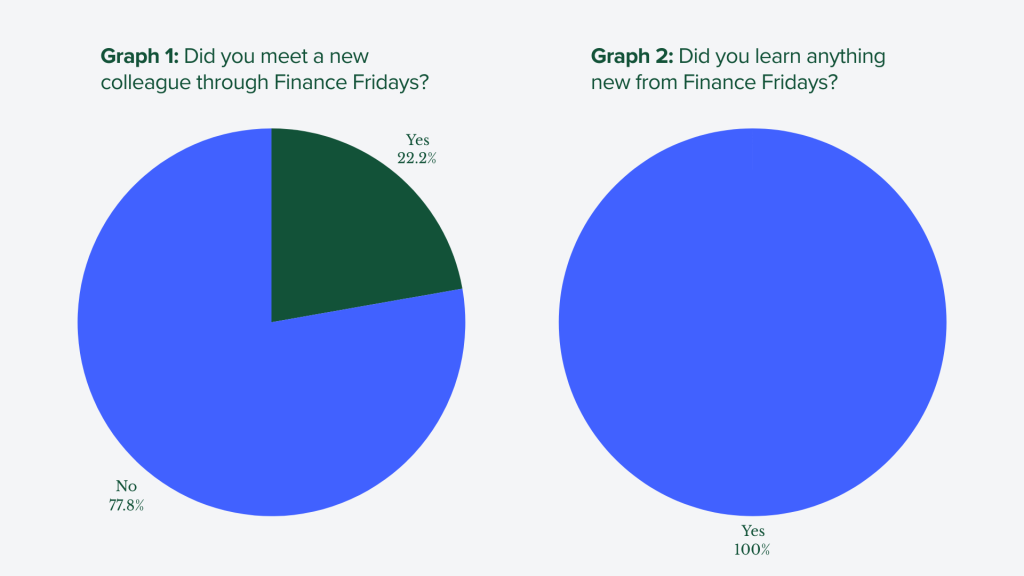
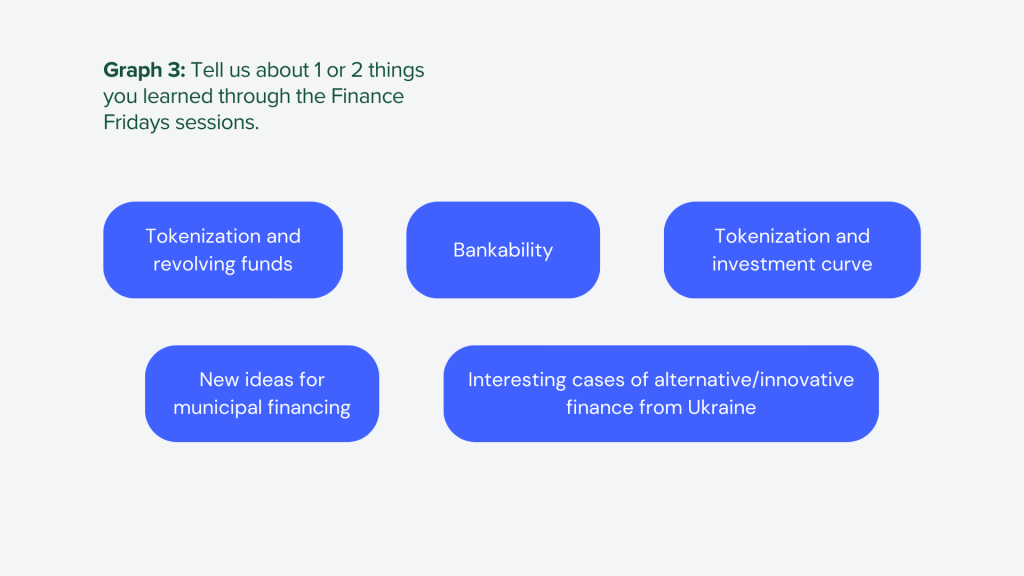
The results showed that 13 of the 20 colleagues attended three or more sessions, with an average of nine participants in each session. Some colleagues shared the invitation beyond their own team and invited other colleagues they work with in other capacities, to attend the sessions. Many colleagues felt that the sessions need to be longer than 30 minutes as we were forced to cut short lively discussions in the interest of time.
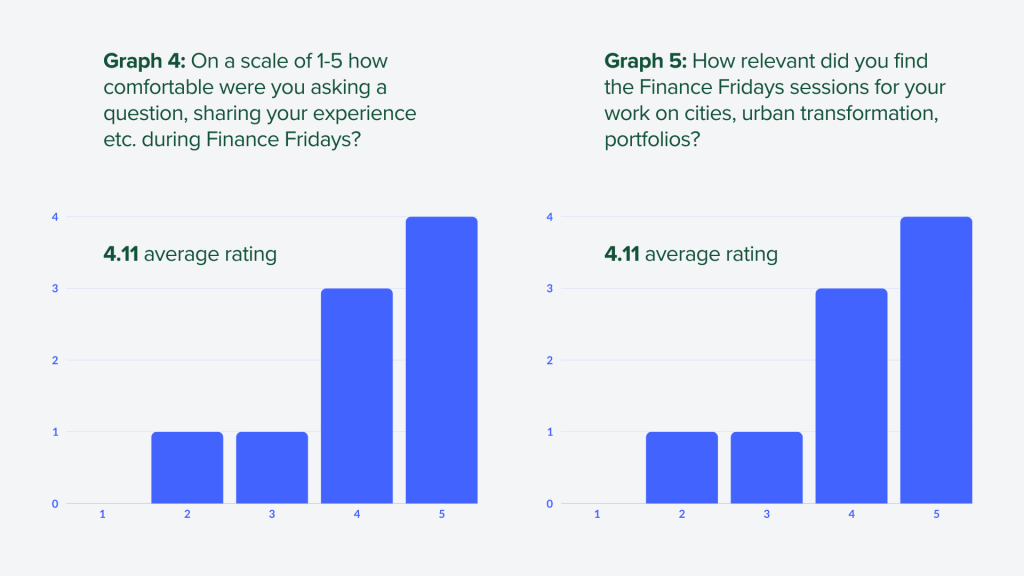
As the summer ends, we plan to redesign this experiment by changing the criteria of assessment and implementing the feedback we received to continue working towards creating a learning culture that fuels our curiosity and sense of community.
The United Nations Development Programme (UNDP) in Europe and Central Asia released its 2023 Annual Report for the Slovak Transformation Fund (STF), funded by the Ministry of Finance of the Slovak Republic. The annual report provides a detailed overview of the Fund’s activities and progress throughout the year and outlines the key developments within the BOOST Impact Acceleration Programme and the City Experiment Fund (CEF), two of the Fund’s main initiatives.
In 2023, BOOST continued to support women innovators that took part in our BOOST: Women Innovators programme by offering essential financial and technical assistance to help grow their impact solutions. A notable milestone was the launch of the BOOST Alumni Network, designed to provide post-acceleration support to impact ventures and non-profits and foster collaboration among cohorts.
The CEF continued its collaboration with five cities in Europe and Central Asia to design, implement, and dynamically manage their portfolios of urban interventions, while also exploring innovative financing options to support sustainable development. 17 options across the five cities were activated, addressing various urban challenges such as air pollution, urban vibrancy, and waste management
The report also reflects on the challenges encountered, including limited local expertise and political instability, and the Fund’s efforts to address these through adaptive management and capacity-building initiatives.
The 2023 Annual Report provides valuable insights into the lessons learned over the past year and presents key recommendations for the future. The STF remains committed to aligning its work with the UNDP Strategic Plan, focusing on green, inclusive, and digital transitions.
About Slovak Transformation Fund:
The STF, funded and supported by the Ministry of Finance of the Slovak Republic, is dedicated to driving sustainable development across Europe and Central Asia by co-creating solutions with local ecosystems, deploying innovative approaches, and leveraging new financing sources.
For more information, reach out to: Ievgen Kylymnyk, Project Manager, Innovation team at UNDP IRH.
In tackling escalating social and environmental challenges, it is becoming clear that traditional project-based innovation methods, with their predefined objectives, outcomes and fixed timelines, often miss the systemic complexities of urban transformation. This includes tackling challenges like transport optimisation, energy transition, and air pollution. In the past few years, an increasing number of development actors, including UNDP, have acknowledged these shortcomings and pivoted towards more nuanced and responsive strategies. A shift to the ‘portfolio approach‘ represents this change in perspective, offering a framework that is flexible, integrative, and adaptable. In this blog, we present a case study that adopts this approach to combat persistent air pollution in Almaty, Kazakhstan. Reflecting on our collaboration with Dark Matter Labs—a strategic design and research lab—we share our insights and experiences from this methodology in practice. Our intent is to contribute to a growing dialogue on innovative methods, focusing on both the process—the ‘how’—and the objectives—the ‘what.’
Portfolios as a method
As the first initiative in Kazakhstan to adopt a ‘portfolio’ approach, ‘Breathing City: Clean Air in Almaty Through Joint Efforts’, specifically engaged with the concept of portfolios as a dynamic model for organising around specific missions, such as clean air and improved public health. Originating from the field of finance (as primarily a risk management tool) and later adopted in the field of policy innovation, portfolios are understood as a network of actions, actors, resources (assets) that drive resilient transition processes. Unlike the conventional method of allocating funds and resources to sector-specific, single-point solutions that address a relatively narrow set of issues, the portfolio framework allows for the aggregation of diverse initiatives within a coherent strategic vision, enabling them to mutually reinforce each other. Moreover, this intention to consider synergies between different initiatives translates into a method of design, delivery, and management that is much more distributed and collaborative, rather than centralised.
However, the portfolio approach is not without its challenges. Institutionalising this method demands substantial efforts to transform procurement, monitoring and evaluation (M&E), and various legal instruments that have traditionally governed the life cycles of large development programmes. The novel approach of clustering initiatives by missions and synergies rather than by traditional sectors may complicate efforts to attract financing and government support, particularly when it diverges from established investment and planning cycles. Building new capabilities and institutional knowledge to enable the shift towards the portfolio approach also remains a continuous challenge. Recognising these obstacles, our project sought to refine and adapt the portfolio model to the unique context of Almaty’s air quality challenge.
Hypotheses for change
Our initiative was built on several key hypotheses aimed at enhancing efforts in air quality action in the city, an active domain spearheaded by committed local actors engaged in advocacy, research, and technological innovation.
- Reframing the issue of air pollution to emphasise its health and economic implications would mobilise a broader range of stakeholders
- Bringing in new actors could help shift the conversation and action on air quality, and thus enhance existing efforts by diversifying strategies and perspectives
- By embedding the portfolio content in municipal and local partner plans and aligning with a new project office in the local government (Almaty Akimat, and its subsidiary bodies like Almaty Development Centre), we could develop a strong pathway for implementation
Translating Portfolio Method into Project Processes
The portfolio method, far from being a fixed framework, is inherently evolving and adaptive, reflecting the contributions from diverse participants and the specificities of the local context it is being initiated in. In the case of the Almaty air quality portfolio, we adapted it as a step-by-step process that integrates research, co-design processes with local stakeholders, and a cycle of review, learning and further development.
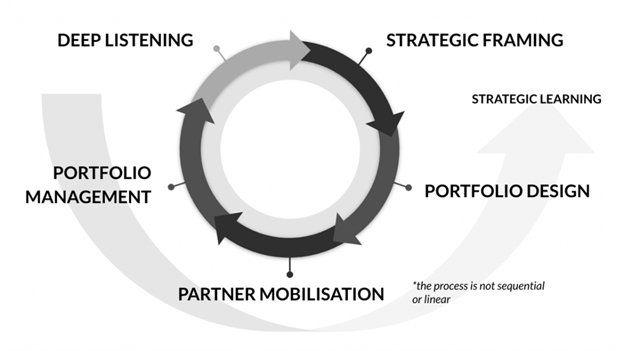
- Deep Listening: Enabled by stakeholder interviews and research — focusing on underlying barriers and innovations
- Strategic Framing: Focusing on strategic alignment with existing initiatives and identifying suitable scale and scope
- Portfolio Design: Enabling multi-stakeholder workshops for ideation and building legitimacy and alignment
- Partner Mobilisation: Moving towards shared accountability, multi-partner collaboration and new forms of governance
- Portfolio Management: Building tools and metrics for continuous portfolio development, implementation and strategic learning
Deep Listening and Strategic Framing
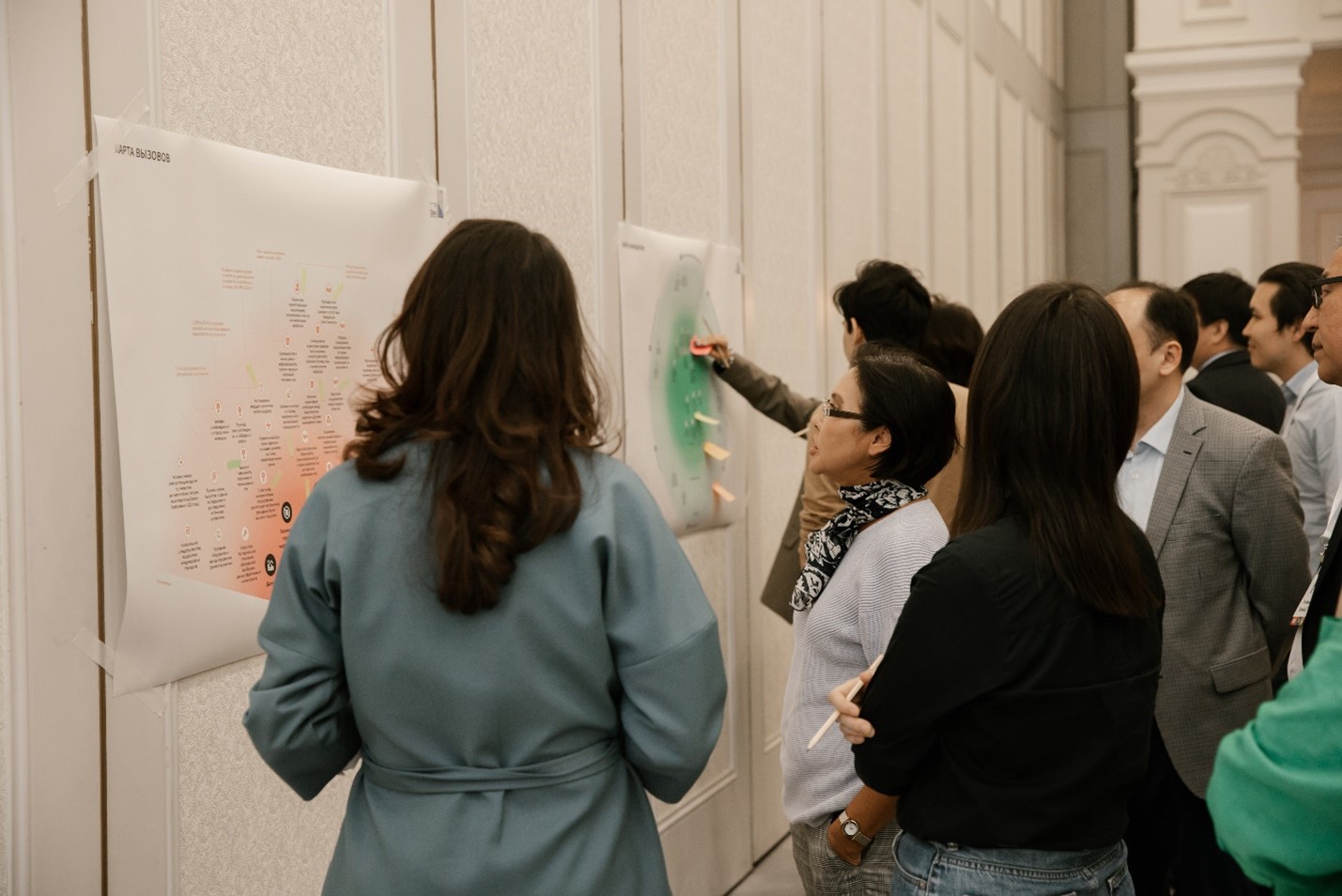
Our initial step centred around deep listening, a phase marked by stakeholder interviews and desk research. This allowed us to uncover the nuanced challenges and opportunities within the Almaty context, focusing on the underlying barriers to clean air and the potential levers for change. In April 2023, we held an in-person ‘sensemaking workshop’ inviting a diverse range of stakeholders — from local experts to community organisers — to share, validate and strengthen the insights gathered from the research. (More details about the process in our first blog.) Some practical tools that we adopted in an in-person and hybrid workshop context were the Five Whys framework, which allows collaborative investigation into root causes of problems, and the challenges and initiatives mapping canvases (see image below), which provide a framework that incorporates insights from desk research and invites participants to proactively add missing elements.
As a crucial step in the portfolio process, strategic reframing utilises insights from the identification of structural challenges to pinpoint gaps and highlight potential levers of change. Through participatory sessions, reframing becomes an opportunity to introduce diverse viewpoints into the portfolio, creating richer and more differentiated narratives as well as new entry points for action. In the case of Almaty, strategic reframing involved looking into one of the root causes of the challenge identified by local stakeholders: the fact that air pollution as an issue is often overshadowed by concerns for economic development because it is largely framed as an environmental issue. Through reframing, we were able to construct a narrative around air pollution that highlighted the economic implications and adverse health effects, particularly on children, which opened new avenues for collaboration between schools, parents, businesses, and medical researchers. This not only broadened the scope for advocacy but also facilitated knowledge sharing and potential for collaborative action.
Often, introducing a systemic perspective into an existing issue necessitates an expansion of the problem space, because root causes of a problem tend to overlap, and this exploration of common ground allows us to see how seemingly discrete sectors or domains of problems are in fact interrelated and interdependent.
Portfolio Design and Partner Mobilisation
The next phase of the work involved a series of collaborative ‘design sessions’ to explore new actions and initiatives that could be integrated into the portfolio. The process not only helped generate innovative ideas but also built legitimacy and alignment among stakeholders, ensuring broad-based support for the portfolio’s objectives.
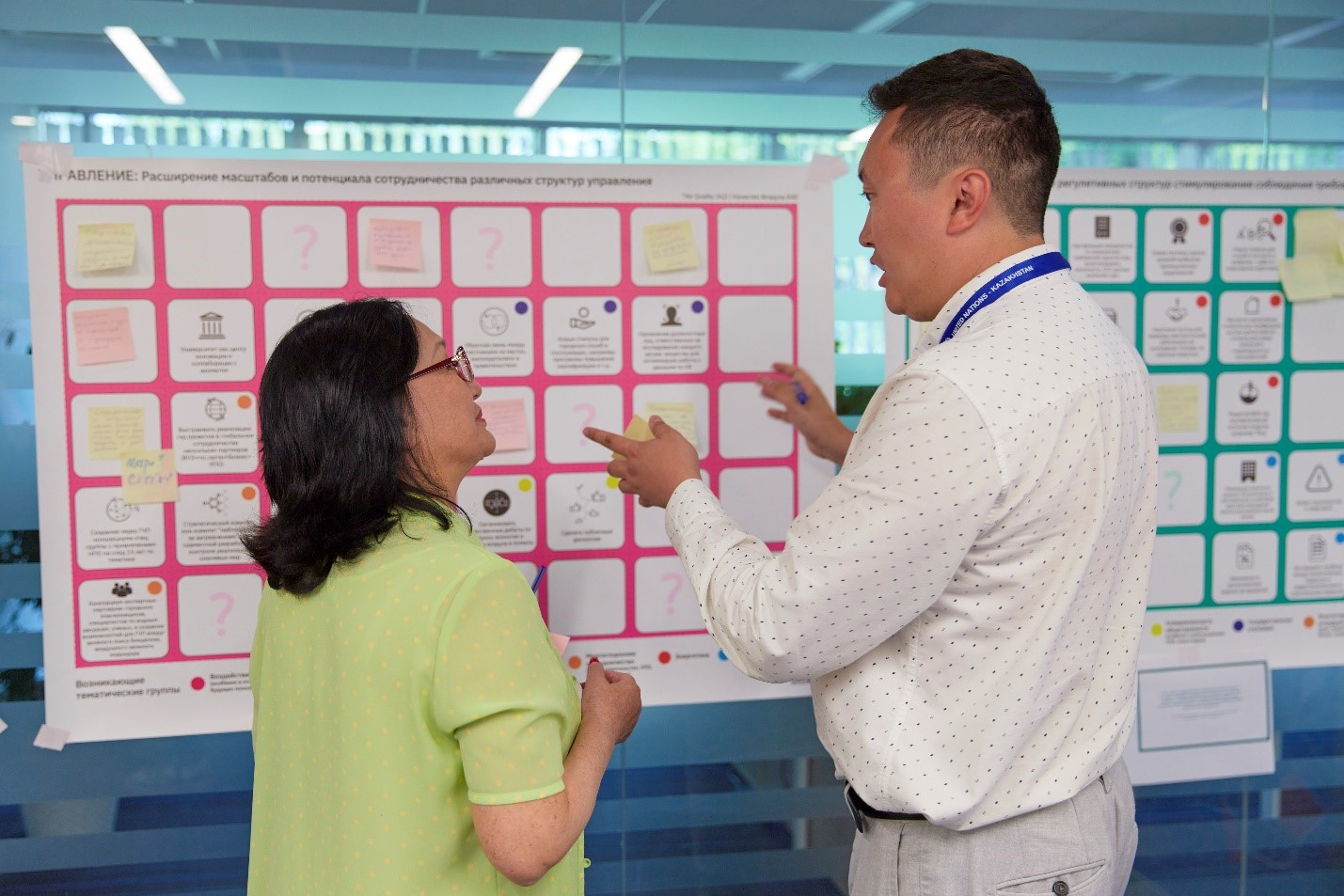
Instead of being a separate phase, partner mobilisation is usually embedded in the ongoing participatory activities that we hold throughout the portfolio design phase. This is to ensure a smooth transition to the implementation phase, and to avoid treating implementation as a mere exercise of delegation and delivery. In the Almaty portfolio, we introduced an additional step of creating a ‘nested’ portfolio—the ‘Safe and Green Streets’ initiative, which strategically connected several initiatives (or “options”) within the larger portfolio to align with critical developments in the city (specifically the new General Plan of Almaty by the government, and mandates of key stakeholders). This was an effort to improve the chances of investment, in a context where portfolio-based investments were rare, and to secure the buy-in of key local stakeholders who may not be familiar with the portfolio framework.
As such, portfolios emerged as a tool to move beyond traditional ‘master plans’ and municipal planning, which often result in extensive lists of actions that few people engage with and that become fragmented during implementation, typically being delegated to the most economic bidder. While the participatory portfolio design sessions helped counter the centralised and top-down nature of planning, transforming it into a more distributed and iterative process, an additional step is needed to make it truly actionable. Through our experience in Almaty, we recognised that to advance a portfolio of actions beyond a static list, it must be integrated into ‘pathways’ aligned with funding opportunities and potential coalitions of actors.
Portfolio Management and Strategic Learning
Portfolio management involves a dynamic process of strategic review and learning, combined with institutionalisation and mainstreaming, which is what we had attempted to do through developing a ‘nested’portfolio, aligned with municipal strategies. It recognises that portfolios need to be continually updated and respond to the latest information, learning through emerging partnerships that form along the way. In the Almaty portfolio process, we began with an open inquiry (not just a hypothesis that was going to be tested and evidenced), which was further defined through stakeholder interviews, challenged and validated continuously throughout the collaborative portfolio design process, and re-worked again through the formation of new partnerships. The evaluation of a portfolio does not happen at the very end—instead, it is iterated at multiple points throughout the process, which allows room for emergence and an ability to respond to the changing conditions of the system.
Lessons Learned and Looking Ahead
As we continue the first stages of implementation, which includes among others a small-scale experiment centred on tactical urbanism, one critical reflection has emerged: a mere list of actions—or a portfolio of actions/initiatives—is insufficient. Greater effort is required to understand and articulate how these diverse actions can be implemented in real-world contexts. In essence, a more nuanced ‘portfolio’ approach to ‘implementation’ is necessary to ensure these strategies are effectively realised.
As a methodology, the portfolio approach is continuously evolving. Typically, the concrete outputs of a portfolio design process include a list of actions—also referred to as options, interventions, or experiments—that are strategically implemented by various actors. These actions are often clustered together to highlight adjacencies, connections, and potential synergies. In the Almaty portfolio, actions were organized under three strategic outcomes: 1) Improving health with a focus on families and children; 2) Building a Green Economy; and 3) Fostering Green Urban Development. These clusters align with the strategic framing of the portfolio, which addresses air pollution as both a health and economic issue. As detailed earlier, some initiatives in the portfolio were strategically grouped under the ‘nested’ portfolio of ‘Safe and Green Streets.’ This initiative envisions a network of interconnected innovations centred around schools, involving retrofitting for energy efficiency, low-emission zoning, urban green infrastructure improvements, and tactical urbanism for community engagement.
As a first step, we are exploring how we can expand and complement the portfolio of actions with additional data and insights such as a list of relevant actors and assets in the ecosystem. The identification of relevant actors within the system highlights the potential for new, sometimes unexpected alliances that span institutions, spaces, and narratives. Similarly, identifying the assets available within the system—from financial resources and regulatory frameworks to democratic legitimacy—underscores the critical role of resources and constraints in shaping action. These assets do not merely facilitate action; they define the boundaries of possibility, encouraging, constraining, and aligning actions within the urban ecosystem. Ultimately, a portfolio that effectively conveys how multiple connected actions, delivered through a coalition of diverse actors who share resources and build on each other’s capabilities, can significantly amplify impact.
Our initiative on improving air quality in Almaty has been a journey of discovery and learning. As the portfolio advances into new phases of implementation, it is progressively handed over to local actors who institutionalise and tailor the process to their context. Concurrently, we continue to explore ways to scale up the venture and apply the lessons learned to initiate or expand larger UNDP programmes both within Kazakhstan and beyond.
Reposted from UNDP Kazakhstan.
Hosted by UNDP Europe and Central Asia in partnership with the Ministry of Finance of the Slovak Republic, the Catalyzing Urban Transformation regional forum brought together over 50 policymakers, urban planners, development experts, and private sector stakeholders to advance urban development through innovative and systemic approaches.
Our video features dynamic snippets from the forum, interviews with key participants, and insights into the collaborative efforts of the Slovak Transformation Fund, and its flagship initiative City Experiment Fund (CEF). The video features our stakeholders from city initiatives and the Slovak Ministry of Finance.
Watch the video to see how cities like Skopje, Pljevlja, Pristina, Almaty, and Stepanavan are pioneering innovative urban solutions and contributing to the creation of more liveable, inclusive, and resilient urban environments.
Stay tuned for more updates and insights from our ongoing urban transformation initiatives!
The Mayors for Economic Growth (M4EG) Facility, a joint initiative of the European Union and the United Nations Development Programme (UNDP), announced the launch of the Green and Just Transition course as part of the Urban Learning Center (ULC). The course introduces the key concepts, solutions and planning processes essential for a Green & Just Transition and what this means for cities or towns, in terms of their practice, planning and projects. The modules in this course connect with several Pathways for Economic Growth (P4EG) steps outlined in the P4EG Course of the Urban Learning Center, namely, Local Economic Situation Assessment, Strategy Making, Action Planning and Monitoring, Evaluation and Learning (MEL).
“Today, urban areas accounted for 70 percent of global CO2 emissions,” recalled Thibault Charlet, Programme Manager for Digital and Local Economic Development at the Directorate-General for Neighbourhood and Enlargement Negotiations (DG NEAR) of the European Commission. “It is crucial for any municipality that aims to be future-ready to understand the essential concepts, solutions, and planning processes for a green transition and implement these in their local planning. In addition, it can help mobilise more public-private financing from the EU’s Economic and Investment Plan for the Eastern Partnership region.”
“Alongside the shift to green practices, it’s vital for city leaders to grasp the needs and complexities of the ‘just’ aspect and its social implications,” commented Tina Stoum, Regional Programme Chief, UNDP. “A Just transition prioritizes equity, justice, sustainable development, and resilience, recognizing the varied needs of communities and underlining the importance of creating alternative and green employment opportunities.”
The self-paced online course is available on the ULC SparkBlue Platform (after log-in) and provides video summaries and bite-sized content such as interactive quizzes and activities to help users apply new learnings to their own context
The Urban Learning Center is designed as a Learning Ecosystem that interconnects community members at the national and regional levels, organized around the practitioner member as both a learner and contributor. Access to ULC is free and available through the SparkBlue online community engagement platform (sign-up is required for new participants). The ULC was developed as part of the Mayors for Economic Growth Facility funded by the European Union.
Background
The M4EG Facility draws on the Mayors for Economic Growth Initiative, launched and funded by the European Union (EU) in 2017. Since 2021, the EU-funded M4EG Facility has been managed by UNDP in close cooperation with the EU, local authorities and a range of partners.
Climate change, technological disruption and other issues are profoundly shaping the trajectory of our cities. Interconnected challenges are converging in front of us, creating a complex landscape that demands action beyond business as usual.
Across Europe and Central Asia, demographic shifts like declining birth rates and rapid aging are straining economies and social systems. Youth unemployment rates are twice as high as older workers. While older populations are less concerned about climate change, young people see it as an existential crisis and demand urgent action – they have a very real stake in environmental impacts playing out over longer timelines.
Emerging learning from the City Experiment Fund
Cities are the hotspots where these challenges are most acute and intersectional. The need to accelerate green and just economic transitions crosses with broader forces reshaping their future:
- Cities’ outsized environmental footprints from industrial activity, transportation emissions and concentrated populations, requiring substantial shifts in how they address sustainability;
- A digital revolution transforming how people work, live and engage with urban environments at an exponential pace, testing cities’ abilities to adapt infrastructure and services;
- Decentralization trends empowering local communities to develop innovative policy solutions tailored to their needs are also fragmenting the landscape of urban governance and straining municipal resources.
- Public trust in institutions eroding even as the need for rapid innovation is increasing.
For UNDP, catalyzing sustainable development means embracing this convergence in cities not as a risk, but as an opportunity for bottom-up transformation.
Enter the “portfolio” approach. Through initiatives like the City Experiment Fund, a partnership with Slovakia’s Ministry of Finance, we assembled collaborative portfolios in five pilot cities – Skopje, Almaty, Stepanavan, Pljevlja and Pristina – we focused on complex urban challenges like air quality, circularity, public spaces and employment.
Rather than pursuing city development projects in isolation, these pilot portfolios became hubs for experimentation – building local capacities in systems thinking, fostering co-creation between unlikely partners and allowing ideas to rapidly evolve based on continuous feedback loops. For example, finding synergy between landfills and the social impact ecosystem to rethink how urban organic waste can be turned into a valuable resource.
The initial results from this approach have been encouraging. Municipalities appreciated the flexibility provided to design and adapt initiatives based on real-time feedback from a wide range of grassroot actors on the ground. This created an environment where experimentation could occur without rigid constraints – a “failing forward” mindset took root, viewing missteps as learning opportunities rather than failures.
Three major shifts dominated the focus across the portfolios: 1) accelerating a green and just transition by addressing air pollution, waste issues, fossil fuel dependency, unsustainable transportation models and lack of green infrastructure; 2) tackling demographic challenges like depopulation, brain drain, loss of human capital and shrinking cities; and 3) tapping into new economic opportunities around circularity and the future of work.
Across these areas, a common thread emerged – navigating uncertainty around how transformation could unfold, and building novel coalitions to drive change, like the civic-municipal partnership returning vibrancy to Stepanavan, Armenia or Montenegro’s National Council for Sustainable Development working on a just transition. The portfolios provided a solid framework for city teams to embrace this complexity. What resulted were not narrow projects but an expanding web of complementary interventions mutually reinforcing each other.
From city portfolios to regional urban innovation cohorts
Encouraged by these initial impacts, UNDP and partners are embracing a more ambitious vision – forming thematic regional cohorts unified by common challenges, transitions and development patterns that transcend geographical boundaries.
Creating groups oriented around emergent themes – recently highlighted at in Slovakia – democratizes innovative solutions by distributing experimentation across a broader network, and simultaneously scales the impact.
Potential thematic areas include youth empowerment to create decent work opportunities that also drive sustainability goals; decentralized, participatory governance models that unlock local policy innovation; and the twin transition towards green economies and digitalization as a unifying platform for reducing emissions/pollution, enhancing environmental resilience and catalyzing smarter, more agile cities.The portfolio architecture will evolve iteratively based on an ongoing process of listening, learning and adaptation to emerging issues, risks and opportunities and changing urban landscapes.
A case for new urban solutions and financing approaches
Systemically addressing these converging urban challenges, however, requires significant financial resources. The global urban financing gap is estimated at a staggering US$1-3 trillion annually, underscoring the urgency of unlocking new funding sources and innovative financial mechanisms.
The regional forum explored a range of emerging approaches and tools:
Quadratic funding for participatory budgeting allows citizens to express their preferences more effectively. Its combination of voting and crowdfunding increases participation, improves decision-making and can even increase the overall budget for projects through citizen donations.
New avenues for value exchange: Inspired by Vienna’s “Culture Token”, a blockchain-based pilot that rewards citizens for environmentally-friendly behaviors like cycling or walking, tokens earned based on saved CO2 emissions can be redeemed for cultural event tickets. This type of cross-sectoral value exchange can help foster more sustainable behaviors while also supporting cultural institutions and creating a shared sense of civic engagement. Meanwhile, they support cities’ climate neutrality goals and create economic exchange in new spaces.
Blended finance and risk-sharing mechanisms: International Financial Institutions (IFI) are increasingly using blended finance approaches to crowd in private investments for sustainable urban projects. This can involve using public or philanthropic funds to de-risk investments, provide technical assistance or structure projects to create more attractive risk-return profiles for private investors. We will be partnering with IFIs too catalyze more private financing for small and medium-sized cities that may otherwise struggle to access funding.
By aggregating smaller, thematically-aligned projects across multiple cities into cohorts, it becomes possible to structure larger financing propositions better suited for these kinds of blended or risk-sharing instruments. City cohorts will also benefit from the strategic integration of UNDP’s regional acceleration programme BOOST.
The key is to move beyond grant-based funding for individual projects and instead design new financing models that are adapted to the complex, mission-driven nature of urban transformation. This requires close collaboration between cities, financial institutions and others, and the City Experiment Fund will continue to foster this and serve as a laboratory for rapidly testing, iterating and diffusing these innovative approaches across city networks.
***
The complex challenges facing cities require new approaches that break down siloes and unlock the creative potential of local stakeholders. The Slovak Transformation Fund (a flagship partnership project between UNDP and the Ministry of Finance of the Slovak Republic) invites partners across sectors to collaboratively explore these new paradigms with us.
Reposted from UNDP Europe and Central Asia’s website.
In 2022-2023, I had the privilege of joining UNDP’s Mayors for Economic Growth (M4EG) for a temporary assignment under the Virtual Development Assignment Programme (VDAP). I supported the team in designing a portfolio for the Khirdalan Municipality in Azerbaijan. M4EG is a unique UNDP program that is run based on the portfolio approach while also promoting the design and implementation of urban development portfolios. The blog shares some of the observations from that “hitchhiking” experience, supplemented with the experience in designing the Future of Work portfolio in Uzbekistan and impressions of the developments happening at UNDP in general. There are links to resources that will guide you through the evolution of portfolios in UNDP. I use references to The Hitchhiker’s Guide to the Galaxy by Douglas Adams.
Alright, you might have reached a point when your professional curiosity, pushful supervisor, or inner conscience have nudged you to learn and apply portfolio approach. You are not alone. The current UNDP Strategic Plan states that it “will continue to deliver projects, but will increasingly plan, align and manage them as portfolios.”
Systems thinking moved to the development practice from the domain of the natural sciences, where solving some problems required looking at separate elements as part of a broader system. The development community has been discussing the rationale for a broader application of portfolios for some time already (some examples are here, here, and here). There are also great early reflections on this topic within UNDP (here, here, here, here, here, here, among many others).
However, UNDP has perfected its conventional project management frameworks so well that, for many, the shift to portfolios in UNDP might feel like losing the ground beneath their feet, a sudden change of the rules one has mastered for years, or a loss of authority. No wonder some feel like they have just heard of the Galactic Planning Council’s decision to destroy Earth to clear space for a hyperspatial express route.
Don’t Panic
It is not that dramatic. While the need and the push are serious, UNDP is not aiming to totally and abruptly revoke existing procedures and infrastructure. Not that it is possible – the Infinite Improbability Drive hasn’t made its way to the Earth yet. It is just that preparedness and confidence are increasing bit by bit every year.
Some Country Programme Documents (CPDs) across UNDP have already been designed to account for complexity and adaptability. A good example is applying the portfolio approach to developing Cambodia’s newly adopted CPD. Notably, the M4EG program has quite a unique and adaptive project document that is effectively functioning under existing programmatic structures.
Even though the systems theory looks [and is a tiny bit] complicated, teams across UNDP are slowly but surely mastering the art and craft. There is a growing compendium of cases where country offices are designing and adopting portfolios for better programming and a more strategic value proposition (check out UNDP portfolio cards for cases in 40 countries). There are also dedicated platforms, offers, guidebooks, and even an e-course to help you navigate the change. Numerous global UNDP webinars are regularly organized to deliver fresh-from-the-oven experience and insights (Portfolios in Practice series being my favorite). The closest source of support may not be as far away as in Betelgeuse.

Answers to the Ultimate Questions
When designing programme proposals, there is always an urge to jump straight to solutions. Especially when developing a portfolio, stakeholders and even colleagues in the design team wonder why we should go through this elaborate process while solutions look apparent.
It is tempting to fall into the traps of linear thinking. We may not have totally misguided answers like 42, but the solutions we get from that thinking will also be suboptimal. Even the pan-dimensional creators of the Deep Thought Supercomputer didn’t know what the correct question was at once. Perhaps we also shouldn’t rush after clear-cut questions and answers.

For example, answering a seemingly straightforward question like how to retain skilled talent in an urban community might open up discussions around enabling living conditions, business environment, talent matching, cultural narratives, demographic nuances, place identity, etc. Utilizing the interplay of the effects in a complex system like an urban socio-economic matrix and balancing the limited resources requires a different paradigm. Let’s admit that in most current cases in our development reality, the challenges we face originate and evolve within complex systems.
A UN guide on developing theories of change already highlights the importance of considering evidence, assumptions, participatory approach, initial analysis, pathways, solutions trees, and the need for regular revisiting. However, without proper frameworks and tools, incorporating all these principles and concepts in practice usually remains subject to ideal conditions.
The tendency to simplify and linearize while declaring all wishlist points gives a false sense of control. One could mistakenly attribute the notice “The Guide is definitive. Reality is frequently inaccurate” to programme documents that oversimplify.
The portfolio approach can bridge this gap between key principles and practical outcomes by introducing uncertainty and non-linear thinking as critical variables to answer more appropriate questions.
Know Where Your Portfolio Is
The programmatic context in which UNDP operates is changing quickly. The Galaxy itself is a rapidly changing place. Even the most well-thought and rigid long-term plans lose relevance over time. Current monitoring and evaluation mechanisms are not always enough to ensure the necessary agility and responsiveness of the programmes.
Colleagues in UNDP are experimenting with an innovative M&E Sandbox (look here, here, and here) to develop “new ways of doing monitoring and evaluation (M&E) that are coherent with the complex nature of the challenges facing the world today.” Attempts to increase programming adaptability lean on the principles of the portfolio approach, specifically sensemaking and dynamic management.
The dynamic management under the M4EG Program (read here and here) is an excellent example of a working setup in UNDP. As this blog brilliantly summarizes, a portfolio is not a destination but a direction of travel. Regular sensemaking and feedback loops, in tandem with flexible programmatic structures, allow for discovering new solutions through experimentation and, more importantly, generating policy propositions to leverage resources for a significantly larger impact.

In the Hitchhiker’s Galaxy, “any man who can hitch the length and breadth of the galaxy, rough it, slum it, struggle against terrible odds, win through, and still knows where his towel is, is clearly a man to be reckoned with.” Our proxy for agility and adaptation in weathering uncertainty and complexity could be embracing portfolios as a critical delivery instrument.
A simple comparison of the UNDP’s overall annual budget in any country with the resources available to international financial institutions and the country’s GDP is the writing on the wall: we can’t compete with the brute force of our limited resources. To stay relevant, we must make knowledge generation our primary business and scalable knowledge our main product.
So Long, and Thanks for All the Listening
One of the revelations working with portfolios so far was realizing the importance of a unique set of skills — a new competency framework.
There are already some outlines of the emerging competency framework for portfolio work in UNDP:
- Seeing the system (system thinking, relationship weaver, foresight, ethnography & active listening, reframing)
- Building collective will to transform (visual storytelling, political savviness, system financing, strategy, and organizational design)
- Generating new possibilities (abstract reasoning, dynamic management, data literacy, risk opportunity analysis, multidisciplinary actions)
In developing a Future of Work portfolio for UNDP Uzbekistan and a municipal portfolio under M4EG, having these skills among the design team was the secret sauce that differentiated them from conventional programme design practices. Applying system analysis and synthesis to primary inputs generated from the workshops, horizon scanning, and listening sessions allowed us to uplift them into coherent ideas and narratives, which constituted various portfolio elements.
Do we understand what narratives those unwoven inputs are telling us? Isn’t that signal an alert for something bigger that will impact our work? Can we connect the dots and interpret the connections? Do we have the fish in our ears?

As UNDP adopts the portfolio approach more widely, the organization will need more in-house capacities to design and manage portfolios. Thus, there will be more demand for internalizing the capacities currently outsourced to other specialized companies. One doesn’t need to hold the Galactic Institute’s Prize for Extreme Cleverness to learn these capacities, but mastering them requires extensive training, hands-on experience, and iterations.
UNDP’s Deep Demonstrations, M&E Sandbox, and Future Trends and Signals System are excellent institutional-level initiatives for building the culture, competencies, and capacities, but there is more to cover.
Engagement with external partners usually contracted to help us in these transformation efforts would be higher-yielding if channeled to building long-term independent capacities in UNDP rather than one-off turn-key services. Additionally, expanding the dedicated teams, such as innovation units at the regional offices, and nurturing essential skills for portfolio design and management among key staff in country offices seems to be an impending necessity.
UNDP Mark II
Finally, whatever the reasons behind your interest in portfolios, I hope you persist and succeed. Despite the evolving knowledge and practice, the success of the organizational transformation relies on people like us – pushing boundaries and staying curious. Join the community that is making portfolios work for a better UNDP. After all, the Earth’s destruction reference made at the start of this blog to describe the changes awaiting our organization may not be too inaccurate. In our case, the threat is not the shift to portfolios but the failure to adapt to the increasing complexity and uncertainty in our world.
“Here, for whatever reason, is the world. And here it stays. With me on it.”
I thank the M4EG team for hosting me and allowing me to learn from their unique experience and culture. The development of the Future of Work portfolio in UNDP Uzbekistan was a collective effort by the country team, including the Accelerator Lab, supported by the IRH Innovation Team and led by the country office leadership. Special thanks to Svetla Baeva and Shakhnoza Zafari for their valuable comments and suggestions for the blog.
In tackling escalating social and environmental challenges, it is becoming clear that traditional project-based innovation methods, with their predefined objectives, outcomes and fixed timelines, often miss the systemic complexities of urban transformation. This includes tackling challenges like transport optimisation, energy transition, and air pollution. In the past few years, an increasing number of development actors, including UNDP, have acknowledged these shortcomings and pivoted towards more nuanced and responsive strategies. A shift to the ‘portfolio approach‘ represents this change in perspective, offering a framework that is flexible, integrative, and adaptable. In this blog, we present a case study that adopts this approach to combat persistent air pollution in Almaty, Kazakhstan. Reflecting on our collaboration with Dark Matter Labs—a strategic design and research lab—we share our insights and experiences from this methodology in practice. Our intent is to contribute to a growing dialogue on innovative methods, focusing on both the process—the ‘how’—and the objectives—the ‘what.’
Portfolios as a Method
As the first initiative in Kazakhstan to adopt a ‘portfolio’ approach, ‘Breathing City: Clean Air in Almaty Through Joint Efforts’, specifically engaged with the concept of portfolios as a dynamic model for organising around specific missions, such as clean air and improved public health. Originating from the field of finance (as primarily a risk management tool) and later adopted in the field of policy innovation, portfolios are understood as a network of actions, actors, resources (assets) that drive resilient transition processes. Unlike the conventional method of allocating funds and resources to sector-specific, single-point solutions that address a relatively narrow set of issues, the portfolio framework allows for the aggregation of diverse initiatives within a coherent strategic vision, enabling them to mutually reinforce each other. Moreover, this intention to consider synergies between different initiatives translates into a method of design, delivery, and management that is much more distributed and collaborative, rather than centralised.
However, the portfolio approach is not without its challenges. Institutionalising this method demands substantial efforts to transform procurement, monitoring and evaluation (M&E), and various legal instruments that have traditionally governed the life cycles of large development programmes. The novel approach of clustering initiatives by missions and synergies rather than by traditional sectors may complicate efforts to attract financing and government support, particularly when it diverges from established investment and planning cycles. Building new capabilities and institutional knowledge to enable the shift towards the portfolio approach also remains a continuous challenge. Recognising these obstacles, our project sought to refine and adapt the portfolio model to the unique context of Almaty’s air quality challenge.
Hypotheses for Change
Our initiative was built on several key hypotheses aimed at enhancing efforts in air quality action in the city, an active domain spearheaded by committed local actors engaged in advocacy, research, and technological innovation.
- Reframing the issue of air pollution to emphasise its health and economic implications would mobilise a broader range of stakeholders
- Bringing in new actors could help shift the conversation and action on air quality, and thus enhance existing efforts by diversifying strategies and perspectives
- By embedding the portfolio content in municipal and local partner plans and aligning with a new project office in the local government (Almaty Akimat, and its subsidiary bodies like Almaty Development Centre), we could develop a strong pathway for implementation
Translating Portfolio Method into Project Processes
The portfolio method, far from being a fixed framework, is inherently evolving and adaptive, reflecting the contributions from diverse participants and the specificities of the local context it is being initiated in. In the case of the Almaty air quality portfolio, we adapted it as a step-by-step process that integrates research, co-design processes with local stakeholders, and a cycle of review, learning and further development.
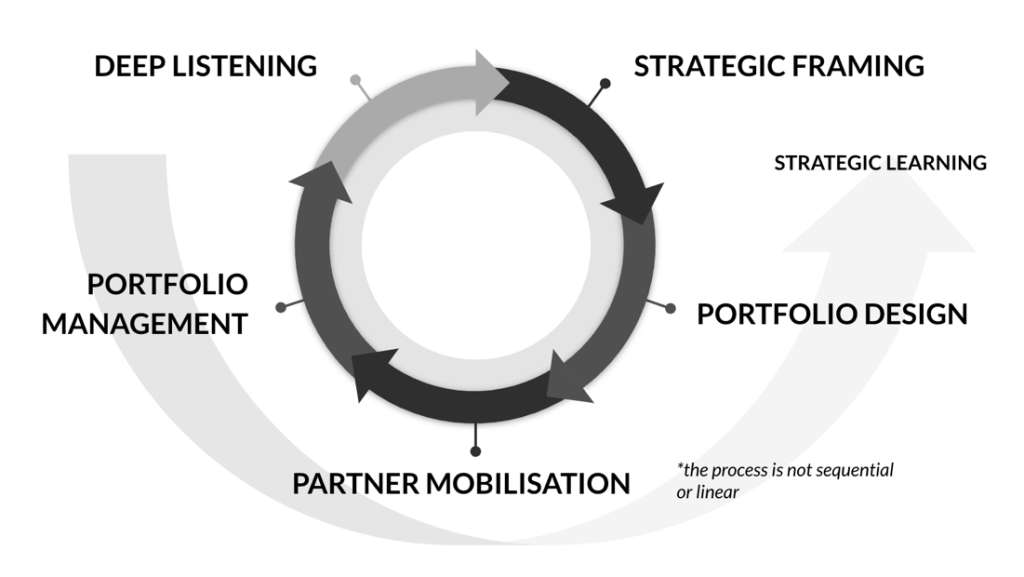
- Deep Listening: Enabled by stakeholder interviews and research — focusing on underlying barriers and innovations
- Strategic Framing: Focusing on strategic alignment with existing initiatives and identifying suitable scale and scope
- Portfolio Design: Enabling multi-stakeholder workshops for ideation and building legitimacy and alignment
- Partner Mobilisation: Moving towards shared accountability, multi-partner collaboration and new forms of governance
- Portfolio Management: Building tools and metrics for continuous portfolio development, implementation and strategic learning
Deep Listening and Strategic Framing
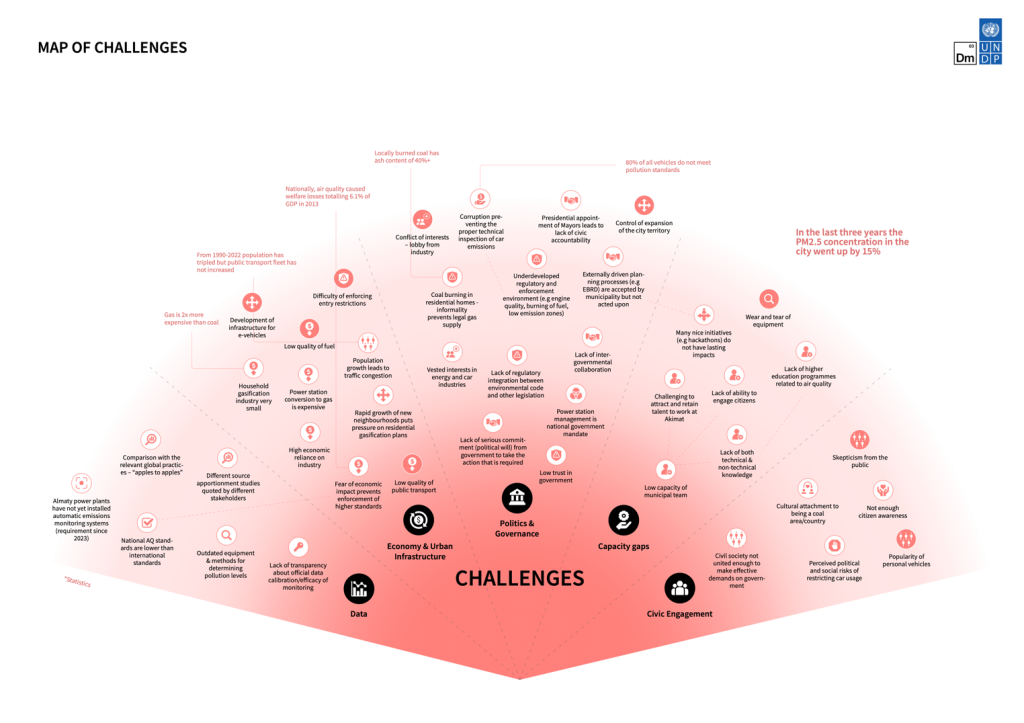
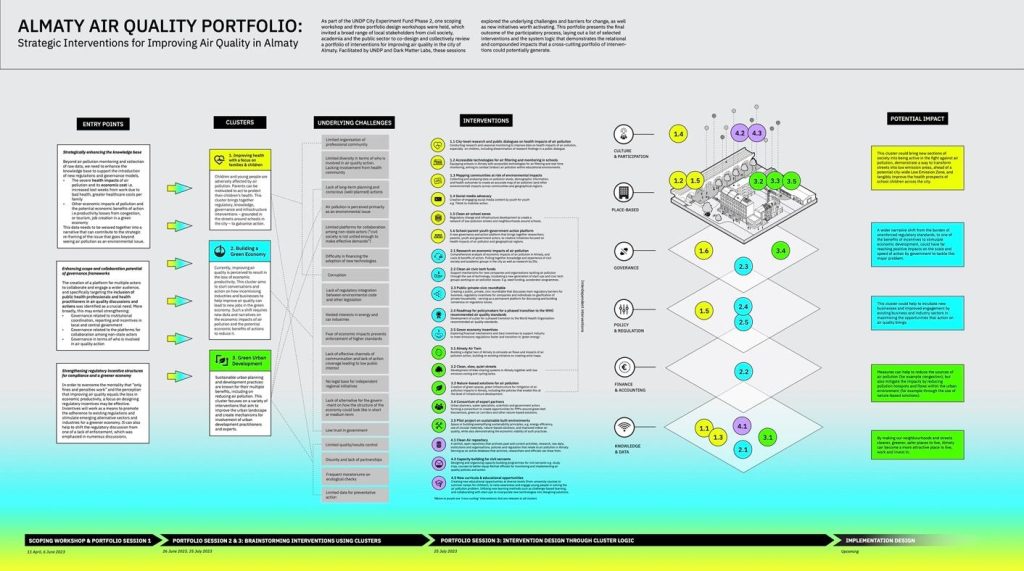
Our initial step centred around deep listening, a phase marked by stakeholder interviews and desk research. This allowed us to uncover the nuanced challenges and opportunities within the Almaty context, focusing on the underlying barriers to clean air and the potential levers for change. In April 2023, we held an in-person ‘sensemaking workshop’ inviting a diverse range of stakeholders — from local experts to community organisers — to share, validate and strengthen the insights gathered from the research. (More details about the process in our first blog.) Some practical tools that we adopted in an in-person and hybrid workshop context were the Five Whys framework, which allows collaborative investigation into root causes of problems, and the challenges and initiatives mapping canvases (see image below), which provide a framework that incorporates insights from desk research and invites participants to proactively add missing elements.
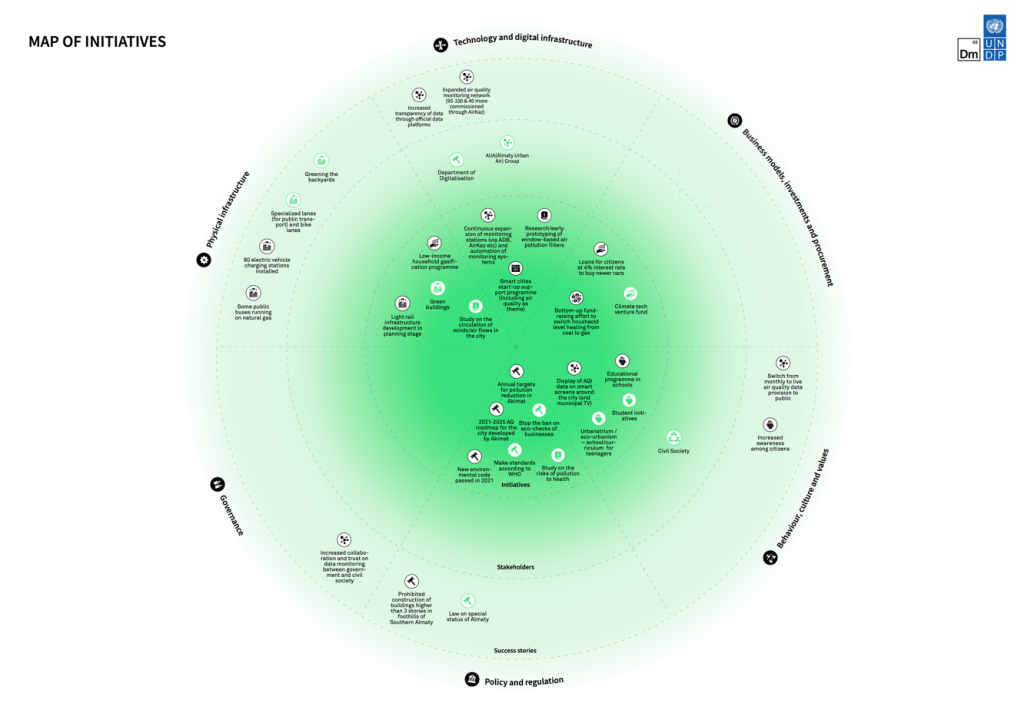
As a crucial step in the portfolio process, strategic reframing utilises insights from the identification of structural challenges to pinpoint gaps and highlight potential levers of change. Through participatory sessions, reframing becomes an opportunity to introduce diverse viewpoints into the portfolio, creating richer and more differentiated narratives as well as new entry points for action. In the case of Almaty, strategic reframing involved looking into one of the root causes of the challenge identified by local stakeholders: the fact that air pollution as an issue is often overshadowed by concerns for economic development because it is largely framed as an environmental issue. Through reframing, we were able to construct a narrative around air pollution that highlighted the economic implications and adverse health effects, particularly on children, which opened new avenues for collaboration between schools, parents, businesses, and medical researchers. This not only broadened the scope for advocacy but also facilitated knowledge sharing and potential for collaborative action.
Often, introducing a systemic perspective into an existing issue necessitates an expansion of the problem space, because root causes of a problem tend to overlap, and this exploration of common ground allows us to see how seemingly discrete sectors or domains of problems are in fact interrelated and interdependent.
Portfolio Design and Partner Mobilisation
The next phase of the work involved a series of collaborative ‘design sessions’ to explore new actions and initiatives that could be integrated into the portfolio. The process not only helped generate innovative ideas but also built legitimacy and alignment among stakeholders, ensuring broad-based support for the portfolio’s objectives.
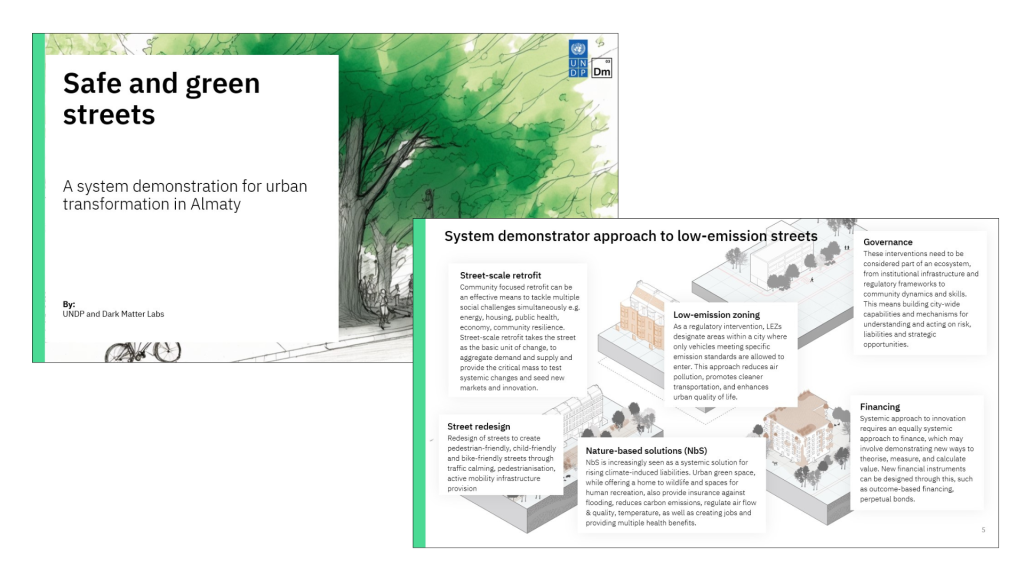
Instead of being a separate phase, partner mobilisation is usually embedded in the ongoing participatory activities that we hold throughout the portfolio design phase. This is to ensure a smooth transition to the implementation phase, and to avoid treating implementation as a mere exercise of delegation and delivery. In the Almaty portfolio, we introduced an additional step of creating a ‘nested’ portfolio—the ‘Safe and Green Streets’ initiative, which strategically connected several initiatives (or “options”) within the larger portfolio to align with critical developments in the city (specifically the new General Plan of Almaty by the government, and mandates of key stakeholders). This was an effort to improve the chances of investment, in a context where portfolio-based investments were rare, and to secure the buy-in of key local stakeholders who may not be familiar with the portfolio framework.
As such, portfolios emerged as a tool to move beyond traditional ‘master plans’ and municipal planning, which often result in extensive lists of actions that few people engage with and that become fragmented during implementation, typically being delegated to the most economic bidder. While the participatory portfolio design sessions helped counter the centralised and top-down nature of planning, transforming it into a more distributed and iterative process, an additional step is needed to make it truly actionable. Through our experience in Almaty, we recognised that to advance a portfolio of actions beyond a static list, it must be integrated into ‘pathways’ aligned with funding opportunities and potential coalitions of actors.
Portfolio Management and Strategic Learning
Portfolio management involves a dynamic process of strategic review and learning, combined with institutionalisation and mainstreaming, which is what we had attempted to do through developing a ‘nested’portfolio, aligned with municipal strategies. It recognises that portfolios need to be continually updated and respond to the latest information, learning through emerging partnerships that form along the way. In the Almaty portfolio process, we began with an open inquiry (not just a hypothesis that was going to be tested and evidenced), which was further defined through stakeholder interviews, challenged and validated continuously throughout the collaborative portfolio design process, and re-worked again through the formation of new partnerships. The evaluation of a portfolio does not happen at the very end—instead, it is iterated at multiple points throughout the process, which allows room for emergence and an ability to respond to the changing conditions of the system.
Lessons Learned and Looking Ahead
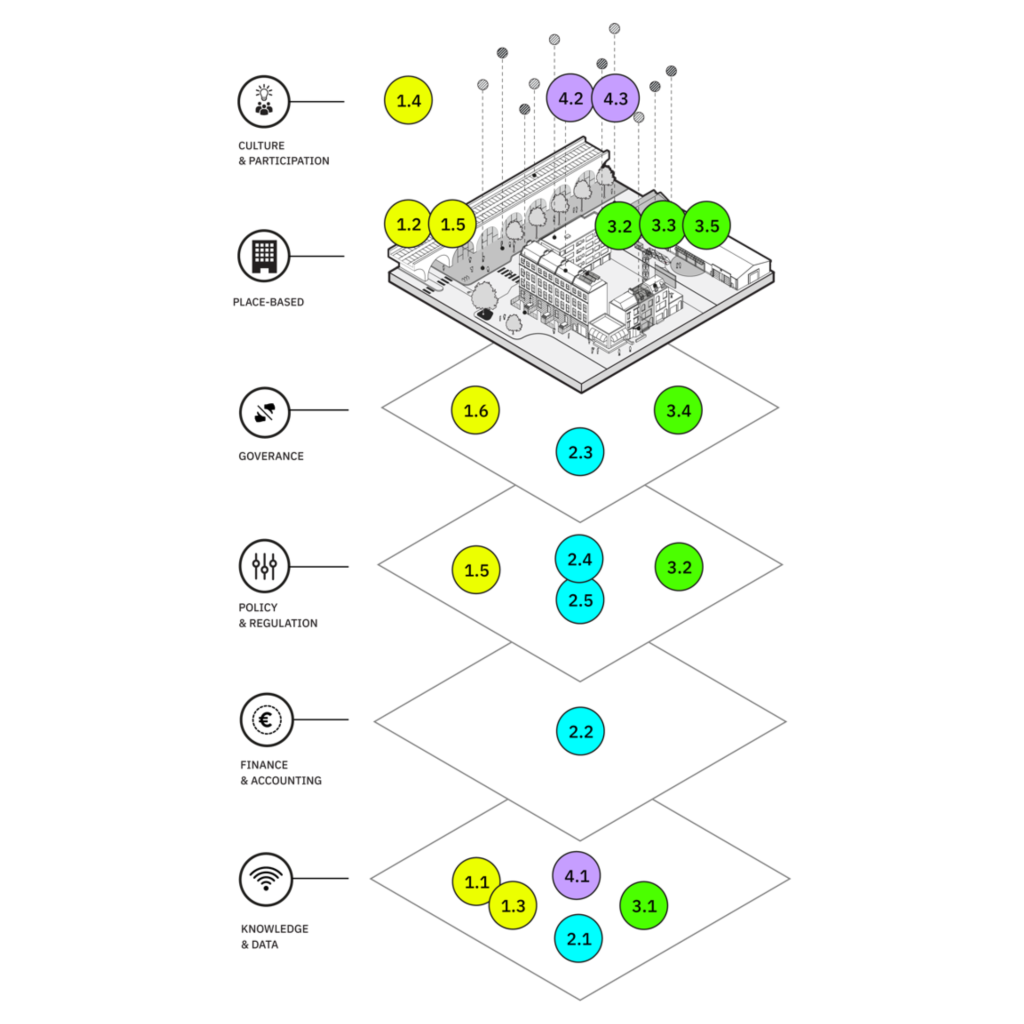
As a methodology, the portfolio approach is continuously evolving. Typically, the concrete outputs of a portfolio design process include a list of actions—also referred to as options, interventions, or experiments—that are strategically implemented by various actors. These actions are often clustered together to highlight adjacencies, connections, and potential synergies. In the Almaty portfolio, actions were organized under three strategic outcomes: 1) Improving health with a focus on families and children; 2) Building a Green Economy; and 3) Fostering Green Urban Development. These clusters align with the strategic framing of the portfolio, which addresses air pollution as both a health and economic issue. As detailed earlier, some initiatives in the portfolio were strategically grouped under the ‘nested’ portfolio of ‘Safe and Green Streets.’ This initiative envisions a network of interconnected innovations centred around schools, involving retrofitting for energy efficiency, low-emission zoning, urban green infrastructure improvements, and tactical urbanism for community engagement.
As we continue the first stages of implementation, which includes among others a small-scale experiment centred on tactical urbanism, one critical reflection has emerged: a mere list of actions—or a portfolio of actions/initiatives—is insufficient. Greater effort is required to understand and articulate how these diverse actions can be implemented in real-world contexts. In essence, a more nuanced ‘portfolio’ approach to ‘implementation’ is necessary to ensure these strategies are effectively realised.
As a first step, we are exploring how we can expand and complement the portfolio of actions with additional data and insights such as a list of relevant actors and assets in the ecosystem. The identification of relevant actors within the system highlights the potential for new, sometimes unexpected alliances that span institutions, spaces, and narratives. Similarly, identifying the assets available within the system—from financial resources and regulatory frameworks to democratic legitimacy—underscores the critical role of resources and constraints in shaping action. These assets do not merely facilitate action; they define the boundaries of possibility, encouraging, constraining, and aligning actions within the urban ecosystem. Ultimately, a portfolio that effectively conveys how multiple connected actions, delivered through a coalition of diverse actors who share resources and build on each other’s capabilities, can significantly amplify impact.
Our initiative on improving air quality in Almaty has been a journey of discovery and learning. As the portfolio advances into new phases of implementation, it is progressively handed over to local actors who institutionalise and tailor the process to their context. Concurrently, we continue to explore ways to scale up the venture and apply the lessons learned to initiate or expand larger UNDP programmes both within Kazakhstan and beyond.
We extend our sincere thanks to Eunsoo Lee, Steven Bland, Gyorgyi Galik, Simon Höher, and Anel Moldakhmetova from Dark Matter Labs for their pivotal role in co-leading our portfolio design process. Their expertise and dedication have been invaluable in shaping our approach and guiding our journey.
Armenian municipalities take ownership of their development
Armenia is a country of ancient histories and modern development. Walk through its capital Yerevan and you willpass through a park filled with modern art sculptures amidst skyscrapers and shopping malls. Yet the country can also contend for the birthplace of Christianity as state religion and winemaking.
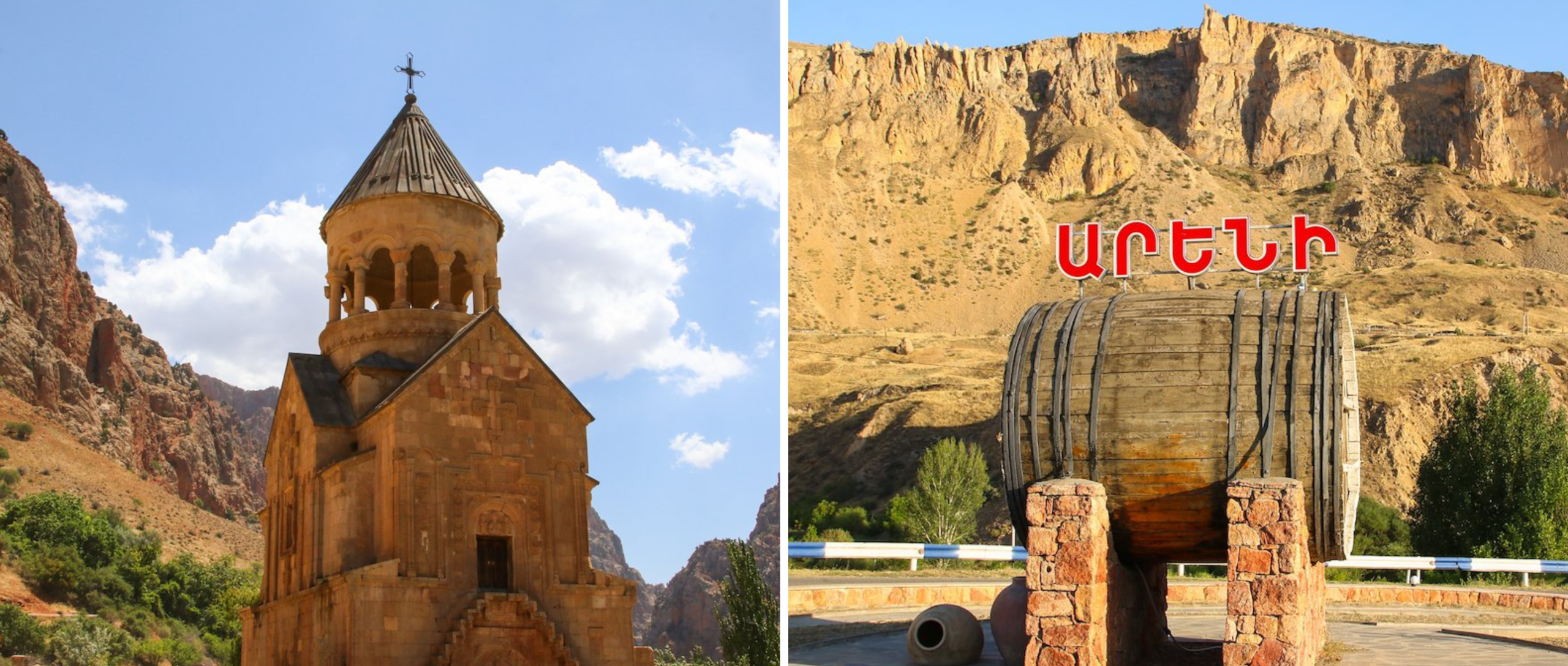
Exploring the narratives of three places around the country – Gyumri, Kapan and Areni – carries us through the rich cultural heritage and history of Armenia. Gyumri and Kapan’s origins date back to the 5th century, while Areni’s history begins in the 13th. These municipalities, each with its own unique history and past, are actively shaping their futures.
As these municipalities have evolved, they’ve faced unique and complex challenges that cannot be solved with one-off solutions from the shelf. Supported by the EU and UNDP’s Mayors for Economic Growth (M4EG) initiative, these local governments are now designing mission-oriented economy strategies for their municipalities. Over the last 10-15 years, there have been plans in Armenia to decentralize government functions, giving more power and autonomy to local governments, but it’s not yet a direct mandate. Through this initiative, and the co-design and grants it provides, municipalities now have stronger control and mandate for their reinvention journeys.
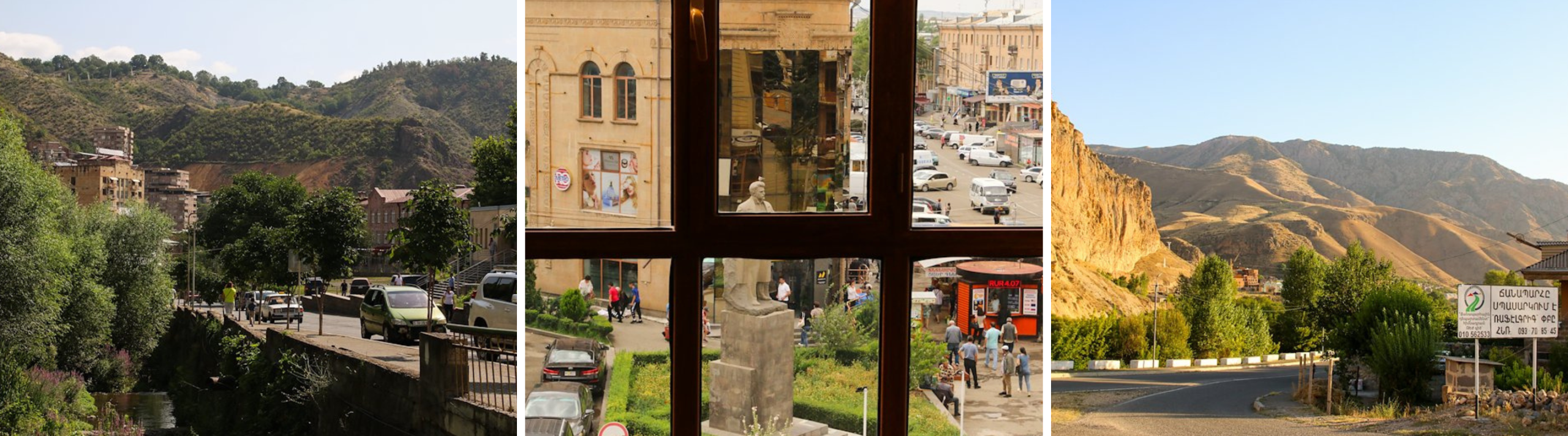
That process of reinvention has citizen involvement at its core. By listening to the community and conducting sessions to listen to their concerns and desires, the municipalities are putting residents at the center of their redevelopment.
And the driving force behind much of this work lies with a younger generation. These are individuals who care deeply for their place of origin, who choose to stay and reimagine how to make living more attractive and sustainable for everyone rather than migrate to Yerevan or beyond.
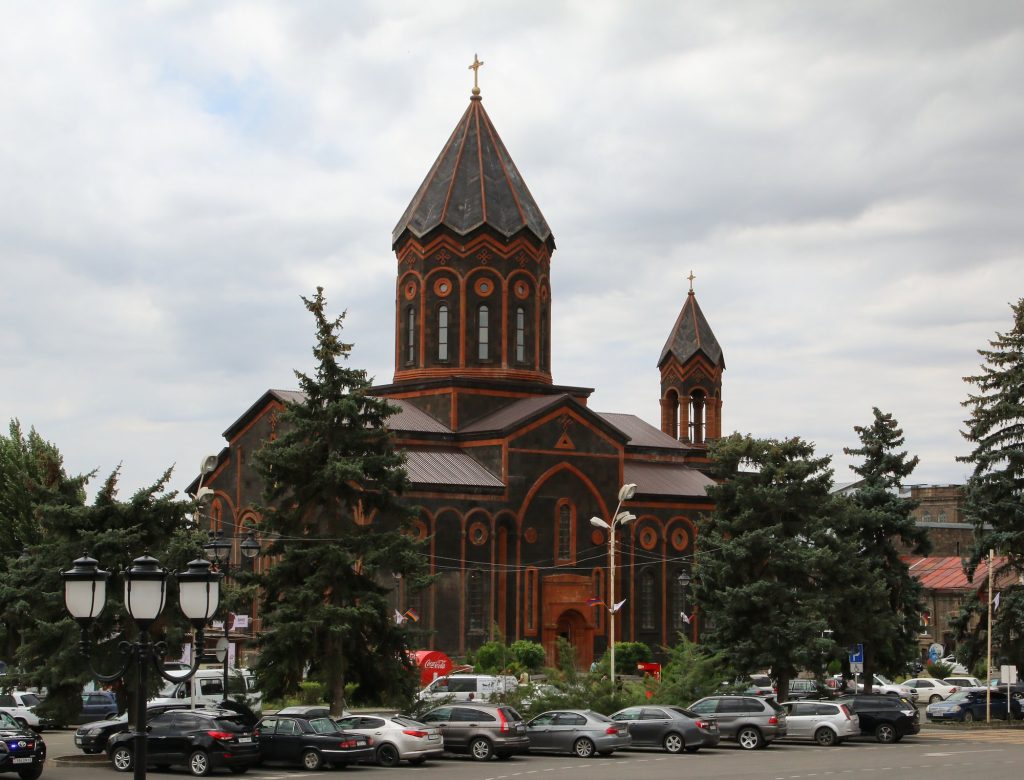
GYUMRI. POPULATION 112,000.
OUTLOOK: EQUITABLE AND RESILIENT CULTURAL TOURISM
Gyumri, population 112,100, is the second largest city in Armenia and known as its cultural and sports capital, with a rich history and unique heritage sites and customs. But some of the damage from a big earthquake in 1988 still has not been fixed, despite much effort to mobilize support.
The city’s cultural heritage is strong, encompassing everything from architecture to applied arts, from music to poetry and theater. Wood and metal production – also linked to the cultural economy – make up a significant share of income sources. Historically, trade was also a major sector because of its size and strategic location, as well as a developed textile industry, construction and hospitality sectors.
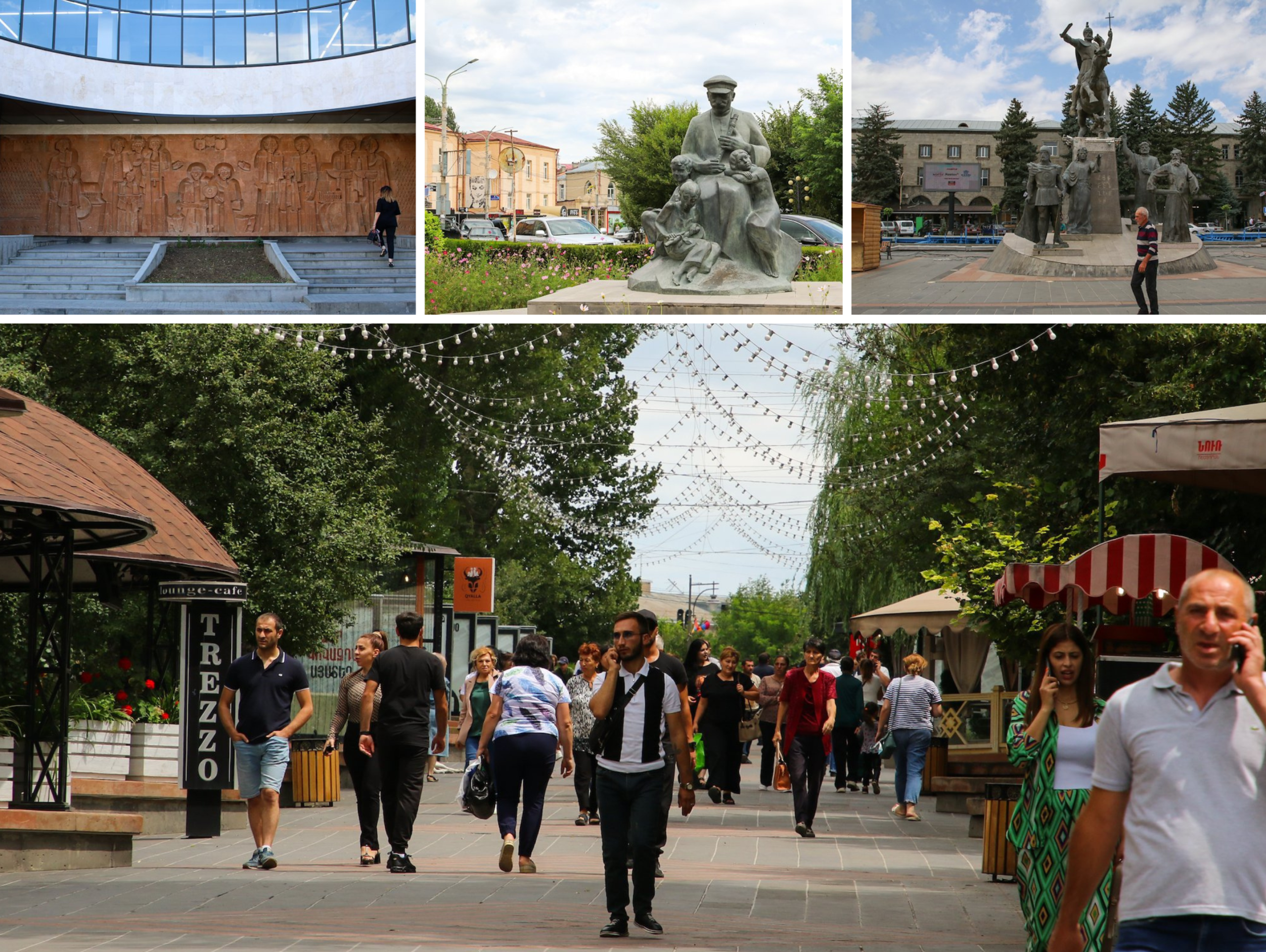
Since 2018, there has been a surge of tourists, magnified during COVID, which the city was not prepared to accommodate. Despite facing growing pains, related to cultural and tourism development, the city has successfully reactivated its former cultural and touristic life post-pandemic. But tourists are still consuming the cultural heritage of the previous century. Additionally, many cultural institutions under municipality management have not changed their practices or adapted to new technological innovations.
The municipality’s plan is focusing outwardly on one hand, to improve the tourism infrastructure and make it more adaptable to the 21st century, and inwardly on the other, to create an environment for its residents that is environmentally healthy and allows for new culture and opportunities to emerge.
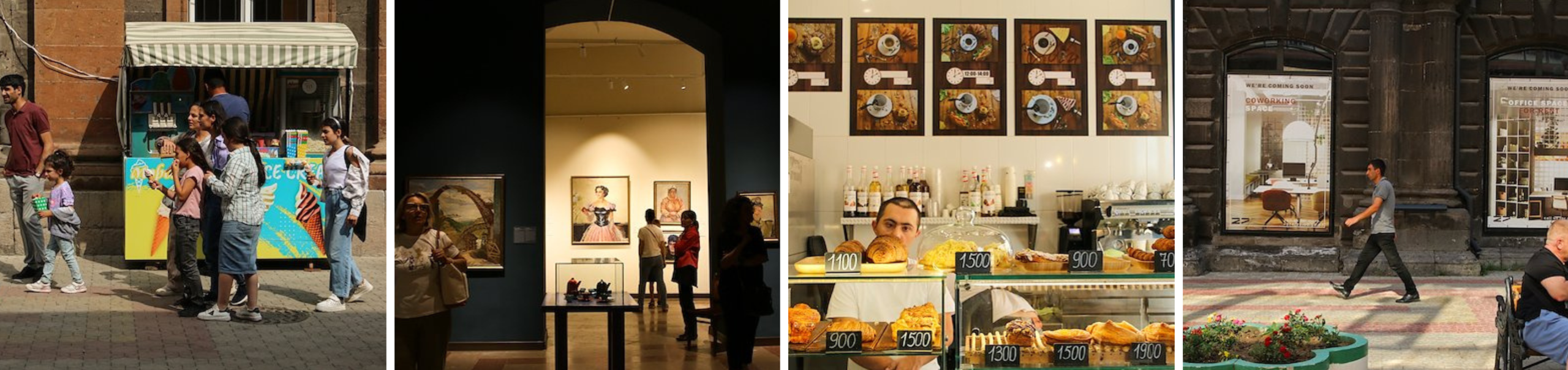
Leading the vision is a team of dynamic young women: Lilit Tovmasyan, Marine Hovhannisyan and Emma Baghdasaryan, all part of the Portfolio team.
“The three of us – Marine, Lilit and I – were all born in 1988, the same year as the devastating earthquake,”
explains Emma, programme coordinator at the Foundation of Urban Development. “The impact was significant, shaping our challenging childhoods. A few years ago, we initiated a gathering ‘88 30’, which brought together individuals born in 1988…who have been shaping the city across different sectors. We want to emphasize that the city’s future rests in our hands, and we’ll support the city that has lost so much by investing in our community, especially the youth.”
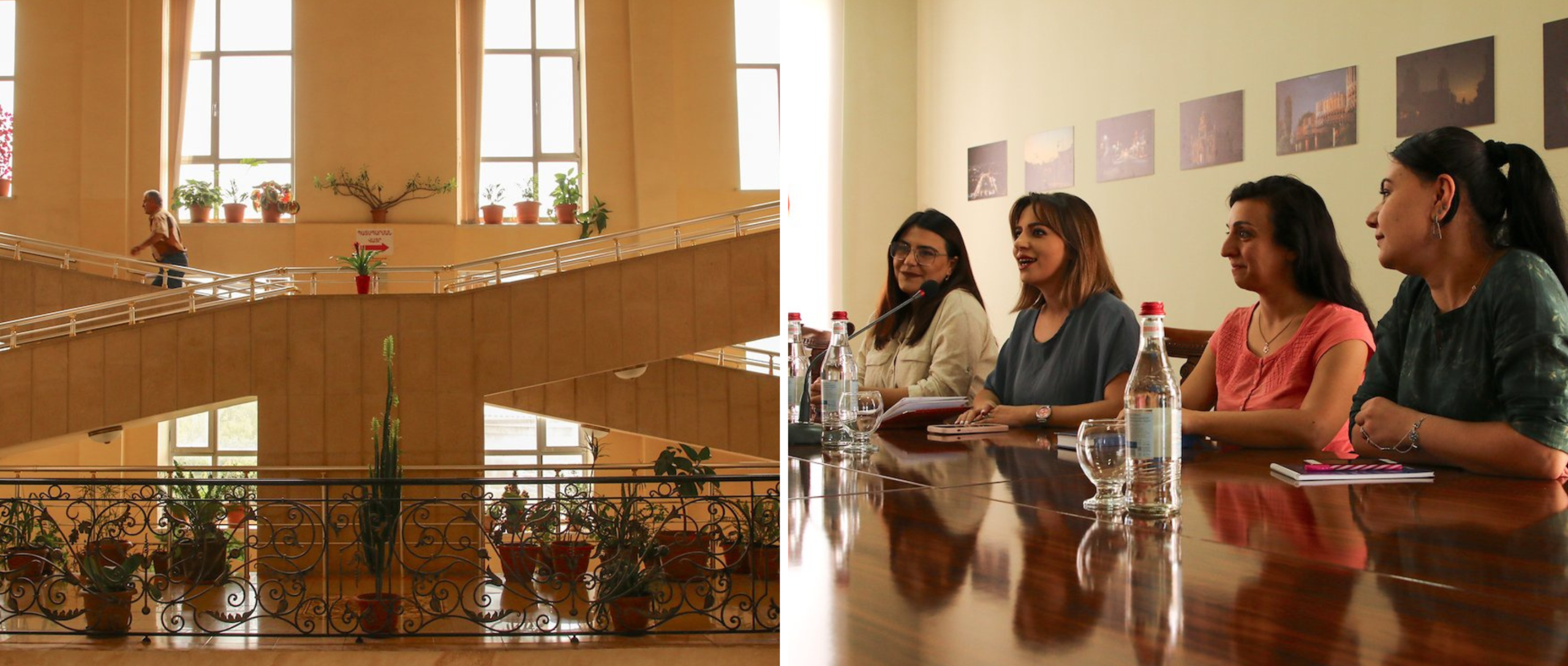
Lilit, head of the unit in the Department of Culture and Youth Affairs, notes the people are special, and their vibrancy can help move the city forward despite the challenges. “On the one hand, many of them reflect the traditions and heritage of our ancestors. At the same time, there exists a robust and progressive community galvanizing the need for change and innovations.”
“To plan the future, we must assess our past,”
Marine, also in the department of Culture and Youth Affairs, points out. And perhaps use it and reinterpret it. She hopes some of the factories and sectors can be revitalized and renewed, and talented youth can create cultural assets that reflect the current times. “Personally, I would love to contribute to the cultural sector and help educate the new generation.”
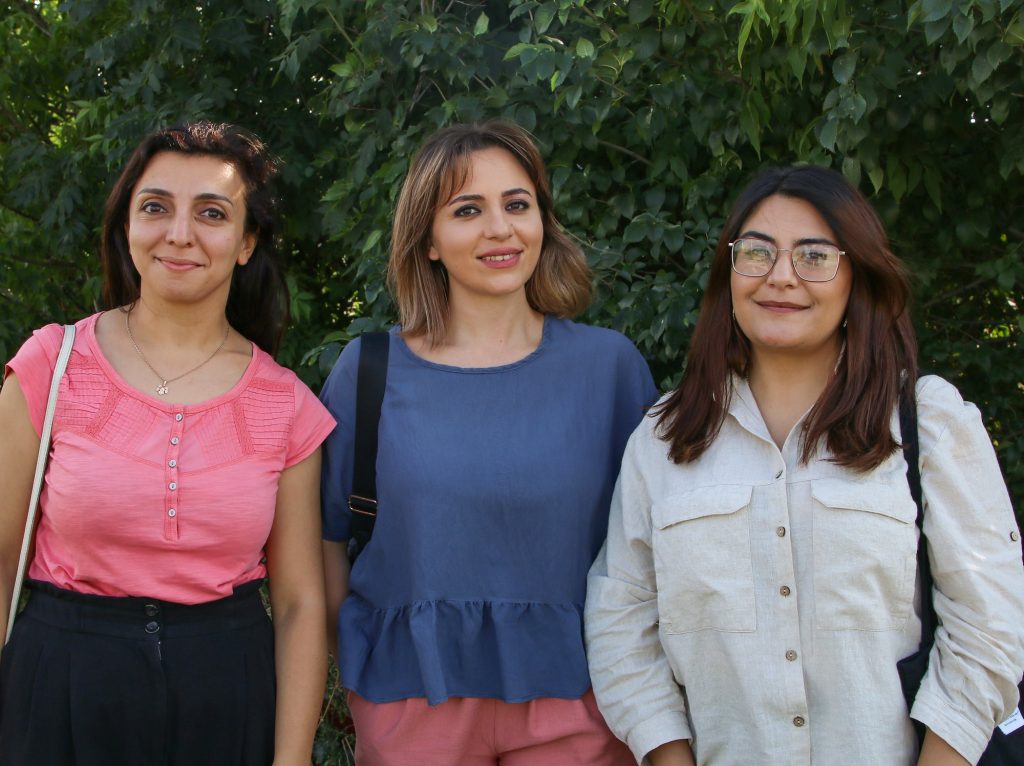
KAPAN. POPULATION 44,362
OUTLOOK: BROADENING HORIZONS TO ENCOMPASS MORE DIVERSE ECONOMIC AND COMMUNITY INITIATIVES
Kapan, in southeast Armenia, serves at the administrative center for the Kapan Municipality as well as the provincial capital of Syunik Province. The economy in this region is mainly based in the industrial sector. Historically reliant on mining, which is currently 80-85 percent of its economy, the city’s well-being has been impacted by foreign investors. The majority of the community is connected to mining in some way, but in the foreseeable future, the resources will dry up, bringing significant cuts to jobs and incomes. A high rate of migration is expected.
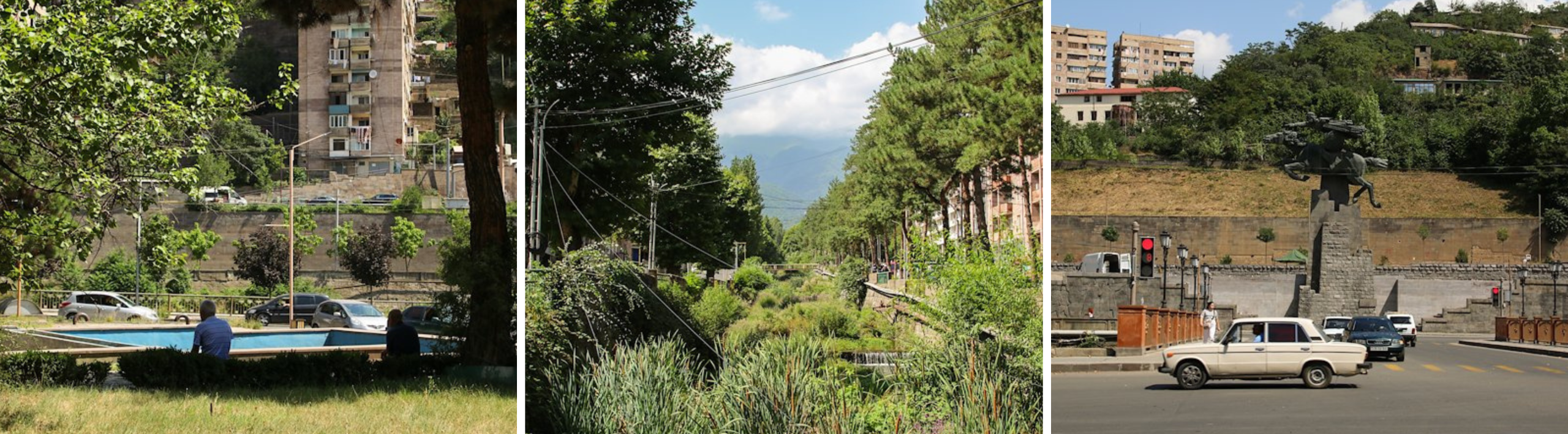
Mining is a difficult job and poses severe health risks to those employed in the system, as well as for the environment where communities live. Traditionally a steady job, younger generations are less interested in this type of high-risk job.
Security risks leave people with a state of unease and insecurity, which can also impact the overall well-being of the local population.
So Kapan is broadening its horizons to encompass more diverse economic and community initiatives (focusing on business and talent development). It’s asking: what are the new areas of economic development? How do you keep younger generations in Kapan, or get them to return?
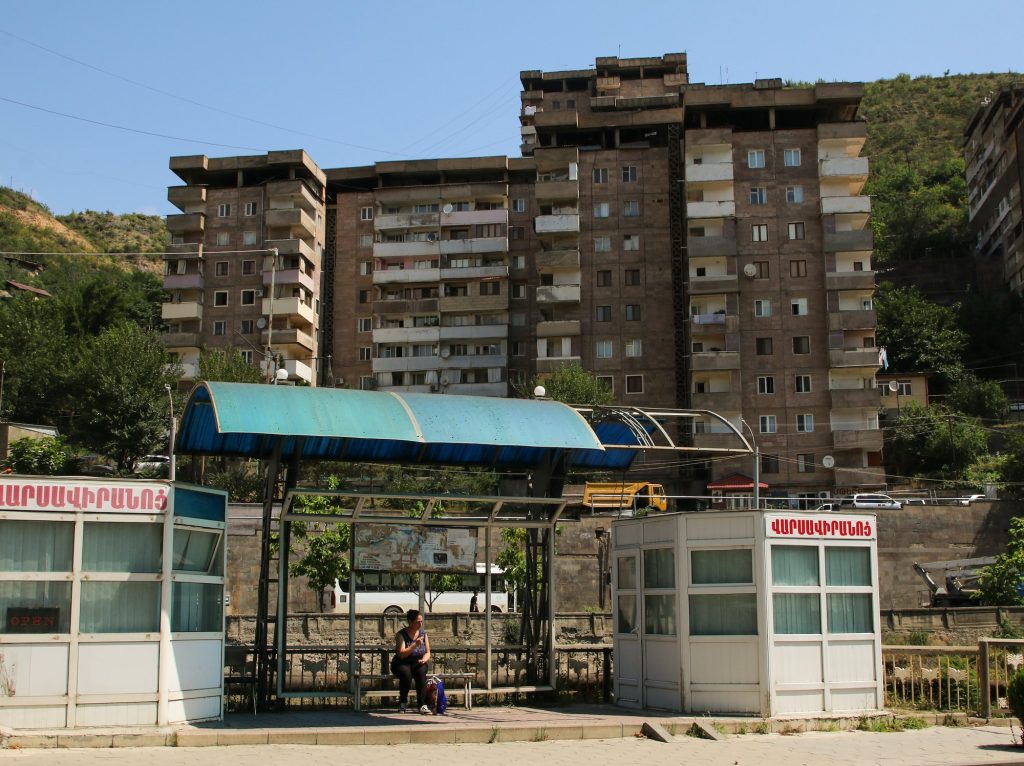
One of these ways is developing technology and entrepreneurial talent that can match needs and skills in existing or upcoming industries. The TUMO Center for Creative Technologies, free-of-charge educational program for teenagers, now operates a training center in Kapan, supported by the EU.
The municipality is considering also using it for mothers and women returning to the workforce after discontinuing their career for family reasons, a large, underused group of work talent. Incubator labs and collaborative studios can help nurture entrepreneurs in tech startups, local production and digital design businesses.
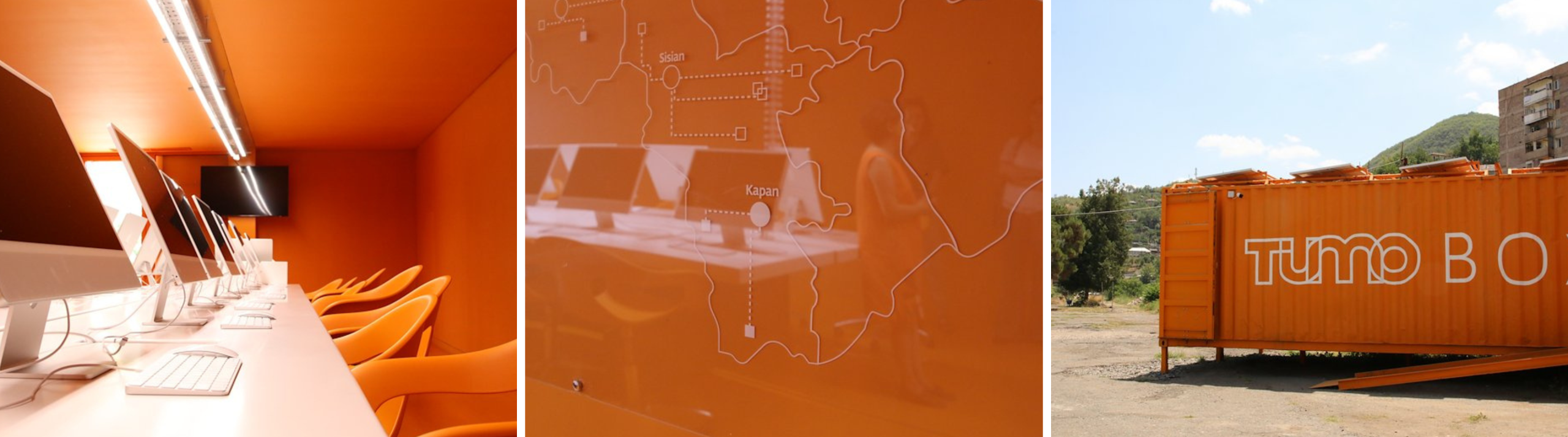
But it’s not just economy that makes a place sustainable for living. How can the municipality improve social protection and the social cohesion? Issues of security have brought stress to the community, and in planning for the future, the community has asked the municipality to incorporate better well-being into the strategic planning ideas for the future.
With the more centralized government, Kapan did not previously have an understanding of how to “work with” and address complex challenges, and institutions are dealing with this for the first time.
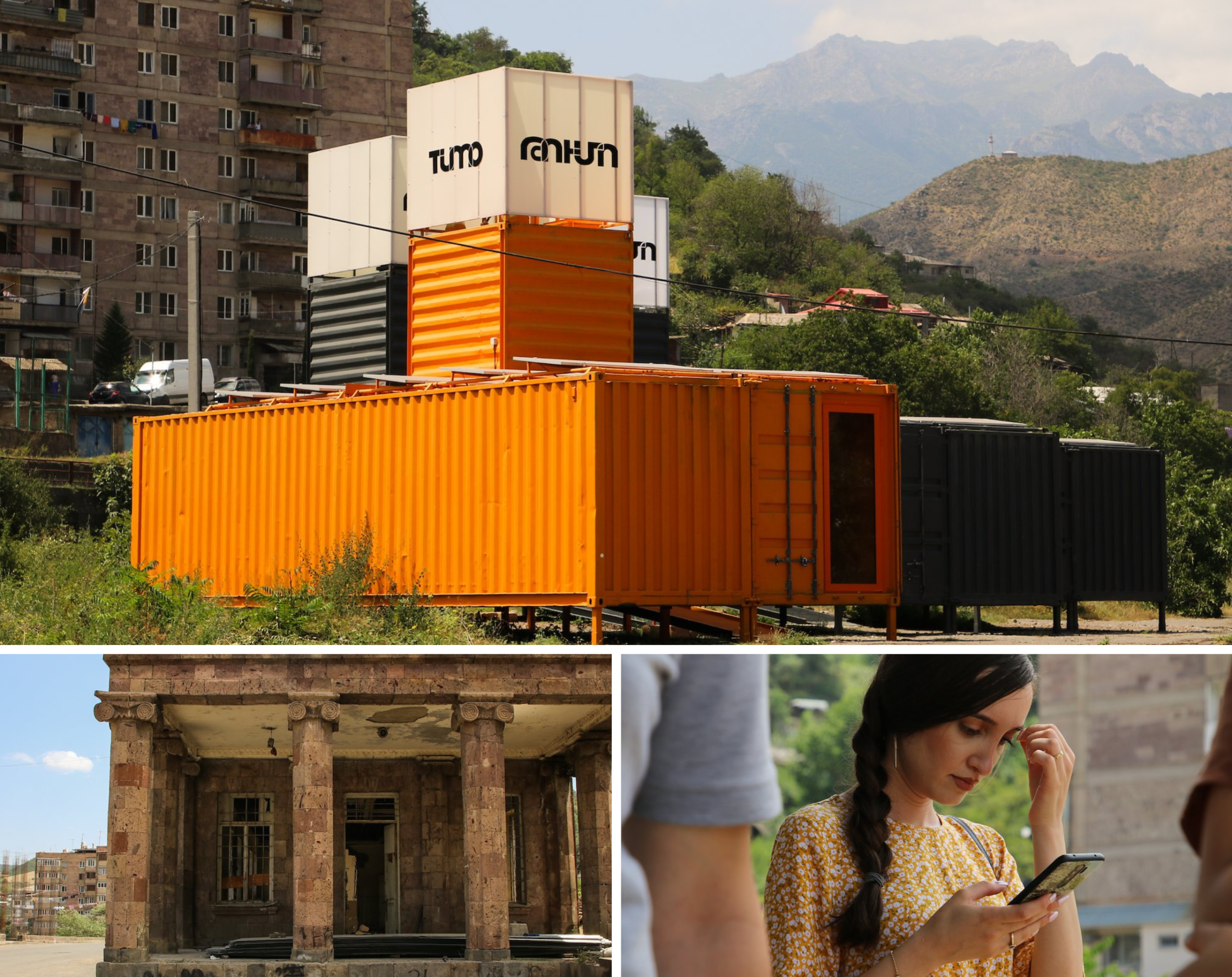
From the community side, social worker Svetlana Manasyan has been a key liaison for the process and Portfolio team, working to incorporate mental well-being into the municipality’s overall plans.
“My deep connection to my family, friends and community keeps me attached to this place,” she explains. “I’ve noticed that our community is very well-educated, something common with Yerevan. What differentiates Kapan apart for me is its distinctive nature and culture.”
She notes that low salaries push the younger generation toward migration or emigration for better job opportunities. As an industrial municipality, it is easier for men to find jobs than women.
“I see a need for social workers in the municipality, positioning me perfectly to make meaningful contributions now,” she explains. And she also sees hope:
“I’m not the only young person who chose to stay in Kapan. Many others have also opted for remote work, which enables them to stay in Kapan and contribute to the municipality’s development.”
ARENI. POPULATION 11, 309
OUTLOOK: STRENGTHEN CULTURAL LANDMARKS AND CREATE OPPORTUNITIES FOR ALL VILLAGES TO ENHANCE TOURISM
Areni municipality, a united community of nine villages, sits in the center-west of the country. From Khachik village, you can see Iran, Azerbaijan and Türkiye.
Areni is known as a centre for wine production and as a big name in wine history.
“In Areni and its larger vicinities, around 200 families are involved in winemaking,” explains Norayr Grigoryan, part of the M4EG portfolio team. “Some produce it for sale, others do as a hobby or gifts for family and friends. With 6000 years of wine history, it became deeply rooted in our history and traditions.”
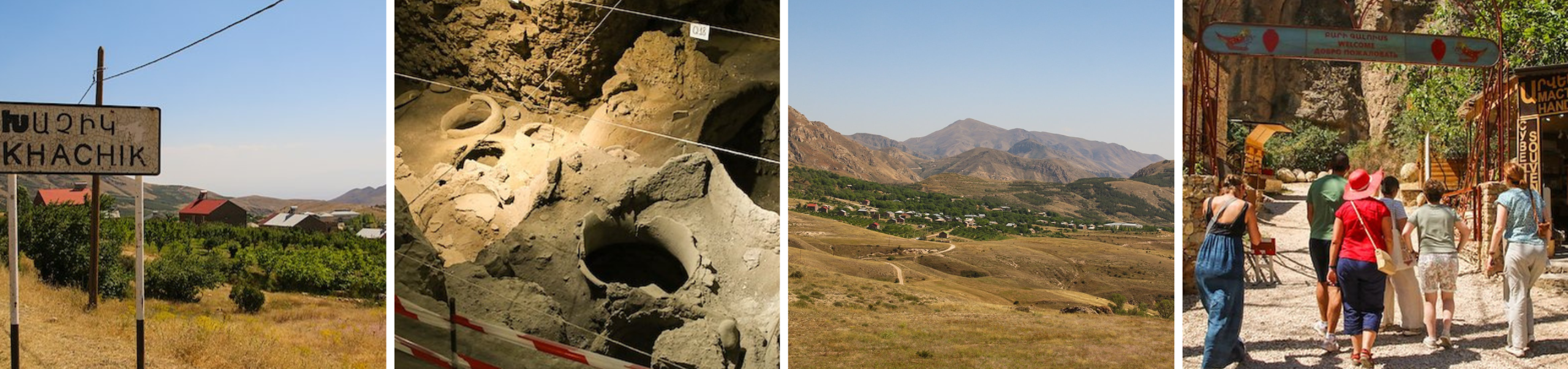
Areni also boasts many unique monasteries, including 13th century Noravank, which are important for Christian tourism, a key sector for Armenia. Despite the strong heritage, tourism infrastructure is lacking. Many of these locations and sites are managed by different private and state entities, making it difficult to generate coordinated tourism efforts. When tourists come, it’s usually just for a few hours as they pass through to other parts of the country.
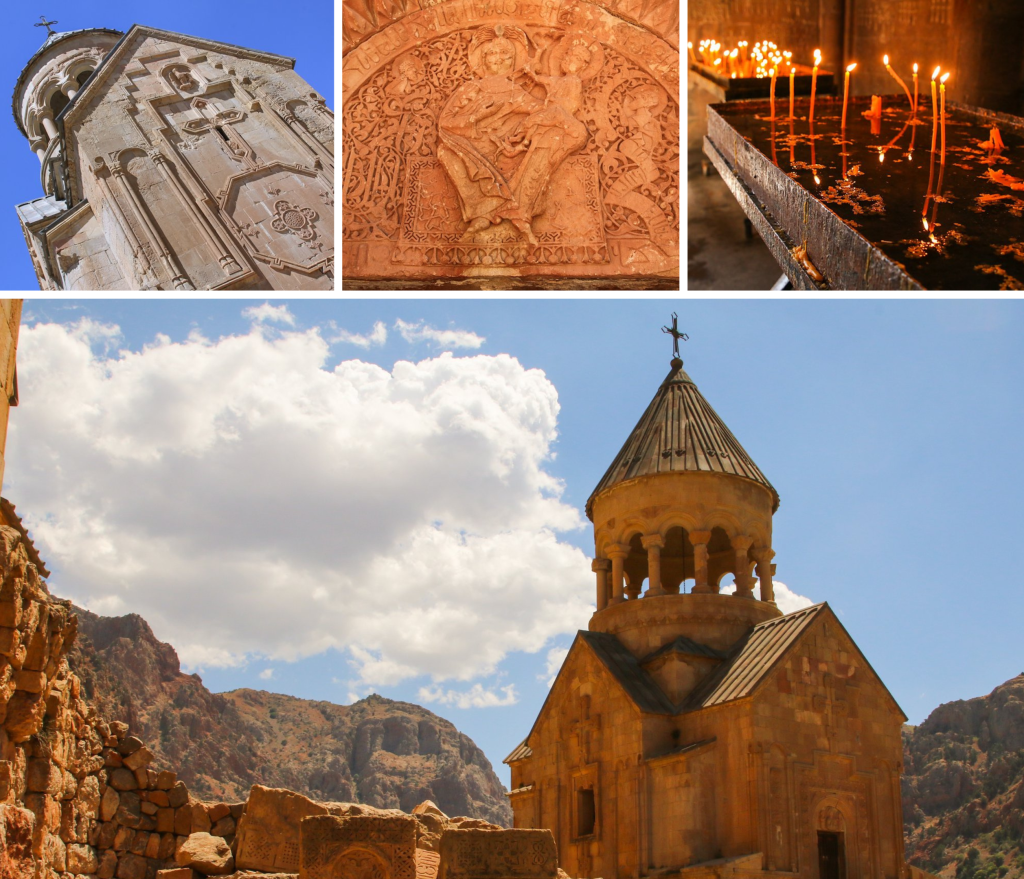
So the municipality is focusing a sustainable tourism transformation, both economically and environmentally, that allows for a diverse, connected and attractive “package” for visitors. This means improving infrastructure for current attractions, developing a brand for wine tourism and identifying new niches and alternative offerings, such as gastro hubs (supported also by UNDP and others) and outdoor adventure tourism.
As one administrative unit, however, it is difficult to craft a universal approach that delivers for all villages. Only 2 of the 9 have wine production or churches, and some villages are more disadvantaged and remote, lack human capital and face more security risks. So special efforts must be made to ensure that all can benefit from this major sector.
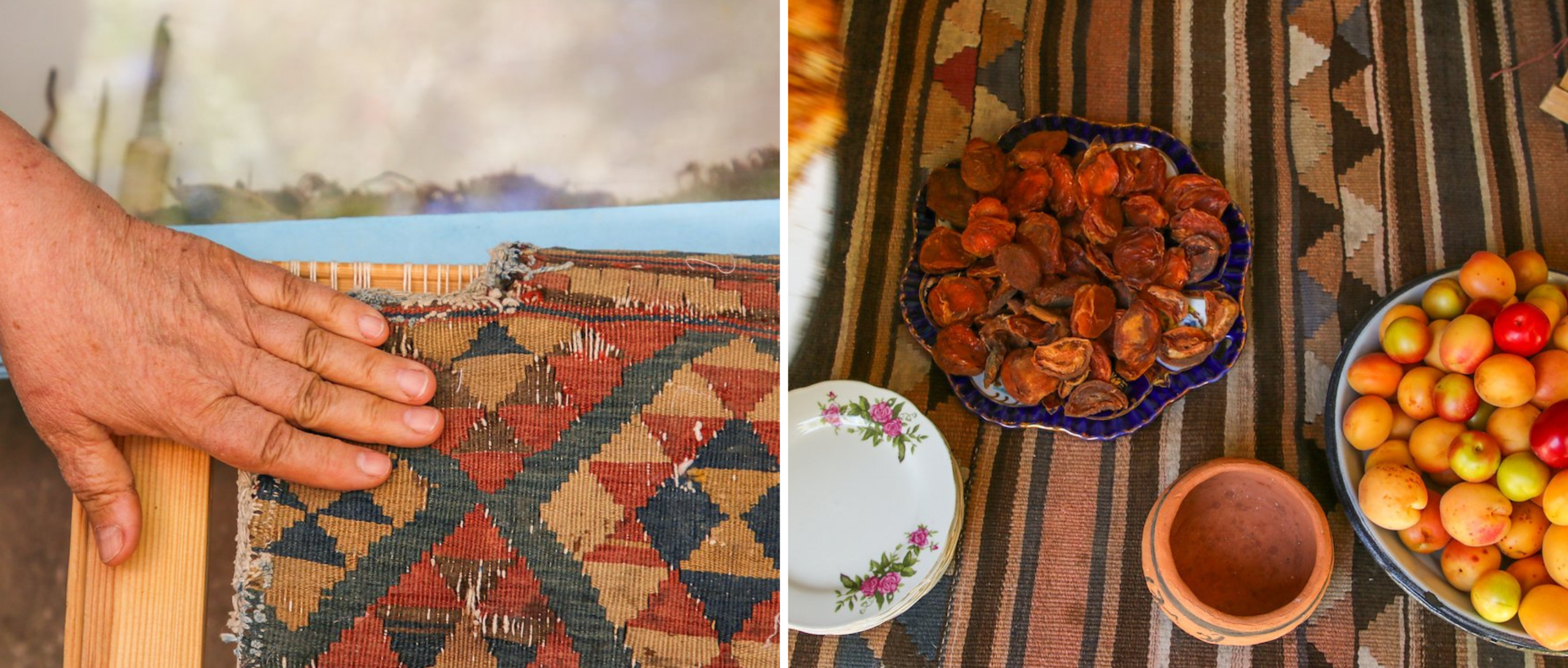
Norayr wears many hats in addition to the M4EG one: leading specialist for advertisement services and tourism for the community, media worker and a winemaker and purveyor of a 30-year-old family vineyard.
“Being born and living in a place naturally connects you to its landscapes, history and cultural legacy,” he says. But that’s not always enough to keep one at home.
“A vast development challenge is that village life doesn’t appeal to young people. Unfortunately, there is a brain drain, a strong migration tendency, and a high level of urbanization.”
Norayr wants to be an active part in reshaping his community’s well-being and future development, so that the younger generation also has a place here.

All these efforts revitalize historic gains and embrace future-readiness where history and progress can coexist and flourish, where community engagement and sustainable development are being actively pursued.
The article was republished from UNDP Europe and Central Asia’s website.
The Mayors for Economic Growth (M4EG) is a joint EU & UNDP initiative to support Mayors and their teams in the Eastern Partnership region. The M4EG offers resources, network and learning opportunities to explore new trajectories of growth, to make towns and cities more attractive for people and investment. The M4EG takes a ‘hyperlocal’ and whole-of-place approach. There are no quick fixes for complex challenges – how is your municipality investing in continuous learning, experimentation, and collaboration to be more #futureready?
Three years ago, we embarked on a new journey with the EU funded Mayors for Economic Growth (M4EG) initiative, supporting mayors across the Eastern Partnership to develop new growth trajectories through mission-oriented innovation. Our goal was ambitious: to transcend business as usual and embrace both a systematic and systemic lens. This initiative, spanning a network of 420 municipalities, has been more than just support for strategy development and economic planning. It’s been a venture into what it takes to stay relevant in a changing and complex environment – from the onset of wars and forced migration, pandemics, and energy crises to local election changes.
We needed to capture learning rather than monitoring only
Recognizing the ever-changing realities within these municipalities and their contexts, we realized that we needed to stay on top of changes and patterns as a team, and that a proactive approach was vital. We recognized the necessity of not only monitoring or evaluating our activities, but also quickly and efficiently reflecting the realities on the ground to make relevant changes based on the evolving context. Hence, we sought to create quicker feedback loops and actionable intelligence, which led us to establishing a rhythm of learning rituals and tools. In 2022, we introduced the M4EG Systems Learning Framework. This tool wasn’t just about monitoring; it was a framework to deepen our insights and guide decision-making, aligning with our mission to increase the relevance of our development efforts.
This led to learning questions that complemented the standard results-based management ‘outcomes’ and ‘outputs’
We understood that the traditional linear progression from output to outcome, akin to a strategy, often yielded uncertain results, with the behavioral or organizational changes being difficult to attribute, and possibly not even influenced by our best-intentioned efforts. Balancing the often quantitative indicators with qualitative insights, we designed learning questions to complement the standard indicators (see example below). To operationalize this, we conducted monthly internal online reflection questionnaires as part of our regular meeting rhythm, to uncover patterns and insights beyond standard monitoring indicators. This shift opened new avenues for understanding the added value of our work. It was fascinating as we identified patterns that we could not capture with the standard monitoring indicators.
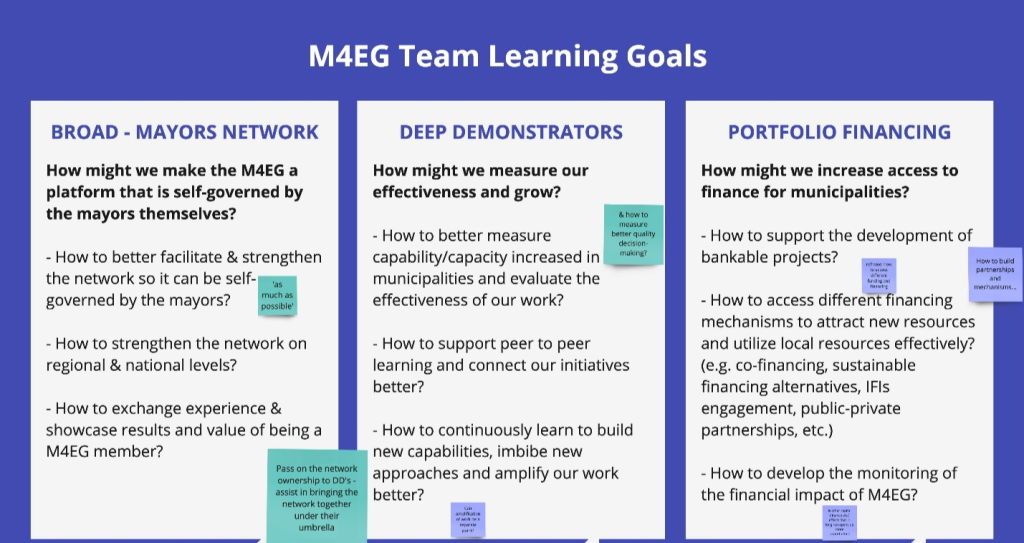
One example of a key insight and how we adapted
One key learning question for enhancing our network focused on improving the exchange of experiences and showcasing the benefits of M4EG membership. Throughout the year, we actively sought effective ways to facilitate this exchange and encourage member participation. A significant insight was the value of cross-border municipal networking and collaboration, particularly highlighted during regional events or peer-to-peer exchanges among local authorities. These periods saw a surge in positive feedback and appreciation from municipalities, reinforcing the importance of being part of the network. This insight led to a renewed emphasis on organizing meaningful network gatherings and improving existing ones. This involved broadening participation to include diverse voices and partners, in response to emerging needs, which also meant bringing in international financial institutions, other partner initiatives at national and international levels, and fostering greater engagement of central governments.
(Learning) culture eats (learning) strategy for breakfast
Fostering a culture of learning necessitated a shift in our approach to questioning – moving away from routine updates and towards more probing inquiries focused on learning, unexpected discoveries, and navigating change. Instead of asking, “What did you do last week?”, we began asking questions like, “What surprised you during your meeting with the municipality?” We augmented this shift with an online space for project staff, creating a platform for sharing and collective learning. Encouraging rituals such as celebrating ‘wins’, foster curiosity and creating a safe space for sharing ‘fumble brags’ and blind spots became integral to our approach.
We have also seen the added value of principles to lean on. A key principle has been ‘not to come with a solution, but a process to co-design solutions in a specific context’. The impulse to immediately solve problems had to be replaced with a sense of curiosity and appreciation for the value of discovery, rather than focusing solely on creating predefined blueprints. Another key principle for learning is now the 70-20-10 model. Where in addition to the 70% of core, tried and tested activities, another 20% of our work ought to be focused on emerging topics and ideas (and ideally 10% for ‘crazy ideas’), where experimentation is needed to help our work and capabilities evolve and stay relevant.
What has been difficult
First, a key realization was our tendency to report actions rather than reflect on learning. Shifting from a control and oversight mindset to one of reflection and learning remains an ongoing journey, and where we seek inspiration from others.
Second, we operate within traditional project management and administrative systems that emphasize accountability and risk management over learning. While we are still accountable in the traditional sense of delivering a clean or green dashboard for all indicators and risk registers, we also nurture a a mindset of ‘yes, and’ as well as curiosity. Continually advocating for an internal operational and cultural shift towards a learning mindset is a critical part of our journey.
Looking ahead
Now in 2024, our aim is to augment our learning muscle by experimenting with new rhythms and rituals, and emerging technologies like artificial intelligence. In a world that constantly evolves, our ability to adapt and learn is our most valuable asset.
We would love to hear from others working on fostering adaptability through actionable learning and insights in their projects and programs. What strategies, rhythm and rituals have you found effective? Please reach out at: irh.innovation@undp.org.
This piece shared what we are working on internally, and we have also tested this framework externally. In 2023, we applied the system learning framework with a cohort of active municipality staff. More on this to come soon.