Category: AltFinLab
UNDP’s Alternative Finance Lab (AltFinLab), in collaboration with the Algorand Foundation, is excited to open applications for the second global cohort of the Blockchain Academy – a flagship learning programme equipping UNDP, UNCDF, and UNV (within UNDP) personnel with the skills to understand, test, and responsibly deploy blockchain for sustainable development.
Running from January to April 2026, the Academy offers a structured, practice-driven curriculum combining self-paced modules, live expert sessions, case studies, and hands-on project work. Participants complete four mandatory modules covering blockchain fundamentals and real-world use cases, followed by optional “deep dive” modules on topics such as digital identity, carbon credits, tokenization, supply chain traceability, and more.
Applications close on Thursday, 18 December 2025. Successful applicants will be notified by mid-January 2026, with onboarding taking place at the end of January 2026.
To help potential applicants learn more, UNDP will host two open information sessions:
- 10 December – Information session in English (Register here)
- 11 December – Information session in Spanish (Register here)
“Blockchain is no longer experimental – it is a practical tool transforming how we deliver impact,” said Burcu Mavis, Blockchain Academy Lead at UNDP AltFinLab. “With this second cohort, we continue building a community across the UN ready to explore innovative, responsible, and meaningful applications of blockchain to advance the SDGs.”
“When UNDP and the Algorand Foundation launched the Blockchain Academy last year, we saw a powerful opportunity to show how blockchain can solve real-world challenges UN staff face every day,” said Matt Keller, Director of Impact at the Algorand Foundation. “By teaching more efficient and transparent ways to deliver humanitarian payments, as just one example, we can demonstrate practical solutions to some of the development community’s toughest problems.”
Since its launch in 2024, the Academy has already trained 500+ participants from 134 countries, creating a global community exploring how blockchain can strengthen transparency, inclusion, climate action, financial innovation, and trusted public systems.
Personnel from UNDP, UNCDF, and UNV (within UNDP) are invited to apply – no prior technical background is required. Find out more about the academy and how to apply here.
The United Nations Development Programme’s Alternative Finance Lab (AltFinLab) and the Blockchain for Good Alliance (BGA) are co-organising a landmark two-day Blockchain Impact Forum. Hosted on 4–5 November 2025 in Copenhagen, the Forum is a global convention of leaders dedicated to harnessing blockchain for social and environmental impact.
The Forum is part of UNDP’s AltFinLab mission to explore and scale innovative financing solutions for development, and builds on its broader work to build capacity, prototype and scale blockchain solutions across the UN system. “The Blockchain Impact Forum provides a crucial platform for the development sector, government and the tech industry to come together and shape blockchain solutions that serve the public good,” notes Robert Pasicko, AltFinLab Lead, for UNDP in Europe and Central Asia.
Day 1: Chains of Change (4 November 2025)
On the first day of the Forum, hosted at UN City, policymakers, UN practitioners, technologists and blockchain pioneers will come together to explore how blockchain infrastructure can be aligned with public mandates and sustainable development priorities. Drawing on experiences from across UNDP’s ecosystem and beyond, curated discussions and workshops will address policy, governance and interoperability, while highlighting areas where blockchain is already delivering public value and where collective experimentation is still needed to unlock its full potential.
Day 2: BGAwards (5 November 2025)
Moving from policy to practice, the second day is open to the public at the T13 Nordhavn venue in Copenhagen, showcasing the most promising projects from the BGA incubation programme and the SDG Blockchain Accelerator.
The day will open with the SDG Blockchain Accelerator Showcase, co-organized with BGA in collaboration with Cointelegraph, Nordic Blockchain Association, GSR Foundation, Draper University, where the top 10 pilots from the Accelerator’s cohorts will present their solutions, covering areas such as climate action, inclusive finance, digital identity, and transparent aid delivery.
Later in the day, the BGAwards Impact Stage will spotlight standout projects from across the ecosystem to an audience of impact investors, culminating in the 2025 BGAwards ceremony, which celebrates the work of outstanding innovators whose projects align with the SDGs. Networking opportunities will continue in the Partnership Lounge, with a dedicated Press Zone by Cointelegraph facilitating interviews and media coverage.
On the sidelines of the event, as a follow-up to the UNDP High-Level Strategic Dialogue on Blockchain for Development in September in New York, UNDP will convene the first technical-level working session on November 3, bringing leading blockchain organizations, to explore key areas for collaboration, work together to refine thematic priorities and co-develop a joint workplan for advancing blockchain for sustainable development.
Title sponsors for the Forum include Bybit EU, GSR Foundation, Xion Foundation, Abu Dhabi Blockchain Centre, Mantle Network, FLock.io, Hetu Protocol and Masverse.
About UNDP AltFinLab
AltFinLab is a flagship UNDP initiative, pioneering alternative and innovative finance solutions. It supports UNDP, governments, civil society and private sector partners by testing and scaling new financing mechanisms, leveraging blockchain technology, crowdfunding, impact investing, and emerging financial instruments to mobilize resources for sustainable development.
About Blockchain for Good Alliance
The Blockchain for Good Alliance is a non-profit initiative established in 2024 by Bybit and global web3 leaders to harness the power of blockchain technology for addressing societal challenges and advancing social good. Bringing together startups, non-profits, and industry leaders, BGA focuses on driving innovation and implementing impactful solutions aligned with the United Nations’ Sustainable Development Goals through sponsorships, incubation programs, collaborative funding with major institutions and is behind the annual BGAwards.
In a time of rapid technological advancement, the question is no longer whether emerging technologies like blockchain have a role to play, but how they can be harnessed responsibly and inclusively at scale. The SDG Blockchain Accelerator, strategically led by UNDP’s Alternative Finance Lab (AltFinLab) with a coalition of leading blockchain partners, is beginning to answer that question.
Its latest initiative – a global, two-week hackathon pairing United Nations development experts with frontier technology innovators – has produced a new cohort of promising pilot projects and valuable lessons about overcoming the divide between development needs and digital innovation.
A New Model for Co-Creation
Matched teams worked to understand context and feasibility from day one of the Hackathon. From 25 August to 8 September 2025, 50 paired teams collaborated across four partner tracks to map stakeholders, validate use cases and craft implementation roadmaps they could carry forward after Demo Day. The emphasis was simple and powerful: connect the people closest to the problem with the builders who can help solve it – then pressure‑test the idea until it fits the terrain.
Over the eleven intensive days, the first explored option wasn’t “blockchain by default” but “blockchain where it adds value”! Where it did, the sprint produced practical, broader-stack designs that leverage decentralization for trust, traceability and programmable flows across climate integrity, inclusive finance, public sector transparency, circular economy and many more. A few examples stood out:
- Climate finance and carbon markets: In Sierra Leone, NovaChat and UNDP Sierra Leone are developing a national carbon credit registry to unlock transparent climate finance, while TradeChainX and UNDP Ethiopia are creating a tokenized carbon marketplace that ensures the integrity and traceability of carbon credits. In India, NovaChat is partnering with UNDP India to connect smallholder rice farmers directly to global carbon markets.
- Public sector transparency and governance: In Malawi, xCapit and UNDP Malawi are building a blockchain-powered partner portal and SMS-enabled wallet that makes public spending traceable and inclusive, even in low-connectivity settings. Meanwhile, SALA and UNDP Bosnia and Herzegovina are combating diploma fraud and streamlining hiring with a blockchain-based credential verification platform aligned with EU standards.
- Humanitarian aid and financial inclusion: In South Sudan, CoalaPay and UNDP South Sudan are piloting a last-mile aid disbursement tool that enables secure, mixed-mode payments – even offline – to reach remote populations faster and more transparently. In Lebanon, Storspay is partnering with UNDP Lebanon to create a stablecoin-powered remittance platform, while in Afghanistan, Decaf and UNDP Afghanistan are designing a blockchain payment corridor to cut costs and delays for SMEs.
- Circular economy and social inclusion: In India, Plastiks and UNDP India are digitizing the waste value chain, accrediting informal waste pickers and linking them to certified recovery data – while in El Salvador, the same solution is being deployed with UNDP El Salvador to support future Extended Producer Responsibility legislation.
- Nature conservation and biodiversity: In Rwanda, Cambridge University and UNDP Rwanda are developing a blockchain-based NFT series linked to mountain gorilla conservation, creating a transparent, traceable funding stream for biodiversity protection. The project is complemented by a gamified education platform and offline VR experiences to engage communities and global audiences alike.
These designs are built around actual constraints, end‑users and regulators – what it takes to make a pilot work in the real world.
Lessons for the Future
Beyond the technical outcomes, the hackathon has surfaced critical lessons for how the development sector can work with emerging technologies:
- Early alignment matters: Pre‑introduction meetings between UNDP teams and solution providers produced better matches and faster progress once the sprint began.
- Co-creation is king: When problem‑holders and builders interrogate the use case together, solutions are more relevant, feasible, and regulation‑ready.
- Continuous support is key: Transitioning from a good roadmap to a functioning pilot needs sustained mentorship, technical support and peer learning – a gap the Accelerator is working to close.
Perhaps most importantly, the process has shown that responsible blockchain innovation has the potential to transform how aid is delivered, how public services are managed, and how communities participate in economic systems.
Building the Next Generation of SDG Solutions
With Demo Day behind them, selected teams transition into Cohort 2 to refine and deploy pilots, backed by tailored guidance and visibility across UNDP and partner networks. The Accelerator also unlocks multiple post-accelerator funding opportunities; with pilots launching across Africa, Asia, Latin America, and beyond, the coming months will put these solutions to the real-world test.
The Accelerator is organized in partnership with the Blockchain for Good Alliance, EMURGO Labs, FLock.io, Stellar Development Foundation and Sui Foundation. It is made possible through catalytic funding from the Cardano treasury, through Project Catalyst, and alongside contributions from other partners.
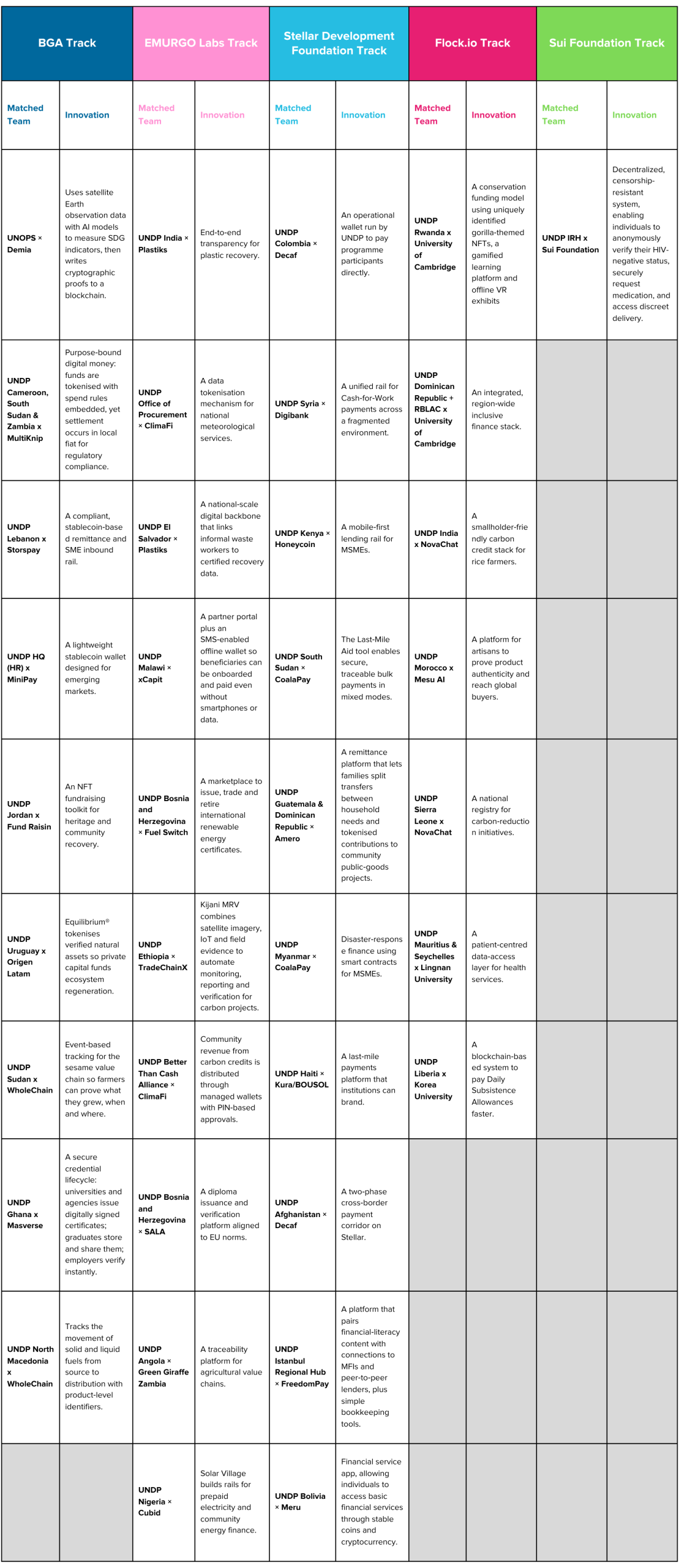
The SDG Blockchain Accelerator has concluded its 2025 virtual global hackathon sprint with 37 winning teams selected to join Cohort 2. Over the next four months, these teams will pilot and scale blockchain-enabled solutions designed to tackle some of the world’s most complex sustainable development challenges.
The global initiative is led strategically by UNDP’s Alternative Finance Lab (AltFinLab) in partnership with the Blockchain for Good Alliance, EMURGO Labs, FLock.io, Stellar Development Foundation and Sui Foundation. The Accelerator is made possible through catalytic funding from the Cardano treasury, through Project Catalyst, alongside contributions from other partners.
A Two-Week Sprint to Co-Create Real-World Solutions
Held from 25 August to 8 September 2025, the SDG Blockchain Accelerator Hackathon brought together 50 matched teams of UN Challenge Owners and blockchain Solution Makers from around the world. The teams worked intensively over an 11-day virtual sprint to co-develop solution roadmaps to address real-world issues – ranging from climate finance and carbon markets to humanitarian aid delivery, public sector transparency, digital identity, and inclusive financial services.
Each team pitched their roadmap during a high-energy Demo Day, where solutions were evaluated against criteria such as impact potential, feasibility, scalability, and stakeholder integration.
Breakthrough Solutions Across Sectors
The diversity of solutions emerging from the hackathon demonstrates blockchain’s potential for impact. Following Demo Day, 37 teams were selected to advance to Cohort 2:
From Concept to Pilot: Cohort 2 Begins
During the Accelerator, which runs from September to December 2025, teams will receive:
- A dedicated program of expert guidance, hands-on technical support, and workshops to refine their prototypes and implementation plans.
- Opportunities to showcase their progress through UNDP and partner networks – helping attract stakeholders, investors, and additional partners crucial for scaling impact.
- Access to post-accelerator funding opportunities (pooled across partners) for the most successful pilots, ensuring teams can sustain and grow their solutions beyond the Accelerator.
By the end of Cohort 2, the selected teams are expected to have pilot-ready solutions tested and deployed in real-world settings. Many of these pilots will be hosted by UNDP country offices and local partners, helping to address identified development challenges while generating valuable evidence for wider application and replication across countries, sectors, and even different blockchain platforms.
Towards a New Model of Responsible Innovation
More broadly, the Accelerator marks a shift in how UNDP approaches development challenges – bridging grassroots expertise with frontier technology to deliver real humanitarian and sustainability impact.“The hackathon shows what’s possible when development practitioners and blockchain innovators work side by side,” said Hajdana Imrovic, UNDP AltFinLab Hackathon Lead. “Cohort 2 is where these ideas turn into real-world impact.”
By co-creating solutions with those closest to the problems, and applying blockchain where it truly adds value, the initiative is looking to redefine how systems are built to serve people and the planet .
Sui’s high-performance blockchain will power pilots advancing censorship-resistant access to healthcare and other critical development initiatives.
September 29, 2025 — The United Nations Development Programme (UNDP) is expanding the SDG Blockchain Accelerator, a global initiative that helps scale blockchain and AI solutions to advance the Sustainable Development Goals (SDGs), through a new partnership with leading Layer 1 blockchain Sui. As a technical partner, core contributors to Sui will provide their expertise and resources to help teams advance their solutions toward implementation, including support for pilots built on the Sui network.
This builds on the Accelerator’s multi‑partner model, strategically led by UNDP’s Alternative Finance Lab (AltFinLab) in partnership with the Blockchain for Good Alliance, EMURGO Labs, FLock.io, and Stellar Development Foundation. The Accelerator is made possible through catalytic funding from the Cardano treasury, through Project Catalyst, and alongside contributions from other partners.
Run in cohort cycles, the Accelerator connects innovators with real-world challenges to turn ideas into impact. Cohort 2, to be announced in late September 2025, brings together the winning teams from a recent two-week global hackathon. Each team pairs a UN Challenge Owner – a representative from a UN office who brings a real-world development challenge and local expertise – with a Solution Maker, such as Sui, from the forefront of the blockchain industry.
The teams will now advance into the 12-week acceleration program, receiving tailored mentorship, technical guidance and access to key stakeholders from governments and development organizations to develop pilot-ready solutions and move into fundraising for implementation or scaling.
As part of the SDG Blockchain Accelerator, the Sui Foundation will mentor at least one pilot building a private, secure, blockchain-enabled system to support access to healthcare on Sui, providing hands-on developer support, ecosystem connections, and post-acceleration guidance to increase the likelihood of practical deployment and long-term impact.
The collaboration complements UNDP AltFinLab’s broader work to educate, prototype and scale blockchain solutions across the UN system – through its portfolio of educational programs, including the Blockchain Academy, UN Blockchain Community of Practice and a growing partner network supporting pilots in areas like financial inclusion, climate action, and transparent governance.
About UNDP
UNDP is the leading United Nations organization fighting to end the injustice of poverty, inequality, and climate change. Working with our broad network of experts and partners in 170 countries and territories, we help nations to build integrated, lasting solutions for people and the planet. Learn more at undp.org or follow at @UNDP.
About UNDP AltFinLab
AltFinLab is a flagship UNDP initiative, pioneering alternative and innovative finance solutions. It supports UNDP, governments, civil society and private sector partners by testing and scaling new financing mechanisms, leveraging blockchain technology, crowdfunding, impact investing, and emerging financial instruments to mobilize resources for sustainable development.
About Sui
Sui is a first-of-its-kind Layer 1 blockchain and smart contract platform designed from the ground up to make digital asset ownership fast, private, secure, and accessible to everyone. Its object-centric model, based on the Move programming language, enables parallel execution, sub-second finality, and rich on-chain assets. With horizontally scalable processing and storage, Sui supports a wide range of applications with unrivaled speed at low cost. Sui is a step-function advancement in blockchain and a platform on which creators and developers can build amazing user-friendly experiences. Users can learn more at sui.io.
September 15, 2025 – Istanbul/London — The United Nations Development Programme (UNDP) and the Exponential Science Foundation have announced a partnership to develop the Government Blockchain Academy – a new initiative designed to drive public sector innovation. The Academy will provide specialized education and implementation programs that harness blockchain, AI, and other emerging technologies to help governments drive transformative change.
The Academy aims to guide governments to find solutions to specific challenges across five main pillars, bridging the gap between education and implementation, culminating in deploying blockchain solutions to pressing development challenges.
Academy Pillars
- Inclusive Digital Finance: Advancing access to financial services through secure digital payment systems.
- Transparent Governance: Improving integrity and anti-corruption efforts through secure, tamper-resistant recordkeeping and digital transactions.
- Supply Chain Integrity: Supporting traceability and accountability in public procurement and logistics through decentralised verification.
- Climate Resilience: Applying blockchain-based smart contracts and digital tokens to facilitate transparent climate financing, including tracking carbon credits.
- Digital Identity Solutions: Providing individuals with trusted, verifiable digital credentials that enhance access to services.
The Government Blockchain Academy will officially launch its first country programs in 2026, with preparatory work, curriculum design and stakeholder engagement commencing in 2025. The formal announcement of the Government Blockchain Academy will take place during the TOKEN2049 in Singapore (1-2nd October 2025). As part of the unveiling, the initiative will host an industry roundtable, aimed at aligning protocol developers, infrastructure providers and gathering support for this global educational initiative.
“At UNDP, we are committed to institutional innovation, including creating spaces for governments to explore and test frontier technologies. The Government Blockchain Academy builds on this spirit, offering a pathway for countries to tackle complex development challenges in new ways and move from experimentation to implementation in ways that strengthen transparency, inclusion, and resilience,” Irena Cerovic, Innovation Team Leader, UNDP Europe and Central Asia.
“This is not just an educational initiative. It’s a collective blueprint for public innovation,” said Prof. Paolo Tasca, Executive Chairman of Exponential Science. “By bringing together diverse partners under one framework, we can ensure that governments have the tools and the talent they need to navigate the next wave of digital transformation.”
The Government Blockchain Academy will offer in-person workshops, online modules, and leadership forums tailored to public sector and local needs. Government participants will gain access to selected resources along with tailored incubation, expert advisory and guidance through their digital learning program.
Each government team will receive structured support—from use case identification and requirements development, to collaborating with Academy experts and industry partners—culminating in joint solution design workshops that align decision-makers and technical stakeholders to co-create scalable, high-impact blockchain initiatives that address national priorities.
The Government Blockchain Academy will function as a global hub, a space for dialogue, experimentation and learning, empowering officials to engage with frontier technologies and shape policies that reflect digital inclusion, security and sovereignty.
UNDP Armenia is in the process of starting a partnership with Plastiks to address the country’s underdeveloped recycling infrastructure by piloting a blockchain-based model that incentivizes plastic recovery through verified plastic credits.
This collaboration is part of the inaugural SDG Blockchain Accelerator, led by the UNDP Alternative Finance Lab, Blockchain4Good Alliance, and EMURGO Labs, joined now also by the FLock Technology Holdings and Stellar Development Foundation. The Accelerator is made possible through catalytic funding from the Cardano treasury, through Project Catalyst, alongside other partner contributions.
In a three-month co-design phase, Plastiks will prototype a solution that integrates traceability, transparency, and economic incentives. This initiative coincides with their migration to the Cardano blockchain, a strategic move that strengthens blockchain-verified impact, drives adoption, and ensures long-term scalability for plastic recovery ecosystems.
By introducing verified plastic credits into Armenia’s recycling ecosystem, the partnership aims to deliver measurable impact and establish a replicable model for other regions facing similar infrastructure gaps.
The UNDP Armenia Pilot: A Model for Verified Recovery
In two Armenian towns of 40,000 residents, Plastiks and UNDP Armenia will co-develop a pilot project that introduces verified traceability and impact certification into the local recycling ecosystem.
The initiative will serve as a testbed for how plastic credits, each backed by evidence and anchored on blockchain, can incentivize proper waste management, engage communities, and prepare the ground for future Extended Producer Responsibility (EPR) compliance.
“This pilot will pave the way for a smarter, greener waste system in Armenia. By testing blockchain-based tools, the initiative will help create a certifiable, transparent, and traceable system that empowers local waste recovery operators with new financing opportunities, while giving the government reliable, verifiable and transparent data on recovery of plastics and other recyclables,” Nelli Minasyan, Project Coordinator, UNDP Armenia
The pilot tackles a key challenge: the lack of verifiable recovery data. With Plastiks’ system, every action is documented, photo, GPS, timestamp, and stored immutably. Key features of the Armenia pilot:
- Digital Recovery Certificates (DRCs) issued for verified plastic recovery actions
- Plastic Credit monetization, enabling co-funding from ESG-aligned private actors
- Stakeholder coordination tools for producers, municipalities, and recyclers
- Dashboard integration for real-time compliance monitoring
This model doesn’t just improve waste management, it creates a foundation for data-driven accountability, incentive alignment, and inclusive environmental action that can scale across regions.
What is the SDG Blockchain Accelerator?
The SDG Blockchain Accelerator is an initiative that aimsto fast-track blockchain solutions for real-world challenges tied to the UN Sustainable Development Goals (SDGs).
In its first cohort, 13 global teams, each pairing a UNDP office with a blockchain innovator, co-designed systems that bring traceability and accountability to areas like:
- Climate finance
- Humanitarian aid
- Renewable energy
- Supply chains
- Waste management
Plastiks x UNDP Armenia is one of these pilots, developing a blockchain-based model for verifiable plastic recovery that supports future Extended Producer Responsibility policy and ESG engagement.
This isn’t just about testing tech, it’s about setting a global standard for traceable, inclusive development.
Scaling Compliance and Impact Through Traceability
With EPR law adoption on the agenda, Armenia must build systems to track and enforce plastic recovery. But like many countries, it faces a gap between policy goals and technical infrastructure.
The Plastiks x UNDP Armenia pilot aims to bridge that gap, creating a blockchain-based model that’s transparent, verifiable, and ready for national scale.
Why it matters:
- Supports EPR enforcement
- Builds trust across sectors
- Enables ESG financing via plastic credits
- Engages communities with real incentives
This isn’t just a local fix, it’s a replicable model for countries needing traceable, policy-aligned recovery systems.
Why Plastiks? Proven Traceability for Plastic Recovery
Plastiks brings a proven, globally scalable system for verified plastic recovery, already used across 20+ countries and backed by nearly 3 million kg of verified impact.
Our solution is built on a 3-step accreditation methodology:
- Define impact roadmaps across social, environmental, and operational goals
- Recovery entities accredited by Plastiks through financial, legal, and operational vetting
- Enable blockchain tracking for each kg of recovered plastic, verified via photo, GPS, and timestamped documentation
“This pilot with UNDP Armenia is a milestone in showing how traceability and verified plastic recovery can reshape waste management systems. We’re not only supporting Armenia’s recycling efforts, we’re building a model that UNDP can replicate globally to accelerate the circular economy,” Andre Vanyi-Robin, CEO & Founder of Plastiks.
Each verified action generates a Plastic Credit, a digital certificate tied to a real recovery effort and a pre-defined impact roadmap. To further strengthen environmental alignment, Plastiks is migrating to the Cardano blockchain, known for its low energy use and high security, making it ideal for circular economy infrastructure.
What’s Next: From Pilot to Scalable Proof of Impact
Over the next 3 months, Plastiks and UNDP Armenia will pilot a blockchain-based system to track plastic recovery in real time, testing stakeholder onboarding, live credit issuance, and a full impact dashboard aligned with upcoming EPR laws.
The goal? A scalable model for national EPR infrastructure that can be replicated across Armenia and beyond.
This pilot lays the foundation for:
- Regional expansion in Eastern Europe and Central Asia
- ESG-aligned private financing
- Stronger, data-backed policy frameworks
UNDP Alternative Finance Lab (AltFinLab), in partnership with the Blockchain for Good Alliance (BGA), EMURGO Labs (with funding from Project Catalyst), Stellar Development Foundation (SDF) and Flock.io, is launching a virtual global hackathon to connect frontline development challenges with frontier blockchain technology as part of the SDG Blockchain Accelerator.
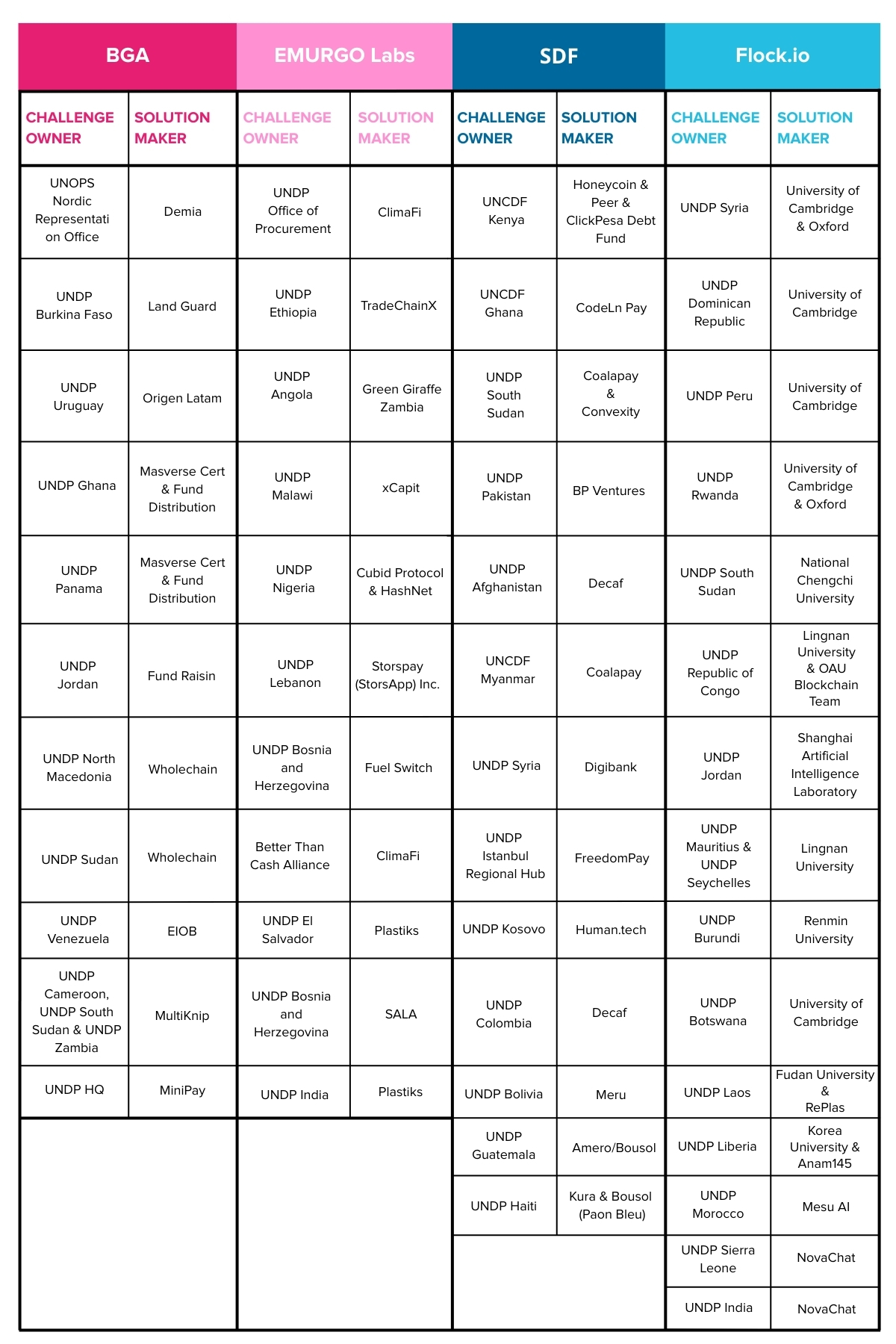
Building on the momentum of the accelerator’s first cohort, this new phase brings together UN Challenge Owners with expert Solution Makers to co-create viable roadmaps for impact. The most promising of these will be selected by mid-September to join Cohort 2 for dedicated pilot and scale-up support.
The Framework – A Sprint for Solutions
Over the course of an intensive two-week sprint, from August 25 to September 8, we will move from identifying problems to drawing the blueprints for their solutions. The initiative will pair nearly 50 UN Challenge Owners, each working on a pressing development issue, with expert Solution Makers from the forefront of the blockchain space. Put simply, matched teams progress from identifying a problem to presenting a roadmap, design, and plan to bring it to life. Together, they will:
- Frame the use case in the real-world context (users, policy, markets, data) and define what success looks like.
- Assess the necessity and added value of blockchain for the proposed solution.
- Design a feasible implementation path (timeline, resources, partners, governance) that enables the development of a strong pilot-ready solution should the project be selected for Cohort 2 of the SDG Blockchain Accelerator.
A Curated Collaboration
The hackathon is made possible through a strategic partnership between UNDP AltFinLab and key leaders from the blockchain industry. The core accelerator partners are the BGA and EMURGO Labs, joined by SDF and Flock.io. Each pairing was deliberately curated, matching the specific context of a development challenge with the most relevant technical expertise from these diverse ecosystems.
The Path to Cohort 2
Once teams are matched, the hackathon kicks off on August 25 with shared objectives, followed by thematic clinics on identity, payments and disbursements, traceability, and data governance.
The two-week sprint culminates on September 8, when each team will present a final pitch to demonstrate the viability of their proposed solution.
Standout roadmaps will move into Cohort 2 of the SDG Blockchain Accelerator for hands-on build support and piloting with UNDP and partners. Outputs are designed to be open and portable so proven models can travel across sectors, borders and chains.
For more information, please contact:
Hajdana Imrovic
Hackathon Lead, UNDP AltFinLab
hajdana.imrovic@undp.org
Together with existing partners Blockchain for Good Alliance and EMURGO Labs, the initiative will pilot blockchain solutions for sustainable development.
August 19, 2025 — The United Nations Development Programme (UNDP) is expanding its Sustainable Development Goals (SDG) Blockchain Accelerator with the addition of new global partners – the Stellar Development Foundation (SDF) and FLock.io – joining founding partners Blockchain for Good Alliance (BGA) and EMURGO Labs. The expansion comes as the Accelerator prepares to launch its second cohort in September 2025, aimed at driving the adoption of blockchain technology to address global development priorities.
Led by UNDP’s Alternative Finance Lab (AltFinLab), the UNDP SDG Blockchain Accelerator kicked off earlier this year to identify, support, and pilot blockchain applications in areas such as climate finance, inclusive energy access, social protection, healthcare, and supply chain transparency (find out more about Cohort 1). The Accelerator is funded by BGA and Project Catalyst Fund13.
Between August and September 2025, UNDP and its partners will organize a series of global SDG Blockchain Hackathons – a two-week virtual co-creation process designed to match pressing development challenges with some of the leading blockchain developer teams around the world. Unlike traditional hackathons, this format focuses on building implementation-ready roadmaps designed to solve real-world problems at scale. It also serves as the main selection mechanism for the Accelerator’s second cohort, the next round of the four-month programme.
Each new partner brings distinct strengths to tackle developmental challenges – SDF supports the Stellar network with a mission to create equitable access to the global financial system and FLock.io, UNDP’s AI Strategic Partner, advances privacy AI solutions on blockchain. As part of their engagement, each partner will provide technical mentorship and support to selected teams throughout the hackathons and the subsequent Accelerator programme. BGA and EMURGO Labs remain anchor partners, supporting ten and seven pilots respectively, while SDF and FLock.io will each mentor five pilot projects. This partner-led support model is designed to increase the likelihood of practical deployment and long-term impact.
By combining the technical expertise of blockchain partners with UNDP’s global network and on-the-ground knowledge, the Accelerator aims to accelerate the development of scalable blockchain solutions that advance the SDGs and UNDP’s priority innovation areas – such as climate action, inclusive digital finance, and stronger governance systems.
Following the Istanbul Innovation Days held in March 2025, we are releasing a series of articles capturing key insights, bold ideas and solutions that emerged from the conversations on institutional innovation. From reimagining partnerships to leveraging frontier technologies, these stories showcase opportunities to rethink and transform institutional paradigms.
Digital payments are no longer just an emerging trend – they’re reshaping the way we think about inclusion, public finance, and service delivery. At Istanbul Innovation Days, UNDP’s Alternative Finance Lab and the Stellar Development Foundation (SDF), a nonprofit organization that supports the growth and development of the Stellar blockchain network for accessible and inclusive financial systems, co-hosted a session to bring this transformation to life, through hands-on exploration and real life experience of how digital payments work.
During the session, we highlighted the global trends driving this change: today, nearly one billion digital wallets are in use, and stablecoin transactions have surpassed $1 trillion each month. These developments are creating new opportunities to streamline remittances, improve government-to-person payments, and unlock access to financial services in remote areas.
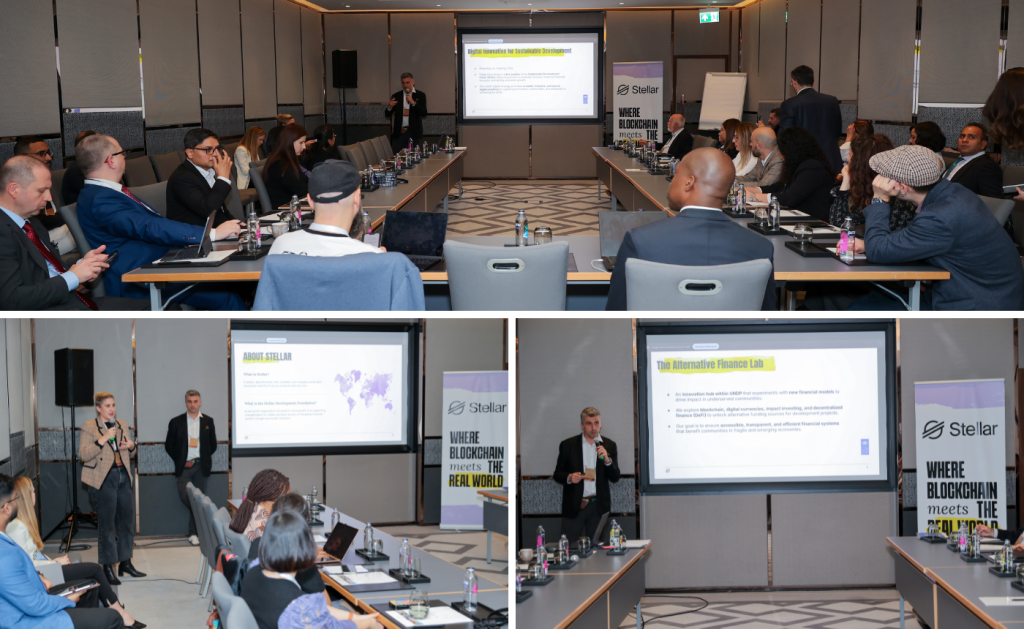
With around 50 participants from across governments, partners and UNDP, the session offered more than just an overview of the potential of blockchain – it was a deep dive into the rapidly evolving world of digital payments, exploring not only how decentralized technologies can transform traditional financial ecosystems, but also the current barriers such as limited infrastructure, regulatory uncertainty, and digital literacy gaps, with a huge potential to either bridge or widen financial inclusion, depending on how these challenges are addressed.
Participants learned how digital payments work and, more importantly, how they could be implemented in their own countries and projects. Through an interactive presentation and live demos, attendees got a firsthand look at how fast, secure, and low-cost digital transactions can be, especially when powered by blockchain technology.
During the breakout session, participants engaged in a live demo that put digital payments to the test. Each person set up a digital wallet and received blockchain-based funds in real time – proving that, with the right technology, payments don’t have to take months. They then used those funds to instantly donate to an NGO of their choice, demonstrating how fast, transparent, and direct digital giving can be. We demonstrated that there is no longer any need or excuse for payments to partners or beneficiaries that take months. The session sparked concrete interest from development professionals, who asked how digital wallets could be integrated into social protection programs, how tokenized payments might reduce losses, and what legal and operational steps are needed to scale such solutions responsibly.
In co-hosting this session with the SDF, we aimed to bridge the gap between emerging technology and practical development solutions, such as with TPN in Ukraine, a GIZ case study and Decaf Colombia example, a UNHCR case, and Rumsan case study. And based on the feedback and follow-up interest, it’s clear there is a strong appetite across the development sector to explore what’s next in digital finance.
This session was just one step in a growing collaboration between UNDP and SDF. Through a joint research initiative in 18 countries across regions – MENA, Latin America and Eastern Europe regions – we are assessing the opportunities and challenges of deploying digital wallets and tokenized cash assistance in real-world settings. Beyond research, our partnership is also helping us pilot projects in regions like MENA and Latin America to test how these technologies can enhance social protection schemes, climate finance, and humanitarian aid. With partners like SDF, UNDP is committed to leveraging blockchain technology as a tool to help countries build faster, more inclusive, and more resilient public services, grounded in real needs and real impact.
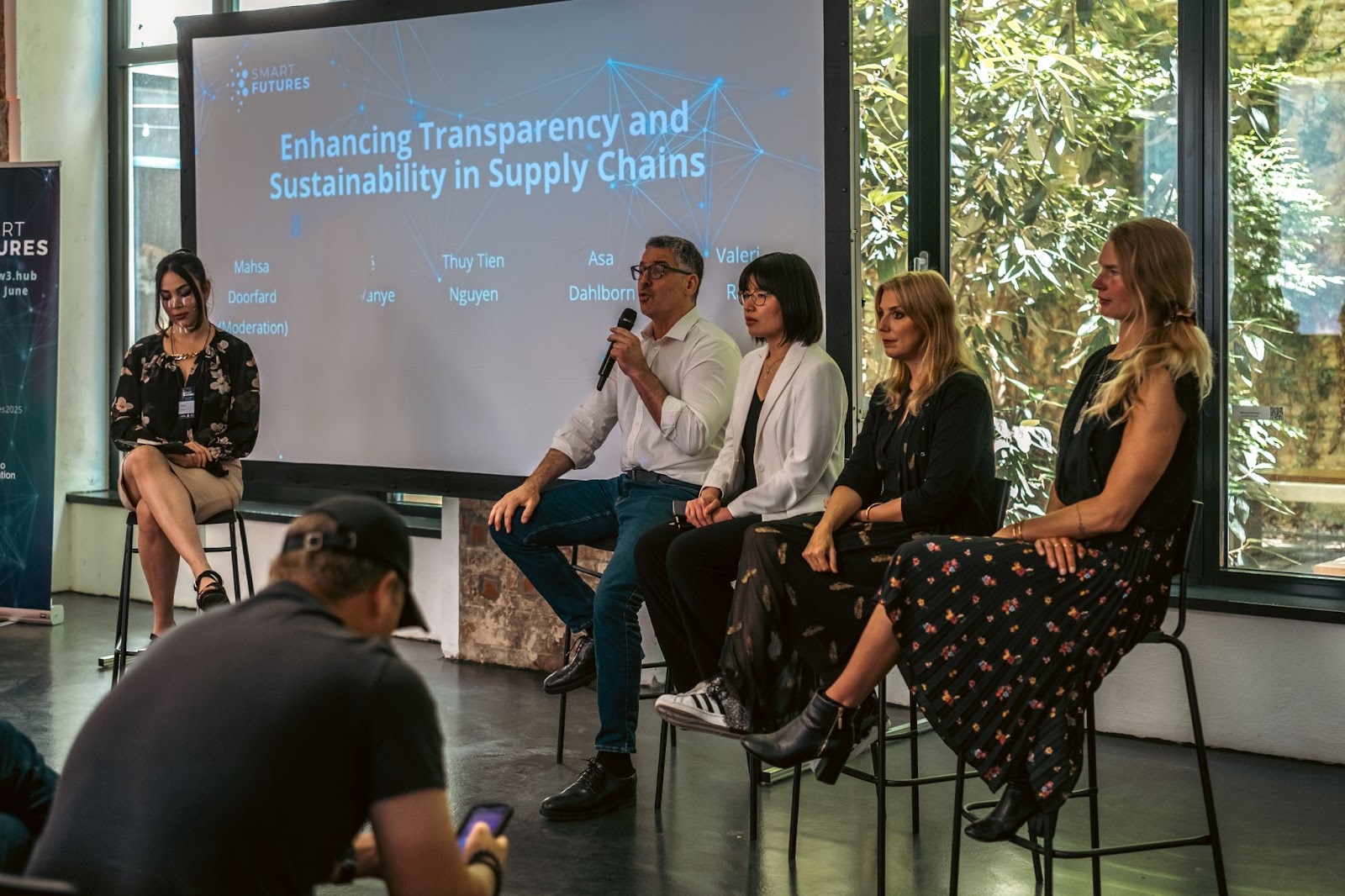
In Berlin, on 12-13 June 2025, the Smart Futures event convened a global community of innovators, policymakers and technologists to explore how frontier technologies – particularly blockchain and artificial intelligence – can accelerate progress toward the Sustainable Development Goals (SDGs). Co-organized by Disruptive Elements in collaboration with UNDP and its innovation and urban transformation programmes, such as BOOST and City Experiment Fund, and supported by the Cardano Foundation, the event served as a platform for innovative dialogue and action-oriented problem-solving across domains such as smart cities, circular economy, CO₂ track and trace, industry 4.0/5.0 and digital public infrastructure.
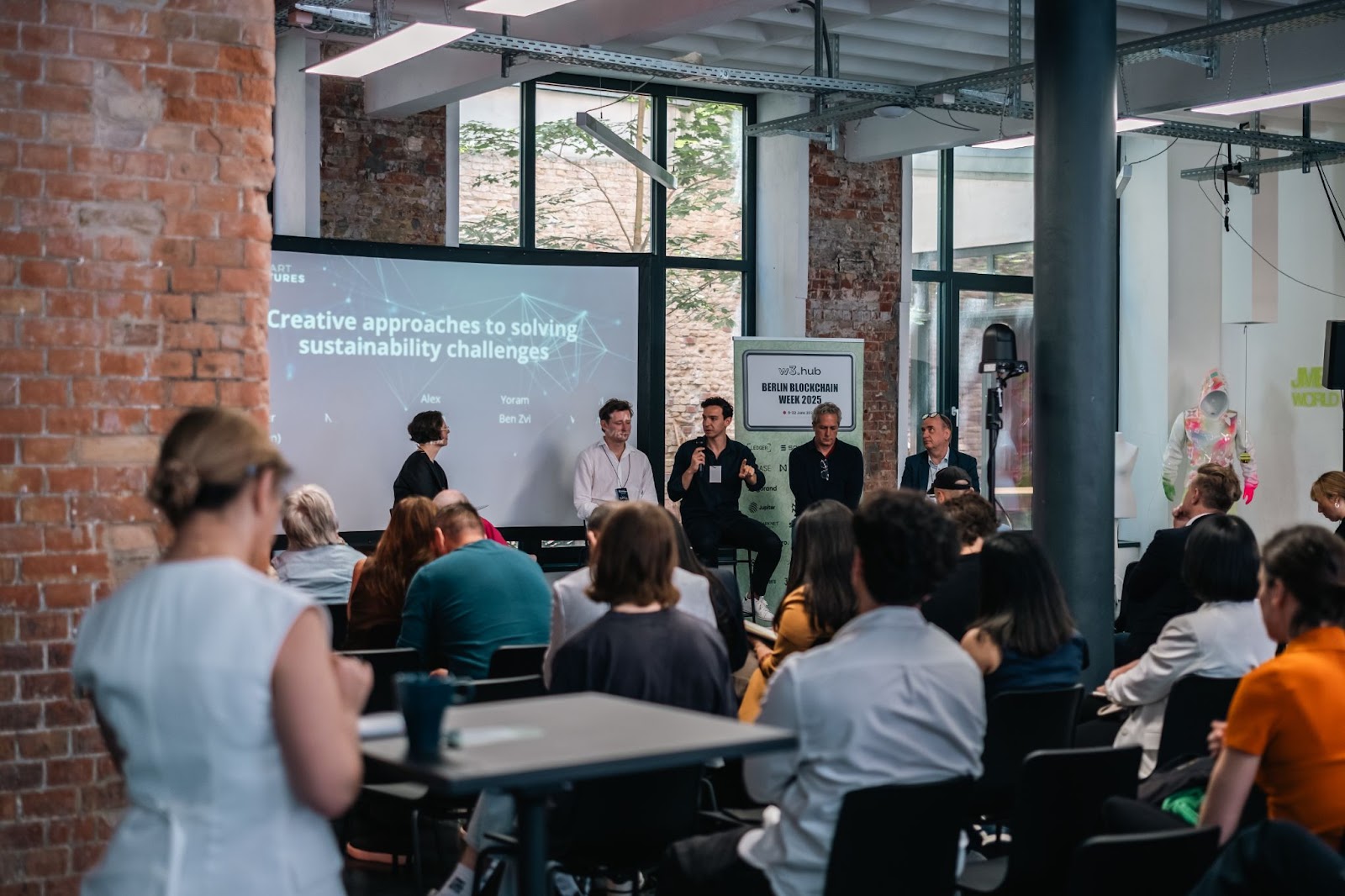
“A digital health passport, a digital vaccine record – it’s something we in the global health space have been struggling with for years. Could blockchain help? Absolutely. In areas like procurement and data management, where accuracy, efficiency, and trust are critical, this technology could help strengthen the foundations of our health systems,” said Marina Smelyanskaya, Team Leader, HIV, Health and Development, UNDP Europe and Central Asia.
From Thought to Action
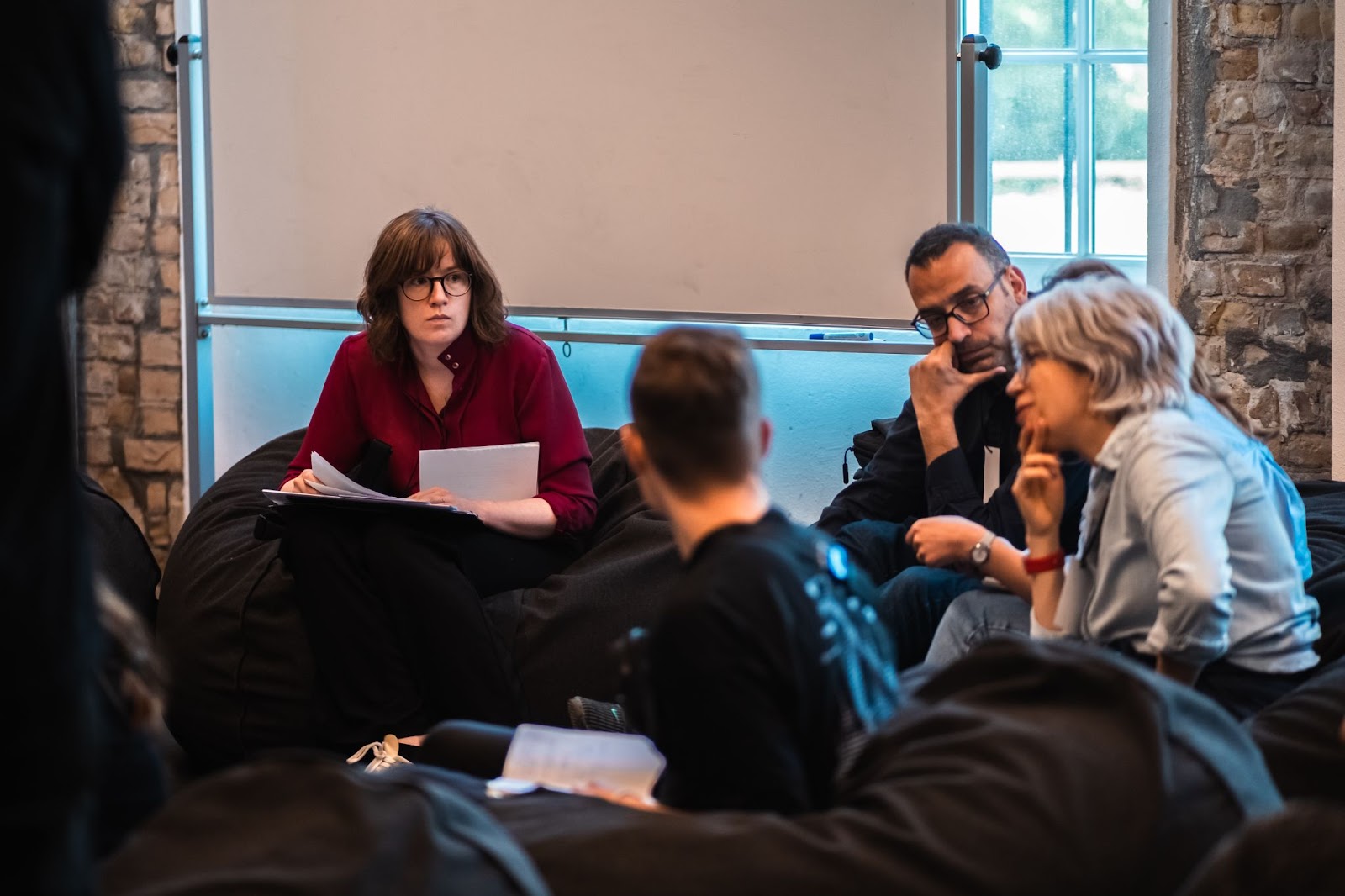
The importance of collective innovation in building equitable, tech-enabled futures was emphasised throughout Smart Futures, from keynotes and interactive panels to participatory think tank sessions.
The event opened with strategic reflections on how emerging technologies can be harnessed for the public good, setting the stage for deeper engagement. These insights were then translated into action through hands-on sessions that explored practical applications across key areas such as Public-Private sector partnerships and the need for coordination in decentralized ecosystems.
“By the very nature of decentralised ecosystems, [the process of decision making] tends to spread far and wide, paying attention to detail, but very slowly. A minimum level of centralization around the allocation of technical and financial resources towards key verticals is valuable for decentralized ecosystems like Cardano to accelerate adoption. This is why we talk about a coordination layer for sustainability on Cardano. We’ve proven the concept with UN-affiliated proposals receiving a substantial percentage of funds disbursed out of Cardano’s annual treasury allocation in 2024. Now it’s time to scale this innovative Private Public Partnership!” noted Alexandre Maaza, Sustainability and Innovation Lead, Cardano Foundation.
Moreover, sessions dug into how blockchain-enabled traceability can make industrial emissions visible and accountable. Participants discussed how digital warehousing and blockchain can also support the green steel industry by providing transparent, mass-balanced emissions tracking.
“The concept of mass balancing, done in a trustworthy and transparent way, would be a solution. We can save the emissions in something like a digital warehouse and just give the savings to the customers who are willing to transform or to pay for them, ” said Steffen Bittner, Stahlo.
Other sessions focused on blockchain-backed skill credentials to promote inclusive, portable learning. These interactive breakouts explored the co-design of pilot initiatives and the role of Web3 in incentivising sustainable behaviours – from earning verifiable credentials for completing tasks to tokenized rewards for community contributions via platforms like Andamio, and blockchain‑verified plastic recovery through Plastiks’ digital plastic‑credit certificates that encourage responsible recycling efforts.
“What incentivizes real-world change is real-world impact. People need to benefit from the use cases first. Then you tell them, ‘Did you know what you’re using is actually built on blockchain?’ That’s the Eureka moment. Blockchain is a tool. Use it if it serves your goal. Positive change is possible through Web3; we just need the right approach, mindset and education,” said Glenn Tan, Director of Global Affairs, Blockchain for Good Alliance.
Collaboration as the Catalyst

A shared purpose and a spirit of openness guided the conversations throughout the event, underscoring what can be achieved when diverse perspectives come together to address global challenges. Rather than being framed as a technological opportunity, the convergence of blockchain and AI was presented as a pathway to greater transparency, inclusion and sustainability.
As discussions unfolded, one message echoed throughout: meaningful innovation in blockchain and AI does not happen in isolation. It thrives when blockchain protocols, private sector leaders, UN agencies, governments, policymakers and communities come together to overcome shared challenges. Collaboration, not competition, is the engine of progress. As the demand for interoperability, ethical standards and inclusive design increases, the importance of multi-stakeholder partnerships becomes ever clearer. When technical innovation meets global cooperation, we can invent scalable, transparent solutions that advance sustainable development and serve the public good.
“We have a saying in Turkish: when you put your head on the pillow, do you feel good about yourself? I think we all can, if we come together. […] As UN agencies, our role is to bring everyone—even competitors—to the same table and ask: what can we solve together? Without collaboration, this technology, like everything else, won’t survive,” noted Burcu Mavis, Blockchain Academy Lead, UNDP AltFinLab.
Showcasing Impact-Driven Solutions
Beyond the panels and discussions, innovators such as Plastiks, PB Token, Green Mining DAO, Andamio, Huros, and others showcased a diverse range of impactful blockchain solutions, highlighting real-world use cases and the transformative potential of Web3 for sustainable development.
To name just a few, Plastiks is harnessing blockchain to bring transparency and accountability to the fight against plastic pollution, connecting businesses and recyclers to ensure verified plastic recovery for a circular economy. Meanwhile, Purpose Bound Token (PB Token) has introduced a new class of programmable digital tokens designed to ensure that funds are used solely for their intended purpose, unlocking new possibilities for transparent, accountable payments in areas like aid delivery, impact investing, and social finance.
But Smart Futures was more than just a showcase of emerging technology — it was a glimpse into what’s possible when innovation is grounded in purpose and driven by collaboration. As blockchain and AI continue to evolve, so must our collective commitment to ensuring these tools serve people and planet.
The UNDP Alternative Finance Lab (AltFinLab), Blockchain for Good Alliance, and EMURGO Labs launched Cohort 1 of the SDG Blockchain Accelerator – a transformative initiative designed to fast-track blockchain innovations that directly address development challenges aligned with the United Nations’ Sustainable Development Goals (SDGs). The selected challenge owners and solution makers represent a surge of creativity, backed by technical rigor and real-world applicability, and span critical areas such as digital identity, humanitarian aid, climate action, and supply chain transparency.
What makes this accelerator truly unique is its collaborative structure. Each team brings together a UNDP Challenge Owner, grounded in frontline development realities, and a Solution Maker, armed with frontier blockchain expertise and ready-to-scale solutions. Over the next three months, 13 paired teams in Cohort 1 will co-design, prototype, and test blockchain applications that deliver real impact, accountability, and inclusion.
| UNDP Challenge Owner | Solution Maker |
|---|---|
| UNDP Tanzania – Track climate finance, carbon credits and biodiversity in Tanzania’s net-zero project, while ensuring inclusive participation of local communities, especially women and young people. | Thallo – A climate-tech platform that leverages blockchain to transparently track, verify, and trade carbon credits and sustainability assets. |
| UNDP Burkina Faso – Secure funding for Burkina Faso’s reforestation: global and local accountability, long-term. Traditional funding is often opaque, making it hard to keep planting and maintaining trees. | Atlas Ledger – Provides blockchain-based infrastructure for tracking environmental assets and climate finance, ensuring transparent reporting and long-term engagement. |
| UNDP Mauritius & Seychelles – Respond to high electricity costs & limited access to solar-energy due to high upfront costs, making solar financing transparent, inclusive and scalable by offering a crowdfunding platform. | Socious Fund – A decentralized platform for impact investing and crowdfunding that brings together social entrepreneurs and funders through smart governance and traceable digital payments. |
| UNDP Malawi – Weak transparency and beneficiary verification in humanitarian aid delivery, especially in remote, disaster-prone areas, causing delays and fund mismanagement. | ClimateAid (Genius Tags) – Uses real-time data, AI prediction models, and smart contracts to enable proactive humanitarian responses before climate disasters strike. |
| UNDP Tanzania – Frequent energy theft, poor billing transparency, and limited integration of renewable energy into national utility systems. | Grinplus – A blockchain-powered energy trading platform that connects local solar producers to markets via traceable, tamper-proof digital certificates. |
| UNDP India – Textile wastewater treatment plants lack financial sustainability, resulting in environmental violations and missed opportunities to monetize pollution reduction. | Karbon Ledger – Tracks emissions reduction and links pollution data to carbon markets, turning environmental compliance into economic incentives. |
| UNDP Malaysia – Inefficiencies and fraud in agricultural supply chains make it difficult for small farmers to prove carbon farming practices and access fair markets. | AFRIKABAL – Offers blockchain-based traceability for agri products and carbon farming practices, supporting fair pricing and environmental validation. |
| UNDP Bangladesh – Existing fund disbursement mechanisms are opaque and slow, with no reliable system to track local climate adaptation beneficiaries. | Cladfy – Delivers decentralized digital identity, e-wallets, and smart contract functionality to increase transparency in fund flows and program implementation. |
| UNDP Bangladesh – Opaque supply chains in Bangladesh raise trade costs, enable illicit activity, and hurt competitiveness. Small farmers, public projects, and the RMG sector all suffer. | Palmyra Pro (zenGate Global) – Specializes in decentralized data infrastructure to enhance transparency and compliance in global agri-supply chains. |
| UNDP Georgia – The municipality of Zugdidi struggles with e-waste due to inadequate systems, high costs, and public mistrust, leading to growing environmental risks. | Creative Operations – Designs market-based ventures that use utility tokens to incentivize social behaviors and address systemic community challenges. |
| UNDP Armenia – Weak waste sorting and recycling infrastructure reduces public engagement and fails to incentivize proper environmental behavior. | Plastiks (Nozama Tech) – Tracks plastic recovery and recycling via blockchain tokens, enabling waste traceability and community incentives. |
| UNDP Istanbul Regional Hub – Rising ethnic tensions in the Balkans and Central Asia are fueled by misinformation and untrusted systems, alongside opaque mineral supply chains that hinder economic independence. | BlackFrog (IotaOrigin UG) – a blockchain solution for supply chain traceability and climate action, tracking the provenance and sustainability of goods and materials. |
| UNDP Nordic Representation Office – Communities in fragile regions face high upfront costs for solar energy microgrids, while traditional financing models deter private investment. | Unicorn.eth – Combines verifiable digital identity with decentralized crowdfunding to expand access to renewable energy in underserved regions. |
To support their journey, the accelerator offers far more than technical validation. Backed by post-accelerator grant potential of up to USD $1.5 million, participants will receive intensive mentorship, access to a multi-chain development environment, expert-led workshops and entry points to the broader UN ecosystem. Through hands-on collaboration and technical deep dives, teams will sharpen their solutions and showcase them during a final pitch, setting the stage for pilot deployment and replication across other UNDP Country Offices.
Together, these 13 teams are forging a new path for how development problems are tackled. They signify a paradigm shift in the way we construct, expand and regulate solutions for sustainable development. Thanks to their expertise in humanitarian logistics, green finance, climate resilience and inclusive digital infrastructure, Cohort 1 is set to lay the groundwork for blockchain’s meaningful integration into the UN system. The grounding of these innovations is in lived realities, the informing of policy, and the designing of tangible, lasting benefits.
Ultimately, this cohort is a launchpad not only for individual teams, but also a signal to the wider development and blockchain communities that innovation cannot be confined to silos. By embracing agile, decentralised, and transparent tools within the UN system, we are redefining the way systems are built to serve people and the planet. We are here to set the standard for responsible blockchain innovation for the greater good.