
Category: Urban futures
Our world is changing fast – often faster than societies can adapt. The seemingly imperceptible changes to our climate, brought on by the burning of fossil fuels that release carbon emissions, are resulting in warmer temperatures, and a more extreme and unpredictable climate.
These changes have not bypassed Bosnia and Herzegovina. Over the last few decades, the annual average temperature has gone up by 1.2 °C. Over the same period, forest fires, coinciding with record droughts and heatwaves, have caused immense environmental damage amounting to 60 million USD. Furthermore, the afforestation efforts are not fast enough to make up for the economic and biodiversity loss caused by frequent and severe wildfires.
At the same time, general awareness and public interest in the causes and effects of climate change is sporadic and passive. Climate action, as both a concept and an act, isn’t quite understood, and climate urgency goes largely unrecognized.
Inspired by UNDP’s Climate Promise and the traditional connection of the people of Bosnia and Herzegovina to their natural environment, the UNDP Accelerator Lab in Bosnia and Herzegovina set out in late 2019 to explore practical ways in which climate action can be ignited. This is the story of what happened next.
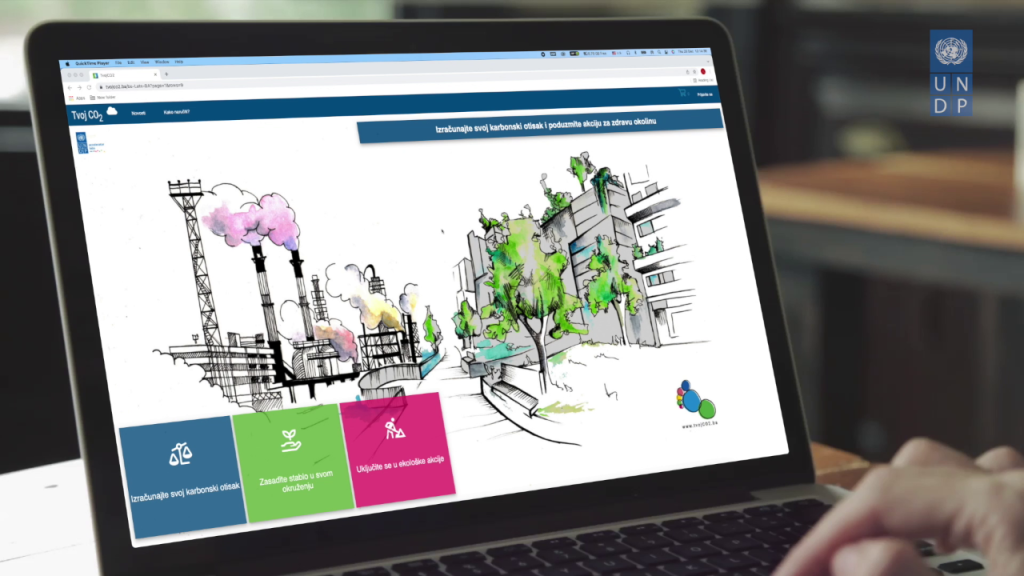
The journey of a new digital tool: TvojCO2.ba
In June 2020, UNDP Bosnia and Herzegovina launched TvojCO2.ba (Your CO2), a digital tool that offers a new way of understanding our climate emergency. It showcases the impact of our everyday lives on the environment and facilitates the planting of hectares of new forests across the country as a means of carbon offsetting and ecosystem restoration. During the three-month campaign in the fall of 2021, the tool enabled the purchase of over 17,000 new trees for natural and urban areas in Bosnia and Herzegovina, that will over their lifetime absorb 20 kilotons of CO2 – which amounts to the CO2 that 10,000 cars on gasoline produce on average every year.
As of 2022, the platform has already attracted more vendors, offers more tree species and expanded its locations, and the public interest in carbon offsetting by planting trees is rising exponentially.
How it started: The Carbon Footprint Calculator
The first phase of the TvojCO2.ba platform consisted of the release of an engaging carbon footprint calculator for individuals and companies, which compared people’s carbon footprint results with the national average and provided a set of recommendations on how to minimize one’s impact on the environment and climate. The goal was first to raise awareness on understanding of the climate urgency.
In parallel, UNDP Bosnia and Herzegovina surveyed the users of the calculator to get a sense of their motivation to take climate action and concrete ways in which they would prefer to lower their carbon footprint. Surprisingly, 100% of those surveyed stated that not enough was being done on climate change and air quality in the country, and that awareness on these issues was very low. Besides separate waste collection, which is correlated with a growing awareness of the municipal waste mismanagement in the country, the second most preferred option for personal and corporate climate action was planting trees.
Safeguarding old-growth forests and planting new ones are among the key ways in which societies can contribute to carbon removal from the atmosphere and the mitigation of negative effects of climate change – such as heatwaves and floods. This was well documented in the “Glasgow Leaders’ Declaration on Forests and Land Use”, endorsed by Bosnia and Herzegovina and a dozen other countries at the COP26 climate summit last year.
Although more than half of the country’s territory is under forest cover, forests in the country are in decline – impacted by wildfires and lack of restoration efforts. At the same time, trees are important carbon sinks, and when healthy, significantly contribute to climate change mitigation. CO2 emissions per capita in Bosnia and Herzegovina in 2021 were estimated to be 6.7 tons. For the capture of 1 ton of CO2 emissions, 50 trees must grow for one year.
Thus, the platform evolved beyond the calculator to give citizens a way to join climate action.
We listened and answered: Tree planting & volunteering
The next step in the platform development was to offer trees for online purchase to allow anyone who calculated their carbon footprint to immediately offset a part of it, and quickly and conveniently take part in maintaining forest health and combating climate change.
Following intensive efforts for over half a year, TvojCO2.ba established partnerships with six vendors across the country. The first batch of partners that offered their seedlings on the platform were either public forestry companies or urban greenery departments of local administrations. This was also the first time in Bosnia and Herzegovina that these types of public companies were introduced to e-commerce, making it available to the entire population of the country.
Users could choose from a wide range of tree seedlings – from less than a dollar for young, common seedlings to more than a hundred dollars for grown-up trees and rare species. In addition the platform offers 17 different species – native species adapted to the conditions of planting locations, and a selection of ornamental tree species used for landscaping in urban environments. What’s more, anyone who contributed could receive a CO2 offsetting certificate.
Each vendor selected a limited number of planting locations, where all seedlings bought through the platform were planted. The pilot campaign included 34 different planting locations, available for review in this map.
Although limited in geographical representativeness, the pilot campaign identified important insights when it comes to planting in forests or natural vs. urban areas and the heightened public interest and mobilization for planting in locations that tell a story (those ravaged by forest fires, or in neighborhoods where someone has grown up).
TvojCO2.ba also expanded its functionalities towards an event organization and management segment. Registered users can, therefore, follow their positive effect on the climate through both the tons of CO2 absorbed by the trees purchased through the platform and the number of hours volunteered for climate action.
Our climate impact following the pilot campaign
A total of over 17,000 tree seedlings were purchased through the platform in less than three months following the launch of the pilot campaign in the autumn of 2021, by 132 individuals and 38 companies. Individuals mostly opted for one or several grown-up and more expensive seedlings to be planted in their neighbourhoods, while companies purchased larger numbers of cheaper ones to be planted in rural areas, resulting in more than 80% of the total trees being bought by the private sector.
All buyers showed a significant interest in the carbon offsetting certificates issued by the platform’s system. Some even gifted them to their loved ones, and companies usually used the certificates for their corporate social and environmental responsibility function and marketing.
While this tool alone cannot tackle the complexity of climate change in our country, it proved to be an important catalyzer for climate action. The trees planted during the pilot campaign alone will absorb over 20 kilotons of CO2 in their lifetime. Also, the newly planted trees will restore a large natural area affected by wildfires, thus contributing to the area’s climate resilience and a boost in biodiversity.
116 mature trees planted in the capital of Sarajevo through the platform will contribute to lower air pollution in the city, cool down urban areas during increasingly warm summers and have a significant aesthetic impact on generally neglected residential areas in the city. However, the most important effect is probably the building awareness of the positive effects of tree planting. Accidently or not, at the very end of our campaign, the Government of Canton Sarajevo announced it will finance the reforestation by planting an additional 500.000 seedlings in rural areas of the Canton.
Where do we go from here?
The first planting campaign by the TvojCO2.ba platform was indeed a pilot campaign: designed and run to demonstrate the viability of the concept and model.
The key result – trees planted through the platform – exceeded the initial target of 5,000 almost four times. However, that was the secondary outcome of this learning journey. The insights collected through the platform, behaviors of vendors and the public when it comes to a “democratized” climate action, types of users and the effectiveness of different communication efforts all paved the way towards: a) an understanding that the concept indeed has genuine value; and b) the forward-looking strategy for the concept’s growth phase.
The growth stage, in 2022 and beyond, is constructed around the following key elements that were recognized as key success prerequisites in the pilot campaign:
- Expanding demand among individual users (attracting more individuals to the platform) and corporate users (new companies to the platform);
- Expanding and diversifying supply: maintain relationships with existing vendors (enhance their offer, improve their products’ presentation and e-commerce skills) and grow the platform to attract new vendors to increase the geographic coverage of planting locations (urban centers & natural areas affected by climate change). The range of tree species offered on the platform will also grow.
- Expanding the network of collaborators and supporters: Besides information about one’s carbon footprint and an online marketplace for trees, TvojCO2.ba also calculates users’ hours of volunteering in climate-friendly activities organized through the event management function of the platform. This entire part of the concept was underutilized during the first stage. The growth phase will include forming strategic partnerships with like-minded formal organizations, such as academia and civil society, and informal networks from the country to create a climate action network, in order to grow the platform as a collaboration and engagement tool.
- Ownership and future management: The Accelerator Lab intends to manage the platform only temporarily until the product is sufficiently developed and sustainably established to continue providing quality service while run by an institutional or NGO partner. We are already exploring different ownership modalities that could work in this case, and in the context of our country.
Read more about the journey and development of the TvojCO2.ba platform.
Supporting cities to take a more complexity-informed approach to urban challenges.
The United Nations Development Programme (UNDP) and the Centre for Public Impact (CPI) have kicked off the Urban Imaginaries programme. Urban Imaginaries is a new ten-month initiative that will support cities across the Eastern Partnership to develop solutions to their most pressing urban and local challenges.
Urban Imaginaries is part of the joint EU & UNDP Mayors for Economic Growth (M4EG) Facility, an EU-funded initiative that promotes inclusive economic growth and innovation in the Eastern Partnership countries. The M4EG network began in 2017 with more than 300 Mayors as members. The current phase is led by UNDP (2021-2024) in close partnership with the EU offices and with the intention to build the capabilities of local authorities to use innovative methods toward just and green development.
CPI is working alongside UNDP to design and implement the Urban Imaginaries programme. The programme will strengthen the innovation capabilities of mayors and city leaders in nine cities across Armenia, Georgia, and Moldova, equipping them with the skills needed to develop initiatives that reimagine or reinvent key aspects of local living.
Cities will receive training and exposure to complexity-informed approaches and frameworks such as design thinking, futures and foresight, systems thinking, and many more. They will then be supported to design place-based solutions across a wide range of issues, including economic development, tourism, and agriculture. Funding of up to EU 60,000 will be available for interventions that have the potential to become catalysts for wider system transformation while contributing to the promotion of sustainable development in the region.
The joint EU&UNDP initiative, Mayors for Economic Growth, is an invitation to change the way we work and move beyond business as usual. The Urban Imaginaries programme allows local governments to test new mindsets and tools for positive change in their towns, cities and communities. We are happy to partner with CPI as a thought leader around re-thinking local governance and building the municipalities’ as well as our own capabilities as learning organizations. CPI’s hands-on work with towns and cities around the world is most valuable here and we are excited to see already tangible results and learning that can be shared across the EaP network and beyond.
Gerd Trogemann, Istanbul Regional Hub, Bureau for Europe and the CIS, UNDP
Note: We recognise the dramatic consequences of the Russian invasion of Ukraine and the refugee crisis in neighbouring Moldova. As a regional initiative, a key focus for the M4EG will be to support Ukraine and Moldova in this rapidly changing crisis situation, while focusing on enhancing the resilience of the other Eastern Partnership countries, which is more important and more relevant than ever.
- For more information on the Urban Imaginaries programme, please visit: www.centreforpublicimpact.org/europe/urban-imaginaries
- For more information on the innovation work of UNDP in the Eurasia region, please visit: https://innovation.eurasia.undp.org/
- For more information on CPI, please visit: https://www.centreforpublicimpact.org/
Reposted from UNDP Europe and Central Asia.
I am standing on a podium in Baku, Azerbaijan, in front of 46 city Mayors, gathered together from all corners of the country. There is a sense of optimism and drive in the air – a desire for novelty and moving beyond business as usual. At the same time, on the other side of the Eastern Partnership, a meaningless war rages on in Ukraine – it’s second month in. It is within this context, with much sadness and optimism, that we begin our journey, a journey that seeks to expand options for local decision makers in a highly uncertain world. It is an invitation to change in a rapidly changing world.
“Our city is not afraid
of taking risks”
City of Rustavi, Georgia,
Member of the M4EG network
The EU & UNDP initiative, Mayors for Economic Growth (M4EG), explores new trajectories of growth and reimagining cities across the Eastern Partnership. With a network of more than 300 towns and cities in Armenia, Azerbaijan, Georgia, Moldova, and Ukraine, the initiative will onboard a cohort of more than 30 members in 2022 to start a mentoring and seed-fund journey to explore what ‘revitalization’ could imply within their contexts.
Human settlements are unruly things. Organic and non-linear. There is a growing realization that there are no clear-cut solutions for planning and delivering economic prosperity, and attracting people and investment. The cities and towns in the EaP are no exception. Many struggle with dilapidated and antiquated industries, lack financial resources, and the need to re-thinking economic development.
For example, the city team in Rustavi, Georgia, which joined the M4EG network and is now part of the programme called Urban Imaginaries – reimagining life in the city, stressed that real societal change calls for a shift in attitude and skills, with a need to mobilize the entire municipality. But before the skills comes the mindset, of moving beyond a controlling approach of knowing what might happen to creating a space that allows ideas to emerge. It is a brave statement, and one that we are curious to see how we can learn from. Urban Imaginaries is supported by our partner Centre for Public Impact and inspired in part by the City Expert Gabriella Gomez-Mont.
“Our community’s complex
challenges cannot be fixed
by technical solutions alone.”
Charentsavan community, Armenia,
Member of the M4EG network
International development is riddled with ‘technical solutions’, and to some extent, even today, it continues to use a ‘cookie cutter’ approach to crafting ‘solutions’. But transformational change calls for embracing a novel underlying philosophy or narrative that the human world and experience is made up of various interacting systems. To intervene successfully in solving unemployment, for example, we will get better results if we understand systems behavior so as to know how, where and when to intervene. (OECD System Thinking Report, 2020)
Urban changes need vision
Charentsavan, a small city in Armenia, struggles, as most communities, with ‘chronic’ issues. It’s an urban space with close to 20,000 inhabitants and was founded in the 1940s by the Soviet Government to accommodate workers at a nearby hydroelectric power plant. Since then, its economy has largely been defined by heavy industries, and with the dissolution of the Soviet Union many of its industrial plants are now no longer viable. In a M4EG workshop, a Charentsavan representative shared that one key challenge they face is the aesthetics of the city and its attractiveness. With the rise of private construction around the town, the new environment is expanding unaligned to any particular design or vision for the city. There are technical regulations in place, but that can only do so much without a shared vision and plan for the wider community.
The importance of urban identities
In 2021, 117 members applied to take part in the M4EG learning journey – each place with its unique enabling environment and bottlenecks for positive change. The M4EG applies its specifically designed Urban Makeover concept, where both the tangible elements such as economic sectors and livelihood opportunities are combined with the softer or intangible aspects, taking into account the need for belonging, people’s hopes and dreams of a better future, and the relationships between people and place. Every community, town and city have their own identity and underlying narrative that can help build momentum for change.
“Our city has an identity
we must tap into.”
City of Mykolaiv, Ukraine,
Member of the M4EG network
As I write, the city of Mykolaiv is at the frontlines of the battle in Ukraine. A few weeks before the war, the M4EG team, together with our partner Chora Foundation, facilitated a sensemaking session with the city government as part of the first phase in designing the city’s portfolio for change. Mykolaiv is a port city with a strong identity as a transport and shipbuilding hub on the Black Sea. In the context of the green and digital shift, “brown” industries will have to change including to better protect the strained natural environment around the city, yet the sense of pride in being a ‘marine hub’ and related historical and cultural heritage will have to be part of that ‘solution’, if peace can prevail.
In Khirdalan, a bordering city near the capital, Baku, we sit down with the Mayor, a young and dynamic man, who eagerly shares many ideas on how to create alternative revenue sources for the city, including petitioning the government for collecting a percentage from advertisement costs on billboards in the city. The Mayor wishes to use the M4EG platform to share and collect such ideas from other Mayors and to better position the city to attract additional investment and revenue. As we brainstorm with the Mayor, the idea of creating informal breakfast gatherings among the city leaders in the country materializes – a space for the Mayors to share lessons and help create a stronger narrative that local authorities are indeed closest to citizens and residents’ needs and concerns and can have a larger role to play in supporting the central government’s responsibilities.
“We as city municipalities
lower the burden for
central governments.”
City of Khirdalan, Azerbaijan,
Member of the M4EG network
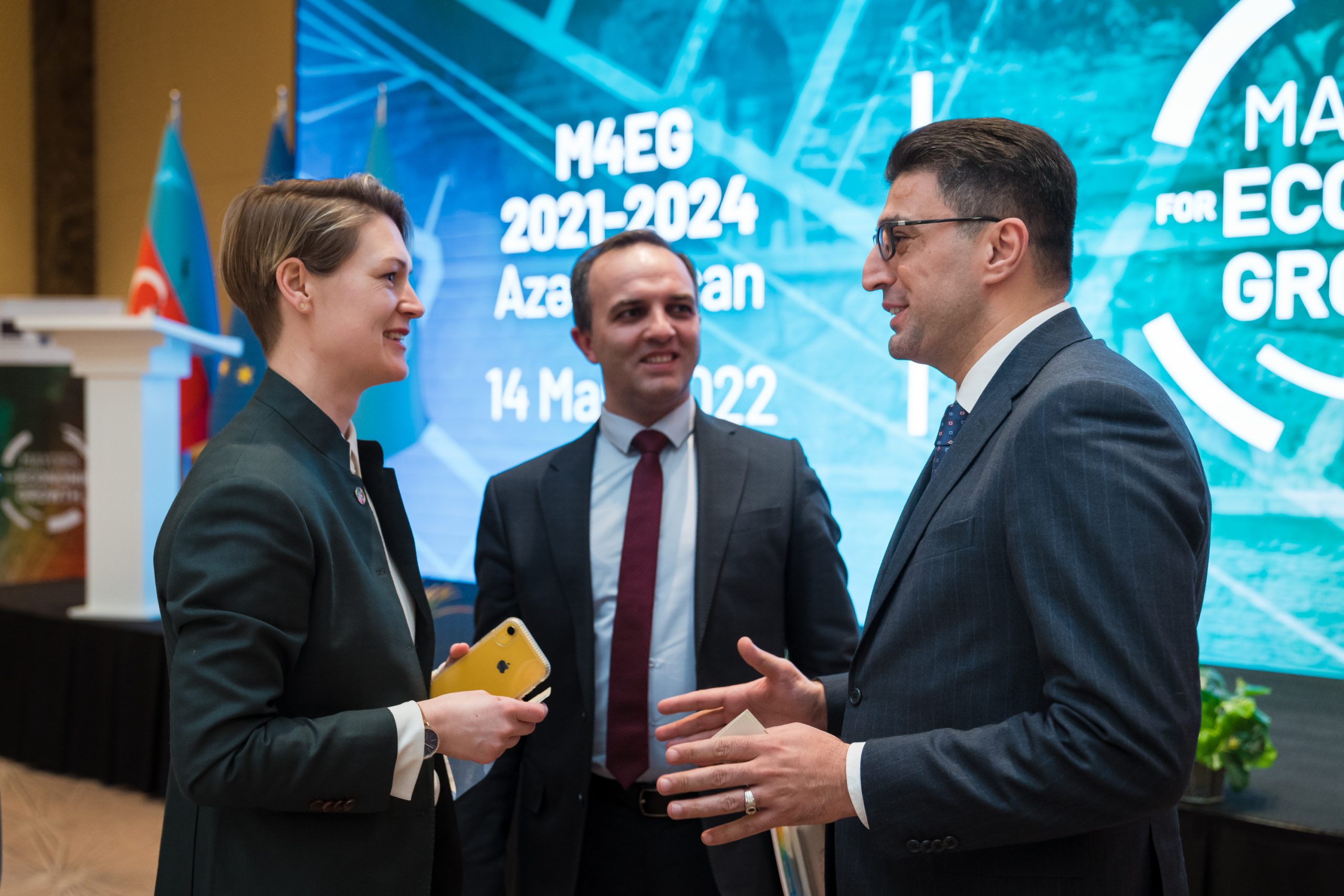
Local authorities are at the forefront of the most pressing challenges faced today
With a high number of refugees coming into Moldova from Ukraine, many of the 45 members of the M4EG network in the country are at the forefront of the refugee response. Moldova’s host communities have quickly and commendably responded to the refugees’ needs, but their capacities and resources are stretched. They will have to adapt to find smart ways to respond to the emerging challenges and linking them to the daily goings-on in their cities and towns, not to mention plans and visions for the future.
It’s a 2,500 km stretch to get from the western part of the Eastern Partnership to its most eastern part, and the interest and demand for re-inventing cities of tomorrow is found all over this route.
Going forward, the M4EG will have to continue building its adaptive muscle to best support the different challenges and realities faced by its members in the Eastern Partnership.
Stay tuned for future intel coming from the Mayors for Economic Growth network and reach out to us if you want to hear more or partner with us (eu.m4eg@undp.org).
In nowadays world immersed in multiple crises and in growing uncertainty, where the situation and dynamics change even on hourly basis, we should all embrace a new mindset, and approach that is agile, quick, adaptive, and systemic to increase our impact and relevance
Under this notion, the cities, forward looking actors of international community that include more than 55% of the world population, have a say, or in fact, can be the pioneers of change, leading the transformation and scaling it to the national level.
Cities are very complex systems with interwoven sectors, interrelated initiatives, stakeholders and relationships. So, how in this fast-paced world, planning can be done with such complex entities as cities? The answer is simple: they need to be “Smart”, not in the sense of only technological advancement, but as new UNDP handbook puts it “have bold vision, be engaging, transparent and stable, build on existing capabilities, learning continuously, be collaborative, inclusive and accessible”.
Well, how can these complex systems achieve the above-mentioned “Smartness”? One of the ways is the portfolio approach; when urban environments are approached through systems lens, thoroughly observed, listened to continuously before & after any intervention in the system. Meanwhile, the approach allows the systems, “to fail fast” and learn from “failure” early in the development where innovation and its impact is less costly but with bigger prospects”.
UNDP Armenia Kolba lab in cooperation with UNDP regional hub and with strong support from Agirre Lehendakaria Center and Chora Foundation embarked on this unknown yet exciting journey of urban transformation by applying the portfolio approach in small city of Stepanavan in the North of Armenia.
The project has identified Stepanavan, a small resort town in Armenia, for its diversity of offerings and potential attraction for talent. A model green city of 2015, an active tourism and recreation spot, the city has recently started looking for more opportunities for development.
All the voices should be heard
First, with the support from regional & Agiree teams, UNDP Armenia team started “listening” to the city dynamics to understand what’s happening and where the citizens of Stepanavan aspire to go. For this purpose, the team used different tools, including urban foresight to ensure that all the voices in the city are heard.
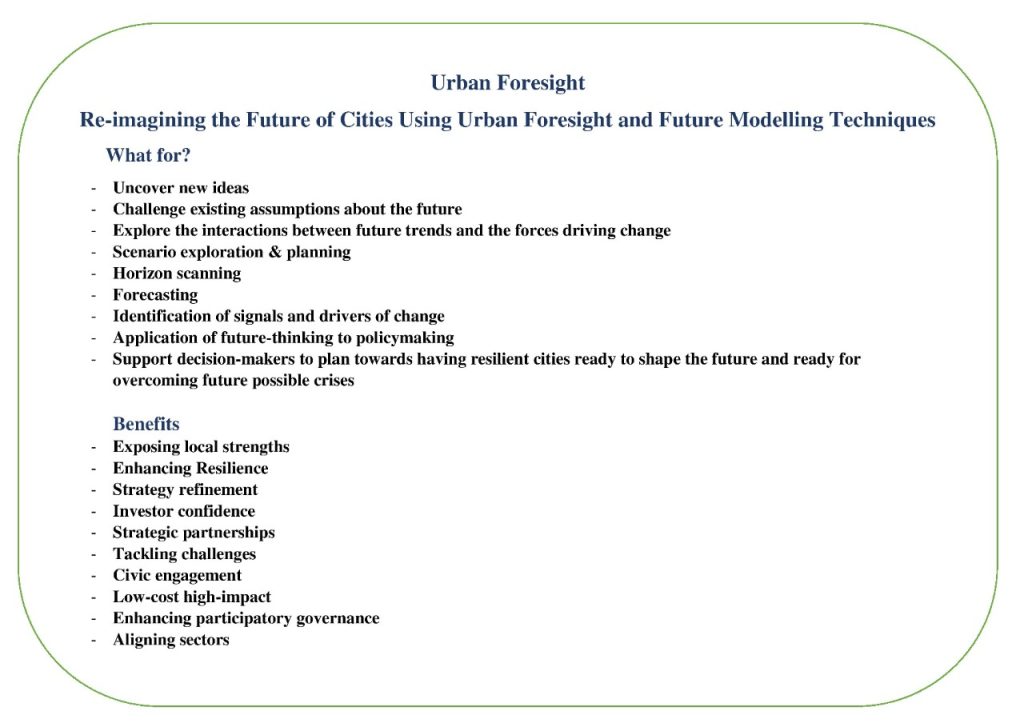
The listening helped us “understand, comprehend” the city; what are city dynamics, barriers, and enablers, divers of change, who are the key stakeholders, actors, and initiatives, what are the relationships between different groups in the system etc. In fact, it turned out that it is largely the relationships, networks and partnerships that make things moving.
Designing the intent for Stepanavan transformation
The listening process was followed by portfolio design process that included sensemaking sessions with the aim to reveal the hidden narratives and metanarratives existing in the city, validate the learnings and find the entry points.
As a result, the initial goal of the project was shifted from initial “talent attraction” to a broader intent for Stepanavan transformation – “bringing back vibrancy” to Stepanavan by:
- leveraging currently existing but under-used resources of the city, its “ripe fruits”
- enabling an image of the city that evolves from only being “a place to rest” to being “a place to live” (and contribute)
- learning how to continuously attract and retain talent (within and outside of the city)
The intent was backed by its eight strongly interrelated positions and several interrelated options; the portfolio team started probing with different but connected interventions at diverse sectors of the city.
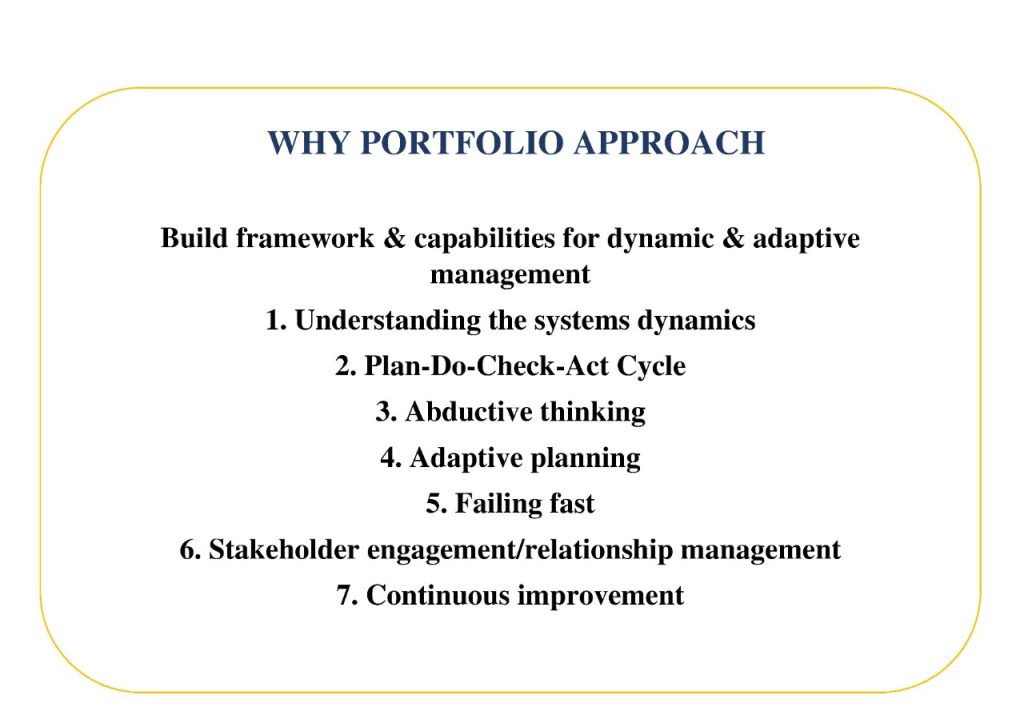
Major challenges in Stepanavan and how we are trying to solve them
Two major problems identified in Stepanavan were the youth emigration and unemployment; the problems the portfolio is trying to address systemically.
First, as the youth and talent are the future of any working system, be it a city, a country, or an organization, our aim was to retain local talent and attract the external talent into Stepanavan by various interrelated probes;
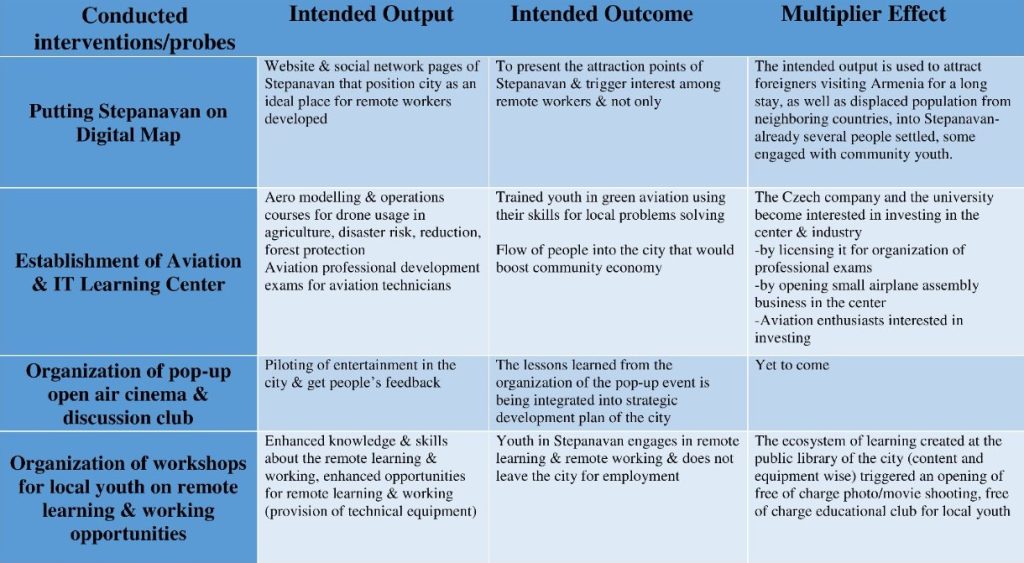
- Enhancing access of local youth to alternative learning and job opportunities. Based on the post COVID-19 trend of increasing “remote operations”, opportunities of remote learning & working were introduced to the local youth, so as they can study in the top universities of the world and work for global markets, without leaving Stepanavan.
- However, the young people do not only need the jobs, but they also need some fun to have after the working day. In the framework of the portfolio several interventions were carried out to bring entertainment into the city: open-air movie & discussion club, revival of city traditional festivals, promotion of sports etc.
- To attract people to Stepanavan, first it was decided to tell the people about Stepanavan, to present Stepanavan with renewed identity, not only a green and cozy place to rest but an ideal place to live and work for remote workers. Stepanavan was put on the digital map through different interventions.
- An experimental internship program was conducted to bring to Stepanavan medical professionals that the city needs so much.
- Finally, for transformative development, an interesting and strategic option was designed and piloted – the citizens of Stepanavan aimed to revive an old, declined industry of aviation through creation of aviation cluster (education, business, infrastructure) in the city. To support the city with the initiative, UNDP together with partners established the Aviation and IT Learning Center in the city, where the young people of Stepanavan will learn design & operations of UAVs to use them in agriculture, forest protection and disaster risk reduction. The Center will serve as a venue for organization of professional development courses as well as social platform for aviation education enthusiasts. A partnership agreement was facilitated by UNDP between Stepanavan municipality, local and external NGOs and academia for sustainable operations of the center.
- Network of change-makers, innovators is formed in the city who already started carrying out dynamic management of the portfolio already without UNDP’s involvement.
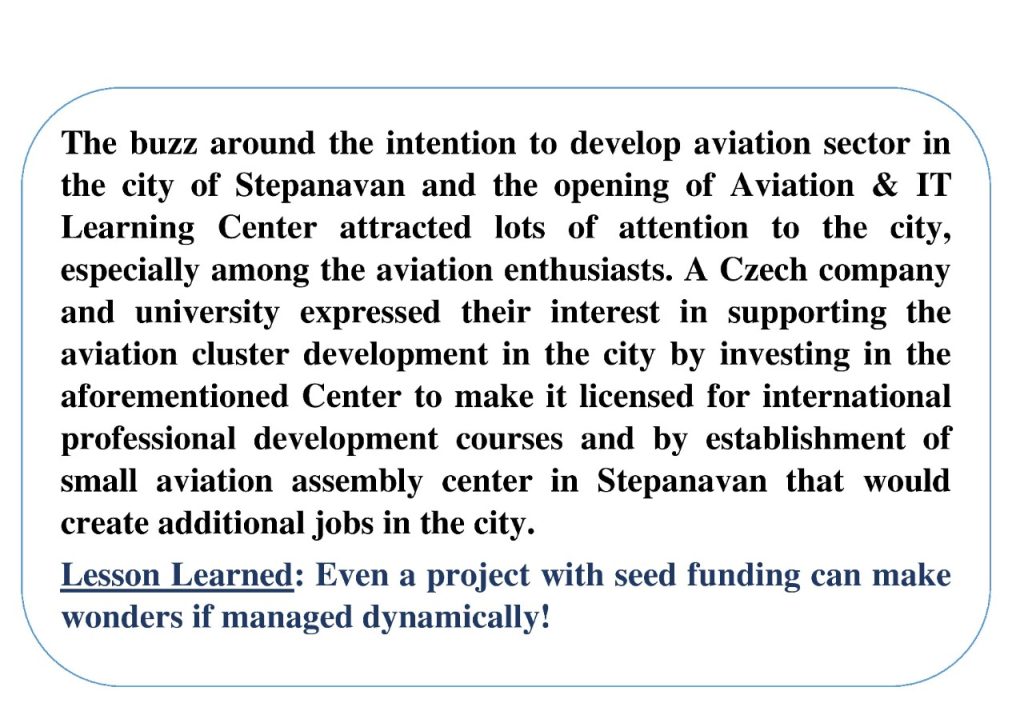
All the above-mentioned interventions, probes serve the same purpose of bringing vibrancy to Stepanavan; we cannot speak about vibrant city without working youth; talent wouldn’t like to remain or come to the city if living in the city is not fun, without development of a major industry the city risks losing its vibrancy during any crises such as COVID-19. Besides, what the probes will bring to the system is largely unknown as they already started having multiplier effects, effects that come on their own based on the initial intervention but going beyond intended output/outcome. The below table shows several of them.
What’s next…
While the portfolio is currently at the stage of learning from the probes, not all the interventions will necessarily be successful. Now the city is in the 2nd iteration of observation, where portfolio team has been engaged in sensemaking sessions to see what went as expected what not, what needs to be changed, what improved etc. This is how iterative development works: continuous learning & continuous improvement.
Currently, UNDP is supporting Stepanavan Municipality to write its 5-year strategic development plan using the designed portfolio as a guide. The process will follow with other iterations of listening, sensemaking & learning & improving…
Let’s follow this challenging but exciting journey of transformation of a small green city of Stepanavan in the north of Armenia, a city with a myriad of challenges but forward looking with determination to achieve sustainable development.
Republished from UNDP Armenia.
Cut down, an average tree could be worth up to a thousand BAM. It’s simple math: no. of cubic meters x the price of m3 of wood for heating or processing.
Planted and left to grow – what would be the tree’s value? Less or more than BAM 1,000? This is where math becomes more complicated – because a single tree growing in nature makes a range of impacts on our lives.
The value of a tree is embedded in every breath we take. The ecosystem services it provides are practically invaluable: it absorbs and removes carbon and replaces it with oxygen, it reduces air pollution in cities, holds the soil together to prevent landslides and stormwater runoff, it shields us from cold winds and creates a shadow we can hide in from the sun. In addition, all this leads to more avoided greenhouse gas emissions and lower energy bills for owners of homes and buildings.
Destructive effects of climate change are increasingly present in our everyday lives: frequent floods, longer droughts that destroy crops and increase food prices, wildfires that consume entire forests and pollute the air… the list can go on.
A single tree is the single best nature-based solution to many of these growing threats to humankind: from rising CO2 levels and temperatures to air pollution and natural disasters, trees have an answer to all.
How to put a price tag on that?
We do not have the luxury of waiting for the climate change response to come from someone or somewhere else. Living in a time of climate crisis requires all of us to undertake action, personally, collectively and immediately. It’s encouraging to see the growing number of initiatives and efforts by communities, organizations, and individuals in Bosnia and Herzegovina, and around the world, starting to mobilize around the climate emergency.
So, for all of us who care about the future of our communities and the planet, but find it challenging to directly contribute to the positive change, we developed a way to contribute quickly and conveniently: how about planting a tree online?
This was, for the first time in Bosnia and Herzegovina and the region, made possible through UNDP’s innovation engine’s, the Accelerator Lab’s, unique web platform TvojCO2.ba that allows any person or organisation to calculate their CO2 footprint and immediately offset a part of it through planting trees online (at the place of your choosing in Bosnia and Herzegovina) by using an online marketplace. The planting of trees is handled by professionals and seedlings are well taken care of, so you don’t have to worry about the sustainability of your offset.
Are you more of a face-to-face person who doesn’t mind getting your hands dirty with the like-minded crowd? The platform allows you to organize, register or join others in climate actions, greening campaigns, and events.
Trees can be planted in spring or in autumn – so the platform was first tested over the three autumn months of 2021. The results were impressive: TvojCO2.ba online marketplace connected the supply of local tree seedlings by six vendors (public forestry and communal companies) with demand for tree planting by some 200 individual and corporate buyers. Over 17,000 new trees of 17 different kinds were purchased in the test campaign by 132 individuals and 38 companies, and planted at 34 locations across the country. These trees will over their lifetime absorb 20,000 tons of CO2, which is, for comparison, the amount of CO2 that 10,000 cars on gasoline produce on average in a year. The concept was proven to be viable and functional, delivering three times the targeted tree-planting target in a little over two months, and attracted over 16,000 visitors to the platform over that time.
For spring 2022, the plan is to grow the supply and cover the entire territory of the country with tree seedling vendors and planting locations – so everyone will be able to gift a tree to whatever part of Bosnia and Herzegovina they wish.
The value of a tree is not the price of a log.
It’s the future value of the world we have pledged to leave behind for the generations to come.
Reposted from UNDP Bosnia and Herzegovina.
When you talk to urban development practitioners, they seem to agree that there are no silver bullet solutions to the challenges cities face. What is even more difficult is that the number, scale and complexity of these challenges keeps increasing. Simultaneously, our cities do not have the resources to ‘fix it all’. They never will. So where does that leave us?
Less than a year ago, five cities from across the Europe and Central Asian region embarked on an exploration of a new approach to problem solving, which is rooted in systems thinking. Stepanavan (Armenia), Almaty (Kazakhstan), Prizren (Kosovo), Pljevlja (Montenegro) and Skopje (North Macedonia) began designing what we call portfolios of options. ‘Portfolios’ because there are no simple, singular solutions to complex problems. ‘Options’ because addressing complexity (esp. If it’s wicked problems [1]) requires an approach based on experimentation, learning, and dynamic management.
The process of portfolio design
During the first phase, the UNDP Country Office teams spent several months going through the processes of portfolio design and deep listening to be able to implement and test out the first iteration of their sets of interventions. Part of the teams used the Agora Urban Transformation Stencil, while others applied strategic risk analysis and solution design. Overall, the key phases were similar for all.
Teams began their work by unpacking the complexity of the challenges they initially selected. This phase included deep listening, which is a process of identifying local narratives that surround both the challenge at hand, but also, more importantly, the city and its future in general. Once the teams developed a deep understanding of the issues they were attempting to tackle, they established their intent – what is it exactly that they want to change, who are they to change it, and what resources would they tap into? For some of the teams it meant reframing the entire challenge altogether, like shifting the focus from air pollution to alternative job opportunities for vulnerable groups, like in Pljevlja. For others it meant moving from a broader scope to a very specific challenge – like in the case of North Macedonia, where the team shifted from green growth to circularity in biowaste.
With a clearly defined intent, each team then moved on to identifying the best places in selected systems to intervene. This sounds abstract, but in practice it is about noticing levers, bottlenecks, elements of the system that either attract the most or the least attention and that – when interacted with – can generate the biggest impact. This is what you design options for. And that’s what the teams did.
From July to August 2021, the teams went into experimentation mode and began implementing their portfolios of options. What is critical to remember, though, is that the first iteration of an option is merely a beginning. It should never be the end (or the goal in itself, for that matter). Working with complex challenges requires continuous learning. Each implemented option provides new insights and allows us to keep developing more impactful interventions with consecutive iterations of a portfolio.
[1] Quoting SpringerLink Design Dictionary: “Wicked problems” is a phrase first coined by Horst Rittel and Melvin Webber, theorists of design and social planning respectively, at the University of California, Berkeley, in 1973. A wicked problem defies any standard attempt to find a solution because it is a symptom or result of multiple, contingent, and conflicting issues.
What do Marvel comic book, technology and people have in common? They all ask the question “What if…?” and they all can be superheroes or supervillains.
People move. Cars, planes and trams move. Planet moves. Rivers and animals move. Cities move. People go from one place to another; taxis and buses roll along the roads, while bicycles and scooters jostle for space. Everyone has somewhere to go and somewhere to be. And we all move in different directions. However, oftentimes the right to free movement is not equally granted to all.
But what if… it can be?
Accessibility isn’t a feature. It’s a fundamental human right. According to the World Health Organisation, around 80 million people in the world have some form of motor disability. That number reaches almost 175,000 in Bosnia and Herzegovina and 30,000 in Sarajevo. At the same time, they all face an identical problem. Life on the planet hasn’t been designed with the needs of different body or ability types in mind.
I, for one, know that really well, because I’m just one of 80 million. Over half of my life I’ve spent in a wheelchair and looking at the world from a lower perspective. I grew up in Sarajevo – a war affected, developing city in Bosnia and Herzegovina – and my life here was challenged by the difficult, almost unbeatable barriers in the built environment.
In 2019 I had the chance to go to Slovenia to study entrepreneurship & technology and for the first time in 25 years I was living and traveling by myself. I felt like Superman or Professor X, being able to fly across countries and visit cities on my own. All the experiences I had during that time opened some new worlds and opportunities for me and broadened my lower perspectives. However, I also realized that in many parts of the world, like, for example in Bosnia and Herzegovina – people are systematically discriminated against and excluded based on physical ability.
Through my own experience and tapping into innovation and technology, I have discovered how to connect business and social purpose. This is how the WeMapp idea was born! WeMapp is imagined as a community-based digital platform that enables people with mobility difficulties to move safely and independently by providing personalized routes based on motor ability for them through a map that contains route obstacle and accessibility detection powered by Artificial Intelligence. Such a tool offering precious information about the specifics of the outdoor environment and helping barrier-free navigation can be a game-changer in the daily life of persons with motor disabilities. WeMapp disguised in a mobile app is actually a social entrepreneurship at the service of people’s and urban mobility.
What if…I’m not alone?
Addressing the issue of accessibility of the built living environment requires joint forces of communities, institutions and businesses. 2020 was the pilot year for this idea – it was just the beginning of trying to set change in motion. 2021 came with many challenges, including the COVID-19 crisis. But at the same time, my enthusiasm around the idea only kept generating more networks and supporters ready to work with me on it.
Amongst them, the UNDP Accelerator Lab recognized the importance of the idea and the impact it could have on people’s quality of life. We embarked on an exciting and playful journey that included ideating on possible solutions, creating a network of stakeholders, launching the first urban walks & rolls in Vilsonovo šetaliste to gathering opinions and insights on the accessibility of the urban spaces in the city of Sarajevo. These are just some of the initiatives we’ve undertaken alongside our partners over the last 10 months, all blazing a trail for new ways to address the existing challenges of inaccessible living.
To make the WeMapp solution customised to the people’s needs, together with the Lab team we have developed a survey to help collect the voice and hear the needs of persons with motor disabilities. Do you want to be part of the change and join us in this endeavor? All it takes to be one of the superheroes (not all superheros wear capes!) is to fill out our survey (5 minutes).
What if… all of it works?
Given the far-reaching effects that inaccessibility has on people’s lives, being a society, economy and global community that cares for all people has to be a norm. In such a society, a person with a disability is then simply another individual with unique experiences and life stories. And technology will be a powerful engine for a thriving and inclusive future. Because technology without the right intention serves no purpose. Through WeMapp, a tech-supported community information sharing and crowdsourcing of accessibility data, every citizen can help make a more inclusive, accessible and happier society.
Much like the story of creation of the new universe in the popular Marvel Comic What If…? thatinspired this blog, what if all of these efforts work and we do create an inclusive space for everyone? What if we all move in the same direction and create smarter, more human-centred cities? I often imagine alternate universes I would like to live in. From barrier-free accessibility in buildings, streets and natural spaces to education, work, leisure, health services, public transport networks and easy-to-understand information. What if WeMapp and alike purpose-driven tech is our point of divergence and the consequences are a fully accessible, marvelous universe for all? What if…?
Republished from UNDP Bosnia and Herzegovina.
As part of the Joint EU & UNDP Virtual Forum on Urban Transformations, we interviewed two thought leaders on how to radically change our urban spaces to become more resilient, inclusive and sustainable, and what new ways of looking at our future(s) along with new approaches, narratives and tools are needed.
Gabriella Gómez-Mont is the founder and director of Experimentalista, a novel type of nomadic and creative office specialized in cities, with high-level, transdisciplinary collaborations across the world. She is the former chief creative officer of Mexico City, and founder of Laboratorio para la Ciudad (2013-2018), the award-winning experimental arm and creative think-tank of the Mexico City government, reporting to the mayor.
Urban transformation is in the hearth of the conversations happening
nowadays. Cities are the best engines for transformation where we can
see different types of urban social realities.
Nicolay Boyadjiev is an architect, strategic designer and creative director working between Montreal and Moscow. He is currently the co-director of Strelka Institute’s post graduate education program, where he co-leads “The Terraforming” interdisciplinary design-research think-tank. He is also the co-author and editor of “The New Normal” (2020, Strelka Press + Park Books): a comprehensive record of the projects and insights developed during the 2017-19 design-research cycle at Strelka which set out to develop and prototype new models for urban design practice at the intersection of software, cinema, strategy, and planning.
We should rethink the standards needed for design, long-term building,
and infrastructure, and how culture is reflected, created, maintained at city scale.
See the full recording from our virtual event.
Browse the list of speakers.
A large and diverse group of municipalities, research institutions and think tanks has kicked off a promising dialogue on how to radically change cities and help them become more resilient, inclusive and sustainable at the first public forum of the Mayors for Economic Growth (M4EG) Facility.
Brussels/Istanbul, 19 November 2021 – The 2021 Virtual Forum on Urban Transformation focused on system transformation in urban settings and working in complexity throughout the European Partnership region.
Jointly organised by the EU and UNDP, the Forum showcased emergent practice on urban transformation among the M4EG network of municipalities as well as the civic and private sector.
Diana Jabłońska, DG NEAR Head of Unit C1 ‘Georgia, Moldova, Economic Investment Plan’, stressed the importance of the EU-UNDP partnership to tackle local economic development challenges in a more innovative, inclusive and sustainable way, by relying on portfolios of interventions. She also recalled that the EU has designed an ambitious agenda and economic investment plan for supporting resilience, recovery and reform as well as harnessing the green and digital transition in the Eastern Partnership region.
Gerd Trogemann, Manager of the UNDP Istanbul Regional Hub, said that the demand for new approaches is tremendous, given the fact that municipalities are at the forefront of addressing systemic risks. He encouraged the Mayors network to lead by example vis-à-vis building partnerships based on trust, honesty, and openness, learning and iterating together.
During the Forum, M4EG municipalities joined in a discussion between various actors, exploring how to move from visions to actions. Panelists from Bilbao, Bologna, Lviv, and Vienna shared best practice on inclusive concepts implemented at the local level, including gender mainstreaming, civic imagination, adaptive city planning and portfolio approaches to tackle complex challenges.
Oleksandr Syenkevych, Mayor of Mykolaiv, Ukraine, said that the pandemic outbreak has surfaced municipalities’ vulnerabilities. Recent and protracted challenges outlined the need to apply new tools and visions to address complex issues like inequality and economic development.
This is one session of many that will come where participants get a chance to engage with a growing network of municipalities and partners to build a space for a community of innovators at the regional level.
Watch the recording of the forum here.
Background:
The joint EU-UNDP Virtual Forum on Urban Transformation is part of a series of strategic dialogues organised by the EU and UNDP on working in complexity in February and May 2020, as well as during the Partnership Forum on system transformation in November 2021. In December 2020, the EU and UNDP signed an agreement to apply portfolio approaches as a way to accelerate system transformation and build resilience at the local level under the initiative Mayors for Economic Growth. These dialogues have highlighted the speed of change and the need for development institutions to adapt their ways of working to allow for testing and discovery, while maintaining a high level of rigor.
For media enquiries:
For the European Commission/DG NEAR:
- Mr. Thibault Charlet, Programme Manager, Digital and Local Economic Development, DG NEAR Unit C1, thibault.charlet@ec.europa.eu
For UNDP:
- Mrs. Laurence Lessire, Regional Communications Specialist, laurence.lessire@undp.org
- Ms. Svetla Baeva, Communications Lead, Innovation Team Istanbul Regional Hub, svetla.baeva@undp.org
- Mr. Anton Sydorenko, M4EG Facility Communications Lead, anton.sydorenko@undp.org
Urban digitalization can accelerate our progress towards cities with cleaner air, creating a more eco-friendly environment in Belarus. Urban green spaces’ natural ability to filter air pollution and reduce local air and ground temperatures can provide significant health benefits for the city’s residents and community. So how to merge digitalization and sustainability to tackle air pollution, which has now become one of the greatest global threats to our health and wellbeing? [1]
The air pollution challenge in cities
Exposure to high levels of air pollutants has a variety of adverse health effects – such as an increased risk of respiratory infections, heart disease, and COVID-19 death. Globally, air pollution causes seven million deaths every year – equal to the population of Bulgaria – and its damaging impact can cut short the lives of billions of people by up to six years. In Belarus, for example, the mortality rate attributed to ambient air pollution was 104.4 (per 100,000 population) in 2016, according to the World Health Organization (WHO). With 91% of the world’s population living in areas where air quality is below WHO-recommended limits, we need an urgent and systemic solution to air pollution.
The air pollution challenge is particularly acute in urban areas. Recognizing the important role of cities in global development, SDG 11 (Sustainable cities and communities) seeks to make cities and towns inclusive, safe and sustainable. Thus, the greening of urban areas can be a perfect nature-based solution for improving cities’ quality of life and health. Urban green infrastructure can play a significant role in balancing the urban microclimate – for example, parks and alleys have an effect on temperature and humidity; they ionize and humidify the air, provide horizontal and vertical ventilation, reduce dust and pollutants and help reduce noise pollution.
The changing approach in Novahrudak, Belarus
A recent survey [2] conducted by UNDP Belarus among the residents of Novahrudak, a town in the Hrodna region of Belarus, showed that 82.6% of the townspeople were concerned about local environmental issues. But while the lack of urban green areas was among the top five identified environmental challenges, only 5% of those surveyed were involved in one way or another in the maintenance of green areas in the town.
This can be explained by the traditional approach to managing green areas (inventory and assessment), which is organized once every five years. Comprehensive information about the status of green areas in Belarus is usually available only to specialists working directly on the topic, which can result in institutional memory loss and lack of strategic planning.
Revitalizing and opening up the approach to the management of green areas and urban greening practices can bring this area of urban development to a new level, thereby meeting the contemporary needs of a systemic approach to urban planning and evidence-based policy-making. For example, using the urban digital twin approach [3] can help local municipal authorities embrace new ways of how cities are planned, operated, monitored and managed, to promote ecosystem services, with a renewed focus on green areas, and improve air quality.
Digitalization x urban green areas
The UNDP Acceleration Lab in Belarus is currently exploring the wider application of digital technologies – such as a tree inventory platform, a digital green city map, and a tree planting mobile application, among others – to expand and improve urban green areas. Harnessing urban innovation will help local governments to better integrate greening agendas in urban planning and development strategies and promote active citizen participation in maintaining green spaces.
In partnership with Belarus’ Ministry of Communication and Informatization, the city authorities, tech community and eco-activists, the Acceleration Lab piloted a portfolio of digital solutions, which can be applied in small and medium-sized cities all across Belarus, starting with Novahrudak.
The tree inventory
One of the solutions in the portfolio is a digital platform for tree inventories, which will help train environmentalists and volunteers to collect data to create an interactive map of green areas. The map will then be periodically updated and publicly available to citizens and city administrations to monitor developments online, and plan and participate in the management and improvement of green areas.
For this map to be effective, residents’ expectations and preferences regarding urban green spaces need to be clearly understood. Therefore, the Accelerator Lab will also develop an online platform that will collect ideas and proposals on urban greening from local residents, plotting them on a digital city map.
Furthermore, to ensure that the greening process corresponds to the city’s management and development strategies, the Acceleration Lab will pilot an existing responsive web-service, designed to make it easier for residents to get permission to plant trees. This digital tool will help people to quickly and correctly file for permission to plant trees within the town’s limits, as well as to receive information about sustainable suppliers of seedlings and gardening tools. Municipalities, on the other hand, will have at their disposal an effective digital toolkit enabling them to make informed, data-based, strategic decisions on improving the urban environment, taking into account the challenges posed by climate change, air pollution and pandemic risks, such as COVID-19.
Multi-Stakeholder involvement in urban greening strategies
The UNDP Acceleration Lab does not focus only on piloting these solutions. Rather, the main objective is to develop a systematic approach to urban greening to minimize air pollution and improve the quality of life in Belarus’ cities. By uniting the efforts of various players such as experts, municipal authorities and citizens, we aim to:
- clearly define the most effective solutions;
- study those aspects of the selected pilot projects that work effectively and those that can be corrected and improved;
- assess the local context of Belarus’ urban development;
- analyse the degree of interest and engagement of residents and the accessibility of information on greening issues.
The Lab’s work in this area shows the importance of employing an integrated approach to urban greening strategies – whereby nature-based solutions are supported by digital transformation – and engaging different stakeholders in the process for more systematic, sustainable and effective outcomes. It is in this framework that cities from areas of high environmental risk can become centres of green recovery, where the well-being of nature and human health go hand in hand.
——————————-
[1] https://www.eurasia.undp.org/content/rbec/en/home/library/environment_energy/tackling-air-pollution-in-europe-and-central-asia.html
[2] The study was carried out by UNDP Belarus Acceleration Laboratory for sustainable development, in partnership with the UNDP-Global Environment Facility “Green Cities” project.
[3] Urban digital twins are a virtual representation of a city’s physical assets, using data, data analytics and machine learning to help stimulation models that can be updated and changed (real-time) as their physical equivalents change.
EU & UNDP organized a joint forum on “Embracing Complexity & System Innovation, and its Implications,” on 28 October 2021. The purpose of the forum was to continue to have a shared space on learning about system transformation, bridging theory and practice.
The forum was opened by Ben Slay, Acting Deputy Regional Director, and Mathieu Bousquet, Acting Director DG NEAR A: Thematic Support, Coordination of Policy and Financial Instruments.
The event brought together practitioners and thinkers working on complexity and system transformation. The first discussion focused on how change happens, moderated by Hoa-Binh Adjemian, Deputy Head of Unit, DG NEAR. Speakers discussed how to build strategies that allow adaptiveness, as well as rules of thumb and practices which can aide decision-makers.
Deputy Prime Minister of the Republic of North Macedonia, Fatmir Bytyqi, shared the innovative framework for the National Development Strategy, which is described as living document. The CEO of Climate-KIC, Kirsten Dunlop, called the portfolio a framework for learning – enabling to plug in and activate multiple points at the same time. Duncan Green, Oxfam Senior Strategic Advisor, shared three rules of thumb for working in complexity: 1) real time feedback and adaptation, 2) planning for uncertainty and 3) thinking about ecosystems and not projects. Garo Armen, Founder and CEO of Agenus,said it was necessary to respond to needs & enable customization.
The second panel was on the practice of working on system transformation, and was moderated by Francine Pickup, Resident Representative in Serbia. She highlighted the need to work within an ecosystem and explore what might work. Indy Johar, CEO and Founder of DML, said the transition required learning institutions. Giulio Quaggiotto, Head of Strategic Innovation Unit, highlighted that there was a need to move beyond linear planning and embracing the unknown. Answering what the public sector could learn from the private sector, Ines Rocha, Director for Financial Products at EBRD, said in the private sector adaptiveness was an essential feature.
A joint statement between EU and UNDP on the shared intent to work in complexity is available here.
The joint EU and UNDP Partner Forum discussed how to address today’s dynamic challenges through new approaches that embrace uncertainty and discovery.
Brussels/ New York/ Istanbul/ Skopje, 28 October 2021 – The joint European Union (EU) and the United Nations Development Programme (UNDP) internal Partner Forum sought to provoke new ways of looking at our possible futures, with approaches that enable building fresh lenses, new narratives and adaptiveness when working in a highly uncertain and changing world.
Co-organised by the European Commission’s Directorate-General for Neighbourhood and Enlargement Negotiations (DG NEAR) and the UNDP’s Istanbul Regional Hub, the event brought together world-class change-makers and policy makers, biotech executives and civil society leaders.
Mathieu Bousquet, DG NEAR acting Director A “Thematic Support, Coordination of Policy and Financial Instruments” stressed that the EU has designed ambitious agendas and economic investment plans to support resilience, recovery and reform as well as harnessing the green and digital transitions in enlargement and neighbourhood countries. He called on UNDP and EU to support breakthrough innovation to ensure that our enlargement and neighbourhood partners develop resilient economies that work for people.
Ben Slay, Acting Deputy Regional Director for UNDP Europe and Central Asia said that development agents, including the EU and UNDP, are coping with the emerging crisis in times of uncertainty when agile approaches are needed to address fragility and complexity of new challenges. The nexus of systems thinking coupled with holistic partnership and strategic innovations should bring partners closer to a stronger basis for accelerating learning, adaptation and provoking new ways of looking at the future.
Building on this, the Forum fostered a partnership dialogue on embracing systems thinking and exploring new approaches to tackling complex challenges. The “new normal” reality has shown the limitations of linear planning and single-point solutions, and is now urging key actors to seek new solutions in the region and worldwide. Development agents have called for integrating complexity in development strategies by looking into the cross-cutting drivers, in order to avoid facing often intractable confluences of difficult problems.
In the Eastern Partnership countries, Mathieu Bousquet and Ben Slay also highlighted the opportunity of relying on a network of 350 local authorities under the new EU-funded Mayors for Economic Growth Facility as a key element to introduce new approaches and accelerate systemic transformation while boosting resilience and recovery at the local level.
In this context, the Partnership Forum underlined the EU and UNDP’s commitment to continue this joint learning journey of dialogues and exploration together, for a stronger neighbourhood and a better world.
Background:
The Partnership Forum is part of a series of strategic dialogues between the two partners on working in complexity in February and May 2020. In December 2020, the EU and UNDP signed an agreement to apply portfolio approaches as a way to accelerate system transformation and build resilience at the local level under the initiative Mayors for Economic Growth. These dialogues have highlighted the speed of change and the need for development institutions to adapt their ways of working to allow for testing and discovery, while maintaining a high level of rigor.
For media enquiries:
For the European Commission/DG NEAR:
- Mr. Thibault Charlet, Programme Manager, Digital and Local Economic Development, DG NEAR Unit C1, thibault.charlet@ec.europa.eu
For UNDP:
- Mrs. Laurence Lessire, Regional Communications Specialist, laurence.lessire@undp.org
- Ms. Svetla Baeva, Communications Lead, Innovation Team Istanbul Regional Hub, svetla.baeva@undp.org
- Mr. Anton Sydorenko, M4EG Facility Communications Lead, anton.sydorenko@undp.org