
Category: Urban futures
The European Union (EU) and the United Nations Development Programme (UNDP) launched today a new ecosystem of learning opportunities to reimagine urban and local spaces for transformative change and future-readiness under the Mayors for Economic Growth (M4EG) Facility. The Urban Learning Center (ULC) is designed as an umbrella for various programme and learning opportunities, knowledge management and stakeholder engagement of the M4EG network, and will be supported by an online platform. The ULC aims to introduce approaches beyond “business as usual” to support municipalities with an “urban makeover” vision, i.e., helping Mayors and their teams re-invent their cities with a focus on key priority areas such as green and digital transitions, and on approaches such as foresight, social and community listening, sensemaking, adaptive and agile management. The ULC will also foster local solutions linked to the implementation of the Economic and Investment Plan for the Eastern Partnership region and the realizations of the Sustainable Development Goals (SDGs) outlined in the 2030 Agenda.
“The network of 350 M4EG cities keeps growing, and so do the needs of municipalities. In such unprecedented times, Mayors and their teams seek new ways to stimulate economic growth and unlock the potential of the green and digital transitions,” said Nicholas Cendrowicz, Deputy Head of Unit C.1. Georgia, Moldova, Economic and Investment Plan for the Eastern Partnership countries, DG NEAR. “Coupled with up-to-date learning insights, the Urban Learning Center will allow cities and towns to attract more investment, people and opportunities.”
“UNDP, together with the EU, strives to ensure that local authorities that are members of the M4EG Facility receive new learning and networking opportunities. The challenges faced by municipalities are highly complex. Hence, they need to develop a portfolio of skills and solutions focusing on innovations toward building smart and inclusive cities,” said Gerd Trogemann, Manager of the UNDP Istanbul Regional Hub.
The Urban Learning Center is designed as a Learning Ecosystem that interconnects community members at the national and regional levels, organized around the practitioner member as both a learner and contributor. Access to ULC is free and available through the SparkBlue online community engagement platform (sign-up is required for new participants). The ULC was developed as part of the Mayors for Economic Growth Facility funded by the European Union. You can access here the ULC concept note to discover more about the center.
Background
The M4EG Facility draws on the Mayors for Economic Growth Initiative, launched and funded by the European Union (EU) in 2017. Since 2021, the EU-funded M4EG Facility has been managed by UNDP in close cooperation with the EU, local authorities and a range of partners.
Media enquiries
For the European Commission/DG NEAR:
Mr. Thibault Charlet, Programme Manager, Digital and Local Economic Development, DG NEAR Unit C1, thibault.charlet@ec.europa.eu
For UNDP:
Mrs. Laurence Lessire, Regional Communications Specialist, laurence.lessire@undp.org
Ms. Svetla Baeva, Communications Lead, Innovation Team Istanbul Regional Hub, svetla.baeva@undp.org
Mr. Anton Sydorenko, M4EG Facility Communications Lead, anton.sydorenko@undp.org
A financial top-up under the auspices of the Mayors for Economic Growth Facility supports the crisis immediate response and recovery & long-term renewal of Moldovan and Ukrainian local authorities, including support to Ukrainian refugees and those displaced by the war, throughout 2022-2023.
Brussels, Chișinău, Kyiv, 30 November 2022 – The European Commission announced today a new financial agreement of EUR 1.8 million to enhance direct support to city and town authorities that are members of the Mayors for Economic Growth (M4EG) Facility network in Ukraine and the Republic of Moldova (Moldova). Seventy percent of the grant component will be available for Ukrainian local authorities, and 30 percent to local authorities in Moldova. The additional funds, along with previously repurposed funds from the M4EG project will sponsor a Call for Local Demonstration Initiatives focusing on revitalizing and supporting the recovery of local economies and communities impacted by the war.
The structure of the fund will have two aspects:
- Response & Immediate Recovery – funding range for each proposal: EUR 30,000-50,000 (no co-financing required). It intends to support the immediate needs of people (IDPs and refugees) whose houses, jobs and businesses were destroyed or affected by the war and small-scale restoration of infrastructure and services
- Renewal & Anticipation – funding range for each proposal: EUR 70,000 – 100,000 (at least 20% co-financing required). This aspect aimed at to support local authorities impacted by the war to get on track with their sustainable development pathways and lay foundations for economic recovery, future sustainable growth and modernization of cities and communities.
“The European family stands together with Moldovan and Ukrainian municipalities. With the outbreak of the Russian invasion of Ukraine, affected municipalities showed great resilience and courage in the face of war,” said Gérald Audaz, Team Leader, Economic Development and Digital Transition in Eastern Partnership countries, DG NEAR. “This is why we keep mobilising support – to strengthen local authorities who are now dealing with complex challenges, striving to re-start a local economy by addressing the immediate needs in the city on the ground.”
“For the last nine months, we have witnessed how the ongoing war led to significant loss of life, devastating destruction of infrastructure, and unprecedented internal displacement in Ukraine and towards neighbouring countries,” said Lejla Sadiku, Innovation team leader, UNDP Istanbul Regional Hub. “City authorities are at the forefront of the conflict and its complex effects. Direct support will help address immediate needs and re-think and re-start local economic development trajectories.”
As of February 2022, the M4EG initiative in Ukraine carried out several interventions to support cities, equipping IDP shelters in Lviv, supporting a crisis coordination centre in Melitopol, setting up a network of 34 United Nations Community Volunteers in 29 local authorities, and launching an online course on crisis management and the integration of internally displaced persons for local authorities.
In Moldova, a rapid light assessment of M4EG signatories provided a snapshot of their level of readiness for emergency response and recovery. Emergency support such as equipment and assets to improve living and sanitation conditions for refugees was delivered in 14 local authorities. The EU Delegation and UNDP confirmed their support in establishing a Response and Coordination Unit under the Congress of Local Authorities of Moldova (CALM) to strengthen crisis management capabilities.
Municipalities interested in participating in the Call for Local Demonstration Initiatives should be part of the M4EG network. To join the network, Moldovan and Ukrainian municipalities should reach out to M4EG Secretariat in respective countries through the following link.
Disclaimer:
The M4EG Facility draws on the Mayors for Economic Growth Initiative, launched and funded by the European Union (EU) in 2017. Since 2021, the EU-funded M4EG Facility has been managed by UNDP in close cooperation with the EU, local authorities and a range of partners.
For media inquiries:
For the European Commission/DG NEAR:
- Mr. Thibault Charlet, Programme Manager, Digital and Local Economic Development, DG NEAR Unit C1, thibault.charlet@ec.europa.eu
For UNDP:
- Mrs. Laurence Lessire, Regional Communications Specialist, laurence.lessire@undp.org
- Ms. Svetla Baeva, Communications Lead, Innovation Team Istanbul Regional Hub, svetla.baeva@undp.org
- Mr. Anton Sydorenko, M4EG Facility Communications Lead, anton.sydorenko@undp.org
In our previous story „Imagine the city we want,“ we introduced the Mayors for Economic Growth (M4EG), a joint EU and UNDP initiative that supports a sustainable, digital, just and inclusive transformation of cities and communities in the Eastern Partnership countries.
In a nutshell, the M4EG is about finding new ways to deal with complex urban challenges of the present and future. It is about going hyperlocal – engaging with local communities to learn, co-design and test together what transformation pathways could look like in the city or town system.
A demonstration project to guide future investments of the EU Eastern Partnership Agenda: “The M4EG is important for us because it firmly fits into a wider EU policy, it is a project that takes a radically new approach to local development; it is a demonstration project to guide investments and translate the Economic and Investment plan for the Eastern Partnership countries at the local level. For green and digital transition innovation is necessary, this is what this project is about for local development.”
Thibault Charlet, Programme Manager for the M4EG initiative at the European Commission’s Directorate-General for Neighbourhood and Enlargement Negotiations (DG NEAR)
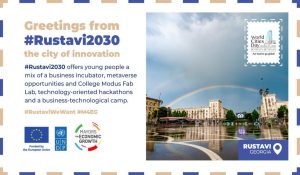

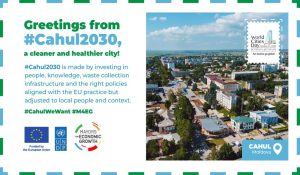
13 mayors as frontrunners
The M4EG introduces new tools and approaches, with four mayors currently testing what it could mean to go from a linear project approach to a systemic portfolio approach for local transformation. Kutaisi and Batumi (Georgia), Areni (Armenia) and Ceadir Lunga (Moldova) are cities making up the first cohort of the Portfolio Journey. Each designed a portfolio with a total of 40 different options to be implemented. Our partner here is the Chora Foundation.
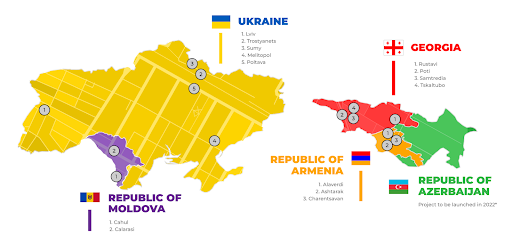
The other nine cities are undertaking an innovation and learning programme called Urban Imaginaries, where cities get a change to test human-centered design through seed-funds. The cities embarking on this journey are: Alaverdi, Ashtarak and Charentsavan from Armenia; Poti, Rustavi, Samtredia and Tskaltubo from Georgia; and Cahul and Călărași from Moldova. Our partner here is Centre for Public Impact.
Instead of looking for up front solutions, these cities and communities are examining the problem from different viewpoints, engaging with unusual suspects, and attempting to curb our reflex to focus on quick solutions for sticky problems. Embedded in empathy, they aim to get a different understanding of the city or town landscape and its economy – going out of the city hall and their offices to talk to residents and local actors, focusing on who the city is and the local stories are. The city teams set up hypotheses and go out to test, pilot, validate various ideas to see how it works. Instead of creating solutions, they are learning how to solve problems as a team, together with their local communities and residents.
It is impossible to bring-in all 13 stories, but we have featured some examples to better illustrate what is “business as unusual” for local governments.
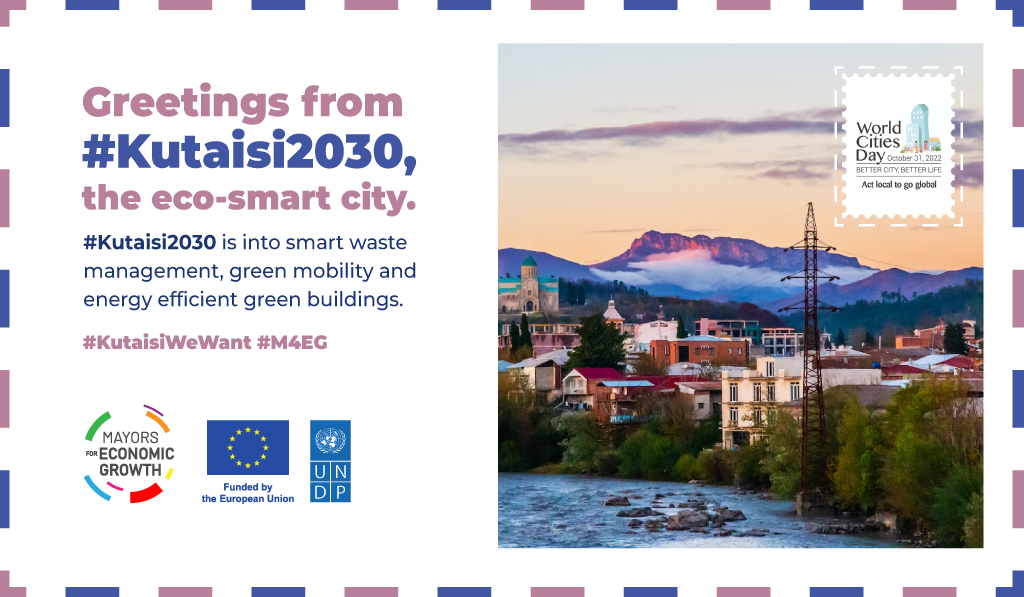
Smart waste in Kutaisi, Georgia
Kutaisi’s portfolio intends to place the city on the eco-smart urban planning frontlines in Georgia and beyond. Of the many designed interventions, the smart waste pilot is looking to gather data on two fronts: what’s the business case for implementing smart tech to optimize waste collection, and how does people’s sorting behaviour change when they are facing new sorting mechanisms such as non-transparent containers or monetary incentives through eco currency. The pilot will implement this tech intervention in a small part of the centre, with a limited number of containers to gather data. At the end of the pilot, they will know: how much money can be saved by automating the planning of waste disposal using sensors on waste bins and whether people sort just as well, better or worse, with financial incentives or with non-transparent containers. This data will give decision-makers an idea of what it would take to unroll this solution across the city, which will be an important infrastructure investment based on a pilot validated by residents.
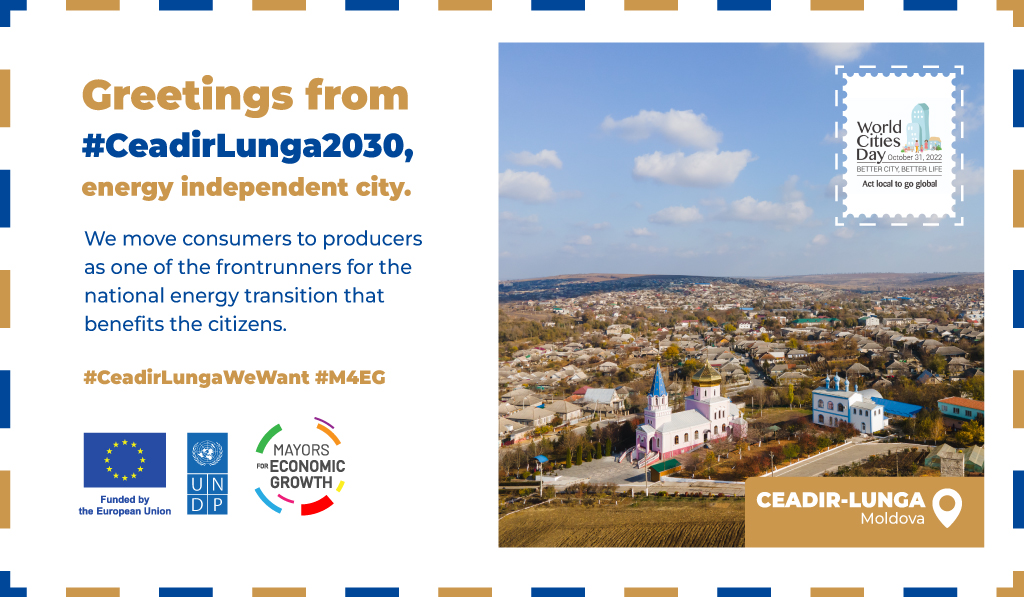
Energy transition of Ceadir Lunga, Moldova
Ceadir Lunga is home to 20,000 people, located in the south of Moldova, right at the border with Ukraine. A key challenge is increased energy prices for gas and oil, particularly during winter months, coupled with the environmental harms of fossil fuel dependency. The town relies on imports for all their energy needs from the Russian Federation. While their energy standards are outdated; it is evident this is not viable nor sustainable going forward. That is why the focus of city transformation is on the transition to renewable and diversified energy sources to reduce imports and improve efficiency. The town wants to support vulnerable groups and tackle high unemployment rates with energy knowledge that can lead to new jobs. “What is new in this process for us is to bring in residents closer through consultations and interviews and to take a more holistic approach to a challenge such as energy imports,” notes Mayor Anatoly Topali from Ceadir Lunga.
How another Moldovan town is reimagining waste management can be found in this blog from Călărași.
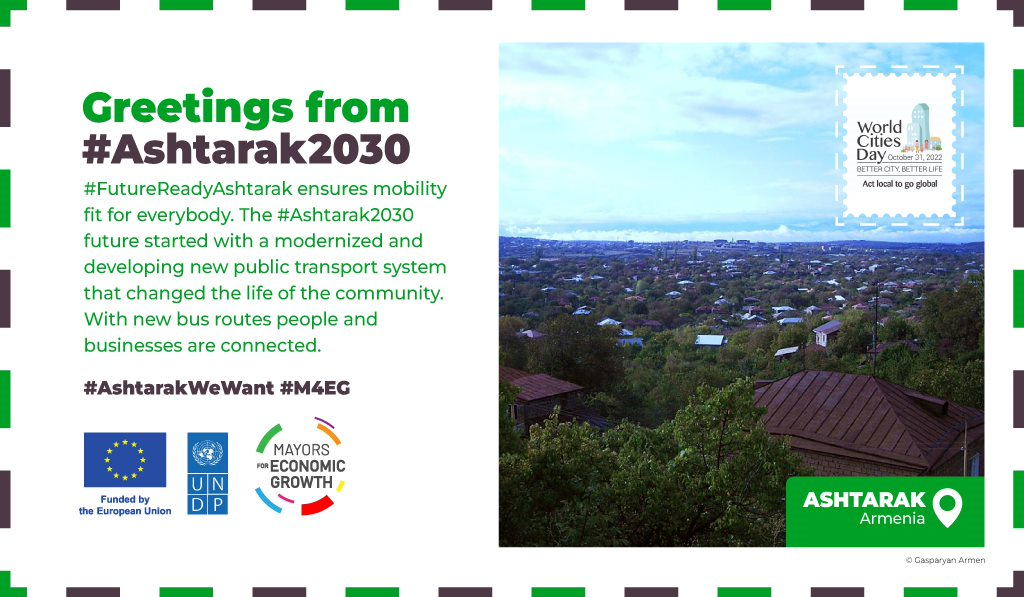
Public transport system reform in Ashtarak, Armenia
Our third example comes from the Ashtarak community in Armenia, only 22 km away from Yerevan. Ashtarak consists of more than 30 villages and has no public transport service, which significantly impacts economic opportunities for local citizens. “We started the public transport reform process as we want to have public transportation services available to our community. We shall establish a test bus route to connect our many community settlements. We are still developing the route, and defining the bus stops’ locations and tariffs in public discussion with our residents. We plan to build closed bus stops, which will have solar-powered heating, lighting and wi-fi. We will start with 3-4 small vans, but the plan is to buy 11 small buses, out of which 3 will be adjusted for use by people with disabilities. For our community development, it is vital to connect settlements with public transport – the 35 new bus stops and greater mobility will change many lives in our community,” shares Mayor Ishkhan Barseghyan. Attracting financing is often difficult for secondary cities and towns, however Astarak has successfully used the M4EG seed-fund to mobilize additional funding from the central government for its public mobility ambition.
15 new city troopers – Azeri cities on board, re-start in Ukraine, and more frontrunners in Armenia
Eight local authorities in Azerbaijan and Armenia recently joined the Portfolio Journey and Urban Imaginaries initiative, together with the seven cities from Ukraine, who put their work on hold due to the war but are back with a plan to re-build and re-imagine their future. We are looking forward to hearing what comes out of the learning journey for Khirdalan, Icherisheher, Sabail, Urva, Mingachevir and Naftalan in Azerbaijan, and Lviv, Melitopol, Poltava, Sumy, Trostianets, Mykolaiv and Ternopil in Ukraine, and Gyumri and Kapan in Armenia.
The network of cities shares that the mutual success ingredient of this journey so far is their teams – people with open minds, dedication, deep engagement and who lean into a process that often goes beyond what has been tried and tested before, all with the guidance and space to experiment, created by their leaders, the mayors and deputies.
Without people’s commitment, no transformative change can happen.
The M4EG Facility builds on the Mayors for Economic Growth Initiative, launched, and funded by the European Union in 2017. Starting from 2021, the M4EG Facility – funded by the EU – has been managed by UNDP in close cooperation with the EU, local authorities, and a range of partners.
Cities: A powerhouse for innovation
Throughout history, cities have held a central role in innovation. First, local governments often are more agile than the national or regional ones in identifying and responding to problems. Then, they are closer to their constituencies, making them well-positioned for participative action. Finally, when facing unprecedented challenges, cities benefit from a wide action range to carry out new solutions, and mobilize communities for a faster response.
On 31 October, the United Nations celebrated World Cities Day, bringing together urban partners to share their approaches on local action, creating more connected, inclusive and sustainable cities.
Emerging challenges
In the Europe and Central Asia region, urban spaces have experienced multiple transitions and shocks. UNDP’s strategic innovation work in cities shows that cities are at a precipice – under-resourced, over-extended, and with unreformed development models – allowing any dent or crack to destabilise the system anew. The outdated economic model no longer works – cities and towns, especially smaller towns, frequently house decrepit industries and are home to young people who want to leave. Yet, while we can easily pinpoint the problems in the region’s recent history and present, the way out is less clear. But there is hope. To live up to people’s expectations for a thriving future, local governments need to move beyond traditional and obsolete economic models, and embrace learning and flexibility to change practices that keep them relevant and open to new opportunities. This is a shift in mindset, collaboration, and capability – and reinventing themselves will accelerate change within the systems.
In this context, urban stakeholders are asking themselves: What do we need to do now to shift systems?
Can we shift urban systems?
Since August, through our Urban Talks Series, we have been exploring these questions and featuring stories of changemakers who have powered innovation to address new and old challenges alike. From these stories, several themes have emerged:
Interconnectedness. Urban systems are interconnected: for example, an investment in public infrastructure will increase the value of property around it and drive other investments. To make them more manageable, urban challenges have been sliced into single issues. But to be effective and make urban systems more resilient, there is a need to work on understanding and building connections between different parts of the system. Urbanist Dr. Jayne Engle, current Co-Director of Participatory Canada, challenged us to explore the interconnectedness between the intangible (wisdom and values), and the tangible – physical, digital, environmental and institutional infrastructures (see Urban Talk #3). Her work recognizes that the future needs to be built together with those to whom it belongs, incorporating the voices of children and young people, and placing at the heart of urban development a balanced relationship with nature. Movements like Japan’s Future Design show how to factor in future generations into the design of interventions now, as do Fridays for Future, a youth-led and organised climate activist movement. In Batumi, Georgia, the city government, in its effort to diversify its economic model and rebrand itself into a tech-city, has ended up identifying and connecting to stakeholders that are driving the startup ecosystem (see Urban Talk #4).
Distributed Power. Radical collaboration between different actors – what Mayor of Ungheni in Moldova, Alexandru Ambros, calls a “web of bridges”, generates active feedback loops and enables cities to respond faster when shocks happen. Building the “web of bridges” is reliant on trust, open communication and shared missions. The Istanbul Planning Agency Vision 2050 team, is another good example of that (see Urban Talk #1). They conducted consultations with over 20,000 people to determine the city’s vision and mission. The city landed on a vision for the future of the city as vibrant, free and diverse, and continued to ‘translate’ this mission into a multitude of actions – from how the municipality works to the projects planned across the city. Similarly, NetZero Cities are supporting 100 cities in Europe to move to carbon neutrality by 2030, together with those to whom the city belongs – communities, companies, city governments (see Urban Talk #7). In the digital space, Barcelona and about 50 cities, with UN Habitat’s support, are developing digital transformation strategies that are people-centred, and that support sustainable urbanization (see Urban Talk #6).
Imagination. In our last Urban Talk, Charles Landry called for boldness and unleashing creativity in cities. Broadening imagination, adopting a learning mindset and encouraging creative bureaucracy are foundational in not only being resilient to shocks, but using them as an opportunity to shift systems. The Creative Bureaucracy movement in the making brings together bureaucrats from around the world who are using their imagination and capabilities to reimagine the role of governments as enablers of change. In this regard at one end of Europe, SPIN Unit is looking into what it would take for the city of Tallinn in Estonia to create a fully self-sufficient food system – including moving to a regional scale, changing diets and re-shaping behaviours. How to get there is a process of discovery that requires “disciplined pluralism,” laced with creativity and hyperlocal knowledge (see Urban Talk #5). On the other end of Europe, UNDP North Macedonia built a portfolio on circularity, by which it unlocked new partnerships, reframed questions and opened up new spaces for collaboration to rethink waste management (see Urban Talk #5).
——-
Cities are starting to reimagine themselves – exploring new economic models that are better balanced with nature, new forms of participation, and understanding more deeply how flows of people (e.g. refugees, internally displaced people, tourists, gig workers, etc.) are reshaping urban fabrics.
Curious to explore and learn how urban spaces are adapting in these ever changing conditions? See all the recordings and all the key insights from our Urban Talks series: innovation.eurasia.undp.org/urban-talks-series-summary-and-takeaways/.
UNDP’s work on the application of systems thinking to urban transformation is supported by the European Commission and the Ministry of Finance of the Republic of Slovakia. To learn more about our urban transformation work, see here, including our Mayors for Economic Growth Initiative in Eastern Partnership countries and the City Experiment Fund.
Illustration: Anina Takeff for Fine Acts
A personal reflection of the past year as the lead orchestrator for a joint EU & UNDP project called the Mayors for Economic Growth
International development is for the most part executed through development projects. The UN Development Programme (UNDP) is no exception, and since our beginning some 60 years ago we have developed an overall solid programme and project management practice.
Yet, the rapid changes and increasing complexities of global and local issues around inequalities, global warming, participatory governance, and public crises and emergencies, question our understanding of linear transformation reflected in our project management.
Many of us working in international development are becoming uncomfortable with presenting ourselves as ‘solution providers’ as if we know what the destination looks like and how to get there. For many of today’s complex challenges and the polycrisis we find ourselves in, we have no ‘best practice’ to lean on.
The thinking that we might be losing relevance due to our projectized approach and how we as an organization are exploring and learning to apply strategic innovation for system change is gaining traction among leading innovation colleagues and senior management, and I would argue is a growing discussion across the organization and sector.
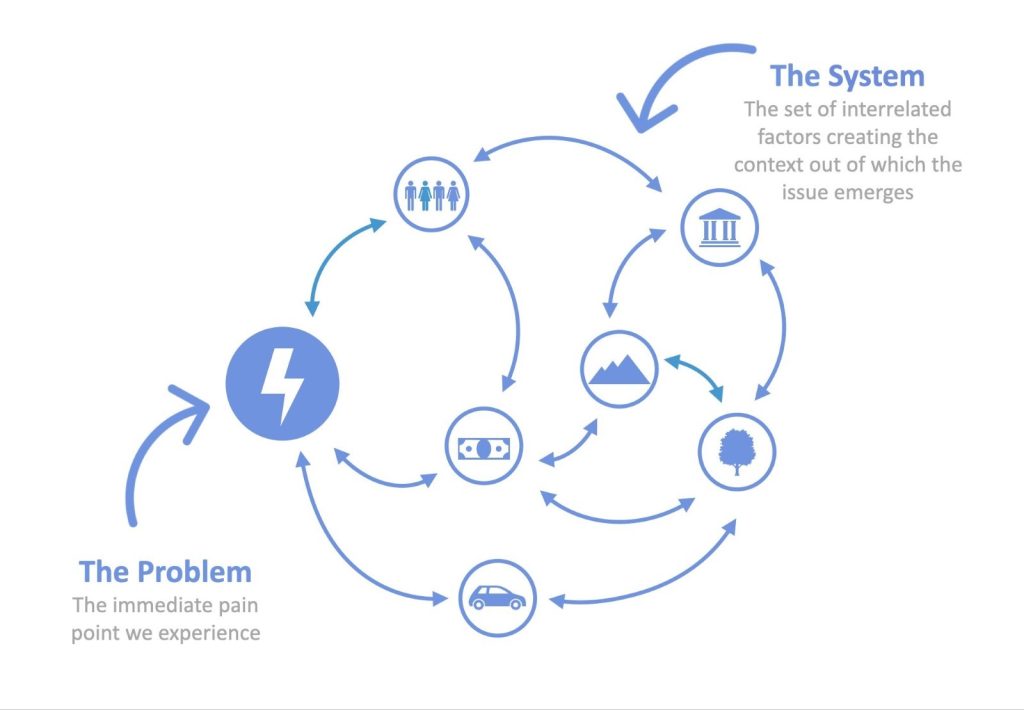
At times, in order to alleviate the pain, we apply #linear approaches to the problem, which can cause unintended consequences. When we disconsider the whole #system the problems we face are involved in, these consequences come back to us.”
SI Network
At a first glance, the Mayors for Economic Growth (M4EG), a joint initiative with the European Union to support towns and cities in Eastern Partnership exploring new trajectories of growth, looks like a standard development project following the established rules and regulations, alongside the ongoing 4,500 projects within UNDP. But M4EG has another intention, that of being a sandbox to test what new handbooks in development could look like while embracing the radical uncertainty of our times.
When we kicked M4EG off in 2021, we asked ourselves: if we accept that the world is complex and unpredictable, how can we inject ways to make our project management more agile, i.e., respond to issues, findings, and opportunities as they emerge?
In some ways, the M4EG has an identity crisis, engaging in deep self-reflection. It straddles the existing frame and project approach, while riding towards what could emerge.
Here are our key takeaways from a project management perspective.
From the start, we designed M4EG for tolerance and adaptability to ensure timely responses and relevance. This flexibility allowed the project team to act faster and make many small and some larger changes over the first year of implementation, among which are:
- New mentoring programme for municipalities: We transformed the standard ‘call for proposals’ into a learning and mentoring journey called Urban Imaginaries Programme, based on a concept around Urban Makeover (vibrant communities + economic opportunities + innovative approaches) that has taken shape within our wider innovation team over the past years. This led to a partnership with the Centre for Public Impact, and the opportunity for 20 municipality teams to learn how to use and implement human-centered design with seed funds.
- New crisis reality in Ukraine and Moldova: The project quickly repurposed EUR 700,000 to support the new realities faced by our network members in Ukraine and Moldova. Consequently, the EU is topping up the existing funds with EUR 1.8m to form a M4EG-EU Response and Renewal Grant Programme to continue supporting municipalities that are currently occupied, at the frontlines, or hosting Ukrainians that are internally displaced or refugees in Moldova.
- Financing links: Knowing that one set of time-constrained project funds will not result in the system transformation we seek, it became evident that UNDP and the EU need to play a stronger role as a bridge and orchestrator for new funding opportunities and partnerships for local authorities. When an EU-led Team Europe initiative, including with International Financing Institutions (IFIs), was launched for the Syunik region in Armenia, the EU called for increased engagement with municipalities in that region. In response, M4EG embedded the largest municipality in the region in the Portfolio Journey programme (going hyperlocal to design and dynamically manage portfolios for system transformation). Simultaneously, to support more of the municipalities in the region, we are launching an accelerated Synch Programme for local economic development (LED) planning to kick start the design of bankable projects that can attract financing.
- From local economic development plans to SYNCH: To switch from linear local economic development planning, the existing LED process under the first phase of the M4EG took on a system lens approach and moved towards continuous and adaptive planning to better stay in synch with changing needs and factors. The first pilot with our partners at Ove Arup and Climate KIC is taking place in Baghdati, Georgia.
- Show and Tell platform: Intentional co-design of interventions is a new approach for most M4EG members and requires stamina, patience, and more time than pre-defined interventions. The 4 to 6 months-long design phase for the first cohort of 13 towns and cities called for a celebration and peer-to-peer exchange in the form of a regional visibility event at the mid-year turn.
- Embedding storytelling: In addition to introducing storytelling as an untapped skill for municipality teams to shape local narratives, it became necessary for a change-orientated initiative like the M4EG to come with a clear future-ready identity. A new attractive brand was co-designed with the EU, with an intentional push for implementation and communication to increasingly go hand-in-hand. So far, more than 200,000 people have been reached in the Eastern Partnership.
The M4EG’s identity sits between being a discovery and learning journey for system transformation, and the UN development project frame for operational effectiveness and expenditure delivery as performance indicators.
To rise above operationalization, our key starting point is not ‘how many workshops and providers are needed,’ but rather ‘what are the emerging needs and realities for our set intention for more sustainable, inclusive, vibrant communities, and how could we best support?’
The M4EG intends to be tolerant and responsive, with a mixture of the relaxed and the precise. It has so far allowed the donor, implementer, partners, and beneficiaries to add a bit of themselves, to help adapt and customize, to be partners in a mission. We see a donor bringing in new partners and exploring new avenues, mayors utilizing the optimistic and colorful M4EG brand to strengthen their local visions, technical partners interested in co-testing new tools and approaches, and UNDP colleagues across teams asking to join in what has become an invitation for change. As Charles Laundry shares in his book on shaping a creative bureaucracy: “Every [bureaucrat] has a vast storehouse of “discretionary” effort, [and] many more are waiting in the wings to contribute more”.
Projects appear across today’s disciplines and is a taken for granted modus operandi for non-routine goals. International development is no exception and arguably has become shaped by a ‘project hegemony’. Could we test ourselves out of this universality?
“Once we denaturalize the project form, we can more clearly imagine alternatives to it. If not every action or every vision for the future amounts to a project, then what else is there? What kinds of transformation might practices of radical care (Hobart and Kneese 2020) or of ‘staying with trouble’ (Haraway 2016) yield? Why don’t we choose to de-projectify some social environments, for example, to ask what work or development might look like without perpetual projects?” (2021, Andrew Graan, What was the project? Thoughts on genre and the project form)
Background:
In 2021 UNDP, together with the EU, launched the Mayors for Economic Growth (M4EG), a regional initiative hosting a network of some 350 municipalities in the Eastern Partnership – Armenia, Azerbaijan, Georgia, Moldova, and Ukraine. The M4EG’s intention is to demonstrate and inspire secondary cities’ new trajectories of growth to become more attractive and vibrant for people and financing.
Local governments are at the forefront of change and opportunity – whether that is tackling climate change, addressing inequality, or attracting and retaining talent. Yet, faced with new and emerging challenges all the time, cities and towns must be able to listen to residents, innovate and reimagine their ways of working to effectively respond to a rapidly changing world.
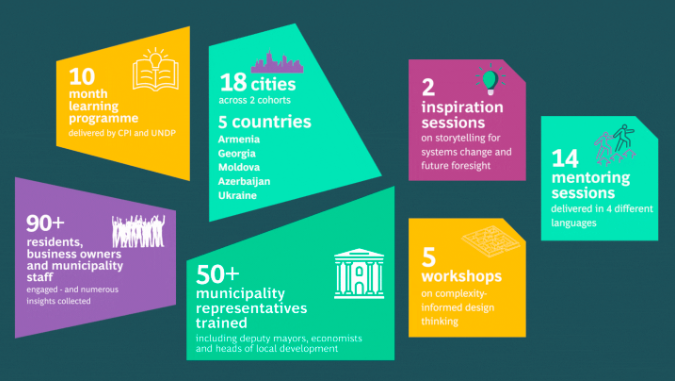
That’s why the Centre for Public Impact and the United Nations Development Programme are excited to be partnering on the Urban Imaginaries programme under the Mayors for Economic Growth, a joint initiative between the EU and UNDP. Urban Imaginaries is a 10-month initiative that is supporting cities across the Eastern Partnership to develop solutions to their most pressing challenges by applying Human Centered Design – a problem-solving approach which seeks to change the way governments approach challenges, by engaging citizens in the design of better – and more human – solutions.
The Urban Imaginaries programme in numbers
4 key learnings for successfully engaging with residents
Through the first phase of the programme, we’ve helped local governments define their challenges. These have ranged from how to reinvigorate cultural life and make public spaces more accessible, through to how to tackle youth unemployment and improve transportation systems. As part of this, we’ve supported local governments to engage with residents and other key stakeholders in their system to develop a deeper understanding of their challenges by using methods like social listening and sensemaking exercises. This has provided ample opportunity for learning, and we’ve summarised four key tips for those in local government who want to work more closely with residents.
- Engage in the process with a learning mindset: Engaging with residents in problem-solving can provide a powerful tool for local government teams to learn more and question their assumptions about the challenge they’re hoping to solve and the way it is impacting residents. By practicing an open, learning mindset, this can better unlock ideas for solutions, and help teams reimagine their relationships with residents.
- Co-design solutions for – and with – residents: While listening to residents to better understand your challenge is the first step, it is important to also continuously engage residents and other key stakeholders in the entire process of designing solutions to emerging urban challenges. This is key to ensuring that city leaders effectively engage with residents and will help deliver greater impact by creating services that better meet the needs of residents.
- Preparation is necessary to listen deeply: The art of listening well to your stakeholders can be learnt, and practiced. Preparing a tailored interview guide in advance, capturing insights as well as making time to collectively reflect on learnings acquired during those conversations are key. It is also important to remember to come in with an open mindset and avoid leading questions.
- Foster values such as empathy, humility, openness and inclusivity: These are all important attributes for city leaders looking to transform how they engage with residents and build trust.
A closer look at our cities and towns
Having concluded the discovery phase of the programme, we’re excited to share how the cohort have engaged residents, what they’ve learned and provide an update on their progress.
Amplifying cultural life in Alaverdi (Armenia) and Tsqaltubo (Georgia)
Arts and culture can change lives, but also have a valuable role to play in contributing to a city’s economy. The arts and cultural heritage of Alaverdi and Tsqaltubo is unmatched in the region. Post-pandemic, both cities want to reimagine and innovate their arts and cultural sector to enrich the lives of residents, create jobs and galvanise economic activity and creativity.

The city of Alaverdi is reimagining cultural life for young people, to create more dynamic and flourishing cultural spaces for the community. Traditionally, Alaverdi has been a centre of cultural life, hosting international festivals such as “Theater fest”, organised annually to honour renowned writers Hovhannes Humanyan and the great actor Sos Sargsyan. As part of this learning programme, Alaverdi has been working with the community to understand their ambitions, aspirations and hopes for this sector. Residents have reflected their desire to enhance the city’s cultural life, which will benefit locals, attract tourists, preserve the area’s rich cultural heritage, and also create new jobs – thereby addressing the issue of migration the region is facing.
“I am surprised at the results of the interviews! It seems the residents are really keen to get involved and they have a MUCH bigger understanding of the issue. For instance, in our interviews with youth, we learnt that they are keen to get involved in the co-design of cultural activities and participate in educational programmes.”
Ms. Karine Simonyan, Local Economic Development Officer (LEDO), Alaverdi Community Administration
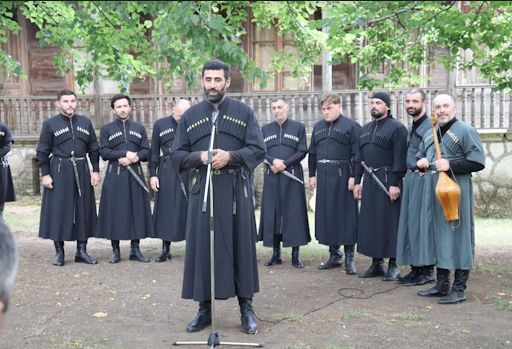
In Tsqaltubo, the pandemic highlighted the need for social interactions, especially among the young population. Now things are changing, and residents are keen to connect, “we are happy to meet each other in person” reported one student. In response to this, the city is focussing on transforming cultural spaces into places for cultural and social interaction between diverse groups.
They were initially looking at how to increase the capacity of the Museum of Niko Nikoladze, in the city’s central cultural hub. However, in-depth user research revealed that residents face transportation limitations which inhibits their ability to experience all the city has to offer. The city is now exploring how they might better link surrounding villages and towns to their local cultural hubs. By addressing these needs, Tsakltubo hopes to take gradual steps towards creating vibrant social and cultural spaces away from the capital, to improve the quality of life for local people and create the conditions for local and international tourism.
Designing inclusive public spaces in Poti (Georgia), Ashtarak and Charentsavan (Armenia)
Many of our cities are focussing on making public spaces more inclusive, accessible and beautiful – which are often a reflection of the values and identity of a city. Frequently, urban spaces are not designed for or with the most marginalised communities in mind. Similarly, urban spaces do not always drive opportunities for intergenerational engagement. Though young people are often described as ‘social glue’, high fences surround our schools, playgrounds are clearly demarcated, and at worst, design features can discourage teenagers from occupying certain spaces. Too often, we erect barriers that segregate different age groups.
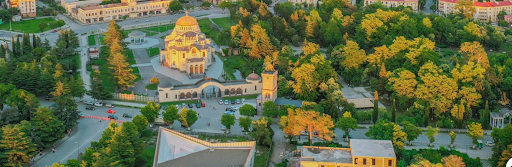
Our cities are changing this. Poti is concentrating on improving open spaces in the city – in particular its central park. The park was previously renovated, but without using a design thinking approach. As a result, the renovation was completed without taking into account the needs of residents. It was built in isolation from many stakeholders and the park now lacks the spaces that residents need for recreation and leisure. The city team is prioritising the inclusion of historically excluded communities as part of their engagement with residents, and some of the ideas emerging from their research include ways of making the park more accessible for disabled communities.
“[complexity informed design thinking methods] are very helpful, because it helps us to understand what others need and build our empathy muscles. We’ve understood the needs may change from one citizen to the other, and we found some needs that were expressed by citizens that we did not expect. For instance, we came to this process thinking some improvements to the park did not fit, and we’ve understood through the interviews that they actually do because they respond to a need expressed by citizens.”
Irakli Lejava, Deputy head of Sustainable Development and Innovation Service, Poti Municipality
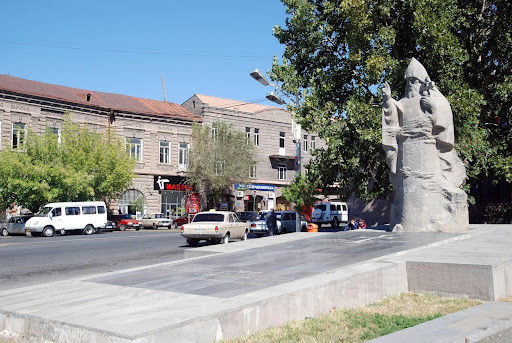
Using the lens of inclusion also means thinking about those who are furthest from the public spaces designed for them. Ashtarak is located in a mountainous region of Armenia, and the city was recently united with 7 neighbouring communities as part of an administrative change. Through Urban Imaginaries, Ashtarak is looking for ways to improve public transportation services between the communities. Currently, these are not well-developed and are impacting the mobility of residents. This includes farmers who find it difficult to sell their products, students who are isolated from universities, and socially vulnerable residents who cannot easily access important public services. By reimagining connectivity between the central city and the other parts of the community, the team hopes to promote economic development throughout the area.
“There is an excitement for this challenge in some remote communities where public transport never existed before. The enthusiasm from our residents is really pleasing – we’re getting really good energy from them as they understand this process allows them to be part of the problem-solving. This work is quite extensive, it might take longer than what we thought, but I am certain this will allow us to get better outcomes. In 20 years, we had never listened to residents in this way, so now we need to make sure we’re up to the level and make sure we keep them updated”.
Nazeli Arsenyan, Member of Ashtarak Community Council
Charentsavan, a small city in Armenia, was founded in the 1940s by the Soviet Government to accommodate workers at a nearby hydroelectric power plant. One key challenge they are facing is the city’s attractiveness. They are therefore exploring how they can reimagine the city’s public spaces to make it more attractive for both residents and visitors. Feedback from the community has been key in shaping a shared vision and plan for the future:
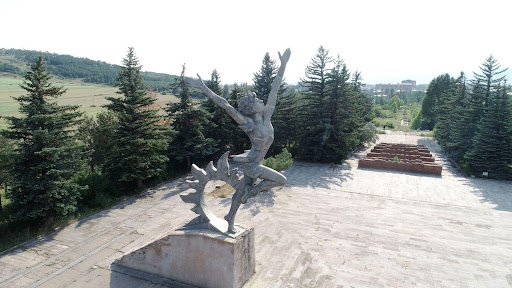
“By engaging with residents, the one thing that surprised us is that we concentrated too much on the central part of the city – leaving the entrance outside. We’ve now realised that the perception of the city starts from the entrance. Our assumption to focus on the central area may have had some emotional grounds as well, and we’ve now realised from our interviews that the entrance needs to be involved in our process.”
Ashot Tserunyan, Local Economic Development Officer (LEDO), Charentsavan Community Administration
Promoting healthy living in Samtredia, Georgia
In Samtredia, the city is aiming to reimagine their sports infrastructure to improve the health of residents and increase regional tourism. They are interested in reinvigorating facilities around the municipality swimming pool, which was functioning well before COVID-19 and is seen as a popular regional attraction.
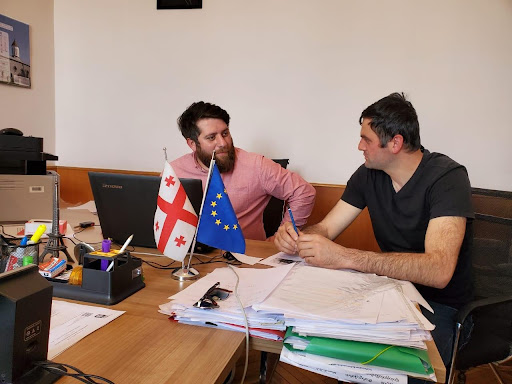
Through the programme, the city team was encouraged to go deeper to understand the health behaviours of their community. In doing so, they learned that residents are apprehensive about visiting public spaces as a result of the COVID-19 pandemic. However, residents are also interested in continuing exercise habits outside of the swimming pool which they took up during lockdown. The city is now exploring ways to respond to this feedback. These include introducing electronic booking systems to increase user safety when using facilities, developing gym facilities, as well as making more sustainable and energy-efficient choices for the city by adopting solar energy.
“Interviews revealed some needs and interesting insights. What was interesting is that we’ve changed our initial plan based on the insights collected. We started this process with a very narrow angle, but with your recommendation we opened up our view to better capture a diversity of views from the visitors. It’s not about what we [the city leaders] want, it’s about what residents need.”
Mr. Lasha Ormotsadze, Head of Coordination Office for Samtredia Mayor’s Representatives
Taking an ecosystem approach to youth unemployment in Rustavi, Georgia
Rustavi, in Georgia, chose to focus on tackling youth unemployment – often a chronic issue that is often difficult to solve. Unemployment in Rustavi is high (approximately 20-22%) and it is above the country average (18.1%).
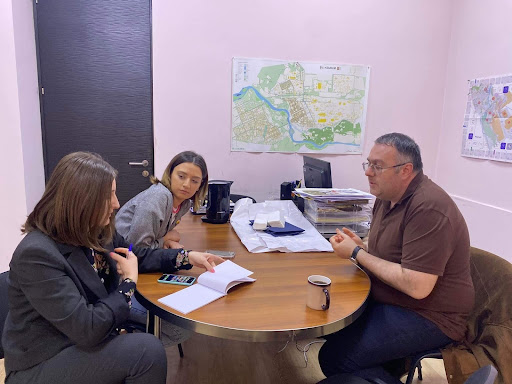
The Rustavi team conducted research to better understand the opportunities and barriers in this space. Through interviews with residents, the city gained a greater understanding of how to narrow down this challenge. The findings highlighted that there is already a vast amount of activity underway to tackle youth unemployment.
For example, they discovered numerous initiatives run by local business and civil society organisations. While well-intentioned, many are not scalable and disconnected from each other. Now, the municipal government is reimagining its role as a connector, convener and amplifier to help the ecosystem collaborate around a diversity of initiatives that seek to develop new skillsets in young people, make job searching easier and provide better career planning tools. This re-envisioning of the role of government with the communities it serves will help solidify and unify efforts across different stakeholders in the city.
“Thinking about ‘for whom is this really a problem?’ helped us understand who the main stakeholders are in the system around our problem. Our end users are of course the young people – but also the municipality and the local organisations and NGOs that are already supporting young people in the city. We’ve understood that our role is also to enhance the strength and great work local organisations are already doing to tackle youth unemployment. We need to engage them in our journey.”
Michael Lobjanidze, Strategic Development Manager of the Center for Artistic, Sports and Youth Development, Rustavi
Improving waste management in Cahul and Calarasi (Moldova)
Calarasi and Cahul are concentrating on challenges surrounding waste management, a key priority in their cities. Waste management infrastructure can be a critical piece of the urban identity puzzle and both city teams are working to better understand the nature of the problems their communities are facing. For example, in both cities the waste collection sites come with a multitude of challenges – they are not contained, attract stray animals, are not well lit and do not offer the opportunity for residents to recycle waste. Furthermore, collection times are often irregular and unreliable leaving the waste sites in disarray.
By conducting user research and deep listening, they were able to better understand and prioritise the waste management challenges that each city is facing.
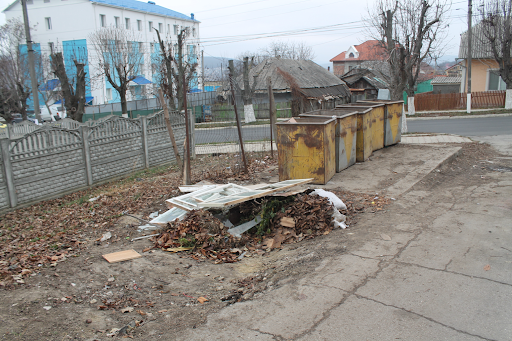
“For us, the process was to learn the methodology and understand how we can put ourselves in the shoes of people. This project helped us understand that we can do things differently – we spoke with those who are in charge of waste management, we spoke to young people, to various people – this helped us understand the problem from various points of view.”
Lilia Rata, Investment Attraction Specialist, City Hall of Călărași
As a result of this work, both cities are able to design more relevant solutions that actually solve citizen needs, improve waste management and collection services, as well as consider environmental sustainability. In Calarasi, one of the ideas they will be exploring is a service that enables residents to share second hand goods with the community, to avoid waste and blockages in the waste management system.
What’s next?
The next phase of the Urban Imaginaries programme has involved working with cities to support them to experiment, and test and learn from their proposed solutions. We look forward to sharing more about what we’ve learned with cities in the experimentation phase soon!
Background:
The Mayors for Economic Growth (M4EG) Facility is part of the M4EG initiative, launched and funded by the European Union since 2017. The M4EG Facility is run by UNDP, starting from 2021, in close cooperation with the EU, local authorities and a range of other partners. www.eum4eg.com
For media and other enquiries for UNDP/M4EG:
Anton Sydorenko, M4EG Communications Lead, anton.sydorenko@undp.org
Tina Stoum, M4EG Regional Lead, tina.stoum@undp.org
Reposted from Center for Public Impact.
Achieving the Sustainable Development Goals in an increasingly evolving, interconnected, and uncertain world requires the ability to navigate complexity. In ecosystems where different actors operate with different priorities and goals, it is necessary to develop innovative practices based on a deep understanding of the environment.
To support urban transformation in Almaty, Kazakhstan, as part of the City Experiment Fund, UNDP has applied a structured methodology. We adopted a holistic mindset that incorporates different parts of the system to achieve optimal outcomes.
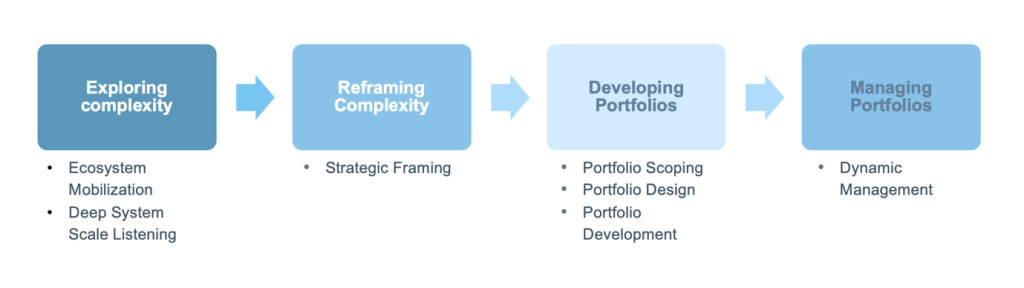
1. Exploring complexity through ecosystem mobilization and deep system scale listening
We applied systems thinking to navigate the complex value chains of urban transformation in Almaty. Social issues in Almaty involve a wide range of actors – from research institutes, businesses, civil society organizations, environmental activists, the Almaty city government, and more. The actors have different priorities and together form an interconnected system. Issues such as air pollution, population growth, and others can only be understood by looking at the entire Almaty development landscape.
To define priority areas and key players requires deep listening to gain a bird’s eye view of stakeholders and key players in the entire system. Specifically, we looked for potential partners, sources of information, and signals of risk.
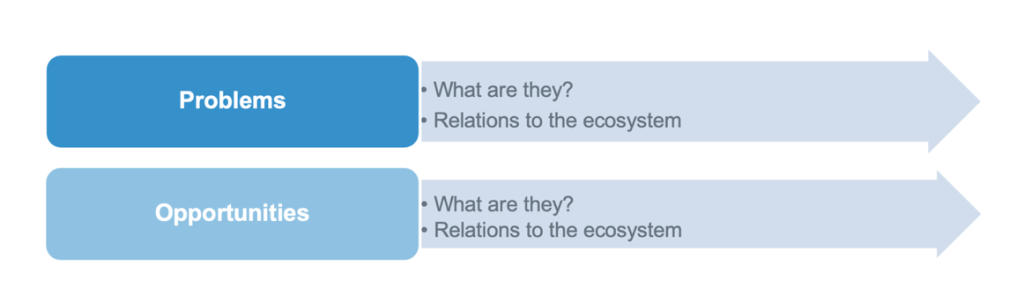
2. Capture complexity with strategic framing
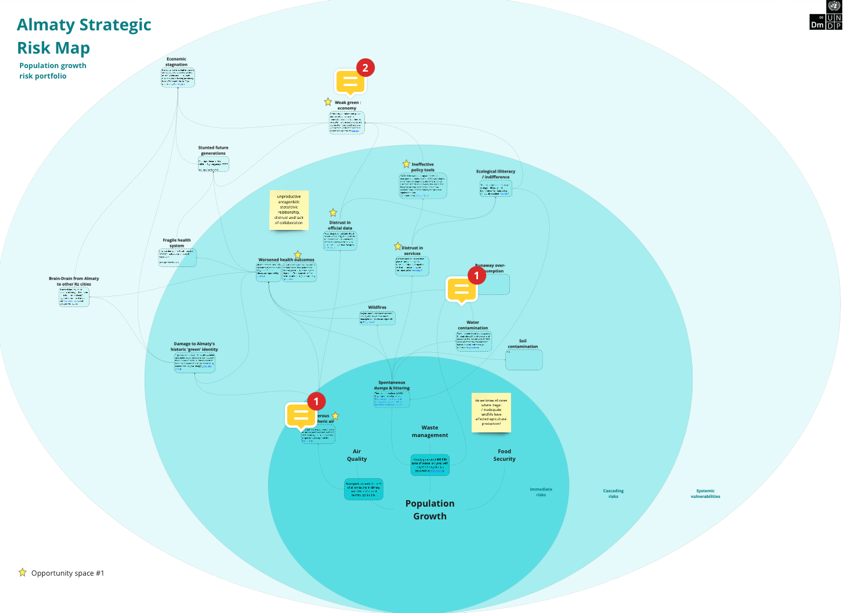
To overcome the unpredictability and spontaneity of urban change, we set out to design a coherent narrative and mission to align the various stakeholders and distribute responsibilities. After identifying our key stakeholders and issues, we began our research grid, which mapped three types of risks and their causality, with population growth as the driver of change in Almaty that concerned us most. This systems thinking approach allowed us to identify the main causes of Almaty’s social problems and find solutions that would have the greatest impact.
3. Portfolio scoping, design, and development
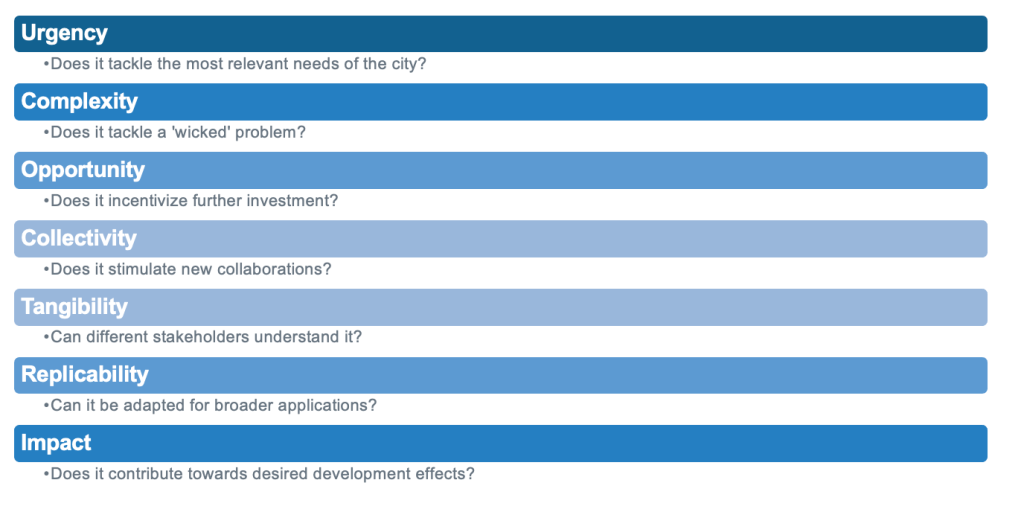
So how can we translate our findings into scalable solutions? First, we identified a set of interconnected immediate, cascading, and systematic risks. For each set of interrelated risks, we created a targeted portfolio of solutions that included a statement of intent and desired development impact.
We then used a portfolio approach to bridge the current situation with our vision. For each opportunity, we took an in-depth look at the current situation, the short-term outcome, the long-term results, and the gaps in achieving the vision. At the same time, we referenced existing opportunities and practices around the globe.
Finally, each position was developed and tested – examining impact based on social, environmental, and economic value. We also used experiments to develop and illustrate the potential of the project.
4. Accelerate change with systematic methodologies
Among the various problems Almaty faces, we choose to focus on addressing air quality following our mapping. Air pollution has dire consequences for Almaty, both in terms of economic costs and health. Our goal for this project is to develop an accurate, real-time, and predictive air quality monitoring system that will guide decision-making by both the local community and the Almaty government.
Identifying obstacles and resolving them in a complex ecosystem requires mapping interconnected activities to address multiple levers simultaneously. We categorized the systematic barriers and their solutions into different levels for each of our identified key stakeholders. Here is what we found:
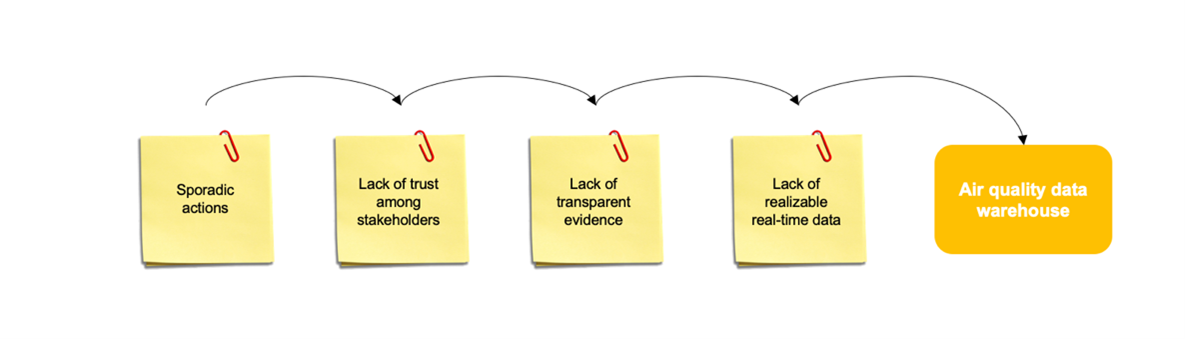
We discovered that the lack of reliable real-time data was the key to unravelling the sporadic, uncoordinated or fragmented actions of stakeholders. This was facilitated by a hostile environment of opposing views, which made information transparency and thus evidence-based policymaking difficult. With these insights, we set out to strengthen the analytical capabilities and gamification of the AirVision platform and a traffic data monitoring system to address air pollution at its root.
Conclusion
The portfolio approach has helped UNDP understand and address the complexity of environmental challenges in Almaty. It has helped the team develop actionable, accelerated, and scaled solutions that untangle complexity through multiple layers of the portfolio.
We look forward to accelerating Almaty’s transformation with insights from our methods and sharing our practices with all colleagues working in the UN system and beyond to achieve greater impact on our most pressing challenges.
As different aspects of UNDP’s work on urban transformation in Europe and Central Asia come together, we’re embarking on a series of high level discussions about new practices to urban transformation, open for a broad audience. This series, called Urban Talks: How Can Cities Thrive in Uncertainty, will take place every Wednesday at 14:00 Istanbul time, starting on August 31, 2022.
Urban Talks will spotlight cities and initiatives that are building new inclusive visions across Europe and Central Asia and wider, and showcase how cities are demonstrating resilience, reinventing their economies, transitioning to inclusive and smart cities, and building new partnerships. It is a space for exchanging insights and learnings and bringing together a growing community of cities, practitioners and thinkers, that are approaching urban challenges in a systematic way.
Register for the upcoming Urban Talks:
- 31 August | Urban Vision: For fairer, greener, and more creative cities (REGISTER)
How are cities tackling competing priorities and developing long-term visions? A growing set of cities are moving away from linear planning to adopting mission-driven change – whether that is towards thriving within planetary boundaries, climate neutrality, centering around care, or seeking to be fairer. In this session, we will draw out the experience of the Istanbul Planning Agency’s Vision 2050 team, whose work focuses on making the city fairer, greener and more creative. We will also hear from local projects in municipalities in Turkey that can in turn inspire and guide other cities to rethink how they can reinvent themselves.
- 7 September | ReStart Ukraine: Leveraging crisis for renewal (REGISTER)
Should Mykolaiv, Kherson include sea level rise in their long-term strategy? How can Chernihiv reinvent its security model and remain economically vibrant? What is the future of Mariupol? How many people will live in Ukraine and where? What are the new transit, energy and production models? ReStart Ukraine seeks a resilient approach, which will allow to plan ahead incorporating future challenges in concrete steps today. In this session, ReStart Ukraine will share its approach on assessing the impact of the war in Ukraine and using the momentum for reimagining cities, beyond infrastructure recovery. Looking holistically at the national, regional, and city scales and filtering in complex risk assessment trees, should allow us to shift from reacting to threats to strategic (even radical) planning. - 14 September | 7 Generation Cities: Crafting value narratives for recovery (REGISTER)
How to create equitable and regenerative cities, reconciling the past with the need for a radically different future? How can we enable structural change at the city level instead of incremental fixes? Jayne Engle, an Adjunct Professor at McGill University, and an urbanist, strategist, & experimentalist will share the findings from her latest book Sacred Civics: Building Seven Generation Cities. In it, she argues that societal transformation requires that spirituality and sacred values are essential to reimagining patterns of how we live, organize and govern ourselves, determine and distribute wealth, inhabit and design cities. - 21 September | Urban Makeovers: Building vibrant cities (REGISTER)
Cities in our region are experiencing large transitions: demographic shifts, dying of old industries and insurgence of new ones, or adapted ones, and multi-layered shocks. Our work with cities has shown that they are looking for diverse models of development and growth, which makes them attractive, dynamic and economically vibrant. This session will focus on the experience of Batumi, a coastal town in Georgia, that is seeking to build a startup ecosystem. We’ll also hear about frameworks that enable identification of interventions that bridge a dynamic cultural life with a growing economy.
In the coming weeks, we will announce our upcoming sessions and please feel free to share this invitation with your network and communities.
What needs to be done to create a prosperous future for people and planet, a future to be realized through the UN 2030 Agenda for Sustainable Development? Here at the UNDP Kazakhstan Accelerator Lab, our portfolio of innovative bottom-up solutions is providing the answer to this question.
As part of the City Experiment Fund programme, we aim to provide the public and local authorities in Almaty with decision-making tools to accelerate sustainable development. Together with our local partners, we provide accurate real-time air quality data and interactive user features on the AirVision.kz platform.
We are developing solutions that target different layers of air pollution in Almaty by using a holistic portfolio approach based on cutting-edge technology.
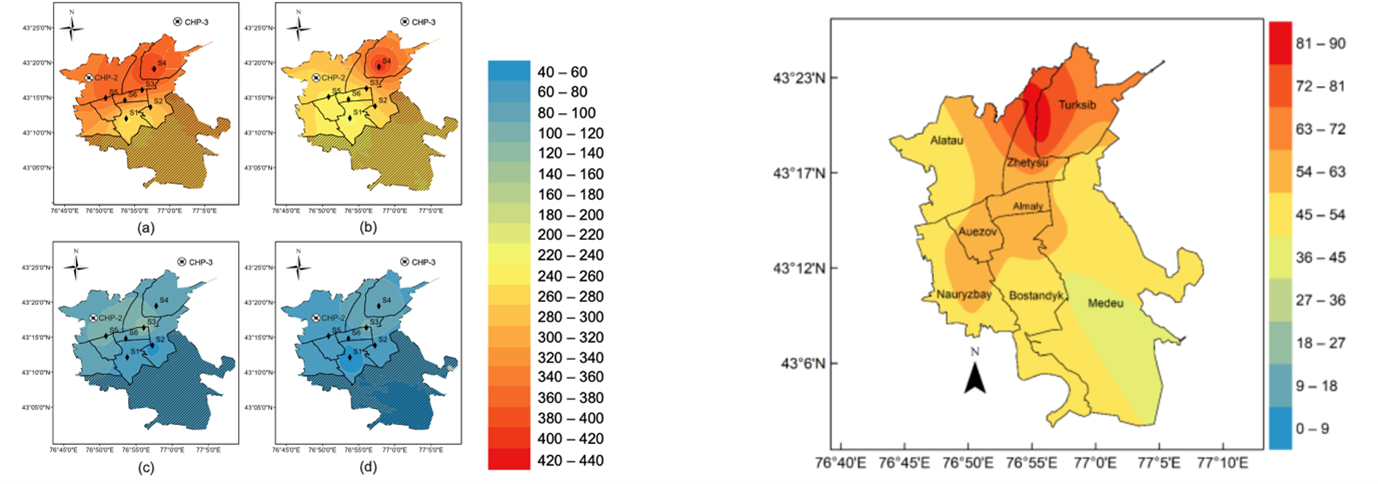
Air pollution has become the biggest challenge to urban transformation in Almaty. Air pollution poses the greatest environmental health risk for the public, and has led to a significant number of preventable deaths and illnesses. The WHO Ambient Air Quality Guidelines show that PM2.5 concentrations in Almaty exceed the limits 17-fold in winter.
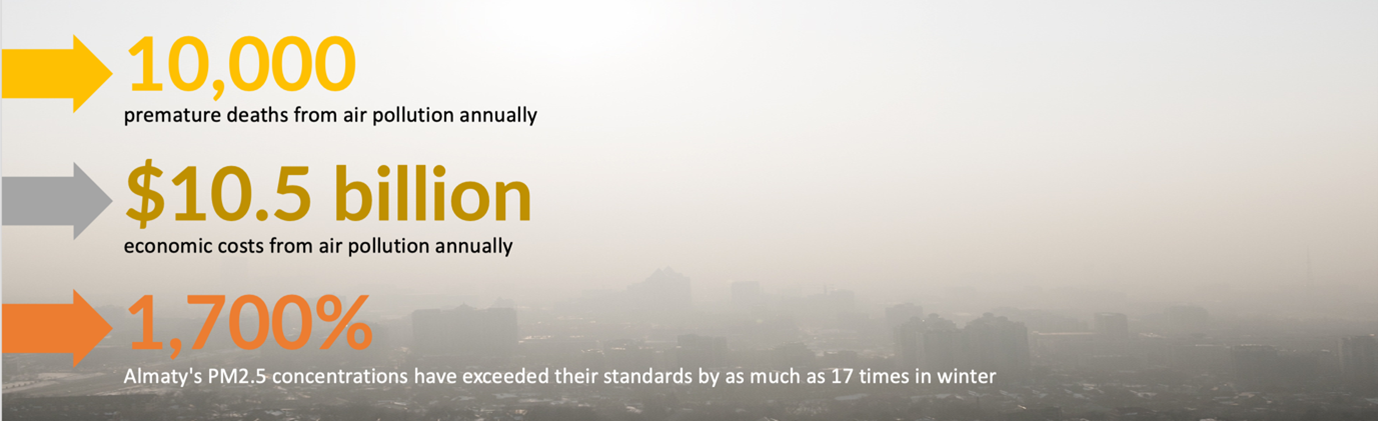
The health risks posed by air pollution come at a high economic cost. In 2022, the World Bank estimated that Kazakhstan would experience more than 10,000 annual premature deaths due to air pollution at an economic cost of more than $10.5 billion per year.
Navigating complexity: how to provide holistic solutions to environmental challenges
Our team identified the lack of air quality data as the overarching problem in tackling air pollution in Almaty. The lack of reliable real-time data has resulted in an air quality data warehouse that prevents accurate estimations, analysis and, as a consequence, an evidence-based developmental policy to target air pollution in Almaty.
As part of our efforts to obtain valid air quality data and to support decision-making by members of the Almaty public and the government, we set out to monitor Almaty’s air quality. To that end, we partnered with the public fund, Airvision.kz, which owns the air quality monitoring portal. The portal collects data from local air quality stations installed throughout the city and interprets the data based on the Air Quality Index (AQI), which includes measurements of PM10, PM2.5, NO2, SO2 and CO. The data can be accessed through the airvision.kz web portal and the mobile application.
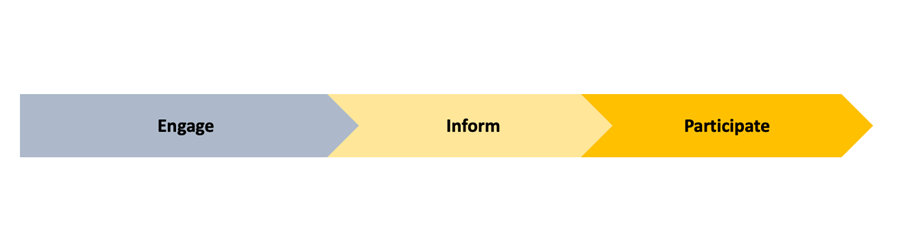
The portal has an educational and a participatory component. It provides the public with news, educational content and recommendations on how to protect oneself from air pollution – the aim being to raise awareness. The portal also offers the Almaty public a one-stop-shop access to submit complaints, make suggestions and vote for ideas to improve air quality in the city.
Integrated approach
The adoption of an engage-inform-participatory framework meant that innovative solutions could be introduced to enhance its components. We are working to incentivize public engagement and to promote grassroots solutions through gamification. Building on the platform’s existing engagement channels, including social media, offline events and bilateral meetings, we are using game-based activities to incentivize a broader audience to engage. With the goal of educating and promoting public and green transportation, we reward users who take part in sustainable activities and award points in the competition for grand prizes.
To better identify key air pollutants and capture air pollution dynamics, we have supplemented existing air quality data from local sensors with traffic emissions data and analysis of historical air quality data. In that way, we are providing a more informative decision-making tool.
Building a healthier Almaty through improved dynamic air management tool
Our air quality monitoring initiative is a successful start to unravelling the complex problem of air pollution in Almaty. With our integrated air quality analysis and integrative capabilities, we will provide improved support for public participation and for a robust evidence-based policy.
With our efforts, we can make Almaty a more attractive city and reduce per capita pollution. Our air quality findings will also accelerate Kazakhstan’s pace toward carbon neutrality by 2060.
Reposted from UNDP Kazakhstan.
Our Show & Tell event, held in Kutaisi, Georgia in July, 2022, was attended by the representatives of municipalities falling under the umbrella of the Mayors for Economic Growth (M4EG). M4EG focuses on economic inclusive growth and job creation in the Eastern Partnership (EaP) countries. It builds on the learnings from its first phase to enhance economic growth by designing and implementing Local Economic Development Plans (LEDPs). As a regional initiative of the EU and UNDP, it seeks to strengthen the capacities of local governments, create inclusive innovation processes for the design of investable projects corresponding to the LEDPs and invest in portfolios of projects that bring tangible benefits to its citizens.
The Show & Tell event was aimed to be regional platform for greater visibility, networking and alignment of seed funds with the identity and intent of the M4EG. Secondly, it gathered municipalities to share their journey learnings, engage and exchange deeper learnings, and outline their next steps. The event was attended in person by the representatives of 56 municipalities, while members of municipalities from Armenia, Azerbaijan, the Republic of Moldova and Ukraine joined online. Representatives from the EU Delegation to Georgia, DG Near and the Georgian Ministry of Regional Development and Infrastructure also joined the event.
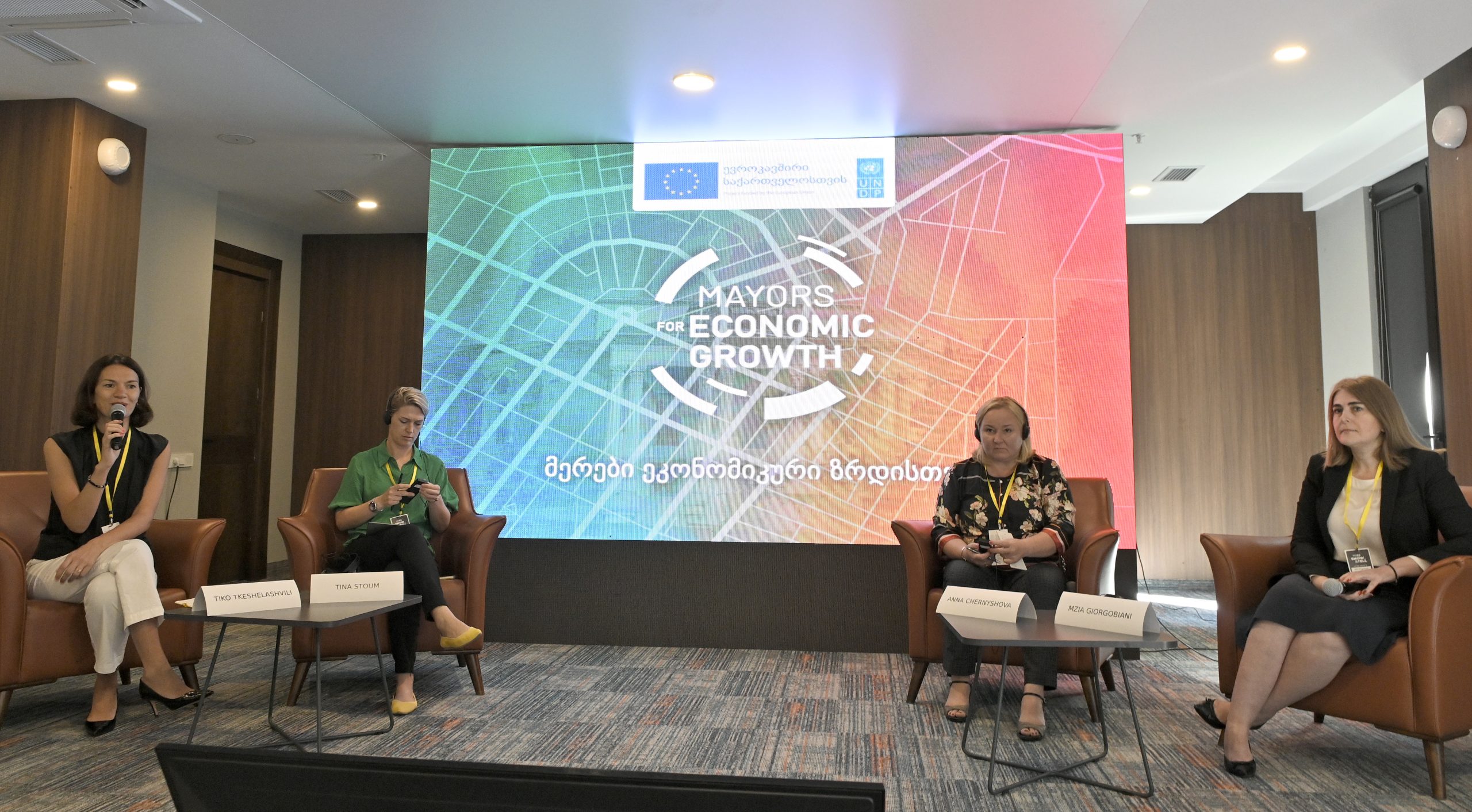
The event agenda included presentations led by 13 municipalities from the ‘Portfolio Journey’ and ‘Urban Imaginaries’ cohorts. These are two initiatives specifically designed to encourage and foster interventions aiming to reimagine key aspects of local living or urban spaces. M4EG’s key thematic focus is: deep engagement modalities with cities and ‘Urban makeover: Reimagining the city by the creation of a responsive, resilient and sustainable urban space’.
Portfolio journey
The portfolio journey addresses the complexity of development challenges by supporting the initiatives of local authorities and bringing additional capabilities to the local level. Currently, it engages with four cities in EaP countries to design and dynamically manage a municipal transformation portfolio. It is an adaptive learning and decision-making mechanism for responding to complex challenges that municipalities are facing.
- Areni from Armenia on sustainable tourism
The portfolio intends to attract and direct additional financial resources to the community to renew parts of its local infrastructure and diversify the local economy by exploring possibilities of interconnected value propositions. This will enable exploring new niches and alternative tourism offerings, such as eco, gastro and adventure tourism, ultimately boosting community livelihoods. - Batumi from Georgia on the start-up ecosystem
The portfolio aims to support the creation of a startup ecosystem space which diversifies and broadens Batumi’s talent pool, contributes to a renewed urban identity, encourages a culture of entrepreneurship and innovation, while at the same time allowing the local government to take the lead of key co-facilitator and orchestrator. - Kutaisi from Georgia on the smart eco-city
The portfolio aims to support the city in transitioning towards green & sustainable life, using nature-based urban innovation, attracting stakeholders with a sustainable agenda, promoting citizenship engagement practices, and sophisticated and responsible management practices at the municipal level. - Ceadîr-Lunga from Moldova on a resilient energy system
The portfolio aims at providing strategic learning opportunities and creating new avenues for diversifying energy sources, increasing energy sufficiency, and identifying local affordable home-based interventions. This would lead to a future of inclusive and sustainable energy, with the optimization of individual household energy use as well as support for low-income households.
Urban Imaginaries
Urban Imaginaries is designed as a learning journey to support small initiatives that seek to reimagine or reinvent key aspects of local living that can become catalysts for an urban makeover. Funding and technical support are provided to selected cities to support them to become familiar with complexity-informed approaches and apply them to design place-based solutions in collaboration with residents across a wide range of issues including economic development, tourism and urban development.
- Alaverdi from Armenia on cultural life
The project seeks to improve its cultural infrastructure hubs to offer a more dynamic and flourishing cultural life. This will lead to a more vibrant cultural life, attracting tourists, preserving the rich cultural heritage of the region, and pushing job creation to address the challenge of migration.
- Ashtarak from Armenia on public transportation
The project seeks to improve public transportation services between the communities, which are not well-developed, which affects the mobility of a wide range of residents, including those who are socially vulnerable and tourists. By reimagining connectivity between the central town and dispersed communities, this will advance economic development in both the central parts of the city and those in the periphery.
- Charentsavan from Armenia on urban development: The public square
This project seeks to reimagine the city centre and make it more attractive for both residents and tourists by renovating its central roads, a key monument and a park, by involving the community and understanding their needs.
- Rustavi from Georgia on economic development: Citipreneurship for youth
This project is reimagining the role of the municipal government as a connector, convener and amplifier to help the ecosystem collaborate around a diversity of initiatives that seek to advance youth skills development, facilitate searching for jobs and provide better career planning tools.
- Poti from Georgia on urban development: Central Park
The project seeks to build on its earlier renovation of city’s central park by reaching out to multiple stakeholders, ranging from park visitors like parents and students to business owners and municipality teams, prioritizing the inclusion of historically excluded communities, as well as integrating ideas emerging from studies to increase accessibility, particularly for people with disabilities.
- Samtredia from Georgia on urban development: Local sports facilities
The project aims to reimagine the city’s sports infrastructure and activities to promote healthier lifestyles and increase regional tourism in the city, particularly by reinvigorating facilities around the municipality such as the swimming pool, understanding public health behavior and adopting sustainable and energy-efficient choices.
- Tskaltubo from Georgia on urban development: Cultural sites
The project seeks to create vibrant social and cultural spaces away from the capital, improve the quality of life for local people and create the conditions for local and international tourism by building better linkages between surrounding villages and towns to their local cultural hubs.
- Cahul from Moldova on waste management 2.0:
The project focuses on improving waste collection and disposal by building the capacity of waste collection sites and implementing initiatives such as the provision of waste bins free of charge so they can expand this service to the entire city.
- Călărași from Moldova on sustainable waste collection platforms
The project focuses on waste management and how to improve collection and disposal, which was identified as a priority for the city in its 2025 development strategy.
The Călărași town calmly lies along the banks of the river Bic in the region of the miraculous Moldovan hills of Codru. But not everything is that miraculous, calm, and green. Like many other towns, the town has a waste management problem. What is exciting is that they decided to tackle it in a new way and engage the entire community around it.
“The problem of waste management is relevant for the whole community. Citizens – children and adults, public institutions, companies – everyone is affected. This is a common problem and now we want the engagement of our community to make a contribution and transform the way we live,” says Lilia Rata, Investment Specialist at the City Hall of Călărași and introduces us into a story of re-imagining the urban waste management in Călărași. So how are they going to do it?
The spring of 2022 brought a new way of thinking in Călărași public administration. The municipality boldly embarked on a journey to embrace the future and use complexity-informed approaches to start solving local issues. The new way is called Urban Imaginaries, a new programme within the EU funded Mayors for Economic Growth (M4EG) initiative delivered by UNDP and the Centre for Public Impact. The programme introduces human-centered design and sensemaking, which can be major catalysts for change because they allow citizens’ voices to be heard and solutions for urban transformation to be co-created. The municipality teams are encouraged to start their journey by selecting a problem they want to focus on, then to reimagine public spaces, and how to engage citizens in the process. The municipality teams are encouraged to experiment and are supported financially to design and demonstrate their solutions with a 60,000 EUR seed fund.
“We are grateful for the opportunity to develop new capabilities that will enhance the human factor and communication with our citizens. Every idea has a beginning, and this project teaches us how solutions to a problem can turn into unique and sustainable ideas for our community and be an example for other communities,” says Olari Ion, Mayor of the Town of Călărași.
Identifying the challenge is not as simple as it seems
In the beginning, the municipality team in Călărași identified three priority areas: public transportation services, local economic development and social services for vulnerable populations.
However, after conducting interviews and getting insights from citizens, it became evident that the municipality team needed to change its focus to the issue of waste management. This is because it better reflects current citizen priorities and incorporates the needs and interests of the broader community.
From here, the team began tackling their problem by taking a complexity-informed design thinking approach to understand how to reimagine this service. The first phase is called Discovery, where the team kicked off user research and conducted 13 interviews, reaching out to residents, municipality staff, a local environment NGO and a municipal enterprise. The Discovery phase is crucial as it showcased current challenges of the waste management services in Călărași and most importantly, to understand how it impacts the residents. What followed was called sensemaking, a method to analyze the insights collected during the interviews and to collectively reflect on what they had learned during their interactions with local communities.
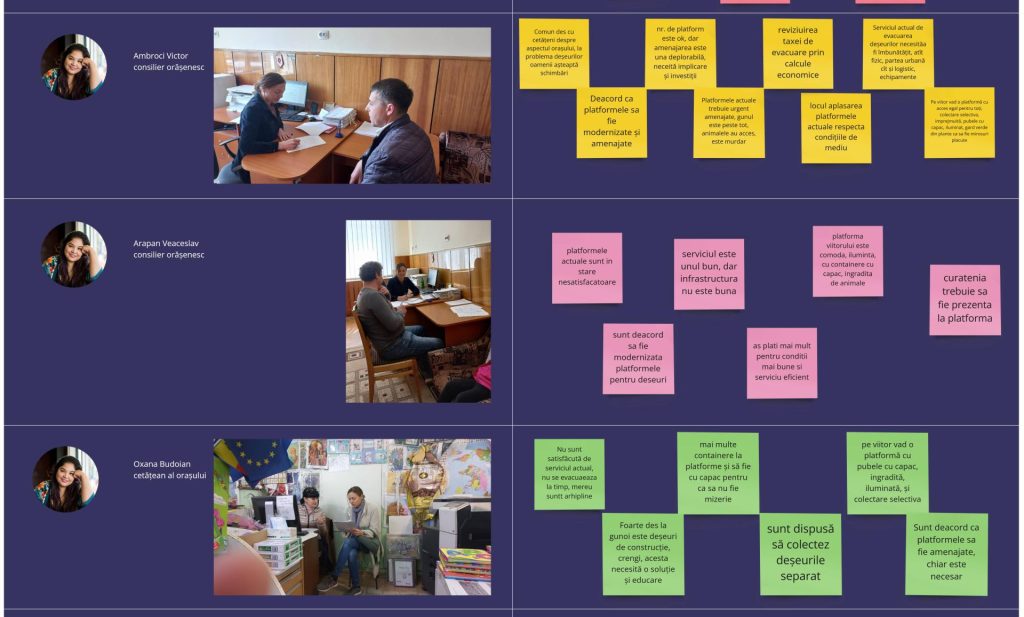
During the Discovery phase, the municipal team in Călărași identified four main issues the team can start reimagining:
- The types of waste containers – what better facilities can we introduce?
- The usage of the waste containers – how can we encourage residents to separate the waste and adopt green habits?
- Container safety in waste management – how can we improve habits around waste?
- How can we improve service of waste disposal?
Innovations for cities’ redesign and reorienting towards residents
As a part of the Urban Imaginaries learning journey, city municipalities are exposed as well to several other innovation methods such as design thinking, future foresight, storytelling for systems change and human learning systems. All of these will help to reimagine urban spaces and deliver greater impact to residents.
Reflecting on these new methods, Lilia says: “We were curious and open-minded towards absorbing the new methodology on design thinking through training and mentorship sessions. It’s a challenge because we haven’t used these methods before. I see the benefits of this approach as it helps us understand better the community’s perspective and their ideas on addressing the challenge we are trying to solve. Our residents were open to sharing their solutions with the city administration, which confirmed that we are moving in the right direction”.
To fully harness the benefits of these methods, teams, such as the one led by Lilia, participate in regular mentorship sessions with CPI experts to discuss how to apply the methods in practice and share learnings with other municipality teams.
When asked which methods have been most useful, Lilia said: “I find deep listening and user research the most beneficial and dynamic innovative methods to use. They allow me to interact with people: you get a new vision through meeting a new person and learning their perspective. It is difficult to analyze this qualitative data, but we learned and identified insights during our sessions with the UNDP and CPI teams.”
Even more important than learning the methodology, municipality teams have reoriented themselves in their relationship with citizens and their role in public service.
Citizens are eager to share, creative and well-informed
Lilia shared how she and her team found that citizens really cared about their communities and were ready to express their perspectives:
“We are grateful for the opportunity to develop new capabilities that will enhance the human factor and communication with our citizens. Every idea has a beginning, and this project teaches us how solutions to a problem can turn into unique and sustainable ideas for our community and be an example for other communities,” says Lilia Rata, Investment Specialist at the City Hall of Călărași.
Not only residents were eager to share their views, but many were creative and well-informed on the topic.
“People like to be heard – it is important to involve and listen to them and I think that is what I did. Citizens have a good grasp of the problem and offer realistic solutions as they face these issues daily. I was impressed by the young people as they know about the circular economy, recycling, and degradable materials. They are excited and willing to engage with us in the future,” says Lilia.
Lilia’s Călărași team also learned how involving citizens not only improves a project but can have a lasting impact on trust between communitiesand their government. She reflects:
“I learned that it is important to know the community’s opinion and what needs they have around any problem we, as the city municipality, may want to solve. We may think we have the best solution or idea; however, the community provides real lessons and examples that we can use in practice. They look forward to the visible results that will strengthen trust between us and society. This will build confidence for future ideas and collaborative projects if we succeed.”
Vision for the future – A Mayor should be closer to the citizens, this is the way how
“We believe a mayor should be close to the needs of the citizens – there should be a connection between the public administration and the local community. For that, we need to develop further our skills in managing human resources, public budgeting, and supporting local businesses to attract investment. The Urban Imaginaries programme is a new beginning for us. We are curious and excited to implement the solutions and see how we can scale them up to a wider community. Let’s share our lessons, methods, and results across Călărași region and the whole country,” concludes Lilia. Next up for the Lilia’s Călărași team is to finalize the design of their seed-fund. More to come on how this demonstration project can be of relevance to other municipalities facing similar issues.
“We’re excited to be moving to the next stage of the Urban Imaginaries programme where we’ll be supporting Lilia, the Calarasi team and other participating cities as they move to experimentation. In this next phase, cities will be designing experiments to test their proposed solutions and learn from them. We look forward to seeing how the Calarasi team embeds the lessons from this work to improve waste management services in the city, and how they apply their learning more broadly to continue reimagining the future of the city,” says Beatriz Cano Buchholz, CPI Programme manager.
About the Urban Imaginaries Programme
“Urban Imaginaries” is an innovative programme to help local municipalities “create responsive, resilient and sustainable cities and and communities with continuously increasing economic opportunities and vibrant social living”. Selected municipalities, such as Călărași, are going through a transformative learning process in identifying solutions and introducing small-scale experiments. The Urban Imaginaries programme is a part of a larger Mayors for Economic Growth Facility, launched by the European Union in 2017. Learn more: https://eum4eg.com/
When thinking about the future, we often ask who gets to speak for it. But instead, we decided to ask ourselves a different question: who gets to listen? If UNDP is to become an even more agile and anticipatory organisation, listening is the first step towards opening a dialogue about possible futures. We approached this exercise as listening practice, with a two-fold goal: 1) spark enthusiasm about exploring possible futures, and 2) contribute to a shifting understanding of the future: from a distant horizon to an extension of today.
With this in mind, we embarked on a journey to gather insights from a wide range of stakeholders involved in shaping the future of urban development in Eastern Partnership (EaP) countries. Curious about how professionals from the Europe and Central Asia region and international experts talk about the future, we started our Urban Futures Talks series with the following goals:
· to identify needs and gaps in terms of urban development in the EaP region;
· to stimulate individuals’ future-oriented thinking and spark enthusiasm around engaging in future conversations;
· to identify conflicting/complementary views about the urban futures in the region.
How and for whom?
After identifying relevant urban experts with the help of our colleagues from UNDP country offices, we prepared a set of future-oriented questions set in 2050. We looked at what makes people hopeful and fearful about urban life in the region, we asked about key trends that could either hinder or accelerate urban development in the upcoming 30 years, and we searched for the hidden sides of development, trying to unveil overlooked trends and patterns.
While UNDP Europe and Central Asia has several initiatives related to urban transformation, our initial exploratory research is meant to support the Mayors for Economic Growth (M4EG) facility. M4EG is a joint EU & UNDP initiative, seeking to address complex development issues in secondary cities in EaP countries.
Over the course of several months, we talked with 27 experts varying in: age (from 23 to 60+), gender (men and women), professions (private and public sector, academia, CSO) and nationality (Armenia, Georgia, Moldova, Ukraine, and international experts). We extrapolated a wide variety of insights, which included key concerns about: ageing population, rural-urban divide, national security, outmigration, the lack of green spaces and affordable housing, digitalization, and poor urban planning. Au contraire, experts also expressed hope about mobility alternatives, emerging tech businesses, urban activism and the youth mindset, city branding and decentralization.
The following selection of recurring issues should be regarded as a glimpse into the conversations that we had, not as their representation.
Shrinking cities
Shrinkage is the defining attribute of secondary cities in the post-Soviet space. Yet the phenomenon is neither new nor peculiar to this region. Despite having a common past where massive urbanization was driven by a particular industry that dictated the spatial distribution of the population, following the dissolution of the USSR, the situation of urban configurations has been context-driven, depending on several factors such as political willingness, education opportunities and more.
During the interviews, architects, activists, scholars, and civil servants acknowledged that shrinking cities is a prevalent urbanization challenge for EaP countries. When asked about the year 2050, a Georgian architect wondered if “secondary cities would even still exist and if so, how would they look like?”
The urban downturn in the region is partly the consequence of demographic decline (outmigration/immigration and falling fertility rates), combined with the story of monotowns who have lost their key economic function and could not reinvent themselves. While shrinking cities are already a reality, the phenomenon is expected to grow. The experts we interviewed expressed concerns about the implications for the physical infrastructure of the cities and their social fabric. Economic factors were still the leading cause of the shrinkage, but economic downturn never comes alone. A series of self-reinforcing and interrelated effects such as the loss of skilled workers, decreased capacity of the city’s administration, worsening quality of public services and a negative image of the city, have made the present situation of secondary cities seem hopeless.
Shrinking cities cannot be understood outside the larger context of growing urbanization affecting the region. If secondary cities struggle to find their ‘lost identity’, big urban centers continue to grow, and attract and retain talent. Highly qualified people leave smaller cities or the country for better opportunities abroad, while villages continue to shrink, exposing painful realities – a growing ageing population left without a proper care infrastructure.
What was surprising though was to hear a lot about planning for the decline instead of trying to overturn the trend. We imagined that we would hear about shrinking cities as an opportunity for growth or a threat to the quality of life. Instead, our interviewees did not perceive this phenomenon as a problem that needed fixing or even less so as a chance for growth. Rather, they described it as a new reality to be acknowledged and accepted.
In terms of solutions, we heard about complementary, even contradictory strategies – repurposing vs rightsizing existing infrastructure, developing a new city identity vs working around the existing one, and focusing on attracting those who left vs focusing on attracting newcomers.
Regardless of the policies to be pursued, what emerged was the need to view shrinkage at a different scale – not as an isolated urban challenge but as a regional one. If we consider the development of a region holistically (both rural and urban areas), what implications does this have for the shrinking of certain cities? What type of ‘shrinking governance’ would a territorial rebalancing imply? What kind of networks of knowledge, institutions and policies are needed to create a support system beyond individual shrinking cities? We don’t have the answers to these questions, but the pandemic has shown us that alternatives exist. Some people were willing to go back and work remotely, others reconsidered where they would want to live or raise their kids, and all of us realized that no structure, system or advancement could be taken for granted.
Tech & digitalization: The potential and risk
Urban environments are often associated with science positivism and tech utopianism. In this context, we were curious to learn about what technology could bring to the 2050 cities.
Technology and digitalization inevitably came into the discussion on the future of cities in the region. Urban development cannot overlook the importance of technology, its application, and its consequences. Now more than ever, emerging technologies impact businesses and politics, policymaking and individual lives.
Although the interviewed experts talked about technology and digitalization from vastly different perspectives, they did not necessarily link it to the urban context. They acknowledged its potential for growing economies and boosting businesses – with a special emphasis on the role of ICT on urban development. Technology has also been particularly helpful during the pandemic; thanks to low-touch economy initiatives, people managed to rethink their businesses and work from home, and education at all levels continued despite restrictions. All these merits of technology further revealed how the digital divide can affect different social groups, exposing some of the pervasive inequalities of the 21st century. Technology allows information to flow, research to spread and people to connect and exchange ideas, so it is undeniably a drive for innovation, as some of our experts (both locals and internationals) rightfully observed. In particular, younger interviewees stressed tech’s potential to diversify economies, bridge the gender divide, and counter other kinds of social injustice.
But tech’s utility and constructive potential can also be limited for a series of reasons, and for others, it can also be damaging and represent a threat. Cybersecurity is a fundamental issue at both public and private levels. For example, in relation to data privacy, what do businesses do with collected data? What are the ethics behind it? While in the EU, the GDPR ensures some protection and accountability for users, the digital world is much more unregulated in the EaP countries. These concerns affect a wide range of issues from children’s rights and safety to data privacy and freedom of expression online.
“Technology and digitalization are taken for granted to be green, but are they?” rightfully wondered a couple of interviewees. On the one hand, digital technologies can offer innovative solutions to complex environmental problems. Apps, blockchain, and AI technologies could, for example, help to address food waste and boost recycling, which might positively impact urban lives. Yet technologies come with their own environmental cost. To solve this issue; it would be essential to strengthen the global governance on data and technology. In fact, according to a 2019 study by The Shift Project, a French think tank, the world’s collective digital carbon footprint accounted for nearly 3.7% of all greenhouse emissions, which is comparable to aviation industry emissions. What is more, digital technology’s energy consumption increased by almost 70% between 2013 and 2020. So, while digital technologies contribute to designing solutions for more sustainable consumption and production, environmental and knowledge management, their carbon footprint should not be underestimated. Technology and digitalization are double-edged swords and to be used in our favour, they need to be harnessed appropriately.
Often what is omitted from an interview can paint a powerful picture. While inequality and social justice can be addressed through the use of technology, little was mentioned about its inherent biases and what is needed for efficient and equitable use of tech. In fact, today, technologies are strongly shaped by an able straight white man’s perspective. So many are the studies proving technology’s detrimental biases, which often negatively affect women, people of colour and other marginalised communities. More inclusive tech education and a bigger collection of disaggregated data (by gender and race for example, although this too carries its own ethical conundrums) is, therefore, a must in order to understand how tech affects different communities or to understand their needs. It is essential to analyze all the good and bad sides of technology in order to apply it ethically and efficiently address urban challenges. Furthermore, the provocation remains how to use urban tech more for social good and less for profit. If the cities of the future want to be sustainable, they need first and foremost to be just and green, and going digital should only enable not hinder that prospective.
Climate change and environment
While some of our interviewees talked about climate change and the consequent environmental transformations as an opportunity for people to pursue further education, major innovation to take place and behavior to change, the concern is certainly not center stage. One of our experts noted the low interest and will to change among older generations, which was also reflected in the interviews with older practitioners.
Changes in temperatures and the environment in all countries in the EaP region are underway, but how much are urban planning and policy-making taking these significant changes into account? While there are extensive scientific research and evidence concerning the risk, and some efforts are being made internationally: from commitment to SDGs to the Paris Agreement, lots more need to be done. From an urban perspective, social, public and personal decisions generated as consequences of climate change are expected. Environmentally conscious people may, for instance, privilege low-emission and zero-emission transport or quit eating meat and dairy. But what will their government push for? Will the EaP cities be ready for a shift in urban mobility? Will public transport receive the funding, or will people have to recur to personal bicycles and scooters? Mobility will also be affected by the jobs people do. If you could work from home, there could be a reduction in the need for mobility in general and a consequent reduction in emissions. A lot of our experts, in fact, mentioned mobility, from public to private transport, as an issue concerning climate change and the environment.
Some comments and insights we were expecting to hear weren’t brought up. No one addressed the link between migration and environmental crisis. While the EaP countries have perhaps not been impacted as much by it yet, the situation is likely to change in the future, and along with humanitarian issues, consequent security and international relations dynamics might be expected to change.
Furthermore, the relationship between the economy, in a broader sense, and climate change was very much overlooked. Mainly women and young people talked about climate and the environment, and women, in particular, addressed it as a matter of social justice. Unsurprisingly, according to a 2019 study, a higher number of women in parliament correlates with the adoption of climate change policies, resulting in a reduction in emissions. At the local level, women’s participation in natural resource management is linked with better resource management and sounder conservation outcomes. Climate talks will be unsuccessful without women and young people’s voices, and urban development risks failing its beneficiaries if it doesn’t look at environmental issues through the lens of diversity and “the future” as an everlasting order of the day.
Conclusions, observations and limitations
The future is inherently uncertain and even more so in unstable times (war in Ukraine, fear of war in Moldova and Georgia, recent war in Armenia). To unlock transformational potential – or at least the capacity to imagine the future – requires a sense of safety and stability. According to one of our interviewees from Ukraine, talking about the future requires being grounded in the present and having essential needs met, hence the difficulty to have these conversations with people from the region who still struggle with existential concerns.
Yet , no other region has experienced such severe depopulation, economic downturn and political instability in peace time. As a result, there is incredible resilience, perseverance and determination that characterize this region which gives hope and a sense of confidence in a better future. Overall, there was a sense of antifragility and faith in the human capacity to innovate despite the odds which confirmed to us that in a complex world, cities are the right locus to begin transformational change.
Engaging in conversations about the future can be a powerful tool, yet there is a need for complementary efforts to achieve a more robust vision of our possible futures. Considering our own biases and assumptions that are relevant only from today’s perspective is the first step to having an honest discussion. Despite numerous limitations, these conversations played an important part in developing our own understanding of what speaks to others, what drives people’s sense of hope and fear, and what type of incentives, knowledge networks and processes are needed to support desired systemic changes.
However, what remains to be improved is supporting a learning culture within and outside the organization to be able to adapt to our fast-changing world, decolonizing capacity building by bringing different forms of knowledge and sources of insights into the process, and finally supporting shared ownership. As we have seen in other regions, lasting change happens only if it is grounded in the local ecosystem and embedded in the conviction of local actors to address it, so we need to get better at incentivizing for systemic transformation and make our offer more demand-driven.
Following these conversations, the questions that still remain are more important than the answers that we have. We still wonder: What does it take to design anticipatory interventions and strategies? What’s the role of conversations about the future in imagining what tomorrow might look like? What capabilities are required to imagine the future and to make policies that are relevant across different possible futures? How to cultivate richer imaginations, deeper understanding of human experience and stimulate bolder endeavours in the extraordinary times we live in? We will keep searching for answers and asking difficult questions, deliberately creating space for these types of conversations to continue to happen.
Photo by CHUTTERSNAP on Unsplash