
Category: Systems and portfolios
While information about AI is abundant, space to make sense of what it means in practice is not. That gap between the global AI conversation and where cities in our region actually stand is the focus of the first session of the AI in Development Practice series. Hosted by the United Nations Development Programme’s (UNDP) Regional Bureau for Europe and Central Asia, the series aims to create space for practitioners, researchers, and policymakers to work through how AI is reshaping development work.
Urban governance is one of the places where AI’s effects are most concrete and most uneven, and where the stakes of getting it wrong are hardest to ignore. Two speakers anchored the conversation, each approaching the same problem from a different angle: Gesa Ziemer, Academic Lead at UNITAC and Director of the City Science Lab in Hamburg, and Yoonjin Yoon, Founder and Director of the Urban AI Institute and Chair Professor at KAIST in South Korea.
Gesa Zeimer: Leveraging existing ecosystems in cities to enable AI and digital transformation
Gesa pointed out that there is a widening gap between how fast urban AI is developing and how ready cities actually are to use it. Data is often outdated, fragmented across authorities, civil society, and private companies, and rarely interoperable enough to feed into an AI system.
Most cities her team works with lack a centralized data management system altogether, and where one exists, it’s often built on a single proprietary platform leaving the city dependent on that company rather than in control of its own data.
On where cities should start, her clearest answer was prioritization: connect civil society and government first. Activists, artists, and community groups are doing real work that’s disconnected from government, and government holds laws and strategies disconnected from what’s happening on the ground.
Her example of an ecosystem approach in practice came from Windhoek, Namibia. The national statistics agency had a solid centralized data platform, but the column for informal settlements was essentially empty, left blank for political reasons. Rather than build a new tool, her team’s actual work focused on relationship-building connecting local NGOs who already held the data, building enough trust to get it included.
Yoonjin Yoon: How cities could apply AI – what the KAIST Urban AI Lab has been testing in cities
Yoonjin opened with a conceptual distinction that anchored her entire talk:
- AI of Cities – how can AI help cities work better?
- Cities of AI – how will cities evolve because of AI?
The purpose of urban AI is not technology. It is to enable better decisions, improve day-to-day operations and services, strengthen engagement with communities, and help cities achieve more with fewer resources, less budget, less staff. Every city, regardless of wealth or geography, is wrestling with the same three challenges: how people move, how the city responds to external stress, and how it manages growth. AI doesn’t resolve those challenges. It helps leaders see them more clearly, understand them more deeply, and act more confidently. This is what decision support actually means, not automation, not replacing planners or policymakers, but giving them better tools to understand what is actually happening in their city.
Two Seoul projects illustrated what using AI looks like in practice and what it can reveal unexpectedly. In the first, using daily credit card data across all 422 Seoul neighbourhoods, the team found that 80% of neighbourhoods see retail sales decline on extreme heat days. Commercial centres drawing commuters and visitors saw the sharpest drops simply because those people stopped coming, while residential neighbourhoods serving local daily needs were largely unaffected. Neighbourhoods that looked identical in official statistics functioned completely differently in reality – invisible in aggregate data but made visible through AI. A second Seoul project used an AI agent built on the open-source SUMO traffic simulator to let non-expert city officials test scheduling decisions – such as the best 30-minute window for road maintenance – using plain-language prompts that anyone can understand.
For cities that find themselves earlier in this journey, her advice was to flip the usual instinct: define the real problem first, rather than starting from what AI can do. She pointed to her institute’s current project near Ho Chi Minh City, where data exists but is scattered, as a close parallel to where many cities in our region are starting from, and noted that a small or imperfect dataset is still worth using, since working with what’s available tends to reveal what the next data investment should be. Asked separately about open datasets, she pointed to satellite imagery as the most universal starting point regardless of income level, alongside anonymized mobile movement data for understanding human dynamics that built-environment data alone can’t capture.
Both speakers, in different ways, pointed to the same underlying urgency. The window for shaping AI adoption is now. Cities that engage with AI early (even if modestly) can shape how it is introduced: which problems it addresses, whose interests it serves, and what safeguards are built in.
Putting AI to work in cities: The CEF × AI programme
The webinar coincides with the launch of the AI Foundations course for municipalities and the launching of CEF x AI, a new programme, part of the City Experiment Fund, focused on helping cities build the capability to work with AI in practice.
CEF × AI frames AI not as a technology agenda but as a set of functional capabilities cities can put to work. The programme organizes these around four pathways:
- Sensemaking Intelligence: AI can help cities analyze large and fragmented datasets to detect patterns, trends, and signals that may otherwise remain hidden;
- Future Intelligence: AI can support city planners and policymakers by modelling potential outcomes and exploring different scenarios;
- Operational Augmentation: AI can help cities optimize everyday operations by improving how resources, infrastructure, and services are managed;
- Ecosystem Insights & Engagement: AI can help cities analyze signals from residents, businesses, and the wider local ecosystem to build a more nuanced understanding of needs, perceptions, and inequalities.
Together, these four pathways reflect a single underlying idea: AI is most useful when it starts from a real municipal problem, not from the technology itself. To support this work, UNDP organized a CEF × AI Bootcamp in Podgorica, Montenegro in June 2026 bringing together municipalities from the region to explore how AI can support their green and digital priorities. Over three days, city teams worked through their own challenges, assessed their readiness for AI, and identified practical opportunities for experimentation and implementation.
Stay tuned for our next webinar sessions!
UNDP teams are increasingly being asked to make sense of fast-changing digital systems before the institutional playbook is fully written. As part of this shift, blockchain is entering more practical development conversations, and UNDP’s ability to engage well depends on colleagues who can look beyond the technology and assess the operational and public-interest conditions around it.
The Virtual Development Assignment Programme (VDAP) offers a structured approach to build this kind of judgement as a UNDP people-development modality. Hosted by the Talent Development Unit under the Office of Human Resources and accessed through Fuel50, VDAP allows colleagues to take on assignments outside their usual office or bureau and contribute to live areas of work to build skills through applied exposure rather than detached training.
For blockchain, UNDP AltFinLab has been using this modality to bring colleagues closer to active workstreams while drawing on their regional and operational experience. A digital payment system needs liquidity, compliance, reporting and user trust; a credentialing tool needs legal recognition and data protection; a traceability system needs reliable actors across the chain. And through VDAP, AltFinLab brings colleagues into this practical layer, where technical promise is tested against operational reality.
A pathway into live blockchain work
VDAPs have grown alongside AltFinLab’s portfolio as it moved from building internal learning through the Blockchain Academy, to strengthening exchange through the UN Blockchain Community of Practice, to developing a pipeline of use cases through the SDG Blockchain Accelerator, and now to supporting implementation and scale-up. Participants have entered this pathway through practical assignments that help translate the portfolio into usable knowledge and more grounded programme design with stronger country-office links.
The same direction is reflected in New Tech, New Partners, which shows how UNDP’s blockchain practice is moving closer to public systems where payments, records, finance, trust and evidence need to work across many actors.
This is why VDAP is becoming an important channel for strengthening blockchain capacity within UNDP. Participants contribute directly to live work while developing a sharper understanding of how blockchain can be assessed in relation to operations, partnerships, safeguards and country-level delivery. In return, UNDP gains colleagues who can bring knowledge of local systems, institutional constraints and programme realities into portfolio discussions.
What blockchain-linked VDAP opens
For upcoming cohorts, the strongest argument may be the kind of work alumni were able to enter, and the value of this model is visible through the people who have passed through it. Some worked on learning systems; others moved closer to digital payments and pilots, AI, operations, credentials or regional digital work.
Earlier VDAP participants helped shape parts of the foundation that AltFinLab’s blockchain work still draws on. Dzenan Buzadzic, Digital Governance and AI Specialist, brought a digital perspective into early mapping and knowledge work, helping review the Tadamon Web3.0 platform and Blockchain Academy content, and developing an opportunity analysis for blockchain-based certification. Jenny Ensi, then Head of Experimentation at UNDP Accelerator Labs, connected her experience in innovation, acceleration and STEM education to early thinking on blockchain education for girls and women in the RBEC region, while also supporting engagement with learning platforms.
McDonald Nyoni, AI Policy Analyst, brought a strategic and implementation-focused perspective to the VDAP work, helping shape tokenization use cases, explore partnerships, and connect alternative finance with emerging opportunities in artificial intelligence. From UNCDF Tanzania, Country Coordinator Tian Zhang, added a UNCDF perspective to the Academy’s content review and beta testing, which shows us how blockchain learning benefits when it draws on experience beyond one office or function.
These contributions show how VDAP can turn internal expertise into institutional assets that others can build on.
Applied learning that travelled further
The value also appears in what participants were able to carry into later work. For Ana M. Grijalva, then Innovation and Digital Lead with UNDP Ecuador, VDAP created a route into AltFinLab’s blockchain portfolio that later developed into direct coordination of digital payments work. As Coordinator of Blockchain Digital Payments and Digital Institutional Strengthening, Ana coordinated a global team across three regions to support five blockchain-based digital payment pilots.
Her work also included developing an engagement strategy with eight government counterparts, helping position blockchain-based payment approaches around financial inclusion and security in government-to-person transfers. Her story shows how VDAP can move colleagues closer to live portfolio work, where country-office experience, cross-regional coordination and government engagement become part of implementation.
“One of the aspects I appreciated most about the VDAP was how the Innovation Team truly made us feel like part of their team. They fostered a collaborative environment by maintaining a well-structured working routine, actively engaging with us, and transparently sharing ongoing initiatives.” Ana M. Grijalva
Another form of value came through colleagues who connected the assignment to wider digital strategy. Enrique Crespo, Regional Digital Specialist for Latin America and the Caribbean, saw value in connecting blockchain with broader digital transformation and regional digital strategies. For him, working in an environment of AI and blockchain learning opened space to think about how these technologies could inform regional strategies and practical applications.
Closer to delivery, knowledge and operations
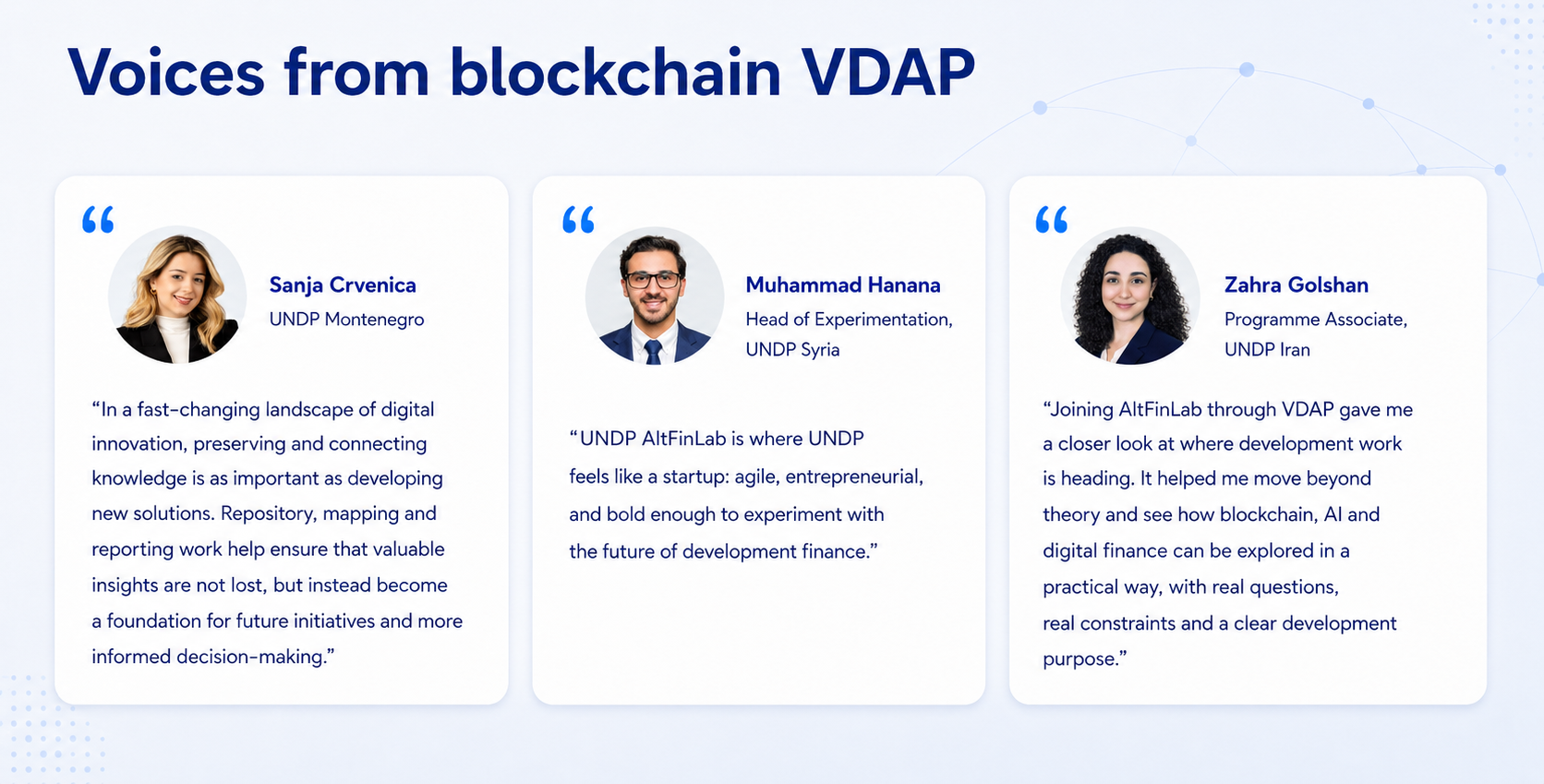
VDAP also helped bring blockchain closer to the systems and operations that make development work possible. Muhammad Hanana, Head of Experimentation in UNDP Syria, brought country-office experience into digital payments work, where the real questions are not limited to the payment rail itself, but include liquidity, regulation, cash-out options, reporting and user trust. Additionally, Sanja Crvenica, a Legal Specialist working with financial institutions at UNDP Montenegro on the development of an EU-ready financial sector, has been involved in knowledge infrastructure work, including repository development, mapping and blockchain reporting, helping turn scattered experience into something the wider system can use.
Marina Storgaard, Human Resources Associate, brought an operational lens to the VDAP experience. Her reflections connected blockchain learning to internal systems, including smart contracts, HR processes, credential verification and tokenization as possible ways to improve transparency and efficiency inside institutional workflows.
“Participating in this VDAP project has significantly enhanced both my technical and interpersonal skills. I developed stronger project management skills, particularly in collaborating across diverse teams and regions, navigating complex decision-making processes, and ensuring smooth communication.” Marina Storgaard
What links them all is the ability to bring their own professional setting into the assignment, and then carry new questions, contacts and practical judgement back into their work.
Why this matters for Country Offices
For Country Offices, this kind of internal capacity changes the starting point of a blockchain conversation. Instead of receiving a proposal and reacting to the technology, colleagues who have worked through VDAP can help ask the earlier questions: what problem is being solved, who needs to be involved, what risks need to be managed, and whether blockchain is actually the right tool.
This is the network effect UNDP AltFinLab is trying to build. VDAP alumni can become connectors inside their offices and teams, linking programme needs with the right expertise and keeping blockchain discussions close to delivery. They can also help maintain relationships between Country Offices and the wider UNDP innovation ecosystem, so emerging ideas are assessed with institutional memory, technical support and a clearer view of public value.
Join the next blockchain VDAP!
The fifth cohort arrives at a time when UNDP is engaging more systematically with the blockchain ecosystem, as evidenced by the recent establishment of the Blockchain Advisory Group in Paris, which is exploring the potential of this technology to support public-purpose digital transformation and financial inclusion.
In light of this, Cohort 5 will adopt a more intentional approach, seeking out colleagues already close to the right ecosystems, countries, functions and thematic areas, and who can help unlock meaningful opportunities for UNDP’s innovation pipeline.
Participants do not need to arrive as emerging tech experts. What matters is curiosity, judgement, initiative and a close understanding of how development work is designed and delivered. The strongest candidates will be those who can bring practical experience into live workstreams, engage with specialists and partners, and return to their offices with sharper questions about where blockchain and AI belong in development practice.
Cohort 5 at a glance
Opportunity title
Scaling Blockchain & AI for Development – SDG Accelerator, Digital Payments & Government Engagement
Available roles
6 positions across 4 roles
Eligibility
UNDP, UNCDF and UNV colleagues
Application channel
Fuel50 >>> search for the opportunity title and indicate which role you are applying for
Deadline
24 July 2026
Contact
Teodor Petricevic, teodor.petricevic@undp.org
Artificial intelligence (AI) is increasingly shaping how cities deliver services, manage infrastructure, and make decisions. For many municipalities across Europe and Central Asia, the challenge is not simply adopting AI, but understanding where it genuinely fits their institutional context, what it demands in terms of readiness, and how to engage with it in a way that is grounded, responsible, and connected to their existing priorities.
To support this work, the United Nations Development Programme (UNDP) in Europe and Central Asia is convening the CEF × AI Bootcamp in Podgorica, Montenegro, from 23 to 25 June 2026.
The bootcamp marks the first milestone of the newly launched CEF × AI programme, part of the City Experiment Fund (CEF), bringing together municipalities from the region to explore how AI can support their green and digital priorities. Over three days, city teams will work through their own challenges, assess their readiness for AI, and identify practical opportunities for experimentation and implementation.
Selected municipalities have been invited to the bootcamp following an Expression of Interest process and completion of an online AI Foundations for Municipalities course to help public servants build a shared understanding of AI, its applications in urban contexts, and what responsible engagement with it looks like in practice.
The following municipalities have been selected to participate in the CEF x AI Bootcamp in Podgorica: Yerevan, Armenia; Kavadarci, North Macedonia; Skopje, North Macedonia; Podgorica, Montenegro; Pluzine, Montenegro; Rivne, Ukraine; Mykolaiv, Ukraine; Kharkiv, Ukraine; Pristina, Kosovo [1].
What cities will work on
Participating municipalities will work through a structured process designed to take them from a broad understanding of AI to clear, actionable directions grounded in their specific contexts.
Cities will begin by mapping their AI ecosystem, examining what data, infrastructure, governance structures, and actor networks they already have, what is missing, and what is already in motion. Building on this, they will move into problem framing, identifying which challenges are most worth pursuing and how AI could meaningfully support their twin transition priorities. Cities will then assess the feasibility of their proposed directions and examine questions of responsibility: who could be affected, where accountability gaps exist, and what governance would be needed.
By the end of the bootcamp, each participating city will have developed its own AI pathway, identifying at least two concrete directions for exploring how AI could support its work. These pathways will also consider the surrounding building blocks required for responsible adoption, including governance, ethics, privacy, partnerships, and institutional capacity, informed by what cities have mapped and learned throughout the three days.
Throughout the sessions, cities will hear from experts and practitioners working at the intersection of AI and urban transformation, exchange perspectives with peers from across the region, and receive structured guidance and one-to-one mentorship from the facilitation team.
Cities as active participants, not passive adopters
A core principle of the bootcamp is that cities engage as active shapers of how AI is integrated into municipal services and processes. Rather than promoting AI as a solution in every situation, the programme encourages cities to critically assess where it can create meaningful value and where other approaches may be more appropriate. The bootcamp is therefore designed around the cities’ own priorities, submissions, and questions.
The bootcamp also addresses the conditions that make AI engagement sustainable over time: institutional readiness, coordination across teams, data and infrastructure requirements, and the governance frameworks that responsible AI adoption demands.
What’s next
Following the bootcamp, cities will be invited submit proposals to continue into one of two supported pathways: the CEF × AI Demonstrator track, focused on building longer-term institutional AI capacity, or the GenAI Challenge track, which matches cities with external innovation teams to co-design and pilot targeted AI solutions.
The programme is implemented by UNDP through the City Experiment Fund (CEF) with the financial support of the Ministry of Finance of the Slovak Republic. CEF collaborates with cities across Europe and Central Asia to tackle complex urban challenges through strategic innovation and experimentation.
[1] References to Kosovo shall be understood to be in the context of United Nations Security Council resolution 1244 (1999).
Artificial intelligence (AI) is opening new possibilities for how cities deliver services, make decisions, and manage complex systems. For municipalities, the question is no longer whether AI will play a role, but how to engage with it in a way that is useful, responsible, and aligned with their existing priorities.
To support this shift, the United Nations Development Programme (UNDP) in Europe and Central Asia is launching CEF x AI, a new programme, part of the City Experiment Fund, focused on helping cities build the capability to work with AI in practice.
The City Experiment Fund (CEF) collaborates with cities across Europe and Central Asia to tackle complex urban challenges through strategic innovation and experimentation. Rather than supporting isolated projects, it helps cities develop portfolios – sets of connected actions and interventions that can be tested, adapted, and improved over time.
CEF x AI extends this approach into the field of AI. The programme is designed to help municipalities integrate AI into their ongoing green and digital priorities through practical exploration, experimentation, and capability building.
Building foundations for municipalities
The programme begins with AI Foundations for Municipalities, an online course developed by CEF and the EU-funded Mayors for Economic Growth (M4EG) initiative. The course was co-created with the City of Bratislava and experts in AI and urban transformation to help municipalities build a foundational understanding of artificial intelligence, governance, risks, and practical urban applications.
The course will be made publicly available and is designed for public servants and city teams who are increasingly engaging with AI-related systems and decisions, regardless of technical background.
From learning to experimentation
Following an Expression of Interest process among municipalities in the CEF network, selected municipalities are invited to join the CEF x AI programme and participate in an intensive in-person bootcamp in Podgorica, Montenegro, in June 2026.
The bootcamp is designed as a working space for cities to explore how AI could support their priorities in areas such as service delivery, planning, operations, participation, and urban management. Working alongside UNDP, experts, and partners, municipalities will identify practical pathways for how AI could support municipal priorities, while mapping the institutional, technical, and ecosystem conditions needed to work with AI effectively.
Cities will also examine questions around feasibility, governance, institutional readiness, inclusion, and long-term sustainability – including where AI may not be the right tool and where simpler approaches may be more effective.
The following municipalities have been selected to participate in the CEF x AI Bootcamp in Podgorica: Yerevan, Armenia; Kavadarci, North Macedonia; Skopje, North Macedonia; Podgorica, Montenegro; Pluzine, Montenegro; Rivne, Ukraine; Mykolaiv, Ukraine; Kharkiv, Ukraine; Prishtina, Kosovo [1].
Two pathways for continued support
Following the bootcamp and an application process, a selected cohort of municipalities will continue into two supported pathways focused on experimentation, capability building, and piloting AI interventions.
- The first pathway, CEF × AI Demonstrator, supports municipalities that want to build longer-term institutional capacity to work with AI. These cities will test and apply AI across different areas of city administration while strengthening internal systems, coordination, governance, and practical capabilities over time.
- The second pathway, GenAI Challenge, is designed for municipalities with a specific, well-defined urban challenge. Implemented through UNDP’s BOOST impact acceleration programme, the challenge will match cities with external innovation teams to co-design and pilot targeted AI solutions within a shorter implementation period.
Across both pathways, the programme combines technical expertise, structured methodologies, peer learning, and funding support, while requiring active involvement from municipal teams throughout the process.
The programme is implemented by UNDP through the City Experiment Fund with the financial support of the Ministry of Finance of the Slovak Republic.
[1] References to Kosovo shall be understood to be in the context of United Nations Security Council resolution 1244 (1999).
The United Nations Development Programme (UNDP) will convene Scaling Blockchain for Public Good, a two-day high-level event bringing together blockchain ecosystem leaders, governments, development organizations, and academic institutions to explore the practical pathways through which blockchain technologies can strengthen public systems and support sustainable development. The programme is organized by UNDP’s Alternative Finance Lab (AltFinLab), a flagship initiative focused on exploring and scaling innovative financing and technology solutions for sustainable development.
The programme will take place across two days in Paris. On 3 June, UNDP will participate in Proof of Talk 2026 at the Louvre Palace (Musée des Arts Décoratifs) – one of Europe’s leading blockchain gatherings – to advance the conversation on blockchain for development with ecosystem leaders. On 4 June, the programme will continue at Sciences Po, co-organized with the Sciences Po Tech & Global Affairs Innovation Hub, with a focus on government engagement and responsible blockchain adoption in public systems.
Blockchain technologies are increasingly demonstrating their potential to foster cooperation in low-trust environments, strengthen digital public infrastructure, and expand access to financial and non-financial services for those furthest behind. Yet developing and scaling these solutions where they are most needed remains a challenge. Closing that gap requires new partnership models that connect technical innovation, development experience, and public sector engagement to deliver development outcomes at scale.
3 June | Proof of Talk, Louvre Palace
UNDP will host two sessions at Proof of Talk – one of Europe’s leading gatherings in the blockchain and digital asset space, with approximately 2,500 senior decision-makers from across the ecosystem.
UNDP will formally launch the Blockchain Advisory Group (BAG) – a senior-level advisory mechanism convening leading blockchain organizations to inform how blockchain technologies can support sustainable development and public-purpose digital transformation. The BAG formalizes UNDP’s engagement with the blockchain ecosystem into a structured, ongoing advisory relationship, designed to explore what partnering differently for development at scale can look like in practice. The inaugural, closed session will focus on financial inclusion and digital finance – where the need is most urgent. Despite significant progress, 1.3 billion adults worldwide remain without access to formal financial services, and close to one billion lack the digital identity needed to access them.
The second is the SDG Blockchain Accelerator Impact Showcase – an open session part of the Proof of Talk programme. The SDG Blockchain Accelerator is UNDP’s global initiative to scale blockchain and AI solutions in support of the Sustainable Development Goals. Selected solution teams will present on-the-ground work across financial inclusion, digital identity, climate resilience, and public service delivery, in a demonstration and networking session. The session will also preview the upcoming launch of Cohort 3 of the Accelerator – an opportunity for solution makers, technical partners, and ecosystem actors to explore collaboration with UNDP on scaling blockchain solutions for development.
Registration for the Impact Showcase is available here.
4 June | Sciences Po, Paris
Co-organized by UNDP AltFinLab and the Sciences Po Tech & Global Affairs Innovation Hub, in partnership with Exponential Science Foundations and Stellar Development Foundation, the half-day programme at Sciences Po brings together academics, policymakers, senior government representatives, and practitioners for a focused dialogue on responsible blockchain adoption in public systems.
The programme addresses two interconnected themes: first, how governments are building the institutional capacity, regulatory frameworks, and implementation pathways needed to adopt blockchain-based solutions within public systems – including an introduction to the Government Blockchain Academy, UNDP AltFinLab’s new capacity-building initiative for public-sector blockchain adoption; and second, how blockchain-enabled financial tools are being used to reach people excluded from conventional financial systems, drawing on active deployments in humanitarian and development settings.
The full programme and registration are available here.
About the programme
Across both days, Scaling Blockchain for Public Good is intended to support practical exchange and advance the conversation on where blockchain can deliver public value – what conditions are needed for responsible and inclusive implementation, and how development actors, governments, and the blockchain ecosystem can work together in support of public purpose digital transformation at scale.
On the eve of the fifth year of full-scale war, four Ukrainian cities have taken on what seems like an impossible task: to determine their economic future in conditions where no one knows when or how the conflict will end. Zhytomyr, Bucha, Slavutych and Khmelnytskyi have joined the Mission-Oriented Economy programme, part of the Mayors for Economic Growth (M4EG), funded by the European Union and implemented by UNDP.
Mission is more important than comfort
The programme brings together diverse city stakeholders – government, business, and civil society – and equips them with a methodology for planning the future. At its core is a deeper ambition: helping cities see themselves as holistic systems and develop a distinctive identity, rather than defaulting to generic notions of livability.
A strategy built around being “a convenient city to live in” risks becoming interchangeable – there will always be a more convenient city elsewhere. What communities need instead is a reason for people to stay: something that makes a place meaningful, specific, and irreplaceable.
From chaos to system
Work with the four cities began in the autumn of 2025 with in-depth research into demographics, economy, and development potential. This was followed by community listening, which engaged stakeholders to identify concerns and barriers; sensemaking, which mapped existing initiatives and avoided duplication; and, finally, foresight, in which participants envisioned their city’s future over the next 50 years.
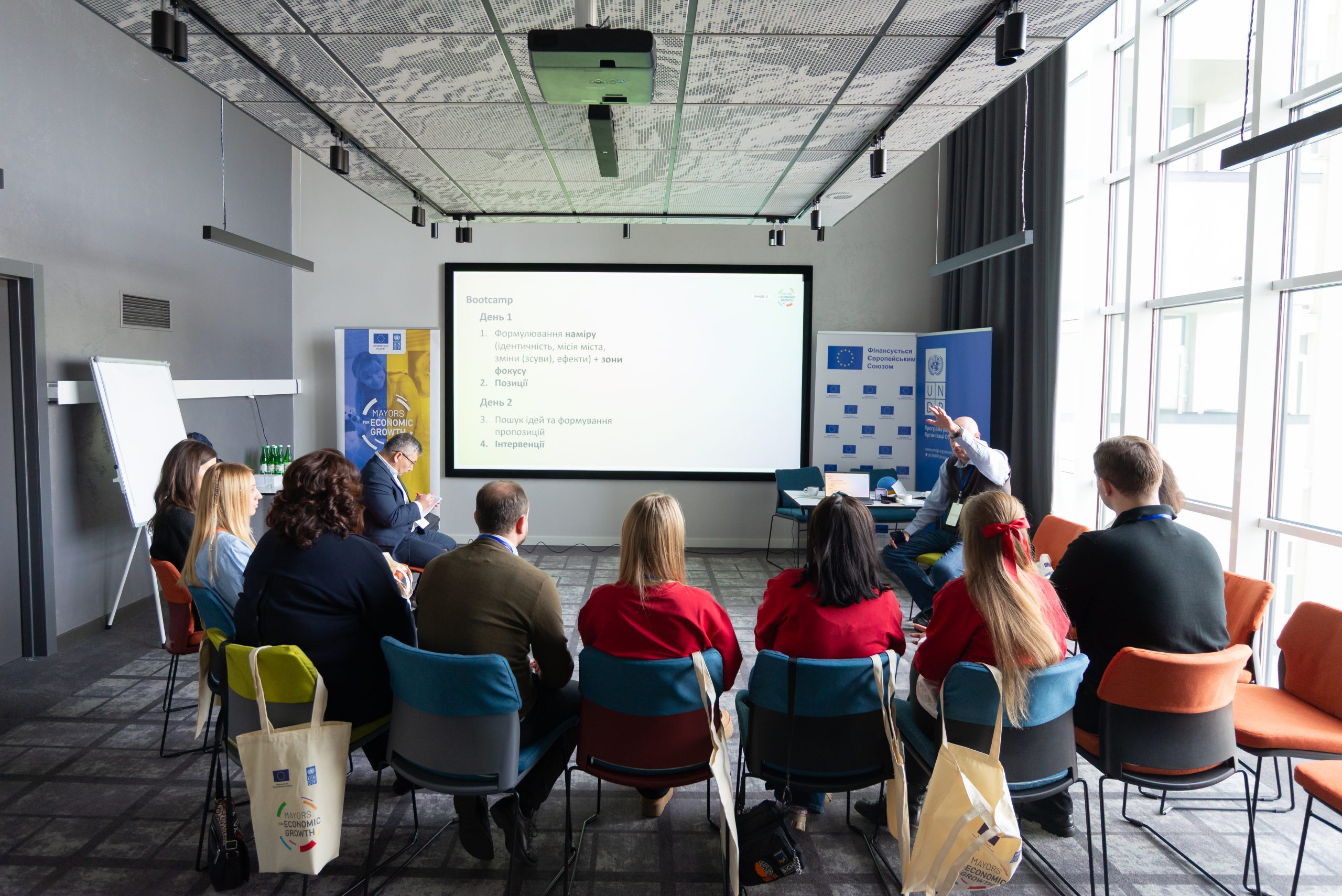
The culmination was an intensive two-day bootcamp, during which each team developed a “community portfolio”: not a conventional strategy document, but a systemic understanding of the city’s mission, development priorities, and concrete small-scale experiments to test whether the chosen direction works.
Systemic thinking over linear planning
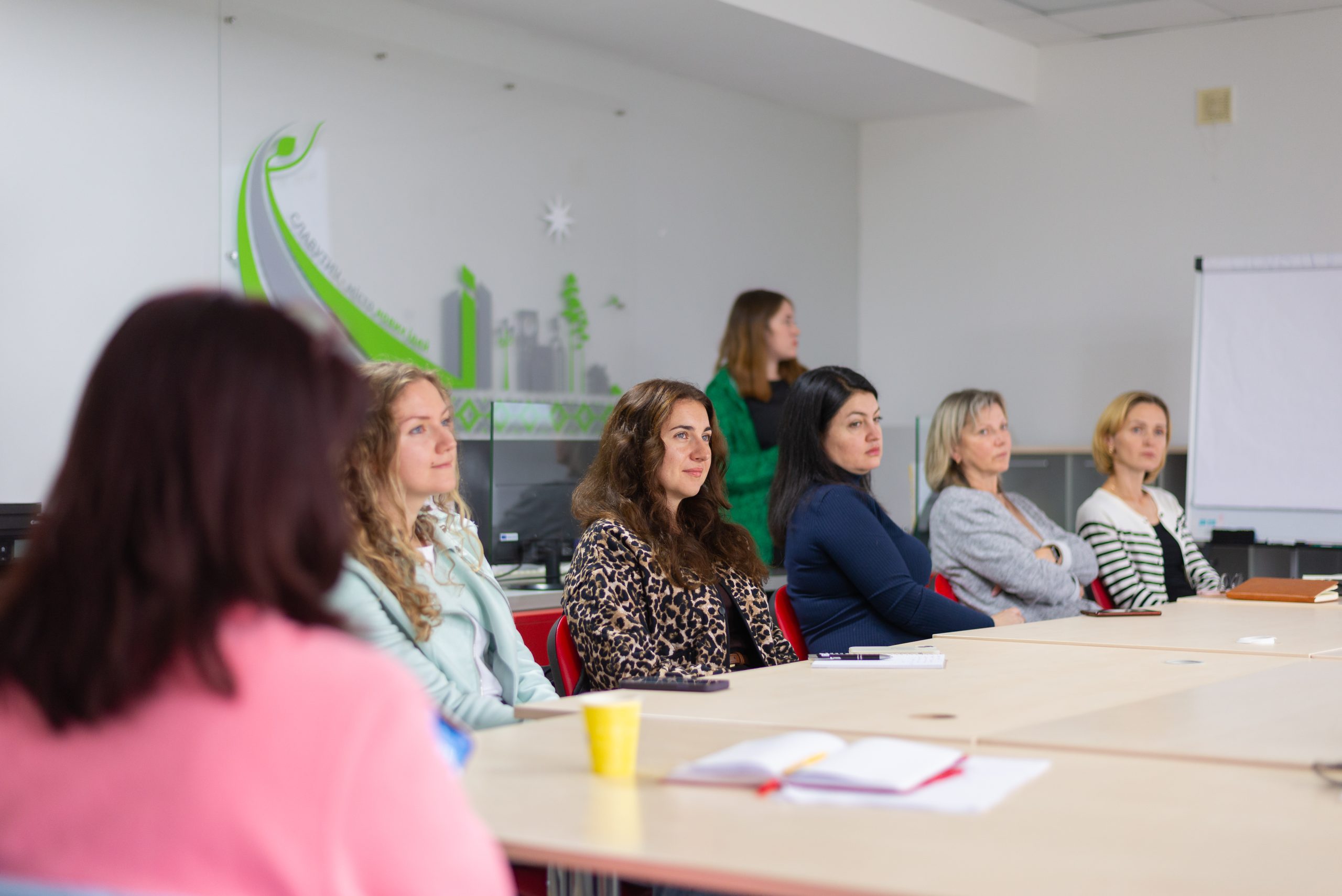
The programme’s core innovation lies in its shift from linear, “waterfall” planning toward a more flexible, experimental approach – often described as a portfolio approach, and in the tech world as “agile.”
As one of the facilitators explains, cities function more like living organisms than static systems. Linear logic tends to break down after the first few steps; instead, cities should explore moving forward by testing hypotheses through small-scale experiments – much like a gardener who plants, observes, and adapts, rather than following a rigid blueprint.
War as a window of opportunity
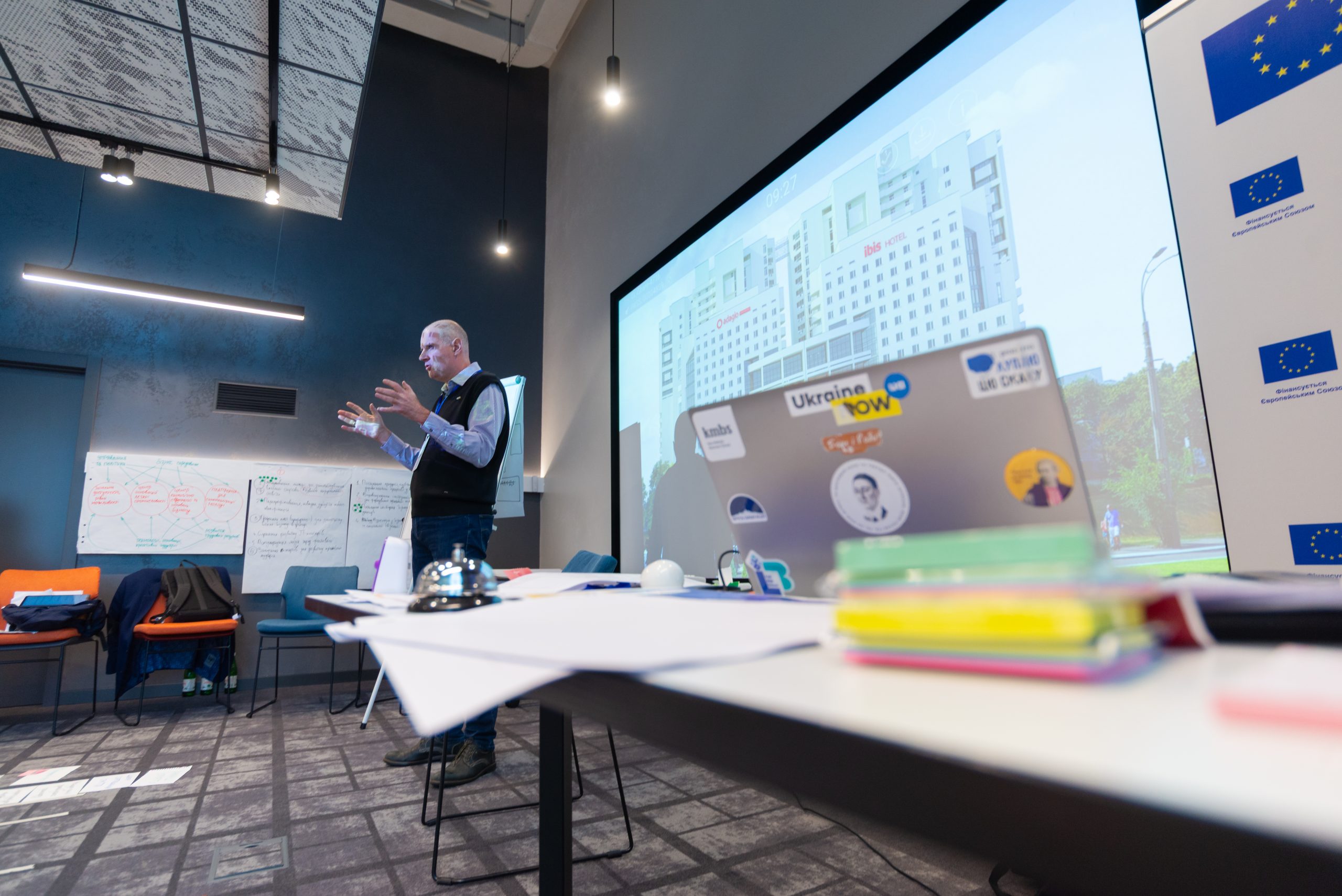
The programme facilitators share a clear conviction: moments of crisis are not a reason to pause this kind of work, but a reason to deepen it. The methodology itself is designed for uncertainty – recognizing that communities do not stop living in difficult times, but continue to adapt, make decisions, and shape their future.
In this context, the pressures of wartime can also shift how cities function. With authorities focused on immediate crisis response, there can be more space for residents and local actors to step in, take initiative, and contribute to shaping their city’s direction – opening possibilities for more participatory and collaborative forms of governance to emerge.

What next?
The participating Ukrainian cities will soon move to portfolio activation, implementing their first pilot initiatives. But the facilitators stress that lasting success lies not in these early steps, but in whether a culture of regular, iterative strategizing takes root – one that continues long after external support ends and keeps residents at the centre of shaping their own communities.
Read the full article on the M4EG website.
In 2025, four Ukrainian cities – Khmelnytskyi, Bucha, Zhytomyr, and Slavutych – joined the Mission-Oriented Economy local transformation programme, part of the EU-funded Mayors for Economic Growth (M4EG), implemented by UNDP Europe and Central Asia. Each city will receive approximately US$20,000 to launch its portfolio, with the opportunity to attract an additional US$100,000 for economic sustainability and green transition projects.
What is the portfolio approach?
The portfolio approach is an innovative method of managing local development that treats cities as complex, interconnected systems rather than collections of separate problems. Like a financial investor who diversifies across multiple assets, cities develop a set of parallel, mutually reinforcing initiatives, called “options”, instead of relying on a single solution. This enables flexible, adaptive management and continuous learning in dynamic, uncertain environments.
How does it work?
Cities begin by defining an overarching mission, then test several pilot activities simultaneously to identify what works. Throughout implementation, teams apply Monitoring, Evaluation, and Learning (MEL) frameworks to analyze results and adjust course. The approach is best suited to situations of high uncertainty, complex systems, and the need for creative problem-solving. The first Ukrainian cities to pilot it were Mykolaiv (Blue Economy Transition) and Ternopil (Green and Comfortable City).

Why does it matter now?
Standard strategic urban planning has taken a back seat during wartime due to the need for rapid responses, yet it is precisely now that it is most critical. As historian Timothy Snyder notes, recovery and integration processes that don’t begin during the war will not begin after it. Cities with clear recovery plans will be better positioned to attract investment and support the return of residents. At the same time, economies must continue to function even in wartime – the portfolio approach enables growth under uncertainty rather than mere survival. Finally, Ukraine’s path to EU accession demands sustainable economic planning, adherence to the European Green Deal, and modern governance practices, making systematic development work an essential condition for strengthening international confidence.
Beyond grants, the M4EG initiative connects cities to broader financial mechanisms, including public-private partnerships and European financial instruments, thereby creating a potentially transformative opportunity for Ukrainian cities as they rebuild their futures.
Read the full article on the M4EG website.
Ten startups and non-profits from across Europe and Central Asia gathered virtually on 25 February 2026 for the BOOST x City Experiment Fund (CEF) Green Urban Tech Sprint Demo Day. They pitched green and urban technology solutions to an expert jury drawn from city administrations and urban innovation communities across the region. After a full afternoon of presentations and jury deliberation, three teams emerged as award winners – recognized for their innovation, impact potential, and the strength of their pitch.
Greatest Impact Potential: LoRaSi
LoRaSi took home the award for greatest impact potential with SAMST, a smart digital twin for power grids that uses sensor networks to help utilities prevent failures, improve reliability, and adapt to extreme climate events. The jury recognized the solution for addressing one of the most urgent infrastructure challenges facing cities across the region – at a moment when energy resilience has moved firmly to the top of the urban agenda.
“Renewable energy is really crucial in cities right now, especially in the context of Ukraine.” — Max van Meerten, Manager for Digital Innovation and Smart City, City of The Hague
Most Innovative Solution: QX
QX was recognized as the Sprint’s most innovative solution for its city-owned, open-source AI platform, which provides city employees, residents and and visitors with verified, trustworthy information based on official city data. Jury member Petra Dzurovčinová highlighted the solution’s broader significance for European digital sovereignty: a locally developed AI model that cities own and control, rather than relying on commercial platforms.
“A local digital solution created in Europe, aligned with the AI Act — this can be impactful for city employees, visitors, and residents.” — Petra Dzurovčinová, Slovakia 2040 Vision Lead
Best Pitch: TUMO Labs
TUMO Labs won the audience vote for best pitch with ClimateNet. This locally maintained, student-built IoT network collects real-time weather and environmental data across Armenia and feeds into an open cloud platform used by researchers, institutions, and communities.
A Strong Cohort Across the Board
The three award winners emerged from a strong cohort, with seven other participating teams, each bringing distinct and city-relevant solutions to the Demo Day stage.
- COSMO Innovate Center (North Macedonia) showcased CarbLog, a smart bio-waste bin with telemetry sensors and a city-compatible cloud platform for waste monitoring and urban planning.
- DevelopWay CJSC (Armenia) presented LivingRoots, an AR and AI platform making urban greening more accessible to residents and more targeted for city planners.
- Ecoverification Technologies (Ukraine) introduced a platform that tracks and verifies individual CO₂ reductions, connecting citizen-level behaviour to city climate goals through verified social recognition.
- PE Symonenko S.S. (Ukraine) introduced Wied, an AI-powered platform that modernises municipal service delivery through smart video guides and photo reports, with particular relevance to migrant worker integration.
- Syntax Architecture (Kosovo) presented Mossflow, a self-sustaining ecological hub that addresses urban heat islands and air quality challenges through a closed-loop system powered by solar energy and AC condensation.
- Traffic Sense CG (Montenegro) presented a mobility and emissions analytics platform that layers open data, municipal inputs, and AI to help cities tackle congestion and plan cleaner transport.
- U-BUILD Community (Montenegro) addressed housing unaffordability through a residential co-housing platform that turns future residents into co-investors in sustainable, architect-designed buildings.
What Comes Next: The BOOST Alumni Network
The Demo Day may mark the end of the Sprint, but it is the beginning of something larger for all ten participating teams. Every team that took part in the Green Urban Tech Sprint is invited to join the BOOST Alumni Network, which is a growing community of innovators from across BOOST’s programmes.
As alumni, the teams will gain access to a range of learning and networking opportunities as well as discounted tools and support from global tech providers. Alumni organizations may also be invited to take part in future BOOST events and initiatives, keeping them connected to the wider ecosystem of urban innovators, city partners, and public-sector stakeholders that BOOST has built across Europe and Central Asia.
For the winning teams, the Sprint also opens doors to deeper engagement: their solutions are now visible to municipalities and city representatives who participated in or followed the Sprint.
The BOOST x CEF Green Urban Tech Sprint is organized jointly by BOOST and the City Experiment Fund, an initiative working with cities in Armenia, Kosovo*, Montenegro, North Macedonia, and Ukraine to tackle complex urban challenges through strategic innovation and experimentation. It is supported by the Slovak Transformation Fund, financed by the Ministry of Finance of the Slovak Republic.
*References to Kosovo shall be understood to be in the context of UN Security Council Resolution 1244 (1999).
At the entrance to Pljevlja, in northern Montenegro, you are met with a familiar sight. Thick smog hides the small town, concealing all its colour and beauty. For most around here – and across the Balkans, Pljevlja is known only as the city of coal.
Wherever you go, you cannot escape the coal mine. Situated on the country’s northern border, Pljevlja is home to 23,000 residents, and two out of three workers are employed either in the mine or in coal-related industries. For most families, “black gold” is not only their main source of income but also a craft passed down through generations.
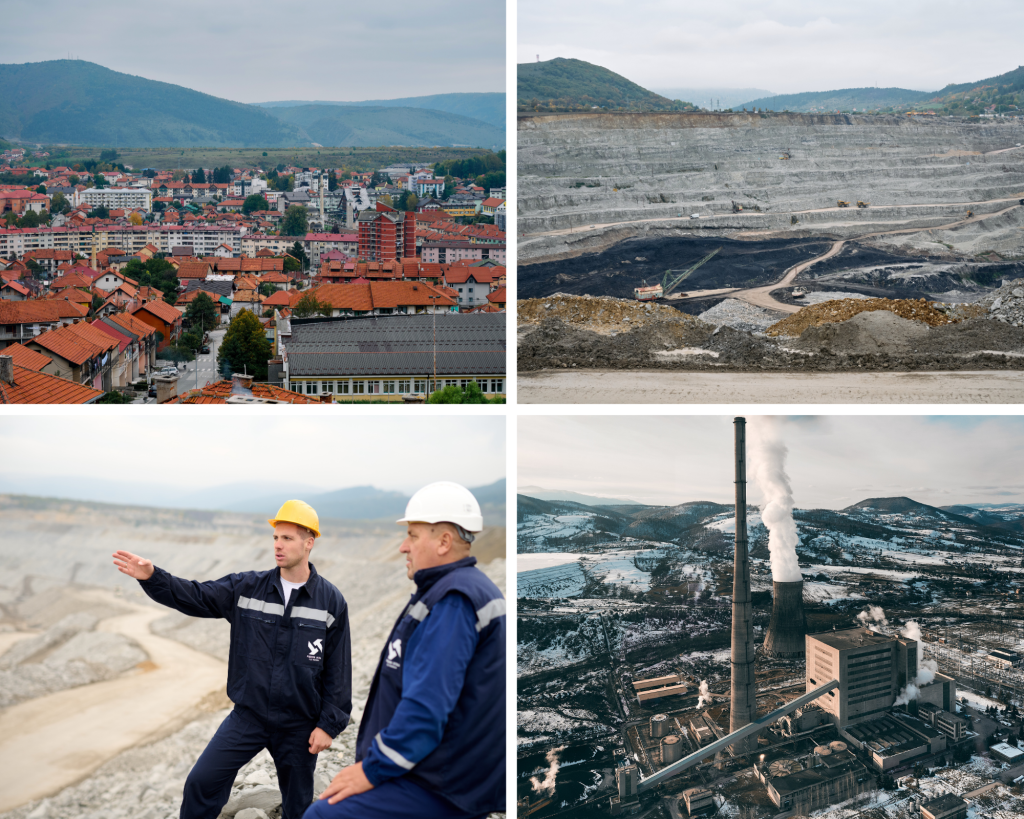
Photos: UNDP Montenegro / Duško Miljanić
Milenko Knežević is a young mining engineer for Coal mine Pljevlja. “I chose to study mining because I grew up in a neighbourhood close to this very pit, and somehow it was in my blood,” he explains. “Mining is dynamic and unpredictable. Something new always arises—that’s the nature of the job, and we work with that interaction.”
Pljevlja is also home to Montenegro’s only thermal power plant. Together with the mine, they have provided energy security since 1982, supplying 40 percent of the country’s total electricity. During dry periods, this percentage increases dramatically, when hydropower plants face difficulties producing electricity due to drought conditions, and the nation becomes almost entirely reliant on coal.
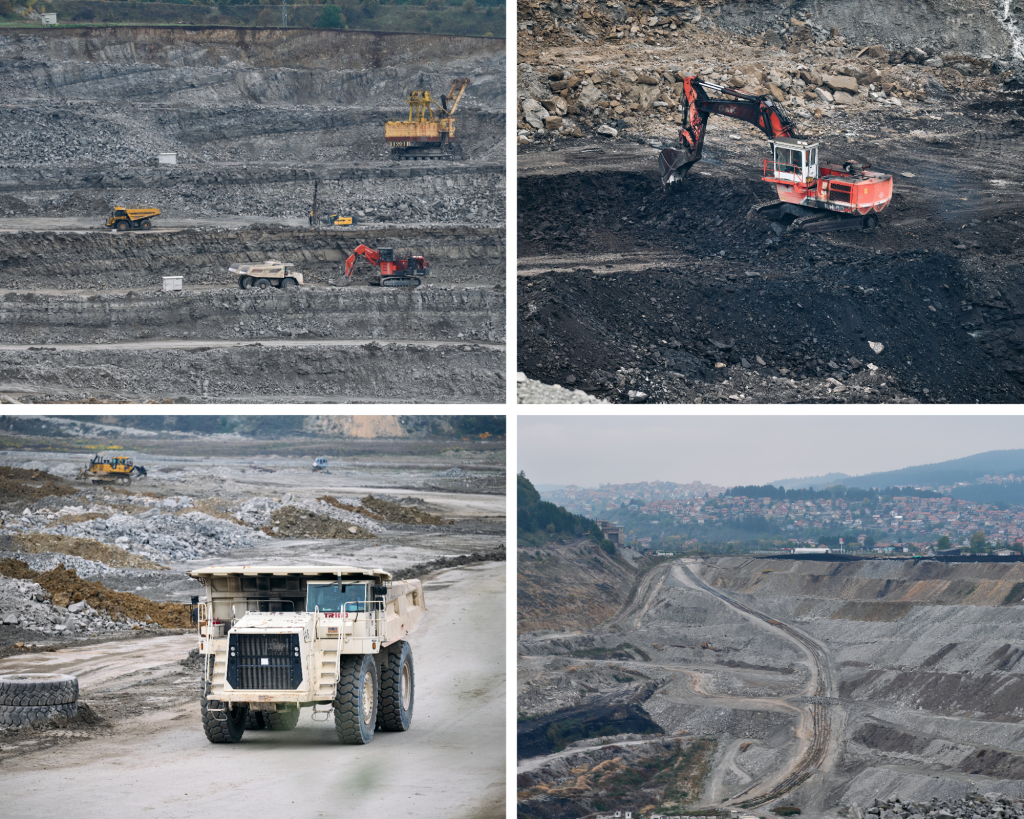
However, today Pljevlja stands at a critical crossroads.
Montenegro, in line with its international commitments, must carry out an energy transition and modernize its energy sector, which includes the gradual phase-out of coal in order to contribute to the goal of making Europe the first climate-neutral continent by 2050.
As Montenegro moves toward a just transition, this town that once powered the nation faces the challenge of diversifying its economy, adapting its energy infrastructure and securing a sustainable future for its residents in the era after coal extraction ends. Undergoing a transition like this requires support – and buy-in – from everyone in town, from the coal mine to the municipality to the citizens. UNDP is working together with them to meet the challenge with a sustainability action plan.
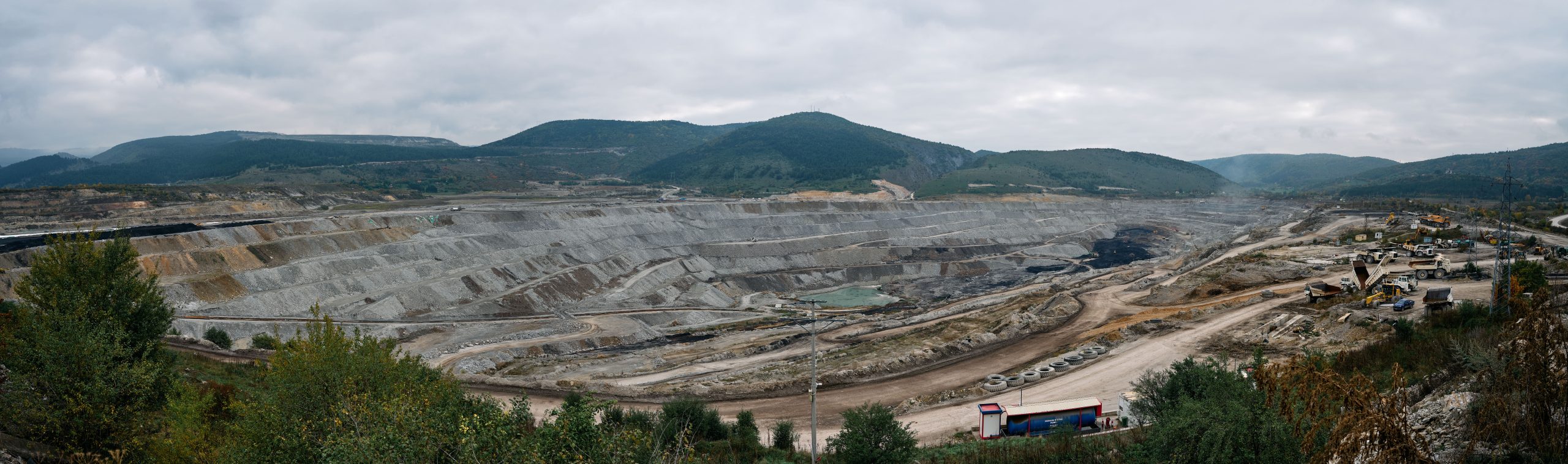
The state-owned company Coal mine Pljevlja has launched an ambitious business transformation program. A decrease in coal mining would have direct or indirect impact on the livelihoods of at least half the town. Targeted to close by 2040, the mine is actively developing 12 new ventures, striving to diversify its operations while retaining as much of its existing workforce as possible, transitioning then into new business fields.
“We came up with the idea to direct the resources the company possesses toward the free market, to explore the potential of new ventures and see how they could operate independently,” explains Milan Dragašević, Director of Strategic Planning and Business Transformation. “The workers would continue their jobs, but aligned with market needs.”
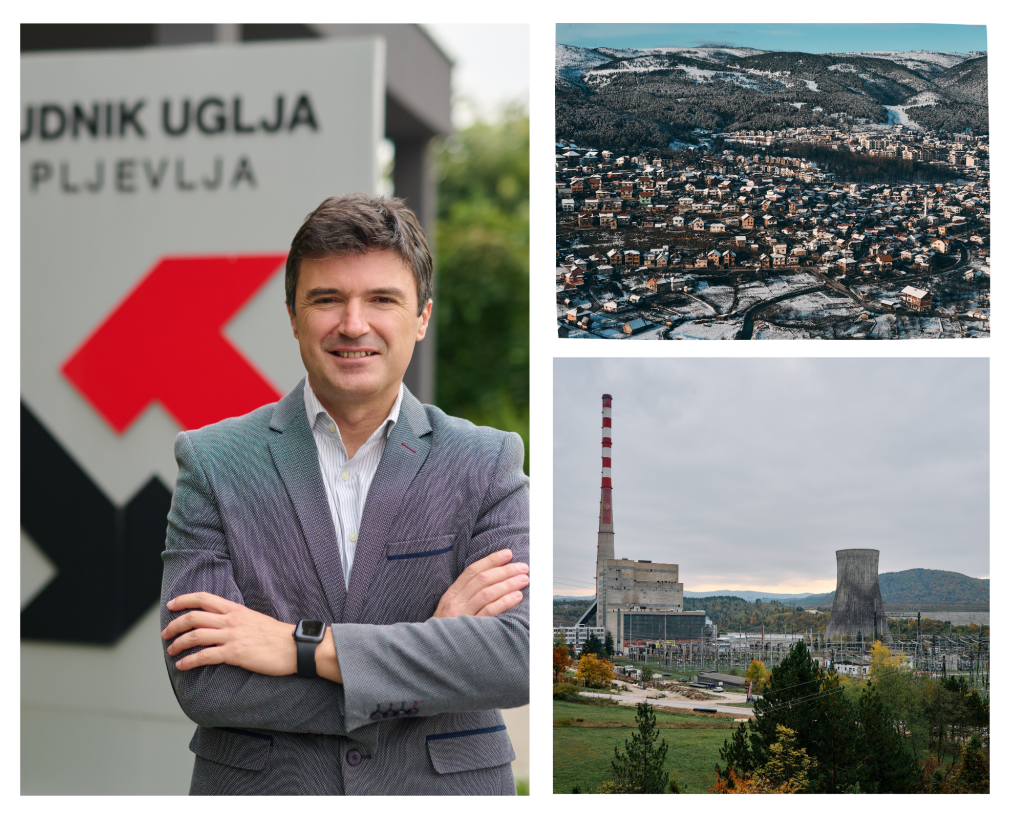
That includes construction services, asphalt production and road works, renewable energy (solar and small hydro), production of protective and technical equipment, geological and technical services, laboratory and testing services, IT and network services. “For those whose current roles are not seen as marketable, we plan to provide training for alternative professions,“ says Milan.
The laboratory currently used for coal quality testing is one of the units within the mine set for business transformation. It is actively performing tests to ensure both operational safety, market readiness and environmental protection, but in parallel has been working on the rigorous accreditation process.
“As part of the just transition taking place, we are pursuing international standards certification (ISO17025),” says Ana Kužić Milović, Head of Quality and Environmental Control. “We plan to expand beyond coal testing, potentially becoming a laboratory that can compete with leading global labs.”
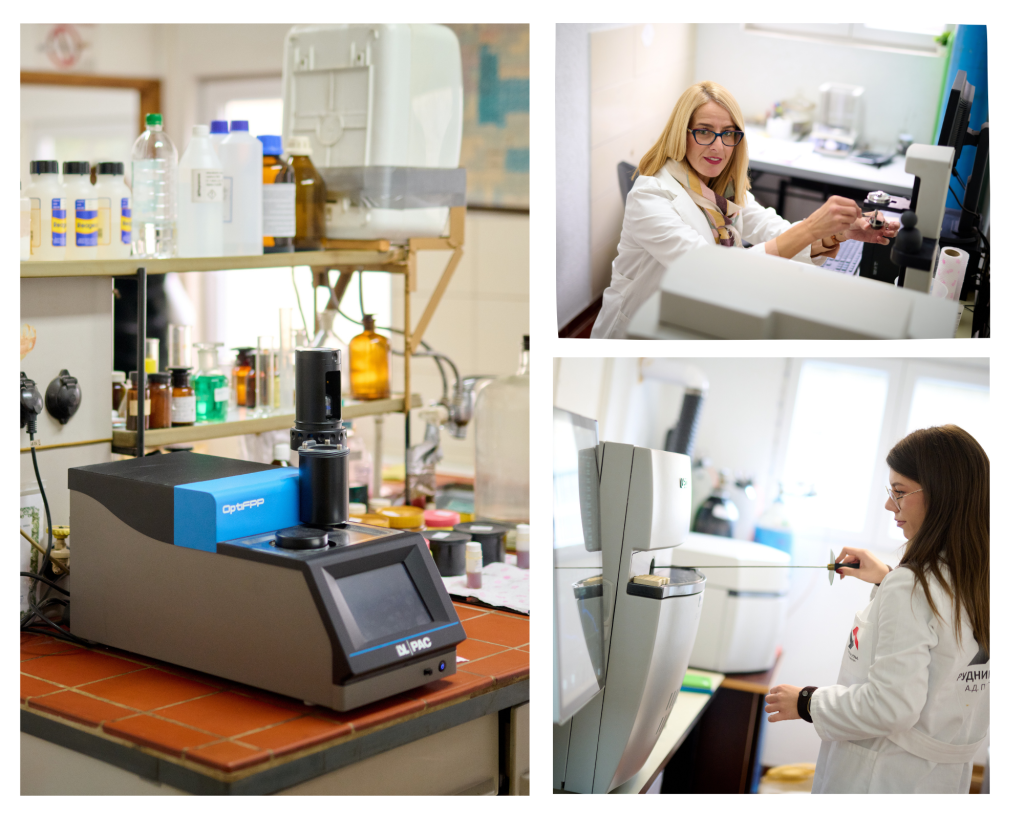
When Ana moved to Pljevlja seven years ago, it was known for pollution and depopulation. She was driven by a vision that the town could one day become a place people return to. Regarding Pljevlja being the most polluted town in Montenegro, she emphasized the importance of energy efficiency measures. “We have this coal season that darkens our town, but as Pljevlja’s district heating system develops, I expect PM10 particles to decrease in the coming years.”
For several years now, Pljevlja and its partners have been actively investing in environmental projects, including water quality infrastructure, waste‑water systems, remediation of polluted sites and energy efficiency measures in housing, such as insulating buildings, construction of district heating and solar solutions, and introducing subsidies to switch to pellet heating instead of coal and wood. Through the words of the employees, one can sense pride in the town’s mining tradition, alongside a longing for a future that offers more than dependence on coal. The success of a just transition will ultimately depend on how these opportunities are translated into measurable, sustainable jobs for the town’s workforce.
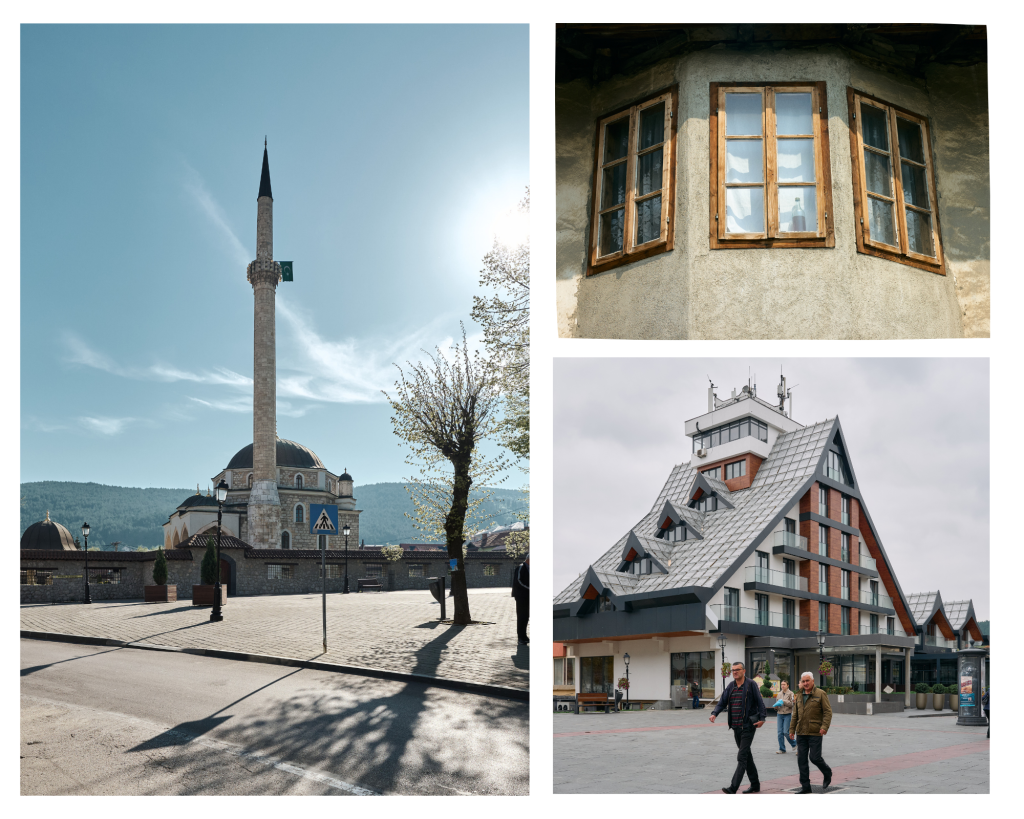
Keeping people here, and attracting new ones, is important in this transition process. Much hope is placed on the younger generations, which are organizing themselves and seeking new opportunities to learn, bring innovations and contribute to the town’s transformation.
Six years ago, the NGO In Step with Science (KSAN) already thinking about how to bring life back to their hometown and strengthen the next generation’s readiness for the future of work.
So they organized the Engineering Summer School of Science, bringing together young engineering students to talk about innovation, science, AI and clean energy. At the summer school openings, many young people gather to learn more, and older residents come by to see what’s happening and show interest.
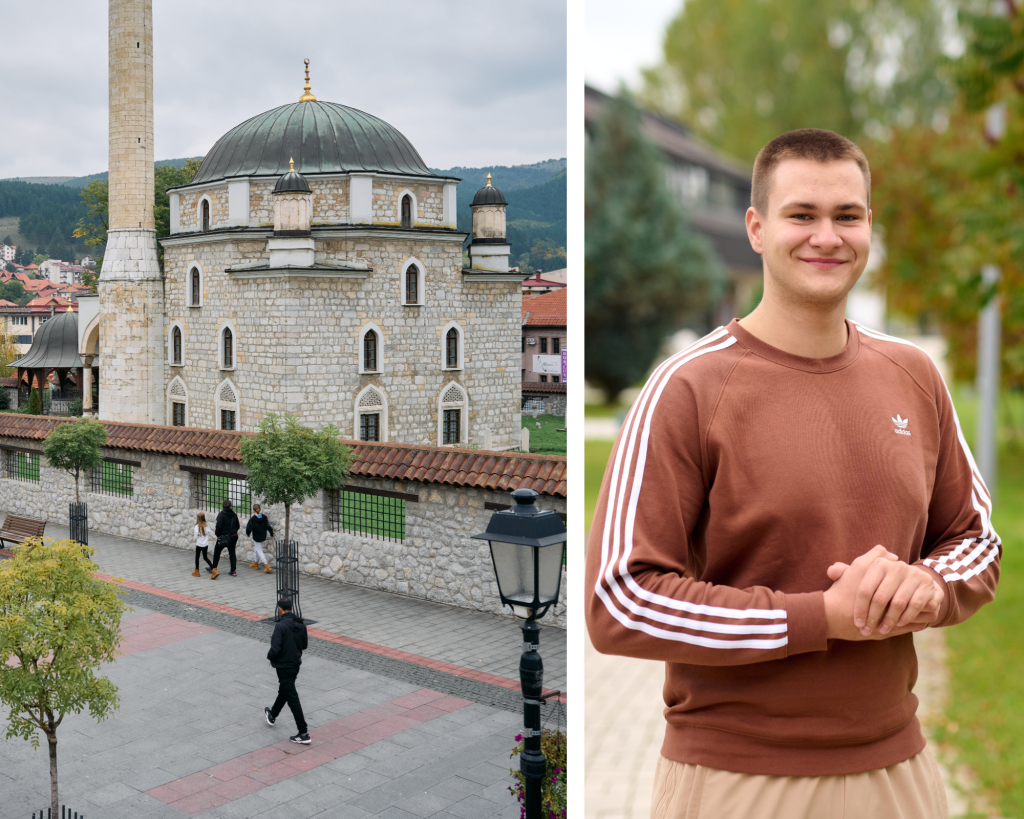
Tadija Janjušević, a student at the Pljevlja Secondary School of Electrical Engineering, who spends his summers volunteering as a mentor at the summer science school, explains the stark reality that many youth do not see opportunities for themselves in Pljevlja beyond secondary school.
“If a university were to open here, I might consider studying in Pljevlja, but it would depend on the quality of the institution. I am a good student and set high goals for myself. I don’t see how I could achieve the goals I’ve set in life while staying here, though that doesn’t mean I won’t return if the situation improves, or if there are employment opportunities beyond the Mine and the Thermal Power Plant”, Tadija says firmly.
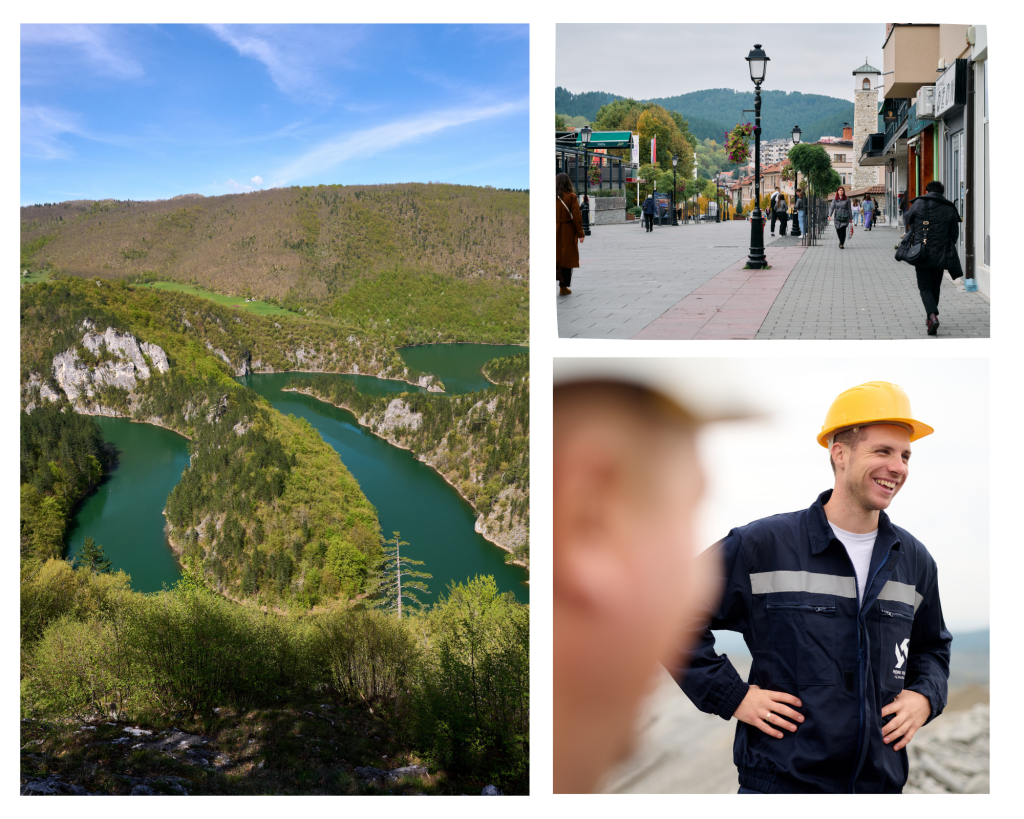
Beyond the mine, life in Pljevlja is picturesque and deeply rooted in history. The town sits at the crossroads of cultural routes, where different religions and communities have coexisted harmoniously for centuries. Pljevlja is surrounded by forests and stunning natural landscapes, making it ideal for agriculture and livestock farming and tourism alike. The famous meanders of the Ćehotina River and the Tara River canyon offer immense potential for the development of sustainable tourism, which is part of several steps of the municipality’s plan.
“There are so many beautiful spots and charming villages just outside the town, and enormous potential that few truly recognize. I think that could change, because people want to experience beautiful nature,” says Milenko optimistically.
The town and its residents are now testing the limits of innovation and resilience, collectively searching for a future in which Pljevlja can continue to provide livelihoods, prosperity and employment, even in the era after the mine’s closure.
UNDP, through the City Experiment Fund initiative, supports Pljevlja’s transformation through efforts to diversify the local economy, reduce air pollution and improve energy efficiency. Aligned with the EU Green Deal, Montenegro’s Reform Agenda and broader EU accession and decarbonization commitments, the initiative supports re-skilling and up-skilling the workforce, encourages investments in green infrastructure and innovation and ensures that no community or worker is left behind in the just transition process.
The City Experiment Fund collaborates with cities across Europe and Central Asia to tackle complex urban challenges through strategic innovation and experimentation. It is made possible with the financial support of the Ministry of Finance of the Slovak Republic.
Originally published at: https://undpeurasia.exposure.co/pljevlja-coal-justtransition
UNDP’s City Experiment Fund has released the Twin Transition Stencil Report, presenting a structured framework that was designed to support cities in designing and managing integrated green and digital transformation portfolios.
It responds to a common challenge faced by municipalities: translating high-level green and digital policy goals into coherent, actionable strategies, practical pathways and investable interventions that reflect local realities.
The report synthesizes learnings from the City Experiment Fund’s 2025 Twin Transition cohort, drawing on practical experience from ten cities across Armenia, Kosovo [1], North Macedonia, Montenegro, and Ukraine. It documents how municipal teams approached complex, interconnected challenges by moving beyond isolated projects and toward adaptive portfolios grounded in local priorities and community input.
Rather than offering a step-by-step toolkit, the report, prepared by the City Experiment Team, offers a structured yet flexible methodology for urban transformation portfolio design. Portfolios refer to a set of connected initiatives and experiments that are designed and managed together, allowing cities to test different approaches in parallel, learn what works, and steer long-term transformation rather than relying on isolated projects.
It introduces key concepts such as portfolio intent, areas of interest, strategic positions, and options, and shows how cities can use practices such as experimentation, community listening, and sensemaking to navigate complexity, manage uncertainty, and build evidence for long-term transformation.
Aimed at municipal leaders, policymakers, development practitioners, and urban innovators, the report offers practical insights for cities seeking to connect green and digital priorities in ways that are locally relevant, inclusive, and resilient. It reflects UNDP’s ongoing efforts to support adaptive governance through systems thinking, and experimentation as foundations for sustainable urban development.
Find the report on UNDP Europe and Central Asia’s website.
The City Experiment Fund is a UNDP-led initiative that collaborates with cities across Europe and Central Asia to tackle complex urban challenges through strategic innovation and experimentation, with financial support from the Ministry of Finance of the Slovak Republic.
[1] References to Kosovo shall be understood to be in the context of United Nations Security Council resolution 1244 (1999).
How do cities understand the needs of their citizens – and turn those insights into meaningful action?
As part of the 2025 cycle of the City Experiment Fund (CEF), ten cities across Europe and Central Asia embarked on a community listening journey to explore how cities can meaningfully engage communities.
The CEF is a UNDP-led initiative that works with cities in the Europe and Central Asia region to tackle complex urban challenges through strategic innovation and experimentation. CEF is made possible with the financial support of the Ministry of Finance of the Slovak Republic.
Over the course of several weeks, representatives from local authorities in Armenia, Kosovo[1], Montenegro, North Macedonia, and Ukraine took part in a community listening training, followed by a month-long engagement phase. Over four weeks, city teams conducted 300+ conversations with residents, community leaders, public officials, entrepreneurs, and activists to understand how urban challenges are experienced across different groups and what kind of future citizens want to see for their cities.
This process revealed a wealth of perspectives, concerns, and ideas that will help shape each city’s Twin Transition Portfolio – a set of experiments and initiatives at the intersection of green and digital transformation.
What Cities Heard
Despite their diversity, many cities voiced similar concerns. Across the region, people spoke about the need for cleaner air, better waste management, reliable transport systems, and inclusive urban spaces. They highlighted the urgency of addressing youth migration, employment insecurity, and weak infrastructure, while also envisioning cities that are greener, more connected, and full of opportunities.
Residents consistently expressed pride in their local identity, community spirit, and natural surroundings. From Stepanavan’s “small Switzerland” image in Armenia to the lively rhythm of Pristina, the listening process uncovered how deeply citizens value nature, culture, and safety as foundations for a good life. Gender and inclusion also emerged as cross-cutting themes: in many cities, women remain underrepresented in decision-making, yet are often at the forefront of community life, education, and civic engagement.
A Shared Aspiration: Greener, More Livable, and Inclusive Cities
Across the ten participating cities, one vision stood out – to build cleaner, greener, and more inclusive communities where people want to stay and thrive. Whether through circular economy models in North Macedonia, green energy transitions in Montenegro, or digital innovation and governance in Ukraine, each city identified pathways toward sustainable urban transformation. The insights collected through the listening process will now help teams design local portfolios that respond directly to people’s lived realities – turning listening into action.
“Community listening is more than a data exercise. It’s about empathy, curiosity, and reimagining development from the citizen’s perspective,” said the CEF team. “It helps cities not only identify problems but also uncover opportunities for innovation rooted in people’s daily experiences.”
The Community Listening Report consolidates key findings and themes emerging across the cohort, serving as a shared resource for cities, partners, and practitioners interested in community-centered approaches to urban innovation.
Acknowledgements: Special thanks to Vid Stimac from the UNDP Serbia Country Office, for supporting the transcription and translation of 300+ interviews with AI tools to enable the synthesis of insights.
[1] References to Kosovo shall be understood to be in the context of United Nations Security Council resolution 1244 (1999)
On World Cities Day 2025, UNDP in Europe and Central Asia launches the City Imaginarium — a regional creative campaign that invites artists and communities from around the region to reimagine greener, more inclusive and more resilient urban futures.
As cities across the region face growing challenges from climate change and demographic shifts to economic transitions and rising inequalities, City Imaginarium turns to imagination as a catalyst for change. Through 11 original illustrations and the Voices from the Cities portrait series, the campaign explores how art and storytelling can help us see our cities anew and envision the transformations ahead.
The artworks are inspired by four themes central to urban change in the region:
- Circular Cities, rethinking waste as a resource and designing for renewal.
- Energy Resilience, building cleaner, affordable, and climate-safe energy systems.
- Inclusive and Livable Cities, creating safer, more accessible, and gender-responsive spaces.
- Digital Urban Futures, ensuring technology serves people and strengthens participation.
The campaign, powered by 11 countries and territories in the region – from Montenegro to Uzbekistan – will be showcased through exhibitions in cities in Kazakhstan, Kosovo[1], Georgia, and other locations, as well as through an online gallery where visitors can explore the full collection and the voices behind it.
City Imaginarium builds on the ongoing work of UNDP and its partners to make cities across Europe and Central Asia more sustainable, inclusive, and resilient. The campaign is supported by regional and other initiatives, including the City Experiment Fund, Mayors for Economic Growth, Greening the Future, Urban Resilience, and Creative-lab “ARTurduuluk” (Art4Diversity).
Explore the campaign and artworks: https://undpeurasia.exposure.co/cityimaginarium
[1] References to Kosovo shall be understood to be in the context of United Nations Security Council resolution 1244 (1999).