
Category: Innovation ecosystems
BOOST x Kosovo, an acceleration programme aiming to promote green transition, announced the grant awardees for the first edition of BOOST programme in Kosovo. The programme aims to help businesses tackle global challenges such as pandemics and climate change, and build resilience by embracing sustainable green practices.
The fifteen awardees will be provided 20,000 Euros each to develop innovative solutions that promote sustainable, efficient, and circular business practices for green and sustainable growth – from waste management technologies in agriculture and food production, to ecological and green manufacturing, to smart parking applications, to e-commerce returns reduction using Artificial Intelligence, to digital fashion production for solving overconsumption and overproduction.
BOOST x Kosovo programme was launched in mid-September 2022 to provide opportunities for small and medium enterprises (SMEs) and to promote greener growth in the private sector in Kosovo. A total of 50 small and medium enterprises from all across Kosovo were selected to participate.
During the three-month acceleration programme, 50 SMEs had the opportunity to deepen their understanding and skills through workshops, and individual mentoring sessions on leadership, business, and green transformation. The programme consisted of four training modules: Impact Measurement & Management; Entrepreneurship Business Acceleration; Green Transformation; and Tech and Digital Transformation; and inspirational ‘Tokyo Talks’ with successful entrepreneurs and global leaders from Japan.
The following SMEs are the grantees of the first edition of BOOST x Kosovo:
BOTANIC shpk, Bee Park LLC, Kosovo Glass Recycling, Hana Zeqa SH.P.K, Enchele sh.p.k, Greenergy, Bio365Kosova, GoBeyond, Smart Park LLC, PNC LLC, Eco Solution Research LLC, Masar Tocani b.i, Elea IT SH.P.K, Boronica e Sharrit, SUPERXPLORERS.
UNDP and partners would like to congratulate all graduates for successfully completing the BOOST x Kosovo acceleration programme.
BOOST x Kosovo is implemented by the United Nations Development Programme (UNDP) in Kosovo, financed by the Ministry of Foreign Affairs of the Government of Japan, European Bank for Reconstruction and Development (EBRD), and supported by the Innovation Center Kosovo (ICK). The programme is made possible through the Climate Promise: Growth Through Green and Just Recovery from COVID-19 project, with the aim of ultimately creating new jobs and revitalizing Kosovo’s economy, in response to the consequences of the pandemic.
In 2022, we worked with 55 changemakers from 16 countries and territories in Europe and Central Asia on harnessing innovation and technology to advance gender equality.
To strengthen the ecosystems of women innovators and entrepreneurs and advance gender equality in the region, BOOST’s acceleration programme for Women Innovators set out to boost innovative solutions that tackle key challenges faced by women and girls in four key thematic areas: women and digital access and use, women in the digital economy and STEM, women in data, and women driving technology innovation.
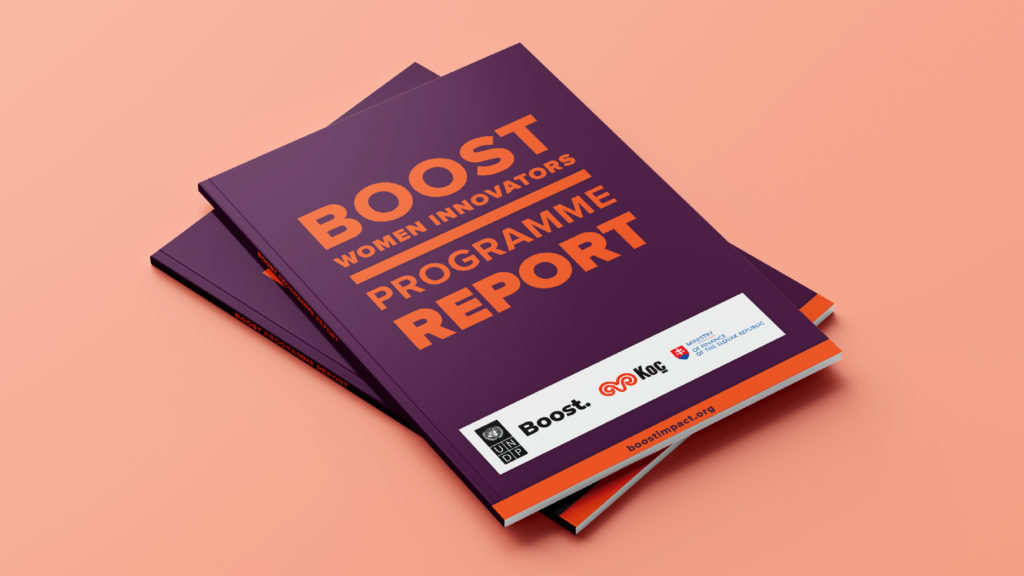
Our Women Innovators Programme Report highlights the collective work of BOOST’s second regional edition, and how the 55 participants are leveraging innovation and technology to address a range of issues – from gender-based violence and access to sexual healthcare services to advancing women in Science, Technology, Engineering and Mathematics (STEM) and opportunities for upskilling.
The majority of BOOST’s changemakers are on a mission to advance gender equality (40%), decent work and economic growth (31%), quality education (25%), reduce inequalities (22%), and strengthen health and wellbeing (15%). Over 70% reported they had gained a better understanding of the 2030 Agenda for Sustainable Development, and how their organization’s impact contributes to specific Sustainable Development Goals (SDGs). Nearly half of the participants (45%) are working in the field of education (33%) and health (12%).
The unique impact acceleration programme brings together a wide range of participants, including impact ventures (startups, SMEs and social enterprises), and non-profits and academic institutions. They took part in a rigorous 12-week programme, which was conducted fully online from May through July 2022 and consisted of a learning and capability development journey, comprising five core modules – from business development and impact measurement to tech and digital transformation and more.
During the programme, some of the participants developed their first impact models, while others explored opportunities to diversify resources, to reduce donor funding dependency and enhance strategic, long-term thinking. Most importantly, BOOST created a supportive environment and network of women innovators, that enabled peer-to-peer connections, and knowledge and experience sharing. What’s more, during the programme, participants were able to get targeted advice from experts who recognize the challenges that women face in entrepreneurship and innovation.
Nine of the participants received a total of US$90,000 in equity-free capital, in support of further developing and scaling their impact innovations.
To learn more about the innovation journey, check out the stats and testimonials in our Programme Report.
Thank you to our partners at Startup Grind, KWORKS, ImpactAIM, UNDP-UNICEF’s joint regional STEM4ALL platform, and The Behavioural Insights Team, for delivering powerful sessions from business development to impact measurement so participants and develop and scale their high-impact innovations. We are grateful to the amazing BOOST speakers: Phin Mpofu, Kashyap Kompella, Hesus Inoma, Vik Kasturi, Maral Kalajian, Lilit Hovhannisyan, Jesus Lozano, Petar Savic & Anastasia Miron, who shared their experiences, best practises, and valuable insights. The participants also had access to both individual and group mentoring sessions led by Startup Grind’s mentors community: Petar Savic, Jesus (Chus) Lozano, Hesus Inoma, Nazareth Seferian, Naimul Abd, Rania Gelidan, Phin Mpofu, Tony Hughes, Corey Hart, Pakiza Abdulrahman, Solange Rodriguez Soifer, Anastasia Miron, Mehkar Sheikh, Joshua Ness, Patrycja Maksymowicz, Rodrigo de Alvarenga, Lukas Hertig, Curtis Bergh, Franco Bondi, Jessica Acosta, Rohan Potdar and Tal Rom.
BOOST is an impact acceleration programme, powered by UNDP Europe and Central Asia. In February 2022, it launched the Women Innovators challenge, consisting of two tracks, in collaboration with innovation partners Koç Holding and the Slovak Ministry of Finance.
Two years ago, Mariam Torosyan, a human rights lawyer and social entrepreneur, founded SafeYOU, a social impact startup, in a bid to curb domestic and gender-based violence by supporting women who have experienced or are experiencing abuse.
The mobile app and platform addresses gender-based violence through protection, prevention and prosecution of cases.
The increase of reported domestic violence during Covid-19 accelerated the social enterprise’s journey – first launching in Armenia in early 2020, where 60 percent of Armenian women have experienced domestic violence at least once. The app was thereafter launched in Georgia, where imposed Covid-19 restrictions limited access to life-saving support services.
With plans to expand to Arab states and Africa, the app now has more than 25,000 users across three countries – Armenia, Georgia and Iraq, with 60,000 women already using the SafeYOU platform.
‘Protect, prosecute, prevent’
Just a tap away, SafeYOU provides access to knowledge resources on sexual health and women’s rights, existing support services, community support, and consultations with different organizations and professionals. “Technology has the power to connect the dots that were not connected […] bringing all the resources into one place,” explains Mariam.
Central to the app’s safety function is the HELP button, which sends up to seven free SMS alerts, which can include personal contacts, service providers (such as women support organizations and state authorities) or the police. “In cases of gender-based violence, especially domestic violence, the victim and the abuser are alone. And in many contexts, it’s really very difficult to prove that there was [physical or sexual] violence and there was no consent.” That’s why once the emergency button is activated – an audio recording starts.
In one of its most emblematic cases so far, a 26-year-old mother downloaded the SafeYOU mobile app in Georgia, after having received death threats from her former husband. When she and her three-year-old were attacked by him several days later, she was able to activate the SOS button and alert the police, who arrived quickly to the scene and arrested him. “The audio recording that was gathered by SafeYOU was later used and accepted by the court as a pivotal piece of evidence,” notes Mariam.
Until now, more than 14,000 women have reported cases through the platform and over 8,000 women have used its network of psychologists, lawyers and healthcare workers. The app is especially valuable for women living in more remote areas and unable to travel to access services and consultations.
Nevertheless, access to digital technology is not always evenly distributed and can depend on rurality and digital infrastructure issues including connectivity and broadband speeds, access to digital devices, disability and digital literacy.
“We are [also] currently developing a follow-up and feedback system to understand whether users received help or not.” This is crucial, Mariam tells us, because currently nearly 60 percent of cases on the app are not reported to NGOs or the police, which means women cannot receive the support they need and the magnitude of the problem remains hidden.
Data as an engine for change
Only 41 percent of countries regularly collect data on violence against women, which means that effective policies cannot be created to combat the problem.
SafeYOU’s strategy is also based on a platform and data analysis system. The app collects anonymous and confidential data, which the platform then analyzes to provide a unique live monitoring tool to track and prevent cases of gender-based violence.
“The data gathered through AI algorithms is really something invaluable not only for policymakers, but also for NGOs, to understand what is needed and what are the trends,” explains Mariam. The data allows policy-makers, lawyers and activists to understand how many cases there are, whether they were reported and to whom, as well as background information on those that reported – from age groups to geography.
“Analyzing the patterns can help us understand who is at the highest and lowest risk to be abused among our users, and how we can make sure that we prevent these cases,” says Mariam.
In Armenia, they’ve already made several important recommendations to governments and nonprofit organizations on how to ensure that women report cases officially, not only to family and friends.
Going global, but staying local
SafeYOU was among 55 changemakers selected to take part in the UNDP-led BOOST: Women Innovators acceleration programme and has worked to further scale their app. They’re also currently enrolled in Google for Startups SDG program and are a winner of multiple awards from the EU, World Bank Group, UNFPA, and the Government of Armenia.
Supporting eight languages, including Armenian, Georgian, English, Arabic and Russian, the app is completely free for users. Instead, SafeYOU’s business model targets governments, nonprofits or international organizations interested in innovative approaches to addressing gender-based violence. For example, in Iraq, SafeYOU partnered with the United Nations Population Fund, Ministry of Interior in the Kurdistan Regional Government and the General Directorate of Combatting Violence against Women and Families to launch the app in the Kurdistan region.
In each context, the team adapts the app together with its partners, depending on local needs and specifications. They may add or hide features – for example, they may deactivate the police alert function due to lack of capacity to negotiate with them, and so may rely on third parties such as nonprofits to review and refer cases to the police.
Its user-centric approach means that the app’s functions are rooted in research and interviews with women – from women in shelters to human rights lawyers focused on women’s rights – which has helped the SafeYOU team “create a highly adaptive technology,” says Mariam. Localizing the app requires adapting its interface and functionality depending on different contexts, cultures and needs, continuously improving the user journey within the app over its 80 releases.
Since 2021, SafeYOU is considered a Digital public goods, i.e. an open-source software that adheres to privacy and other applicable laws and best practices, ‘do no harm’ design, and attaining the Sustainable Development Goals.
‘Be unstoppable’
SafeYOU is looking to expand to countries and regions where there are higher prevalence rates of gender-based violence. “This is the best market to be because that’s where we can really bring bigger change, because the gaps in those countries are much bigger.” As is the impact.
When asked about her advice to other women innovators, Mariam says: “Be unstoppable […] You must find your inner power and say: ‘I can do it and I am going to do it, because the world needs someone to do this. And I’m the person who must do it.’”
***
BOOST is a regional acceleration programme for sustainable impact innovation, powered by UNDP Europe and Central Asia. Initially launched in 2020 in response to the socioeconomic impact of the COVID-19 pandemic, BOOST seeks to boost social innovators across the region to accelerate the 2030 Agenda for Sustainable Development. Its Women Innovators programme, financed and supported by the Ministry of Finance of the Slovak Republic and Koç Holding, is about developing innovative solutions that tackle key challenges faced by women and girls or are powering the women-led entrepreneurial ecosystem across the region.
Reposted from UNDP Europe and Central Asia’s website. Photo courtesy of SafeYOU.
BOOST, a regional acceleration programme for social impact innovation, financed and supported by the Ministry of Finance of the Slovak Republic and Koç Holding, announced the grant awardees for its Women Innovators programme in Europe and Central Asia today.
The awardees are developing innovative solutions that tackle key challenges faced by women and girls or are powering the women-led entrepreneurial ecosystem across the region – from mobile apps and marketplaces for improved access to sexual and reproductive health and combatting violence against women and girls, to tailored Science, Technology, Engineering and Mathematics (STEM) education.
The Women Innovators programme was launched in February 2022 to leverage the power of innovation and technology to advance gender equality in the region. A total of 288 startups, SMEs, social enterprises, non-profits and academic institutions from Europe and Central Asia applied and 55 were selected to participate.
During an intensive 12-week online acceleration programme, participants gained access to world-class training and mentorship to develop, reimagine and scale their impact innovations. Working closely with Startup Grind, ImpactAIM, UNDP-UNICEF’s joint regional STEM4ALL platform, and The Behavioural Insights Team, which provided modules on business acceleration, impact measurement and management, as well as behavioral insights, the participants were able to further develop their solutions, while strengthening the ecosystem of women innovators in the region.
The programme consisted of two tracks: Track 1 targeted Europe and Central Asia women-led startups, SMEs, social enterprises, non-profits, and academic institutions with innovations in four key thematic areas: women in data, women and digital access & use, women in the digital economy & STEM, and women driving tech innovation; while Track 2 focused on women innovators in Türkiye (Meet the Track 2 grant awardees here).
Thirty-two (32) participants from Track 1 successfully completed the BOOST acceleration programme and 26 finalists pitched their innovations in front of a five-member jury panel of leading experts and partners at the programme’s graduation event in July 2022.
Eight participants were awarded US$10,000 in equity-free capital:
- AppsMakers (Ukraine) – a mobile app for social products and services that use no-code and low code technologies to address economic challenges that Ukrainian refugees, particularly women and children, face as a result of the war. Harnessing the power of cutting-edge technology, AppsMakers has quickly been able to invest in hope in times of crisis.
- ArrowStone (Ukraine) – an online marketplace connecting local and global players in the floral industry and promoting a ‘buy local’ concept to reduce carbon emissions and boost local economic growth. Through its marketplace Lystva, ArrowStone is reducing entry barriers for growers, and reduces gender inequality in the market.
- ConsciESG (Albania) – a platform which provides tools and metrics for companies and investors in the Western Balkans to assess companies’ Environmental, Social and Governance (ESG) factors, including gender equality at work. Through ConsciESG’s Direct Product Impact Performance solution, companies can efficiently and effectively align their ESG strategies and measure their impact along the entire product lifecycle.
- Female Algorithm (Slovakia) – a social EdTech startup empowering women, including Ukrainian refugees, to make a career change to tech and business management through a single digital platform. By innovating in the area of EdTech, Female Algorithm is breaking new ground to enhance digital literacy and provide upscaling opportunities to support integration efforts.
- Kyrgyz Space Program (Kyrgyzstan) – a non-profit organization led by seven inspirational young women dedicated to promote STEM education for girls. The team is building an educational platform to encourage youth involvement in STEM through satellite construction.
- Safe YOU (Armenia) – an app and multi-stakeholder platform created by the Impact Innovations Institute that aims to prevent or curb domestic and gender-based violence by supporting women who have experienced or are experiencing abuse. By providing access to real-time data and statistics, Safe YOU also enables crucial data-driven policy making.
- Spica Technology (Kazakhstan) – a web-based, MedTech solution called CLARITY that helps women to take control of their health by providing virtual access to sexual and reproductive health consultations with an international group of doctors experienced in obstetrics and gynaecology. CLARITY facilitates a quick “second medical opinion” and has the potential to reduce diagnostic time.
- WeinCrypto (Kyrgyzstan) – a decentralized autonomous organization (DAO) that provides education opportunities and promotes the participation of women and youth in the world of crypto currency investments to help break stereotypes and gender inequality in the Central Asia region.
UNDP and partners also congratulate all 32 graduates from Track 1 for successfully completing the BOOST impact acceleration programme:
AppsMakers; Arrowstone Flowers; Art Pioneri Platforma; B&M Accounting Solution; Business and Technology University; Centre for Science and Innovation for Development; Connect-Ed Kazakhstan; ConsciESG; Dreamups Innovation and Entrepreneurship Accelerator; Female algorithm; Film-U-Box; ForSet; Girls Power Fund; Hajde Folim; Her Guide; Innovation, Technology and Strategy Center; Izzi; Kyrgyz Space Program; LLC New Algorithm; MedPoint Technologies; MUGALIM – Online school for teachers; OK TOWN; Onwa; Safe YOU (Impact Innovations Institute); Space SyntaKs; Spica Technology; Tech4Impact; Upway; Virtual Story; Linaster; Visit village; and WeinCrypto.
More information about all graduates’ innovations can be found here.
—————
About the programme:
BOOST is a regional acceleration programme for sustainable impact innovation, powered by UNDP Europe and Central Asia. Initially launched in 2020 in response to the socioeconomic impact of the COVID-19 pandemic, BOOST seeks to boost social innovators across the region to accelerate the 2030 Agenda for Sustainable Development.
United Nations Development Programme (UNDP) in Kosovo, in partnership with the Government of Japan, the European Bank for Reconstruction and Development (EBRD) and the Innovation Centre Kosovo (ICK) announced yesterday the names of the enterprises to participate in the BOOST x Kosovo.
After a thorough evaluation process, 50 small and medium-sized enterprises (SMEs) from all over Kosovo were selected, including from non-majority communities, to take part in the acceleration programme which can provide solutions towards green transition and sustainability.
The selected SMEs cover a range of sectors, among them agriculture, production, hospitality and tourism, digital, and renewable energy. They have proposed a set of interesting ideas, including minimization of waste, improved efficiency, and improved knowledge and awareness raising. BOOST x Kosovo will amplify, bridge, and connect these selected entrepreneurs across Kosovo with global innovators who will support them technically and financially to develop and advance their initial ideas. Ultimately, the best 15 teams with the most promising solutions will be awarded grants of around 20,000 EUR each to finalise their projects.
The six-month programme will consist of four training modules, a series of talks with successful entrepreneurs, philanthropists, global leaders, and experts from Japan, as well as Mentorship and Peer-to-Peer Learning.
BOOST x Kosovo is an initiative designed to help shift Kosovo’s private sector towards green and just transition – and through inclusive approach, create new jobs, reduce greenhouse gas emissions and boost competitiveness.
BOOST x Kosovo is the local chapter of the regional BOOST programme, launched by UNDP Kosovo and the Embassy of Japan in Kosovo, and implemented in cooperation with ICK and EBRD. Its first edition aims to support businesses and communities to rebound from COVID-19 and build a climate-resilient future.
United Nations Development Programme (UNDP) in Kosovo, in partnership with the Embassy of Japan in Kosovo, launched today BOOST x Kosovo, an acceleration programme to help businesses tackle development challenges and support Kosovo’s private sector to build resilience by embracing sustainable green practices.
In the presence of Maria Suokko, UNDP Resident Representative, H. E. Keisuke Yamanaka, Chargé d’Affaires a.i. of Japan in Kosovo, Uranik Begu, ICK Executive Director, representatives of Ministry of Regional Development, Kamenicë/a and Pristina municipalities, EBRD, Business Associations and other guests, the Kosovo BOOST Team presented its curriculum and activities.
Talking about the importance of the platform, Maria Suokko, Resident Representative emphasized: “Kosovo is going through a rough period, impacted by a socio-economic crisis – further exacerbated by the current global turmoil – without having had the chance to fully recover from the pandemic. BOOST x Kosovo will provide an immediate, comprehensive solution for MSMEs, helping them recover from the Covid-19 through green transition”.
“With an emphasis on sustainable business models, risk management, and catastrophe resilience, BOOST seeks to develop the capacities of up to 50 private companies with a high business potential to transition towards environmental sustainability on a green recovery from the pandemic”, said on this occasion H.E. Keisuke Yamanaka, Chargé d’Affaires a.i. of Japan in Kosovo.
Uranik Begu, Executive Director at ICK said “BOOST x Kosovo not only will support SMEs from the business perspective but will work closely with them to accelerate their goals in more sustainable way, thus becoming leaders in promoting green and sustainable ways of doing business. This is not only important for their growth, but also for the communities in which their operate.”
BOOST x Kosovo was made possible through the Climate Promise: Growth Through Green and Just Recovery from COVID-19 project, generously funded by the Ministry of Foreign Affairs of the Government of Japan. It seeks to provide opportunities and address the challenges of greener growth in the private sector. The challenge is open for all small and medium enterprises with innovative solutions that promote sustainable, efficient, and circular business practices. Women entrepreneurs are strongly encouraged to apply and integrate innovation and technology into their businesses. The aim is to ultimately create new jobs and revitalize Kosovo’s economy, in response to the consequences of the pandemic. Winning teams will take part in a 3-month acceleration programme, workshops, and individual mentoring sessions on leadership, business, and green transformation, designed to ensure a smooth roll-out of the solutions they have developed.
For more information on the open challenge and program visit: boostimpact.org/challenges/the-kosovo-green-challenge.
BOOST is an acceleration programme, powered by UNDP Europe and Central Asia, boosting social impact innovation, and accelerating the 2030 Agenda for Sustainable Development. BOOST x Kosovo is the local chapter of the programme, launched by UNDP Kosovo and the Embassy of Japan in Kosovo, and implemented in cooperation with ICK. Its first edition aims to support businesses and communities to rebound from COVID-19 and build a climate-resilient future
Interview with Didem Cikse, the co-founder and CEO of Hub21. In August 2022, BOOST announced that the 2022 Women Innovators champion in Turkey is Hub21, a women-led startup building a new way to help young people master tech skills via an online platform for teachers, students and parents. BOOST is a regional acceleration programme for social impact innovation, financed and supported by Koç Holding and the Ministry of Finance of the Slovak Republic.
What’s your personal story? How did it all start? Where did the idea come from?
As the daughter of two academics, I grew up surrounded by teachers. I saw my parent’s passion and efforts to educate students from my generation. But even though I respect and love them, I couldn’t see myself embracing the same path and becoming part of an outdated educational system. I decided to study Economics at one of the best public universities in Turkey, grasping all the tools I needed to become an accomplished businesswoman. I also chose to spare time for others and joined a nonprofit involved in the education of students from economically disadvantaged regions in Turkey.
I was selected to be part of the Young Guru Academy (YGA) from among 50,000 applicants in Turkey. I traveled all around my country and organized scientific, and educational workshops for children, living in economically underdeveloped regions. By participating in leadership schools and camps, I in turn developed my own leadership skills in order to empower children from disadvantaged regions. Then, I decided to join the YGA and help them with marketing and business development. I worked hard on many case studies from the Turkish startup ecosystem to develop the future of YGA.
I worked closely with early-stage technology startups as a growth manager in an incubator based in Istanbul. After creating an ex nihilo crowdfunding platform in Turkey, I continued to work with entrepreneurs as a senior associate in Venture Capital. Defining business models and growth strategies for early-stage companies, building venture structures, I paved the way to become the co-founder and CEO of my own company.
During all these years, I observed a growing gap between the current education system and the digital and innovative world I experienced in my business life. In 2018, I met with my co-founder Sylvain Roussarie, at one of YGA’s events. He has been working as a private tutor for over 10 years and during all these years he kept his passion for education alive. Both of us observed the same problem from two different aspects: there is a lack of interaction between the education system and the digital innovative world, and a huge gender gap. To increase interaction, and close the gender gap, we decided to start Hub21 Learning in 2019.
How is your platform preparing today’s kids for the future? What is your impact vision? What is your impact so far?
Today, we are preparing children for a world that no longer exists. This world is torn between two realities – an educational system anchored in the past and a digital world moving faster every day. Only 19% of the classrooms are equipped with the right technology and methodology. Hub21 is creating a positive impact on the quality of education by increasing the number of young people and adults who have relevant skills, including technical and vocational skills, for employment and entrepreneurship.
We have also taken action on closing the gender gap existing in tech because, with the rise of digital use in our society, it is necessary to break down stereotypes to attract more women to technology. With Sylvain, we share the same vision: “The future of education must be personalized, self-paced, and guided by near-peer tutors.” Our platform has three main features that help fuel the impact I am talking about:
- Blended Learning: We have a balance of live, online 1-1 and small group sessions with personalized self-paced programs.
- Inspiring, Young Tutors: We have brilliant tutors from the top universities who are experts in their fields and love sharing their knowledge with the next generation. While kids are getting fresh, up-to-date information from their tutors, they also get the chance to have a role model by their side.
- Personalized, Project-Based Curriculum: Our way of creating a personalized learning model for each student enables them to progress at their own pace and follow a learning path of their own. Because every child is different, we don’t adopt a “one-for-all” state of mind at Hub21.
How many boys and girls are using Hub21 and what is their feedback?
Since we founded Hub21, we have empowered more than 800 children from 10 different countries. We always try to keep the number of boys and girls very close to equal. We recently received the following feedback from the parent of one of the girls, taking part in Hub21:
”My daughter was always very successful at school and was interested in technology. Unfortunately, the education opportunities are limited in our city and school. My daughter Nazlı and her teammates needed to learn software skills to get a degree in robotics club projects at their school. She achieved this dream with the Hub21 for Girls program and they are preparing for a global competition with their projects. We would like to thank our valuable trainer Merve and Hub21, who mentored my daughter not only in learning software but also in the competition process!”
You founded Hub21 in 2019, how did the pandemic impact your work? What challenges have you faced along your journey?
We started Hub21 by organizing summer camps and face-to-face workshops in coding, game development, and robotics. Six months later, we faced the first COVID-19 lockdown, followed by an uncertain period for students, parents, teachers, schools. At first, we felt like we are at the end of everything, but then we realized that it was an opportunity to think out of the box and create new solutions. We adapted our content and the whole learning experience and brought it all online. We were able to do it quickly, and it gave Hub21 an opportunity to grow internationally.
However, we also realized that there’s a digital divide. Many children in the different regions of Turkey had, and still have, very limited access to technology in order to continue their online learning. Even though we’ve received applications from such regions, kids are facing serious internet and hardware issues. That’s how we decided to act to solve this digital divide as much as we could. We started collaborating with schools in those regions; with corporate and personal in-kind donations, we restarted tech classes in some of them. In this way, students were able to connect alternately and continue their online learning.
What has your experience been with BOOST? What was the most useful for you within the BOOST programme?
The BOOST programme is all about giving a chance to create real impact. At the heart of the programme are brilliant women entrepreneurs, who have come together with a common mission: to share the best practices with each other and build a better future. It is an honor for the Hub21 team to be selected as one of the winners in the programme. We will continue empowering young women to find their place in the tech ecosystem.
What is your favorite story that you like to tell about Hub21? It can be about a student on the platform or feedback you’ve received from a user.
At Hub21, we share a lot of happy messages from our students, as well as positive feedback from their parents. This is extremely valuable and our team is dedicated to continue offering the best experience to parents and students. This is however only one side of the story. The messages we receive from our tutors are as important as the ones from students and parents. They were selected for their excellence, their hard-work and a majority of them have received scholarships for their studies. But this financial support isn’t enough, and they found in Hub21 a source of revenue that helps them continue their studies in large cities such as Istanbul, London etc. They are thankful for sharing their experience with the younger generation, while at the same time ensuring astable income..
What’s your message to women innovators in Turkey and beyond?
First of all, I am really happy that they have taken the step to create an innovation. As we show the courage and hard work to step up for making an impact in the world, we are not only empowering ourselves, but we are also becoming role models for little girls out there who don’t believe they can. With the existing gender gap especially in the areas of entrepreneurship, technology, and innovation, it is harder to achieve what they dream. But with our encouragement, they will slowly learn that they have the power to make those big dreams come true. Not all of them will be as lucky as we are in terms of accessibility, that is why it’s also our job to try as much as we can to create the right conditions for younger generations. So, let’s keep up with the hard work, support each other, and be an inspiration for others to believe they can.
What are your plans after the BOOST programme? How do you plan to use the BOOST grant?
With the BOOST grant, we will reach out to 200 girls starting mid-September. We will be opening tech classes at village schools in Van, and students will have the chance to have 4-month long weekly STEM courses. Our aim is to be able to do the same thing in many different locations and empower more children and with the outcomes we learn from this journey, to create a more scalable solution.
One of our main goals is to build a self-learning adaptable product that it’s accessible by many more people. This is something we are always working on in the background.
For more information about the BOOST: Women Innovators programme in Turkey, read the press release here.
Learn more about Hub21, see here.
Famous American writer and activist James Baldwin once wrote: we made the world we’re living in and we have to make it over. That’s just what the women leaders in our 2022 BOOST Women Innovators programme are doing in Europe and Central Asia.
BOOST is a regional acceleration programme for social impact innovation, which launched a Women Innovators edition in 2022, connecting champions that are spearheading change for millions of people in the region – from pioneering new biomaterials, to creating e-learning classes for children and upskilling platforms for women.
According to the World Economic Forum, it will be 132 years before women have the same career prospects as men. [1] Furthermore, while the age of automation and artificial intelligence (AI) technologies offers new job opportunities and avenues for economic advancement, women face new challenges overlaid on long-established ones. Between 40 million and 160 million women globally may need to transition between occupations by 2030, often into higher-skilled roles. [2]
To close this gaping chasm, women need to be skilled, mobile, and tech-savvy. For this reason, an astounding number of our BOOST graduates are focused on preparing women for the digital future – from shattering stereotypes and changing minds about women in STEM to providing tech & digital literacy courses.
The trailblazing 30+ women-led startups and nonprofits are pushing new frontiers to disrupt the business-as-usual across areas such as education, health, work and economic opportunities to open doors for girls and women across the region. What are some of them doing?
STEM education will shape our future
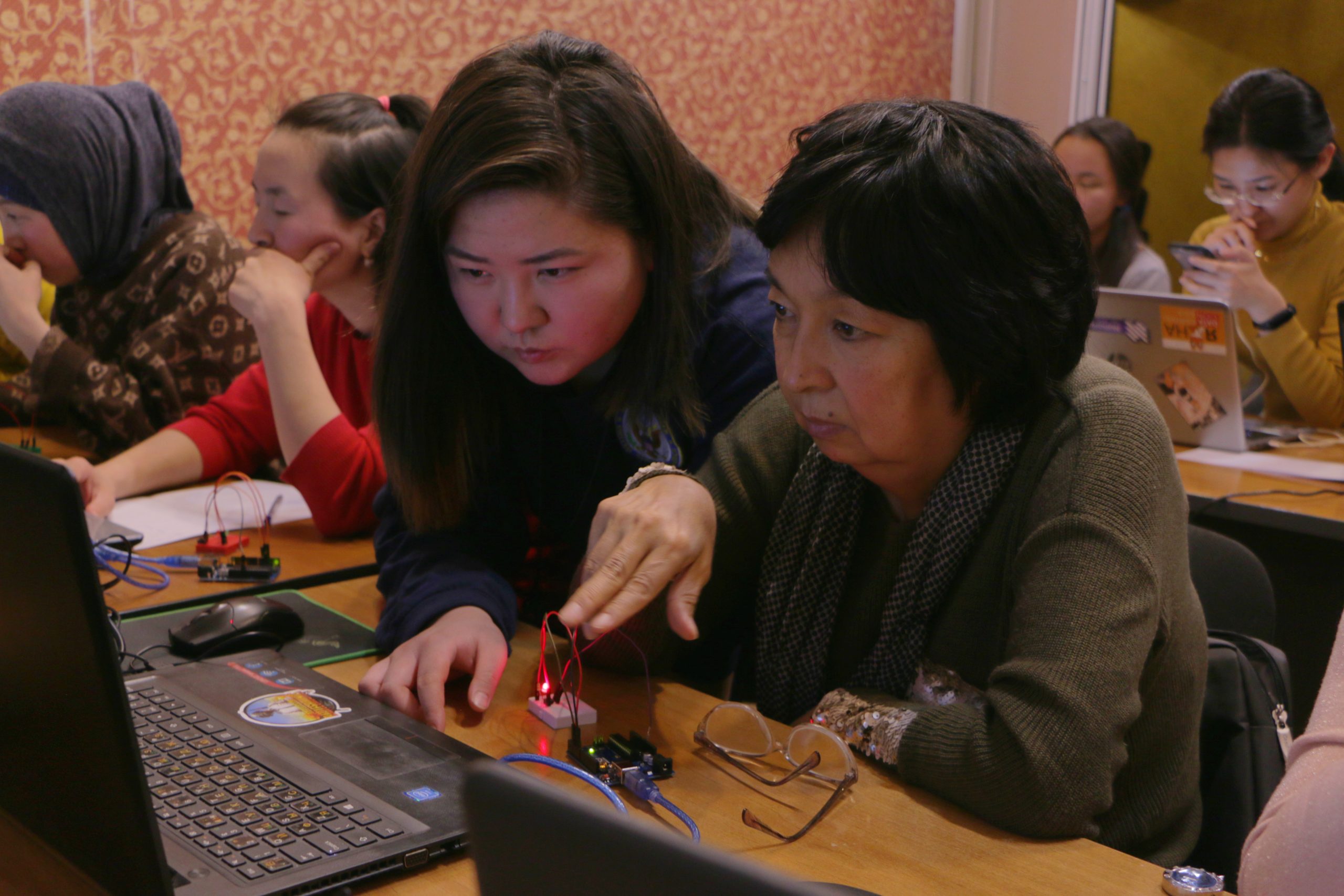
The all-female team, powering the Kyrgyz Space Program, is set on launching Kyrgyzstan’s first satellite into space one bolt and piece of code at a time. By doing this, they are creating inspiring role models that are changing how society traditionally views women’s roles in a country where only 1 in 3 girls have computer literacy skills. [3] If that isn’t enough, they are also offering programming and 3D modeling courses to encourage girls and women to foray into the fantastic world of STEM.
All across Europe and Central Asia, we’re seeing a boom in nonprofits and startups working to bridge the gender digital divide, enabling women and girls to equally access and use digital technologies and increase women’s active participation in digitally transformed economies and STEM.
For example, Connect-Ed, a nonprofit in Kazakhstan, is developing a platform to crowdsource IT equipment for children who need it, coupling it with an offer for digital literacy courses, while in Georgia, the Business and Technology University has launched a 500 Women in Tech programme to train women across the country in front-end and back-end, UI/UX, graphic design, software testing, digital marketing and more.
Over in Armenia, Linaster, a promising startup, is developing a virtual assistant training agency to assist those that cannot work full time with unique digital skills to become competitive on the labor market. In Uzbekistan and Tajikistan, the Innovation, Technology and Strategy Center and New Algorithm have launched initiatives to equip girls and women with digital literacy and coding skills.
Other BOOST participants are bent on helping women transition into new careers. Female Algorithm, a nonprofit based in Slovakia, provides women with opportunities for a career transition to tech or leadership positions via long-term online education, internships, and hands-on project experience. In the last year alone, they’ve trained close to 4000 people, and are currently developing Code4Purpose, where women develop websites for local nonprofits to cement their tech skills, with the help of experienced mentors.
The dawn of the healthtech revolution
FemTech, which was coined as a term just a couple of years back, largely refers to tech-enabled, consumer-centric solutions addressing women’s health. Some of our BOOST graduates are joining the FemTech revolution.
Spica technology, a SME based out of Kazakhstan, is developing an mHealth solution called Clarity helping women take control of their health. The app improves women’s access to healthcare and diagnosis by allowing them to tap into a verified group of international obstetricians and gynaecologists which provide collective medical opinions to improve the patient’s and their doctor’s diagnosis journey. In addition to that, Clarity also provides virtual sexual health news & resources to help women make informed decision and choices.
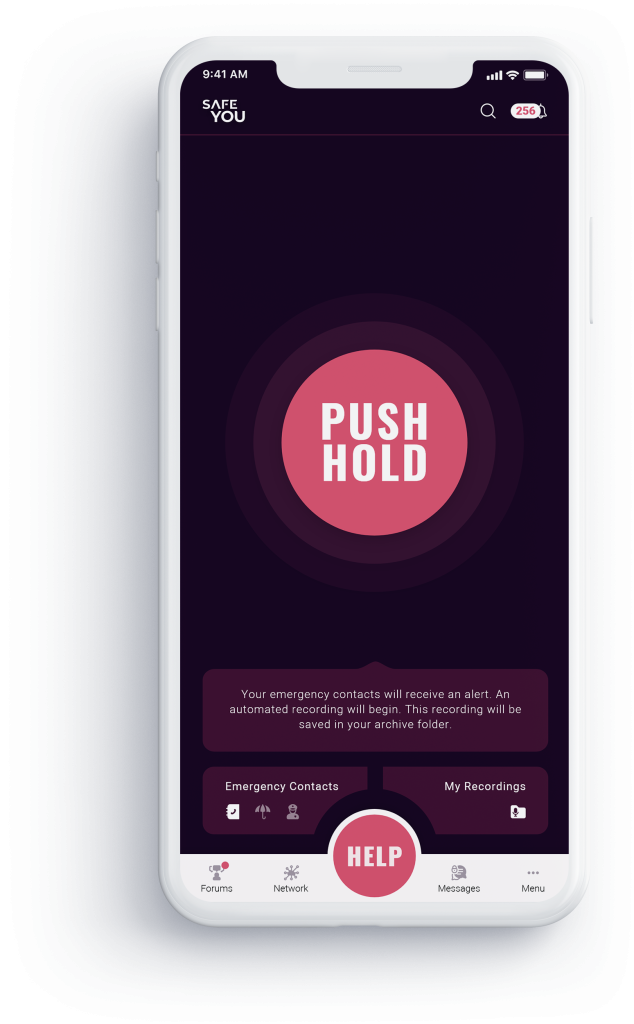
Another important solution to emerge from the BOOST cohort is Safe YOU, a mobile app and multi-stakeholder digital platform that aims to prevent and combat violence against women and girls. The Safe YOU app, developed by the Impact Innovation Institute, a social enterprise in Armenia, has three main functions: an emergency help function, discussion forums where women can consult professionals (psychologists, lawyers, social workers, etc), and a database of helpful contacts in the user’s location. In addition, Safe YOU collects vital aggregated data on gender-based violence, which is used to inform policy- and decision-making.
While most solutions categorized as FemTech involve technology, there are also nondigital consumer products harnessing materials science innovations to improve women’s lives. Onwa, a menstrual health startup in Serbia, is transforming period care in the country by introducing affordable and comfortable period underwear, using innovative and sustainable materials that absorb period blood and eliminate humidity.
A collective approach to solving challenges affecting women & girls
Our 2022 cohort of innovators are passionate about creating lasting change and equality for women and girls in the region and beyond. But no one can do this on their own, and too many organizations are working in isolation from one another.
BOOST brought together the changemakers in the region in one digital classroom to break these silos, which is key to achieving the UN Sustainable Development Goals by 2030 and a core component of UNDP’s 2022-25 Strategic Plan. The 17 quite different goals are interconnected, and systems change is too complex for any actor to tackle alone, requiring broad cross-sector exchanges and collaborations.
BOOST is an experimentarium where participants mix with startups, enterprises, universities and nonprofits to learn about the issues each one of them is tackling and how they are doing it. It is a journey through which they learn, exchange ideas and insights and look at the broader needs of their target groups to see beyond silos and think in systems.
The outcome is a collective portfolio of powerful interventions across multiple sectors to benefit the lives of millions of girls and women in the region. Stay tuned as we announce the winners in our BOOST Women Innovators programme!
Boosting innovators in our society wouldn’t be possible without the immense support of the Ministry of Finance of the Slovak Republic, a long-standing UNDP partner, and Koç Holding. BOOST launched the Women Innovators programme with a special track in Europe & Central Asia for startups, nonprofits and academic institutions, in partnership with the Ministry of Finance of the Slovak Republic, to leverage the power of innovation and technology to advance gender equality in the region.
Powered by UNDP Europe and Central Asia, BOOST announces that the 2022 Women Innovators champion in Turkey is Hub21, a women-led startup building a new way to help young people master tech skills via an online platform for teachers, students and parents. BOOST is a regional acceleration programme for social impact innovation, financed and supported by Koç Holding and the Ministry of Finance of the Slovak Republic.
BOOST launched the Women Innovators programme with a special track in Turkey, in partnership with Koç Holding and implementing partner Koç University Entrepreneurship Research Center (KWORKS), to close the gender gap in innovation and entrepreneurship and accelerate innovative ideas led by women in any industry that leverage the power of technology.
Hub21 was awarded US$10,000 in equity-free capital after being shortlisted to participate in BOOST’s pitch battle, during which eight finalists pitched their startups and innovations in front of a five-member jury panel, consisting of representatives from UNDP global, regional and country offices, Koç Holding and KWORKS.
Driven by a stellar team, Hub21 is an online platform that aims to get more young people between the ages of 7 and 17 interested in science, technology, engineering, and mathematics (STEM) and prepared for our digital future. They offer personalized, self-paced courses using an adaptive learning methodology that responds to the way students learn and one-on-one or small group live online video sessions with tutors from top universities. What is more, Hub21 provides a dedicated, free-of-charge tech programme for girls from economically underserved regions in Turkey, which they plan to expand with the awarded grant to reduce the gender gap in STEM.
On the road to scaling, Hub21 is moving into the European and MENA online education markets, increasing their impact on the gender equality and quality education Sustainable Development Goals. Their innovative and effective execution strategy received high points from the jury – from introducing adaptive learning solutions using AI to creating a teacher marketplace by engaging graduate and postgraduate students to lead their classes.
A total of 65 startups in Turkey applied for the BOOST Women Innovators acceleration programme. The programme is an intensive 12-week online acceleration journey with a mission to boost women-led startups with powerful innovations that can positively impact our future and strengthen the startup ecosystem of women innovators.
Participants gained access to world-class trainings and mentorship to develop, reimagine and scale their impact innovations. During the programme, UNDP worked closely with KWORKS, ImpactAIM, Startup Grind and the Behavioural Insights Team to provide modules on business acceleration, impact measurement and management, and behavioral insights, helping startups to develop their solutions.
UNDP and partners congratulate all the selected participants for successfully completing the BOOST acceleration programme:
- Arimars Teknoloji
- Hub21
- Mapla Biotechnology
- Mimarlık Robotu
- Nuvio
- Rebee Mobile Application
- Searover Robotic and Software
- Sumatrix Biotech
- Zetamatrix
55 regional champions will take part in BOOST’s new cohort to advance gender equality in Europe and Central Asia
UNDP Europe and Central Asia’s BOOST, a regional acceleration programme for social impact innovation, financed and supported by Koç Holding and the Ministry of Finance of the Slovak Republic, has selected a total of 55 champions to take part in its Women Innovators program. The program amplifies, bridges, and connects innovators across the region with innovative ideas that leverage the power of technology to support women and girls to thrive and advance in the digital economy.
Launched in collaboration with public and private partners, BOOST: Women Innovators is a region-wide open call for innovations in four key thematic areas: women in data, women and digital access & use, women in the digital economy & STEM, and women driving tech innovation. As digital transformation and new technologies propel us forward, the initiative aims to close the widening gender digital divide, impacting women’s socio-economic opportunities in a wide range of fields.
“The response to our innovation call was truly remarkable. The ingenuity and great impact potential shown in the innovations we received confirms our conviction – our region is full of changemakers, and we need to amplify, bridge, and connect them. We are grateful to our Evaluation Board, comprised of core partners and innovation experts, for selecting a promising new cohort to join the BOOST community. We look forward to seeing how these innovations advance gender equality across our region”, said Rikard Sjöstrand, BOOST Lead at UNDP.
Launched in February 2022, the call received nearly 300 applications from women-led startups, SMEs, non-profits and academic institutions from more than 20 countries and territories in Europe and Central Asia.
The program consists of two tracks:
- Track 1 is for women-led organizations in Europe and Central Asia working on tech innovations to bridge the gender digital divide. Track 1 received 223 applications, of which 45 were selected (22 startups, 3 SMEs, 5 social enterprises, 10 nonprofits, and 2 academic institutions). The selected participants are:
ACircPack; AppsMakers; Arrowstone Flowers; Art Pioneri; B&M Accounting Solution; BizBIR; Business and Technology University; Centre for Science and Innovation for Development; Connect-Ed Kazakhstan; COR – don’t skip it; Digital Innovation Academy; Dreamups Innovation and Entrepreneurship Accelerator; Empress; Envicon; Female algorithm; Film-U-Box and FilmStar Maker; ForSet; Gaia; Girlopolis; Girls Power Fund; Goguzo; Hajde Folim; Her Guide; IdealHub Innovation and Technology Center; Innovation, Technology and Strategy Center; Izzi; Kyrgyz Space Program Public Fund Kloop Media; LLC New Algorithm; MediCare Box; MedPoint Technologies; MUGALIM – Online school for teachers; OK TOWN; Onwa; Outsourcing contact center “MyCall”; Safe YOU (Impact Innovations Institute); Space SyntaKs; Spica Technology; Tech4Impact NGO; UNEW; upway; VESNA; Virtual Story; Virtual Team LLC; Visit village; Weincrypto - Track 2 is for women-led startups, registered in Turkey, working on innovations in any industry. Track 2 received 65 applications, of which 10 were selected. The selected participants are:
Arimars Teknoloji; Hub21; Mapla Biotechnology; Mimarlık Robotu; Nuvio; Rebee Mobile Application; Searover Robotic and Software; Sumatrix Biotech; UXapply; Zetamatrix
The 55 innovators from across Europe and Central Asia will join BOOST: Women Innovators to access world-class trainings and mentorship to develop, reimagine and scale their impact innovations – and compete for US$10,000 in equity-free capital. The innovations will become part of a region-wide portfolio that lays the groundwork for a better and inclusive future.
Background:
BOOST is a regional acceleration program for sustainable impact innovation, powered by UNDP Europe and Central Asia. Initially launched in 2020 in response to the socioeconomic impact of the COVID-19 pandemic, BOOST seeks to boost social innovators across the region to accelerate the 2030 Agenda for Sustainable Development.
BOOST is financed and supported by partners across the region and beyond, including Koç Holding and the Ministry of Finance of the Slovak Republic. BOOST is also working with STEM4ALL, Startup Grind, KWORKS, ImpactAIM and Digital X amongst a growing list of partners, to deliver an impactful programme for BOOST’s new cohort.
In 2022 living solely offline seems like something from a bygone era. Connectivity and technology have indubitably become integral parts of most people’s daily lives. As governments around the globe imposed lockdowns and movement restrictions to curb COVID-19 infections, businesses and organizations have more swiftly than ever adapted to reinvent themselves and survive. To do so, technology was fundamental.
Beyond the heavy toll on the global economy, public health and policymaking, COVID-19 worsened social, gender and racial inequality. The progress made thus far towards closing the gender gap has been obstructed – in 2020 it was predicted it would take 99.5 years to achieve gender equality, and in 2021 this had increased by one generation to 135.6 years.
In this critical moment, UNDP has embarked on a new Strategic Plan to accelerate the achievement of the 2030 Agenda and build a more equitable future. Strengthening gender equality enablers is at the core of these efforts – a more inclusive economic system, a more equal social contract and changing gender norms.
In Eastern Europe and Central Asia, there are some worrying signs of regression – the gender gap in access to technology and digital inclusion is widening, in contrast with the global trend. At first glance, digitalization appears to be democratic, yet when we look closer technologies and the internet are not accessible to all people, and gendered differences in digital access, participation in the digital economy, and visibility in data are marked. Across Europe and Central Asia more than 60 million women have no access to mobile internet and so are more likely than men to miss out on learning and economic opportunities.
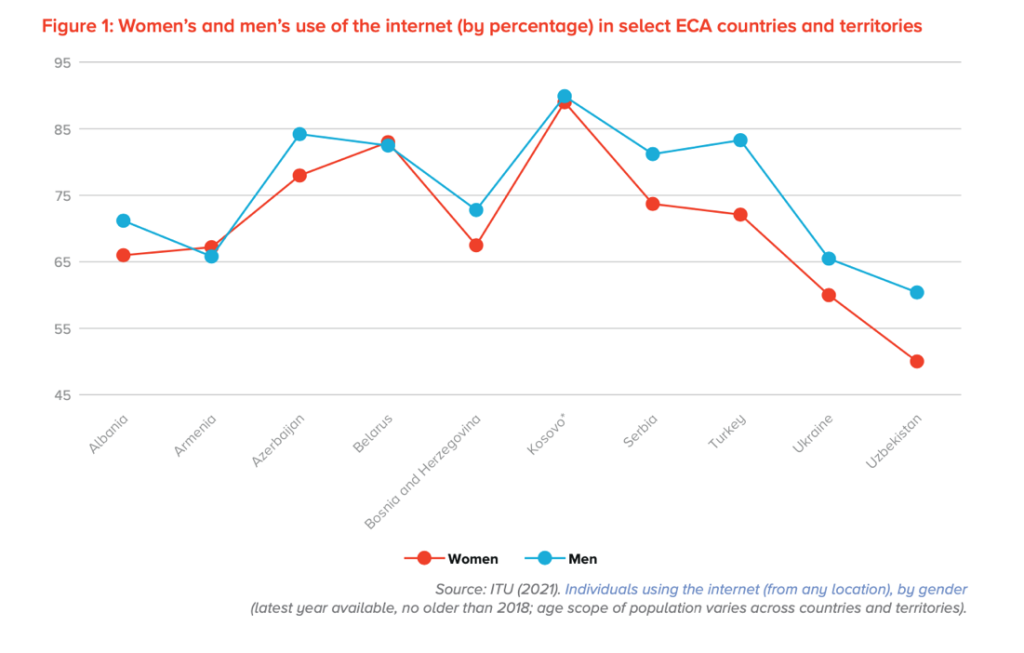
Structural and economic issues faced by women is a primary barrier to accessing technological tools and improving digital literacy. As a result of the pandemic, women are more at risk of losing their jobs as they are more likely to be working in the service sector. In addition, girls and women are often limited by domestic chores and unpaid work responsibilities, much of which fall along gendered lines. Finally being less likely to have advanced ICT skills means that women also face more difficulties adapting to the changing circumstances. This obstructs their journey to pursuing online learning or work from home, which has become the mainstay of the “new normal.”
Today’s digital transformation opens avenues for women’s economic and social empowerment and can be used to boost gender equality if we are strategic about it. Digitalization potentially supports women in myriad of ways – from earning income and growing employment and networking prospects to accessing knowledge and information. Thus, closing the digital gender gap is an ever more urgent priority. Many essential goods and services are now accessible online; and digital skills are required in people’s businesses and daily lives. Countries that had already set out on a digital transformation path, e.g. by digitizing their public employment services, have responded more promptly and efficiently to COVID- 19 challenges that we continue to face.
Investing in digitalization and promoting digital inclusion is crucial to provide remote support and access to services to professionals and customers. Powered by UNDP’s Innovation Team in Europe and Central Asia, and facilitated by leading international experts in the field of business acceleration and impact investment, the first round of BOOST, a regional acceleration program, scouted, supported and helped scale 37 innovations in the areas of digitalization, low-touch economy, and wellbeing. An excellent example is DokTok, accelerating the transition to remote working for health professionals and advancing the use of independent-work platforms. Such flexible telework forms undoubtedly have a positive impact, particularly for women workers and entrepreneurs, who could benefit from these platforms’ flexibility and reach.
As demonstrated by BOOST’s first cohort, technology can be a vector for economic growth and societal progress, including gender equality. Now, how can we create an enabling ecosystem of innovators to boost women’s digital access, participation in the digital economy, and visibility in data? With the generous support from Koç Holding and the Slovak Ministry of Finance, UNDP launched BOOST: Women Innovators to address these challenges. The program aims to support women innovators in the start-up, nonprofit and academic ecosystems driving change across a variety of fields, while at the same time accelerate innovations that give visibility to women in data, promote women’s digital access and use, and propel more women to join the digital economy and STEM.
Through an intense, 16-week virtual acceleration bootcamp, BOOST will connect women-led startups and businesses, non-profits and academic institutions from across the region leading gender equality or tech-driven innovations with financing, resources, training and mentorship. BOOST, uniquely rooted in systems thinking, seeks to generate a coherent portfolio of innovations, make sense of the system in which they act, reveal inherent yet unseen interconnections, and generate actionable intelligence to accelerate system transformation.
Aren’t there enough business and CSO acceleration programs for women out there already? Absolutely not. Firstly, women’s entrepreneurial opportunities in the region remain scarce – only 16% of founders in the ICT sector are women in South Caucasus and Western CIS. What’s more, data shows that even when women are tech leaders, innovators, and entrepreneurs, they receive much less investments than men. Globally, only 2.3% of venture capital funds went to women startups in 2020. At the same time, we see from studies that women-led businesses have higher revenues, while greater gender equality in teams leads to higher innovation. Women entrepreneurs and women pioneering cutting-edge technologies could also further inspire and pave the way for other girls and women throughout the region to fulfil their potential, pursue education in STEM-fields, and support informal businesses to shift to the formal sector and expand.
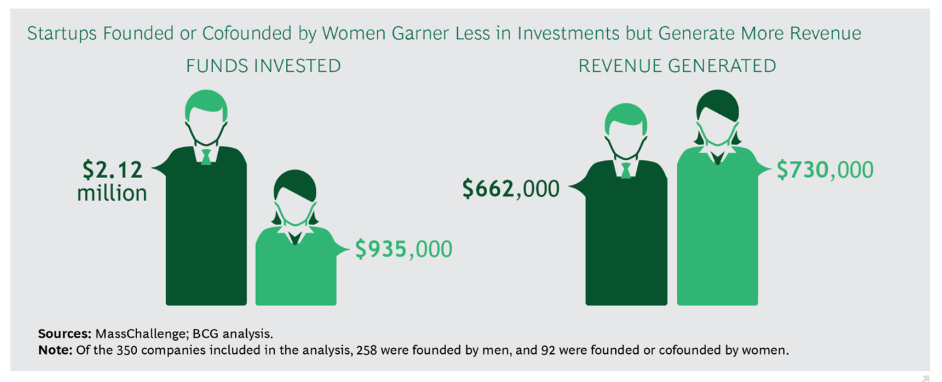
UNDP Europe and Central Asia works with partners such as STEM4ALL to build a gender-responsive digital ecosystem through several streams, bringing together different actors to create enabling ecosystems, learn and accelerate the closing of the gender gap. BOOST Vol. 2 supports these efforts, innovating with women for women, with the firm belief that bridging the gender digital divide while supporting tech innovation is essential for building resilient and inclusive realities.
Join BOOST: Women Innovators – apply before March 15 (deadline extended)!
Image credit: Cecilia Castelli for TheGreats.co
UNDP announced the five organizations and startups that have been selected as the winners of the 2020 BOOST Innovation Challenge Fund. The winning participants are engaged in developing innovative solutions that tackle some of the most pressing development challenges in the region – from providing online healthcare services to building a regional, digital educational platform for computer science.
Winners of the BOOST Innovation Challenge Fund:
The Innovation Challenge Fund was hosted by UNDP and the Slovak Ministry of Finance, a long-standing partner committed to harnessing the potential of the data revolution, new technologies and other innovations for improved governance and sustainable development in the region. The core principle was to support nonprofit organizations, startups, and academic institutions that are pushing the frontier by using innovative approaches in three key areas to support COVID-19 recovery: digitalization, wellbeing, and low-touch economies.
Out of 60 received applications for the Innovation Challenge Fund, 15 were selected to participate in BOOST, which is an intensive six-month online program centered around online learning tracks and mentorship, including 1-on-1 sessions with field experts. UNDP worked closely with Startup Grind and ImpactAim to provide modules on digital transformation and tech, and business and impact, supporting selected applicants based on their needs.
After carefully reviewing the selected projects, the BOOST jury selected the winning solutions, each of which will receive $15,000 to further develop their solutions and enhance regional collaboration in addressing the crisis and other development challenges.
Full list of selected participants that successfully completed the BOOST regional acceleration program:
- PhaseGrowth
- NGO State Watch / Market Research Tool
- DokTok
- COMMON Store
- H2i Balkans
- De Facto Consultancy
- Rights and Freedoms of Turkmen Citizens
- Flourish
- Faculty for Montenegrin Language and Literature – FCJK
- Yesil Science
- Civic Alliance
- Bioscope
- Zombies
- Simple MM
- 4Future.ai