Category: Digital transformation and emerging tech
The following piece was first published on the UN Development Programme and was originally published on September 30, 2019.
In the blockbuster science fiction movie ‘The Matrix’, after Neo takes the red pill offered by Morpheus, he not only learns the truth about reality, he also discovers how an ecological disaster has led to humans being harvested and enslaved by machines. At UNDP we wondered, what if we ‘matrix’ our way into tackling climate change, using emerging technologies to create urgency and kick start political action. After all, we’re in uncharted territory, or as writer James Bridle in ‘The New Dark Age’ calls it ‘peak knowledge.’
We went straight to the source — to Magic Leap, whose Senior Vice President for Creative Strategy, John Gaeta, created all the special effects in ‘The Matrix’. What did we learn?
Several studies indicate that being able to experience the impact of climate change allows people to connect emotionally with the problems and make them more likely to act on that feeling. We deployed this strategy when we were thinking through what the future of development might look like (check out our imaginary future of development organization — Mantis Systems — that we built with Nesta, SuperFlux and Bond). Our colleagues in the United Arab Emirates government went with similar tactics to create a visceral experience of air pollution by getting staff to breathe in air from 2050 that contained pollutants that would build in over 30+ years in case of business as usual development scenario. Imagine what breathing that air felt like, and what you might want to do to avoid it!
Spatial computing takes this one — well maybe several hundred — steps further. So what is it? Combine virtual, mixed and augmented reality and voila! you get emerging technology that brings information from 2D screens into a 3D space allowing you to interact directly with the digital world. It is a little bit like having an x-ray view into our world with the ability to play with it. On some level, it is the purest form to date of blending technology into the world.
If the definition sounds too techy, maybe a few examples might help. In some cases, this allows farmers to manipulate their physical environment (their farms) as they are affected by weather in real time in order to increase crop yields and reduce costs. Or consider the Hydrous project that gave public servants from Palau a visceral experience of the effects of climate change on the underwater world, which prompted them to do more to protect its coral reef.

Spatial computing can help reduce skill gap and errors in production by applying mixed reality to training employees without advanced technical experience or specialized equipment. It could also increase perception, engagement and overall experience of the world for the children with autism. And for one of our more favorite non-development applications of the technology, check out the experience of the speech from William Shakespeare’s ‘As You Like’ — as if you’re in the same room.
Working with Magic Leap, the German Space Agency and BadVR, we created an experiential visualization, Climate Change Spares No One, that brings to life visceral implications of the changing climate on the delta cities. Our intention is to enable anyone to feel, sense and see what life in +2 celsius world is like. The interactive experience was showcased during the 2019 Social Good Summit and during the UN General Assembly UN Action Zone.
We hope this is just a start of our partnership with emerging technology companies whose work can potentially increase the urgency of the scale and scope of climate emergency into our day to day lives, and inspire bold action to forestall the catastrophy the world is likely to experience if we don’t act.
This blog was co-written by UNDP’s Milica Begovic, Lejla Sadiku, Marina Petrovic, Robert Pasicko and Cassie Flynn, and from Magic Leap’s Andy Lanning, Prudence Fenton, Jad Madouchy, Suzanne Borders, Austin Grossman, Naomi Augustine-Yee, Graeme Devine and Quiddale O’Sullivan.
©Valery Brozhinsky/Shutterstock.com
The following piece was first published on the UNDP Europe and Central Asia and was originally published on May 9, 2019.
This blog series takes a look at the new landscape of financing for development, the focus of our upcoming Istanbul Development Dialogues, an annual a global development forum where policy-makers, business leaders, and experts discuss issues of our time.
Islamic finance, a method of financial system which complies with sharia law and forbids charging interest, has become a growing source of funding for development. Because inclusion, women’s empowerment, fairness, accountability and sustainability are embedded in its principles, if offers a natural connection with the Sustainable Development Goals (SDGs).
UNDP has been exploring ways to increase Islamic finance’s impact by linking Indonesia and Turkey together, through UNDP Alternative Finance Lab and UNDP Innovative Financing Lab that has been helping countries explore new funding opportunities.
We wondered: How can Islamic finance be designed to better serve the SDGs in Europe, Asia and beyond?
Here are the key findings of our research:
- There are five Islamic financial instruments with high potential: sukuk (the equivalent of bonds), microfinance, waqf (charitable endowment), zakat (an obligatory form of giving) and corporate social responsibility.
- These can be mixed with microfinance, cryptocurrencies and other modern mechanisms. Sukuk transactions have been using blockchain since 2017.
- A total of 37 institutions from Indonesia, Turkey and other countries have been identified as potential partners. In Indonesia, these include micro-waqf bank, corporate social responsibility funds and other institutions handling social crowdfunding or green sukuk. In Turkey, we found a vibrant ecosystem of Islamic crowdfunding start-ups and SMEs. Some were funding refugees with zakat and blockchain technology, while others were financing Ramadan packages with zakat and issuing socially responsible investment sukuk.
- There are significant differences between regions and local contexts: for instance, different legal jurisdiction may affect how institutions work. Still, Islamic finance tools and instruments are applicable in many parts of the world, which means that there is a treasure trove of lessons to share from different countries.
- Beyond its convening role, UNDP can help steer their efforts, supporting coordination and design, and helping iron out technical issues.
There is much more research to be done in countries such as Malaysia, Saudi Arabia, Bahrain and Qatar. We have no doubt that tapping into the enormous potential of Islamic finance and blending it with other sources of financing will scale up impact and accelerate progress in Muslim-majority countries between now and 2030. It’s a win-win situation for Islamic banking institutions, the private sector and international development organizations.
UNDP Indonesia, through the Innovative Financing Lab, has been working on Islamic finance since 2016. It has extensive experience with testing different Islamic finance instruments, such as “zakat for SDGs” and the “waqf digital platform” to encourage cash waqf contributions and assisting the Government of Indonesia in the issuance of the first sovereign green sukuk.
Under the overall theme of “Putting money to work for sustainable development”, the Istanbul Development Dialogues, taking place 27-28 May 2019, will seek to tackle some of these issues.
This article is a part of blog series that looks at the new landscape of financing for development, the focus of our upcoming Istanbul Development Dialogues, an annual global development forum where policy-makers, business leaders, and experts discuss issues of our time.
The following piece was first published on the AltFinLab blog and was originally published on March 22, 2019.
The United Nations Development Programme (UNDP), together with mayors from eight countries – Moldova, Serbia, Georgia, Tajikistan, Croatia, Somalia, Lebanon and Portugal – today launched a new initiative to boost financing for solar energy in cities across the world.
The Solar Mayors platform will connect cities around the topic of energy transition and production of solar energy in urban contexts. Functioning as an online community, the platform represents an opportunity for Mayors to learn about the latest trends in the industry, share best practices, and collectively promote citizen engagement.
The platform encourages peer-to-peer learning and cooperation with the private sector and NGOs, two factors recognized as important factors for success of solar projects in cities.
[blockquote author=”” link=”” target=”_blank”] With the dramatic decrease in costs that we have witnessed in the last ten years, bringing solar prices down by a factor of ten, it will be exciting to see more and more regions and cities embracing solar energy as a backbone of their development.
– Raffaele Rossi, Policy Analyst at SolarPower Europe[/blockquote]
Solar technology has only recently begun to take off globally. Until recently, high equipment costs, risky markets, lack of clear commitments at local levels and limited experience with bringing in financing have all proven to be major obstacles. As of 2018, only two percent of the world’s electrical energy is produced with solar, with over 50 percent of new installed capacities come from solar.
New financing models, such as the community funding models (crowdfunding, crowd-investment, energy cooperatives), energy service companies financed by savings (ESCO), and cryptocurrencies (such as SolarCoin) are widely expected to help increase solar energy production by bringing financing from impact investors at lower interest rates. Active participation of local administrations, mayors, citizens and the private sector can accelerate generation and use of solar energy in cities.
At the launch ceremony, the mayors will conclude and sign the Solar Mayors Charter, resolving to promote solar energy installations in their cities.
The initiative is launched by the United Nations Development Programme, together with the Citizenergy platform, the European aggregator platform of all sustainable energy crowdfunding platforms and Energy Cities Europe’s largest Association of local authorities for energy transition.
Portugal was chosen as host for the kick-off event due to the country’s international reputation as a renewable energy leader and for being home to the local platform GoParity, which runs the Citizenergy aggregator together with the UNDP AltFinLab.
The initiative is co-funded by the UNDP’s Global Innovation Facility, and is initiated by UNDP Moldova, UNDP AltFinLab and Citizenergy.
Contacts:
Dumitru Vasilescu, UNDP Moldova dumitru.vasilescu@undp.org (+373) 60056 556
Robert Pasicko, UNDP AltFinLab robert.pasicko@undp.org (+385) 98 678 234
Nuno Brito Jorge, Citizenergy and GoParity nunobj@goparity.com (+351) 918 919 600
The following piece was first published on the AltFinLab blog and was originally published on February 20, 2019.
Technology Innovation and Entrepreneurship Center (TIEC), United Nations Development Programme in Egypt (UNDP Egypt) and the UNDP Alternative Finance Lab (AltFinLab) partnered together to foster crowdfunding in Egypt during the week of 3rd to the 7th February 2019. In 2017, $65 billion was raised on global crowdfunding platforms and there is an upward trend in developing countries in adopting crowdfunding as a source of finance. This is particularly interesting for Egyptian SMEs, as only 50% of SMEs in the formal sector currently engage with banks. Crowdfunding lowers barriers of access to finance and matches demand and supply of finance as it allows individuals to make contributions and investments directly to projects they are passionate about. Egypt does not make sufficient use of such funding and this weeklong program was set to introduce more widely and foster this way of funding.
Randa Aboul-Hosn, UNDP Resident Representative a.i. in Egypt outlined the importance of crowdfunding for Egypt development, explaining: “Budding energetic young SMEs of Egypt present almost unlimited potential for economic growth and for creative solutions to social and environmental challenges, but they have limited access to capital. Crowdfunding is one important innovative way to bridge this gap. TIEC, UNDP Egypt and UNDP AltFinLab partnered for Egypt to stimulate the crowdfunding ecosystem”.
[blockquote author=”” link=”” target=”_blank”]Crowdfunding is a very impactful tool for accessing finance that is not fully utilized in Egypt yet. Through the crowd funding academy, we hope to raise awareness about it and also develop skills in supporting entities to help startups build crowdfunding campaigns.
– Rasha Tantawi, Head of Entrepreneurship and Business Support at TIEC[/blockquote]
The week kicked off with a national roundtable, hosted by the American Chamber of Commerce, on the challenges and opportunities of crowdfunding in Egypt. The roundtable brought together high-level representatives from the banking sector, entrepreneurs, investors and enterprise support organizations. Issues raised included different regulatory and policy challenges facing the entrepreneurial ecosystem when planning and executing crowdfunding campaigns to be able to collect and allocate funds safely, the need to create an enabling environment for innovative models to emerge, and an emphasis on financial literacy/awareness to improve penetrability rates as currently only around 10% of the Egyptian population have a bank account.
To drive momentum in the area of advocacy and capacity development for crowdfunding campaigns, a one-day Training of Trainers (ToT) was held on the 4th of February at TIEC’s premises, targeting supporting entities working closely with startups and providing them with the know-how to support their startups with accessing alternative finance, and specifically to develop crowdfunding campaigns.
As a third phase for this crowdfunding week, the trainers were then immediately pulled in for support in a three-day Crowdfunding Academy (CFA) workshop led by the AltFinLab, held at the UNDP premises and that was delivered to around 10 startups. The CFA introduced crowdfunding as an impact investment tool, and supported teams with tools and resources that they can leverage to jumpstart their own crowdfunding campaigns. The CFA covered topics related to the design, development and launch of a crowdfunding campaign: from developing a concept and drafting a business plan, to designing and implementing a resource mobilization campaign, leveraging storytelling and graphic design skills. UNDP will then work closely with the startups on the design and launch of their campaigns.
This initiative takes place within the context of UNDP Egypt’s Impact Investment Programme, and the global UNDP programme “SDG Impact”. Both programmes aim to unlock investment for the Sustainable Development Goals by working with the private sector on how best to invest in enterprises and/or investment funds in ways that help achieve the SDGs while delivering on their profit-making bottom line. As it stands, there is an annual shortfall in funding to achieve the SDGs of USD2.5 trillion.
In 2018 the UNDP Innovation Facility issued a Call for Proposals to promote development through the innovative use of Artificial Intelligence, big data, behavioural insights and impact financing. A record of more than 195 proposals were received, and 29 winners chosen from 35 countries. UNDP Lebanon, UNDP AltFinLab and its partners won with a proposal which will help to reinvigorate the country’s ancient cedar forests.
The Syria crisis has placed a great strain on its immediate neighbour Lebanon. The country of just over six million has taken in more than a million refugees in the past seven years. Its infrastructure, public finances, and environment are suffering as a result, and Lebanon doesn’t have the money to cope. According to the World Bank, in 2015 alone Lebanon lost $US5.6 billion—more than 11 percent of its GDP.
The diaspora has stepped in to help.
The estimated 10 million Lebanese who live abroad play a vital role in the country’s economic health. According to the Ministry of Foreign Affairs and Emigrants, they sent home US$7.9 billion in 2017.
Helping ‘home’ from abroad
UNDP is making it easier for the Lebanese diaspora to participate in programmes that benefit the country.
Since its launch in 2009, Live Lebanon has implemented 67 projects and raised US$4.2 million from Lebanese communities abroad. From education to environment, it has tapped into various aspects of society through development and awareness projects.
Ensa Joura, one of Live Lebanon’s most successful campaigns, fixed more than 6,000 potholes reported by citizens around Lebanon and reduced the number of road accidents. Live Lebanon also launched volunteering programmes to clean beaches, seas, waterfalls, rivers, and forests, engaging more than 5,000 volunteers in a single year. Recently, it has been working on solving a protracted problem: 25 million hunting cartridges are dropped in forests every year, causing fires, damaging crops, and polluting groundwater. The team, together with the support of university students, built a separating and recycling machine to help manage used cartridges. In the coming weeks, Live Lebanon will launch a Motor Ambulance project with Lebanese Civil Defense in the hopes of reducing the number of casualties from road accidents.
Matching crypto currency with cedar trees
To strengthen and broaden such development efforts, Live Lebanon continuously explores new ideas.
Now it’s expanding into alternative financing. Crowd investing will encourage more private funding and allow contributors to invest in a crypto currency called CedarCoin.
Backed by blockchain technology, CedarCoin will promote the reforestation and protection of Lebanon’s ancient cedar forests, the symbol of the country.
Mentioned in the Mesopotamian Epic of Gilgamesh, the forests were placed on the list of UNESCO World Heritage Sites in 1998.
The trees are slow growing and famously long-lived; they can survive for more than 1,000 years. They once thickly covered Lebanon’s mountains, but have suffered from extreme deforestation, and only small remnants of the original vast forests survive.
Planting new cedar trees will not only rebuild the once flourishing forests but will also provide promising opportunities for the economy as well as for agriculture and health. As the cedar tree represents Lebanon, replanting these trees will symbolize investing in the growth of the country.
Rewarding environmentally conscious behaviour
One CedarCoin will be assigned to a specific tree. For each tree planted, a CedarCoin will be distributed to its investor and to the communities hosting the trees; encouraging reforestation and rewarding environmentally-conscious behaviour. CedarCoin will raise money to buy more trees and finance replanting programmes.
In future, CedarCoin owners will be able to ‘adopt’ a specific tree, and see its location and GPS coordinates.
CedarCoin will also be used to promote solar photovoltaic technology—allowing supporters to invest in solar panels to replace carbon-generated power. Investors will be paid in CedarCoins equal to the electricity and the income the panels generate.
Live Lebanon’s mobile app, Lebanon Connect, will be expanded to enable direct contributions to crowd investing campaigns. Participants will be able to buy CedarCoins through digital wallets such as Lykke, a Swiss-based free exchange global marketplace.
For as little as US$20, Lebanese expatriates will be able to digitally connect to their home country as well as to a community of investors and public and private sector organizations, and ensure that the trees that have stood as the symbol of their country for thousands of years have a healthy future.
Read original article.
Who can imagine Valentine’s Day without bon-bons, or Easter without chocolate eggs? Yet generations-old cocoa farming businesses are on the verge of collapse in the Amazon because cocoa farmers don’t receive fair pay for their work. Using blockchain technology, the United Nations Development Programme in Ecuador, AltFinLab and Amsterdam’s FairChain Foundation are developing one of the world’s first blockchain shared-value chocolate bars.
Best known as the technology behind cryptocurrencies, blockchain is still too new and cutting edge for many industries. However, as AltFinLab points out in its White Paper ‘The Future is Decentralized’, blockchain can potentially revolutionize the food industry. Blockchain data cannot be manipulated, it is fully traceable, and offers a highly trustworthy low-cost IT solution.
Can Willy Wonka save the Amazon?
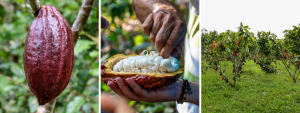
Being a cocoa farmer in Ecuador is both physically and economically difficult. Every day farmers must climb approximately an hour and a half in hot and humid or dusty conditions to their farms, so it isn’t surprising that fewer and fewer young people want to work on farms, as generations before them have done.
“Blockchain can document cocoa’s journey from Amazonian farmers to UK retail outlets,” says Guido van Staveren, CEO of FairChain, the company that wants to revolutionize farmers’ markets, pay a premium on their products and empower them. From monitoring hygiene in facilities and time stamping with pictures and videos, to tracking food across the entire supply chain via QR code and Radio Frequency Identification, unlike any other technology, blockchain offers transparency and authenticity to each product.
The partners are exploring the cost of implementing blockchain against savings and profits. They also want to better understand one of the main arguments against blockchain’s use in the food industry — that it’s impossible to track small amounts of food and record each bean individually.

What are we creating?
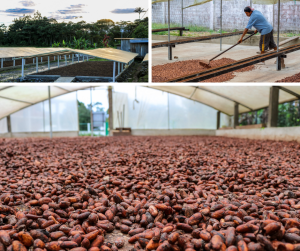
We are creating our first chocolate bar made with Ecuador’s most exclusive cocoa beans and sourced from sustainable farmers in the Ecuadorian Amazon. We have selected the APEOSAE association of farmers and will be working with them to develop a traceability platform.
The price of the chocolate bar will reflect its impact on the ecosystem and the real costs of production and export. The profits will be shared fairly, with farmers receiving a significantly greater share than through any other method.
“The farmers we are sourcing from practice zero deforestation. They do not cut trees to plant cocoa and they actively work to preserve the Amazon,” says Jose Nicolas Velez, a shareholder from Hoja Verde Company. Hoja Verde is also working with the Ecuadorian Arriba Nacional Fino de Aroma cocoa to promote the culture of bean-to-bar chocolate while improving cocoa producers’ quality of life.
Changing chocolate buyers’ behaviour
Thanks to blockchain, European customers will be able to trace every single ingredient.
“We truly believe that total traceability will positively influence European consumers’ purchasing behaviour, directly helping the livelihoods of thousands of farmers,” says Carlo Ruiz, head of UNDP Inclusive Economic Development Unit in Ecuador. “If we prove that consumers will pay the true price for the chocolate’s socio-economic and environmental impact, then we can replicate this model.”
One of the world’s least compromised chocolate bars will go on sale in the UK later this year.
Read more about the development potential of Blockchain.
Read original article.
The following piece was first published on the AltFinLab blog and was originally published on October 19, 2018.
With a financing gap of 2.5 billion dollars to implement the Sustainable Development Goals and two out of every six people in the world without access to a formal bank account, innovative financial mechanisms represent an alternative to close the financial gap and promote sustainable development.
This is said by the team of experts in alternative finance of the United Nations Development Program (UNDP), Marina Petrović and Robert Pasicko. They run the Alternative Finance Lab (AltFin Lab), an initiative created in 2016 to explore and take advantage of new financial technologies and mechanisms to access investment.
[blockquote author=”” link=”” target=”_blank”]Due to the increasingly changing world of today, governments, citizens and development actors must adapt quickly, understand better advanced technologies and learn how they can be used in the best way for the benefit of society in general.
– Robert Pasicko, UNDP Alternative Finance Lab[/blockquote]
The AltFin Lab experts visited Panama at the invitation of the UNDP Country Office. Their purpose is to learn about advances in innovation with practical cases, and thus be able to exchange with organizations that are already promoting blockchain, fintech and crowdfunding initiatives, such as the City of Knowledge, the Panamanian Chamber of Technology (CAPATEC) and the Authority for Government Innovation (AIG).
The UNDP AltFinLab team and the UNDP Environment and Sustainable Development area in Panama organized a session to exchange experiences, challenges and opportunities, as well as an interactive workshop led by UNDP experts, in which representatives of the UN Environment also participated. There were also participants from the Inter-American Development Bank (IDB), the World Bank (WB), the AIG, the Panama Canal Authority (ACP), and private sector initiatives that are currently innovating in Panama.
Working groups were formed and ideas with development potential were created to catalyze resources through new technologies. “It is expected that new technologies such as blockchain, crowdfunding, social impact bonds, among others, will change the global financial system, and the development issues will not remain immune to these trends”, Petrović sums up.
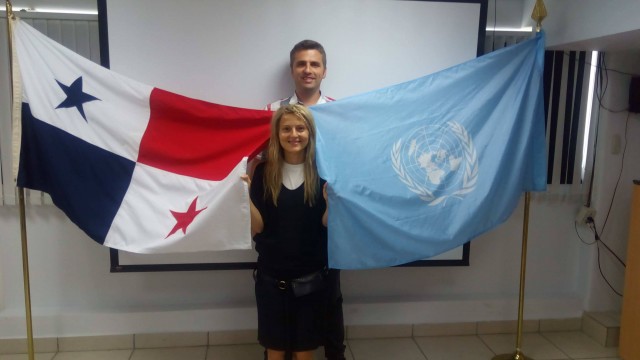
As an organization present in more than 170 countries and territories, UNDP aims to consolidate as an articulator between key stakeholders with needs to advance in sustainable development and change makers of technological innovation through multi-stakeholder platforms that allow concrete, agile and accessible solutions that help improve the quality of life of people.
[blockquote author=”” link=”” target=”_blank”]In a context of global financial challenges it is important that the organization develop a new generation of ideas tested in practice, easily adaptable to local contexts, to reach innovative financing strategies
– Jessica Young, National Officer for Environment and Sustainable Development, UNDP Panama[/blockquote]
In the same way, Marina Petrović, from the UNDP Innovation team, explains that “to create an innovative alternative financing strategy for UNDP, it is necessary to consolidate the expertise of the country offices. The easiest way would be to couple UNDP country offices with local partners and empower them for their own alternative financing projects”.
An example of alternative finance is the Development Impact Bonds, investment instruments based on payment by results. The infrastructure specialist of the World Bank, Inga Afanasieva, explains that under this type of financing, the reimbursement to investors depends on the achievement of specific social results, which translates the investment risk from the public to the private sector. According to the specialist, these bonds have the potential to improve the effectiveness of development aid and profitability by changing the focus towards the quality of implementation and the delivery of successful results.
[blockquote author=”” link=”” target=”_blank”]The crowdfunding is at the origin of all modern development platforms. When we turn to platforms, we direct the money where it is most needed. People can select the best ideas and vote for them. Governments and donors can channel the funds raised, financing projects that citizens support.
– Marina Petrovic, UNDP Alternative Finance Lab[/blockquote]
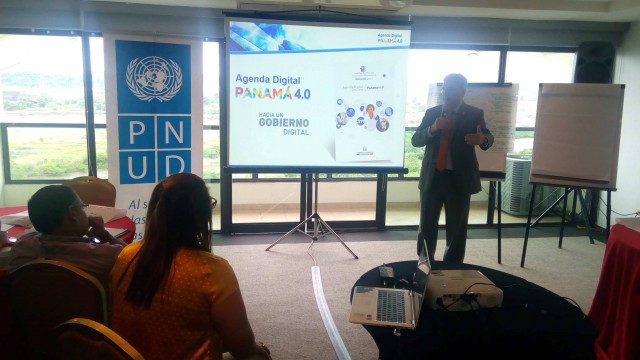
Since 2015, AltFin Lab has conducted 35 crowdfunding campaigns and managed to mobilize more than 1.2 million dollars. The field offices are working on campaigns valued at 7 million dollars, according to the experts.
The blockchain is one of the technologies with the greatest potential for development. It offers possible solutions to a wide range of issues, including the conservation of natural resources, economic growth and financial inclusion and security, areas in which UNDP has begun to work globally.
Participating institutions
Fundación Ciudad del Saber, Cámara Panameña de Tecnología (CAPATEC), la Autoridad para la Innovación Gubernamental (AIG), ONU Ambiente, Banco Interamericano de Desarrollo (BID), Banco Mundial (BM), la Autoridad para la Innovación Gubernamental (AIG), la Autoridad del Canal de Panamá (ACP), Municipio de Panamá, Banesco, Consejo Nacional Empresa Privada (CONEP), Corporación La Prensa, Fortesza and Redoxigen.
The following piece was first published on the AltFinLab blog and was originally published on July 23, 2018.
Hardly a day goes by in the development world without hearing the term “platform”. Like in the business world, it’s becoming harder for any development organization to provide a single service or product that will make broad impact. Airbnb doesn’t build homes, it creates a network that brings together host and guest.
Likewise, it’s impossible to eradicate poverty – a complex phenomenon – without connecting different areas of expertise and partners across a wide range of thematic issues. And it’s often the case that the people we’re trying to pull out of poverty are closer to the problem and entitled to have a say about the solution.
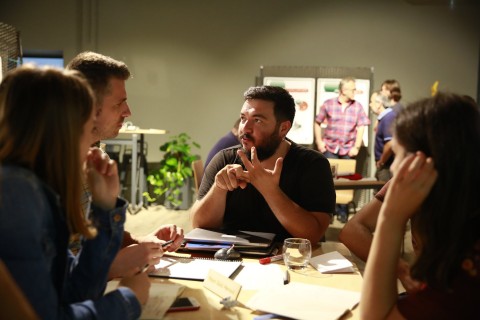
While building platforms doesn’t happen overnight, it’s highly likely you’re already working in ways that resemble that. Take crowdfunding: it helps diversify funding, involves target groups, and mobilizes experts from all walks of life. We’ve led 35 crowdfunding campaigns at UNDP since 2015 and mobilized US$1.2 million. Our field offices are working on US$7 million worth of campaigns. So here’s our take-away:
- Think broad. Turning old development methods on their head, crowdfunding enables development institutions to sit at the same table with everybody else –people from poor neighborhoods, governments, startups, banks and large donors, and of course crowdfunding marketplaces. To survive in the 21st century, development organizations must diversify their contacts with partners that are ready to research, test and scale up solutions to complex problems.
- Build your ecosystem. Get a better understanding of the national context. Study the legislation and bring on board national partners who already have local connections to crowds. The more partners are able to latch on and add value, the higher the chances of success. Think of yourself as the app store: when developers come in and launch their own apps, you’ve created a virtuous circle in which the parts bring exponentially more value into the whole.
- Link up with tech platforms. Through crowdfunding we’ve supported lots of UNDP tech-based platforms, like LiveLebanon.org, GreenCrowds in Ecuador, or YemenOurHome. We’re working with them to move away from online donations, towards building communities that can deliver long-term impact. It’s not enough just putting a “donate” button on your page. These online communities can be powerful starting points for continuing to rally investors and partners.
- Partner with cities to achieve quick wins. London is creating a city for all Londoners through crowdfunding. Madrid has its own crowdsourcing platform. We’re transferring these practices to some unlikely places like Somalia, working with the diaspora to help people in Mogadishu create revenue, and withstand violence and disaster.
- Go solar: it’s the ultimate platform initiative. It’s not development if it isn’t green. Funding solar is the ultimate way to hit multiple SDG targets. We teamed up with over 30 crowdfunding platforms to deliver Citizenergy, which helped invest € 40 million into clean energy. With UNDP Moldova and Sun Exchange, we are also developing a US$1 million solar plant using cryptocurrencies.
- Support small businesses – It’s hard for SMEs to get and repay their credit. But our experience in Ukraine, Bosnia and Herzegovina, Morocco and Turkey has shown that crowdfunding can be a great way to get new businesses off the ground. By the same token, development organizations should intensify their work to bring crowd-funders, businesses, third party verifiers and others together to make business more inclusive.
- Use new sources of financing. In the Muslim world, Zakat (donations) are worth 200 billion to 1 trillion. We’re now working with the Islamic Development Bank on a proposal to fund NGOs. In Indonesia, UNDP is designing a brand new platform that will – among other things – use Islamic finance to help the country achieve the SDGs.
- Build networks to help people recover from disaster. Campaigns such as GoFundMe and YouCaring are putting a face on individuals affected by disasters and mobilizing global funding. The Connecting Business Initiative is taking that approach further, mobilizing business networks so they too can get involved.
Crowdfunding is the originator of all modern development platforms. When we turn to platforms, we direct money where it is most needed. People can crowdsource the best ideas and vote for them. Governments and donors can match the funds collected, financing projects citizens actually support.
In an increasingly networked age, it’s not only capable of unleashing significant impact. It can also inspire thousands of development organizations around the world to rally partners and contribute to global causes more effectively.
The following piece was first published on the AltFinLab blog and was originally published on July 10, 2018.
Impact bonds, one of the pay-for-success financial mechanisms bringing impact investors, private, public and third sector organizations together to solve social and development issues, have recently faced some criticism about their complex nature, which can lead to a long design phase and high related transaction costs.
We, at UNDP Istanbul Hub and Finnish Innovation Fund Sitra, put our heads together and thought about the challenges around impact bonds. There was a mutual understanding that what comes to preventing and solving wicked societal problems, the impact is achieved together – the core idea and benefit of impact bonds. Sitra has been using co-creation as a mechanism to boost the design of social impact bonds (SIB) in Finland and we decided to create an impact bond design programme together around the same approach to support more straightforward design of the impact bonds in the region of Europe and CIS countries.
The idea of moving from simple cooperation of different actors to co-creation lies in understanding the societal challenges in a broader way and jointly set and produce mutually valued impact. Impact bond can be one part of the buzzle in realization of the targeted change.
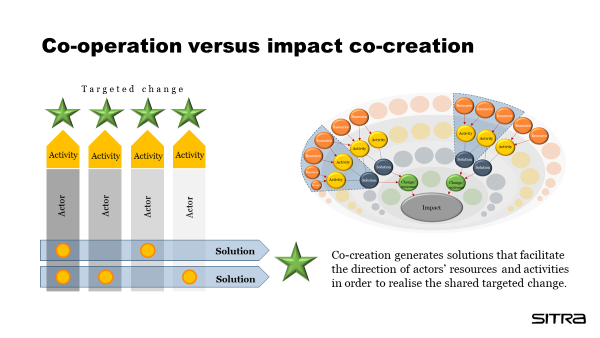
We also acknowledged that both public sector and development sectors are facing similar challenges in their service delivery where the focus is still on procuring activities. Impact bond modality is being used in both sectors: In social impact bond (SIB) the outcome funder is the host government and in development impact bond (DIB) it is a third party, such as a donor government or philanthropy organization. Or like in Colombia employment SIB, the outcome payment is divided between the national government and SECO.
The change from procurement of activities to procurement of outcomes means two radical changes in both sectors, and the relationship between the outcome payors and the service providers should be taken to a new level: 1) Outcome payor becomes an owner instead of determinant and 2) service provider acts as an innovative impact actor instead of mechanical operator. This, however, requires real co-creation between different stakeholders aiming to achieve mutually determined goal and public sector can act there as an enabling platform. We think it is very important to understand that impact bonds are not the goal itself, but a tool for strategic leadership and more effective use of tax payers’ money to achieve sustainable well-being and development.
To help the transition from activity-based procurement into outcome-based procurement by using impact bond mechanism, we launched our Impact Bond Design Programme late January 2018. Five teams of UNDP-government collaborations were selected from the region of Europe and CIS countries. After an introductory into impact bonds, the teams started mapping the social issues to tackle and considering initiatives where an impact bond mechanism might create some change. After mapping and brainstorming, the teams decided to focus on the following themes: road safety in Montenegro, dairy production in Armenia, air pollution in Macedonia, cattle production in Moldova and youth activity in Georgia.
With these topics in mind, we organized a four-days hands-on design workshop in Helsinki early April to create more targeted impact bonds with clear goals and target groups and tools to determine suitable intervention strategy, metrics and indicators for measuring the impact. We brought together different SIB actors, such as investors, service providers and fund managers to highlight their experiences and learnings. We gathered experts and mentors from Sitra and UNDP, sector-specific institutions from Finland, international organizations specialized on impact bonds, such as Strat!gos and Social Finance UK and IFIs, such EIB and EIF to help the teams to refine the details of their impact bonds. The week’s work culminated to a final pitching session.
The work is now continuing in these five countries with stakeholder discussions, data collection and legal analyses. We are looking forward in having more news about the design of these impact bonds early autumn.
Our findings from the first phases of the process are: more work need to be done to make the utilization of the mechanism easier for a bigger number of countries and the support more systematic. Further plans of UNDP for this year include: designing of an online curriculum for impact bonds, an outcome fund to support the outcome payments in the countries and more research on outcome-based budgeting to enable the outcome payments of the host governments. Stay tuned!
The following piece was first published on the AltFinLab blog and was originally published on May 23, 2018.
Based on lessons learned – some of which are mentioned below – crowdfunding can bridge the gap between top-down and bottom-up ways of thinking.The United Nations Development Program (UNDP) Alternative Finance Lab has been working and experimenting with crowdfunding now more than five years, by developing campaigns, workshops, booklets and observing how this new way of financing can help communities to become more resilient and empowered.
Due to fiscal constraints governments are facing globally, conventional means of financing municipal projects are at risk, opening the floor for various alternative financing mechanisms.
Crowdfunding mechanisms are one of the fastest growing: they can help leverage public funding to mobilize various new sources of investment for public policy, social services and the Sustainable Development Goals (SDGs), while at the same time re-aligning interests of various partners and creating new investment opportunities. It is estimated that in the past year, over US$16 billion was raised through various crowdfunding platforms, while the World Bank estimates that by 2025 this will grow to over US$100 billion.
Crowdfunding has immense potential to fund municipal projects, but it should be no alternative for traditional financing structures – rather an additional mechanism during any phase of the project for financing small, citizen-led projects to build social resilience and rejuvenate urban areas and for getting support for local community. We see crowdfunding as a strong tool to motivate citizens to be a part of the transformation of the urban environment and for keeping the momentum behind urban regeneration projects.
By capitalizing social power, AltFinLab has enabled broader visibility and scaling-up of a given project, as well as catalyzed social action and policy-level impact. We are using crowdfunding not only to collect money, but also to use it for the following purposes:
- Community-building instrument: Our Guzgef Solar School campaign aims at improving education facilities in rural Tajikistan and attracted donations from the Tajik diaspora in Australia.
- Marketing instrument: Our Taste of Home campaign is a social cooperative run by refugees, migrants and volunteers. The initiative was featured on Yahoo! News which tremendously raised its profile. Similarly, the first women-run cooperative craft brewery in Croatia Brlog appeared as a featured story in Wizz Inflight Magazine, a publication by Hungarian airline WizzAir. British celebrity chef Jamie Oliver and Bangladeshi international cricketer Mashrafe Bin Mortaza have also shown their support for some of our crowdfunding initiatives.
- Political instrument: Many governments are using crowdfunding as a supplement to their traditional financing models. Other initiatives such as the Subversive Festival in Zagreb have become an unavoidable place for critical and political theory in Eastern Europe. This campaign for healthy snacks in primary schools in Moldova got an interest from a large national network of supermarkets and was upscaled by the government from 3,500 to 350,000 kids.
Going forward, crowdfunding initiatives seek to create platforms for collaboration between civic actors, private sector and government by using innovative methods and applying a problem-solving approach to:
- Harness capacity, creativity, knowledge and expertise from citizens, especially young and women technologists;
- to strengthen responsiveness, openness and efficiency of institutions;
- to stimulate innovation and cross-sectoral collaboration with the private sector.
Considering that the 21st century is an urban one, key attributes of our cities should be used as assets to harness urban development scenarios, primarily density and diversity. With so many interesting ways of public inclusion in developmental issues – feeding off both density and diversity of communities, such as tactical urbanism, placemaking or sharing cities – it is easy to foster a sense of agency and ownership of local communities via crowdsourcing and crowdfunding ideas.
Historically, it was incompleteness, organic growth and sometimes even an ad hoc development of cities that enabled them to build up resilience which made them robust enough to fight back various challenges. Today’s comparison with such historical examples is represented exactly in crowd urbanism, serving as a key bottom-up initiative, which gives tools to all city members to co-steer local development.
Governments ought to focus on enabling its citizens to support their community development which can result in absorbing complexity versus reducing it.
Photo by Marcus Lenk on Unsplash
UNDP AltFinLab partnered with Blockchain.com, UN Refugee Agency (UNHCR), and the World Economic Forum (WEF) to explore how block chain technology works, but also how it is already being used to pursue conventional ends. The culmination of that partnership is in the form of a white paper titled, The Future is Decentralised.
We’re excited to share how this technology has brought new levels of efficiency and effectiveness to the fields of development aid, supply chain management, renewable energy, economic growth, and several others.
The potential of block chains to disrupt industrial sectors, commercial processes, governmental structures or economic systems seems to know no bounds. We suggest that the transformative power of block chain technology should not be seen as a threat to existing systems of governance; rather, it should be seen as an opportunity for national and international institutions to defend the rights of those they represent and to accelerate our collective progress towards meeting the United Nations’ Sustainable Development Goals.
Block chains can bring transparency to opaque or corrupt systems, and verifiability and immutability to commercial processes. They can bring security and resilience to vulnerable infrastructure, ensure individual privacy whilst guaranteeing autonomy, and encourage cooperation and engender trust where they are needed most.
Block chains can ease the frictions that prevent a vast array of sustainability, humanitarian, and environmental initiatives from fulfilling their potential.
This white paper explains how this unconventional technology works and how it is already being used to pursue conventional ends. It illustrates how block chains have brought new levels of efficiency and effectiveness to the fields of development aid, supply chain management, renewable energy, economic growth, and several others.
Our aim has been to show how governments, NGOs, and citizens are working together, exploiting the versatility of block chain technology to form new, powerful partnerships. We address the risks posed by this nascent technology and suggest how these risks should be managed.
[highlight background=”” color=””]To learn more download the report.[/highlight]
The following piece was first published on the AltFinLab blog and was originally published on April 30, 2018.
The Day of Big Waves in February in Banja Luka. What? Yes, we have the first successful crowdfunding campaign in Bosnia and Herzegovina by “Talas” magazine team.
Talas means wave! The campaign name was “Swim upstream” or #PlivajUzvodno. There is no ocean in Banja Luka to make waves or to swim, but Talas magazine team has done their job!
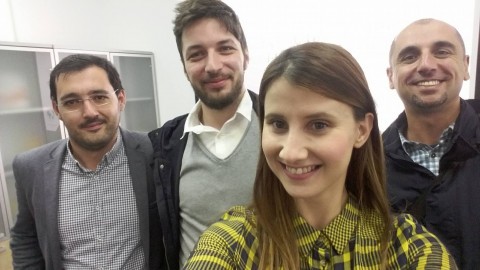
They started a quarterly print magazine back in June 2016, determined to write only positive stories about great, productive, proactive and enthusiastic people in Bosnia and Herzegovina. Those stories deserve to be told and inspire other people to strive in making a positive change, starting a business, creating jobs, doing good for themselves and for the community. They went into a crowdfunding campaign to secure funds for one-year print costs and they’ve paved the way for the other teams who attended the first Global UNDP Crowdfunding Academy in Bosnia and Herzegovina to dare. To dare dreaming big and swimming upstream.
But let us go back a bit. In December, while the first snowflakes were covering Banja Luka and later-on Tuzla, eleven teams were getting the first insights in how to create and implement a successful crowdfunding campaign. The teams were selected by UNDP B&H Local Integrated Development project, UNDP AltFinLab and Terra Hub Croatia team.
The selected teams represent different socially responsible entrepreneurial initiatives: starting from promotion of Bosnian tradition like old Bosnian dishes and handicrafts, through the promotion of organic and ecological producers, to establishing social enterprises, as well as educational board-game makers for children or the IT-education for girls. The crowdfunding is one alternative way of increasing their access to capital. But not only, crowdfunding is so much more than just money that it simply had to come to Bosnia and Herzegovina to place the seeds of a future crowdfunding ecosystem in South-East Europe/Western Balkan.
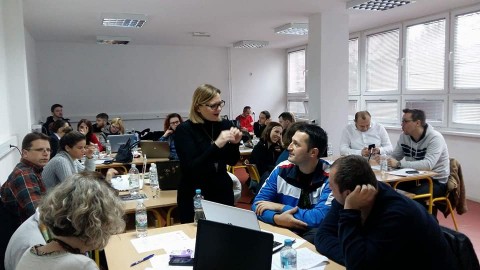
The teams went through a set of four thematic educational modules of UNDP Crowdfunding Academy, similar as those from Ukraine, back in February 2017: Those are about the building strategies for implementing crowdfunding campaigns, building campaign groundwork and community engagement; communications planning, creating great visual communication, social networking, using media, technical aspects of crowdfunding campaign and team preparation, tips&tricks for successful campaign implementation.
“During the trainings we’ve had our own creative process with parallel pop-up clouds above our heads with sets of questions coming and going away as we were learning.” said a girl named Sanela from Multifunctional house “Labyrinth” from Tuzla. “Perhaps the most motivating were the presentations of other campaigners who already have been through a crowdfunding campaign about their own experiences, both good and bad. They encouraged us to try it. We want to be a part of global crowdfunding community!”