Category: Digital transformation and emerging tech
The United Nations Development Programme (UNDP) in Europe and Central Asia and the Stellar Development Foundation (SDF) have announced a strategic partnership aimed at harnessing blockchain technology to accelerate progress toward meeting the United Nations’ Sustainable Development Goals and promoting financial inclusion worldwide.
With this partnership, UNDP and SDF will aim to create scalable blockchain solutions that drive equitable economic growth and strengthen economic resilience in developing regions. The collaboration will harness the Stellar network and open-source tools to enhance access to digital financial services, facilitate transparent and efficient cross-border transactions, and provide more secure, low-cost digital payment solutions, including for humanitarian aid, remittances, and national cash transfer programmes. The partnership will focus on empowering underserved populations and fostering innovation in emerging economies through a series of joint pilots, knowledge sharing, and capacity building.
Robert Pasicko, Project Manager of the Alternative Finance Lab at UNDP, remarked: “Our collaboration with the Stellar Development Foundation is a pivotal step toward harnessing cutting-edge technology for sustainable development. With nearly 1 billion people worldwide using cryptocurrencies and digital wallets, the potential for these tools to drive meaningful change in the development and humanitarian sectors is immense. By merging UNDP’s global expertise with Stellar network capabilities, we aim to create innovative solutions that transform lives and communities. Together, we are committed to unlocking the power of blockchain to drive social impact on a global scale.”
“The Stellar network was designed to support access to the global financial system for everyone, no matter where they live,” said Denelle Dixon, CEO of the Stellar Development Foundation. “Partnering with UNDP to leverage blockchain technology for international development and financial inclusion aligns perfectly with our mission. This collaboration represents exactly the kind of transformative impact the Stellar Development Foundation was created to achieve. We are excited to be part of this crucial effort to drive innovation and empower communities around the world.”
For more information, please contact Svetla Baeva, Communications Lead, UNDP at svetla.baeva@undp.org or the Stellar Development Foundation at media@stellar.org.
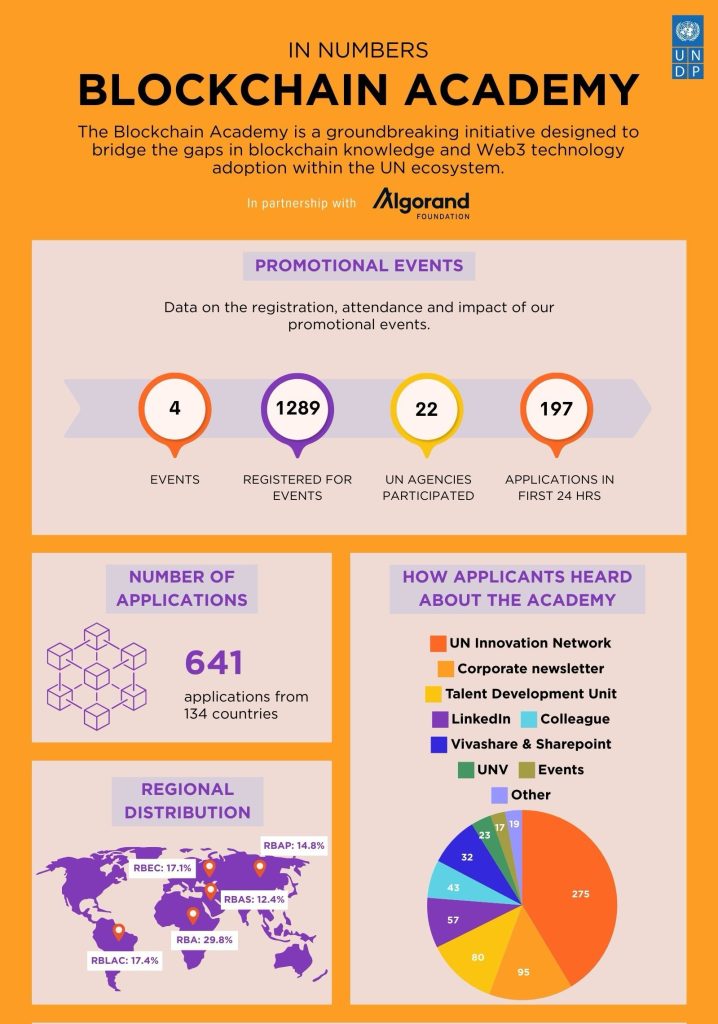
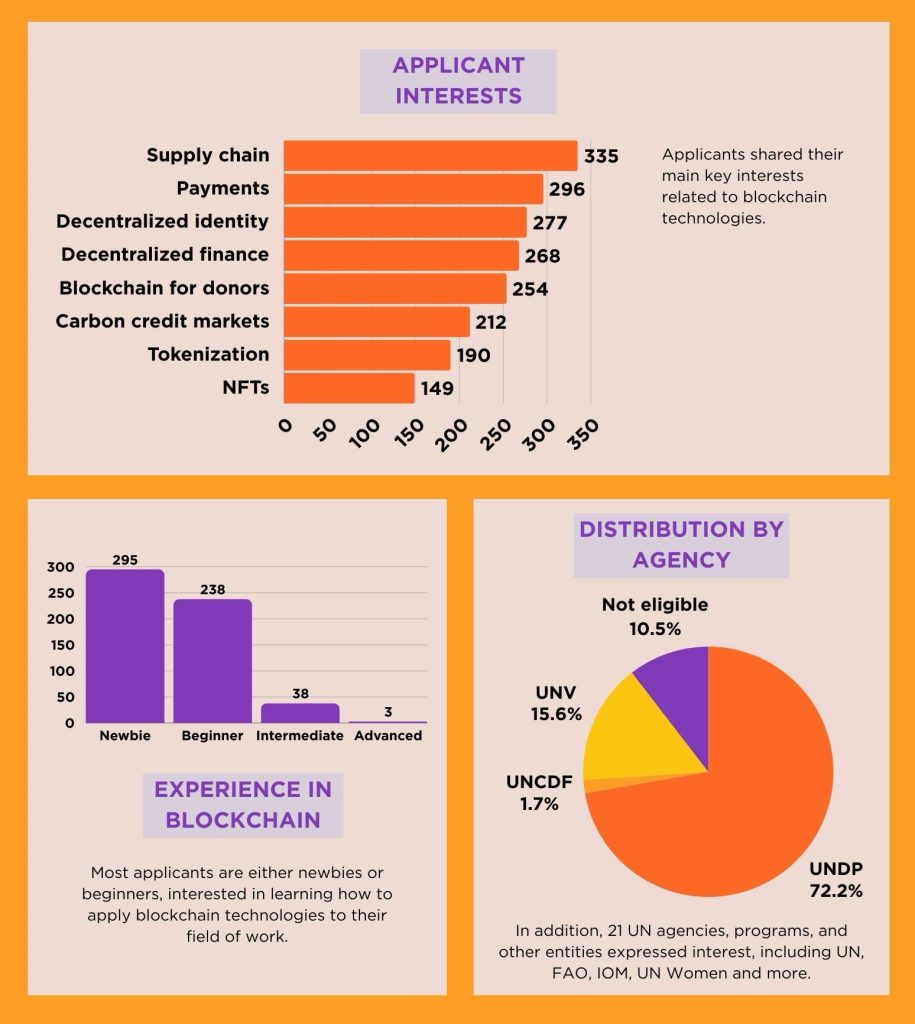
The first-ever Blockchain Academy tailored for the UN ecosystem, developed by the United Nation Development Programme in partnership with Algorand Foundation, saw an overwhelming response, receiving 641 applications from 134 countries. 500 applicants were selected to participate in the first edition. This extraordinary interest spans 21 different UN entities, with UNDP personnel comprising 72.23% of applicants, demonstrating a strong organizational interest in embracing blockchain technology.
What is the Blockchain Academy?
The Blockchain Academy aims to enhance the skills of UN personnel in over 170 countries in using and applying blockchain technology to promote sustainable development. It will provide a well-structured educational platform, consisting of recorded lectures, interactive workshops, hands-on assignments, and expert guidance and mentorship. This comprehensive approach ensures that participants will develop a solid understanding of blockchain technology and its potential to address global challenges related to digital identity, asset tokenisation, financial inclusion, and supply chain transparency.
There is a pressing need for Web3 education among UN personnel due to limited knowledge of blockchain technologies, which hampers the ability to further enhance transparency, efficiency, and accountability. As blockchain becomes vital for processes like aid distribution, identity verification, and data management, equipping staff with these skills is essential for improving operations.
Reaching out globally
The beta phase of the academy was a success, certifying over 30 participants from various UN agencies, setting the stage for the current global rollout. The full program not only aims to educate UN personnel but also seeks to establish a Blockchain Community of Practice, powered by UNDP AltFinLab, within the United Nations Innovation Network. This community aims to encourage collaboration and the exchange of best practices among development professionals to leverage blockchain technology to effectively achieve the SDGs.
Doro Unger-Lee, Head of Education and Inclusion at the Algorand Foundation, highlighted the transformative potential of the academy. She stated that education is fundamental to innovation in addressing pressing global challenges. By blending practical training with expert insights from the Algorand ecosystem, the Blockchain Academy marks a significant advance in expanding blockchain knowledge within the UN system.
Looking ahead
As the academy prepares for its global launch in January 2025, it seeks to inspire personnel from UNDP, UNCDF, and UNV to become leaders in using blockchain for sustainable and inclusive growth. Most applicants are beginners in blockchain, indicating a substantial demand for foundational knowledge of this technology within the UN agencies. Furthermore, the range of interests among the selected applicants varied, with many focusing on supply chain management, payments, and decentralized identities. These areas align with the current demands and potential applications of blockchain technology in humanitarian and development sectors. This diverse interest base underscores the versatility of blockchain applications and the potential for these technologies to be leveraged across various impact areas.
Follow UNDP AltFinLab on LinkedIn for more updates!
UNDP, UN Volunteers, and the United Nations Capital Development Fund personnel can now participate in blockchain and web3 training provided by the Algorand Foundation
NEW YORK — The United Nations Development Programme (UNDP) expands its blockchain education academy globally, offering its training to 24,000 personnel worldwide from UNDP, UN Volunteers and the United Nations Capital Development Fund (UNCDF). The blockchain and web3 training for the academy is provided by UNDP, in partnership with the Algorand Foundation, an organization focused on enabling an inclusive, decentralized, and borderless global economy.
“Harnessing technology helps humankind achieve its ambitious goals. Blockchain is one of these essential technologies, as its transparency and efficiency makes sustainable development programmes even more impactful. Our aim in launching this academy alongside UNDP is to help more personnel understand blockchain. From there, they can evaluate how using this will help them in their efforts to build a more sustainable and equitable future,” said Doro Unger-Lee, Head of Education and Financial Inclusion at the Algorand Foundation.
“At UNDP, we recognize that emerging technologies like blockchain have the potential to transform how we deliver development solutions. By launching the Academy, we aim to equip participants with the tools and insights to design blockchain solutions while fostering a dynamic community of practice that enables collaboration and the sharing of best practices to address common challenges. We further aim to bring these solutions to life through our acceleration programmes and extensive blockchain networks,” Burcu Mavis, Blockchain Academy and Accelerator Lead at UNDP.
The Blockchain Academy was announced in late 2023, with its curriculum specifically designed to provide staff with training in blockchain technology, including how the technology can be used for sustainable development projects. During its beta phase, the academy certified more than 30 UN personnel and added more than 18 hours of training to its curriculum. Building on this success, today’s launch features an expanded curriculum available to all UNDP, UN Volunteers and UNCDF personnel worldwide.
The Algorand Foundation has historically supported the UN and has helped pursue the achievement of its Sustainable Development Goals through various initiatives. In June 2024, the foundation led the creation of a council seeking to increase access to blockchain-based cash assistance during humanitarian crises. Other members of the council include WorldPay, Circle, and UNDP. The Algorand blockchain is also used by several startups and enterprises for SDG-related work, including the expansion of sustainable supply chains, inclusive finance and aid, and other impactful products and initiatives.
UNDP has been exploring blockchain technologies and their application since 2015, supporting the implementation of solutions across numerous countries – from tracking cocoa supply chains and democratizing energy trading to enabling digital impact coins for investment. Through its Alternative Finance Lab, UNDP is working to engage the Algorand Foundation and other blockchain partners for training, project incubation, and technical support to accelerate blockchain adoption in development. The launch of the global Blockchain Academy marks a significant milestone in scaling blockchain knowledge across the UN system, enabling thousands of personnel to understand and apply this technology for sustainable development. By combining practical training with access to ecosystem expertise, this initiative aims to accelerate the implementation of blockchain solutions that enhance transparency, efficiency, and inclusion across development programmes.
Learn more about the Blockchain Academy.
About UNDP
UNDP is the leading United Nations organization fighting to end the injustice of poverty, inequality, and climate change. Working with our broad network of experts and partners in 170 countries and territories, we help nations to build integrated, lasting solutions for people and planet. Learn more at undp.org or follow at @UNDP.
About Algorand Foundation
Algorand’s mission is to power a world where information has integrity and innovative ideas can scale. The Algorand Foundation supports Algorand’s rapidly growing ecosystem by providing a best-in-class developer environment, supporting key infrastructure and setting technical standards, offering comprehensive support to builders and entrepreneurs, and providing the framework for decentralized governance. The Algorand (ALGO) blockchain has grown into a vibrant ecosystem of developers, entrepreneurs, and enterprise partners that benefit from institutional-grade certainty and resilience. Its low fees, instant finality, and minimal carbon footprint appeal to the protocol’s millions of retail users, and developers of all kinds appreciate the ability to use common programming languages like Python. Builders on Algorand are creating protocols and companies that solve important problems at a global scale: instant payments in war and disaster zones, self-sovereign identity for the disenfranchised, supply-chain traceability for global commerce, permissionless protocols addressing financial inclusion, and the creation of entirely new markets through tokenization, to name a few. To learn more and start your journey on Algorand, visit algorand.co
The United Nations Development Programme (UNDP) participated in the Cardano Summit 2024, held on October 23-24, building on our strategic partnership with the Cardano Foundation, which was established at the end of 2023. As a Silver Sponsor, UNDP played a crucial role in driving conversations around the potential of blockchain technology to support sustainable development.
Day 1: Setting the Stage for Innovation
Throughout the first day of the summit, participants engaged in keynotes, thought-provoking panels, and interactive masterclasses on topics such as blockchain adoption, education, and governance. These sessions provided valuable insights into how blockchain technology can address global development challenges and drive positive social and environmental change.
UNDP participated in a panel discussion titled Blockchain and Social Impact: Leveraging Technology for Positive Change, where Dhani Spiller, Head of Digital Capacity Lab from the UNDP Chief Digital Office shared perspectives on how blockchain is transforming development projects by enhancing transparency, efficiency, and trust among stakeholders. “Our session explored the real-world applications of blockchain and demonstrated the technology’s potential to create tangible social impact,” said Spiller.
The summit featured important networking opportunities among attendees, speakers, and sponsors, laying the foundation for meaningful discussions over the two-day event. One of the highlights was the Battle of the Builders competition, which saw finalists pitch their innovative projects to a panel of experts, competing for recognition and support.
Day 2: Delving Deeper into Blockchain’s Potential
On the second day, keynotes, panels, and masterclasses focused on operational resilience and the practical aspects of blockchain adoption. UNDP collaborated with the Cardano community to host a masterclass tailored to UNDP’s specific challenges, diving into how blockchain can streamline funding processes, increase transparency, and align with the Sustainable Development Goals (SDGs). These discussions resulted in several exciting initiatives aimed at leveraging blockchain for meaningful impact.
The summit concluded with a Gala Awards Dinner at Fort Island, Madinat Jumeirah, where attendees celebrated the achievements of the Cardano community. “UNDP’s presence at the summit underscored our commitment to raising awareness, building capacity, and supporting blockchain initiatives in partnership with a range of stakeholders. Through our collaboration with Cardano, especially the Global Impact Challenge 2023, we have been working on establishing a verified database and monitoring system for civil society ecosystem development across multiple countries as part of Tadamon, a flagship multi-year project implemented in partnership with the Islamic Development Bank and Islamic Solidarity Fund for Development,” said Teodor Petricevic, Accelerator lead in UNDP IRH Innovation Hub.
Building on the momentum from the Cardano Summit 2024, UNDP is committed to harnessing blockchain technology to drive meaningful progress in sustainable development. Together with partners like Cardano, we’re putting innovative technology to work where it matters most – creating positive change for communities and our shared future.
What’s Next: Bridging Gaps for a Better Future
The Cardano Foundation is also supporting the Blockchain4Good Summit, taking place on October 30-31, 2024, from 1 pm to 5 pm (CET). A central theme of the summit will be bridging the gap between development agencies and blockchain communities to address broader questions around environmental and social impact.
Organized by UNDP, together with Innofund, Positiveblockchain.io, and the Blockchain for Good Alliance (BGA), the event will feature key sessions exploring critical global challenges: financial inclusion, climate resilience, food security, and equitable education.
Register for the event now: https://blockchain4good.vfairs.com/
The United Nations Development Programme (UNDP) in Europe and Central Asia is co-organizing the Blockchain4Good virtual summit on October 30-31, 2024. This event aims to explore the transformative potential of blockchain technology in strengthening international aid and advancing the Sustainable Development Goals (SDGs).
The two-day summit will bring together a diverse ecosystem of partners, including several UN agencies, nonprofits, blockchain platforms, impact investors, and innovative startups. By fostering collaboration between international development agencies and blockchain innovators, the event seeks to ignite new discussions and partnerships that can drive positive change on a global scale.
“At UNDP, we see blockchain as a game changer for sustainable development. Its capacity to provide secure, transparent, and decentralized solutions has the potential to revolutionize how we address poverty, inequality, and climate change. By working with partners across sectors, we aim to unlock blockchain’s potential to create more inclusive and resilient systems,” says Ben Thompson Coon, Analyst on CSO Community Management, UNDP Europe and Central Asia.
The summit will feature four thematic sessions exploring critical global challenges: financial inclusion, climate resilience, food security, and equitable education. Each panel will examine how blockchain solutions are currently being utilized or could be implemented to create a more equitable world.
UNDP is co-organizing the Blockchain4Good virtual summit with Innofund, a blockchain startup focused on creating solutions for international development, and Positive Blockchain, in partnership with Sustainable ADA. The summit will also feature participation from other UN agencies, including UNHCR for Switzerland, UNICEF, and FAO.
Despite global progress, 1.4 billion people remain ‘unbanked’ worldwide, often excluded from vital financial services and trapped in cycles of poverty. The climate emergency, ongoing conflicts, and depleting resources further exacerbate these conditions. Blockchain technology offers promising solutions to these challenges. It has the potential to provide secure, low-cost financial services to the unbanked, create verifiable digital identities, and make aid distribution more efficient and transparent. Additionally, blockchain can enable innovative funding mechanisms like quadratic funding, strengthen monitoring and evaluation through payment data, and improve supply chains and ownership models.
“Blockchain has the power to really change how development and humanitarian agencies work,” says Alex Macbeth, co-founder of Innofund, the company that conceived of the virtual summit. “We are confident that Blockchain4Good is the bridge that will create the necessary introductions and partnerships.”
The event will further explore how blockchain technology can be harnessed to eradicate poverty, reduce inequalities, and build resilience to crises and shocks. Register for the event today: https://blockchain4good.vfairs.com/.
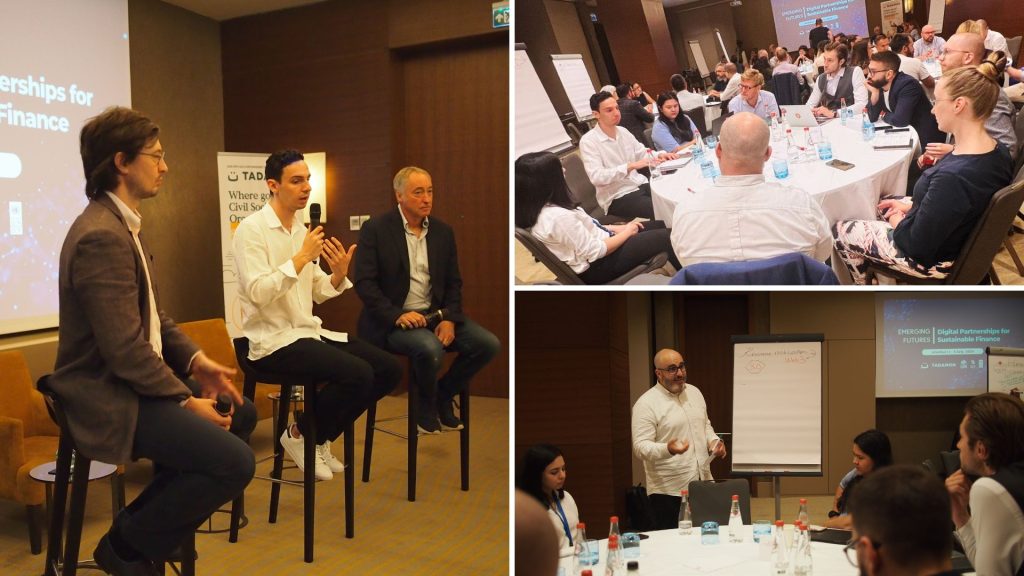
Emerging Futures: Digital Partnerships for Sustainable Finance, a blockchain-focused event organized in July by UNDP, with the financial support of ISDB, provided an in-depth exploration into how blockchain can revolutionize the landscape of development and humanitarian efforts, particularly in advancing the SDGs. It brought together hundreds of participants from over 30+ countries, reflecting a global interest in harnessing digital technology for sustainable development.
Blockchain as a catalyst for change
The event featured a series of motivational talks and discussions led by key figures in the blockchain and development sectors, such as representatives of the Cardano Foundation and Algorand Foundation. They highlighted how blockchain can enhance transparency, boost efficiency, and build trust among various stakeholders. Not merely theoretical, these discussions also showcased tangible outcomes and case studies that demonstrated blockchain’s potential in real-world applications.
One of the standout sessions focused on blockchain’s role in creating sustainable financing models, diving into topics like digital payments, tokenization, and the issuance of carbon credits. These mechanisms were discussed as a means to effectively mobilize resources, underlying the UNDP’s commitment to innovative financing through its AltFinLab Digital Partnership Strategy.
Fostering collaboration and building trust
The event also emphasized strengthening partnerships and expanding networks among UN agencies, non-profit organizations, tech developers, and leaders in the blockchain industry. There was a concerted effort to create a cohesive platform for all stakeholders to collaborate more closely on implementing blockchain solutions – crucial for efficiently building, testing, validating, and scaling. The event also underscored the synergy of cross-chain collaboration and the significant community impact, reinforcing the vision that together, we can achieve greater and more effective changes.
Additionally, practical demonstrations and pilot projects were highlighted, where innovative applications were tested in controlled environments. These pilots showcased the benefits of blockchain and offered scalable models for addressing global challenges.
Discussions further explored innovative blockchain financing mechanisms aimed at supporting the SDG Impact development projects. The event introduced the potential of blockchain funds designed specifically for partnership projects with the UN, promoting sustainable financial models across UN projects.
Mainstreaming blockchain education
The workshop also marked the launch of the Algorand Blockchain Academy, created in partnership with UNDP, which aims to empower UN staff with the necessary skills to effectively utilize blockchain in their operations. This educational initiative is critical for enabling the effective use of blockchain technology across UNDP and beyond. What’s more, educational sessions ran parallel to the main discussions, providing hands-on experiences aimed at demystifying blockchain for newcomers and deepening the technical understanding for those already familiar with the technology.
Looking ahead
With the groundwork laid out and the tools provided, the next steps involve deepening the implementation of blockchain initiatives, expanding educational efforts, and continuing collaborative partnerships that drive innovation and effective solutions. The event not only highlighted the potential of blockchain but also set the stage for a future where these technologies are central to achieving global development goals – from blockchain-based financial services that provide banking access to unbanked populations to tracking food supply chains from farm to table, ensuring food safety or reducing waste.
The Algorand Blockchain Academy, an initiative developed by the United Nations Development Programme (UNDP) and the Algorand Foundation is ready to launch in September 2024. The Algorand Blockchain Academy, which completed its beta phase in May 2024, aims to provide comprehensive blockchain education, hands-on experience, and mentorship support to UN staff worldwide. This initiative marks a significant step towards leveraging blockchain technology to achieve Sustainable Development Goals (SDGs).
The vision and genesis of the Algorand Blockchain Academy
The collaboration between the Algorand Foundation and UNDP is rooted in a shared vision of utilizing cutting-edge technology to tackle global challenges, with blockchain seamlessly integrated into development efforts. The Algorand Blockchain Academy aims to equip over 120,000 UN employees across 170 countries with the knowledge and tools needed to harness blockchain technology effectively. The initial focus areas include financial inclusion, supply chain transparency, real-world asset tokenization, and more.
Doro Unger-Lee, Head of Education and Inclusion at the Algorand Foundation, highlighted the significance of this initiative: “Education is the cornerstone of innovation. By equipping development professionals with the knowledge and skills to use blockchain technology, we are taking a crucial step towards practical, on-the-ground solutions that can address some of the world’s most pressing challenges. Our goal is to inspire and empower participants to become leaders in their fields, using blockchain to foster sustainable and inclusive growth.”
The beta phase: Lessons learned and moving forward
The beta phase of the Algorand Blockchain Academy, which ran from February to May 2024, involved participants from six different UN agencies. The curriculum comprised seven modules delivered over 12 weeks, featuring a mix of self-paced pre-recorded content and live events, supported by personal mentorship from blockchain experts and entrepreneurs in the space. Participants praised the quality of the training, noting its relevance to their work and the practical applications of blockchain in development contexts.
Plans for global expansion in 2025
Teodor Petricevic, Digital Partnerships and Accelerator Lead at UNDP AltFinLab, the flagship UNDP initiative behind the Academy, shared his vision for the Algorand Blockchain Academy: “As we look ahead to 2025, our mission is to expand the reach and impact of the Algorand Blockchain Academy on a global scale. We are not only committed to continuing the education of UN staff but also to extending our programs to civil society organizations worldwide. This will enable a broader range of stakeholders to leverage blockchain technology for sustainable development. Moreover, we plan to offer the Algorand Blockchain Academy’s resources to other prominent development agencies to foster a more inclusive and interconnected global development community. By doing so, we hope to create a network of blockchain-educated professionals who can drive forward sustainable development initiatives with enhanced transparency, efficiency, and accountability.”
Expanding horizons
The Algorand Blockchain Academy’s success in its beta phase and its strategic enhancements set the stage for a transformative educational experience for UN staff. This initiative not only aims to upskill UN employees but also to create a robust community of blockchain-savvy professionals capable of leveraging this technology to drive sustainable development.
As the Algorand Blockchain Academy prepares for its official launch, it stands as a signal of innovation and collaboration, showcasing the potential of blockchain technology to revolutionize development practices and achieve a scalable global impact. Stay tuned for more updates on the Algorand Blockchain Academy and its journey towards fostering a globally connected and technologically empowered community.
The United Nations Development Programme (UNDP) is excited to announce the Tokenization for Sustainable Development event, a pivotal component of the Green Tokens initiative. This event is dedicated to promoting sustainable urban development through the adoption of cutting-edge technologies that foster eco-friendly behaviors among citizens.
As the global focus intensifies on environmental sustainability and urban efficiency, this event seeks to transcend traditional financial mechanisms and cultivate innovative practices that can transform urban landscapes. Key stakeholders from Podgorica and Bar, Montenegro, along with a delegation from Skopje, North Macedonia, will come together to share knowledge, collaborate on various innovative approaches, and expedite the adoption of sustainable initiatives.
The event will underscore the significance of emerging technologies, particularly tokenization, in encouraging eco-friendly behaviors among citizens. Participants will explore how these technologies can be integrated into urban development plans to create more sustainable and efficient cities. Additionally, the event aims to highlight existing tokenization cases and best practices, showcasing their potential impact on urban development and environmental sustainability.
One of the highlights of the event will be the presentation of findings from feasibility studies on tokenization conducted in Podgorica and Skopje. These findings will provide a foundation for gathering feedback and insights, which will be crucial for refining and implementing future projects. Additionally, a co-design session will engage participants in exploring various tokenization models and prioritizing actions for developing a blueprint for sustainable urbanization.
By bringing together together various stakeholders – municipal authorities, government agencies responsible for urban planning, transportation, waste management, and environmental sustainability, as well as experts in blockchain technology and digital innovation, representatives from academia, international organizations, civil society organizations, and community groups – the event aims to ensure a diverse and comprehensive dialogue and fuel cross sector partnerships and connections.
Unveiling new horizons – our commitment to transformative change
Over the last decade, blockchain technology and cryptocurrencies have undergone a significant cycle of hype. As the Alternative Finance Lab (AltfFinLab) in the Innovation team at UNDP Europe and Central Asia, we were there to witness and learn more by experimenting ourselves. We are now convinced that we stand at a juncture where powerful technological solutions can also accelerate development endeavors. Read more about what we have learned and how we are planning to unlock the blockchain potential for development across UN(DP) through unrolling training programs and the use of blockchain-based solutions.
When we talk about using blockchain technologies and cryptocurrencies for development – it’s time we also move away from outdated associations with Bitcoins and speculative bubbles. Instead, we are referring to technology with the potential to ensure the legal identity of almost 1 billion people, offer financial inclusion solutions to 1.4 billion unbanked people, instil more trust in areas like agriculture through track-and-trace systems, accelerate financial aid through smart contracts and transparent payments, and create opportunities for tokenizing assets and impact investments.
This endeavor goes beyond mere technological adoption; it represents a shift in approach to development. We see blockchain as a pivotal tool for enhancing transparency, efficiency, and accountability. Our dedication to embedding blockchain in our projects is driven by its potential to expedite progress toward the Sustainable Development Goals (SDGs), thereby fostering more inclusive, effective, and resilient development models.
Where it all began – our blockchain legacy
The narrative of UNDP AltFinLab’s involvement in blockchain is a rich tapestry, interwoven with various groundbreaking initiatives, each strand representing a step forward in our ongoing journey towards innovation and impact. In 2015, we started exploring blockchain and crypto opportunities together with other UNDP frontrunners, including at the Alternative Finance Conference we organized. Since then, we have facilitated the implementation of smaller-scale initiatives in over 10 countries worldwide, exploring best case practices for how to proceed forward.
2019 marked a milestone with our support for ‘The Other Bar’, an innovative project pairing chocolate bars with a ‘digital passport’ to trace the cocoa journey from bean to bar. More than just a product, each bar carried an impact token, offering consumers an opportunity to reinvest in the very farmers and communities who crafted their chocolate. Additionally, we have been involved in other projects on democratizing energy production and consumption in Serbia and Lebanon, enabling efficient, sustainable, and community-driven energy trading. What’s more, our collaboration with UNDP Lebanon led to the birth of CedarCoin in 2020, a digital impact coin designed to funnel investments into impactful projects within Lebanon.
In Bahrain, we undertook a unique initiative to create blockchain stamps (green energy certificates) for energy generated from solar panels. With the European Commission, we worked on a blockchain accelerator to implement several more solutions in the solar energy sector (in Serbia and Lebanon), as well as to track and trace agricultural products (fair supply chain for argan oil in Morocco).
Each of these initiatives represents a vital chapter in our blockchain legacy. Far from mere experiments, they were foundational steps towards grasping the immense potential of blockchain in tackling global challenges. They underscore our belief that blockchain is not just a tool for digital transactions but a catalyst for meaningful change, capable of addressing some of the most pressing issues faced by our communities today.
Today’s blockchain chronicles – scaling new peaks
Our current chapter in blockchain is as thrilling as it is transformative. We have designed and initiated multiple blockchain initiatives for 2024. This endeavor aims to encourage innovation within UNDP, fostering a culture of exploring cutting-edge technologies and solutions. For this, we have established several strategic partnerships in the last few months with the Algorand Foundation, Cardano Foundation and Polygon Technologies. In addition, the UNDP AltFinLab team also onboarded six blockchain visionaries and experts from our global network to embark on a six-month mission to pioneer novel blockchain applications in development assistance.
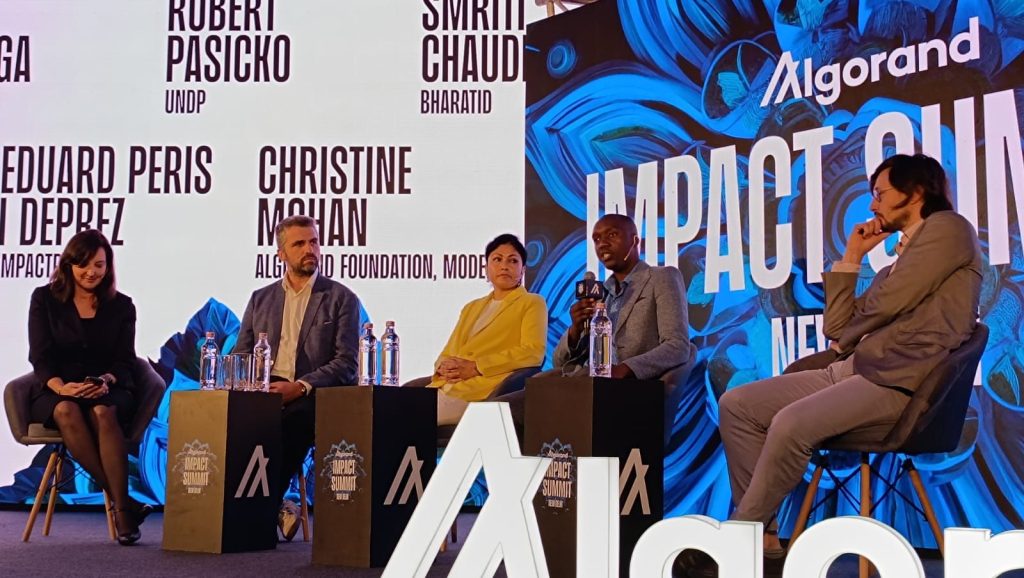
Together with Algorand, we are developing our upcoming Algorand Blockchain Academy, a significant stride towards training UN staff on Web3 and blockchain technology. In collaboration with UNDP Digital Giving and building upon the UNDP Crowdfunding Academy training program, this initiative aims to equip UNDP employees, as well as staff from other UN agencies, with practical knowledge and applications of blockchain in the context of sustainable development. Set to roll out as a beta version in Q1 2024, the Algorand Blockchain Academy will also offer mentorship support to UNDP Country Offices (CO) initiating or developing blockchain development projects.
Furthermore, as part of our program, we plan to develop acceleration programs with funding for the most promising UNDP CO blockchain projects. This approach not only underlines UNDP’s commitment to utilizing blockchain technology for global challenges but also fosters a culture of continuous learning and innovation, opening new fundraising opportunities for pilots and experiments. Together with the UNDP Chief Digital Office and the UN Innovation Network, we are exploring ways to design and manage an effective and impactful UN Blockchain Community of Practice, as well as how we can create environments (playgrounds and sandboxes) to test and validate blockchain-based solutions in various UN development projects.
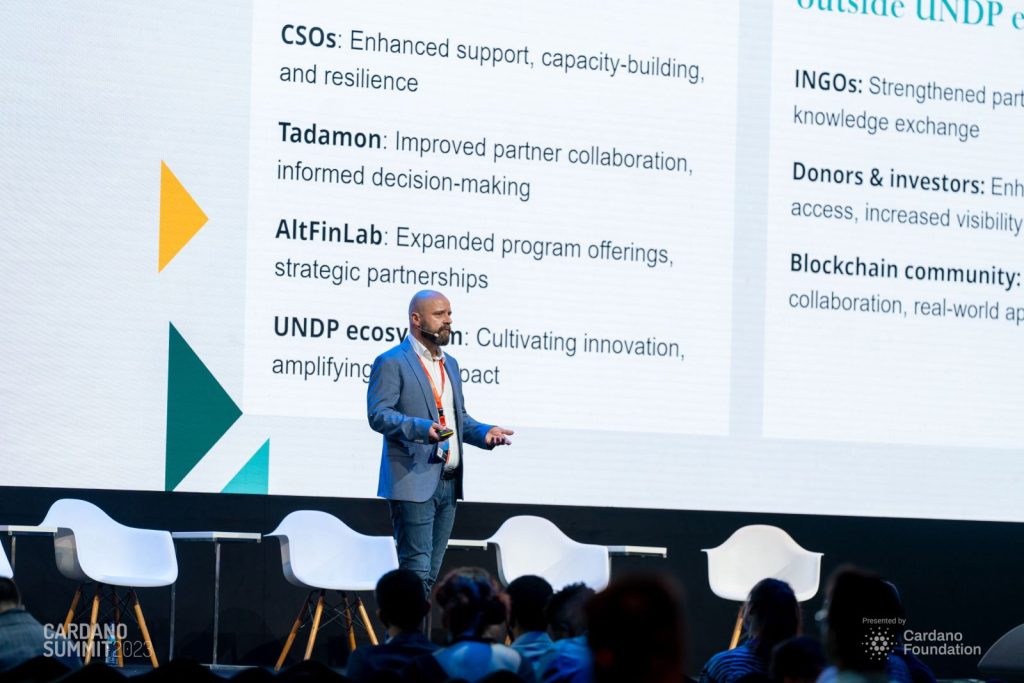
Our collaboration with the Cardano Foundation, announced in early November 2023 at their Annual Summit in Dubai, marks another significant milestone. Each year, through the Cardano Global Impact Challenge (GIC), the Cardano community focuses on blockchain-based solutions for development organisations, like the 2022 partnership with Switzerland’s UNHCR for a charity stake pool. This year’s GIC aims to revolutionise not only the Tadamon program, a multiyear initiative empowering civil society organizations, in partnership with the Islamic Development Bank and Islamic Solidarity Fund for Development, but also other UNDP development projects. Together with Cardano, we aim to establish an automated engine for a verified database and monitoring of civil society ecosystem development across multiple countries where AltFinLab operates. Finally, with Polygon Technologies, we are planning to jointly accelerate and incubate innovators working on the development issues using blockchain, and to learn from their experiences on working with startups.
In addition to our partnerships with blockchain foundations, we have also initiated a number of collaborations with private companies. One such transformative initiative is our partnership with Innofund, and several other UN agencies, on the Tadamon Web3.0 multi-platform. This platform aims to revolutionize grantmaking, crowdfunding, and matchmaking by integrating state-of-the-art Web3.0 technology. Focusing on aid distribution, systematic impact investment, cross-border money transfers, payments, and impact measurement, the platform is poised to significantly streamline and enhance the efficiency of these vital processes. This venture marks a major advancement in leveraging blockchain technology for more effective and transparent global development efforts.
Looking ahead – the future of blockchain in development
Our journey with blockchain is just beginning. As we gaze into the future, a horizon brimming with exciting new initiatives and dynamic partnerships awaits us – from accelerators to incubators. Our efforts go beyond merely fostering new ideas; we are actively shaping a new paradigm. The upcoming e-learning training for UN(DP) employees is set to spark a global discourse on blockchain’s role in sustainable development. Additionally, our 2024 blockchain partnership event, to be hosted in the Western Balkans, is poised to be a hub of innovative ideas and collaborative efforts.
An invitation to co-create the future
As we move towards this new phase of testing and experimenting with blockchain at UNDP, our commitment to unlocking its full potential remains unwavering. But to do this, collaboration should be at the heart of this endeavor. Thus, this is also an open invitation to technologists, development professionals, innovators, and dreamers: join us in spearheading this digital revolution. Your ideas, active participation, and engagement are the lifeblood of our mission. Together, let’s build a future that is inclusive and resilient, driven by blockchain technology, where every innovation and effort propel us towards a universally prosperous world.
Stay tuned for updates, insights, and inspiring stories from the forefront of blockchain and development.
(Edited by Svetla Baeva, Communications Lead, UNDP IRH)
The United Nations Development Programme (UNDP) announces a partnership with Innofund, a blockchain development firm dedicated to creating Web3 solutions that address societal challenges. Together, they will explore leveraging blockchain technology for sustainable development, by addressing governance challenges, promoting financial inclusion, and driving social impact.
Innofund powers Cashdillo, a crowdfunding and grant management platform, which will support UNDP on addressing various challenges, including grant allocation and management, provision of advanced fundraising tools, automating co-financing mechanisms, optimizing data collection, and ensuring seamless impact reporting.
“This new partnership will be first deployed across our work on civil society empowerment through the NGO Empowerment for Poverty Reduction Programme (Tadamon), led by UNDP, ISDB and ISFD, which focuses on supporting civil society organizations (CSOs) by providing capacity-building and development trainings for fundraising and business acceleration,” says Robert Pasicko, UNDP Istanbul Regional Hub’s expert for alternative finance and low carbon development. “We are looking forward to explore and develop blockchain applications to address development challenges in UNDP development projects.”
Notably, blockchain technology will be leveraged to enhance transparency, with the platform offering a comprehensive suite, including matchfunding, crowdfunding, grant management, and an ESG data engine, harnessing the benefits of blockchain such as smart contracts, decentralization, and data transparency.
“We are delighted to be able to partner with UNDP, one of the world’s largest and most respected development agencies, to pilot our bespoke grant management and crowdfunding platform,” says Alex Macbeth, one of the Cashdillo’s co-founders. “We are confident that introducing web3 elements can make the grant management process more efficient and transparent, and ultimately more beneficial for CSOs working on major development challenges, as well as major donors and implementing agencies like UNDP”.
The partnership with Innofund comes as part of a series of collaborations with blockchain technology organizations to build UNDP capacity through education and training and unroll practical applications for sustainable development. Find out more about UNDP’s partnership with Algorand Foundation here and with Cardano Foundation here.
About UNDP:
UNDP is the leading United Nations organization fighting to end the injustice of poverty, inequality, and climate change. Working with our broad network of experts and partners in 170 countries and territories, we help nations to build integrated, lasting solutions for people and planet. Learn more at undp.org or follow at @UNDP.
Photo by Shubham Dhage on Unsplash
Algorand selected to deliver blockchain curriculum to 22,000 UNDP employees globally
The United Nations Development Programme (UNDP) announces a partnership with Algorand Foundation, an organization focused on enabling an inclusive, decentralized, and borderless global economy based on the Algorand blockchain technology, to provide UNDP staff with knowledge and insights into the applications of blockchain technology.
The Algorand Blockchain Academy will launch in 2024 and is designed to bolster UNDP staff capacity through education and training in blockchain technology and its practical applications for sustainable development. The curriculum will consist of recorded lectures, interactive workshops and hands-on assignments that will be made available to all 22,000+ UNDP employees in over 170 countries and territories, in addition to staff members at other UN agencies.
“The training is instrumental in equipping our team with the tools needed to address complex global challenges using blockchain technology,” said Robert Pasicko, UNDP Istanbul Regional Hub’s expert for alternative finance and low carbon development, at the Algorand Impact Summit last week. “We are thrilled to be in a position to leverage the credibility and expertise of the Algorand Foundation and key members of their ecosystem in order to upskill, empower, and inspire UN practitioners around the world.”
Focus areas of the program include:
- Financial inclusion: Exploring the use of blockchain to extend financial services to marginalized communities;
- Supply chain transparency: Enhancing transparency in supply chains, combatting issues like child labor, and promoting sustainable sourcing;
- Real-world asset tokenization: Enabling fractional ownership to increase accessibility for a wider variety of investors;
- Digital identity: Developing secure and universal digital identity solutions to support social and financial inclusion.
“We are excited to partner with UNDP to promote innovation and technology for the betterment of society,” said Doro Unger-Lee, Head of education and inclusion at Algorand Foundation. “We see this education and tooling initiative as a critical first step toward identifying and delivering actionable, on-the-ground use-cases of blockchain to help achieve the Sustainable Development Goals in a number of areas.”
In addition to the team at the Algorand Foundation, the curriculum will include speakers from Algorand ecosystem projects including HesabPay, Wholechain, Koibanx, and Quantum Temple. Pilot testing of the platform will start early 2024 and will be rolled out throughout the year.
About UNDP:
UNDP is the leading United Nations organization fighting to end the injustice of poverty, inequality, and climate change. Working with our broad network of experts and partners in 170 countries and territories, we help nations to build integrated, lasting solutions for people and planet. Learn more at undp.org or follow at @UNDP.
About the Algorand Foundation:
The Algorand Foundation is dedicated to helping fulfill the global promise of the Algorand blockchain by taking responsibility for its sound monetary supply economics, decentralized governance, and healthy and prosperous open-source ecosystem. Designed by MIT professor and Turing Award winning cryptographer Silvio Micali, Algorand is uniquely capable of delivering on the promise of a borderless global economy. It achieves transaction throughputs at the speed of traditional finance, but with immediate finality, near zero transaction costs, and on a 24/7 basis.
For contact
Ms. Svetla Baeva, Communications Lead, Innovation Team Istanbul Regional Hub, svetla.baeva@undp.org
New developments in artificial intelligence (AI) arise every day. AI offers us a vast array of opportunities for labour optimization, refinement of education systems, disease diagnosis, urban infrastructure improvement and economic forecasting. The list of these opportunities is endless. However, the list of those who can take advantage of these opportunities is quite limited.
This article, which by the way is written by a human being (a disclaimer that seems to be necessary for each and every text nowadays), will be published in three languages: English, Russian and Kazakh. The latter falls into the category of “low-resource” languages. This means it is inadequately represented or researched in AI and machine learning due to the limited amount of linguistic resources available online.
As a result, the vast majority of AI tools accessible to people proficient in English, Russian, or other popular languages on the web are not available to individuals who only speak Kazakh.
According to data from Statista, the ranking of the most frequently used languages for web content, as of January 2023 (by the share of websites), is as follows: 1. English (58.8%); 2. Russian (5.3%); 3. Spanish (4.3%); 4. French (3.7%); 5. German (3.7%); 6. Japanese (3%); 7. Turkish (2.8%); 8. Persian (2.3%); 9. Chinese (1.7%); 10. Italian (1.6%).[1] Kazakh language does not make it into the top twenty.
According to the results of the latest population census in Kazakhstan (2021), over 13,768,000 residents of the country (more than 80%) reported being proficient in the state language.[2] No precise data is available on the number of Kazakh speakers outside Kazakhstan.
I am a translator by education and a communications specialist by profession. Language is my working tool and AI is the sphere of my interests and of my scientific investigations. Of all the AI tools – language models, image generators, virtual assistants, automatic speech and text recognition systems, machine translation mechanisms, data analysis tools and content creation tools – which I have studied and used, only a few worked in Kazakh. Moreover, the quality of their output always left much to be desired.
Kazakh language in the AI era: a struggle for representation
Modern artificial intelligence tools are essentially built on predicting the most likely response based on a vast amount of “training data” — digital content bases that AI engineers use to build models. When the data is insufficient, as is the case with “low-resource” languages, AI tools either do not work, or they perform poorly.
“Most people in Kazakhstan know and use the Kazakh language in their daily lives. However, the presence of the Kazakh language in the digital world doesn’t mirror its status in the real world,” says Daniyar Mukanov, a programmer and specialist in generative AI from Kazakhstan, highlighting the discrepancy between the amount of data available in a certain language in reality compared to the digital realm.
For seven years, Daniyar has been running a blog about IT in Kazakh. Initially, the goal was to provide a platform for a dialogue about technology, but now another mission has emerged, namely creating content in Kazakh to support a variety of topics necessary for AI training. Daniyar encourages everyone able to do so to create quality Kazakh-language digital content in various fields, thereby contributing to AI training.

Global language imbalance: Who is deprived of access to AI?
Billions of people worldwide, like Daniyar, cannot fully utilize AI opportunities because of their language.
According to Ethnologue, the world’s largest language reference, there are 7,168 languages worldwide.[3] Only about 20 of them have enough training data online to create natural language processing systems.
The representation of a language in the virtual world is not always related to the number of speakers in reality. Globalization and socio-economic changes lead to the dominance of certain languages in the digital space, often to the detriment of others, even more numerous in terms of speakers, languages.
For instance, Hindi, spoken by over 500 million people, is also considered a “low-resource” language,[4] while Western European languages, like Dutch, spoken by 20 times fewer people, technically is a language with a higher resource. Less than 1% of languages worldwide are “high-resource”. The speakers of the remaining 99%, not knowing other languages, are essentially cut off from global technological progress.
The inability to access advanced technologies directly affects the level of socio-economic development in society, hindering access to information, education and development opportunities. This can exacerbate the digital divide among developed and developing countries and intensify global social inequality.
Collective approach to bridge AI language gaps
This article is not a ready-made directive, but rather a call to action. The growing technological gap based on language that we are witnessing is a challenge requiring collective and coordinated efforts from researchers, governments, educational institutions and private companies.
The approach to solving the problem must undoubtedly be a collective one. Piecemeal measures will not suffice. Manually processing data for large models is not only labour-intensive but also a very lengthy process. And perhaps we no longer have time for that. AI is developing at an unimaginable speed. In the last seven years, AI has evolved from defeating humans in the board game Go in 2016 to being able to recognize images and speech better than humans, and passing the most challenging exams in 2023.
A common approach in overcoming the language gap in the AI sector should include joint development of technologies and educational programmes, implementation and testing of pilot projects and drawing attention to the results through publications and educational activities.
It is essential for governments to encourage researchers and developers in this field and to provide transparency and sufficient funding to the process.
Creating conditions for the development of AI technologies for “low-resource” languages will benefit both individual nations and countries and the entire world. Because preserving global language diversity online is as important as in reality. It allows us to maintain a variety of cultures, and thus manifold ways to understand our amazing world.
[1] https://www.statista.com/statistics/262946/most-common-languages-on-the-internet/#statisticContainer
[2] https://stat.gov.kz/ru/national/2021/
[3] https://www.ethnologue.com/insights/how-many-languages/
[4] https://medium.com/neuralspace/low-resource-language-what-does-it-mean-d067ec85dea5