Category: AltFinLab
The Algorand Blockchain Academy, an initiative developed by the United Nations Development Programme (UNDP) and the Algorand Foundation is ready to launch in September 2024. The Algorand Blockchain Academy, which completed its beta phase in May 2024, aims to provide comprehensive blockchain education, hands-on experience, and mentorship support to UN staff worldwide. This initiative marks a significant step towards leveraging blockchain technology to achieve Sustainable Development Goals (SDGs).
The vision and genesis of the Algorand Blockchain Academy
The collaboration between the Algorand Foundation and UNDP is rooted in a shared vision of utilizing cutting-edge technology to tackle global challenges, with blockchain seamlessly integrated into development efforts. The Algorand Blockchain Academy aims to equip over 120,000 UN employees across 170 countries with the knowledge and tools needed to harness blockchain technology effectively. The initial focus areas include financial inclusion, supply chain transparency, real-world asset tokenization, and more.
Doro Unger-Lee, Head of Education and Inclusion at the Algorand Foundation, highlighted the significance of this initiative: “Education is the cornerstone of innovation. By equipping development professionals with the knowledge and skills to use blockchain technology, we are taking a crucial step towards practical, on-the-ground solutions that can address some of the world’s most pressing challenges. Our goal is to inspire and empower participants to become leaders in their fields, using blockchain to foster sustainable and inclusive growth.”
The beta phase: Lessons learned and moving forward
The beta phase of the Algorand Blockchain Academy, which ran from February to May 2024, involved participants from six different UN agencies. The curriculum comprised seven modules delivered over 12 weeks, featuring a mix of self-paced pre-recorded content and live events, supported by personal mentorship from blockchain experts and entrepreneurs in the space. Participants praised the quality of the training, noting its relevance to their work and the practical applications of blockchain in development contexts.
Plans for global expansion in 2025
Teodor Petricevic, Digital Partnerships and Accelerator Lead at UNDP AltFinLab, the flagship UNDP initiative behind the Academy, shared his vision for the Algorand Blockchain Academy: “As we look ahead to 2025, our mission is to expand the reach and impact of the Algorand Blockchain Academy on a global scale. We are not only committed to continuing the education of UN staff but also to extending our programs to civil society organizations worldwide. This will enable a broader range of stakeholders to leverage blockchain technology for sustainable development. Moreover, we plan to offer the Algorand Blockchain Academy’s resources to other prominent development agencies to foster a more inclusive and interconnected global development community. By doing so, we hope to create a network of blockchain-educated professionals who can drive forward sustainable development initiatives with enhanced transparency, efficiency, and accountability.”
Expanding horizons
The Algorand Blockchain Academy’s success in its beta phase and its strategic enhancements set the stage for a transformative educational experience for UN staff. This initiative not only aims to upskill UN employees but also to create a robust community of blockchain-savvy professionals capable of leveraging this technology to drive sustainable development.
As the Algorand Blockchain Academy prepares for its official launch, it stands as a signal of innovation and collaboration, showcasing the potential of blockchain technology to revolutionize development practices and achieve a scalable global impact. Stay tuned for more updates on the Algorand Blockchain Academy and its journey towards fostering a globally connected and technologically empowered community.
In an effort to strengthen resource mobilization, UNDP kickstarted six Crowdfunding Academies (CFA) across the globe. This initiative aims to equip teams with the expertise required to organize and launch successful crowdfunding campaigns – focusing not only on fundraising, but also community building, creating greater visibility for UNDP’s work and testing various innovations.
The response to the open call for the UNDP Crowdfunding Academy (CFA) has been impressive – nearly 250 applications – with some applications coming from UNDP Country and Regional Offices worldwide, as well as UNDP global teams. They are all eager to mobilize funds for projects aligned with key thematic areas such as inequality, climate and nature, and crisis and conflict.
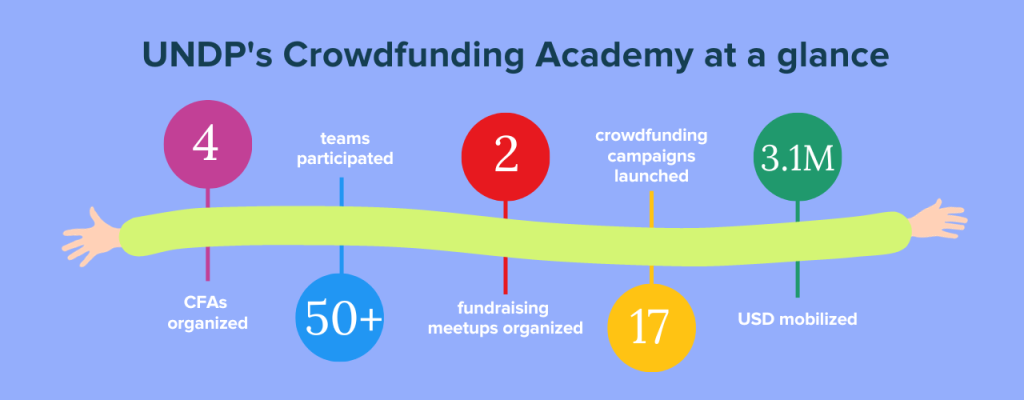
The CFA, a joint initiative between the Bureau of External Relations and Advocacy (BERA), responsible for UNDP’s external relations and advocacy functions, and UNDP AltFinLab, a flagship project at UNDP Europe and Central Asia promoting alternative finance for development. The first CFA started in 2015; and in the last four years that we are running the global open call, we have organized four academies with over 50 teams participated; which resulted in 17 crowdfunding campaigns launched and over USD 3.1 million mobilized.
The 2024 UNDP Crowdfunding Academy (CFA) will be conducted in two phases, catering to six cohorts: a Global CFA, a joint CFA for Europe, Central Asia & Asia-Pacific, a CFA for Latin America and the Carribean, a CFA for Arab States, and finally two CFAs for Africa, a general and thematic one focused on Nature, Climate and Energy.
The first phase will focus primarily on capacity-building, giving selected participants the skills and knowledge necessary to effectively use individual giving and crowdfunding for their projects and initiatives. This interactive two-month online training program will cover diverse crowdfunding approaches, campaign strategy development, partner engagement, and communication tactics. The curriculum, tailored to meet the specific needs of participants, comprises 13+ interactive sessions on SparkBlue, each complemented by informative videos, quizzes and assignments to enhance learning. Additionally, participants will receive ongoing mentorship from a pool of crowdfunding experts, ensuring personalized support.
Following the capacity-building phase, a total of around 10 teams will be selected for the second phase, Campaign Accelerator, to advance their skills to the next level by launching a crowdfunding campaign in 2024. Participants will be chosen based on demonstrated commitment & interest, campaign idea, budget and other resources, and team cohesion. During this phase, teams will work on fine-tuning their ideas, building their campaign strategy, forging partnerships, and creating their communications strategy. Each team will work with a dedicated group of mentors over the course of two months via interactive and practical 1:1 training sessions, aimed at accelerating their campaign ideas.
Crucially, mentorship lies at the heart of the CFA experience. Participants receive ongoing support from crowdfunding experts, guiding them through the intricacies of fundraising campaign planning and execution. With access to UNDP’s fundraising platforms and operational support, participants will be equipped to create compelling campaign pages and engage donors securely and reliably.
The impact of the CFA extends far beyond individual projects, fostering a culture of innovation and collaboration within UNDP and beyond. As teams gear up to launch their campaigns, they are poised to drive meaningful change and realize their project goals, amplifying UNDP’s impact in communities worldwide.
Stay tuned for updates as upcoming individual giving campaigns take shape, furthering UNDP’s mission to address global challenges and create positive impact for communities worldwide.
Unveiling new horizons – our commitment to transformative change
Over the last decade, blockchain technology and cryptocurrencies have undergone a significant cycle of hype. As the Alternative Finance Lab (AltfFinLab) in the Innovation team at UNDP Europe and Central Asia, we were there to witness and learn more by experimenting ourselves. We are now convinced that we stand at a juncture where powerful technological solutions can also accelerate development endeavors. Read more about what we have learned and how we are planning to unlock the blockchain potential for development across UN(DP) through unrolling training programs and the use of blockchain-based solutions.
When we talk about using blockchain technologies and cryptocurrencies for development – it’s time we also move away from outdated associations with Bitcoins and speculative bubbles. Instead, we are referring to technology with the potential to ensure the legal identity of almost 1 billion people, offer financial inclusion solutions to 1.4 billion unbanked people, instil more trust in areas like agriculture through track-and-trace systems, accelerate financial aid through smart contracts and transparent payments, and create opportunities for tokenizing assets and impact investments.
This endeavor goes beyond mere technological adoption; it represents a shift in approach to development. We see blockchain as a pivotal tool for enhancing transparency, efficiency, and accountability. Our dedication to embedding blockchain in our projects is driven by its potential to expedite progress toward the Sustainable Development Goals (SDGs), thereby fostering more inclusive, effective, and resilient development models.
Where it all began – our blockchain legacy
The narrative of UNDP AltFinLab’s involvement in blockchain is a rich tapestry, interwoven with various groundbreaking initiatives, each strand representing a step forward in our ongoing journey towards innovation and impact. In 2015, we started exploring blockchain and crypto opportunities together with other UNDP frontrunners, including at the Alternative Finance Conference we organized. Since then, we have facilitated the implementation of smaller-scale initiatives in over 10 countries worldwide, exploring best case practices for how to proceed forward.
2019 marked a milestone with our support for ‘The Other Bar’, an innovative project pairing chocolate bars with a ‘digital passport’ to trace the cocoa journey from bean to bar. More than just a product, each bar carried an impact token, offering consumers an opportunity to reinvest in the very farmers and communities who crafted their chocolate. Additionally, we have been involved in other projects on democratizing energy production and consumption in Serbia and Lebanon, enabling efficient, sustainable, and community-driven energy trading. What’s more, our collaboration with UNDP Lebanon led to the birth of CedarCoin in 2020, a digital impact coin designed to funnel investments into impactful projects within Lebanon.
In Bahrain, we undertook a unique initiative to create blockchain stamps (green energy certificates) for energy generated from solar panels. With the European Commission, we worked on a blockchain accelerator to implement several more solutions in the solar energy sector (in Serbia and Lebanon), as well as to track and trace agricultural products (fair supply chain for argan oil in Morocco).
Each of these initiatives represents a vital chapter in our blockchain legacy. Far from mere experiments, they were foundational steps towards grasping the immense potential of blockchain in tackling global challenges. They underscore our belief that blockchain is not just a tool for digital transactions but a catalyst for meaningful change, capable of addressing some of the most pressing issues faced by our communities today.
Today’s blockchain chronicles – scaling new peaks
Our current chapter in blockchain is as thrilling as it is transformative. We have designed and initiated multiple blockchain initiatives for 2024. This endeavor aims to encourage innovation within UNDP, fostering a culture of exploring cutting-edge technologies and solutions. For this, we have established several strategic partnerships in the last few months with the Algorand Foundation, Cardano Foundation and Polygon Technologies. In addition, the UNDP AltFinLab team also onboarded six blockchain visionaries and experts from our global network to embark on a six-month mission to pioneer novel blockchain applications in development assistance.
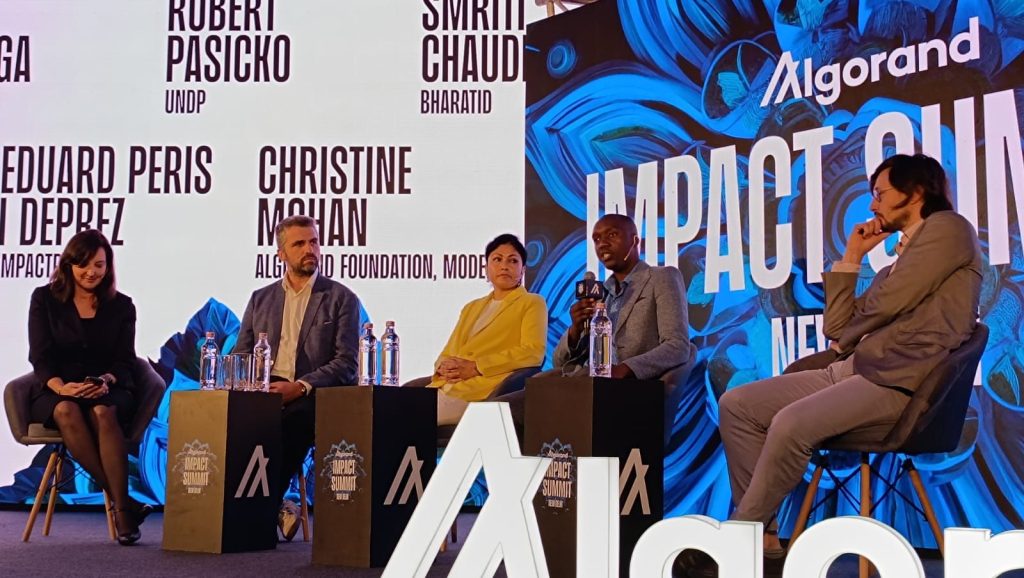
Together with Algorand, we are developing our upcoming Algorand Blockchain Academy, a significant stride towards training UN staff on Web3 and blockchain technology. In collaboration with UNDP Digital Giving and building upon the UNDP Crowdfunding Academy training program, this initiative aims to equip UNDP employees, as well as staff from other UN agencies, with practical knowledge and applications of blockchain in the context of sustainable development. Set to roll out as a beta version in Q1 2024, the Algorand Blockchain Academy will also offer mentorship support to UNDP Country Offices (CO) initiating or developing blockchain development projects.
Furthermore, as part of our program, we plan to develop acceleration programs with funding for the most promising UNDP CO blockchain projects. This approach not only underlines UNDP’s commitment to utilizing blockchain technology for global challenges but also fosters a culture of continuous learning and innovation, opening new fundraising opportunities for pilots and experiments. Together with the UNDP Chief Digital Office and the UN Innovation Network, we are exploring ways to design and manage an effective and impactful UN Blockchain Community of Practice, as well as how we can create environments (playgrounds and sandboxes) to test and validate blockchain-based solutions in various UN development projects.
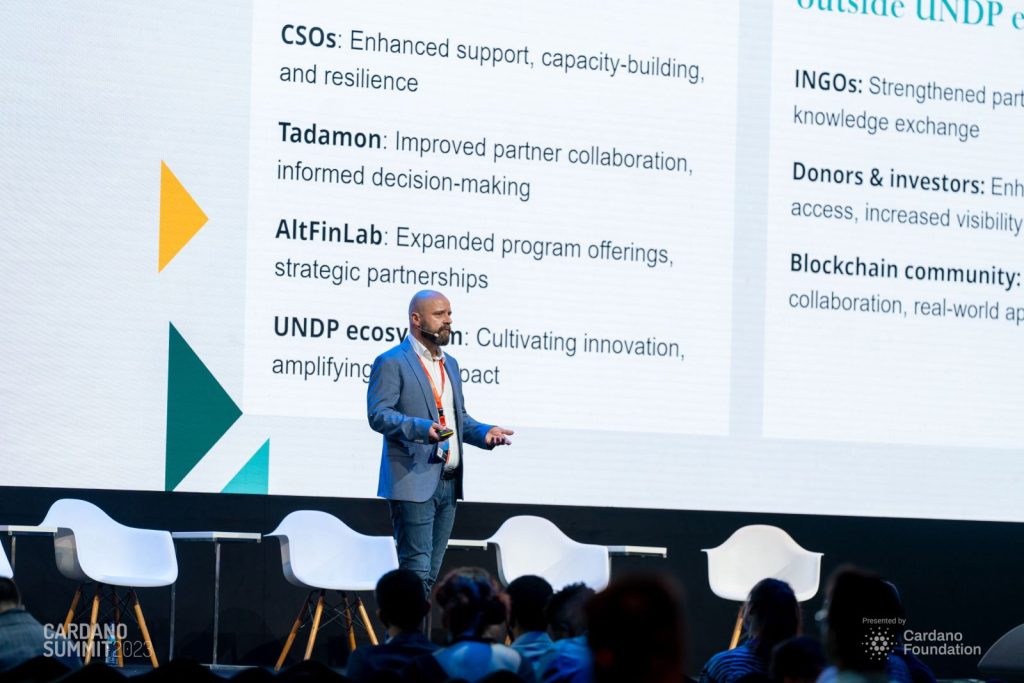
Our collaboration with the Cardano Foundation, announced in early November 2023 at their Annual Summit in Dubai, marks another significant milestone. Each year, through the Cardano Global Impact Challenge (GIC), the Cardano community focuses on blockchain-based solutions for development organisations, like the 2022 partnership with Switzerland’s UNHCR for a charity stake pool. This year’s GIC aims to revolutionise not only the Tadamon program, a multiyear initiative empowering civil society organizations, in partnership with the Islamic Development Bank and Islamic Solidarity Fund for Development, but also other UNDP development projects. Together with Cardano, we aim to establish an automated engine for a verified database and monitoring of civil society ecosystem development across multiple countries where AltFinLab operates. Finally, with Polygon Technologies, we are planning to jointly accelerate and incubate innovators working on the development issues using blockchain, and to learn from their experiences on working with startups.
In addition to our partnerships with blockchain foundations, we have also initiated a number of collaborations with private companies. One such transformative initiative is our partnership with Innofund, and several other UN agencies, on the Tadamon Web3.0 multi-platform. This platform aims to revolutionize grantmaking, crowdfunding, and matchmaking by integrating state-of-the-art Web3.0 technology. Focusing on aid distribution, systematic impact investment, cross-border money transfers, payments, and impact measurement, the platform is poised to significantly streamline and enhance the efficiency of these vital processes. This venture marks a major advancement in leveraging blockchain technology for more effective and transparent global development efforts.
Looking ahead – the future of blockchain in development
Our journey with blockchain is just beginning. As we gaze into the future, a horizon brimming with exciting new initiatives and dynamic partnerships awaits us – from accelerators to incubators. Our efforts go beyond merely fostering new ideas; we are actively shaping a new paradigm. The upcoming e-learning training for UN(DP) employees is set to spark a global discourse on blockchain’s role in sustainable development. Additionally, our 2024 blockchain partnership event, to be hosted in the Western Balkans, is poised to be a hub of innovative ideas and collaborative efforts.
An invitation to co-create the future
As we move towards this new phase of testing and experimenting with blockchain at UNDP, our commitment to unlocking its full potential remains unwavering. But to do this, collaboration should be at the heart of this endeavor. Thus, this is also an open invitation to technologists, development professionals, innovators, and dreamers: join us in spearheading this digital revolution. Your ideas, active participation, and engagement are the lifeblood of our mission. Together, let’s build a future that is inclusive and resilient, driven by blockchain technology, where every innovation and effort propel us towards a universally prosperous world.
Stay tuned for updates, insights, and inspiring stories from the forefront of blockchain and development.
(Edited by Svetla Baeva, Communications Lead, UNDP IRH)
The United Nations Development Programme (UNDP) announces a partnership with Innofund, a blockchain development firm dedicated to creating Web3 solutions that address societal challenges. Together, they will explore leveraging blockchain technology for sustainable development, by addressing governance challenges, promoting financial inclusion, and driving social impact.
Innofund powers Cashdillo, a crowdfunding and grant management platform, which will support UNDP on addressing various challenges, including grant allocation and management, provision of advanced fundraising tools, automating co-financing mechanisms, optimizing data collection, and ensuring seamless impact reporting.
“This new partnership will be first deployed across our work on civil society empowerment through the NGO Empowerment for Poverty Reduction Programme (Tadamon), led by UNDP, ISDB and ISFD, which focuses on supporting civil society organizations (CSOs) by providing capacity-building and development trainings for fundraising and business acceleration,” says Robert Pasicko, UNDP Istanbul Regional Hub’s expert for alternative finance and low carbon development. “We are looking forward to explore and develop blockchain applications to address development challenges in UNDP development projects.”
Notably, blockchain technology will be leveraged to enhance transparency, with the platform offering a comprehensive suite, including matchfunding, crowdfunding, grant management, and an ESG data engine, harnessing the benefits of blockchain such as smart contracts, decentralization, and data transparency.
“We are delighted to be able to partner with UNDP, one of the world’s largest and most respected development agencies, to pilot our bespoke grant management and crowdfunding platform,” says Alex Macbeth, one of the Cashdillo’s co-founders. “We are confident that introducing web3 elements can make the grant management process more efficient and transparent, and ultimately more beneficial for CSOs working on major development challenges, as well as major donors and implementing agencies like UNDP”.
The partnership with Innofund comes as part of a series of collaborations with blockchain technology organizations to build UNDP capacity through education and training and unroll practical applications for sustainable development. Find out more about UNDP’s partnership with Algorand Foundation here and with Cardano Foundation here.
About UNDP:
UNDP is the leading United Nations organization fighting to end the injustice of poverty, inequality, and climate change. Working with our broad network of experts and partners in 170 countries and territories, we help nations to build integrated, lasting solutions for people and planet. Learn more at undp.org or follow at @UNDP.
Photo by Shubham Dhage on Unsplash
Algorand selected to deliver blockchain curriculum to 22,000 UNDP employees globally
The United Nations Development Programme (UNDP) announces a partnership with Algorand Foundation, an organization focused on enabling an inclusive, decentralized, and borderless global economy based on the Algorand blockchain technology, to provide UNDP staff with knowledge and insights into the applications of blockchain technology.
The Algorand Blockchain Academy will launch in 2024 and is designed to bolster UNDP staff capacity through education and training in blockchain technology and its practical applications for sustainable development. The curriculum will consist of recorded lectures, interactive workshops and hands-on assignments that will be made available to all 22,000+ UNDP employees in over 170 countries and territories, in addition to staff members at other UN agencies.
“The training is instrumental in equipping our team with the tools needed to address complex global challenges using blockchain technology,” said Robert Pasicko, UNDP Istanbul Regional Hub’s expert for alternative finance and low carbon development, at the Algorand Impact Summit last week. “We are thrilled to be in a position to leverage the credibility and expertise of the Algorand Foundation and key members of their ecosystem in order to upskill, empower, and inspire UN practitioners around the world.”
Focus areas of the program include:
- Financial inclusion: Exploring the use of blockchain to extend financial services to marginalized communities;
- Supply chain transparency: Enhancing transparency in supply chains, combatting issues like child labor, and promoting sustainable sourcing;
- Real-world asset tokenization: Enabling fractional ownership to increase accessibility for a wider variety of investors;
- Digital identity: Developing secure and universal digital identity solutions to support social and financial inclusion.
“We are excited to partner with UNDP to promote innovation and technology for the betterment of society,” said Doro Unger-Lee, Head of education and inclusion at Algorand Foundation. “We see this education and tooling initiative as a critical first step toward identifying and delivering actionable, on-the-ground use-cases of blockchain to help achieve the Sustainable Development Goals in a number of areas.”
In addition to the team at the Algorand Foundation, the curriculum will include speakers from Algorand ecosystem projects including HesabPay, Wholechain, Koibanx, and Quantum Temple. Pilot testing of the platform will start early 2024 and will be rolled out throughout the year.
About UNDP:
UNDP is the leading United Nations organization fighting to end the injustice of poverty, inequality, and climate change. Working with our broad network of experts and partners in 170 countries and territories, we help nations to build integrated, lasting solutions for people and planet. Learn more at undp.org or follow at @UNDP.
About the Algorand Foundation:
The Algorand Foundation is dedicated to helping fulfill the global promise of the Algorand blockchain by taking responsibility for its sound monetary supply economics, decentralized governance, and healthy and prosperous open-source ecosystem. Designed by MIT professor and Turing Award winning cryptographer Silvio Micali, Algorand is uniquely capable of delivering on the promise of a borderless global economy. It achieves transaction throughputs at the speed of traditional finance, but with immediate finality, near zero transaction costs, and on a 24/7 basis.
For contact
Ms. Svetla Baeva, Communications Lead, Innovation Team Istanbul Regional Hub, svetla.baeva@undp.org
The UNDP Crowdfunding Academy (CFA) is now open for applications! The global CFA is a two-month online training that dives into the world of fundraising, building your skills to successfully start a crowdfunding campaign yourself to fund a project or initiative at UNDP.
The interactive and hands-on academy will explore the science behind successful digital fundraising – you’ll learn different types of crowdfunding approaches, how to set the right funding goal, creative ways to engage partners, build a beautiful campaign page and an efficient communications strategy, and receive detailed advice on what to do (and what not to do) when fundraising.
It is a joint initiative between the Bureau of External Relations and Advocacy, responsible for UNDP’s external relations and advocacy functions, and UNDP AltFinLab, a flagship project at UNDP Europe and Central Asia promoting alternative finance for development.
How to apply
The training is open to UNDP Country and Regional Offices anywhere, as well as global teams, seeking to mobilize funds for new or existing projects or campaigns in several key thematic areas (but not limited to): inequality, climate and nature, and crisis and conflict, in line with UNDP’s external engagement priority themes. To apply, please fill in the application form and provide a description of your campaign idea (not to worry – these may be adapted on your crowdfunding journey). Teams should aim to launch their campaigns 3-6 months after the end of the training.
⏳ The deadline for submitting applications is December 20, 2023. You will receive information about your application in mid-January.
What to expect
The academy will start at the beginning of 2024. It consists of 10-12 interactive online sessions, including an introduction to crowdfunding, building a campaign strategy and mapping your crowdfunding ecosystem, setting your financial goal, engaging partners for resource mobilization, as well as communications and storytelling for crowdfunding among other things. The sessions are tailored to fit your needs and improve your skills to launch your own successful crowdfunding campaign. Each session includes a 10-to-20-minute video and a short quiz. Following every third module, you will be given an assignment to complete, which will help you build your campaign.
You will also be assigned a mentor to work with you as you prepare to launch your campaign. Our mentorship takes the form of regular meetings, where you discuss assignments and other pressing campaign issues. The academy requires a weekly time commitment. Your team will need to invest 3-5 hours weekly.
What you’ll receive
By joining the Crowdfunding Academy, you will receive:
- Access to the training materials and resources, master class videos on specific topics, and the Community of Practice on SparkBlue to interact with other participants;
- Access to UNDP’s fundraising platforms – Every.org & Classy – allowing you to create custom campaign pages and content, while providing donors with a secure, reliable donation experience;
- Access to a pool of crowdfunding experts and mentors from AltFinLab, who will provide hands-on support and personalized mentorship sessions on campaign strategy and communications to creating videos & visuals;
- Access to central operational processes, including financial reconciliation, managed by UNDP BERA;
- Additional learning opportunities through LinkedIn for which you can receive a certificate upon completion;
- Access to communications support from BERA on regional or global campaigns.
To crowdfund is to build a community. Join us!
The Islamic Development Bank (IsDB), the Islamic Solidarity Fund (ISFD), the United Nations Development Programme (UNDP), and the Organisation of Islamic Cooperation (OIC) successfully organized a special side event during the 78th UN General Assembly last week. The event ”Empowering Civil Society: Unleashing Innovation and SDG Finance through the Power of Community“ brought together 200+ participants, including civil society organizations (CSOs) and partners, to explore different ways of leveraging innovation and alternative financial mechanisms to empower CSOs that are addressing a range of critical development issues.
The event was attended by high-level representatives, including Haoliang Xu, the Under-Secretary-General and Associate Administrator of UNDP, Dr. Mansur Muhtar, IsDB Vice President of Operations, and Ambassador Hameed Opeloyeru, OIC Permanent Observer to the UN, and Dr. Hiba Ahmed, Director General of the ISFD. Their inspirational and compelling opening remarks and statements underscored the significant role of civil society and the innovative tools available to strengthen organizations’ work on the ground.
At the heart of the event was a lively discussion, moderated by Syed Husain Quadri, Director, of the Resilience and Climate Action Department at IsDB, that highlighted the importance of innovative finance and cutting-edge technologies in advancing the work of CSOs. It featured key speakers: Edward Bitar, Founder and President of Live Love Lebanon, Nasser Diallo, Founder and CEO of Clinic+O, Chris Blauvelt, Co-founder and CEO of LaunchGood, Dorothee Unger-Lee, Head of Education and Inclusion at the Algorand Foundation, and Gina Lucarelli, Team Leader of UNDP Accelerator Labs.
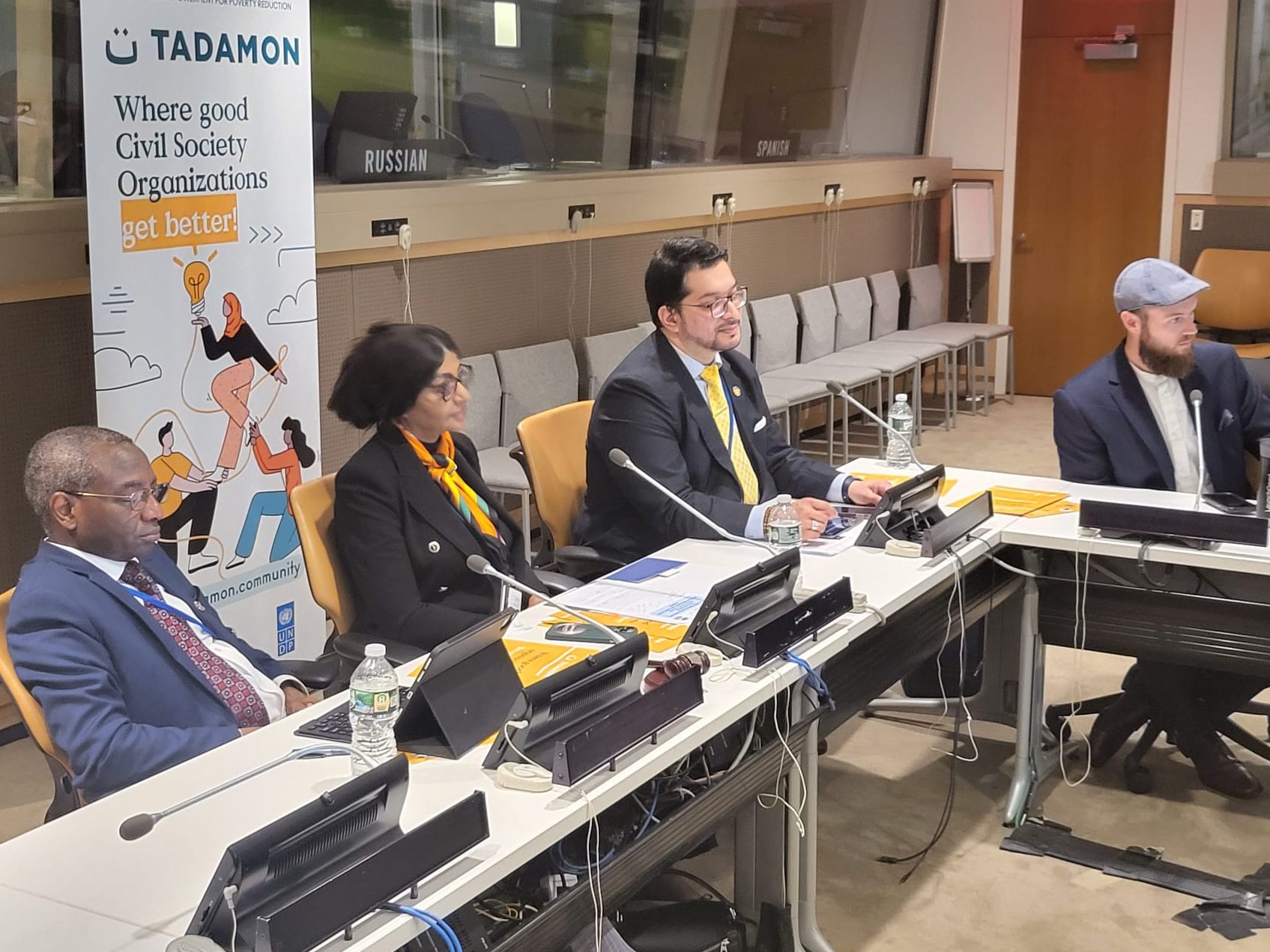
The conversation centered on emphasizing the crucial role of the community in gaining a deep understanding of the challenges and creating solutions that fit the local context. Moreover, it brought attention to alternative funding mechanisms, like crowdfunding for CSO-led projects, and the use of cutting-edge technologies such as blockchain to educate grassroots changemakers in tackling global challenges. These insights underscored the necessity of consistently monitoring and embracing new solutions and technologies to address pressing challenges in our ever-changing world.
In addition, Dr. Robert Pasicko, NGO Empowerment Project Manager, UNDP RBEC, presented the impressive results of Tadamon’s program, four years into the initiative. He shared the progress and impact of contributing not only to civil society development but boosting critical sustainable development financing. As a result of the program, a total value of $2.2 million has been effectively raised by over 80 crowdfunding campaigns powered by CSOs to underpin impactful projects that have changed the lives of over 80,000 people in areas related to education, healthcare, disaster relief, and more. Additionally, 500 CSOs have been trained and have created a $14 million pipeline of innovative projects supporting the SDGs.
The event ended with an exploration of potential partnerships, priority issue areas to address such as climate and youth, and innovative mechanisms to tap into in the next phase of Tadamon in supporting CSOs on the frontline to further drive innovation in development and sustainable financing.
For more information, please see our Tadamon website or contact us via email: team@tadamon.community
The Islamic Solidarity Fund for Development (ISFD) and the Islamic Development Bank (IsDB), in collaboration with the United Nations Development Programme (UNDP) and the Organization of Islamic Cooperation (OIC), are proud to present a special side event during the 78th session of the UN General Assembly. This event aims to explore how innovation, alternative finance, and sustainable development can serve as catalysts, empowering civil society organizations (CSOs) to play a pivotal role in achieving the Sustainable Development Goals (SDGs).
CSOs stand as instrumental players in addressing today’s paramount developmental challenges – spanning from poverty and inequality to climate change and pollution. With a profound understanding of the needs and concerns of marginalized communities, CSOs are at the forefront of driving positive change. Nonetheless, the funding gap in addressing the SDGs in developing countries increased by 56% after the outbreak of COVID-19, totalling USD 3.9 trillion in 2020 (OECD 2022).
In response to this challenge, the interest in harnessing innovative financing mechanisms such as crowdfunding, impact investing, blockchain-based and Islamic financing and other models has soared. This surge is propelled by factors including heightened internet penetration, the proliferation of smartphone usage, and an ever-growing entrepreneurial spirit.
During the side event, the organizers will bring together a diverse array of stakeholders, including crowdfunding platforms and blockchain companies. Together, they will discuss innovative strategies for harnessing alternative financing and innovation, thereby fortifying CSOs to effectively address critical developmental issues. Moreover, the event will shed light on gaps and conditions essential for bolstering CSO capacity, fostering innovation to combat poverty-related challenges, and guaranteeing sustainable financing for those at the frontline of change.
A significant highlight of this event will be the presentation of the IsDB – ISFD NGO Empowerment for Poverty Reduction Programme (Tadamon). This programme, sponsored by ISFD, managed by IsDB, and executed by UNDP and partners, spans across 33 OIC Member Countries, including in the RBEC region, where it supports local CSOs in their mission to improve the socio-economic wellbeing of marginalized communities.
With over 3,500 CSOs having joined Tadamon to drive transformational change, the programme runs a series of initiatives, including a Crowdfunding Academy, which has equipped 450 CSOs with skills in management, innovative financing, and crowdfunding, and the Tadamon Accelerator, which has supported 50 CSOs from 28 countries with training and $460,000 in grants.
Operating at the nexus of innovation and alternative mechanisms, the side event will showcase Tadamon’s achievements and lessons learned, showcasing how innovation and sustainable development can empower local CSOs.
In July, UNDP, in collaboration with the Islamic Development Bank, the Islamic Solidarity Fund, and the Ministry of Finance of the Slovak Republic, organized a three-day workshop in Istanbul to explore how to build innovation ecosystems and leverage innovative finance to fuel sustainable development.
The workshop brought together participants from UNDP Country Offices spanning Africa, Asia Pacific, Europe, Central Asia, Latin America, and the Middle East. Their collective aim was to explore the potential of various innovative financing mechanisms, including crowdfunding, impact investing, blockchain-based financing, and other models, as means to overcome funding challenges and facilitate novel pathways for financing the Sustainable Development Goals (SDGs).
Unlocking innovation ecosystems: Cultivating collaboration and culture of innovation
During the first day we looked into what it means to support the development of innovation ecosystems and explored various types of innovative finance models for sustainable development. Choosing single-point solutions instead of building ecosystems limits the impact and sustainability of innovation, making it ineffective and insufficient.
We heard from a number of UNDP Country Offices from Mauritania and Djibouti to North Macedonia and Uzbekistan, which presented the mapping of existing innovation ecosystems and projects, shedding light on their potential and challenges. Interestingly, each emphasized the importance of collaboration with various stakeholders, including startups, accelerators and incubators, entrepreneurs, policymakers and civil society organizations (CSOs), as crucial for addressing complex challenges effectively.
Boosting innovation ecosystems: Emerging frontiers
Additionally, the workshop convened a diverse group of technology partners, ranging from blockchain enterprises to crowdfunding platforms. Together, they examined potential pathways for embracing innovative approaches to advance the SDGs. The fusion of Artificial Intelligence (AI), Machine Learning (ML), and Metaverse technologies holds significant potential in transforming sustainable development efforts. These technologies offer the promise of enhancing impact measurement, data analysis, and decision-making processes.
“Shifting power and resources to the people most impacted by a problem builds trust and ownership in solutions.”
Rujuta Teredesai, GlobalGiving
The event also explored the possibility of establishing a blockchain academy, tailored for diverse stakeholders, including nonprofits. Such an academy would offer opportunities to delve into state-of-the-art technologies and understand how blockchain, AI, and ML can be harnessed to support CSOs or forge strategic alliances with global tech and development entities in the realms of global campaigns and emergency response measures. The productive dialogue marked the initial stride in identifying pivotal intersections and crucial areas for intervention to catalyze innovation and collaboration for sustainable development.
“Technology is a powerful tool, and its scope has reached out to new fields such as sustainable development in the last years. New technologies such as AI and Metaverse can intertwine with development. For example, in Turkey, a project with UNDP will show (through METAVERSE) how cities and places used to look before the earthquake to motivate donors to add funds in the reconstruction efforts.”
Ece Başay, META
A deep dive into how to use crowdfunding
The second part of the workshop was dedicated to discovering the potential of crowdfunding as a powerful tool to fund initiatives and bring together communities. The sessions took place as part of UNDP’s Crowdfunding Academy, led together with BERA, and Tadamon, under the NGO Empowerment for Poverty Reduction program seeking to uplift CSOs.
“Capacity building is fundamental for CSOs to be able to mobilize resources. The alliance between ISDB and UNDP has been fruitful to tackle this challenge and provide CSOs with necessary mechanisms to grow.”
Eyas Ghreiz, IsDB
Participants in our training program actively immersed themselves in a meticulously crafted curriculum, strategically aimed at empowering them with the knowledge and expertise required not only to kickstart but also to confidently execute impactful crowdfunding campaigns. Our overarching goal was to equip UNDP Country Offices with the essential skills and insights necessary to harness the potential of crowdfunding as a sustainable source of funding for their initiatives.
Moreover, our training program extended its focus beyond the mere execution of campaigns; it delved into the cultivation of thriving ecosystems around these initiatives. Participants delved into strategies for engaging communities, resource mobilization, and sustainable project management. This comprehensive approach sought to ensure that campaigns not only met their immediate funding objectives but also laid the foundation for enduring community support and the long-term success of projects.
The working groups became vibrant hubs of collaboration where participants shared experiences and devised innovative strategies for applying their newfound knowledge in their respective countries. Key learnings from the working groups encompassed a wide spectrum, from crafting comprehensive crowdfunding campaign strategies and mapping out crowdfunding ecosystems to resource mobilization techniques and harnessing the persuasive power of communication and storytelling.
Key learnings and next steps
The three-day workshop was a resounding success, with a profound impact on driving innovation and advancing sustainable development, particularly in the realm of innovative finance. This event acted as a potent catalyst for transformative change in how we approach resource mobilization.
During the workshop, participants were exposed to cutting-edge concepts and real-world case studies, which expanded their horizons and allowed them to approach challenges from fresh perspectives. Through interactive sessions and hands-on exercises, attendees developed a deeper understanding of how innovative financing mechanisms could effectively address intricate societal and environmental issues.
The workshop marked the beginning of a journey toward innovation-driven sustainable development through collaborative initiatives harnessing innovative modes of financing.
Tadamon, a community platform for civil society organizations empowerment has recently announced, 50 civil society organizations (CSOs) will join the Tadamon Accelerator open call, a social impact acceleration project financed by The Islamic Development Bank (IsDB), The Islamic Solidarity Fund for Development (ISFD) and implemented by UNDP. The Tadamon Accelerator open call focuses on strengthening emergency and resilient-led responses. The selected changemakers will join a 14-week intensive online program to explore and implement innovative social impact solutions in three key thematic areas: emergency medical response education in emergency, and building community resilience.
The 50 selected CSOs were selected from nearly 350 applications from 28 OIC member countries after compliance verifications by the UNDP and based on their potential to impact their communities. The organizations are on a mission to transform the lives of millions of people and their communities – from advancing remote digital health solutions and revolutionizing maternal healthcare through an app to using gamification to enhance children’s learning skills and repurposing agricultural spaces.
The Tadamon Accelerator open call is part of an overall emergency program launched in 2020 by the Islamic Development Bank and the Islamic Solidarity Fund for Development, titled “Tadamon CSO’s Pandemic Response Accelerator Program”. The program is funded by a seed contribution of IsDB, ISFD and is currently implemented by key strategic financial and technical partners including UNDP, Spark, IFRC, ICRC, Plan International, Light for the World.
The full list of Tadamon accelerator open call selected participants are:
Algeria
Reyada Association
Azerbaijan
Debate in Civil Society
Benin
Médecins A Domicile- Benin
Burkina Faso
Blue Diamond Leading Solutions
Cameroon
Society for the Promotion of Initiatives in Sustainable Development and Welfare
Chad
DIBEBE for Development and Aid
Guinea
Clinic+O
Indonesia
Yayasan Inara
Semarak Cerlang Nusa Consultancy, Research and Education for Social Transformation
Kharisma Agri Inovasi
Iraq
The Iraqi Institution for Development
Nahri Humanity Organization
Young Messengers Organization for Relief and Development
Jordan
SOLVillion
Jordan Youth Innovation Forum
Kazakhstan
Kunde Social
Lebanon
Dooda Solutions
Home Care Services
Libya
Moomken Organization
Women’s Forum for Development
FabLab Libya
Maldives
Global Citizen Society
Mauritania
Development, Research and Monitoring Association
Morocco
Association Al Amal Féminine
Niger
Assistance au Développement Communautaire
Nigeria
NerdzFactory Company
Health Emergency Initiative
Association of Northern Women Entrepreneurs
Pakistan
Needy Poor People Foundation
Active Involvement & Motivation
Saudi Arabia
Saudi Green Building Forum
Senegal
Jokalante
Somalia
Somali Relief Center
African Development Trust
Burhakaba Town Section committee
State of Palestine
BuildPalestine
Al Quds Business Center for innovation technology and entrepreneurship
Hakini for Psychological Services and Consultations
Sudan
Sudan Urban Development Think Tank
Togo
Centre de Documentation et de Formation sur les Droits de l’Homme
Association des Volontaires pour la promotion des Jeunes
Tunisia
Association Tunisienne de Protection de la Nature et de l’environnement de Korba
Scout Without Borders
Smart Books
Turkey
Association for Solidarity with Asylum Seekers and Migrants
Innovation for Development
Hope Revival Organization
Yemen
Democracy School
Enjaz Foundation for Development
Al-Awn Foundation for Development
“Civil society organizations are at the forefront of crises responses complementing hundreds of public health and humanitarian emergencies that occur every year. With the Tadamon Accelerator, we can now expand our support for these pioneering innovative solutions in hard-to-reach communities. The program is meant to connect changemakers across countries and accelerate the impact they have on pressing issues”, said Dr. Robert Pasicko, Project Coordinator from the UNDP IRH.
“Civil Society Organizations spectrum of interventions across the 57 OIC Member Countries can often seem complicated and challenging to navigate in view of the rapid changes and crises they are facing – Our Tadamon Community Hub offers opportunities and support at every stage of the CSOs growth journey. From capacity development to diverse ranges of CSOs, to delivering projects at grass root level, to strategi consultations we are here to empower CSOs to realize their full potential and impact their communities”, says representatives of IsDB.
“The link between the Sustainable Development Goals (SDG) and Civil Society Organizations (CSO) is undeniable. Goal 1 of “ending poverty in all its forms everywhere” would not be achieved (both on the financing and implementation levels) without forging innovative and smart partnerships among governments, CSOs, donors, private sector, and citizens. This is especially true in the least developing and fragile countries.
TADAMON is both a platform and a tool for connecting governments, citizens, and the private sector to CSOs recognizing the vital niche that CSOs have in creating a better future through effective, inclusive and grass roots implementation of humanitarian and development efforts alike”, say representatives of ISFD.
The 50 innovators will access world-class trainings in innovative finance, digital transformation, business model development, impact measurement & management, and more. Guided by trainers and mentors from Startup Grind, Ideas42, ImpactAIM, and UNDP, they will develop, reimagine and scale their impact innovations – and compete for 25 monetary grants of up to USD 40,000, to ensure further scaling and sustainability. The innovations will become part of a region-wide portfolio that lays the groundwork for a better and inclusive future.
About Tadamon:
Tadamon, a community platform for civil society empowerment, is sponsored by ISFD, managed by IsDB, and implemented by UNDP and other strategic partners. The mission of the program is to provide visibility to CSOs’ projects and activities, support them with better access to alternative finance, and connect them to potential partners and supporters.
For more information, see here: tadamon.community or contact us at team@tadamon.community.
Civil society organizations across Asia, the Middle East, and Africa can apply by June 10, 2022, to receive access to training and funding fast-track their emergency response innovations: https://tadamon.community/accelerator
Tadamon, a community platform for civil society empowerment, funded by ISDB, ISFD, and implemented by UNDP, is launching the Tadamon Accelerator, a social impact acceleration program for civil society organizations (CSOs) in 32 Islamic Cooperation (OIC) member countries*.
Amidst public health and humanitarian emergencies, innovative solutions enable quicker responses, improve efficiency, and reduce costs. For its first edition Level Up, the Tadamon Accelerator is looking for CSO-led social impact innovation projects and solutions in three key thematic areas: emergency medical response education in emergency, and building community resilience.
“In line with the IsDB’s Civil Society Engagement Policy, Tadamon Accelerator capitalizes on the important role of CSOs and partners to complement OIC Member Countries Governments in addressing the impacts of the COVID-19 pandemic and the economic crisis. Since 2020, IsDB, ISFD, and all our partners have supported affected communities and populations by engaging with humanitarian actors, local authorities, and trusted leaders.”
“Beyond the COVID-19 crisis, we face hundreds of public health and humanitarian emergencies every year. Civil society organizations are at the forefront of this response, working with the most vulnerable communities. The Tadamon Accelerator is a new initiative that aims to accelerate social impact innovation in the area of emergency response by supporting those pioneering new ideas and technologies to make our societies more resilient and our response more effective”, says Dr. Robert Pasicko, Project Coordinator from the UNDP IRH.
50 CSOs will be selected to join the Tadamon Accelerator to explore and implement innovative solutions in these areas. The selected CSOs will participate in a 14-week intensive learning online program, which consists of training sessions on Sensemaking, Innovative Finance, Digital Transformation, Impact Measurement and Management and many more and mentoring led by world-class professionals to address key CSO needs. Upon completion of the program, up to 25 CSOs will be awarded monetary grants, to ensure further scaling and sustainability.
The application deadline for applying for participation in the Tadamon Accelerator is June 10, 2022. Apply here: https://tadamon.community/accelerator
*32 OIC Member Countries: Algeria, Azerbaijan, Benin, Brunei Darussalam, Burkina Faso, Cameroon, Chad, Comoros, Djibouti, Guinea, Indonesia, Iran, Iraq, Jordan, Kazakhstan, Lebanon, Libya, Maldives, Mauritania, Morocco, Niger, Nigeria, Pakistan, State of Palestine, Saudi Arabia, Senegal, Somalia, Sudan, Togo, Tunisia, Turkey, and Yemen.
Please contact us via team@tadamon.community for any questions you have regarding the Tadamon Accelerator and the application process.
Anyone who wants to make a difference in their community is now able to mobilize support and funds in Georgia through the homegrown crowdfunding platform OrbelianiMeti. Officially launched with UNDP seed funding in late 2019, the platform has succeeded in attracting an additional US$900,000 of USAID funding for a five-year programme to support crowdfunding for civic initiatives in Georgia. How did UNDP Georgia’s pilot transform into a nation-wide programme with a 10-fold increase in funding within just a year?
It all started with the Rustavi Innovation Hub, led by City Hall civil servants who were encouraged to experiment and use innovative approaches. This meant reaching out to new partners beyond the usual suspects for novel knowhow, experiences and practices.
The post-industrial city of Rustavi aims to innovate to create new opportunities for the younger generation to thrive through accessible education, jobs and creative spaces.
Irakli Tabaghua, the Mayor of Rustavi when establishing the Rustavi Innovation Hub
The city exchanged practices with the municipalities from the Polish cities of Lublin, Łódź and Stalowa Wola on how to design the city’s future vision through Foresight methods, and plan specific activities using a gaming approach. Local partners, like the data outlet Forset helped develop basic data literacy skills within the community; while the first public sector innovation space ServiceLab in Georgia guided the hub through user-centred design to co-design urban initiatives – such as urban street addressing and the design of the interior of the local service hall to reflect the needs of diverse groups of people.
The hub also worked with the UK Behavioural Insights Team to design a plastic waste pilot, involving a number of public-private partnerships with 47 schools and kindergartens. This hands-on learning approach gave the hub confidence to independently launch a C-bot, a civil servant chatbot providing 24/7 information on local public services. This project was implemented in partnership with the artificial intelligence startup Pulsar AI which later became the first Georgian startup to be acquired by the US digital automotive merchandising platform SpinCar.
Throughout this process, it became evident that alternative urban solutions proposed by individual citizens, groups or organizations at the local level needed new forms of funding and implementation. The city accepted the challenge and launched a match funding programme for youth initiatives to attract external investments. To manage the calls Rustavi Innovation Hub partnered with Orbeliani platform – a pioneering NGO democratizing access to donor funding. It offered both transparency, as the calls are announced and managed online, and administrative support. Orbeliani doesn’t issue direct funding to winning projects, but purchases all the necessary materials and hands them over to the initiative organizers for implementation. This arrangement overrides the requirement for official registration as a CSO, and gives access to individuals or groups to implement small scale community actions rooted in the local needs. The new funding modality, offered by the City Hall through Rustavi Innovation Hub and the Orbeliani platform, received a record number of 50 submissions for the first call. It transformed civic consultations into an action-based participation mechanism, linking civil servants and communities, albeit still largely dependent on external funding sources.
While we were happy with this new modality of cooperation, we wanted to offer a match funding model – donor funding plus crowdfunding to mobilize resources, spur civic engagement, increase efficiency and multiply impact. We were lucky to join the UNDP-Rustavi urban transformation journey, which helped us connect with the local and external expertise and make our plans a reality.
Ketevan Khachidze, Ex-Director of Orbeliani
It is at this junction that the City of Rustavi joined UNDP’s initiative to bring together mayors from eight countries to boost financing for solar energy in cities across the world. The choice of Rustavi was not incidental – the city as a signatory to European Energy Cities Covenant of Mayors was acknowledged for its local actions on energy efficiency.
Supported by UNDP AltFinLab, a unit within the Innovation team at UNDP Europe and Central Asia promoting alternative finance, the local team was guided through a series of webinars on crowdfunding and partnership building. They also connected with the founder of the first crowdfunding platform in Georgia – WeHelp.ge – to learn about the local context and crowdfunding ecosystem. Although the initial plans envisaged the development of a single crowdfunding campaign for a solar panel installation, the process took an unexpected turn. Orbeliani teamed up with Rustavi Innovation Hub, the selected schools, Future Laboratory and the Business and Technology University (BTU) for the Entrepreneurial Skills Development for Youth initiative. In addition to mentorship provided by Future Laboratory and BTU, students trained within the framework of MIT Global Start up Lab, and eight participating youth teams were given an introduction to crowdfunding and access to the Orbeliani platform.
The designed innovative model for action-based participation, linking local governance and individual citizens, has subsequently been replicated within UNDP local governance programming in three other municipalities: Marneuli, Bolnisi and Dmanisi. With USAID support, Orbeliani expanded its crowdfunding platform to other municipalities and in total helped raise 30,000 GEL for community initiatives by the end of 2020. Not surprisingly, community activists or groups in the municipalities see the non-monetary side of the crowdfunding much more appealing. Elnur Alisoy, who raised funds to organize an open-air museum of local heritage, noted that “crowdfunding is much more than money”, it allowed them to tap into the social capital by communicating about their ideas and mobilize genuine support from the people in the community and local authorities.
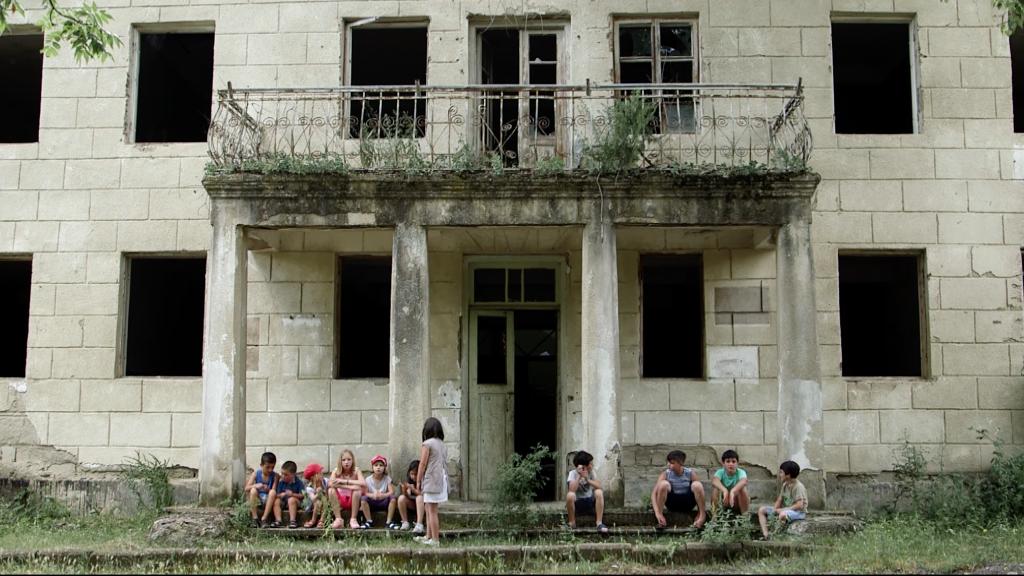
The city’s support for the use of crowdfunding, which is largely perceived as community work, created unprecedented conditions for transforming a single crowdfunding campaign into a collaborative movement of academia, public and private actors. It was centred around creating new opportunities for urban youth, and empowering them with cutting-edge skills and tools to take matters into their own hands. This example inspired others to follow: leading to the creation of the crowdfunding platform OrbelianiMeti.
Within UNDP the framework for this exploratory journey was provided by UNDP Innovation Facility and Country Investment Facility.