Tag: Crowdfunding
The following piece was first published on the AltFinLab blog and was originally published on June 21, 2017.
Our first 2 years of experience with crowdfunding taught us that the approach is not just a new market place for accessing funds but a tool to build community engagement; not just a PR fad but a powerful outreach and advocacy mechanisms; and not merely a support system for an initiative but an effort to catalyse new business models, technologies and solutions for social issues. Just donating money is like buying a blanket for one person in need; and crowdfunding an SME is like setting up a company that produces affordable blankets to hundreds in need. Re-inventing the business model, building an ecosystem of supporters and ambassadors, and a powerful leapfrog.
This year, our efforts are geared toward seeing to what extent crowdfunding can help small entrepreneurs accessing funding in places where it is prohibitively expensive or difficult in the mainstream finance sector. And our first lab – Ukraine.
Supporting SMEs from war affected areas in Ukraine
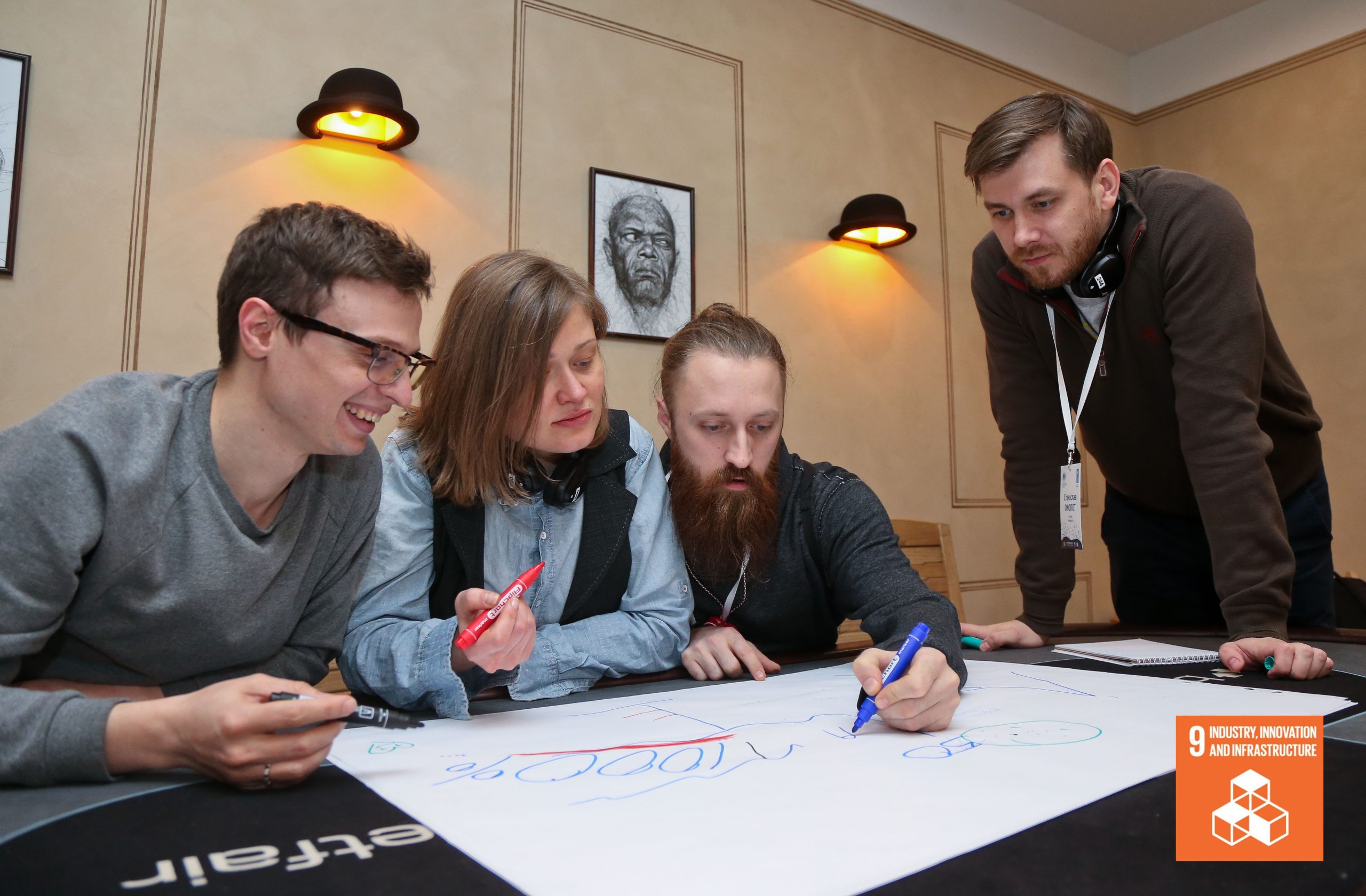
UNDP Ukraine Recovery and Peacebuilding Programme has a challenging task – to inspire people from war affected areas who worked all their life in mines and factories to step into the unsure path of entrepreneurship, and make them believe in themselves and their country again. Instead of just providing grants, we wanted also to see how can crowdfunding engage entrepreneurs themselves to build up their community and build transparency in the process of support.
Out of 40+ interested entrepreneurs, we worked with the 12 who had the most interesting ideas and enthused teams to help turn their vision into a crowdfunding campaign. First two campaigns already finished successfully:
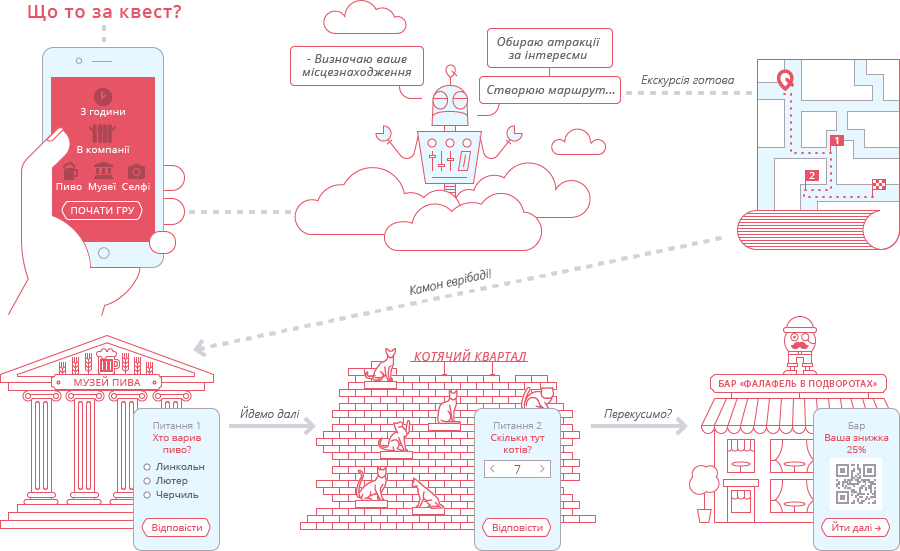
- WalQlike is a touristic app to explore the city in creating personalized route and quests;
- Secret Expedition, an educational tabletop scientific game meant to draw more girls and boys into science and engineering;
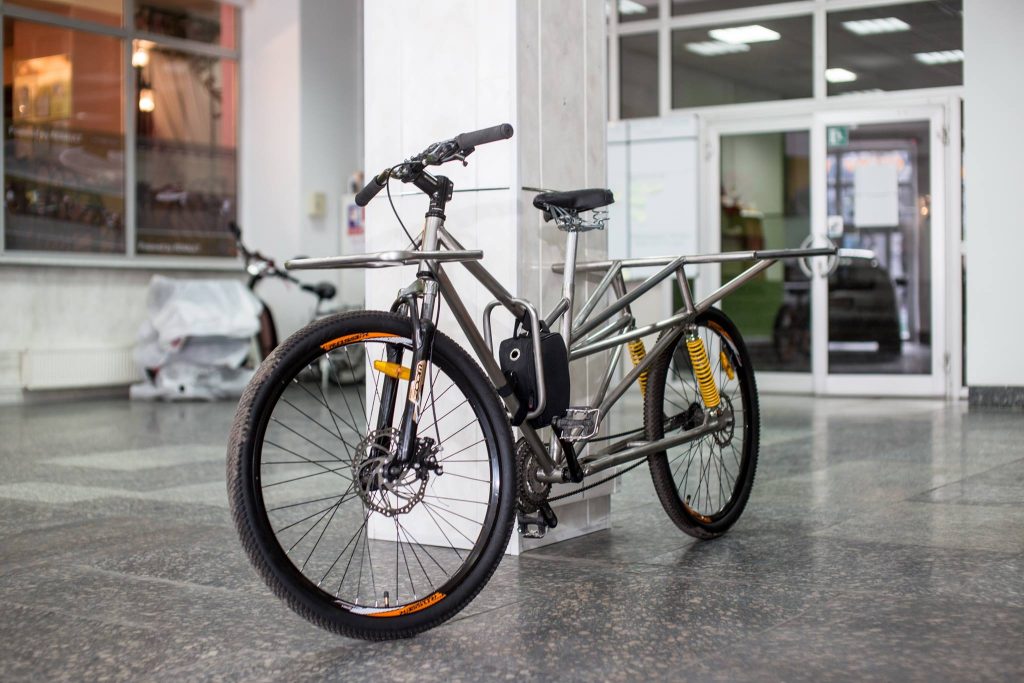
- Voltyco is affordable cargo electric bike that can travel on a single charge for 120 km with a total load of 150 kg – currently preparing their campaign for Kickstarter;
- Naprintuy fashion patch creates patches for clothes on human rights and tolerance (campaign coming out soon).
Lessons learned
We are currently in the process of supporting the teams, but some early learnings from the work with entrepreneurs vs. work with the non profit sector:
- Allow time – after finishing crowdfunding education, because of the project deadline there was a pressure to see campaigns out ASAP. Mistake not to be repeated as teams (entrepreneurs) need at least 3 months to build their communities once they know what they want;
- Find champions to start with – for initiating a crowdfunding ecosystem in a country with limited or no crowdfunding experience, quality of early campaigns is extremely important; especially in terms of using social networks, communication skills, English language (if they are about to go to international market) and hardworking dedicated SMEs;
- It is not a sprint but a marathon – don’t put high expectations from first campaigns in a country where culture of giving and supporting is not there. It is all about building the right ecosystem based on trust and it takes time, and it takes a lot of effort in connecting the dots between members of these ecosystem;
- Match the funds – something we planned from the start, we didn’t manage to perform due to project time constraints: supporting successful campaigns with matching additional dollar for every dollar from backers. The Danish Government has set a Fund that gained a lot of interest globally, matching successful platforms. Like this, selection process for companies to be supported is being outsourced to the market; and government gets to leverage public finance.
- Once again, it is a process – that gets initiated every time campaign gets out, and you never know where it is going to take you. Our project Voltyco put a campaign on Indiegogo campaign which brought them investors for a slightly different type of electric bike then they were offering. So they sit together with them, and are now preparing a new product for Kickstarter platform. It is a communication with your customers, to understand their needs and how to find the common ground.
Next steps
Crowdfunding principles are similar (but approach might be different), either it is an SME in a startup stage (early stage, may have just an idea and want to build a prototype); or it is an existing SME developing a new product/service; or even an SME moving into new sector (growth capital). Currently we are working on a number of approaches;
- Soon starting a new Global Crowdfunding Academy in Bosnia and Herzegovina, and supporting 12-15 SMEs with crowdfunding;
- In Moldova our project idea is supporting apple producers in a single food-export company, to bring domestic product to foreign markets (as a scale up of previous crowdfunding project which brought apple snacks to schools);
- In Kazakhstan – our project has just gone out, support it! https://goo.gl/Y2tWvU
Equity crowdfunding or crowdlending for SMEs is a new strong push; and we are currently working with KIVA platform to have our first campaigns soon out (and with an interesting new model – to have a direct contract between KIVA and a social entrepreneur; without usual “middle men”, their field partners. Our partner Indiegogo recently started their equity crowdfunding page for investing in startups and growing companies – so far working only for companies registered in USA, but we hope to see it soon abroad!
The following piece was first published on the AltFinLab blog and was originally published on April 4, 2017.
What are the campaigns, what is in the #BigStoriesSmallBusinesses?
Take a small A to W quest with Maša and find out!
A. stands for Antonov, Ukrainian engineer who constructed the biggest cargo plane in the world, the famous Antonov! Produced in Ukraine. Mašenjka saw it in Zagreb several years ago, once it landed to pick up a transformer for a powerplant. The queue of curious people was the longest queue she has ever seen! Can you imagine how thrilled she was she realised we have another Antonov in one of the teams that is composed of engineers who once worked in the Antonov factory? Now The A. team has created the first electric cargo bike in Ukraine – find out what is their name and try-out the bike when they go out to the crowds with guerrilla marketing!?
B. stands for Bees. Did you know that if you lay down in a specially designed wooden house (or is it a bed that looks like a small house – you tell us?), where you get surrounded by bee-hives, the vibration of their humming around you have healing effects for your health, body and mind? It is called apitherapy. Do not worry, it is safe! You can come and try it out but where, you should find out! It is one of campaigns combined with eco-tourism in beautiful nature of Ukraine.
C. stands for Carpets. Do you know how old is the tradition of waiving carpets, rugs and tapestries with beautiful colourful motives in Ukraine? Can you imagine there are only ten, yes, your read well, ten (10) masters who still know how to do it in the authentic way, manually, working in Reshetylivka village factory. How old the tradition is you’ll find out if you watch the video. You’ll just love it.
D. stands for Donbas. The Eyes of Donbas. Who’s eyes those are? You must find out yourself, you’ll be surprised. And they will tell you what really happened in Lugansk in 2014 when the conflict in Eastern Ukraine burst out.
E. stands for Expedition, but not any kind of expedition, a secret expedition with a Tuareg, a Maya, a Viking, led by Oksana and Mary. What is so secret in this expedition? You have to find out, Maša promised to Tuareg she won’t tell, otherwise he can make her turn indigo blue!
F. stands for Fashion Patches. A statement you can make with your clothes. With what you wear you can show-out your support for human rights. Different we are indeed but our rights should be the same, right? Watch Olena to tell you how you can show your respect and your support!Enter your text here …
H. stands for Home. And for the House. Low-energy house that two guys united in a housing cooperative know how to build, twice as cheaper than regular construction costs in Ukraine are. And there is more! Heating bills in winter times in that house are five times cheaper than in a regular house! These two men want to help more than 1.7 million Internally Displaced Persons in Ukraine, like they are themselves too. Watch their video and they will show you!
K. stands for Kids Club. In Rubizne. Just 30 kilometres from the conflict zone. A couple of thousand kids can come there to play, learn English and spend wonderful time together. There are 500 more kids with special needs that would love to join them, but they need you to support the Kids Club to open that door as well!
P. stands for Patents. If you have a unique and great business idea, you can register it and protect on-line. Easy-peasy copyrights protection – how? Find out!
S. stands for Sloviansk. Same Sloviansk that was captured by terrorists and then was the first city liberated by Ukrainian Army. Did you know there is a nice Simple Coffee café there where you can enjoy some creative time over a nice, smelly coffee? It also has a great yard where outdoor extension of Simple Coffee is planned. You can be part of it, join creative art and smart group, check out how!
T. stands for Trees. For 50.000 seedlings of trees that can grow to at least 1000 trees, with some help of thousands of kids in 40 schools of Luhansk region. They want to turn green what once was grey sand dunes in the surroundings of their city. And you can help them, find out how! Trees are precious. Kids are too.
W. stands for WalQlike. What does it stand for? You do not know yet? Quick, go to Spilnokosht platformand find out, support the team, WalQlike along Kyiv or Lviv and have fun!
After two months of intensive work with the Crowdfunding Academy team – voilà!
The Spring is here and the twelve teams are ready with their campaigns. The great positive energy and enthusiasm all along the Academy reflected in the great progress of the teams. Maša feels happy! She has done her job, with her comrades from the Crowdfunding Academy, with UNDP Alternative Finance Lab, with Terra Hub and Brodoto from Croatia and with Spilnokosht at Big Idea from Ukraine. Powered by UNDP Ukraine and DFID, British International Development Department.
Now it is your turn! What can you do? Check out the teams and their videos, find out the answers to A-W quest, follow when they go out with campaigns, support them, share, tell everyone, be their crowd! It feels great, you’ll see!
The following piece was first published on the AltFinLab blog and was originally published on December 7, 2016.
The idea of tackling the problem of low fruit intake in Moldova came during a banal lunch. We were intrigued by the paradox that in a country that is a regional “garden”, abundant in fruits and vegetables, the average consumption of these goodies constituted only 60% of the minimum WHO recommended quantity.
We then thought about connecting the private sector represented by the fruit producers with the educational institutions, targeting the young generations of our country, where the culture of fruit consumption is just about to be shaped.
Our mission was to increase children fruit consumption, by offering them local fresh apples, sliced and delivered in an attractive package, thus making the consumption process “cool” for them.
The challenges were numerous:
- skepticism voiced by many (“I can buy a kilogram of apples and feed my child with them, why all this fuss about slicing apples?”)
- skepticism voiced by the private sector (“if I invest in the production of apple snacks, how do I know that the project is sustainable, wouldn’t people buy apples from the market instead?”)
- skepticism voiced by the public sector (“why give kids sliced and packaged fruits, we already provide them with whole fruits, part of the daily menu?”)
We believed too much in our idea, however, so proceeded with collecting the necessary knowledge, people and money. Whereas knowledge is what UNDP can bring in by helping with development of new products, people and money was the most difficult part. And here UNDP again proved to play innovatively. The office in Chisinau launched its first crowdfunding campaign and raised over 12.000 US dollars in less than two months from local private companies and individuals from more than 20 countries. Whether we owe our success to the dramatic apple story , the endorsement of Jamie Oliver, or the support of all those who believed in this initiative, is left to be discovered. We believe it was a mix of all of the above and many more mesmerizing processes that come with handling a “newborn” project.
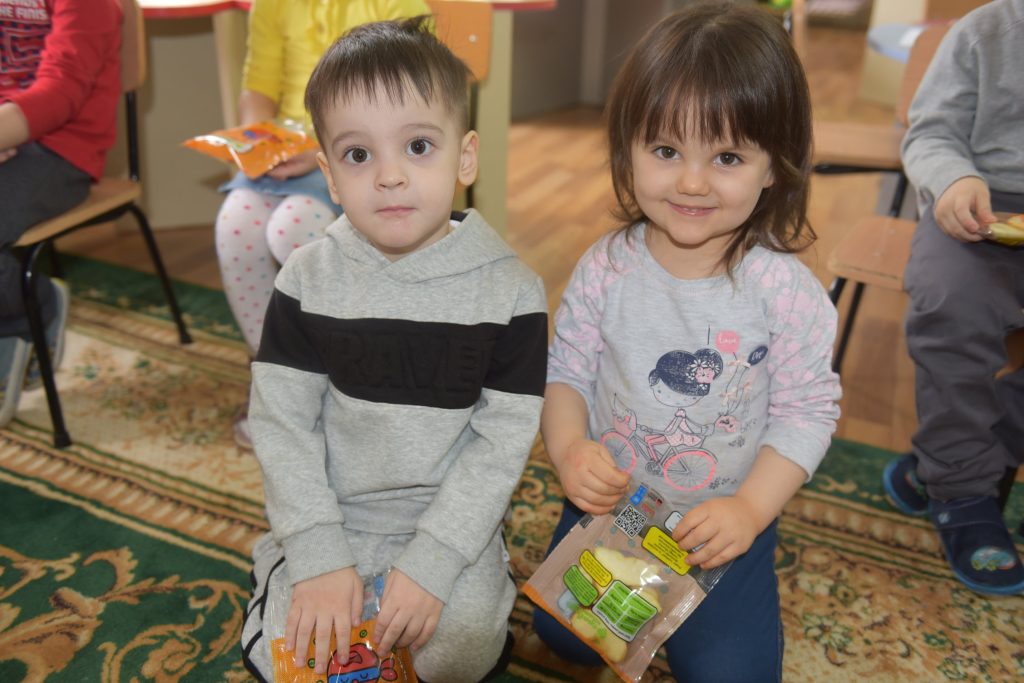
The most interesting part, however, was about to follow: the design of the snack package that we developed together with the children beneficiaries of the project by democratic vote, the nutritional sessions organized in schools together with a medical institution and the launch of the product itself in schools.
What we have learned:
- Engagement with the private sector is key and the only way to proceed if undertaking such complex challenges. UNDP has still much to improve in the process, but the first steps proved successful, in particular through testing MICS (Moldova Innovation Challenge Scheme).
- Communication with kids and parents is crucial. Understanding the reasons of the reduced fruit consumption in kids and the ways in which they prefer their food to be delivered to them helped us adapt the product to their needs in terms of content, packaging and convenience.
- The possibility of extending the program is another very important aspect. By starting small with only 5 schools and over 3500 kids that we connected to two local producers, UNDP managed to showcase how fresh fruits consumption can be sustainably improved and inspire more schools and kids to join the “Make apples cool project”.
When starting the distribution in schools, we witnessed various reactions from children and teachers. Children played for ages with the package, counting the vitamins on it, stated that the slices are cool and the tastiest they have ever tried (we will consider here the margin of error driven by the childhood enthusiasm), while the teachers were amazed that even those children that don’t normally eat fruits, ate all the apple slices. Those few moments were the ones that made the game worth the candle.
The following piece was first published on the AltFinLab blog and was originally published on November 11, 2016.
If you need just money, go to the bank and don’t use crowdfunding. Use crowdfunding if you need awareness building, campaigning, initiating debate, attract other funders and build up your community.
When we started our first campaign for an energy independent school in Croatia, we didn’t have the slightest idea where crowdfunding would take us.
From conducting a successful campaign to setting up Crowdfunding Academy and UNDP Alternative Finance Lab, helping to launch more than 15 campaigns in 10+ countries – crowdfunding has definitely taken a hold on us.
In the UK alone, crowdfunding for civic causes has gained $30 million over the last five years.
But crowdfunding is so much more than about getting the required financing for your project.
Let’s take a look at some other benefits of crowdfunding: amassing social capital, enabling broader visibility and scaling-up of a given project, as well as catalysing social action and policy-level impact.
- Crowdfunding is a Community Building Instrument
One of the greatest gifts of crowdfunding comes when your backers evolve into your continuous project partners. For example, our Tajik campaign attracted donations of their Australian diaspora, which is now interested in making a similar project in Eastern Tajik region where most of them originate from. Similar sidekick happened with a campaign for STEM spider-robots that attracted attention of 30+ schools in Croatia and made them implement it in their official education curriculum.
- Crowdfunding is a Marketing Instrument
Well maintained crowdfunding campaigns can bring on average 10-fold amount in media visibility than the amount raised, consequently increasing project’s impact.
Besides securing them every-day catering bookings, our Taste of Home campaign for a restaurant run by asylum-seekers in Croatia was featured on Yahoo news, hugely increasing their visibility.
At the same time, Brlog, a cooperative brewery run by women, appeared as a featured story in WizzAir inflight magazine and gained their Indiegogo webpage more than 20,000 visitors within the 40-day campaign.
Data based on five campaigns done by our team shows us that 43 percent of contributions in our campaigns come from abroad. Contributions came from 13-25 countries, have 50+ media appearances and are often promoted by celebrities such as Jamie Oliver and Mashrafe Bin Mortaza. All this is to say that crowdfunding might just be the perfect out-of-the-box way of getting your message to the masses.
- Crowdfunding is a Political Instrument
Crowdfunding is called the Wild West for civic initiatives, with its ability to adjust to specific social needs and challenges.
On one hand we have examples of governments using crowdfunding as a supplement to their traditional financing models, on the other crowdfunding giving voice to citizens who may otherwise remain unheard.
Our campaign for the Subversive Festival in Zagreb, for example, received prompt support by the Croatian Ministry of Culture but only after public interest was confirmed through campaign contributions.
Another campaign for building an energy Independent school in Croatia, helped to trigger a pilot project from the Ministry of Construction for energy refurbishment of schools all over Croatia, worth 7 million EUR.
- Crowdfunding is a Tool for Testing Innovation in Practice
Crowdfunding is becoming widely used to test innovative models and principles – and depending on the market feedback, such innovation could be pursued or stopped at early stage. Many examples are putting it as a torch to light the dark room, and if the results from the crowdfunding campaign are showing that it is not too dark, other financiers, partners and stakeholders are following. Good example is crowdfunding for green tech in Africa (such as Trine), after which VC and banks came with larger financing using the similar business models. Similar was proved in UNDP led campaigns, such as healthy snacks in primary schools in Moldova which got an interest from large national network of supermarkets afterwards.
There you have it. That’s why “move beyond the financial goal” is our new mantra.
And in next few months we will be able to tell you how we swim in new crowdfunding waters – as within new UNDP Global Crowdfunding Academy we are focusing on crowd investing and crowd lending business models!
The following piece was first published on the AltFinLab blog and was originally published on October 21, 2016.
Nothing could beat the pleasure of staring at a packed auditorium while I was waiting for the opening talk of the Zagreb Crowdfunding Convention and thinking back of the months of preparations behind us. Industry experts, NGO’s and private companies, government representatives and numerous curious individuals – we got them all at one place to discuss the future of crowdfunding in our region!
We’ve been intensively focusing our work on a variety of crowdfunding activities in order to climb closer to the goal we’ve set more than one year ago, when we co-founded the Crowdfunding Academy. That was to contribute to the development of a crowdfunding market in Croatia. Our Zagreb Crowdfunding Convention event nowadays comes as a manifestation of that goal. It’s the one day of the year when all these activities interconnect and fall on one common ground, ready to grow into something bigger and better. Task for the day? Exchange of practices with an aim to intensify the current market expansion!
Where Do We Stand?
The key talk of the event came from Ronald Kleverlaan, one of the most active names on the European crowdfunding scene. According to the Alternative Finance Maturity Index presented by Kleverlaan, Croatia is currently at the starting, first of five levels of the market maturity.
The first, pre-mature level, includes an open dialogue between the government and the industry, simple regulations and financing educational programs, while the industry organizes informal roundtables, works with independent advisors, publishes educational articles, organizes local events and has uniformed taxonomy.here …
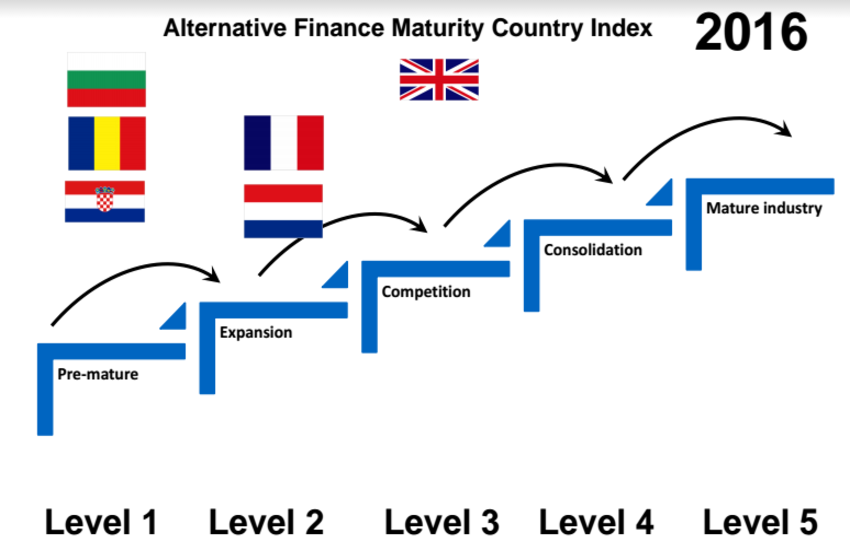
Croatian crowdfunding scene currently includes three active crowdfunding platforms – Croinvest, Croenergy and Čini pravu stvar, one educational platform – the Crowdfunding Academy – financed by the nonprofit organisations, yearly statistical overview of the market growth and informative blogs about crowdfunding, as well as few crowdfunding events per year, such as Zagreb Crowdfunding Convention. We mainly use reward-based crowdfunding model and have been following the European-wide trend of doubling in market size from 2014($402,898) to 2015 ($751,457). Our dialogue with the government still remains on the level of informative discussions, though government’s representatives at the Zagreb Crowdfunding Convention event show support and interest for more participation in the crowdfunding activities in Croatia. We have no legal regulations regarding the use of crowdfunding, though legislation regarding business financing is applicable in use of different models, such as crowdlending.
Building On Current Strengths
According to Kleverlaan, market growth depends on a variety of factors – from the general economic situation, legislative and policy framework to trigger events, such as economic crisis. Following the Alternative Finance Maturity Index, starting point should include identifying the market’s current point of development, while the next step should include targeting the base-points that can be used for further upgrading. On the example of the Alternative Finance Maturity Index, informal industry events on the pre-mature level turn into organized industry events in the expansion market level, while in the competition market level industry they become integrated with traditional finance industry events. Meaning, markets can build upon their current status and strengths.
As Kleverlaan pointed out, the next stop on the Maturity Index, the expansion level, includes taking open dialogue with the government to the point of funding different stakeholders in the crowdfunding industry, as well as its open support, research and promotion. At the expansion level industry includes accountants and financial advisors in its work, organizes larger, nation-wide events, launches industry-wide associations, trains advisors and shares success stories.
It’s All About the Teamwork
What other speakers at the Zagreb Crowdfunding Convention, such as Irene Demetriou Rotsides, founder of the Crowdfunding Cyprus, and John Burton, researcher at the Cambridge Centre for Alternative Finance highlighted – none of the possible steps in market development will be effective if they won’t be undertaken in cooperation with the government. While we head into that direction, let’s keep in mind one motivational estimation that Kleverlaan made during his talk at the event – we’re a part of the East-European, billion euro potential market.
The following piece was first published on the AltFinLab blog and was originally published on September 19, 2016.
Ten months ago we had an eclectic group of people introduce a slew of new financial mechanisms- blockchain based cash transfers and impact bonds for reducing recidivism to forecast based finance for disasters and peer to peer lending for SMEs- emerging into what the ODI calls a new ‘age of choice’ for the development finance.
We tackle this topic not just because there is a $2.5 billion gap in funding the current SDG agenda (even though ODA flows to developing countries continue to increase year on year). We are more tickled by the sheer explosion of money coming from other sources of funding that aren’t high on the priority list of either development organizations or governments (admittedly this is fast changing)- the European alternative finance market grew by 144% in 2015, the global impact investment market is projected to grow over $3 trillion in the coming years, and crowdfunding investments reached $37 billion in 2015 (by way of comparison, this is about ⅓ of total ODA totaling $131 billion in 2015).
This tickle gave birth to a sort of an Alternative Finance Labwe’ve (unintentionally) began running out of Istanbul. What skills do our clients need to tap into some of these new sources of funding? Is the effort worth it given the experimental nature of some instruments and the fact that they are way ahead of existing legislation in most countries we work in (think blockchain based remittance transfer)? Many of the mechanisms are preventative in nature and require a shift to costing future liabilities (think of a financial value on the cost society bears from youth unemployment- what does a ‘log frame’ for that type of a project look like?
In tackling some of these questions since the beginning of the year, we mobilized over EUR 3 million across a series of experiments with these new financial mechanisms:
Blockchain and development
In Serbia, we’re working with superstars from AidTech (check out their prize winning prototype on reducing fraud in cash transfers for refugees in Lebanon) to design a proof of concept for remittance transfers over blockchain that would be cheaper (in looking to cut out an intermediary a la Western Union) and targeted toward specific needs (think using remittances to pay energy or phone bills and purchase food). There are several similar initiatives ongoing (check out these Tunisian start-ups redefining remittances transfers with blockchain) but for us this is a first. In Moldova, we’re testing whether blockchain can provide a more effective way of managing the UN car fleet together with EmerCoinandDeePlace. We’ve been inspired by a decentralized ride-sharing outfit in Israel, Lazooz and driver-owned car sharing start up Arcade City. When it comes to UNDP’s emergency response in employment,we have a hunch that blockchain could provide a more effective way of transferring and tracking funds, and shifting our strategy in line with what is happening in the field– this is a work in progress though but one we’re excited about.
We’re cooperating with the Joint Research Center of the European Commission (check out an impressive line up of people they’ve had for a discussion on distributed ledger technologies a few months back) on design of a challenge prize for social applications of blockchain that would (hopefully) incentivize use cases that go beyond financial sector. The speed of progress in this field has been staggering with new use casespopping up across just about all priority sectors for our client governments- for example, the UK government just published research showing how digital currency based on the distributed ledger could up the GDP by as much as 3%. Others include blockchain based micro energy grids, land registries (Georgia) and election platforms (Ukraine’s Parliament), defrauding distribution of natural disaster relief funds (Italy) and philanthropic donations, managing and tracking the cross border SME trade, boosting girls education and storage of cultural heritage in political conflicts to name a few.
Preventative finance: social impact bonds and forecast based finance
In Serbia, we’re working with the Finnish Innovation Fund Sitra on designing a social impact bond on youth unemployment. We were inspired by their work on using this financial mechanism for public sector absenteeismand migrants and employment both of which have flipped the concept of welfare from being considered a cost to being the government’s investment in social outcomes. We will have some fresh data on this in the coming weeks, but accounting only for wages and taxes foregone and cost of social transfers avoided the cost exceeds EUR 1.5 billion a year (and this does not include other costs such as likelihood that unemployed youth may be more likely to suffer from depression and alcoholism, engage in violence). In Belarus, the European Commission has invested in our team to design an Outcome Buying facility(where impact bonds will be one of many instruments to include a mix of grants, impact investment, and others). The results of SIBs globally have been mixed at best, but we believe there is a lot to be gained from calculating future liabilities, attracting new sources of funding and holding pay-outs contingent on achieving the results (as opposed to fulfilling activities). Apparently so do others with thegovernment of Netherlands issuing its fifth SIB on employment, transitioning of youth from Out of Home facilities (drug and alcohol abuse) in Australia, and a massive $30 million first humanitarian impact bond launched by the International Red Cross and the Belgian government.
When it comes to the forecast-based finance, we’re learning from the best! Together with the Red Cross/Crescent Climate Center,our team in Bosnia and Hercegovina is designing the FbF mechanisms for the Vrbas basin. Ultimately our intention is not only to minimize the risk and secure funds before a disaster has received sufficient media support but also to test the feasibility of attracting new sources of funding (think insurance companies) for community resilience.
Crowdfunding in development
Since we launched UNDP’s 1st Global Crowdfunding Academy in December (followed by a succesfull Crowdfunding Academy in Croatia), we’ve worked on 13 crowdfunding campaigns that mobilized over $200,000 across a range of sectors including health, inclusion, energy and entrepreneurship- Kyrgyzstan raised funds for a more inclusive and energy efficient retirement home in a rural area, Indonesia got resources forrenewable energy in rural areas, Moldova mobilized funds for healthy food in public schools, and Yemen for a range of community projects unique to the conflict contextof the country. Currently, we’re preparing the launch of a campaign in Bangladesh on youth employment and Lebanon who already raised $116,000 for traffic management and control around public schools.
All of these were donation based campaigns where one of our main take aways has been their ability to link us up to interesting new partners and help us with advocacy. For example, our Tajik campaign attracted the country’s diaspora in Australia not only to donate funds but also explore investment in a similar new project in the eastern region. Famous chef, Jamie Oliver, supported our fresh fruit campaign for public schools in Moldovaand Bangladesh cricket national team captain Mashrafe endorsed the campaign for building employment skills for the youth. The Balkan rock star Rambo Amadeus got behind a campaign to build solar power sail boats on the Adriatic, andYahoo picked up on our efforts to invest in refugee-driven pop up restaurants. The Croatian Ministry of Construction prepared a pilot project for refurbishment of 30+ schools (and an energy agency designed a dedicated platform) to replicate our success with building the first Energy Independent school in the country.
Moving forward with this line of work, we’d like to put more emphasis on equity crowdfunding (example on investment in renewable energy community project) and peer to peer lending (check out this investment for SME on furniture design in Tajikistan) as our hunch is that these mechanisms can help us redirect vast diaspora funds more closely to bottom up, entrepreneurial projects in communities across the development work. We will have a chance to experiment with this approach together with the UNFCC with who we are currently designing a system by which crowdfunding can be utilised for renewable energy programs alone.
What’s next?
We’d love to see Open Bank initiative functioning in one of our projects (think a crowdfunding campaign where a single donor can track her investment through the point of a purchase) and we’d love to tinker with the GrowFundand Fund Club-like idea where we’d combine crowdfunding with corporate investment and peer to peer donations. Mobile money hasn’t taken off in Europe and CIS (which is where most of our time is invested at the moment), so we’d like to explore why and how to change that. We also haven’t yet but would like to troublemake with Disberseteam who seem to have put together a number of puzzles that for us are still up in the air- social cash transfers, impact bonds and payment for results, blockchain and transparency- all under the chapeau of future of development finance. We’ve also got a few things cooking with AlliedCrowds and Cambridge Alternative Finance Lab but more on that soon.
Ps. We would like to acknowledge the very first investor in our Alternative Finance Lab- the Ministry of Finance of Slovakia.
The following piece was first published on the AltFinLab blog and was originally published on November 26, 2015.
For those who haven’t read the first part here is a little introduction. We are travelling around the world and meeting teams and projects of Global Crowdfunding Academy. All of them wish to make a change in their community. So, at the beginning of December we will gather in Istanbul and start working on realizing those dreams.
Last time we visited Macedonia, Columbia, Indonesia, Bangladesh and Tajikistan. Now there are six more countries ahead of us. So let’s continue our little adventure!
Today our journey starts in Zimbabwe. Project name: Young small-holder farmers Insurance and Risk Transfer Facility. Young small holder farmers are increasingly affected by extreme weather events and the adverse effects of climate change. To make things better an Innovation Centre/Hub for Enhanced Risk Reduction Capacities’ for Small Holder farmers will be set up. As a both tangible and mobile innovation centre, in the shape of a bus and mobile tent, which will be a creative and innovative space for building solutions and partnerships. It’s journey will start in June 2016, with young farmers, innovators and interested actors on board.
The second station is Lebanon. Project name: Live Lebanon. This project targets four underprivileged communities in Lebanon; South, North, Bekaa,Mount Lebanon and Beirut.The main goal of the project is to make sure that students are safe in traffic and it hopes to do it through infrastructure improvements and raising awareness about road safety.
On the third station we are in Madagascar introducing the Dairy Products for the Development of Androy. This project will promote the dairy sector and support the cooperative of dairy products through helping out the five women to develop a strong business and communication plan so that they access a crowdfunding platform and launch a campaign.
Our next stop is Yemen with Mobile midwives project whose main objectives are to economically empower ‘midwives’ by engaging them in ‘social businesses development’ for self-reliance and improved livelihoods; to improve basic healthcare services in support of ‘women in pregnancy’ by tapping on the local midwives potential and to establish ‘resident and mobile midwifery’ clinics in rural areas for improved healthcare access. Through all this, the Project in overall will contribute, at the local level, to decent work and economic growth, good health and societal well being, and gender equality, besides partnerships for sustainable development.
Fifth station is Egypt introducing TeleMedicine project that aims to improve the Healthcare services at large for rural communities and to focus on decreasing child and maternal mortality rates in Nubian villages in Aswan Governorate through the installation of a videoconference and disease detection scanners. In this way it will be possible to virtually connect patients to doctors, who can then give a proper diagnosis in time to save his or her life.
And our last station on this journey is Kyrgyzstan and we are going to Day care center of elderly in Balykchy where we will raise funds for its warming because during the winter the Center cannot be fully functional. This Centre is a unique model for lonely retirees that provides them with diverse social, consumer, legal and psychological assistance and is based on the self-helping groups concept. The project will also combine DCC regular services with new innovative one – bringing children in from Balykchi orphanages to DCC during day time and arranging “grandparents and grandchildren” therapy. The elderly people will share their care, some experience and knowledge with orphans and get back love and joy.
Well, this was our little journey through projects around the world, now let’s support our favorite ones and make the world a better place to live in.
The following piece was first published on the AltFinLab blog and was originally published on November 13, 2015.
The first Global Crowdfunding Academy organized for and by the UNDP offices around the world had a really strong competition. After a tough selection process, we have chosen 11 teams with most inspiring projects from community green solutions to peacebuilding and poverty reduction.
Interested? Let’s go on a little odyssey around the world, meet the teams and see what they want to change in their community with the help of crowdfunding.
First station: Republic of Macedonia. Project name: Let’s paint Skopje from 50 shades of GREY to 50 shades of GREEN. The main idea of this project is to pick out one prominent building in Skopje, turn it from grey to green and set an example for others to follow. The proposed building is the Skopje City Hospital, located right in the center – the most polluted area of the capital. So refurbishing this tall grey old building with green roof and façades would certainly have a great social impact and could inspire similar undertakings in other polluted areas of the country.
Second station: Bangladesh. Bangladesh team wants to enable digital Future for the Urban Poor. This project will aim to empower urban youth, age 18 to 26, to generate income, through building their capacities to navigate the IT freelance marketplace and facilitate job placement. The team wants to provide tailored training to 40 youngsters in two different batches, to engage community development committees to select the urban youth beneficiaries and to mobilize and build partnerships between local government, community development committees, digital champions and service providers from the private sector. Consequently, the digital divide and poverty in the country will be reduced.
On the third station we are in Columbia, and introducing the Peace Pathways project that is based on eco-friendly sources of energy (i.e. recyclable bottles used as lightbulbs and charged with solar energy). Energy will not only foster access to basic services but also strengthen local governance, thus reducing the recurrences of conflict in areas previously dominated by armed actors.
After Columbia we are traveling to Indonesia to the province of East Nusa Tenggara which is located in the eastern part of Indonesia and is one of Indonesia’s driest and poorest provinces. Here we are getting introduced to the Village Climate Adaptation project, which aims to empower the rural communities in Palanggay Village to access clean water for home-grown production of seaweed that helps generate income for the local community. The Campaign will also help the villagers to improve their access to clean water for household consumption.
The last station on this tour leads us to Tajikistan, where the project Green School in Sorvo intends to provide access to sustainable energy and energy efficiency solutions through covering the roof or the backyard of the school with solar panels.
These are the first five teams. To find out about the others, follow our blog part two.