Building on research across seventeen countries and live pilots in five, the next phase establishes the governance and infrastructure for UNDP country offices to use blockchain-based digital payments as a regular part of programme delivery.
July 6, 2026 | Innovative Finance, New Technologies
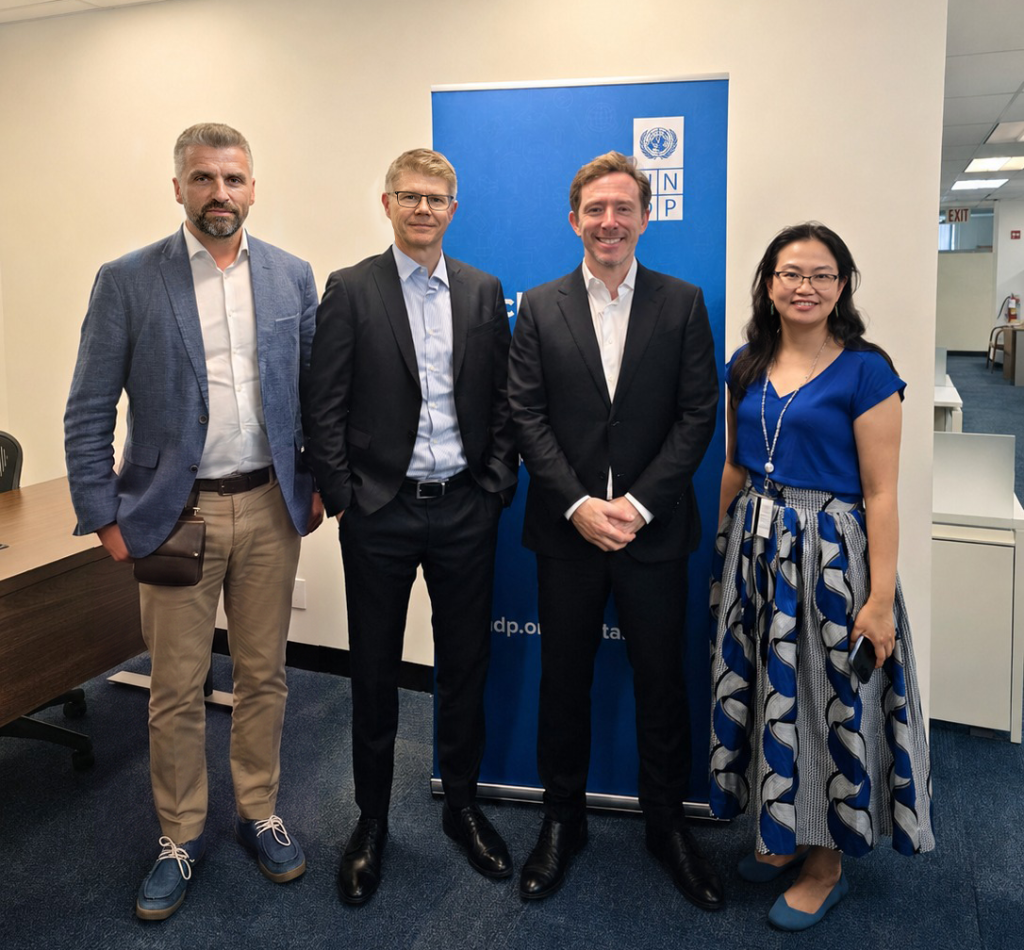
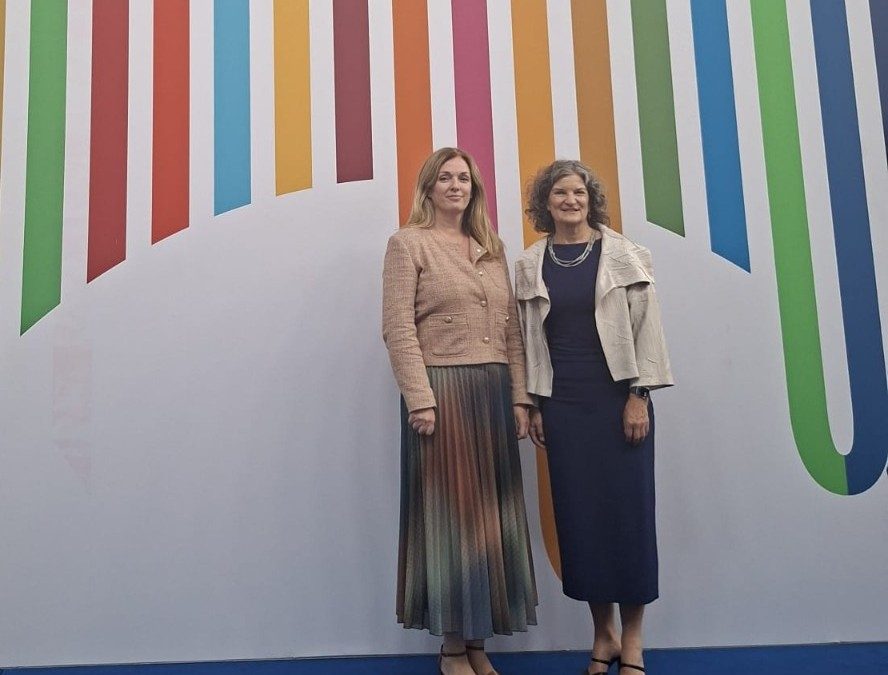
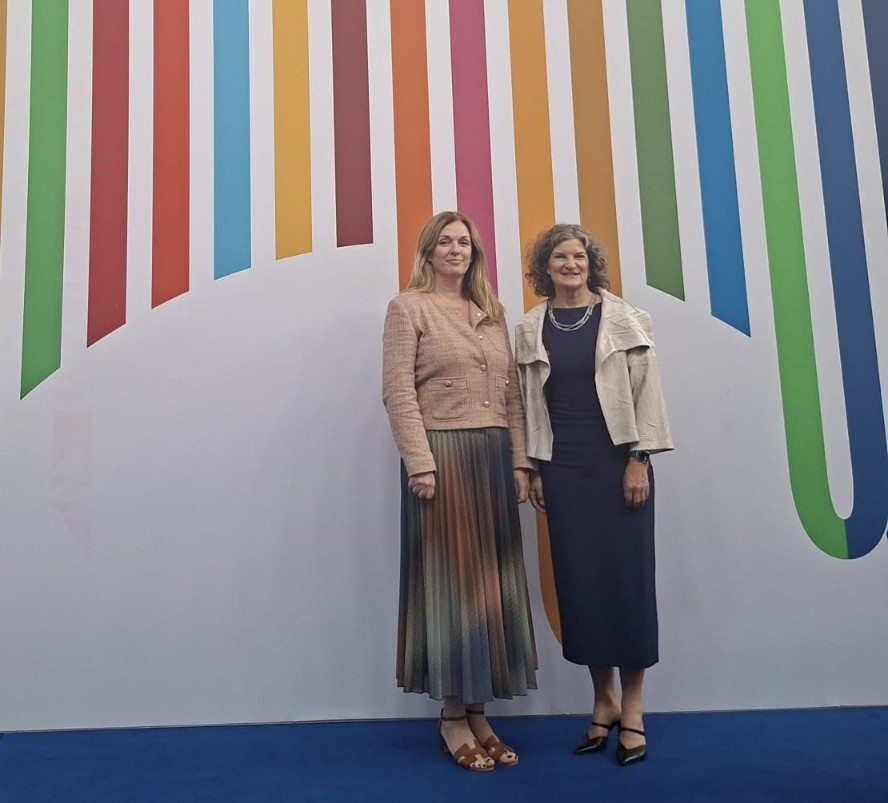
Ivana Živković, UN Assistant Secretary-General and Director of UNDP in Europe and Central Asia, and Candace Kelly, Chief Legal & Policy Officer at the Stellar Development Foundation, at the Hamburg Sustainability Conference 2026.
Istanbul, 06 July 2026. The United Nations Development Programme and the Stellar Development Foundation have signed a new agreement that carries their joint work on blockchain-based digital payments into its next phase, moving from a set of proven pilots toward a standing capability that UNDP country offices can draw on as a regular part of how they deliver programmes. Coordinated by the UNDP Alternative Finance Lab (AltFinLab) at the Istanbul Regional Hub, the agreement shifts the focus from testing the technology in specific contexts to putting in place the institutional conditions under which it can be used at scale.
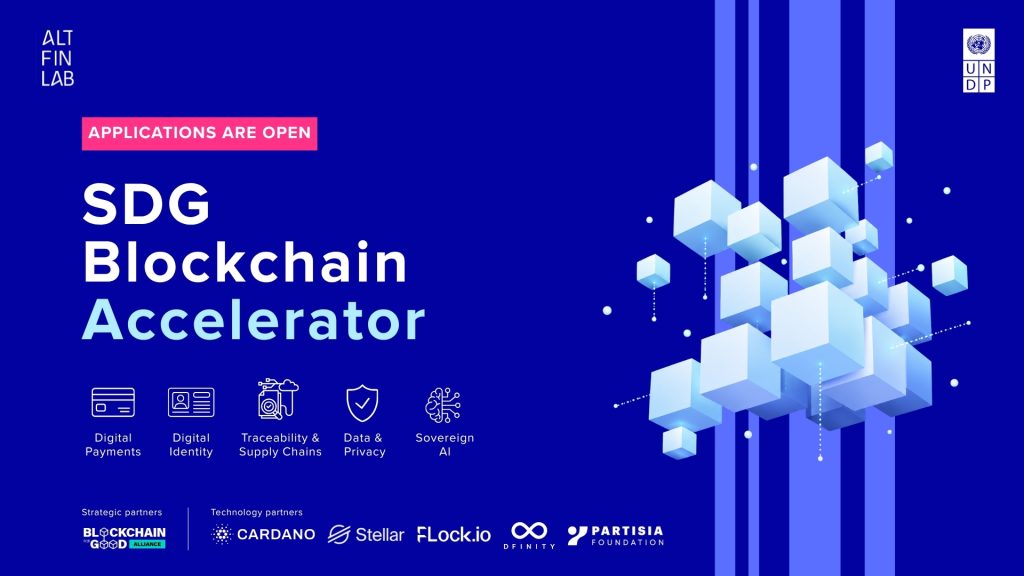
The decision to scale follows sixteen months of joint work, during which the two partners researched the use of digital payments across seventeen countries, consulted UNDP country offices and stakeholders, and implemented live pilots in Haiti, Syria, Kenya, Guatemala, and The Gambia, with two further solutions developed to a working prototype in Colombia and Papua New Guinea. In parallel, the Sustainable Development Goals Blockchain Accelerator, strategically led by UNDP AltFinLab, matched a cohort of payment solutions built on the Stellar network with real UNDP programme challenges, producing a portfolio of graduated solutions with documented pathways to scale within existing country office programmes.
These pilots produced concrete evidence rather than promising projections. In Aleppo, UNDP delivered Cash for Work stipends to beneficiaries digitally and recorded every transaction on-chain, which reduced the estimated cost of distribution from about 10 percent of funds under conventional methods to about two percent, with every participant receiving and cashing out their payment. In Haiti, a pilot built for low connectivity continued to function with a 100 percent success rate, even when the cellular network failed entirely during testing, settling payments almost instantly under the conditions that communities actually face. Across all of the pilots, programmes gained something they had not had before, which is a traceable record of where money went.
Earlier in 2026, UNDP featured part of this work in the report New Tech, New Partners: Transforming Development in the Digital Era, which set out why reliable digital payment infrastructure matters for financial inclusion, for remittances, and for reaching people in fragile and conflict-affected settings that traditional financial systems sometimes fail to reach.
The new agreement turns these results into a capability that does not depend on any single project or funding cycle. Over the coming period the two partners will establish the governance, onboarding, and safeguards that allow UNDP to adopt digital payments responsibly, move validated solutions from the existing pipeline into active use, extend the same infrastructure across different categories of UNDP programming – from humanitarian response to social protection and financial inclusion – and consolidate the evidence and operating guidance that the service needs to continue and grow within the development system.
Throughout this phase, the Stellar Development Foundation will provide technical advisory support and coordination across the Stellar ecosystem, including expertise on the network and its protocols, and engagement with the solution providers operating within the UNDP pipeline, while UNDP will retain responsibility for delivery and implementation.
Robert Pasicko, UNDP Alternative Finance Lab, said: “We have shown that digital payments can reach the people that conventional systems miss, and in some of the hardest places to operate. The work now is to make that capability ordinary, so that a country office can use it with confidence as part of how it already works, rather than treating each deployment as an experiment.”
Candace Kelly, Chief Legal Officer, Stellar Development Foundation, said: “These pilots showed what open, public blockchain infrastructure can do when it is built around the realities of the last mile. We are proud to continue this work with UNDP and to help turn a set of successful pilots into a durable part of how development and humanitarian finance is delivered.”
The agreement runs through 2027 and will conclude with a consolidated evidence base, a scaling playbook, and a formal handover, so that the capability outlasts the partnership that created it.
The United Nations Development Programme (UNDP) is the leading United Nations organization fighting to end the injustice of poverty, inequality, and climate change. Working with our broad network of experts and partners in 170 countries and territories, we help nations to build integrated, lasting solutions for people and planet. Learn more at undp.org or follow at @UNDP.
UNDP Alternative Finance Lab develops new financial approaches, instruments, and partnerships that expand the resources available for sustainable development. Its work on blockchain based digital payments is part of a wider effort to make development and humanitarian finance faster, more transparent, and more inclusive. The Lab is hosted at the UNDP Istanbul Regional Hub.
The Stellar Development Foundation (SDF) is a non-profit organization that supports the development and growth of Stellar, an open-source network that connects the world’s financial infrastructure. Founded in 2014, the Foundation helps maintain Stellar’s codebase, supports the technical and business communities building on the network, and serves as a voice to regulators and institutions. The Foundation seeks to create equitable access to the global financial system, using the Stellar network to unlock the world’s economic potential through blockchain technology.