How do you prepare cities to navigate the complexity of green and digital transitions – not through isolated projects, but through interconnected portfolios that learn, adapt, and transform?
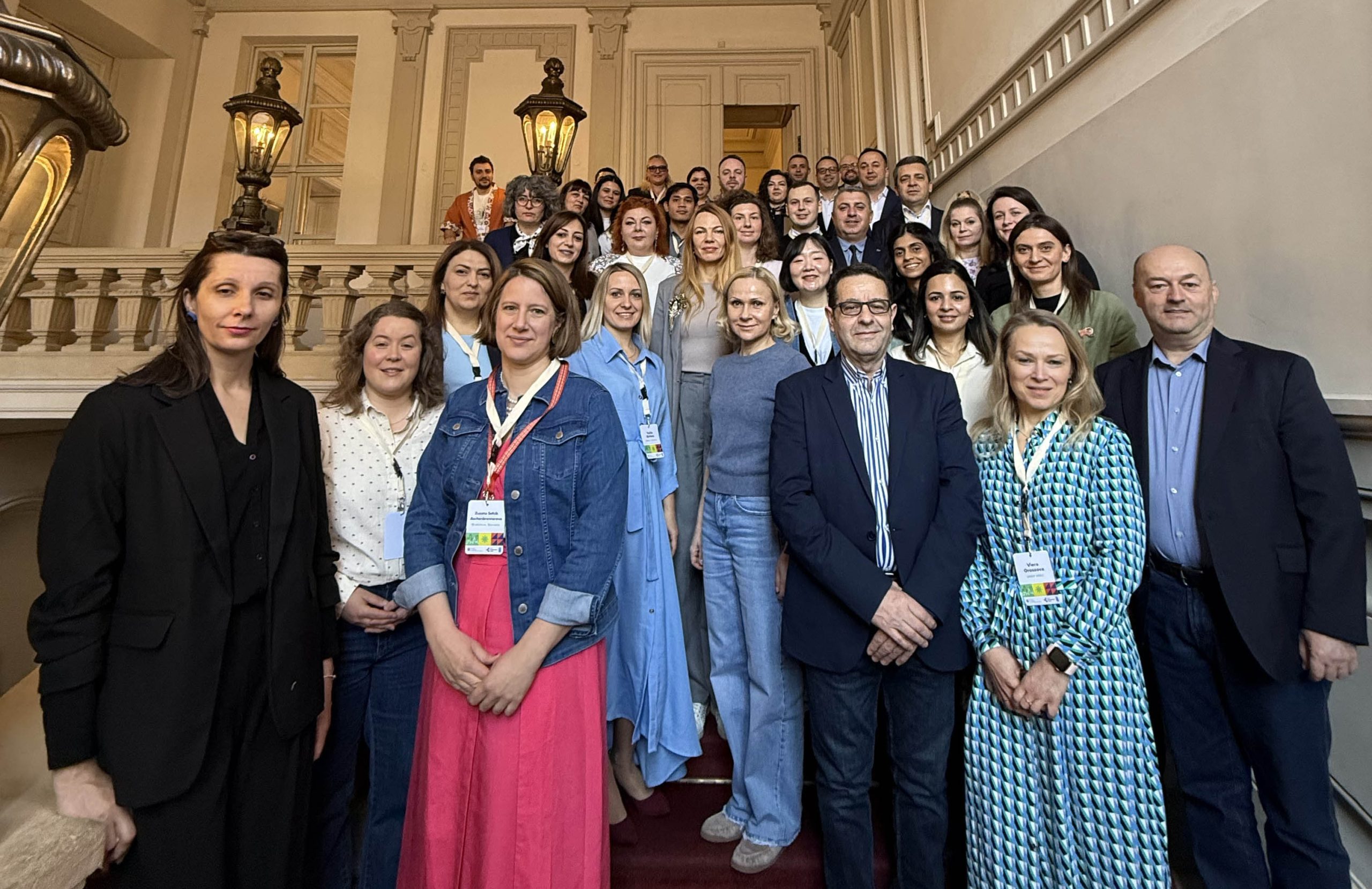
This was the core challenge taken up at the City Experiment Fund (CEF) Portfolio Bootcamp held in Bratislava, Slovakia, from April 10–11, 2025. Hosted by the Ministry of Finance of Slovakia, UNDP, and the City of Bratislava, it convened municipal teams, UNDP Country Office leads, and innovation specialists from across the region, marking a catalytic step in co-designing urban portfolios under the Slovak Transformation Fund (STF).
Shaping the Experience: Our Approach to Bootcamp Design
As systems thinkers and facilitators, we often think about more than just the task at hand – we focus on how processes should feel, how people move through a complex and interconnected journey, and what kinds of outcomes the process is meant to enable – both rational and experiential, and that is how we approached designing the Bratislava bootcamp as well.
Through this bootcamp we wanted to create a shared learning space where city teams would meet for the first time, start building trust, and work through their own challenges using systems thinking. Our aim was to make the process feel structured enough to offer clarity, but open enough to leave room for curiosity, doubt, and different starting points.
We designed the two days to gradually layer the application of our ‘portfolio approach’: starting with defining their identity and intent, and then moving towards more solution-oriented parts of the process, like strategic positions and ideas to explore. This flow helped participants connect theory with practice and reflect on what kind of systemic effects they’re working for. To support this, we developed a user-friendly portfolio workbook that broke things down into step-by-step templates, prompts, and reflection questions. The goal was to guide without overwhelming and to spark thinking without locking anyone into a fixed format.
Facilitation was also intentionally distributed. Different team members led different parts of the bootcamp, bringing in their own perspectives, expertise and ways of working. This helped the group experience a more inclusive and co-owned flow.
Ultimately, we wanted participants to leave with both tangible outputs – like a clear intent for their portfolios, a set of initial strategic positions, and a deeper sense of how this approach can become a part of their everyday ways of working. And just as importantly, we wanted them to walk away feeling connected to each other, inspired by what’s possible, and excited to test things on the ground.
A New Chapter in Urban Innovation
The bootcamp opened with welcoming remarks from Martina Kobilicova (Ministry of Finance), Marina Popjakova (City of Bratislava), and Ievgen Kylymnyk (UNDP). From the outset, the message was clear: cities are not just implementers – they are active agents of transformation.
Day 1: Setting the Intent – From Systems to Identity
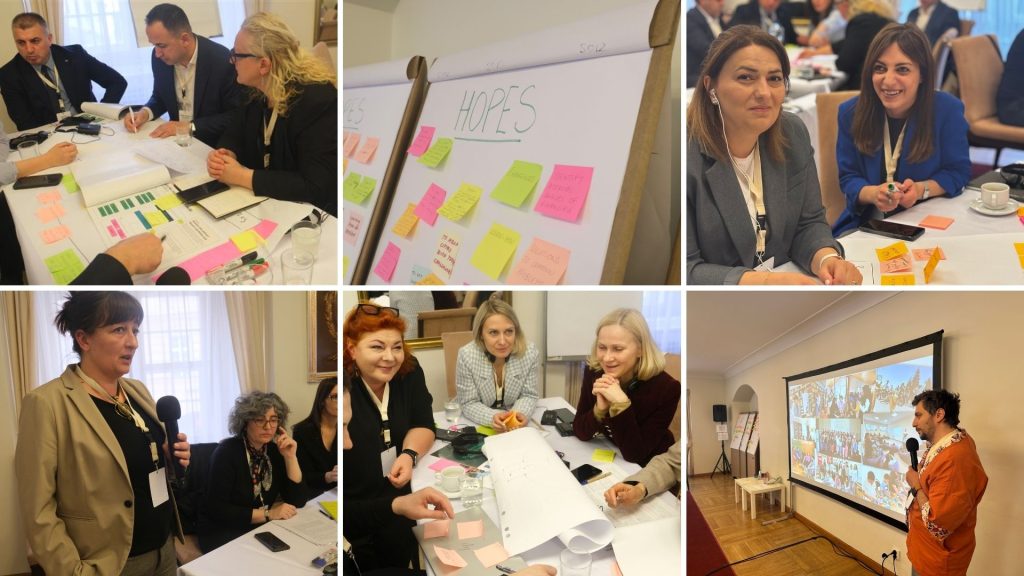
The first day centered around the question: What do we want to transform and why? After an introductory session exploring hopes and fears, participants engaged in a deep dive into the portfolio approach, learning how to work with complexity, using systems thinking and strategic innovation tools.
Key exercises included:
- Foresight and Shifts: Using tools like the “history wall” and “future-backwards mapping,” city teams identified key turning points and imagined future shifts, such as moving from paper-based to digital governance, or from fixed employment models to fluid work ecosystems.
- Portfolio Focus Mapping: Cities were asked to define their primary and secondary focus areas, ranging from circular economy and climate resilience to mobility, water, and digital governance, using the CEF Twin Transition Stencil.
- Portfolio Identity: In the final exercise of the day, teams reflected on their strengths and capabilities as portfolio holders. Through the roles of Innovator, Steward, Convener, Catalyst, or Integrator, each team began to define their identity – clarifying what they bring to the transformation journey, and where they may need support.
Day 2: From Intent to Action – Designing for Strategic Effects
The second day shifted from design intent to strategic articulation. The central question was: How can we activate portfolios to deliver systemic effects across our urban systems?
Day 2 highlights included:
- Portfolio Effects Framing: Cities worked to articulate the broader systemic effects their portfolio aims to produce – such as improved well-being, environmental gains, increased employment, or inclusive service delivery. Teams considered not only direct outcomes, but the cumulative change generated by a coherent set of interventions over time.
- Portfolio Positions Workshop: In one of the most hands-on segments of the bootcamp, cities developed strategic entry points – or “positions” – that would serve as vehicles for learning and change. Examples included youth-led circular economy hubs, digital public service pilots, and green mobility micro-zones. These were not standalone projects, but connected interventions designed to test assumptions, surface insights, and unlock new possibilities.
- Peer Exchange and Feedback: Cities shared early ideas with peers, receiving feedback and inspiration across country contexts – from agro-tourism pilots in Armenia to green-digital mobility plans in Montenegro.
Learnings and Reflections
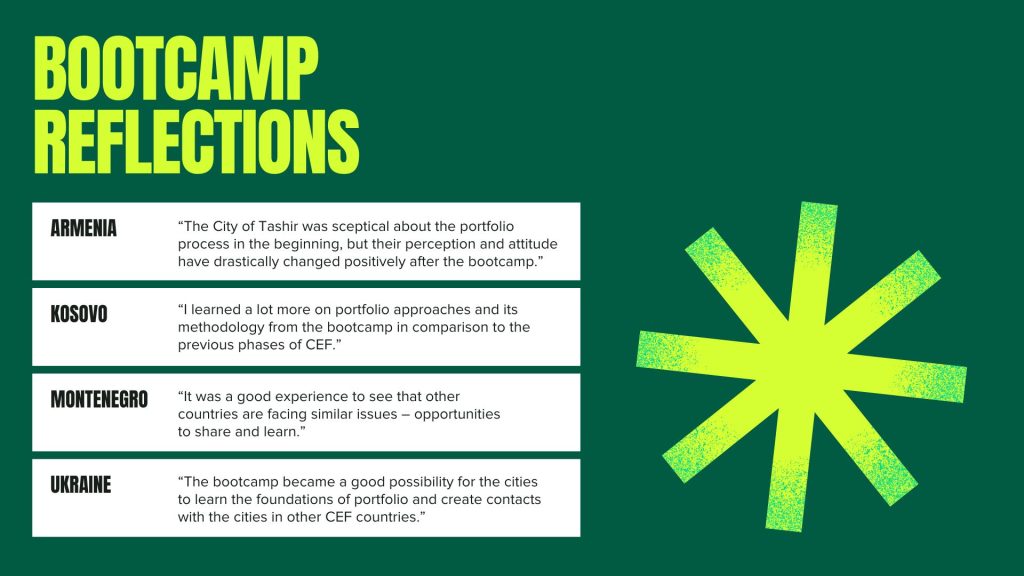
Designing and running the bootcamp gave us a lot to reflect on, not just about the process itself, but about what cities need at the start of a journey like this.
One thing that stood out clearly: simple tools unlock deeper thinking. The workbook and other such templates helped participants focus less on decoding the process and instructions and more on the actual questions they were trying to answer. When tools are designed to support and not direct, they create space for teams to think more clearly and go further.
We also saw the value of making room for different learning styles and paces. Not every team had to finish everything in the room. Some moved quickly, others stayed with a single idea longer, and that was okay. What mattered was developing a flow and understanding they could continue back home. In that way, the bootcamp was just the beginning – what they started here would then evolve within their own city context.
Another key insight was the importance of local leads from the Country Offices – people who not only speak the language but understand the team’s day-to-day realities. They were crucial in helping teams interpret, adapt, and translate the content into something usable and grounded. This kind of embedded facilitation will be essential moving ahead, too, as city portfolios begin to take shape on the ground.
The physical tools, like the workbook, played a quiet but important role. People carried them around, referred back to earlier notes, and will likely use them for deeper conversations within their municipalities. In a process that can feel abstract, these tangible touchpoints can sometimes aid discussions and decision-making beyond the core team.
Looking back, it felt especially important to hold this kind of a workshop at the beginning of this journey. It built trust, helped establish a shared rhythm, and created the foundations of a community. That connection like the peer exchange, the informal side chats, the moments of “we’re figuring this out too” will only grow stronger over time and increase the level of engagement and ownership across the cohort.
Lastly, hearing from people who have already been doing this work, who shared stories of their initiatives and portfolios, including the messy parts, was very powerful and reassuring. It made the process feel real, human, and possible. We aim to keep bringing those voices into future spaces because sometimes the best way to learn is simply to understand how someone else made it work.
A Bootcamp of Possibility, Not Prescription
What made the Bratislava bootcamp unique was its emphasis on learning by doing. Participants didn’t just listen – they mapped, prototyped, imagined, and reflected. Embedding systems thinking, foresight and strategic learning, every exercise was framed as an invitation to experiment, with portfolios positioned not as static plans but as evolving vehicles for navigating uncertainty and shaping urban transformation.
With the portfolio bootcamp completed, cities now move into the activation phase: refining their early positions, testing pilot options, building governance capacity, and laying the groundwork for long-term financing and partnerships.
The City Experiment Fund, a regional UNDP initiative, collaborates with cities in Europe and Central Asia to drive sustainable urban transformation through strategic innovation. Find out more: https://innovation.eurasia.undp.org/city-experiment-fund/