

Urban Talks series | Summary and takeaways
Urban Talks is an interactive webinar series that spotlights cities and initiatives that are building new inclusive visions across Europe and Central Asia and wider, […]
Artificial intelligence (AI) is opening new possibilities for how cities deliver services, make decisions, and manage complex systems. For municipalities, the question is no longer whether AI will play a role, but how to engage with it in a way that is useful, responsible, and aligned with their existing priorities.
To support this shift, the United Nations Development Programme (UNDP) in Europe and Central Asia is launching CEF x AI, a new programme, part of the City Experiment Fund, focused on helping cities build the capability to work with AI in practice.
The City Experiment Fund (CEF) collaborates with cities across Europe and Central Asia to tackle complex urban challenges through strategic innovation and experimentation. Rather than supporting isolated projects, it helps cities develop portfolios – sets of connected actions and interventions that can be tested, adapted, and improved over time.
CEF x AI extends this approach into the field of AI. The programme is designed to help municipalities integrate AI into their ongoing green and digital priorities through practical exploration, experimentation, and capability building.
The programme begins with AI Foundations for Municipalities, an online course developed by CEF and the EU-funded Mayors for Economic Growth (M4EG) initiative. The course was co-created with the City of Bratislava and experts in AI and urban transformation to help municipalities build a foundational understanding of artificial intelligence, governance, risks, and practical urban applications.
The course will be made publicly available and is designed for public servants and city teams who are increasingly engaging with AI-related systems and decisions, regardless of technical background.
Following an Expression of Interest process among municipalities in the CEF network, selected municipalities are invited to join the CEF x AI programme and participate in an intensive in-person bootcamp in Podgorica, Montenegro, in June 2026.
The bootcamp is designed as a working space for cities to explore how AI could support their priorities in areas such as service delivery, planning, operations, participation, and urban management. Working alongside UNDP, experts, and partners, municipalities will identify practical pathways for how AI could support municipal priorities, while mapping the institutional, technical, and ecosystem conditions needed to work with AI effectively.
Cities will also examine questions around feasibility, governance, institutional readiness, inclusion, and long-term sustainability – including where AI may not be the right tool and where simpler approaches may be more effective.
The following municipalities have been selected to participate in the CEF x AI Bootcamp in Podgorica: Stepanavan, Armenia; Yerevan, Armenia; Kavadarci, North Macedonia; Skopje, North Macedonia; Podgorica, Montenegro; Pluzine, Montenegro; Rivne, Ukraine; Mykolaiv, Ukraine; Kharkiv, Ukraine; Prishtina, Kosovo [1].
Following the bootcamp and an application process, a selected cohort of municipalities will continue into two supported pathways focused on experimentation, capability building, and piloting AI interventions.
Across both pathways, the programme combines technical expertise, structured methodologies, peer learning, and funding support, while requiring active involvement from municipal teams throughout the process.
The programme is implemented by UNDP through the City Experiment Fund with the financial support of the Ministry of Finance of the Slovak Republic.
[1] References to Kosovo shall be understood to be in the context of United Nations Security Council resolution 1244 (1999).
RELATED POSTS
Urban Talks is an interactive webinar series that spotlights cities and initiatives that are building new inclusive visions across Europe and Central Asia and wider, […]

On 30 July, the Green Economy Hub was opened in Nizhyn – a new space where residents, local authorities, businesses and academia can work together around […]
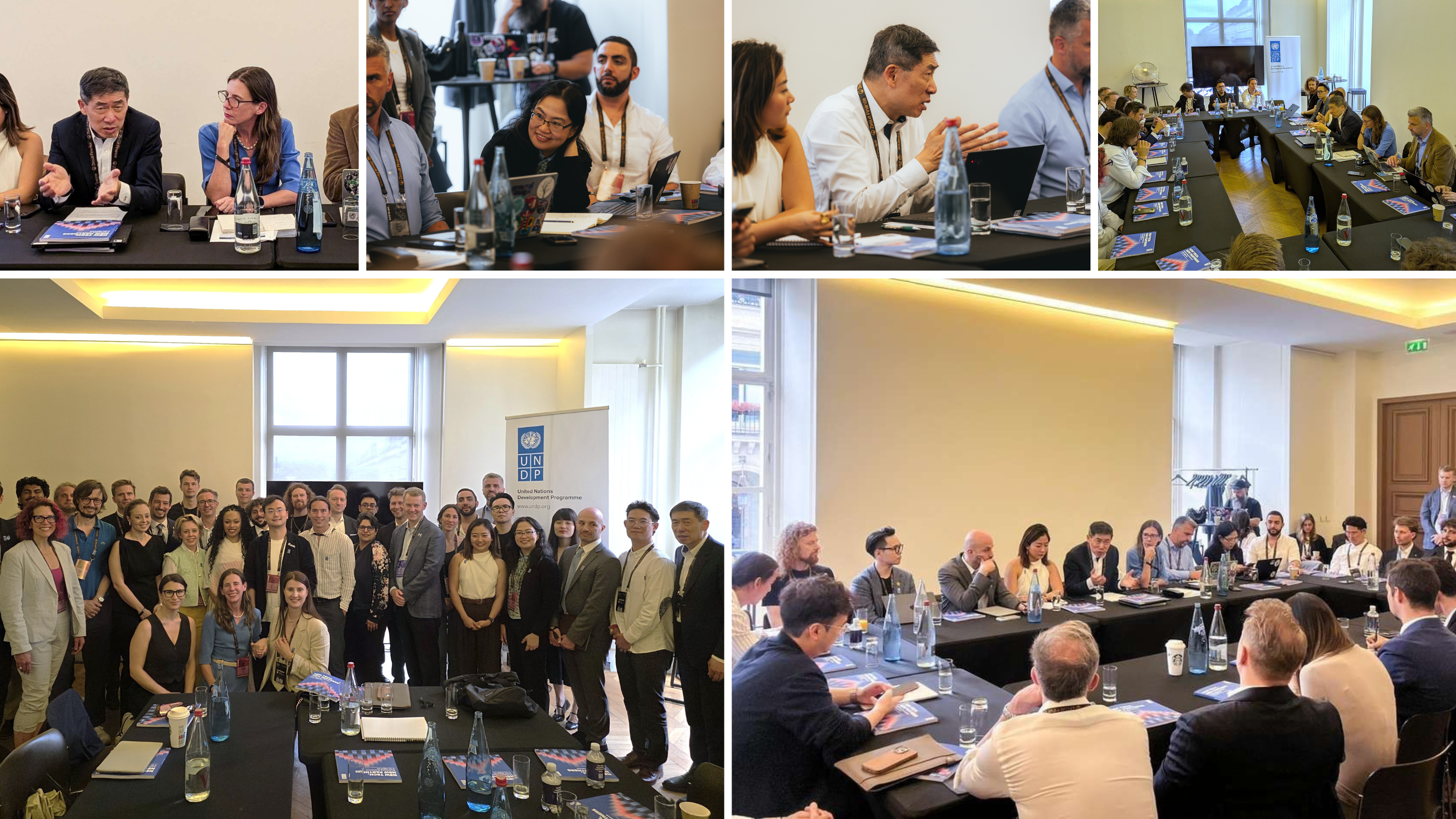
Insights from UNDP’s Paris Convenings