
M4EG: What if the project is not the point?
Originally posted at M4EG’s website, read the full article here. Cities rarely move in straight lines. A tourism problem is also a skills problem, a […]

Originally posted at M4EG’s website, read the full article here.
When familiar maps no longer work and the compass starts to spin, leadership is about learning to navigate the unknown. Tools alone are not the answer; if anything, cities have no shortage of frameworks, strategies, and pilot projects. The more uncomfortable question is whether the way cities are led is keeping pace with the problems they are meant to solve. That is the premise behind the Mayors Leading Transformational Change Programme under the Mayors for Economic Growth (M4EG) Facility and the City Experiment Fund (CEF).
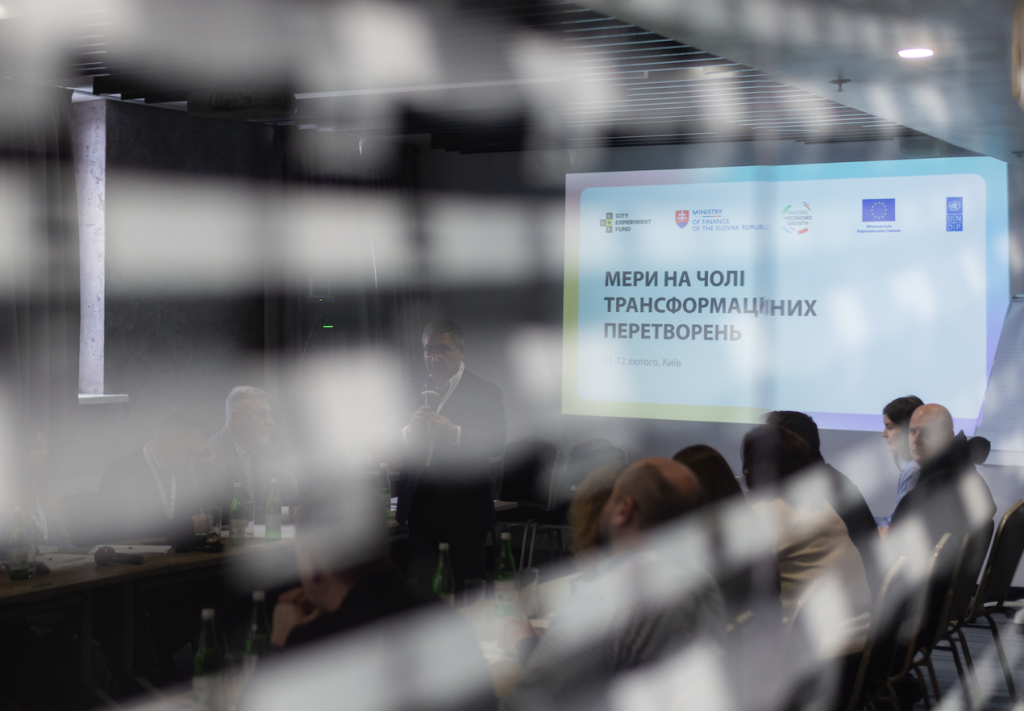
Cities today are no longer just delivering standard services, they are managing complex, overlapping transitions from green and digital transformations to building socio-economic resilience. This new reality makes the demand for an adaptive approach to local leadership more evident than ever. Following an initial kick-off in December 2025, mayors, deputy mayors, senior leadership, and heads of departments from 20 cities across the Western Balkans and Eastern Partnership countries convened in February for a two-day leadership workshop. Gathering in person across four virtually connected venues, the participants dived into the programme built around adaptive leadership and shared experiences from their respective cities.
To ensure these insights translate into lasting local impact, the workshop is being followed up by dedicated mentorship sessions and peer clinics designed to help navigate implementation challenges specific for each city.
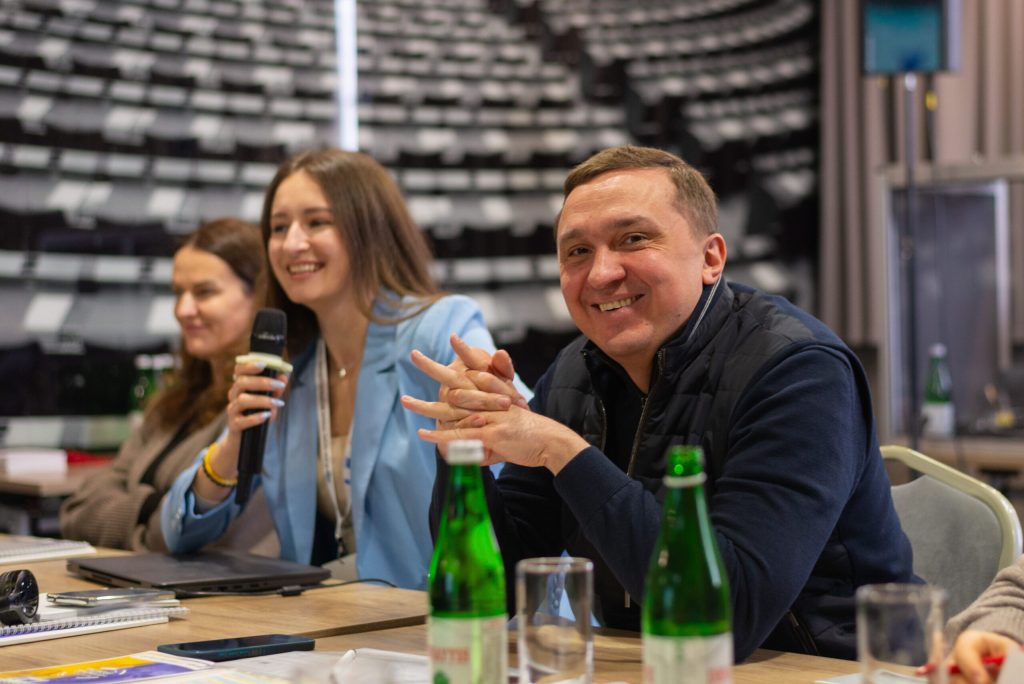
Reflecting on his experience, Mayor Oleksandr Kodola notes: “Taking part in the Programme has changed my view of the role of a city leader: it is not just an administrator, but a facilitator of change who brings together the community, business and partners around a shared mission for development. What stuck with me most was the idea of ‘mission-to-solution’ thinking and the importance of cross-sectoral cooperation as the foundation for effective policies. For me, the key lessons in adaptive leadership are the ability to work with uncertainty, listen to different points of view, test solutions in small steps, and build trust through openness and community engagement.”
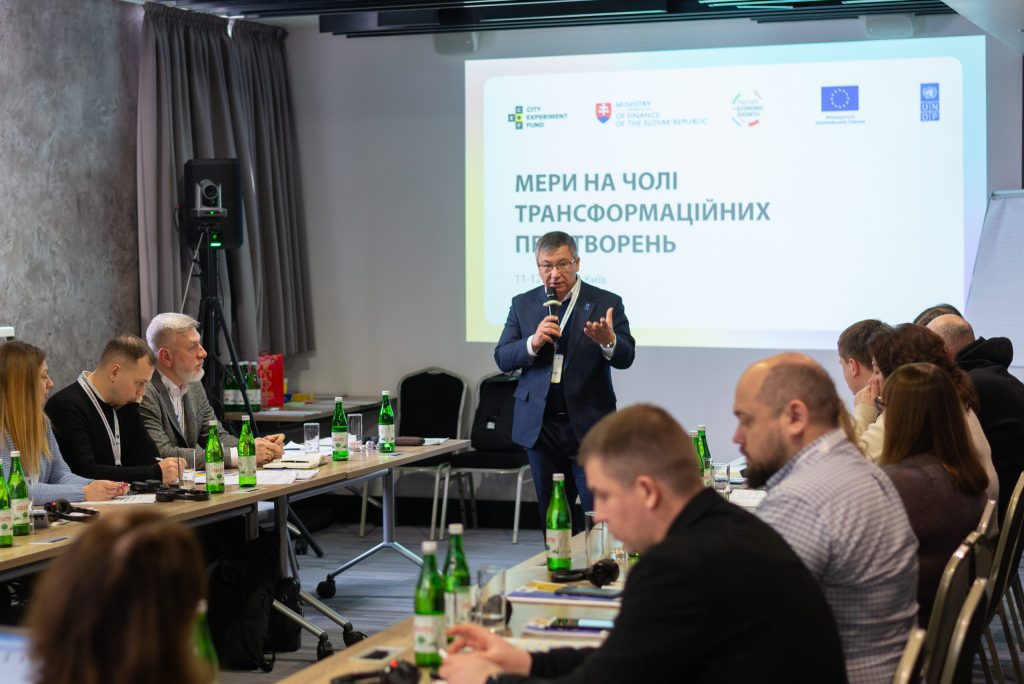
Bringing together participants from North Macedonia, Armenia, Moldova, Ukraine, Montenegro, and Kosovo1, the Mayors Leading Transformational Change Programme provides a structured space for city leaders to move beyond the exchange of best practices towards a more systemic understanding of change.
By building city portfolios, a set of connected initiatives designed to tackle a municipality’s key challenge based on a series of interconnected activities, they learn to see how different pieces of a city connect, to listen more closely to residents, and to make sense of what is shifting around them, so they can steer long-term change rather than simply react to it.
In Aparan, Armenia, the mission to create an “Equitable Tourism-Driven Economy” combines community mobilization around a shared local identity with cultural events and the development of local tourism offerings into new products and services. To ensure residents captialize on the increased inflow of visitors, these interventions are coupled with capacity-building programmes for local actors. This approach ensures that branding, infrastructure, product development, and human capital initiatives are all reinforcing one another to build a more connected and resilient local economy.
Recognizing that systemic change requires strong human capital, initiatives like CEF and M4EG have expanded their focus to directly support the people shaping their municipalities’ futures. Effective leadership is rarely just about making the ‘right’ choice, it is about navigating constant change. It requires anticipating unpredictable factors, uniting diverse perspectives and fostering a portfolio of evolving initiatives rather than relying on a silver-bullet solution. To meet this need, the Mayors Leading Transformational Change Programme was designed to equip city leaders to manage complexities with confidence, scale, and collaboration.
Marat Kyurchevsky, Programme Manager for the EU Integration-Public Administration Reform Programme of the European Delegation to Ukraine: “In Ukraine, city leaders today operate in an extremely fluid, fast-changing environment, often facing unprecedented situations that require rapid decisions without a clear blueprint. I strongly believe that adaptive leadership is highly relevant in this context, as it closely reflects the realities in which Ukrainian cities are currently functioning. Moreover, Ukraine’s experience offers a unique and valuable source of practical insights, case studies, and lessons learned that can further enrich and evolve this leadership approach.”
A key practical tool in this approach is learning how to manage the ‘temperature’ or pace of a transition so that a community remains in the productive zone of learning. For instance, if a community like Leova, Moldova, is pursuing its mission to develop an integrated and competitive local economic ecosystem, and progress stalls due to a reluctance to shift away from familiar economic models, local leaders might need to ‘raise the heat.’ They can do this by inviting diverse stakeholders to the same room and creating a space to openly discuss competing demands and trade-offs. Conversely, if tensions and emotions run high during discussions, leaders can “lower the heat” by focusing on the stakeholder’s shared needs and values while addressing the technical part of the problem first, such as revitalizing the village center.
Anatoli Talmaci, Vice-mayor of Copceac, Moldova: “One of the most valuable lessons from the Adaptive Leadership framework is the importance of diagnosing complex challenges before acting and understanding the perspectives and motivations of different stakeholders. This approach helps leaders address not only technical problems but also deeper systemic issues. I will continue applying key principles such as working both “on the balcony and on the dance floor”, managing expectations and maintaining the right pace of change. These insights will help us strengthen cooperation in Copceac and implement more inclusive and sustainable solutions for our community.”
The Mayors Leading Transformational Change programme builds on Ronald Heifetz’s model from Harvard Kennedy School, treating leadership as a collective practice. In practice, this means experimenting, adjusting as you go, and managing the human side of change, where progress rarely follows a straight line.
Yurii Fomichev, Mayor of Slavutych, Ukraine: “Such leadership programmes are always beneficial for city officials. They provide an opportunity to view their work from a different perspective and rethink approaches to tackling complex challenges.”
The Mayors Leading Transformational Change Programme is implemented under the EU-funded Mayors for Economic Growth Facility and the City Experiment Fund (CEF), funded by the Ministry of Finance of the Slovak Republic.
RELATED POSTS
Originally posted at M4EG’s website, read the full article here. Cities rarely move in straight lines. A tourism problem is also a skills problem, a […]
The United Nations Environment Programme (UNEP), through its Climate and Clean Air Coalition (CCAC), has approved over US$2.2 million in funding to accelerate Armenia’s transition […]

On 30 July, the Green Economy Hub was opened in Nizhyn – a new space where residents, local authorities, businesses and academia can work together around […]