

Urban Talks series | Summary and takeaways
Urban Talks is an interactive webinar series that spotlights cities and initiatives that are building new inclusive visions across Europe and Central Asia and wider, […]
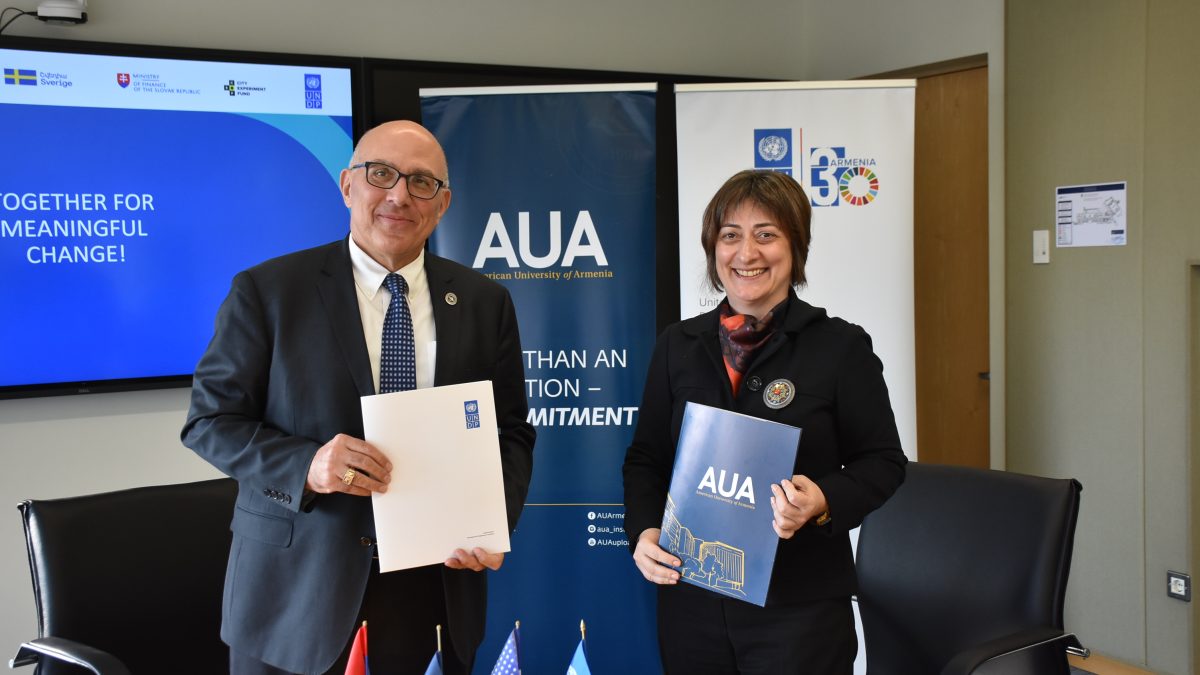
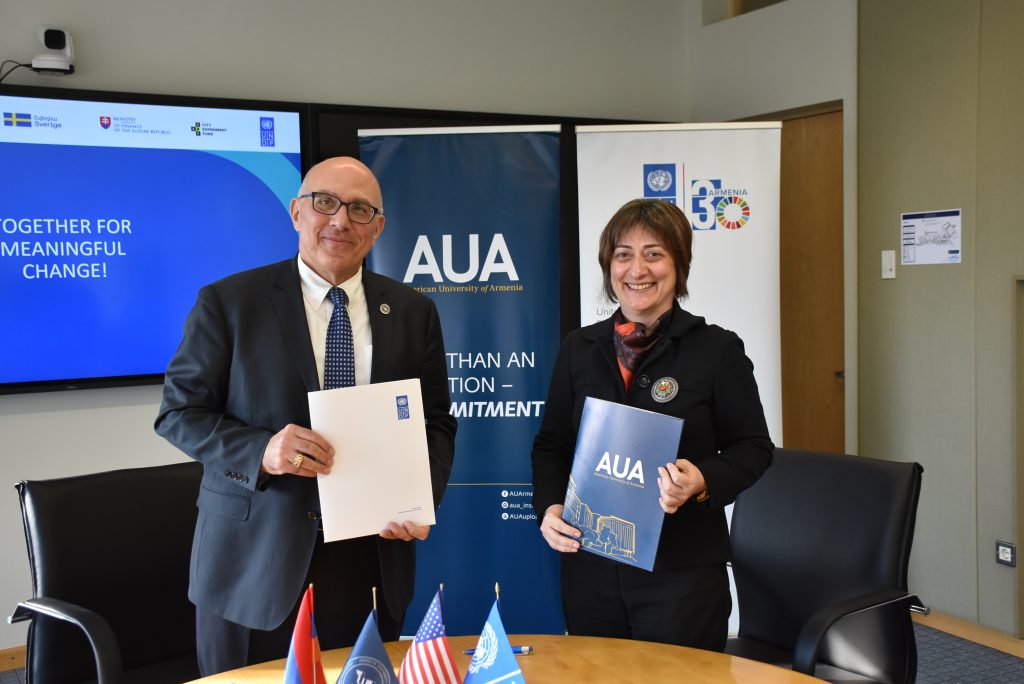
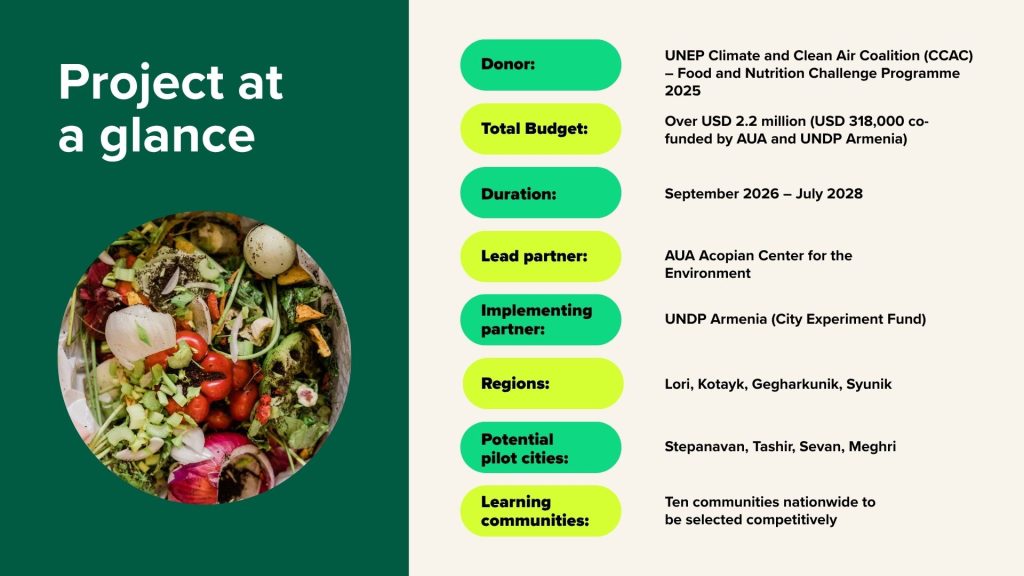
The United Nations Environment Programme (UNEP), through its Climate and Clean Air Coalition (CCAC), has approved over US$2.2 million in funding to accelerate Armenia’s transition towards a circular bioeconomy – strengthening municipal systems, reducing organic waste, and cutting methane emissions. UNEP funds US$1.95 million toward this project with US$318 thousand co-financed by the implementing partners. the implementing partners.
The project titled “Organics Mobilized: Accelerating Social Transformation towards a Circular Bioeconomy,” will be implemented between September 2026 and July 2028 by the American University of Armenia (AUA) Acopian Center for the Environment and UNDP Armenia, building on the municipal transformation model developed through UNDP’s City Experiment Fund (CEF).
Armenia’s organic waste challenge is both environmental and economic. Nearly half of municipal solid waste consists of food and green material, much of which is currently openly dumped in unmanaged sites instead of properly treated. This releases methane – a potent short-lived climate pollutant (SLCP) and a priority target for the CCAC – while wasting organic nutrients that could regenerate soil and support local food production. At the same time, limited refrigerated storage and transport for agricultural products contribute to post-harvest food loss, particularly in rural areas. Without adequate cooling infrastructure, farmers are often forced to sell produce prematurely or at lower value, reducing incomes and increasing waste across the food system.
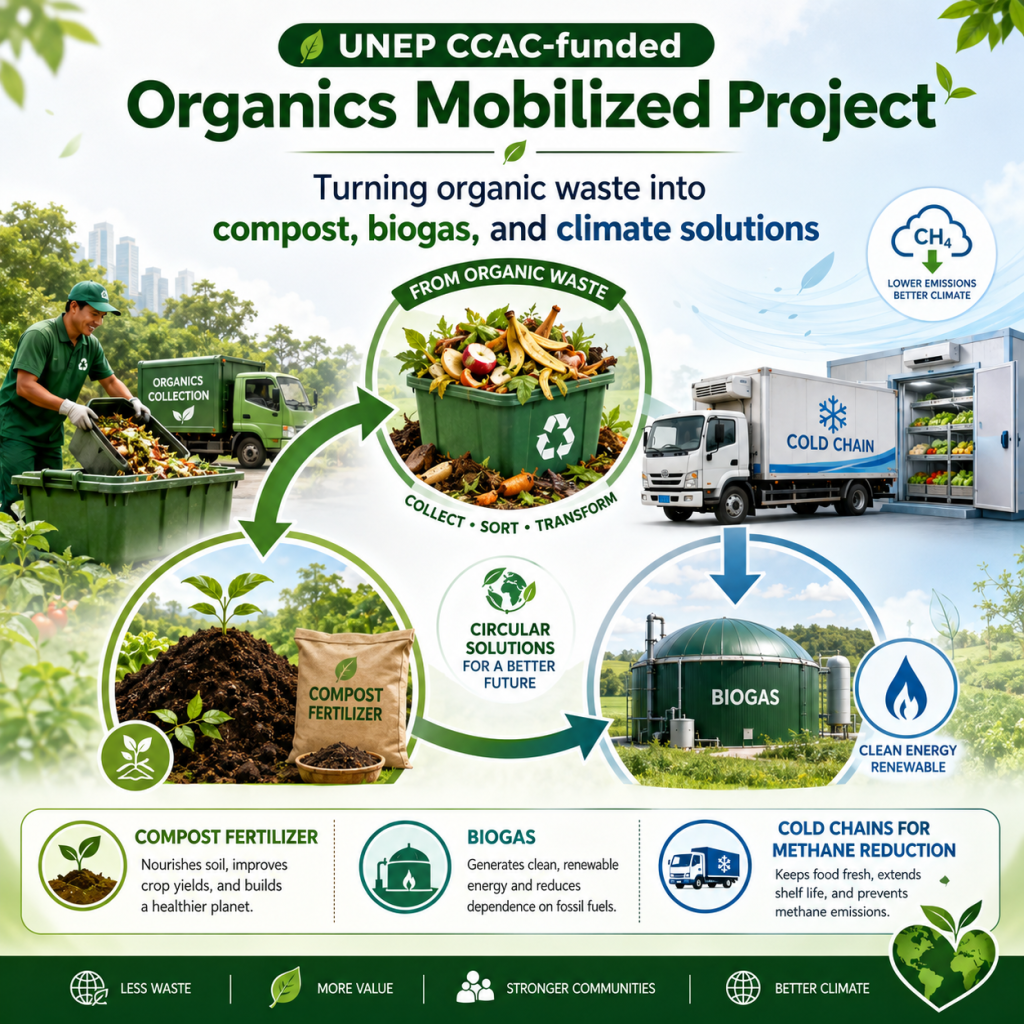
The initiative will be implemented in four regions – Lori, Kotayk, Gegharkunik and Syunik – with pilot activities starting in the cities of Stepanavan, Tashir, Sevan, and Meghri. In Lori, Kotayk and Gegharkunik, the pilot cities will introduce or strengthen source separation and decentralized treatment of organic waste, including composting and anaerobic digestion solutions aligned with local operational capacity. In Syunik, the project will pilot shared refrigerated storage and transport systems using climate-friendly cooling technologies, aiming to reduce post-harvest food loss by 5–10 percent while lowering emissions across the food supply chain.
In each pilot city, Living Labs will serve as the core delivery mechanism – testing environments where municipalities, researchers, businesses and residents work together to design, operate and improve circular organics solutions. These Labs will generate evidence, build municipal governance capacity, mobilize local actors, and unlock new financing pathways. In parallel, ten additional municipalities from across Armenia will participate as “learning communities” – observing, assessing and preparing to adjust solutions to their own contexts.
Crucially, implementation will be accompanied by institutional reform. Lessons from the pilot cities will be translated into municipal bylaws, service standards, operational contracts, and dedicated budget lines – ensuring solutions are embedded within public systems and can be adopted by municipalities nationwide.
This project builds directly on the work of CEF – a UNDP regional initiative, funded by the Ministry of Finance of the Slovak Republic, that brings cities together to reimagine sustainable urban development through strategic innovation and transformative solutions. In Stepanavan and Tashir, CEF-supported municipalities have co-designed Circular Economy Portfolios – place-based strategies integrating green transition goals with governance reform, citizen engagement, and adaptive delivery.
“The UNEP funding gives Armenia an opportunity to accelerate the green transition at national scale by embedding circular bioeconomy solutions into municipal systems, while keeping them flexible and responsive to local needs and a rapidly changing environment,” said Natia Natsvlishvili, Resident Representative, UNDP Armenia. “By scaling the City Experiment Fund’s portfolio approach nationally and introducing experimental living labs, we are creating opportunities to combine environmental sustainability with economic value, stronger local economies and more resilient governance.”
The project also draws on AUA Acopian Center’s expertise and applied national work in biowaste systems, waste source separation, and circular economy policy, including through its Sweden-funded Waste Policy Armenia program, which is strengthening sector capacity for more environmentally sound waste management and the introduction of Extended Producer Responsibility (EPR). “Armenia is at an inflection point on green transition. There is great momentum in modernizing and growing the economy, with increasing appreciation of doing this green. The Organics Mobilized project supports this development by creating space to experiment, learn, and institutionalize change,” says Alen G. Amirkhanian, Director of the AUA Acopian Center for the Environment.
The partnerships, models, and institutional readiness developed through this combined work created the conditions for Armenia to mobilize external climate finance – scaling twin transition goals from city-level experimentation to national investment.
The initiative is designed not simply to improve waste management, but to reshape how cities and food systems manage organic resources. By addressing both organic waste and post-harvest food loss across multiple regions, the project links SLCP reduction with economic resilience and more efficient municipal services.
Through implementation in the pilot cities, Armenia will generate tested service models and governance tools that other municipalities will actively observe and can adopt. These lessons will feed into national guidance and policy frameworks, helping translate local experimentation into wider systemic change.
Ultimately, the project supports the acceleration of a circular bioeconomy approach in Armenia – where organic waste becomes a resource, food systems become more resilient, and cities play a central role in driving sustainable transformation.
RELATED POSTS
Urban Talks is an interactive webinar series that spotlights cities and initiatives that are building new inclusive visions across Europe and Central Asia and wider, […]
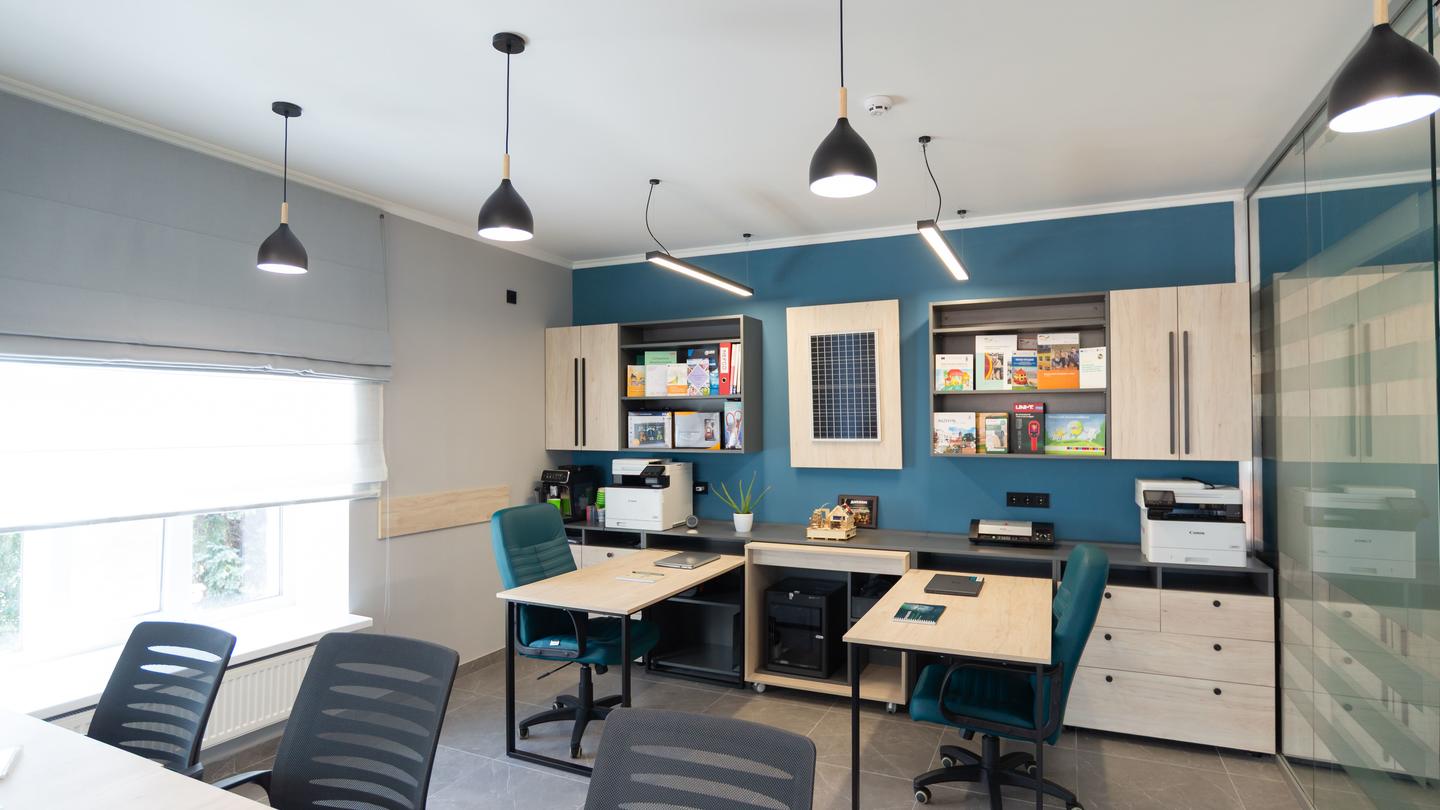
On 30 July, the Green Economy Hub was opened in Nizhyn – a new space where residents, local authorities, businesses and academia can work together around […]
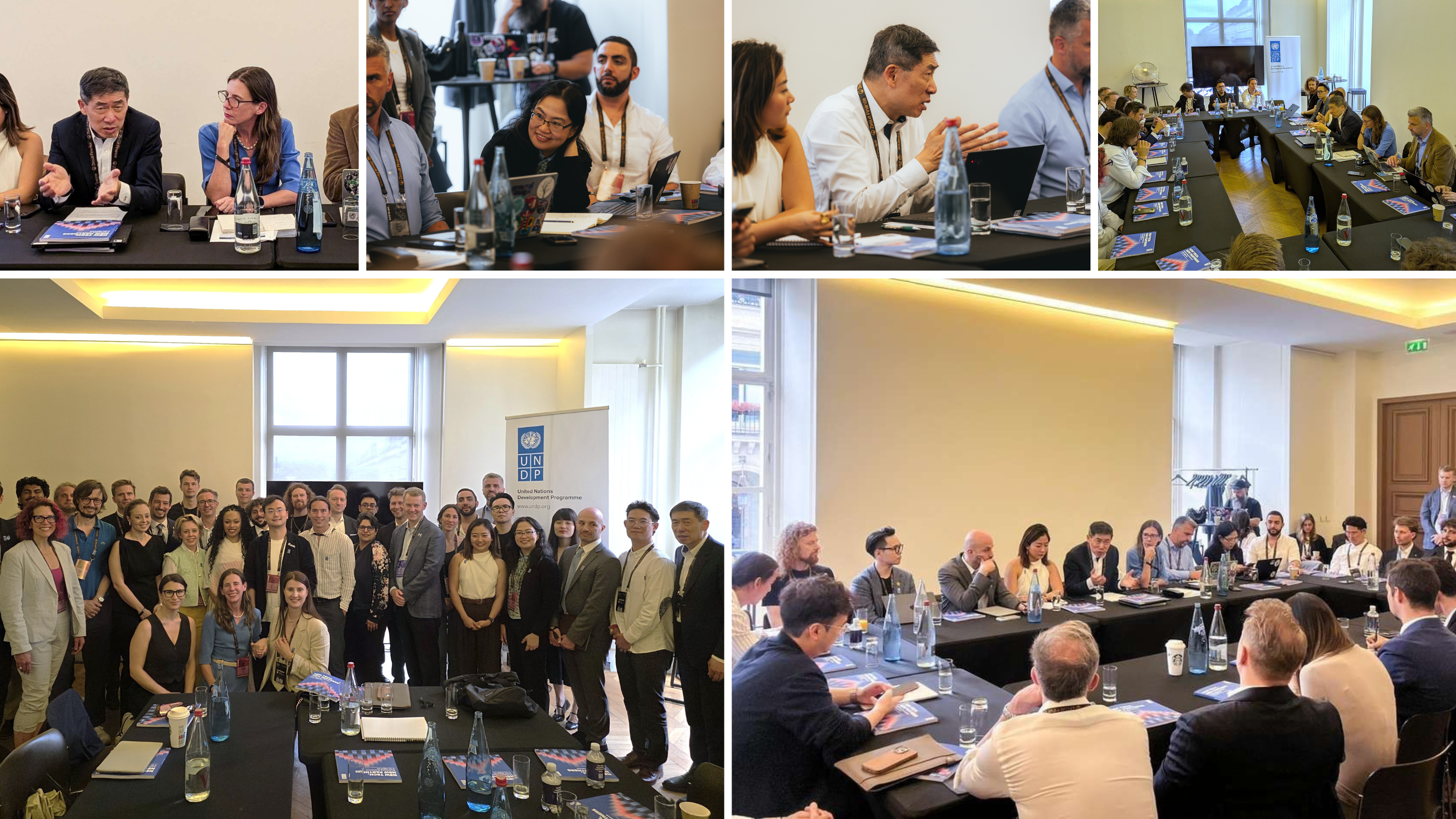
Insights from UNDP’s Paris Convenings