

Three Winners at BOOST x CEF Green Urban Tech Sprint Demo Day
Ten startups and non-profits from across Europe and Central Asia gathered virtually on 25 February 2026 for the BOOST x City Experiment Fund (CEF) Green […]

At the Western Balkans Digital Summit 2025 in Skopje, we asked six regional experts¹ from across the Western Balkans 6 (WB6) two questions: what works, and what is missing in digital skills in the region? Through lightning talks, an interactive “harvest” workshop and a collective vision-boarding exercise, we left with three essential insights.
The Western Balkans do not lack good pilots. Non-formal programmes have achieved significant penetration, filling gaps that formal curricula have left open. Individual classroom interventions, like an IT professional spending a day with students or a short-term coding bootcamp, can inspire, but they rarely produce durable change.
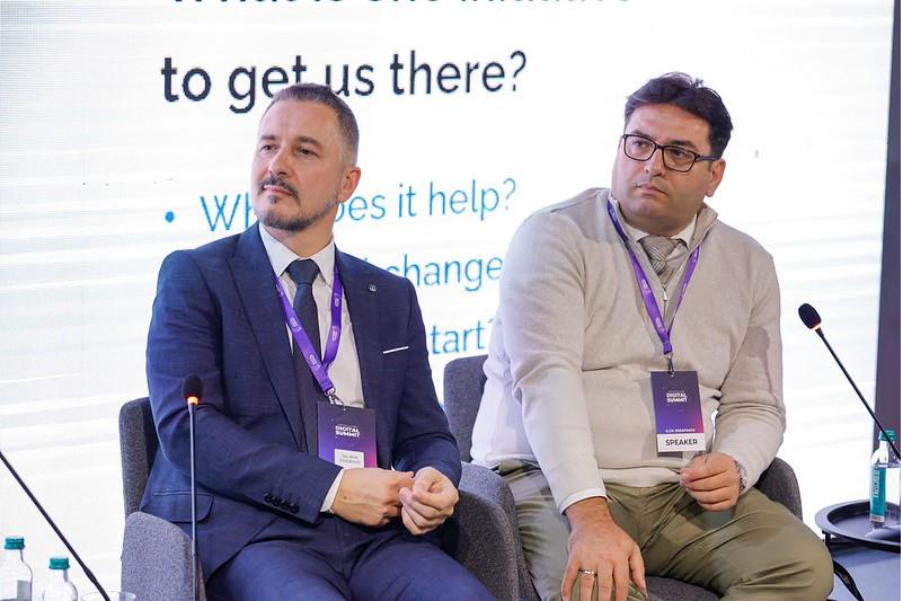
As Dalibor Todorović, a Computer Science Educator from Belgrade, put it: “AI entered all spheres of our lives, so AI entered also in classrooms uninvited and found the teachers completely unprepared for using it.” The technology is already there. The systems to support it are not.
The critical question is no longer “how do we launch more programmes?” It is “how do we structurally move from pilots to systemic change?” The answer lies in formal anchoring: embedding digital skills into national curricula, teacher-training pathways and vocational structures so that gains survive political cycles and funding windows.
Training supply alone is insufficient. Without trusted, portable proof that a learner possesses specific skills, learner motivation stalls, employer hiring decisions rely on guesswork and cross-border mobility remains a promise. The region’s investment in digital training risks diminishing returns if skills remain invisible to labour markets beyond the country where they were acquired.
As Ilija Serafimov, CEO of the Serafimov Group, noted: “The private sector is hungry for digital literacy and digital skills and they are searching for them everywhere. So we must create and give those to them.” The demand is clear. What is missing is the infrastructure of recognition.
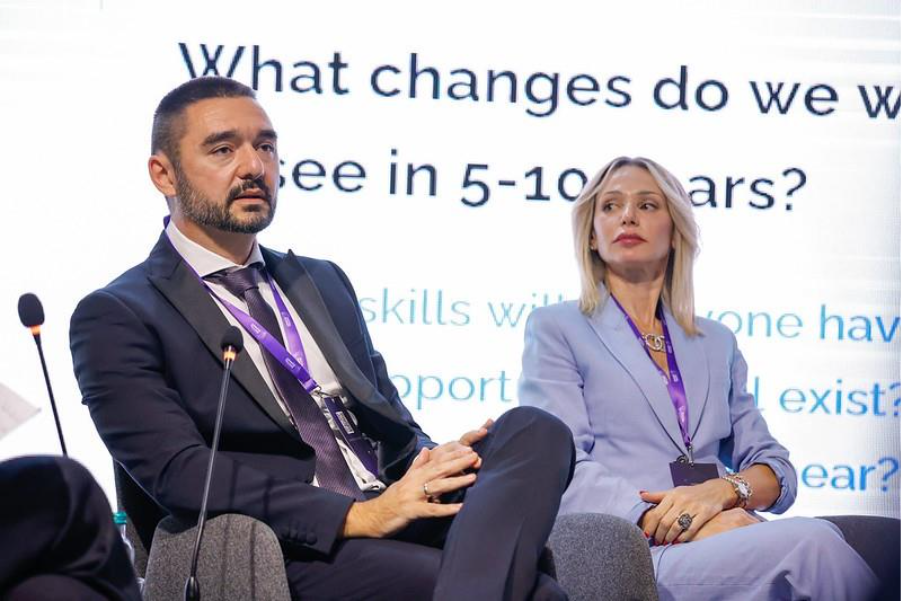
A regionally recognized, portable credential, a WB6 digital skills passport, could fundamentally change this equation. Such a framework would make competencies visible and verifiable across all six labour markets, creating a common language between educators, employers and learners. Combined with the formalization of AI, cybersecurity and digital curricula at the national level, credentialing becomes a lever for both individual mobility and regional workforce integration.
Sustained workforce relevance emerges from aligning three elements that are too often treated in isolation:
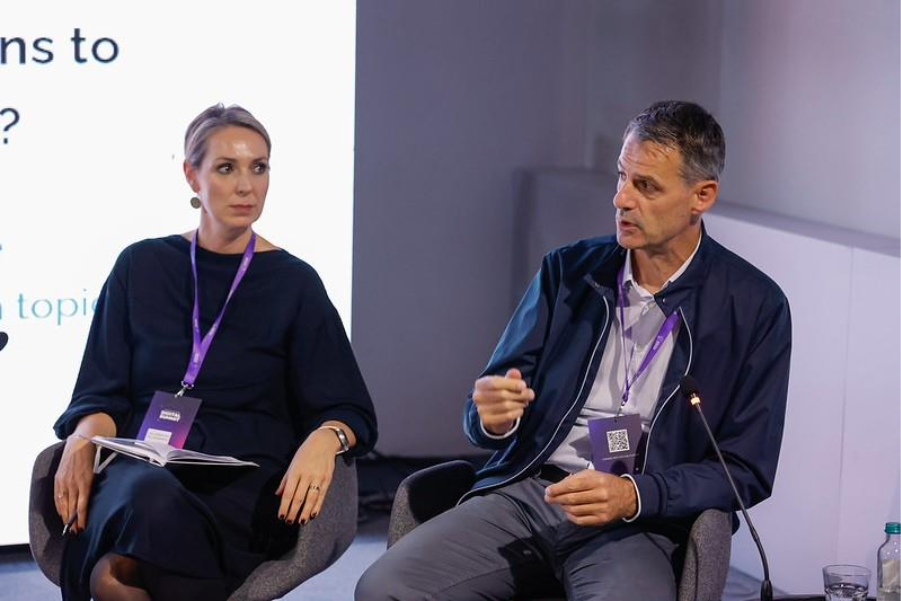
Milan Simic, Director of Petlja Foundation, captured this well: “We should as IT experts actually get into classrooms and connect education with real-life problems and motivate both teachers and kids that this makes sense.” The synergies between government, private sector and education institutions are essential to making this triad function. Equally critical is that lifelong learning for adults and educators is treated as a permanent priority. Digital and AI literacy should be embedded through trained professionals and anchored in real work.
Meanwhile, signs of momentum start to emerge. As Lejla Ibranovic-Mulahasanovic, Portfolio Manager at UNDP Bosnia and Herzegovina, observed: “Youth is really stepping forward and is willing and eager to embrace those digital and new technologies, and as a consequence we see a rise of tech startups in the region, which is a really important development.”
We closed the session with a collective vision-boarding exercise. Across countries and sectors, independently and on post-its, participants converged on the same structural priorities: teacher reskilling at scale, regional EdTech innovation labs, stronger Centres of Vocational Excellence, project-based learning co-created with industry, portable regional credentialing, and inclusion initiatives focused on rural, low-income and marginalized groups.
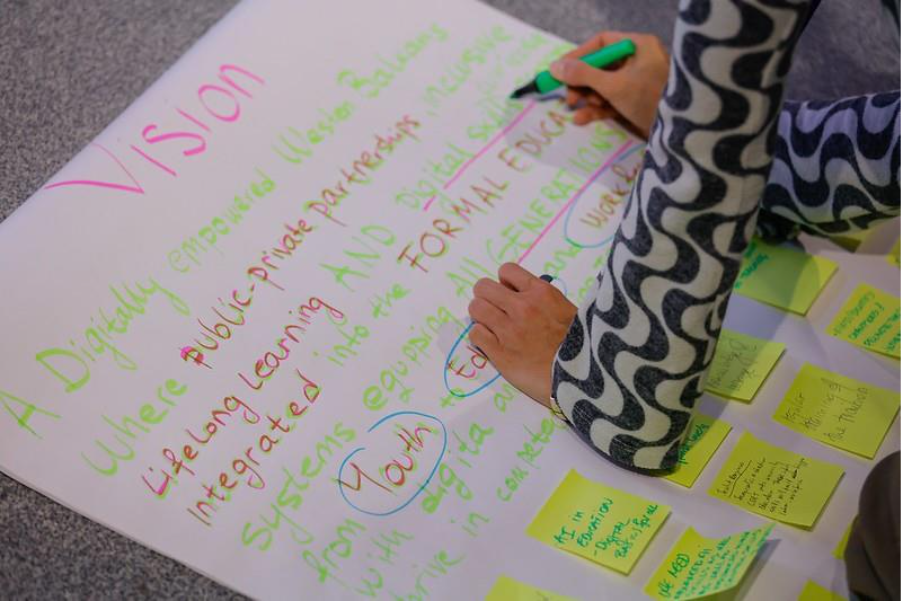
At the Innovation and Digital team at UNDP Europe and Central Asia, we will carry this collective vision forward together with the broader regional community by raising awareness, translating shared priorities into action through our digital skills work in the region. We invite governments, universities, private-sector leaders and funders to join us. Together, we can develop solutions that address the core tensions surfaced at the workshop. By working together and designing with local ownership, the region can build a future-ready workforce that is inclusive, mobile and prepared for an AI-enabled economy.
¹ Nikica Mojsoska-Blazevski (Macedonia2025), Stefan Thomas (European Training Foundation), Milan Simić (Petlja Foundation), Dalibor Todorović (Computer Science Educator), Lejla Ibranović-Mulahasanović (UNDP Bosnia and Herzegovina), Ilija Serafimov (Serafimov Group).
RELATED POSTS
Ten startups and non-profits from across Europe and Central Asia gathered virtually on 25 February 2026 for the BOOST x City Experiment Fund (CEF) Green […]

Lisbon, 18 March 2026 – Goparity, a Portuguese impact investment platform, has collaborated with AltFinLab, a flagship United Nations Development Programme (UNDP) initiative, pioneering alternative […]

Blockchain work across the UN system has grown steadily, but not always in a coordinated manner. Some teams are piloting real solutions; others are still […]