
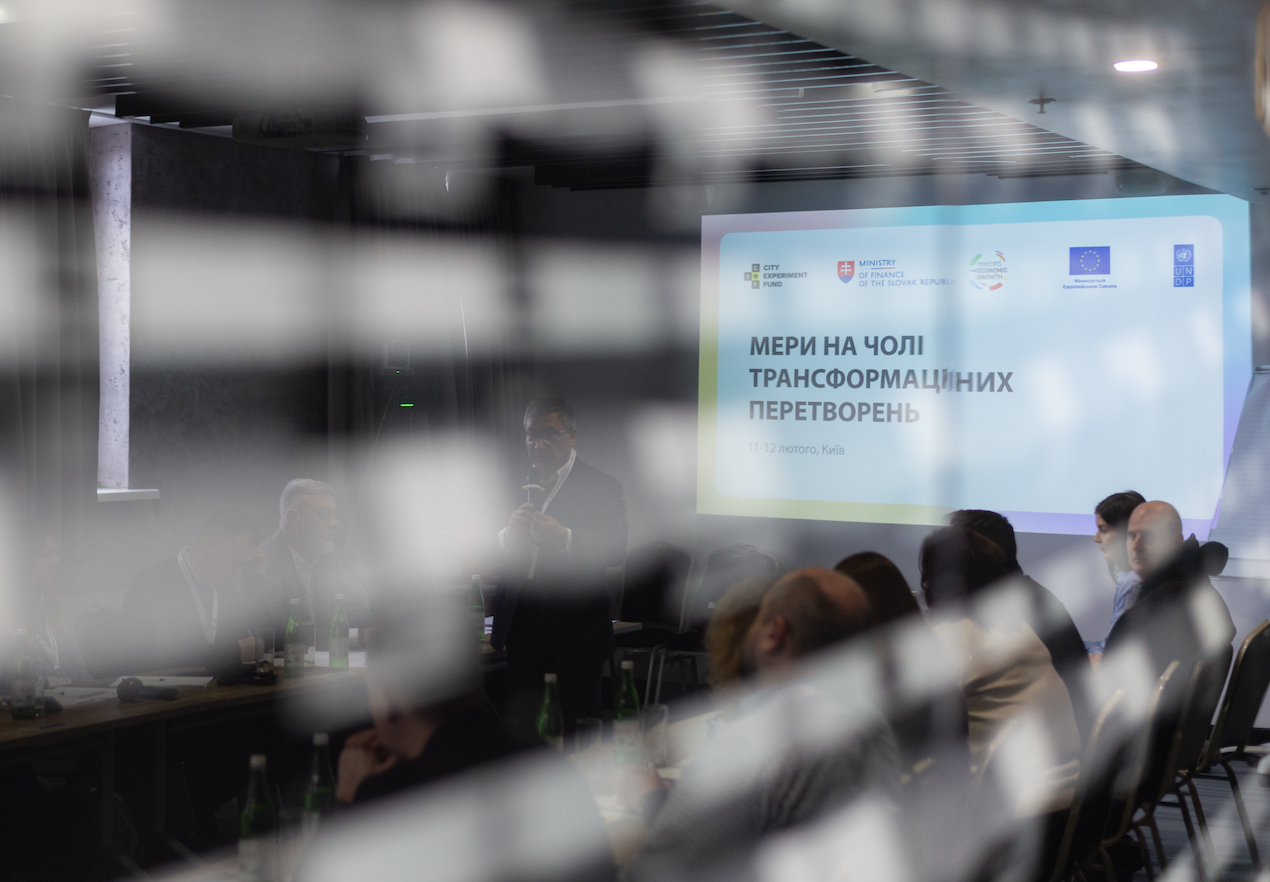
M4EG: Leading cities when the compass fails
Originally posted at M4EG’s website, read the full article here. When familiar maps no longer work and the compass starts to spin, leadership is about […]


The European Commission’s Directorate-General for Neighbourhood and Enlargement Negotiations (DG NEAR), Arup, EIT Climate-KIC, Tallinn University of Technology (TalTech), and UNDP launched today the Pathways for Economic Growth (P4EG) framework, a methodology to design a new generation of local economic development plans in the context of the EU-funded project Mayors for Economic Growth (M4EG).
Founded on the principle of holistic development, the P4EG framework helps cities best assess social, environmental and economic factors in local development, as well as the potential for scaling up their projects in cooperation with central governments, donors and European and International Financial Institutions.
Thibault Charlet, Programme Manager for Digital Transition and Local Economic Development in the European Commission’s DG NEAR, underlined that a critical success factor for the P4EG framework is that existing revenue streams, funding and financing opportunities are mapped up front. He highlighted the important role for local leaders to engage with diverse stakeholders, such as local businesses, donors, investors and central government. He added that the P4EG framework will play a key role in building pipelines of investment projects at the local level, which will help cities mobilise more public-private financing under the EU’s Economic and Investment Plan for the Eastern Partnership region.
Pasquale Capizzi, Europe Resilience and Adaptation Leader, ARUP, highlighted that pathways address the ongoing need for learning and adaptability among local authorities. “The approach prompts cities to rethink their economic development paradigm, by firmly linking growth to sustainability and equity.”
Tina Stoum, Regional Manager, M4EG, UNDP Istanbul Regional Hub, highlighted the importance of shifting from one-size-fits-all linear planning tools to recognizing the uncertainty and complexity of challenges faced by municipalities. “By moving beyond traditional GDP-centric focus, P4EG brings a broader focus on well-being and sustainability,” added Stoum.
Comprising eight building blocks, the P4EG approach provides cities and towns with the necessary framework to set a diagnostic of their local situation, identify key drivers of change, opportunities, stresses, and shocks facing them. It allows the establishment of prioritised actions for municipalities to deliver on the targets set out in their development vision, and promote entrepreneurship and innovation.
Access the P4EG Guidance Note and join the P4EG introduction course starting today.
Republished from M4EG. See original article here.
RELATED POSTS
Originally posted at M4EG’s website, read the full article here. When familiar maps no longer work and the compass starts to spin, leadership is about […]
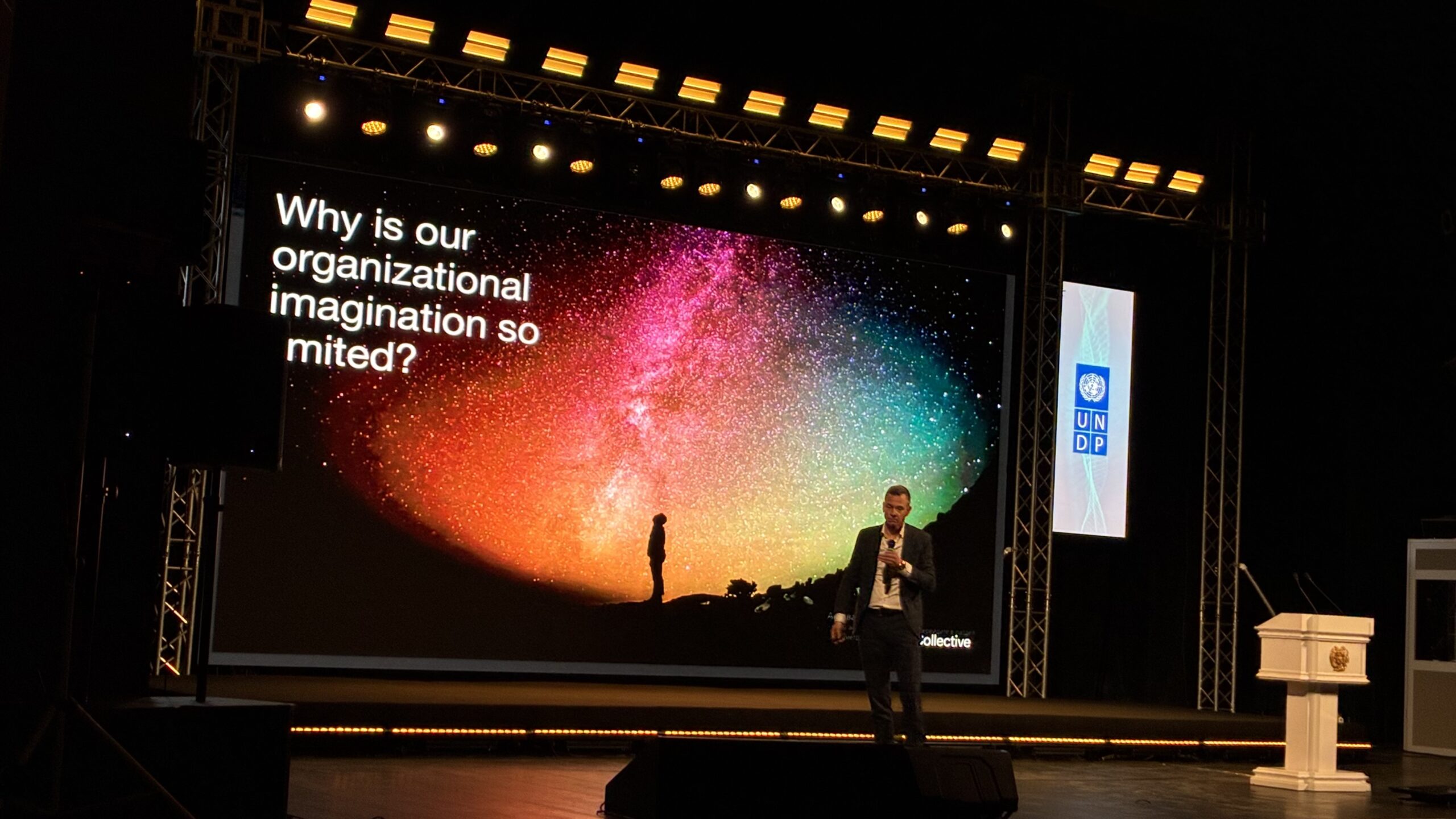
Originally posted at M4EG’s website, read the full article here. Cities rarely move in straight lines. A tourism problem is also a skills problem, a […]
The United Nations Environment Programme (UNEP), through its Climate and Clean Air Coalition (CCAC), has approved over US$2.2 million in funding to accelerate Armenia’s transition […]