How four Ukrainian cities are seeking their future during the war
STRATEGIC INNOVATION
On the eve of the fifth year of full-scale war, four Ukrainian cities have taken on what seems like an impossible task: to determine their economic future in conditions where no one knows when or how the conflict will end. Zhytomyr, Bucha, Slavutych and Khmelnytskyi have joined the Mission-Oriented Economy programme, part of the Mayors for Economic Growth (M4EG), funded by the European Union and implemented by UNDP.
Mission is more important than comfort
The programme brings together diverse city stakeholders – government, business, and civil society – and equips them with a methodology for planning the future. At its core is a deeper ambition: helping cities see themselves as holistic systems and develop a distinctive identity, rather than defaulting to generic notions of livability.
A strategy built around being “a convenient city to live in” risks becoming interchangeable – there will always be a more convenient city elsewhere. What communities need instead is a reason for people to stay: something that makes a place meaningful, specific, and irreplaceable.
From chaos to system
Work with the four cities began in the autumn of 2025 with in-depth research into demographics, economy, and development potential. This was followed by community listening, which engaged stakeholders to identify concerns and barriers; sensemaking, which mapped existing initiatives and avoided duplication; and, finally, foresight, in which participants envisioned their city’s future over the next 50 years.
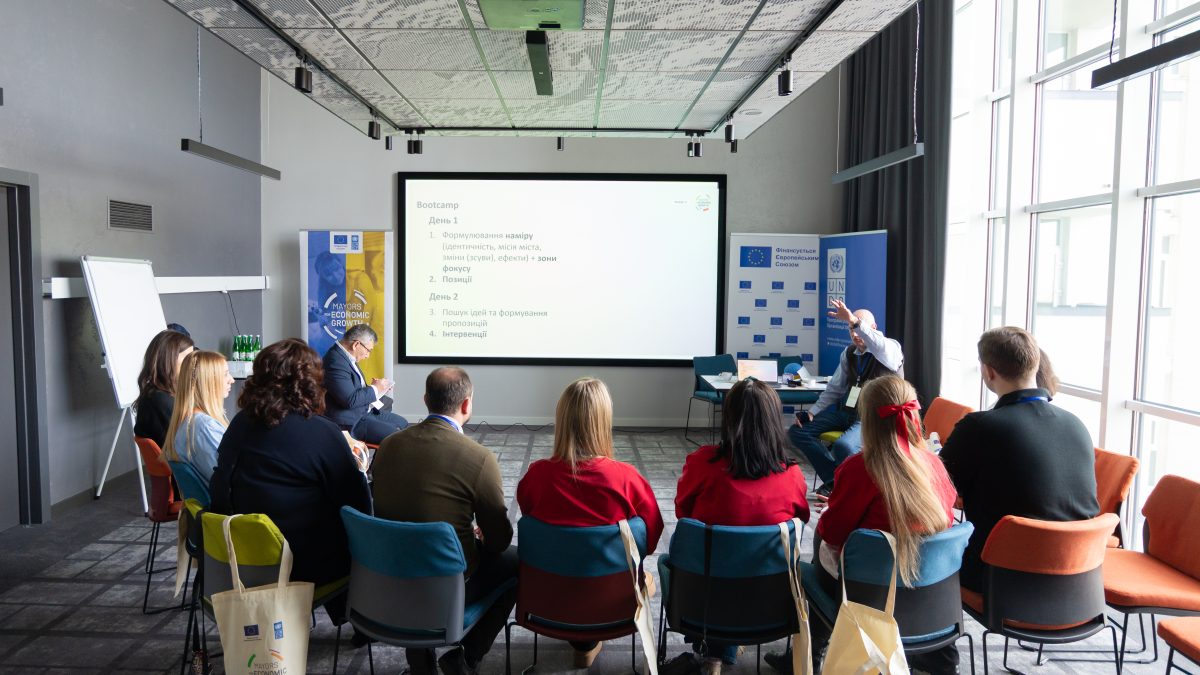
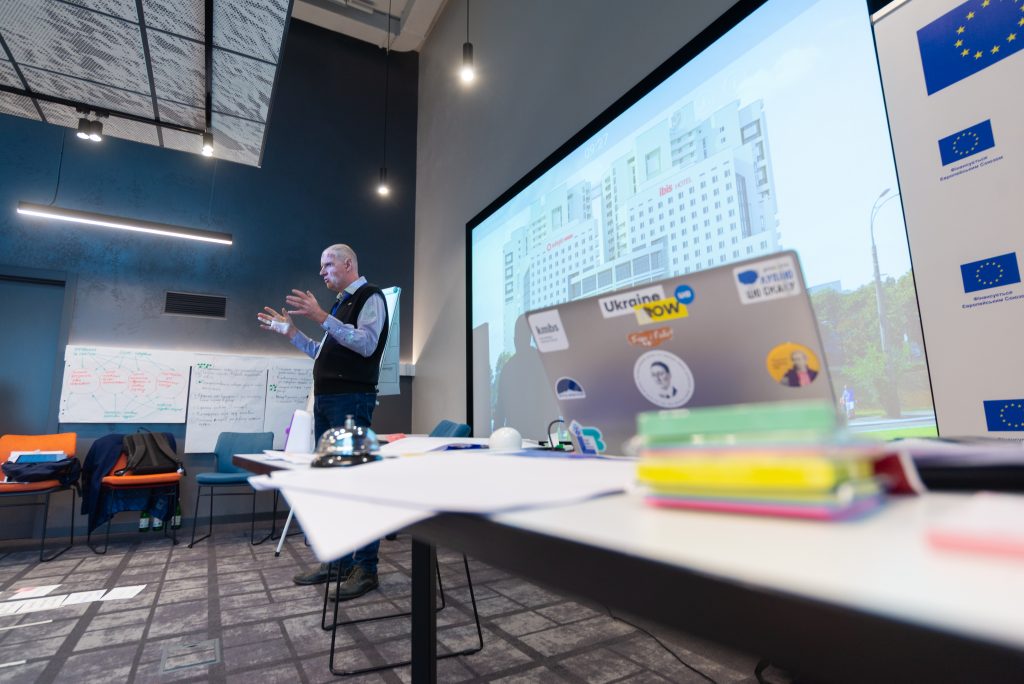
The culmination was an intensive two-day bootcamp, during which each team developed a “community portfolio”: not a conventional strategy document, but a systemic understanding of the city’s mission, development priorities, and concrete small-scale experiments to test whether the chosen direction works.
Systemic thinking over linear planning
The programme’s core innovation lies in its shift from linear, “waterfall” planning toward a more flexible, experimental approach – often described as a portfolio approach, and in the tech world as “agile.”
As one of the facilitators explains, cities function more like living organisms than static systems. Linear logic tends to break down after the first few steps; instead, cities should explore moving forward by testing hypotheses through small-scale experiments – much like a gardener who plants, observes, and adapts, rather than following a rigid blueprint.
War as a window of opportunity
The programme facilitators share a clear conviction: moments of crisis are not a reason to pause this kind of work, but a reason to deepen it. The methodology itself is designed for uncertainty – recognizing that communities do not stop living in difficult times, but continue to adapt, make decisions, and shape their future.
In this context, the pressures of wartime can also shift how cities function. With authorities focused on immediate crisis response, there can be more space for residents and local actors to step in, take initiative, and contribute to shaping their city’s direction – opening possibilities for more participatory and collaborative forms of governance to emerge.
What next?
The participating Ukrainian cities will soon move to portfolio activation, implementing their first pilot initiatives. But the facilitators stress that lasting success lies not in these early steps, but in whether a culture of regular, iterative strategizing takes root – one that continues long after external support ends and keeps residents at the centre of shaping their own communities.
In 2025, four Ukrainian cities – Khmelnytskyi, Bucha, Zhytomyr, and Slavutych – joined the Mission-Oriented Economy local transformation programme, part of the EU-funded Mayors for […]
Ten startups and non-profits from across Europe and Central Asia gathered virtually on 25 February 2026 for the BOOST x City Experiment Fund (CEF) Green […]