Accelerating women’s digital inclusion through experimentation in Kazakhstan
NEW TECHNOLOGIES, STRATEGIC INNOVATION
Aizhan Kapysheva, Head of Solutions Mapping, Accelerator Lab, UNDP Kazakhstan
Kazakhstan has made progress in gender equality in all sectors, but challenges remain. Young women in Kazakhstan are not well represented in STEM (science, technology, engineering, mathematics), which generally pay better than occupations in other sectors. Although the overall educational attainment of women in Kazakhstan is high, this is not reflected in the enrolment in STEM degrees and professions. Only 25% of women choose a STEM career. There are several reasons for this, most notably the lack of representation of women role models in STEM fields, gendered role expectations, and societal norms that assume these professions are more suitable for men. Recent studies also suggest that women experience a “confidence gap” about the skills they need to master and that there is low awareness of career opportunities that narrows women’s pipelines in STEM fields.
In December 2021, young women from the cities of Satpayev and Zhezkazgan had an opportunity to participate in a two-week “Alga!” [“Go for it!” in Kazakh] bootcamp organized by the UNDP Kazakhstan Accelerator Lab. The experiment aimed to develop digital and leadership among women in remote areas of Kazakhstan to enhance their employment opportunities in ICT (information, communication, technology) and STEM.
Photo: UNDP Kazakhstan
Digitalization is an important factor in the UNDP Strategic Plan 2022-2025 and it is important to emphasize how digital technologies can contribute to women’s economic, social and political participation. Increased participation of women in ICT and STEM leads to better professional and academic opportunities, especially in single-industry cities such as Satpayev and Zhezkazgan, where most economic activity is concentrated in a single industry – copper mining.
The goal of the “Alga!” bootcamp, organized together with Girls Power Up (now participating in BOOST’s acceleration programme), was to introduce participants to women role models in ICT and STEM pathways and to raise their awareness of the 21st century skills that are important in each profession. Participants had hands-on workshops in graphic design, social media marketing, ICT skills, emotional intelligence and mental well-being, leadership and project management. They also heard from inspirational speakers from Kazakhstan who are successful in ICT or STEM jobs. Existing role models motivated participants to think about alternative employment scenarios in the knowledge economy and gave them the confidence to overcome gendered expectations.
The bootcamp concluded with an in-person “Pitch Day” event that showcased the presentations participants had worked on during the two-week period. The young women addressed issues such as gender-based violence, animal cruelty, green jobs for people with disabilities, English learning among youth, and promoting educational content in Kazakh, using the tools learned during the bootcamp. Dilnaz Iskakova, a 2nd year student at Zhezkazgan College, was the winner of the bootcamp, creating a website in Kazakh from scratch. The second place went to the team “Jasyl Odak” from Zhezkazgan Industrial and Humanitarian College with the idea of attracting people with disabilities to green jobs in the city.
Photo: UNDP Kazakhstan, Dilnaz Iskakova, the winner of the bootcamp.
The experiment demonstrates the importance of targeted local digital initiatives to open up new avenues for education and employment for young people in communities dependent on extractive industries. Such communities can redefine their economies and leverage all of their human capital by promoting women’s economic empowerment through a focus on ICT and STEM with concrete policy changes aimed at building 21st century skills curricula in schools and universities.
UNDP continues to provide its digital capacity to local partners as a tool for change. Through small-scale experiments such as the “Alga!” bootcamp, UNDP is demonstrating innovative ways to address challenges through the use of digital technologies and the promotion of local ecosystems. Given the transformative impact of new technologies, automation and changing the nature of work, the UNDP Accelerator Lab believes in the potential of digital tools as key to structural change for gender equality, as highlighted in the UNDP Digital Strategy 2022-2025.
Partnership supports UNDP country-office pilots, civil society organizations (CSOs), and public-sector engagement around responsible digital infrastructure and AI-enabled software development
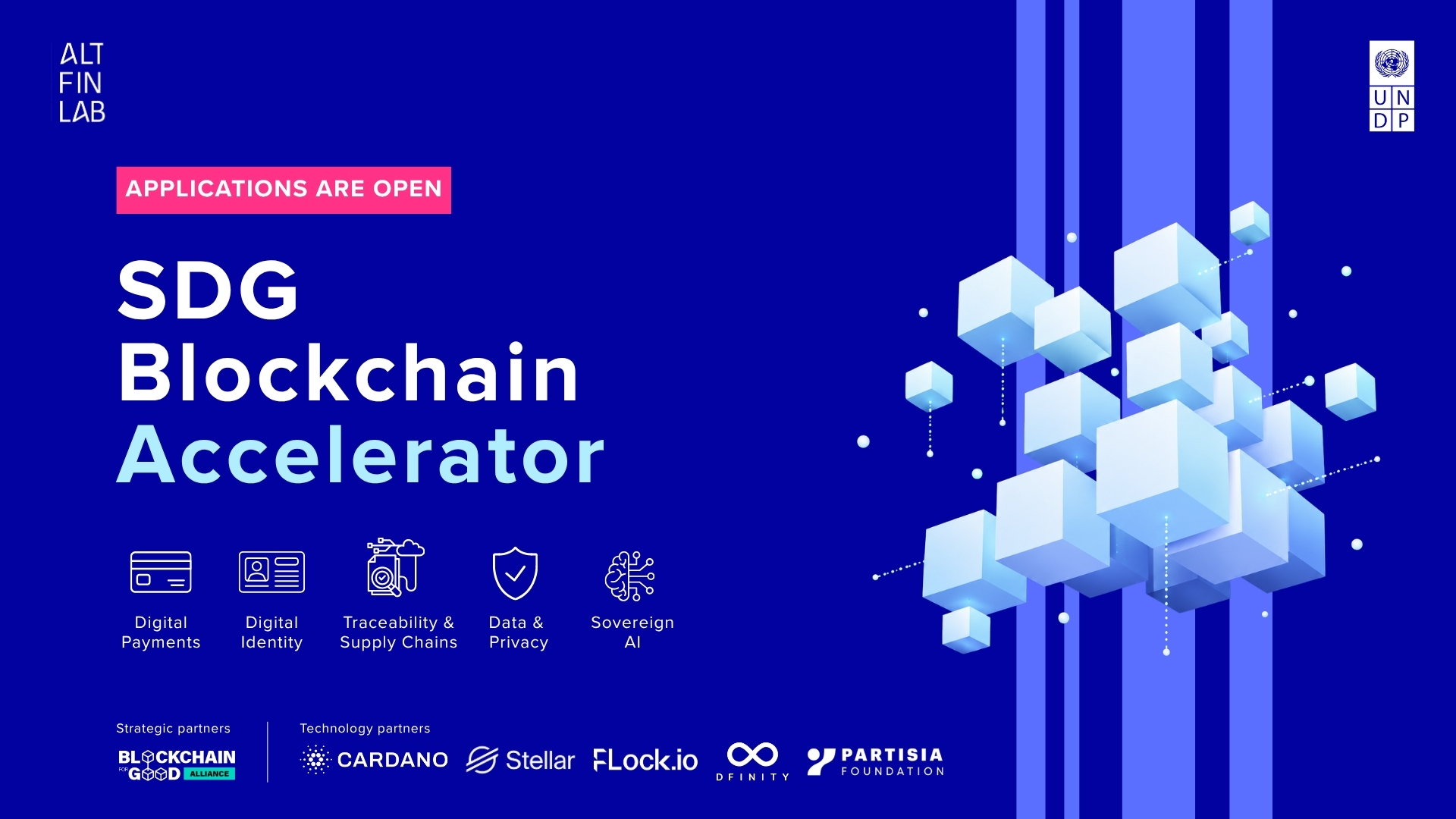
The third edition will help UN teams turn challenges from active programmes into practical, scalable solutions with support from leading blockchain and AI partners.
The United Nations Environment Programme (UNEP), through its Climate and Clean Air Coalition (CCAC), has approved over US$2.2 million in funding to accelerate Armenia’s transition […]