

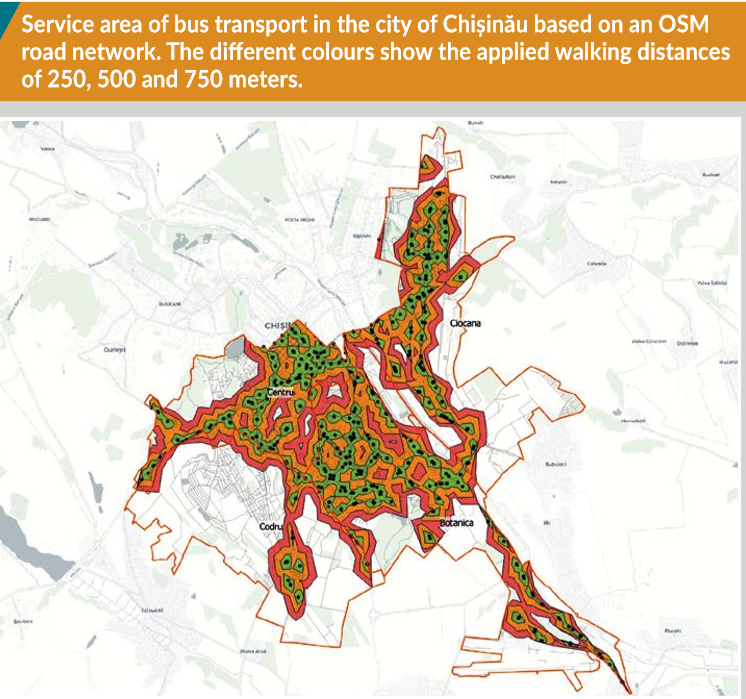
Reinventing urban mobility and public transportation in Chisinau
The project is aimed at supporting improved mobility and use of public transportation by at least 5%, by mapping the user journey and crowdsourcing new […]

AREA OF WORK
COUNTRY
DONORS
COUNTRY OFFICE
SDG GOALS
CITY
PARTNERS
The city of Yerevan was designed as a garden city: walkable and green. The estimated number of users of the biggest city park is 200,000. Nonetheless, as recent investigations showed, around 80% of the garden is privatized, under construction or leased out for 99 years after the collapse of the Soviet Union. As Yerevan lacks an urban development strategy, there are no mechanisms to engage citizens in public space design, leading to apathy and lack of ownership. Moreover, decision-making processes via public hearings are very formal and not productive, leading to further disappointment. The project aims to generate efficiency gains and transparency in new planning processes by mapping public space usage, collecting alternative data (e.g. human traffic patterns, crime rates, transport traffic analysis) and using alternative forms of resident participation.
The project already received the methodology for the urban context study and participatory placemaking concept development from “Strelka KB”, a Russian urban consulting agency, which conducted the architectural assessment, GIS-related data collection, anthropological studies. By providing a detailed analysis of people, communities, and spaces, this anthropological approach makes an essential contribution to the strategic view on the social mission of the project to understand how to sustainably use emerging public spaces and lay the groundwork for the development of loyal communities around them. Urban anthropology employs a range of qualitative methods within a “classical” field approach, alongside several innovative tools (chatbots, crowdsourced media analysis, machine learning algorithms), provided by digital anthropology. Within the framework of the anthropological study, the project team collected data on residents’ perceptions towards the project pilot park, the Yerevan youth park (former Circular garden.) Study findings illustrated the perception gap between local authorities and citizens towards the park which led the UNDP country office to the understanding that public space design in Yerevan does not always meet the user demand. Not to mention that the current pandemic created new momentum for analyzing the city-scale change in the demands towards urban landscape due to the COVID-19 pandemic: before, during COVID-19 and after quarantine.
The project’s other key partner is the SpinUnit lab which is responsible for GIS analysis aimed at capturing, analyzing, managing, and presenting all types of geographical data. The analysis is a useful tool in both the problem-solving and decision-making processes, as well as for the visualization of data in a spatial environment. It helps to determine the location of features and their relationships, their density, indoor-outdoor activity inside an area of interest, and provides information on how the specific area has changed over time and in what way. Despite the comprehensive analysis of the park, the team is also responsible for land-use mapping and functional reading of other public spaces in the city. Not only is it important to map the spaces, but also compare and rank them.
RELATED PROJECTS
The project is aimed at supporting improved mobility and use of public transportation by at least 5%, by mapping the user journey and crowdsourcing new […]

The project aims to demonstrate a multi-pronged intervention to tackle air pollution in the City of Skopje. It complements the ongoing efforts to improve data […]
The general goal of the project is to observe habits and understand the needs of people with disabilities in cities and to co-design systems and […]
Stay in the loop
Curious about the latest innovation insights in development?
Get them in your inbox.
We respect your privacy.